Károli Gáspár University of the Reformed ChurchHungary
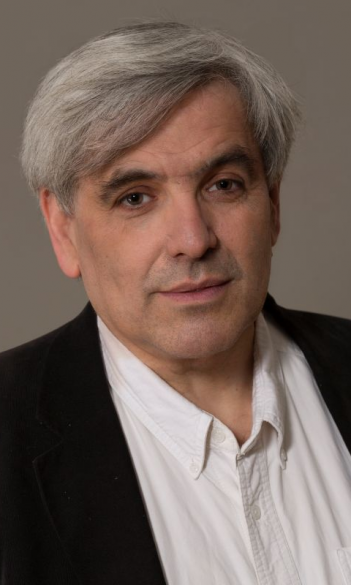
Dr. Gábor Pintér holds dual academic appointments as Assistant Professor at Károli Gáspár Reformed University's Faculty of Humanities and Social Sciences (Department of Japanology) and as Associate Professor at Kobe University's School of Languages and Communication. Born in Hungary in 1977, he earned his MA (2005) and PhD (2008) in Linguistics from Kobe University, Japan, with a dissertation on asymmetrical segment distributions in Japanese. His research focuses on three interconnected domains: phonological theory (especially Japanese phonology), experimental phonetics, and applications of automatic speech recognition in language education. Specific interests include vowel devoicing patterns, prosodic perception in L2 learners, phonotactic constraints, and diachronic sound changes in Japanese. Pintér actively contributes to international research collaborations, including the JSPS-funded project 'Stochastic & theoretical phonological research' and serves as chair of the Phonology Association in Kansai (PAIK). His 15 most recent publications demonstrate methodological diversity, combining theoretical linguistics with computational approaches and experimental studies, primarily focused on Japanese phonetics and speech technology applications. Professional memberships include board positions in The Phonological Society of Japan and memberships in the International Speech Communication Association and Association for Laboratory Phonology.
Károli Gáspár University of the Reformed ChurchHungary
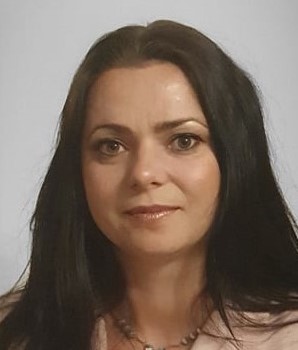
Dr. Julia Somodi is an Associate Professor at the Department of Japanology, Institute of East Asia, Faculty of Humanities and Social Sciences, Károli Gáspár Reformed University (KRE) in Budapest, Hungary. Her academic career spans over two decades with significant contributions to translation studies and Japanese linguistics. Her educational background includes: PhD in Translation Studies (2015) from ELTE with dissertation on Japanese address terms in Hungarian film translations MA in Japanese and English Studies (2001-2002) from Károli Gáspár Reformed University Dr. Somodi's research focuses on the intricate relationship between pragmatics and translation, particularly examining address terms across Japanese and Hungarian languages. Her work bridges theoretical linguistics with practical translation challenges, with special attention to cultural transfer in literary contexts. She has made significant contributions to understanding how linguistic politeness strategies and address systems function differently across these linguistically distant languages. Analysis of her 15 most recent publications reveals a consistent trajectory in translation studies with evolving sophistication. Her early work concentrated on foundational aspects of Japanese address terms, while recent publications demonstrate expanded scope into translation pedagogy, cultural transfer in contemporary literature, and innovative teaching methodologies. A notable thread throughout her career is the humanitarian application of her expertise, particularly in translating testimonies of Hiroshima atomic bomb survivors. Her scientific recognition includes: OTDK témavezetői elismerés (2015, 2021, 2025) Innovatív Oktatói Díj (Innovative Teacher Award, 2024) Dr. Somodi has actively contributed to academic service through committee memberships (Credit Transfer Committee, Quality Assurance Committee), conference organization (including the 30th Departmental Jubilee Conference in 2024), and leadership in the Japanese-Hungarian Translation Technology Workbook project (2025-26). Her international research collaboration with Kyoto University on 'Disfluency in Comparison' demonstrates her standing in the global academic community. She has also served as opponent in doctoral defenses at ELTE, showing her role in shaping the next generation of scholars. Her laboratory work centers around translation technology development and practical translation projects, most notably her ongoing collaboration with the Hiroshima Atomic Bomb Victims National Peace Memorial Hall since 2018, where she coordinates and translates survivor testimonies into Hungarian.
Károli Gáspár University of the Reformed ChurchHungary
István Janó is an Assistant Professor in the Department of Japanology at the Faculty of Humanities and Social Sciences, Károli Gáspár Reformed University in Budapest, Hungary. With a distinguished career spanning over four decades, he has established himself as a leading scholar in Japanese studies, comparative literature, and cross-cultural research between Japan and the West. His academic journey began at József Attila University where he earned his MA in English and German literature and linguistics in 1978, followed by his doctoral degree in comparative literature in 1980. His educational background includes: MA in English and German literature and linguistics (1978) from József Attila University PhD in Comparative Literature (1980) from József Attila University with dissertation on 'Far Eastern influences in the poetry of imagism' Continuing doctoral studies at the Doctoral School of Literary Studies of the Hungarian Academy of Sciences (2008-) Additional studies at Eötvös Loránd University, Humboldt University in Berlin, and Osaka University of Foreign Languages Janó's research focuses on the intricate connections between Japanese and Western literary traditions, with particular expertise in classical and modern Japanese prose, Japanese literary theory, classical Japanese grammar, and linguistic problems. His scholarly work reveals a deep engagement with how Japanese poetic forms like haiku influenced Western literary movements such as Imagism and Vorticism, particularly through the works of Ezra Pound and Amy Lowell. He has made significant contributions to understanding the cultural dialogue between Japan and Hungary, as evidenced by his involvement in the Japanese-Hungarian Dictionary project since 2000. An analysis of his publications spanning from 1980 to 2022 shows a consistent scholarly trajectory exploring Japanese-Western literary connections, with recent works delving deeper into Vorticism's Eastern roots and the synthesis of Japanese haiku with French symbolism. His research demonstrates remarkable continuity in examining how Japanese aesthetics have shaped and been shaped by Western literary traditions. Throughout his career, Janó has been actively involved in academic service, including serving as an examiner for Japanese language exams at ELTE from 1992-2000, revising significant Japanese language learning materials like 'Kanji and Kana' (1995), and developing university textbooks on basic Japanese (1997). His international research fellowships at Osaka University of Foreign Languages (1990-1991) and Yokohama University (1995) under Japanese government sponsorship highlight his recognition in the field. Janó maintains active participation in the Hungarian Association of Japanese Language Teachers and has presented extensively at academic conferences, including notable appearances at the Károli Gáspár Reformed University's Literary Studies Conferences and the 20th anniversary celebration of the Japanology department in 2014. His work continues to bridge Japanese and Hungarian academic communities through translation, lexicography, and scholarly research.
János Győri is a Professor at the Institute of Intercultural Psychology and Education at Eötvös Loránd University in Budapest. His roles include serving as a lecturer in the Relation between Shadow and Public Education Research Group and as an Alternate Member of the Credit Transfer Committee. He specializes in intercultural education systems, shadow education dynamics, and international comparative studies in teacher education and language learning motivation. His research spans multiple countries including Japan, Singapore, the Czech Republic, and Myanmar, with a focus on educational policies and student motivation across different cultural contexts. Dr. Győri’s work emphasizes cross-cultural pedagogical comparisons, particularly analyzing how informal educational structures (shadow education) influence formal schooling systems. He has conducted extensive studies on international students' language learning motivations, teacher identity formation, and gifted education programs across global contexts. His research bridges educational theory and practice, often employing both quantitative and qualitative methods to explore complex educational phenomena. Notable themes in his publications include examining motivational frameworks for language acquisition among international populations, analyzing systemic differences in teacher education between nations, and evaluating the societal impacts of supplementary educational systems. His recent work highlights emerging trends in global talent development strategies and the evolving role of non-formal educational interventions. While no specific awards are listed, his prolific publication record indicates sustained academic contribution to educational sciences. His advisory activities and committee roles reflect engagement with institutional educational reforms and cross-border educational collaborations.
Károli Gáspár University of the Reformed ChurchHungary
Marianna Lazar is an Assistant Professor of Japanology at the Department of Japanology, Institute of Oriental Languages and Cultures, Faculty of Humanities and Social Sciences, Károli Gáspár Reformed University in Hungary. She also serves as a Lecturer at ELTE BTK (Eötvös Loránd University Faculty of Humanities) Department of Japan starting in 2025. Her academic career bridges Hungarian and Japanese scholarly traditions, with extensive research experience in both countries. Her educational background includes a PhD in Cultural History from Ryukoku University in Kyoto, Japan (2018), with a dissertation titled 'The development of the Four Gods cult in East Asia - A study of the Japanese Four Gods cult.' She earned her MA in Japanology from Károli Gáspár Reformed University (2013) with studies also at Kobe University's Graduate School of Humanities in Japanese Art History (2012-2013). Her BA degree is in Oriental Languages and Cultures with Japanese specialization from Károli Gáspár Reformed University (2006-2010). In 2024, she obtained an Intermediate Level Examination in Japanese Archaeology (Kōko kentei chūkyū) from Nihon Bunkazai Hogo Kyōkai. Dr. Lazar specializes in ancient Japanese history (3rd-8th centuries), Japanese archaeology focusing on decorated mound tombs, ancient Japan-Korea-China relations, the Four Gods belief system in East Asia, and cultural-historical aspects of early Onmyōdō practices. Her research demonstrates how continental cultural elements were transmitted to and adapted within Japanese society, particularly examining ritual objects, ceremonial flags, and tomb art. She has published extensively on the integration of Chinese cosmological concepts into Japanese religious and cultural practices, with particular attention to the Four Gods symbolism across historical periods. Her scholarly output reveals consistent focus on the transmission and transformation of East Asian cultural elements, particularly examining how Chinese cosmological concepts were adapted within Japanese religious and cultural practices. Her work spans from ancient tomb murals and numismatics to ceremonial objects and ritual practices, showing remarkable interdisciplinary breadth while maintaining focus on cultural transmission patterns. The articles demonstrate increasing sophistication in methodology, combining archaeological evidence with textual analysis and comparative approaches. Köztársasági ösztöndíj (KRE, 2011) Kutatói (M.A.) ösztöndíj (Japanese Government/MEXT, 2012-2013) Kutatói (Ph.D.) ösztöndíj (Japanese Government/MEXT, 2014-2016) Érdi Tudományos Díj (Érd City Government, 2023) The Asiatic Society of Japan - Young Scholars' Programme (Hugh E. Wilkinson Foundation, 2023) Szenczi Molnár Albert Senior Prize (KRE, 2025) While Dr. Lazar has not served as a primary doctoral supervisor according to the available documentation, she has been actively involved in doctoral examinations as an opponent for numerous dissertations at ELTE, covering topics ranging from Buddhist cosmology to Edo period legal texts and modern Japanese society. Her academic service includes organizing TDK (Scientific Students' Association) conferences since 2020, serving as TDK leader for Japanese, Korean, and Chinese specializations, and participating in curriculum development including the creation of Korean Language and Culture specialization courses (2022-2024). She has also been a member of the Quality Assurance Committee at KRE Faculty of Humanities and Social Sciences since 2022. Dr. Lazar is an active participant in multiple international research networks, including The Asiatic Society of Japan, European Association for Asian Art and Archaeology, European Association for Japanese Studies, and the Hungarian Academy of Sciences Committee on Oriental Studies. Her research connects Hungarian scholarship with broader East Asian academic communities through regular participation in international conferences across Europe and online presentations for Japanese institutions. Her work bridges archaeological, historical, and art historical approaches to understanding premodern Japanese culture and its continental connections.
Beatrix Mecsi , Associate Professor at Eötvös Loránd University , serves as Head of the Department of Korean Studies within the Institute of East Asian Studies. Her academic career spans decades of research and teaching in Korean art history, Buddhist studies, and intercultural competence. Research Interests Professor Mecsi specializes in Korean art history with particular focus on: Chan/Zen Buddhist iconography and its transmission East Asian tomb murals and cultural heritage Postcolonial interpretations of Korean art Korean language pedagogy in Central Europe Religious syncretism in East Asian contexts Publication Trends Her scholarship reveals consistent exploration of: Korean-Japanese intercultural exchange patterns Material culture analysis in Hungarian museum collections Buddhist visual narratives across East Asia Post-war cultural diplomacy through art exhibitions Educational approaches to Korean studies in Central Europe
Melinda Pap is an Assistant Professor at the Institute of East Asian Studies and a lecturer in the Department of Chinese Studies at Eötvös Loránd University (Budapest). Her research focuses on Japanese cultural anthropology, ritual studies, and child development, with a particular emphasis on the role of storytelling and cultural practices in education and socialization. Research Interests: Japanese rituals, folklore, early childhood development, narrative therapy, cultural transmission, and historical sociology. Key Themes: Analysis of coming-of-age ceremonies like Shichigosan, urban cultural change in Japan, metaphorical language in therapeutic contexts, and the pedagogical use of storytelling for preschoolers. Her publications span topics from preschool education methods to the evolution of family rituals in Japan, blending cognitive linguistics and anthropological inquiry. While no formal scientific awards or student advisement details are listed in the provided materials, her work engages deeply with interdisciplinary approaches to cultural and developmental studies.
Károli Gáspár University of the Reformed ChurchHungary
Dr. Ilona Varrók is an Associate Professor and Head of the Department of Japanese Studies at the Faculty of Humanities and Social Sciences, Károli Gáspár Reformed University in Budapest, Hungary. With over three decades of academic experience, she has established herself as a leading scholar in Japanese studies within the Hungarian academic landscape. Her leadership has been instrumental in developing Japanese language and cultural studies programs at multiple Hungarian institutions. Dr. Varrók's educational background includes: PhD in Educational Science (2003) from ELTE (Eötvös Loránd University), with dissertation on 'History of Art Education in Japan, with special regard to the relationship between literature and fine arts' MA in Portuguese Language and Literature, Spanish Language and Literature, and Orientalist (Japanese) Studies (1984, 1992) from ELTE Her scholarly work centers on the intricate connections between Japanese literature, visual arts, and educational philosophy. She has made significant contributions to understanding how Japanese educational traditions integrate aesthetic principles and creative expression across historical periods. Dr. Varrók's research spans from ancient Japanese educational practices through the transformative Meiji era to contemporary educational reforms, with particular emphasis on the relationship between visual arts and literary traditions in pedagogical contexts. Her work demonstrates how Japanese educational philosophy has historically valued the synthesis of artistic expression and intellectual development. Dr. Varrók's publication record reveals a consistent scholarly trajectory focused on Japanese educational history and cultural studies. Her most recent works increasingly emphasize cross-cultural connections between Japan and Hungary, particularly through her leadership in the Japanese-Hungarian Dictionary project. A notable trend in her scholarship is the interdisciplinary approach that bridges education, art history, literature, and cultural studies. Her publications demonstrate a deepening engagement with how aesthetic principles inform educational practices across different historical periods in Japan. Dr. Varrók's scholarly achievements have been recognized with significant honors: Rector's Certificate of Merit from Károli Gáspár Reformed University (2017) Award for the Japanese-Hungarian Dictionary from the Japanese Ministry of Foreign Affairs (2016) As an academic leader, Dr. Varrók has supervised numerous student research projects through the Scientific Student Circle (TDK) program. She has secured substantial research funding, including Japanese Government Cultural Grant Aid. Her editorial leadership extends to coordinating major projects such as the Multimedia in Japanese Language Teaching project (PFP) and serving as Editor-in-Chief for the Japanese-Hungarian Dictionary project, which represents a significant scholarly achievement in cross-cultural linguistic work. Dr. Varrók has played a pivotal role in establishing and developing Japanese studies programs at Károli Gáspár Reformed University, including the five-year Japanese studies program, the Oriental Languages and Cultures undergraduate program with Japanese specialization, and the Japanese studies master's program. She has also contributed to the World Literature Lexicon as a senior associate and has been active in the Hungarian Association of Japanese Language Teachers, helping to shape Japanese language education standards across Hungary.
Károli Gáspár University of the Reformed ChurchHungary
Adam Gergo Molnar is a Lecturer in the Department of Japanese at the Faculty of Humanities and Social Sciences, Károli Gáspár Reformed University in Budapest, Hungary. He serves as a language teacher specializing in Japanese language instruction and has developed specialized curriculum materials for Japanese language education. His educational background includes an MA in Teacher of Japanese Language and Culture (2021) from Eötvös Loránd University and an MA in Japanology (2016) from Károli Gáspár Reformed University. He furthered his expertise through a Japanese Studies Program at Gunma University, Japan (2014-2015) and European Correspondence Education in Journalism (2012-2014). Molnar's research and teaching focus centers on Japanese language education, particularly Kanji pedagogy and Japanese literature translation. His work bridges linguistic instruction with cultural understanding, emphasizing practical learning approaches for Hungarian students of Japanese. He has developed innovative teaching methods such as the 'Learning Kanji through Kanji Roots' curriculum. His publication record demonstrates a strong commitment to making Japanese literature accessible to Hungarian readers through high-quality translations of works by authors including Mori Ógai, Hosi Shinicsi, and Szakagucsi Ango. His 2021 Kanji Roots Workbook represents a significant contribution to Japanese language teaching resources in Hungary. Researcher Prize Molnar has been actively involved in secondary school talent development (2019-2020) and has contributed to curriculum development for Japanese language education. His professional experience extends beyond the university to include teaching positions at Corvin Mátyás High School, Bálint Márton Elementary School and High School, Momiji Language School, and Department Language School, demonstrating his commitment to Japanese language education at multiple levels.
Károli Gáspár University of the Reformed ChurchHungary
Noemi Szabo (b. 1984, Hungary) is an Assistant Professor at the Department of Japanese Studies , Faculty of Humanities and Social Sciences , Károli Gáspár Reformed University . She teaches Japanese history, geography, art history, and language, with research focusing on Hungarian-Japanese relations and European-Japanese interactions. Her projects include the 2025-2026 KRE research team 'Perceptions of Japan in Hungary after 1945'. Education MA in German Language and Literature (2009) MA in History (2009) MA in Japanology (2014) Research Themes include: Historical press coverage of Japan in Hungary Cultural and diplomatic exchanges between Hungary and Japan Edo-period Japan's global interactions Analysis of 17th-19th century European perceptions Academic Activity Trends (based on publications 2014-2025) show expertise in: 19th-century Hungarian press analysis Edo period diplomatic history Comparative cultural reception studies Transnational media representation Scientific Awards Researcher Prize International Research Experience : Waseda University (2022) University of Vienna (2019) Japan Foundation, Kansai (2016-2017)
Huba Bartos is an Associate Professor at the Institute of East Asian Studies , Eötvös Loránd University , specializing in Department of Chinese Studies . His research focuses on syntax theory, Mandarin-Hungarian phonological comparison, and second language acquisition for Hungarian learners of Chinese. He has co-edited major Hungarian-Chinese dictionaries and leads acoustic studies on tonal coarticulation. Key Research Areas : Syntax-semantic interface, tonal language teaching, cross-linguistic phonetics. Teaching : Courses on Chinese syntax, Japanese structure, and minimalist theory. Publications : Over 76 works, including bilingual dictionaries and studies on Mandarin intonation.
Károli Gáspár University of the Reformed ChurchHungary
Dr. Emese Kovacs is an Assistant Professor in the Department of Oriental Languages and Cultures (Japanese) at the Faculty of Humanities and Social Sciences, Károli Gáspár Reformed University in Hungary. She specializes in media sociology with a particular focus on Japanese cultural practices and cross-cultural communication patterns. Her educational background includes a PhD in Japanese language-sociology from Musashi University, Tokyo (2016), an MA in sociology from the same institution (2010), along with additional qualifications in Japanese studies, film arts, dance education, and public education administration. She possesses superior Japanese language proficiency with intermediate English and German skills. Dr. Kovacs' research examines cultural differences in media apologies across Japanese (collectivist), American, and Hungarian (individualist) contexts. Her work bridges sociological theory with practical media analysis, exploring how cultural frameworks shape public apology mechanisms. She teaches Contemporary Japanese Media, Thesis Writing Methodology, Etiquette in Everyday Japanese, and Media and Society courses. Her publications demonstrate a consistent research trajectory examining the social function of media apologies, with particular attention to Japanese societal norms and their manifestation in media contexts across different cultural frameworks. Moritani Scholarship (2013-2016) from Moritani Ikueikai MEXT Scholarship (2007-2013) from Japanese Ministry of Education Dr. Kovacs maintains active membership in the Nordic Association for the Study of Contemporary Japanese Society, European Association of Japanese Studies, and International Association for Media and Communication Research. She has conducted research visits at Central European University and the London School of Economics, presenting her work at numerous international conferences across Europe.
Dániel Cseh is an Assistant Professor at the Department of American Studies, School of English and American Studies, Eötvös Loránd University (Budapest). He is a doctoral candidate in the Modern and Contemporary World History Doctoral Program, currently completing his dissertation on the exclusion and incarceration of Japanese Americans during World War II. Education: MA in English Language and Literature and American Studies (2010), PhD in Modern and Contemporary World History (current) His research areas include 20th Century U.S. History, Japanese American history, civil liberties in America, and political cartoons. He has received research grants from the Fulbright Program, CAMPUS Hungary, and the Roosevelt Study Center, and has served as a Visiting Researcher and Guest Lecturer at San Francisco State University's College of Ethnic Studies. Scientific awards: Fulbright Visiting Student Researcher Scholarship, CAMPUS Hungary Scholarship, Roosevelt Study Center Grant He is affiliated with the Hungarian Fulbright Association, Hungarian Association for American Studies, and the European Association for American Studies. His teaching and research activities focus on critical historical and sociopolitical topics within American Studies.
Richard Gábor Gottner is a Lecturer at the Eötvös Loránd University (ELTE) within the Institute of East Asian Studies and Department of Japanese Studies . He holds a doctoral position in the Japanese Studies Doctoral Programme under ELTE's Doctoral School of Linguistics , while also having completed undergraduate studies at the Károli Gáspár Református Egyetem in the Department of Far-Eastern Cultures . Research Focus: Japanese martial arts terminology, cultural transmission, and historical connections between Kyokushinkai Karate, Daitō-ryū Aikijūjutsu, and Aikidō Key Projects: Philological translation of Itosu Ankō's foundational karate letter; analysis of Daitō-ryū scroll authenticity; standardization of Hungarian martial arts terminology His recent publications (2019-2025) demonstrate a consistent focus on technical terminology analysis and historical verification in Japanese martial arts. Scientific contributions include critical reviews of martial arts literature and systematic approaches to translation accuracy. Contact: gottner.richard@konfuciusz.elte.hu Address: 1088 Budapest, Múzeum körút 4/B
Károli Gáspár University of the Reformed ChurchHungary
Molnár Pál is an Assistant Professor at the Department of Japanology, Institute of Oriental Languages and Cultures, Faculty of Humanities and Social Sciences at Károli Gáspár Reformed University in Budapest, Hungary. Holding a PhD in Educational Sciences and Network Research (2016), he specializes in networked learning, knowledge creation communities, and Japanese studies. His interdisciplinary work bridges educational technology with Japanese cultural studies, focusing on collaborative learning environments and network analysis methodologies. 1991-1994: Electrical Engineering (Computer Science specialization) from Kandó Kálmán Technical College (now part of Óbuda University) 1998-2000: Japanese Language and Culture Studies from Károli Gáspár Reformed University 2000-2001: Scholarship studies at University of Tsukuba, Japan 2016: PhD in Educational Sciences and Network Research from University of Szeged Molnár's research centers on networked learning communities , examining how social networks form and function in educational contexts. His work explores collaborative knowledge creation through digital platforms, with particular focus on Japanese character networks and their visualization. He investigates how network structures influence learning outcomes, scientific thinking development, and writing processes in higher education. His research integrates educational psychology with network science methodologies to understand collaborative learning dynamics in both Hungarian and Japanese educational contexts. His publication record shows a strong focus on network analysis in education (65%), collaborative learning methodologies (20%), and Japanese studies (15%). Recent work increasingly incorporates disability studies and rehabilitation pedagogy , particularly examining cerebral palsy interventions. His research demonstrates consistent methodological rigor using network visualization and analysis techniques to study educational communities. Molnár has been actively involved in curriculum development, creating multiple courses on networked learning, Japanese culture, and research methodology. His work on the Japanese-Hungarian Dictionary Creation Workgroup demonstrates his commitment to cross-cultural academic collaboration. He has supervised numerous student research projects focused on networked learning environments and Japanese studies.