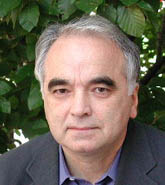
Graham Ward serves as Regius Professor of Divinity at Christ Church College, University of Oxford, and holds a Visiting Senior Research Fellow position in Theology at Campion Hall. His academic profile bridges institutional theology with cross-disciplinary cultural analysis within Oxford's theological framework. His research spans systematic theology, philosophy, and cultural studies, with concentrated focus on religion's interplay with anthropology, sociology, political theory, gender studies, and contemporary science. Current work involves a three-volume project developing culturally engaged systematic theology that confronts modern secular frameworks while re-examining Christian doctrine's societal relevance. Publication trends reveal sustained engagement with political theology (particularly through Carl Schmitt interpretations), deconstructive philosophy (Barth/Derrida dialogues), and cultural dynamics of religious practice. His scholarship consistently examines how theological concepts navigate modernity's collapse, addressing secularization through aesthetics, urban studies, and critical theory while maintaining doctrinal rigor.
Matthias Fritsch is a Professor of Philosophy at Concordia University. He specializes in contemporary European philosophy, environmental ethics, and intergenerational justice, with a focus on critical theory, deconstruction, and phenomenology. His work explores normative relations between past, present, and future generations, particularly in environmental and political contexts. Education : Ph.D. (Villanova University, 1994-1999), Doctoral Research (Freie Universität Berlin, 1997-1998), M.A. (New York University, 1993-1994), B.A. (Universität zu Köln, 1990-1993), and Humboldt Scholar (Goethe Universität Frankfurt am Main, 2010-2011, 2023). His research centers on justice in relation to history, time, and the environment, addressing questions about societal obligations to the dead and future generations. Current projects include a monograph on phenomenology and critical theory (SSHRC-funded, 2020-2026) and co-organizing the award-winning Nature-Time-Responsibility research network, which promotes intercultural approaches to environmental justice. Recent publications examine generativity, climate ethics, and temporal responsibility, reflecting his interdisciplinary engagement with Heidegger, Derrida, and indigenous perspectives. His work appears in journals such as Continental Philosophy Review , Constellations , and European Journal of Political Theory . Scientific Awards : Humboldt Scholar (2010-2011, 2023). Matthias supervises graduate students in Philosophy (MA) and Humanities (PhD) and has contributed to edited collections including Eco-Deconstruction (Fordham University Press, 2018) and Environmental Philosophy and East Asia (Routledge, 2022). He is also co-editor of the 2024 special issue of the Yearbook for Eastern and Western Philosophy on "Philosophies of Time and Nature."
Professor Martin McQuillan is a prominent academic serving as Professor and Director of the Institute for Creative Enterprise (ICE). He is actively accepting PhD students and contributes to the Centre for Human Animal Studies. His research focuses on deconstruction theory, Jacques Derrida's philosophy, literary analysis, and contemporary cultural studies. Recent work explores themes like poststructuralist thought, the innocence of deconstruction, and obsolete technology's role in storytelling. McQuillan has supervised 2 academic works and engaged in interdisciplinary activities such as Re-membering obsolete technology (2021). Key Research Areas: Deconstruction, Postmodern Theory, Literary Criticism Affiliations: ICE Director, Centre for Human Animal Studies His publications span books, chapters, and peer-reviewed articles, emphasizing philosophical inquiry into literary and cultural texts. McQuillan's work bridges theoretical frameworks with creative practice, reflecting a commitment to interdisciplinary scholarship.
Victoria Rimell is Professor of Latin and Director of Research in the Department of Classics at the University of Warwick, Faculty of Arts. She previously served as Associate Professor at Sapienza University of Rome and held research fellowships at University College Oxford and Cambridge. She joined Warwick in 2016 and was promoted to Professor in 2018. She also holds administrative roles including Deputy Head of Department and Coordinator of the joint degrees in Classics and English. Education: MA, King's College Cambridge MPhil, King's College Cambridge PhD, King’s College London MSc, University of Warwick Her research bridges Latin literature and Roman culture with modern philosophical and political thought, focusing on authors such as Seneca, Ovid, Martial, Petronius, and Horace from the first century BCE to the second century CE. She explores themes of space, enclosure, vulnerability, mourning, and identity, often engaging with critical theory, gender studies, and classical receptions. Her work frequently draws interdisciplinary connections to modern art, literature, and philosophy. The recent publications highlight a strong trajectory in Senecan studies, particularly on consolation, grief, and ethical self-fashioning, alongside continued engagement with Ovid, Martial, and Horace. The works reflect a deep integration of classical texts with contemporary theoretical frameworks, including psychoanalysis, feminist theory, and spatial theory. Topics such as the ‘labour of empire,’ ‘creative self-reproach,’ and ‘care of the other’ underscore her focus on emotional and ethical dimensions in Roman literature. Scientific Awards and Recognition: Member, Academia Europaea (2020) Leverhulme Trust Research Grant for 'Care of the Other: Senecan Consolation and the Work of Mourning' Victoria Rimell actively supervises PhD students on topics ranging from humanitas to adulatio and the disabled body in Martial. She has secured external research funding and serves on editorial boards for Classical Philology , MD , and The Journal of Roman Studies . She also contributes to interdisciplinary research through the Centre for Research in Philosophy, Literature, and the Arts. She teaches undergraduate and postgraduate modules on Latin literary texts, Roman laughter, vulnerable bodies, and ancient literature and thought. She leads a research group and collaborative projects on imperial space, the ancient novel, and Vergil and the Feminine (co-edited with Dr Elena Giusti). Her current Leverhulme-funded project continues to expand the dialogue between classical texts and modern ethical theory.
Robert Eaglestone is a Professor of Contemporary Literature and Thought at the Department of English, Royal Holloway, University of London. He has held leadership roles including Deputy Dean of the Faculty of Arts (2005-2009) and Deputy Director of the Holocaust Research Institute (2002-2016). His research bridges literary theory, Holocaust studies, trauma, and European philosophy. Ph.D., University of Wales, Lampeter MA, Southampton University BA, Manchester University His work focuses on contemporary literature, ethical responses to trauma, and philosophical engagements with the Holocaust. He explores intersections of narrative theory, memory, and critical theory through thinkers like Levinas, Derrida, and Arendt. Recent publications analyze Kazuo Ishiguro's fiction, Heidegger's classical reception, and Arendt's political philosophy. He has contributed to debates on subject benchmarking for English and Holocaust memorialization in policy contexts. National Teaching Fellowship (2014) College Teaching Prize (2012) Elected Fellow of the English Association (2017) Senior Fellow at The Flemish Academic Centre (2009) He supervises PhD students in literature and philosophy, teaches psychiatrists at the Maudsley Hospital, and participates in public engagement through radio, literary festivals, and Holocaust education initiatives.
Eddis Miller is an Associate Professor and Department Chairperson in the Department of Philosophy & Religious Studies at Pace University's Dyson College of Arts and Sciences. They are based in the New York City campus and actively contribute to academic life through teaching, research, and university service. Education: PhD in Religious Studies, University of Pennsylvania, 2008 BA in Philosophy and Religious Studies, SUNY Stony Brook, 2002 Their research focuses on continental philosophy, particularly the works of Jacques Derrida and Immanuel Kant, with strong interests in deconstruction, philosophy of religion, ethics, and the intersections between theology and political theory. They explore themes such as unconditional hospitality, messianism, moral law, and the role of religion in questions of economic justice. Their scholarship engages deeply with hermeneutics, postmodern theology, and interreligious dialogue, especially with regard to Islamic thought. Their publications reflect a consistent engagement with high-level philosophical discourse, particularly around Derrida’s deconstructive ethics and Kantian moral philosophy. The works span topics from ancient and medieval theology to contemporary political and economic critiques, showing a broad chronological and thematic range grounded in rigorous textual and philosophical analysis. Professional Service: Committee Member, NYFC Student Affairs, Athletics, Publications, and Scholastic Standing Committee Dr. Miller advises on academic policy and student affairs at the institutional level. While no formal advisees are listed, their leadership as department chair and extensive teaching portfolio suggest strong mentorship roles. Though no grants or awards are explicitly mentioned, their conference presentations at venues like the UK Kant Society and the Left Forum indicate active scholarly participation. Laboratories, Research Groups, or Teams: No specific labs or research centers are mentioned, but Dr. Miller has presented at interdisciplinary forums such as the Religion Graduate Students’ Association of Columbia University and the Center for Ethical Thinking at Pace University, suggesting collaborative engagement across institutions.
Dr. Ralph E. Shain is an Associate Professor in the Department of Political Science and Philosophy at Missouri State University within the Reynolds College of Arts, Social Sciences and Humanities. He specializes in contemporary French and German philosophy, with a focus on thinkers such as Walter Benjamin, Jacques Derrida, and Georg Wilhelm Friedrich Hegel. His research spans topics in metaphilosophy, temporal theory, and cultural critique. His contact email is RShain@MissouriState.edu. PhD in Philosophy (1994), Northwestern University Shain's research engages with key themes in continental philosophy, including deconstruction, epistemological pluralism, and the philosophy of language. He has published extensively on Derrida's engagement with Husserl and Wittgenstein, Benjamin's cultural theories, and metaphysical questions regarding time and being. His work often bridges analytic and continental traditions while exploring intersections with ethics and social theory. Recent publications examine Derrida's interpretations of Husserl's phenomenology, temporal traces in continental thought, and the metaphilosophical implications of pluralism. Earlier works analyze historical underdetermination skepticism, recognition theory, and Native American philosophical perspectives on history. No scientific awards or honors are mentioned in the provided text. Similarly, no information about advisees, grants, or laboratory affiliations is available.
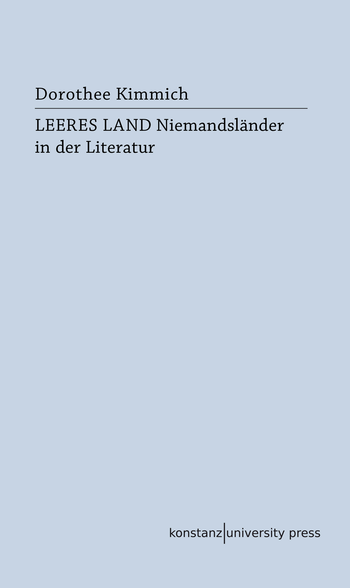
Professor Dorothee Kimmich holds a professorship for Literary Cultural Studies and Cultural Theory at the Department of Modern German Literature, University of Tübingen's Faculty of Humanities. With a distinguished career spanning over three decades, she has established herself as a leading scholar in literary theory, cultural studies, and the philosophy of literature. Her academic journey began at the University of Tübingen, included influential studies in Paris with thinkers like Michel Foucault and Jacques Derrida in the 1980s, and led to her habilitation at Justus Liebig University of Giessen in 1999 before securing her current professorship in 2002. Professor Kimmich's research explores the intersection of literature, philosophy, and cultural history, with particular focus on the role of objects in modern literature and the concept of similarity as a cultural-theoretical paradigm. Her work challenges traditional categorizations between living and non-living, material and spiritual, examining how literature contests these divides. Her influential monographs include Leeres Land: Niemandsländer in der Literatur (2021), Ins Ungefähre: Ähnlichkeit und Moderne (2017), and Lebendige Dinge in der Moderne (2011), which explore no-man's-lands, similarity as a cultural concept, and the agency of objects in literature. Her recent scholarly output demonstrates remarkable breadth and depth, with publications in 2024 examining cultural techniques of borders, proximity as method for coexistence, and family resemblances in cultural contexts. Her work consistently bridges literary analysis with philosophical inquiry and cultural history, addressing topics from Epicurean gardens to terra nullius concepts, from theft as cultural founding myth to the complex narratives of belonging and mobility. This interdisciplinary approach has positioned her at the forefront of contemporary cultural theory. Co-Chair of the CIVIS hub 'Society, Culture, Heritage' (2020-present) Member of the DFG Review Board (2016-present) Head of the Tübingen Poetry Lectureship (2004-present) Member of the IVG Professor Kimmich's research methodology reflects her humanities discipline—often working individually through close reading and writing while maintaining interdisciplinary connections across Tübingen's diverse academic landscape. She values the University of Tübingen's rich disciplinary environment, noting opportunities for collaboration not only within humanities but also with natural sciences and medicine. Her recent podcast interview for the Excellence Strategy at the University of Tübingen reveals her continued engagement with how imagination connects to survival, problem-solving, and our relationship with material objects in contemporary life.
Beth Ash is a faculty member with expertise in literary modernism, feminist theory, and psychoanalysis. She holds a joint appointment with the Center, where she teaches undergraduate and graduate Feminist Theory courses, advises students, and serves on MA committees. Education: PhD in English from the University of Virginia; MA in English from the University of Virginia; BA in Literature (High Honors) from the University of Michigan. Her research focuses on intersections of modernism, feminism, and psychoanalysis, particularly in the works of Joseph Conrad, Henry James, and Virginia Woolf. She explores psychosocial dilemmas in modernist literature, feminist revisions of psychoanalysis, and critiques of cultural commodification. Recent publications and lectures analyze deconstruction, gender dynamics in classical scholarship, and the psychosocial implications of colonial narratives. Notable works include Writing In Between: Joseph Conrad and the Psychosocial Dilemmas of Modernity and studies on Lacan, Kristeva, and Winnicott. Key collaborations include seminars at the Cincinnati Psychoanalytic Institute, University of Tennessee, and University of Chicago. Her methodological approach integrates post-Freudian theory, postmodern critique, and feminist re-readings of canonical texts.
Professor Melanie White is a sociologist at UNSW Sydney, specializing in classical and contemporary social theory, political theory, and poststructuralism. She is affiliated with the Faculty of Arts, Design and Architecture and serves as Deputy Head (Education) for the School of Social Sciences (2020-2023). She also holds an Adjunct Research Professor position at Carleton University's Department of Sociology & Anthropology, Ottawa, Canada. Education: PhD (Carleton University) MA (Carleton University) BA (University of British Columbia) Her research investigates the intersections of social theory and political philosophy, with a focus on the works of Durkheim, Bergson, Foucault, and Canguilhem. She explores how sympathy differentiated the social from the biological in 19th-century French sociology and examines the social implications of vitalism through thinkers like Simmel and Scheler. The 15 most recent publications reveal a trajectory spanning biological sociology, criminology, and political philosophy. Articles like 'Bergson and Sociobiology' and 'Derrida and Durkheim on Suffering' highlight interdisciplinary engagement with philosophy and ethics. Scientific Awards: Award for Excellence in Educational Mentorship (2023) Award for Excellence in Educational Leadership (2022) Senior Fellow of the Higher Education Academy (SFHEA) (2019) Michael Wearing Memorial Award for Postgraduate Supervision (2019) Scientia Education Academy Fellow (2018) Vice-Chancellor's Teaching Excellence Award (2017) She has supervised numerous PhD candidates, including Roxarne Moon, Chelsea van Deventer, and Hawthorn James King, and served as secondary supervisor for interdisciplinary projects. Her grants include Social Sciences and Humanities Research Council of Canada Postdoctoral Fellowships and Canada Research Chair support. White is a member of the Société des amis de Bergson and has contributed to UNSW's Scientia Education Academy. Her teaching includes courses on social theory, selfhood, and research methodologies.
Dr. Urszula Idziak-Smoczyńska is a researcher at the Institute of Religious Studies, Faculty of Philosophy, Jagiellonian University in Kraków, Poland. Her academic work focuses on the intersection of religion and philosophy through linguistic lenses, with particular expertise in contemporary French philosophy and Wittgenstein studies. Her research interests include: Philosophy of religion Contemporary French philosophy (particularly Derrida, Nancy, Marion) Phenomenology Postmodern philosophy Wittgenstein studies Philosophy of language Dr. Idziak-Smoczyńska has been actively involved in multiple research projects including 'Problems of contemporary phenomenology' under Prof. Jacek Migasiński, 'Polish Cartesianism. History and contemporary perspectives,' and several international projects on phenomenology and subjectivity with scholars from Slovakia, Czech Republic, and Belgium. Her research particularly focuses on the works of Jacques Derrida, Jean-Luc Marion, and Ludwig Wittgenstein, exploring the theological turn in contemporary philosophy and the relationship between language, religion, and phenomenology. Her scholarly output demonstrates a consistent engagement with the theological dimensions of postmodern thought, examining how religious concepts persist and transform within secular philosophical frameworks. She has made significant contributions to understanding the intersections between deconstruction, phenomenology, and religious experience, particularly through her analyses of Derrida's late religious turn and Marion's saturated phenomena. Dr. Idziak-Smoczyńska has authored the monograph 'Dar. Spór między Jeanem-Lukiem Marionem a Jacquesem Derridą' (Gift: The Dispute between Jean-Luc Marion and Jacques Derrida) and numerous scholarly articles published in international journals and edited volumes. She has also contributed translations of important philosophical works by Jean-Luc Marion, Gabrielle Dufour Kowalska, and Jean-Paul Sartre.
Arkady Plotnitsky is a Distinguished Professor in the Department of English at Purdue University, affiliated with the School of Interdisciplinary Studies (SIS), where he also serves as Director of Theory and Cultural Studies. His work bridges literature, philosophy, and science, positioning him as a leading figure in interdisciplinary humanities. Research Interests: His scholarship spans critical and cultural theory, continental philosophy, Romanticism, modernism and postmodernism, and the philosophical foundations of science and mathematics. He explores how literary and philosophical modes of thought interact with scientific paradigms, especially in quantum theory and non-classical logics. The analysis of his recent publications reveals a sustained engagement with the intersections of philosophy and theoretical physics, particularly quantum mechanics and relativity, as well as deep inquiries into the works of thinkers like Deleuze, Derrida, Riemann, and Kant. His work often examines non-classical epistemologies, the limits of representation, and the role of imagination in scientific discovery. Scientific Awards: No awards explicitly listed in the provided text. Advising and Grants: While no formal list of advisees or grants is mentioned, Plotnitsky has supervised numerous scholarly projects through his editorial work and leadership in theory and cultural studies. His extensive publication record and editorial roles suggest significant mentorship and research leadership. Labs and Research Teams: He leads the Theory and Cultural Studies initiative within SIS, fostering interdisciplinary dialogue among humanities and science scholars. His work cultivates collaborative intellectual spaces focused on the philosophical dimensions of scientific and literary thought.
Sylvie Avakian is a Lecturer in Systematic Theology at the Faculty of Protestant Theology, University of Tübingen , since April 2019. She was ordained to the pastoral ministry in the Evangelical Church of Württemberg in 2021 and completed her habilitation at Tübingen University (2018-19) with the thesis Being Toward Death: Heidegger and the Orthodox Theology of the East . Her academic journey includes a Doctorate in Theology (2011) from Heidelberg University, a Master in Theology (2007), and a Bachelor in Theology and Christian Education (1998) from the Near East School of Theology (NEST), Beirut. Education: Doctorate (2011), University of Heidelberg Master (2007), Near East School of Theology Bachelor (1998), Near East School of Theology Her research focuses on Systematic Theology, Interreligious Dialogue, Eastern Orthodox Thought, Intercultural Theology, Secular Christianity, and Post-structuralism , with a particular interest in Christian-Muslim Dialogue and the Philosophy of Christian Education . Her recent publications explore themes like Heidegger’s existential philosophy in relation to Orthodox theology, divine hospitality , and theology of the Other in Middle Eastern contexts. She has taught courses ranging from Introduction to Systematic Theology to Eastern Orthodox Theology and Spirituality , reflecting her interdisciplinary approach. Key scientific recognitions include the Teach@Tübingen scholarship (2018-19) under Tübingen’s Excellence Strategy and the Bread for the World scholarship (2011) during her dissertation work. Her sermons and lectures (e.g., The Spirit of God: The Love That Burns Within Us , 2025) demonstrate her engagement with practical theology and spiritual reflection.
European Graduate School of Economics and ManagementBulgaria
Samuel Weber (b. 1940) is a distinguished American philosopher, literary theorist, and psychoanalyst. He holds the Paul de Man Chair at The European Graduate School / EGS and the Avalon Foundation Professor of Humanities at Northwestern University , where he co-directs the Paris Program in Critical Theory. His interdisciplinary work spans psychoanalysis , media studies , theatre theory , and deconstruction , with a focus on the Frankfurt School and French poststructuralism . Weber’s research interrogates the politics of institutions (e.g., University and Discipline Formation ), media’s role in identity construction , and theatricality as a structural metaphor for understanding modernity. His seminal works include Return to Freud , Institution and Interpretation , and Benjamin’s Abilities , where he explores iterability and Benjamin’s conceptual style . He has translated foundational texts by Jacques Derrida ( Limited Inc ) and Theodor Adorno ( Prisms ), and co-founded the journal Glyph , instrumental in introducing the Bakhtin circle to the West. His career bridges academia and practice, having worked extensively as a dramaturge in German opera houses.
Chris Boesel is an Associate Professor of Christian Theology at Drew Theological School. Born in Tacoma, Washington, and raised in Manila, Philippines, as the child of missionaries, his theological work is shaped by colonial critique, liberation theologies, and postmodern philosophies. He is affiliated with the Presbyterian Church and engages with Reformed traditions and confessional theology. Education: MTS from Candler School of Theology, PhD in Theology from Emory University, and a diploma from the Oxford Centre for Hebrew and Jewish Studies. Boesel’s research explores intersections between progressive socio-political visions and traditional Christian confessions, notably through Karl Barth’s theology. He also investigates the relationship between Kierkegaard’s faith and Derrida’s deconstruction, offering critiques of American exceptionalism and colonial contexts in theological discourse. His work addresses conflicts within Christian communities and aims to foster constructive dialogue. Teaching at Drew since 2002, he leads the Transforming Theologies class, which introduces students to diverse theological perspectives. His publications include monographs on Barth and Kierkegaard/Derrida, reflecting his commitment to reconciling theological tradition with progressive thought.