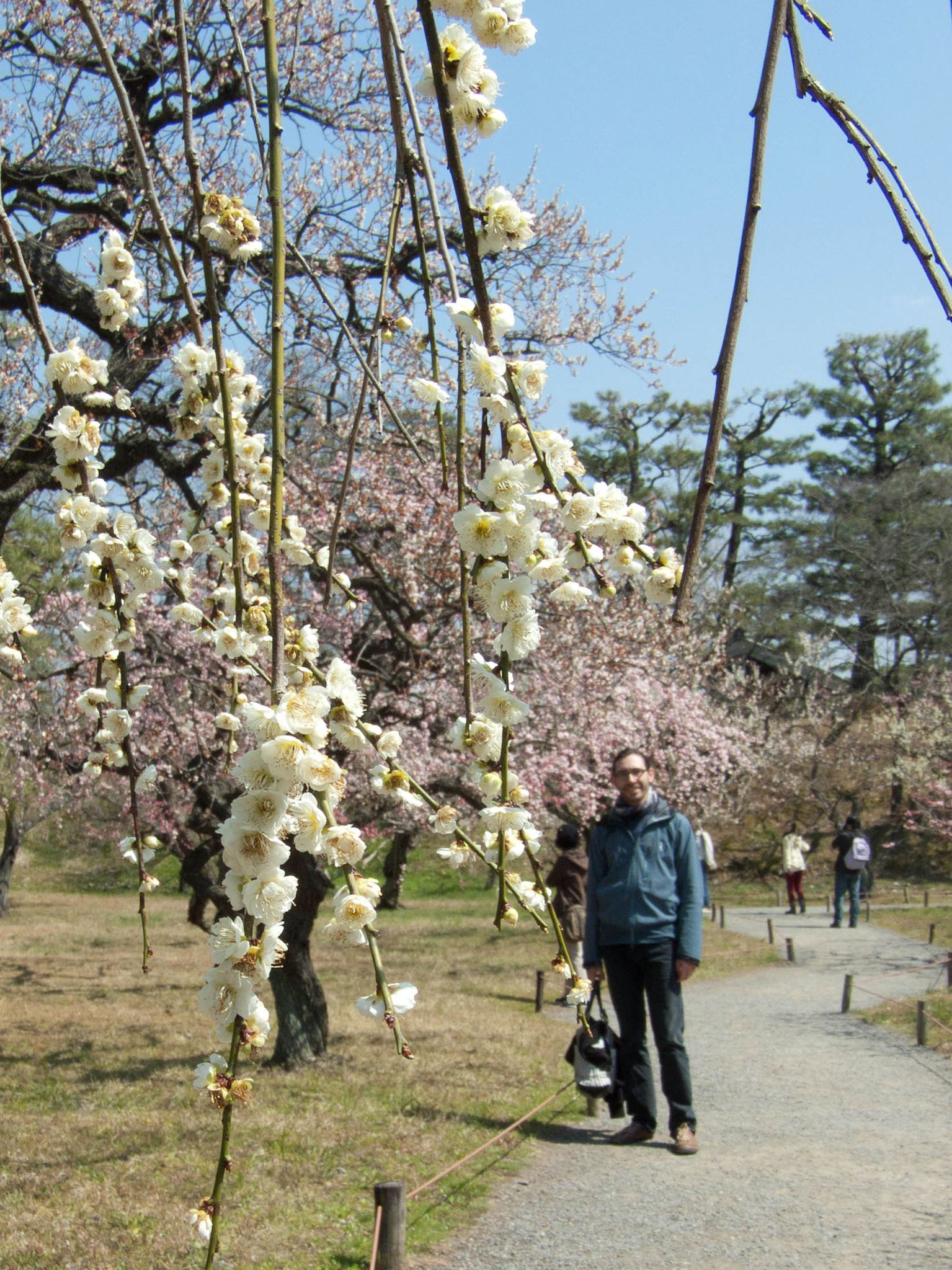
Ambros Gleixner is a Professor at HTW Berlin since 2020 and an affiliated researcher at the Zuse Institute Berlin (ZIB) since 2008. His research focuses on computational aspects of mixed-integer linear and nonlinear programming, with emphasis on exact rational arithmetic and algorithm verification. PhD in Mathematics (2015), Technische Universität Berlin Diplom (MSc) in Mathematics (2008), Technische Universität Berlin Vordiplom (BSc) in Mathematics (2004), Universität Bayreuth His work spans mathematical optimization, operations research, and computational mathematics. At ZIB, he leads projects like developing the MINLP solver SCIP , the LP solver SoPlex , and verifying integer programming results through VIPR . Recent publications highlight advancements in exact rational MIP, GPU-parallel algorithms, and energy system optimization. Scientific Awards : MERIT Visiting Scholar at University of Melbourne (2013) Teaching : Offers bachelor's theses in optimization and computational mathematics. Requires students to have attended relevant seminars and possess programming skills. Office hours by email appointment through Ambros.Gleixner@HTW-Berlin.de . Labs & Teams : Principal investigator at ZIB's Mathematical Algorithmic Intelligence division, Research Campus MODAL , and Linear, Integer, and Constraint Programming project.
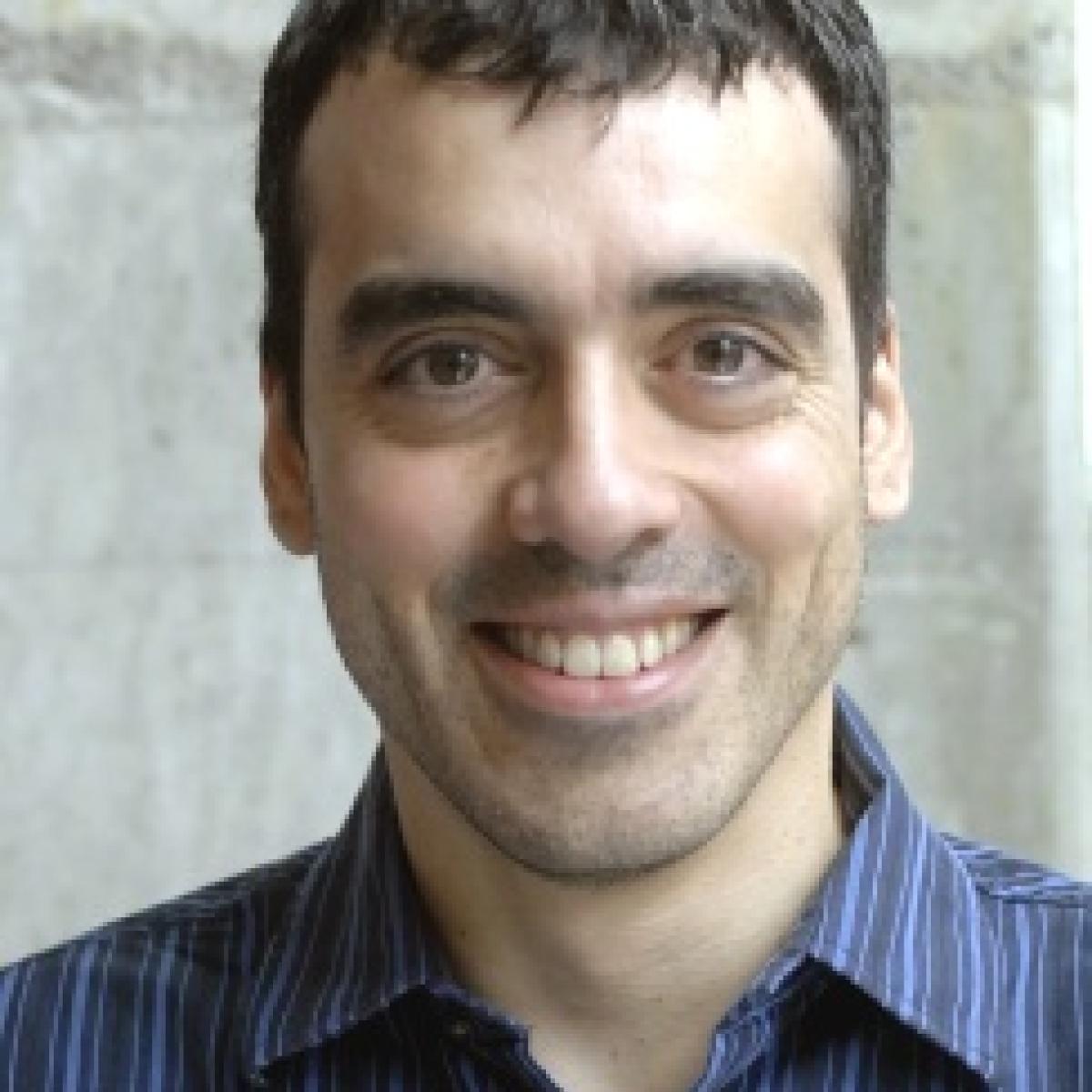
Pablo A. Parrilo is the Joseph F. and Nancy P. Keithley Professor of Electrical Engineering and Computer Science at the Massachusetts Institute of Technology (MIT). He serves as Associate Director of the Laboratory for Information and Decision Systems (LIDS) and maintains affiliations with the Operations Research Center (ORC), as well as connections to multiple research centers including the Simons Institute programs in Geometry of Polynomials and Bridging Continuous and Discrete Optimization. His extensive academic journey includes previous positions as Assistant Professor at ETH Zurich's Automatic Control Laboratory and Visiting Associate Professor at Caltech, with research visits to UC Santa Barbara, Lund Institute of Technology, and UC Berkeley. Parrilo received his Electronics Engineering undergraduate degree from the University of Buenos Aires and earned his PhD in Control and Dynamical Systems from the California Institute of Technology. His foundational education in engineering and dynamical systems established the basis for his subsequent research contributions in optimization and control theory. Professor Parrilo's research spans optimization methods for engineering applications, control and identification of uncertain complex systems, robustness analysis and synthesis, and the development of computational tools based on convex optimization and algorithmic algebra. His work bridges theoretical mathematics with practical engineering problems, particularly through sum of squares (SOS) optimization techniques. He has pioneered applications in semidefinite programming, algebraic geometry, and polynomial optimization, creating powerful frameworks for solving challenging non-convex problems. His influential SOSTOOLS MATLAB toolbox has become a standard resource for researchers working in sum of squares optimization. Analysis of his recent publications reveals a consistent focus on advancing convex optimization techniques, with particular emphasis on sum of squares methods, graph-based optimization, and applications to robotics and control systems. His work increasingly integrates algebraic geometry with optimization theory, developing novel approaches for polynomial optimization problems and exploring connections between continuous and discrete optimization paradigms. Recent publications demonstrate growing interest in robotics applications, particularly in motion planning and manipulation through convex relaxations. Among his notable distinctions are the Finmeccanica Career Development Chair, the Donald P. Eckman Award from the American Automatic Control Council, the SIAM Activity Group on Control and Systems Theory Prize, the IEEE Antonio Ruberti Young Researcher Prize, the Farkas Prize from the INFORMS Optimization Society, and recognition as an IEEE Fellow. These awards reflect his significant contributions to optimization theory, control systems, and their applications across multiple disciplines. Professor Parrilo has advised numerous PhD students and postdoctoral researchers who have gone on to prominent positions in academia and industry. His research has been supported by multiple National Science Foundation grants, including the AF "Algebraic Proof Systems, Convexity, and Algorithms" project and the FRG "Semidefinite Optimization and Convex Algebraic Geometry" project. He has organized influential workshops and programs that have shaped research directions in optimization and control theory. Within MIT, Parrilo leads a vibrant research group focused on optimization theory and applications, working closely with the Laboratory for Information and Decision Systems. His group develops both theoretical foundations and practical computational tools, maintaining strong connections with researchers across mathematics, computer science, and engineering disciplines. The group's work on SOSTOOLS and other software packages has created valuable resources for the broader optimization community.
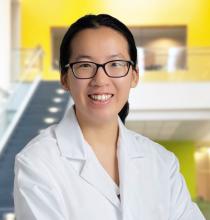
Qihui Lyu is an Assistant Professor in Residence at the University of California San Francisco (UCSF) Department of Radiation Oncology. She holds a PhD in Medical Physics from UCLA (2021) and completed clinical training at the UCLA Medical Physics Residency Program (2023). Her research focuses on image reconstruction, dual-energy CT, treatment plan optimization, and machine learning applications in radiotherapy. Education: B.S. in Physics (Nanjing University, 2016), Ph.D. in Medical Physics (UCLA, 2021) Research: Optimization algorithms for image-guided radiotherapy, machine learning in radiation oncology, and dual-energy CT applications Awards: AAPM BEST award (2022), Early-Career Investigator Symposium First Place (2022), Norm Baily Awards First Place (2022) Her publications emphasize advanced optimization techniques for volumetric modulated arc therapy (VMAT), proton therapy, and FLASH radiotherapy systems, with recent work on deep learning denoising and dual-layer multi-leaf collimator (MLC) integration. Collaborative projects include HDR prostate brachytherapy planning and high-energy X-ray dosing monitoring via tomographic photon detection.
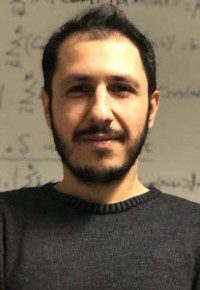
Lorenzo Frassinetti is a Professor at the Division of Electromagnetic Engineering and Fusion Science at KTH Royal Institute of Technology. His research focuses on fusion plasma physics, specifically tokamak operation, plasma confinement, and edge physics. Prior to his current position, he served as an Associate Professor at KTH from 2012 to 2022, and held post-doctoral research fellow positions at KTH and the National Institute of Advanced Industrial Science and Technology in Japan. Ph.D. in Physics, University of Padova, Italy (2003) Degree in Physics, University of Bologna, Italy (2000), Grade: 110/110 cum laude Frassinetti's research spans multiple critical areas of fusion science including pedestal physics, edge localized modes (ELMs), divertor physics, and plasma turbulence. His work heavily involves experimental analysis from major tokamaks like JET and TCV, with particular focus on understanding transport barriers, stability properties, and power exhaust challenges. Recent work demonstrates increasing emphasis on predictive modeling for next-generation devices like ITER and the Divertor Tokamak Test facility. His recent publications reveal strong trends toward predictive modeling for future fusion devices, with significant focus on the Divertor Tokamak Test facility (DTT) scenarios. There's notable emphasis on understanding the effects of plasma shaping, particularly negative triangularity, and developing control strategies for disruptions. His work bridges experimental observations from JET and other tokamaks with theoretical models to address critical challenges for ITER operation. Frassinetti actively participates in major international fusion research collaborations, particularly within the EUROfusion consortium, contributing to JET experiments and ITER preparation efforts. His work often involves multi-institutional teams across European fusion laboratories. His laboratory work centers around analysis of data from major European tokamaks including JET (Joint European Torus), TCV (Tokamak à Configuration Variable), and ASDEX Upgrade. His research group at KTH appears to focus on integrating experimental observations with theoretical models to develop predictive capabilities for next-generation fusion devices.
Pan Xu is a tenure-track Assistant Professor at Duke University with joint appointments in the Department of Biostatistics & Bioinformatics , Department of Computer Science , and Department of Electrical & Computer Engineering . He earned his Ph.D. in Computer Science from the University of California, Los Angeles (2021) and completed postdoctoral training at the California Institute of Technology (2021-2022) . Research Focus: Machine Learning, Reinforcement Learning, Optimization, and High-Dimensional Statistics with applications in Bioinformatics and Healthcare. Key Contributions: Developing algorithms for robust sequential decision-making under uncertainty, improving Thompson Sampling efficiency, and advancing multi-agent reinforcement learning. Scientific Recognition: NSF award for exploration in decision-making (2023) Whitehead Scholar award (2023) PIMCO Postdoctoral Fellowship (2022) Best Paper Award at ACM FAccT (2023) Teaching: Offers graduate courses in machine learning and decision-making frameworks. Service: Serves as Area Chair for ICML, NeurIPS, and AAAI; Action Editor for TMLR.
Christos Papadopoulos Filelis is an Assistant Professor at the Department of Electrical and Computer Engineering, Democritus University of Thrace, where he conducts research and teaches courses in computational mathematics and physics. His academic journey began with a Diploma in Electrical and Computer Engineering from Democritus University of Thrace in 2010, followed by a PhD in Numerical Analysis and High Performance Computing from the same institution in 2014. His research interests span Computational Mathematics, Mathematical and Computational Physics, Numerical Methods, Scientific Calculations, High Performance Computing, and Machine Learning applications in Mathematics and Physics. He has made significant contributions to pre-coordinated iterative methods, multi-grid and multi-level methods, parallel computing, cloud computing, and big data analytics. His work bridges theoretical mathematics with practical computational applications across multiple domains. Analysis of his recent publications reveals a strong focus on developing advanced computational techniques for solving complex mathematical problems, with particular emphasis on matrix computations, preconditioning methods, and time series analysis. His research demonstrates a consistent trajectory toward more efficient algorithms for high-performance computing environments, with increasing applications in machine learning and environmental sustainability. Dr. Papadopoulos Filelis has taught undergraduate courses including Physics, Numerical Analysis, Mathematical Software, Scientific Calculations, and Calculus of Changes. He has participated in European (H2020) and National funded projects such as the SFI FinTechNext project (UCC, Ireland), demonstrating his ability to secure competitive research funding. His work with the Physics Laboratory at Democritus University of Thrace involves developing computational frameworks that integrate theoretical physics with advanced numerical methods. He has collaborated extensively with researchers across Europe, particularly in cloud computing and high-performance computing projects that address real-world computational challenges.
Sorin-Mihai Grad is a Researcher at the Applied Mathematics Unit (UMA) of ENSTA Paris , Institut Polytechnique de Paris. His work spans optimization, control theory, and algorithm design, with a focus on nonconvex problems and stochastic methods. Fields of Interest : Optimization, Control Theory, Nonconvex Optimization, Stochastic Algorithms, Mathematical Programming. Scientific Awards : Top 10 Romanian Scientists Abroad (2024) CIAS Senior Research Fellowship (2022) STAR-UBB Advanced Fellowship (2020) Publications : 15+ recent works on proximal point algorithms, inertial effects, quasiconvex functions, and stochastic mirror descent, with applications in logistics, tomography, and machine learning. Email : sorin-mihai.grad@ensta-paris.fr
Dimitrios Pappas is a faculty member at the Department of Statistics within the School of Information Sciences and Technology at Athens University of Economics and Business . His research spans multiple disciplines, including Statistics , Linear Algebra , Image Processing , and Financial Mathematics . His work focuses on generalized inverses , matrix factorization , and quadratic optimization , with applications in image deblurring , credit risk modeling , and smart local energy systems . Recent publications highlight his contributions to network intrusion detection , Markov chain lumpability , and symbolic computation methods . While no specific scientific awards or student advising details are provided in the available text, his extensive publication record demonstrates expertise in applied mathematical modeling and computational techniques . He can be contacted at dpappas@aueb.gr .
Josef Winter is a researcher at the Department of Aerodynamics and Fluid Mechanics within the TUM School of Engineering and Design at the Technical University of Munich. His work focuses on advanced numerical methods for fluid dynamics simulations, integrating quantum computing, machine learning, and Bayesian optimization to enhance computational efficiency and accuracy. University: Technical University of Munich School: TUM School of Engineering and Design Department: Department of Aerodynamics and Fluid Mechanics Academic Rank: Researcher Email: josef.winter@tum.de Dr. Winter's research interests include: Quantum algorithms for fluid dynamics Multi-fidelity and Bayesian optimization techniques High-order numerical methods Level-set-based sharp-interface simulations Deep reinforcement learning for flow optimization Complex flow modeling across scales His publication trends indicate a strong focus on merging quantum computing with classical fluid dynamics simulations, developing adaptive solvers like ALPACA, and optimizing numerical schemes for compressible and multiphase flows. Recent works explore dynamic circuits for quantum lattice-Boltzmann methods and multi-objective optimization frameworks. Dr. Winter's articles cover diverse aspects of fluid mechanics, including: Quantum computing applications in fluid simulation Level-set methods for interface dynamics BAYESIAN OPTIMIZATION OF NUMERICAL SCHEMES Multi-fidelity surrogate models for complex flows High-order methods for conservation laws Deep reinforcement learning for dynamic systems
Justyna Jarczyk is a Professor at the University of Zielona Góra, affiliated with the Department of Exact and Natural Sciences. Her research spans functional equations, invariance of means, and iteration theory, with applications in stochastic inclusions, operator theory on locally convex spaces, and nonlinear analysis. She explores preference models using graded and interval relations, game theory in stochastic and multigenerational contexts, and multivariate linear models with specialized covariance structures. Her teaching includes mathematical analysis, real and complex analysis, linear algebra, and LaTeX for technical and natural sciences students. Her scientific activity focuses on fixed point theorems in uniformly convex spaces, Volterra-type integral equations, and numerical methods for solving complex mathematical problems. She contributes to projects funded by the European Union under the Widza Education Development Operational Programme, emphasizing modern teaching and interdisciplinary collaboration.
Janusz Matkowski is a Professor at the University of Zielona Góra, affiliated with the Department of NŚP (Exact and Natural Sciences). His work spans functional analysis, operator theory, and applied mathematics. Research focuses on functional equations, fixed point theory, and operator theory on locally convex spaces. He investigates graph theory, game theory, and combinatorial geometry for mathematical modeling of complex systems. His applied research involves stochastic equations, multivariate linear models, and approximation theory using Fourier series. He contributes to interdisciplinary projects in sustainable energy, industrial optimization, and decision support systems.
Jean-François CHASSAGNEUX is a Full Professor in Finance at Université Paris, holding a permanent position at CREST (Center for Research in Economics and Statistics). His academic career focuses on the intersection of probability theory, numerical analysis, and financial mathematics, with particular expertise in backward stochastic differential equations and their applications to financial modeling. His research interests span Applied Probability, Financial Mathematics, Numerical Analysis, Stochastic Analysis, Backward Stochastic Differential Equations (BSDE), Large Population Stochastic Control, Non-linear pricing methods, and Markets with imperfections . His work bridges theoretical mathematics with practical financial applications, particularly in derivative pricing, risk management, and sustainable finance. CHASSAGNEUX has developed novel numerical methods for solving complex financial models, including probabilistic approaches to non-linear partial differential equations and advanced techniques for hedging problems. His publication record demonstrates consistent contributions to top journals in mathematics and finance, with a recent focus on sustainable finance applications including carbon markets and impact investing. His collaborative work with researchers like D. Crisan, G. Pagès, and A. Richou has significantly advanced the field of probabilistic numerical methods for financial engineering. As an educator, CHASSAGNEUX teaches advanced courses in Financial Mathematics (APM_4FI02_AE) and Numerical Methods in Financial Engineering (APM_5FI10_AE), training the next generation of quantitative finance professionals. His teaching combines theoretical foundations with practical computational techniques essential for modern financial engineering.
Stefan Steinerberger is a Professor in the Department of Mathematics at the University of Washington, Seattle. He holds a PhD from the University of Bonn (2013) and specializes in Analysis, with research interests spanning Partial Differential Equations, Spectral Theory, Harmonic Analysis, and applications to Data Science and Mathematical Physics. His work often bridges theoretical and applied mathematics, addressing problems in geometry, combinatorics, and numerical methods. Education: PhD in Mathematics, University of Bonn, 2013 Research Interests: Steinerberger’s research focuses on Analysis, with emphasis on PDEs, Spectral Theory, and Harmonic Analysis. He explores interdisciplinary connections, such as applying analytic techniques to graph theory, optimization, and data science. Specific themes include eigenvalue estimates, dynamical systems, and the interplay between geometry and combinatorial structures. Awards & Recognition: While specific awards are not listed, his extensive publication record and affiliations with prestigious journals indicate significant contributions to the field. His work frequently appears in top-tier journals like Advances in Mathematics , Journal of Functional Analysis , and SIAM Journal on Discrete Mathematics . Teaching & Outreach: He teaches courses in the Department of Mathematics and is involved in outreach initiatives such as the Washington Experimental Mathematics Lab (WXML) and the UW Math Circle. His courses and research often emphasize problem-solving and real-world applications. Labs/Teams: Active in collaborations across mathematical disciplines, including work with researchers in combinatorics, probability, and numerical analysis. He maintains a personal website with resources on his research, teaching, and open problems.
Tong Zhang is a Professor in the Siebel School of Computing and Data Science at the University of Illinois Urbana-Champaign (UIUC), part of the Grainger College of Engineering. He previously held positions at The Hong Kong University of Science and Technology, Rutgers University, and industry roles at IBM, Yahoo, Google, Baidu, and Tencent. His research focuses on machine learning algorithms, statistical methods for big data, and their applications in areas like reinforcement learning, generative AI, and optimization. Education: PhD in Computer Science (Stanford University, 1999), MS in Computer Science (Stanford University, 1996), BA in Mathematics and Computer Science (Cornell University, 1994). Research Interests: Machine learning theory, large language models, reinforcement learning, adversarial attacks, optimization algorithms, and ethical AI. His work emphasizes robustness, generalization, and scalable methods for complex systems. Awards: ASA Fellow, IEEE Fellow, IMS Fellow, and recipient of multiple top-tier conference awards (e.g., NAACL 2024 Outstanding Papers). Labs/Teams: Leads a research group at UIUC with active collaborations in areas like generative AI and embodied agents. Supervised over 20 PhD students and postdocs, many now in academia and industry leadership roles.
Matthias Heinkenschloss is the Noah G. Harding Chair and Professor of Computational Applied Mathematics and Operations Research at Rice University. He joined Rice in 1996 after serving as an assistant professor at Virginia Tech and earlier at the University of Trier in Germany. His research focuses on large-scale nonlinear optimization, PDE-constrained optimization, and optimal control, with applications in engineering and scientific domains such as flow control, reservoir management, and structural acoustics. He holds a Ph.D. (Dr. rer.nat.) and M.S. in Applied Mathematics from the University of Trier, Germany. His academic leadership includes six years as department chair at Rice and advisory roles on the Scientific Advisory Board of the Weierstrass Institute for Applied Analysis and Stochastics, among others. Research interests span optimization under uncertainty, model reduction, iterative solvers for KKT systems, and domain decomposition in optimization. His work emphasizes integrating optimization algorithms with underlying differential equations to enhance computational efficiency and solution fidelity. Notable contributions include methods for PDE-constrained optimization, reduced-order modeling, and parallel-in-time algorithms for optimal control. Key publications include advancements in nonlinear manifold reduced order models, domain decomposition techniques, and parallel-in-time solutions for linear-quadratic optimal control problems. His work has been recognized with awards such as the Mercator Fellowship (2016). He actively contributes to academic societies like the Society for Industrial and Applied Mathematics (SIAM) and teaches courses in numerical optimization and PDE-constrained optimization.