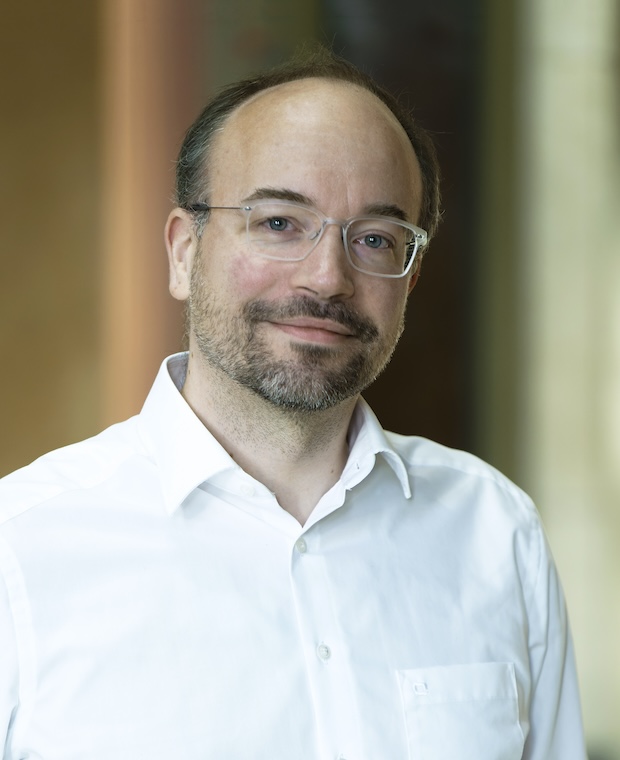
Prof. Dr. Martin Kronbichler is a faculty member at the Faculty of Mathematics , Ruhr University Bochum , leading the Numerics group. His research focuses on higher-order finite element methods, multigrid techniques, and high-performance computing for complex fluid and solid mechanics problems. Key Research Areas: Higher-order finite element methods, iterative solvers, multigrid algorithms, exascale mathematical software, and computational fluid dynamics. Notable Projects: EU-funded dealii-X (exascale digital twins), BMBF PDExa (optimized PDE solvers for exascale), and DFG grants for cut-discontinuous Galerkin methods and geometric multigrid. Publications Trends: Recent works emphasize matrix-free operators for hyperelasticity, diffuse-interface models for additive manufacturing, and multigrid smoothers for higher-order elements. Scientific Awards: Recipient of the Humboldt Research Award for his contributions to numerical methods and HPC. Team: Collaborates with researchers like Dr. Shubham Kumar Goswami, Dr. Richard Schussnig, and Natalia Nebulishvili.
Prof. Dr. Markus Bachmayr is a full professor at the Institute for Geometry and Practical Mathematics, RWTH Aachen University, holding the chair for Applied Mathematics. His research focuses on nonlinear approximation, high-dimensional partial differential equations (PDEs), uncertainty quantification, and numerical methods in quantum chemistry. He leads the ERC Consolidator Grant project Computational Complexity of Highly Nonlinear Approximations (COCOA) and contributes to CRC 1481 Sparsity and Singular Structures, and RTG 2326 Energy, Entropy, and Dissipative Dynamics. His recent work emphasizes adaptive low-rank and sparse approximation techniques for parametric and stochastic PDEs, including applications in radiative transfer and poroviscoelastic flow modeling. He serves as Editor-in-Chief of Foundations of Computational Mathematics and Associate Editor for multiple journals. Scientific Awards: John Todd Award 2013 Borchers Plakette 2014 Erwin Wenzl Preis 2007 He has taught courses such as Numerische Analysis I/II, Numerische Mathematik für Elektrotechniker, and seminars on numerical methods and approximation theory.
Max Planck Institute for Evolutionary AnthropologyGermany
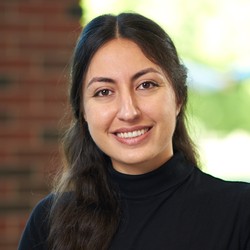
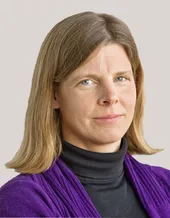
Mahsa Ghasemi is an Assistant Professor in the Elmore Family School of Electrical and Computer Engineering at Purdue University, leading the AKADEMI Group. Her research focuses on theoretical advancements in trustworthy sequential decision-making for autonomous systems, emphasizing human-aware collaboration and adaptation to dynamic environments. She is affiliated with the Institute for Control, Optimization and Networks (ICON). Education: PhD in Electrical and Computer Engineering from The University of Texas at Austin (2021), MSE in Mechanical Engineering (2017), and BSc in Mechanical Engineering from Sharif University of Technology (2014). Research Interests: Reinforcement learning, control theory, active perception, multi-agent systems, robotics, and online learning. Applications span disaster response, healthcare, and autonomous systems design. Key methodological directions include compositional learning, human-AI collaboration, and adaptive decision-making under uncertainty. Teaching: Courses include Reinforcement Learning Theory (ECE 59500), Introduction to Reinforcement Learning (ECE 49595), and Python for Data Science (ECE 20875). Awards: Finalist for Student Best Paper Award at the 2018 American Control Conference (ACC). Students: Current advisees include Maheed H. Ahmed, Jayanth Bhargav, and Somtochukwu Oguchienti. Past members include Lai Wei and Juan Sebastian Mateo Ruiz Bulla. Service: Editorial roles at ICRA, ICCPS, and IFAC workshops. Reviewer for top conferences (NeurIPS, ICML) and journals (Automatica, IEEE TAC). Labs/Teams: Leads the AKADEMI Group, focusing on algorithmic and theoretical research in autonomous decision-making systems.
Volker Mehrmann is a full professor at the Technical University of Berlin in the Institute of Mathematics , Faculty II - Mathematics and Natural Sciences. He has held academic positions at Chemnitz University of Technology and RWTH Aachen University . His roles include leadership in research centers: Spokesperson for the DFG Research Center Matheon (2008-2016), President of the European Mathematical Society (2017-2022), and committee member of the Cluster of Excellence MATH+. PhD: Bielefeld University (1982) Habilitation: Bielefeld University (1987) His research interests span Numerical Linear Algebra , Differential-Algebraic Equations (DAEs) , Control Theory , and Industrial Mathematics . Recent work focuses on port-Hamiltonian systems and model order reduction for multi-physics applications. Key scientific contributions include: ERC Advanced Grant (2011-2016) on multi-physics systems Hans Schneider Prize (2019) SIAM Fellow (2011) and AMS Fellow (2022) He serves as editor-in-chief of Linear Algebra and Its Applications and contributes to numerous editorial boards. His leadership roles include presidency in the European Mathematical Society and GAMM .
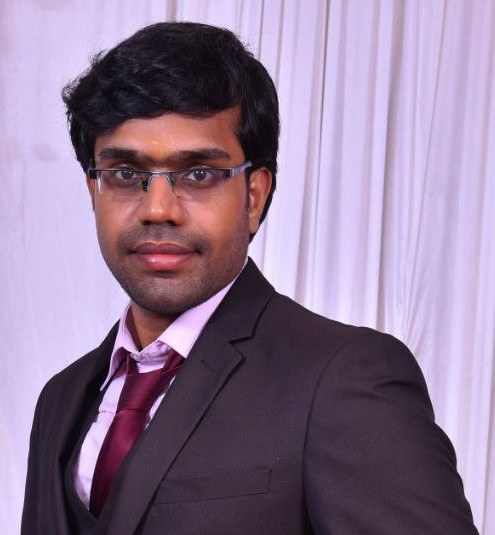
Sriramkrishnan Muralikrishnan is a Research Staff member at the Department of Mathematics and Education within the Jülich Supercomputing Center (JSC) at Forschungszentrum Jülich, Germany. His work focuses on developing advanced computational methods for high-performance scientific computing, particularly in plasma physics and related multi-physics applications. Dr. Muralikrishnan's research spans several key computational domains: Numerical Analysis and High-Order Methods High Performance Scientific Computing for Exascale Architectures Plasma Physics Simulations Fast Solvers and Preconditioners Parallel-in-Time Integration Techniques Performance Portable Programming His recent publications demonstrate a strong focus on particle-based computational methods, particularly Particle-in-Cell and Particle-in-Fourier techniques. His work consistently addresses challenges in energy conservation, scalability across architectures, and noise reduction in plasma simulations. A significant portion of his research involves developing performance-portable frameworks that can efficiently leverage modern supercomputing hardware from different vendors without code rewrites. Dr. Muralikrishnan is actively involved in open-source scientific software development: Lead developer of IPPL (a performance portable library for grids and particles) Developer of OPAL (an open-source particle accelerator library) His research has direct applications in plasma physics, fusion energy research, and advanced accelerator design, with a strong emphasis on making computational methods accessible through open-source development and advocating for diversity in scientific computing.
Thomas Spenke is a Researcher at the Chair for Computational Analysis of Technical Systems (CATS) within RWTH Aachen University's Center for Computational Engineering Science. He joined the research team in October 2017 after completing his master's degree in Computational Engineering Science at RWTH Aachen, where his academic journey began in 2011 with early engagement in CATS through a 2014 project thesis on isogeometric shell elements. His educational background includes: Studies in Computational Engineering Science at RWTH Aachen University (2011–2017) Bachelor and seminar theses on isogeometric shell elements for fluid-structure interaction Master thesis on numerical methods enhancing partitioned fluid-structure interaction algorithms Dr. Spenke's research spans Fluid-Structure Interaction , Isogeometric Analysis , Nonlinear Structural Mechanics (specializing in Shell Theory), and Interface Quasi-Newton Methods . His work develops efficient computational frameworks for multi-physics problems, emphasizing partitioned approaches that decouple fluid and structural solvers while ensuring stability and convergence through advanced acceleration techniques. His 9 publications (2020–2024) reveal a consistent focus on optimizing partitioned fluid-structure interaction simulations. Key trends include quasi-Newton acceleration for interface coupling, adaptive time-stepping strategies, and spline-based space-time finite elements for moving domains. His research frequently addresses challenges in fully enclosed systems and lubricated contact scenarios, demonstrating strong interdisciplinary links between computational mathematics and mechanical engineering. As an academic advisor, Dr. Spenke has supervised four student projects: J. Zwar (2019): Adaptive time stepping for fluid-structure interaction J. Spatka (2020): Fluid-structure-contact interaction in lubricated temper rolling M. Velioglu (2021): Space-time spline-based finite elements for moving domains S. Woyda (2023): Adaptive time stepping for multi-field problems The Chair for Computational Analysis of Technical Systems operates within RWTH Aachen's Center for Computational Engineering Science, founded by Professor Marek Behr in 2004. Located in the Rogowski building since 2009, CATS focuses on computational methods for engineering systems with expertise in fluid dynamics, structural mechanics, and multi-physics coupling algorithms.
Lars Grasedyck is a Professor of Numerical Analysis at RWTH Aachen University. His research focuses on hierarchical matrices, tensor approximation, and numerical methods for partial differential equations and matrix equations. He has contributed to applications in biomedical engineering, particularly EEG/MEG inverse problems, and is involved in software development (HLIB, HLIB-pro). Education: Diploma and Ph.D. in Mathematics at Christian-Albrechts-Universität zu Kiel (1998, 2001), Postdoctoral work at Max Planck Institute, Leipzig (2002-2010). Research: Specializes in high-dimensional numerical methods, low-rank matrices, and tensors with applications in PDEs, uncertainty quantification, and biomedical modeling. Projects: Leads DFG-funded initiatives on adaptive tensor networks for parametric PDEs and tumor progression modeling. Advising: Supervises doctoral students including Thong Le, Maren Klever, and Dieter Moser. Software: Developed HLib and HLib-pro for hierarchical matrix computations. Conferences: Active in GAMM Fachausschuss Numerische Analysis, organizing workshops and symposia globally.
Oliver G. Ernst is a Professor of Numerical Analysis at Technische Universität Chemnitz . His research focuses on Numerical Analysis , Uncertainty Quantification , and Inverse Problems , with applications in Thermo-Hydro-Mechanical (THM) processes , Electromagnetics , and Stochastic Partial Differential Equations . He is associated with the Numerical Analysis group at TU Chemnitz. Key Research Areas : Efficient numerical methods for PDEs Krylov subspace techniques Stochastic finite element methods Multi-physics modeling Geoscientific applications Recent Publications (2025-2010): THM simulations under uncertainty Neural network PDE solvers Bayesian inversion frameworks Rational Krylov algorithms Deflated restarting strategies Collaborations : TU Bergakademie Freiberg University of Manchester Technical University of Munich University of Maryland University of Geneva Software Development : Contributor to OpenGeoSys platform Developer of FEMALY MATLAB library Academic Recognition : h-index 32, i10-index 66, with over 4423 citations since 2020.
Prof. Barbara Wohlmuth is a full professor in Numerical Mathematics at the Technical University of Munich (TUM), affiliated with the TUM School of Computation, Information and Technology. She leads the International Graduate School of Science and Engineering at TUM and has held professorships at Stuttgart, Darmstadt, and Berlin universities. Her research focuses on numerical simulation of partial differential equations, multiscale solvers, and coupled multi-field problems with applications in engineering. Education: Studied mathematics at TUM and Université Joseph Fourier in Grenoble, received her doctorate from TUM in 1995, and completed habilitation in Augsburg. Visiting professorships in USA, France, and Hong Kong. Research interests include discretization techniques, predictive modeling, and interdisciplinary collaboration with engineering disciplines. Notable achievements: 2012 Gottfried Wilhelm Leibniz Prize (Germany’s highest academic honor in sciences), 2005 Sacchi-Landriani Prize. Publications emphasize advanced numerical methods in fluid dynamics, geophysics, and biomedical engineering. Active in editorial roles for international journals and scientific committees across Europe and USA. Elected member of Bavarian and European Academies of Sciences. Key contributions include: Development of robust numerical algorithms for exascale simulations Pioneering work in coupled multi-physics modeling Innovative methods for computational contact mechanics Leadership in graduate education initiatives
Dr. Armin Nurkanović is an interim professor at the Technical University of Braunschweig's Department of Mathematical Optimization, where he teaches courses on dynamic optimization and numerical methods. Previously, he completed his PhD at the University of Freiburg under Prof. Moritz Diehl, focusing on optimal control of nonsmooth dynamical systems. His research emphasizes numerical methods for hybrid systems, real-time optimization, and applications in robotics and renewable energy systems. He has received the IEEE Control Systems Letters Outstanding Paper Award (2022) and was a finalist for the 2024 European Systems & Control PhD Thesis Award. Education: Bachelor's in Electrical Engineering (University of Tuzla, 2015) Master's in Electrical Engineering and Information Technology (Technical University of Munich, 2018) PhD in Control (University of Freiburg, 2023) Research Interests: Optimal control of hybrid and nonsmooth systems (e.g., Filippov systems, switched systems) Real-time optimization for model predictive control (MPC) Robust control theory and stochastic optimization Applications in robotics and renewable energy systems Teaching & Software: Developed open-source tools nosnoc and nosnoc_py for optimal control Teaching courses on numerical optimization and optimal control at TU Braunschweig Collaborations & Students: Open to academic and industry collaborations Supervises Bachelor's/Master's theses in mathematics, engineering, and computer science
Gerhard Wellein is a Professor for High Performance Computing at the Department of Computer Science of Friedrich-Alexander-Universität Erlangen-Nürnberg (FAU). He is the head of NHR@FAU (Erlangen National Center for High Performance Computing) and a member of the board of directors of the German NHR-Alliance. Since 2024, he has also served as a Visiting Professor for HPC at the Delft Institute of Applied Mathematics, Delft University of Technology. He holds a PhD in theoretical physics from the University of Bayreuth and has over two decades of experience in HPC education and research. Research Interests: His research focuses on performance modeling and engineering, architecture-specific code optimization, novel parallelization techniques, and the development of hardware-efficient building blocks for sparse linear algebra and stencil solvers. His work bridges computer science, applied mathematics, and computational physics, aiming to maximize efficiency on current and future HPC architectures, including exascale systems. Publication Trends: His recent publications emphasize analytical performance modeling (e.g., Roofline, oscillator models), energy efficiency, GPU optimization, and scalable linear algebra. They reflect a strong focus on both theoretical modeling and practical implementation, with applications in CFD, quantum physics, and molecular dynamics. Scientific Awards: 2011 Informatics Europe Curriculum Best Practices Award (shared with Jan Treibig and Georg Hager) for outstanding teaching contributions in HPC. Grants and Advising: He has led numerous third-party funded projects from the EU, BMBF, and DFG, including EoCoE-III, ESSEX, EXASTEEL, and ProPE. These projects focus on exascale software, performance engineering, fault tolerance, and multiscale simulation. He has mentored multiple researchers and students, contributing to the development of tools such as LIKWID, ClusterCockpit, and GEOPM. Labs and Teams: He leads the HPC research group at FAU and is deeply involved in national and international HPC initiatives. His team collaborates extensively on open-source HPC software and performance tools, fostering a strong community-driven approach to performance engineering.
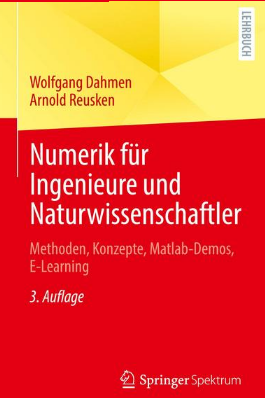
Prof. Dr. Arnold Reusken is a full Professor of Numerical Mathematics at RWTH Aachen University, affiliated with the Institute for Geometry and Practical Mathematics (IGPM). He has held the Chair for Numerical Mathematics since 1997 and maintains an active research and academic profile in computational mathematics. Education: Ph.D. in Mathematics, University of Utrecht (1988) M.Sc. in Mathematics, University of Utrecht (1984) His research focuses on the development and analysis of numerical methods for partial differential equations, with particular emphasis on finite element methods, multigrid solvers, and computational techniques for two-phase incompressible flows and PDEs on surfaces. His work bridges theoretical numerical analysis and practical scientific computing applications in fluid dynamics and interfacial phenomena. He has made significant contributions to trace finite element methods, surface Stokes equations, and unfitted discretizations. The recent publication trend shows sustained activity in numerical methods for evolving surfaces, surface fluid dynamics, and preconditioning techniques. His work often involves rigorous error and stability analysis, demonstrating a strong theoretical foundation. Editorial Roles: Associate Editor, Journal of Numerical Mathematics (2015–present) Associate Editor, IMA Journal of Numerical Analysis (2020–present) Former Associate Editor, SIAM Journal on Numerical Analysis (2016–2021) Former Associate Editor, SIAM Journal on Scientific Computing (2002–2008) Former Associate Editor, Computing & Visualization in Science (2010–2021) Member of Advisory Board, Computing (1997–2009) Prof. Reusken has advised numerous students and researchers, though specific names are not listed in the provided text. He has been involved in collaborative research projects and has secured funding for work in numerical simulation and computational fluid dynamics. He co-authored the influential textbook Numerik für Ingenieure und Naturwissenschaftler , now in its third edition, and has contributed to other key publications in the field. He leads a research group at IGPM focused on numerical methods for interface and surface problems, contributing to both fundamental algorithm development and practical implementation in scientific computing. His team works on cutting-edge methods for simulating complex fluid systems with moving boundaries and topological changes.
Prof. Dr. Dietmar Gallistl is a faculty member at Friedrich-Schiller-Universität Jena, holding the Professorship for Numerical Mathematics within the Faculty of Mathematics and Computer Science. His research focuses on numerical methods for partial differential equations, including mixed finite elements, multiscale methods, adaptive algorithms, and computational homogenization. He teaches courses such as Theory and Numerics of Partial Differential Equations and Iterative Solvers for Partial Differential Equations . His research interests span various areas including discretization techniques for nonlinear PDEs, error analysis, and computational methods for wave propagation. He has contributed to software tools for finite element mesh refinement and numerical simulations. Recent work includes publications on the Gross-Pitaevskii eigenvalue problem, Monge-Ampère equations, and time-harmonic Maxwell equations. Prof. Gallistl's academic work emphasizes rigorous mathematical analysis alongside practical numerical implementation. His teaching materials include lecture notes on computational PDEs and finite element methods available on his university webpage.
Prof. Hans-Joachim Wunderlich is a Professor at the University of Stuttgart's Institute of Computer Architecture and Computer Engineering, within the Faculty of Computer Science, Electrical Engineering, and Information Technology. His research focuses on hardware reliability, fault tolerance, and testing methodologies for VLSI circuits and embedded systems. He specializes in areas such as delay fault testing under PVT variability, approximate communication, and aging-aware design. Key research interests include robust testing techniques for small delay faults, error-tolerant communication protocols (e.g., RAPPER and Gray code-based approaches), and GPU-accelerated simulation of faults. His work addresses challenges in functional safety, interconnect reliability, and securing reconfigurable architectures against security violations. He explores energy-efficient iterative solvers for approximate computing environments and develops methods for predicting device aging and early life failures. Prof. Wunderlich’s contributions span academic and industrial applications, with a focus on real-time systems and dependable multi-processor systems-on-chip (MPSoCs). His research integrates formal verification, machine learning for defect detection, and hybrid protection schemes for reconfigurable scan networks. Recent work emphasizes stress-aware testing strategies and optimization of sensor data streaming in resource-constrained environments.
Miriam Schulte is a Professor at the University of Stuttgart’s Institute for Parallel and Distributed Systems, leading the Institute for the Simulation of Large Systems. She holds a Carl von Linde Junior Fellowship and has held academic roles since 2002, including heading the CFD Group at TUM. Her expertise spans computational fluid dynamics (CFD), high-performance computing (HPC), and numerical methods for PDE solvers. She earned her diploma (1997) and PhD (2001) in mathematics from TUM, followed by habilitation in Computer Science (2010). Her research focuses on optimizing algorithms for efficient simulation software, integrating mathematics and computer science. Key areas include fluid-structure interactions, multi-physics coupling, and scalable parallel computing. She has contributed to frameworks like Peano for adaptive Cartesian grids and developed methodologies for partitioned fluid-structure interaction simulations. Publications highlight advancements in HPC, multi-physics coupling, and parallel algorithms. Awards include the Bayerische Begabtenfoerderung (1993–1997). Her work bridges computational methods with real-world applications, emphasizing scalability and efficiency in large-scale simulations.