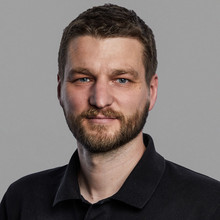
Marjolein Elize Buisman is an Assistant Professor at WHU Otto Beisheim School of Management, affiliated with the Supply Chain Management Group. Her research focuses on optimizing supply chain processes with an emphasis on reducing food waste, inventory management, and sustainable practices in retail and food sectors. Research Interests Food Supply Chain Management Inventory Optimization for Perishable Goods Retail Analytics and Operations Consumer Behavior and Substitution Effects Sustainability in Supply Chains Key Research Themes Her work addresses challenges such as donation management for food banks, dynamic pricing strategies, and inventory control for fresh produce. Recent studies emphasize reducing food waste through innovative policies and technological applications. Publications Overview Her publications span topics like food waste reduction via dynamic shelf-life management, inventory dynamics in retail, and joint optimization of product assortments. These contributions highlight interdisciplinary approaches combining operations research, sustainability science, and retail economics. Awards & Grants No scientific awards or grants explicitly listed in the provided materials. Collaborations Active in the Supply Chain Management Group at WHU, collaborating on projects related to perishable inventory control and supply chain resilience.
Peter Münch is a postdoctoral researcher at the Chair of Numerical Methods for Partial Differential Equations within the Institute of Mathematics at Technical University of Berlin (TU Berlin), Faculty II - Mathematics and Natural Sciences. He has held research positions at Uppsala University, University of Augsburg, Helmholtz-Zentrum Hereon, and Technical University of Munich. Dr. Münch's research focuses on high-performance scientific computing with expertise in matrix-free computations, dynamic sparse communication patterns, node-level optimization, iterative solvers including multigrid and block preconditioners, and efficient algorithms for high-dimensional partial differential equations. His work spans discontinuous Galerkin methods, computational fluid dynamics, and simulation of additive manufacturing processes including solid-state sintering and melt-pool modeling. He is one of the principal developers of the deal.II finite-element library, which won the SIAM/ACM Prize in Computational Science and Engineering in 2025. His recent publications demonstrate significant contributions to matrix-free finite element methods, multigrid solvers, and applications in computational fluid dynamics and materials science. The research shows a strong trend toward high-performance implementations of numerical methods for extreme-scale computing, with particular emphasis on matrix-free approaches that avoid explicit storage of large sparse matrices. SIAM/ACM Prize in Computational Science and Engineering 2025 (for deal.II) Dr. Münch has supervised numerous student projects including Master's theses, Bachelor's theses, and term papers on topics ranging from immersed boundary methods to high-order discontinuous Galerkin methods. His teaching activities include courses on Numerical Methods for ODEs, PDEs, and High-Performance Parallel Computing. He has contributed to multiple deal.II tutorial programs (steps 19, 68, 75, 76, 87) demonstrating advanced finite element techniques. As a principal developer of the deal.II finite element library, Dr. Münch is actively involved in the open-source scientific computing community, contributing to one of the most widely used finite element frameworks in computational science and engineering. His GitHub profile shows consistent contributions to deal.II and related projects, with significant activity in 2025.
Andreas Wagner is a researcher affiliated with Helmholtz-Zentrum Dresden-Rossendorf , with a focus on interdisciplinary research spanning computational biology, systems biology, computer science, and materials science. His work explores genotype-phenotype mappings, evolutionary innovation, and robustness in biological systems, while also contributing to machine learning, numerical methods, and positron annihilation spectroscopy in physics. Wagner collaborates internationally, with co-authors from institutions in Germany, Austria, Finland, and beyond. Research Interests : Wagner's research bridges computational biology and systems biology, analyzing evolutionary processes through genotype networks, metabolic innovation, and gene regulatory circuits. He applies machine learning techniques to energy systems, such as solar power forecasting in federated learning frameworks. His physics work involves positron annihilation spectroscopy for material defect analysis, particularly in alloys and thin films. Publications & Data Science : He has published extensively on topics like robust numerical algorithms, adaptive cruise control optimization, and data-driven approaches for systematic reviews. His recent work includes matrix-free preconditioning methods and physics-regularized multi-modal image assimilation for medical imaging. Wagner contributes to open data initiatives, including datasets on radiation damage and material porosity via RODARE.
Benjamin Recht is a Professor at the California Institute of Technology , affiliated with the Center for the Mathematics of Information . His work spans Machine Learning , Control Systems , Reinforcement Learning , and Optimization , with a focus on theoretical guarantees, adaptive algorithms, and real-world applications. His research includes: Control Systems : Certainty equivalence, adaptive control, LQR, and robustness in dynamic environments. Machine Learning : Generalization bounds, interpolation in classifiers, test set overuse, and ethical frameworks for systemic harm detection. Neural Rendering : K-Planes for explicit radiance fields in space-time-appearance modeling. Recent publications (2025-2018) highlight trends in automating adaptive control , ethical machine learning , distributed computing , and 3D reconstruction . No student lists, awards, or lab details are explicitly mentioned.
Sergio Lucia is a Full Professor (W3) for Process Automation Systems at Technische Universität Dortmund within the Department of Biochemical and Chemical Engineering since 2023. He previously served as a W2/W3 Professor (2020-2023) and W1 Assistant Professor at TU Berlin (2017-2020). His research focuses on the intersection of control engineering, numerical optimization, and machine learning, with applications in chemical processes, biotechnology, and energy systems. He leads the Laboratory of Process Automation Systems (Building G2, North Campus) and has held prestigious roles including Vice Chair of IFAC Technical Committee on Optimal Control since 2020. Education: Dr.-Ing. (summa cum laude) in "Robust multi-stage nonlinear model predictive control" (2014) Postdoctoral: Massachusetts Institute of Technology (2016), Otto-von-Guericke University Magdeburg (2015-2017) Alumni: Research Assistant at TU Dortmund (2010-2014), Diploma in Electrical Engineering (2010) His research explores novel methods to bridge theory and applications in control engineering, particularly through model predictive control (MPC) innovations. Recent work emphasizes robustness under uncertainty , Bayesian optimization , deep learning integration , and privacy-preserving federated learning for industrial applications. His 2025 publications address challenges in chemical recycling networks, crystallization processes, and serverless computing triggers. Scientific recognition includes: Teaching award (2023) Best student paper awards (2022, 2021) VAA Dissertation Award (2015) Erasmus Scholarship (2010) M.Sc. Extraordinary Career Award (2011) As a dedicated educator, he refines courses to enhance learning outcomes and mentors PhD students Sarah Braun and Benjamin Karg. His laboratory at TU Dortmund's North Campus is strategically located near the H-Bahn monorail system for accessibility.
Sergio Lucia is a Full Professor (W3) for Process Automation Systems at the Department of Biochemical and Chemical Engineering, TU Dortmund University. His research integrates control engineering, numerical optimization, and machine learning to address challenges in chemical processes, biotechnology, and energy systems. Education: Dr.-Ing. (summa cum laude) from TU Dortmund University (2014); Diploma in Electrical Engineering from University of Zaragoza (2010) Professional Journey: Full Professor (2023–present), Professor (W2) at TU Dortmund University (2020–2023), Assistant Professor at TU Berlin (2017–2020), Postdoctoral Fellow at MIT (2016) His recent work focuses on combining machine learning with model predictive control (MPC) for robust applications in chemical recycling, bioreactors, and energy networks. Key trends include AI-driven optimization, uncertainty quantification, and real-time control for complex systems. Scientific Awards Teaching award, TU Dortmund (2023) Best student paper award (PhD student Sarah Braun) (2022) Best paper by young author award (PhD student Benjamin Karg) (2021) VAA Dissertation Award for outstanding work in process engineering (2015) Erasmus Scholarship (2010) He has advised PhD students in chemical and biotechnological process optimization and led the Laboratory of Process Automation Systems at TU Dortmund's North Campus. His service includes Vice Chair of IFAC Technical Committee on Optimal Control (2020–present) and editorial roles in leading journals.
Prof. Burkhard Corves serves as Director of the Institute of Mechanism Technology, Machine Dynamics and Robotics within the Faculty of Mechanical Engineering at RWTH Aachen University. His academic leadership spans robotics, mechanism theory, and dynamic systems engineering, with significant contributions to industrial automation and sustainable manufacturing applications. His research concentrates on Robotics, Mechanism Design, Machine Dynamics, and Multibody Simulation, with recent emphasis on compliant gripper development for surgical applications, energy-efficient cam mechanisms, and human-robot collaboration systems for inclusive workplaces. Key investigations address data-driven trajectory optimization, sustainable ship recycling processes, and real-time simulation techniques for bicycle and vehicle dynamics. Analysis of his 15 most recent publications (2024-2026) reveals dominant themes in industrial robotics (particularly delta robots and pick-and-place systems), compliant mechanism design for medical applications, and sustainable manufacturing processes. Significant focus appears on real-time multibody simulation for transportation systems, control strategies for vibration suppression, and recycling automation aligned with circular economy principles. Emerging work explores human-robot collaboration for disability inclusion and bioprocessing optimization. Scientific Awards No awards were documented in the provided materials. Advising and Grants Specific student supervision details and grant funding information were not included in the source documentation. Laboratories and Teams Prof. Corves leads the Institute of Mechanism Technology, Machine Dynamics and Robotics (IGMR), directing research in robotic systems for manufacturing, sustainable ship recycling, and bicycle dynamics simulation. The institute actively participates in interdisciplinary projects including Bots2ReC (semi-autonomous asbestos removal) and sustainable EV battery recycling initiatives, with strong emphasis on practical engineering solutions for industrial challenges.
Marc Adrat is an Honorary Professor at RWTH Aachen University and Head of the Software Defined Radio research group at Fraunhofer Institute for Communication, Information Processing and Ergonomics (FKIE). His dual role combines academic teaching with cutting-edge industrial research in communications engineering. Education: Diplom-Ingenieur in Electrical Engineering (1997), RWTH Aachen University Dr.-Ing. (PhD) in 2003 from Institute of Communication Systems and Data Processing (IND), RWTH Aachen Research Focus: Prof. Adrat specializes in channel coding , modulation techniques , and iterative decoding with particular emphasis on polar codes , BICM-ID systems , and EXIT chart analysis . His work bridges theoretical foundations with practical implementations in software-defined radio systems. His recent research directions include applying machine learning techniques (particularly genetic algorithms) to optimize communication systems, developing autoencoder-based signal enhancement methods, and advancing spectrum monitoring technologies for cognitive radio applications. Awards & Recognition: Best Paper Award at ICMCIS 2022 for work on spectrum monitoring techniques Appointed Honorary Professor by RWTH Aachen University in June 2024 Teaching & Supervision: Since 2009, he has taught courses on Modern Channel Coding for Wireless Communications and Advanced Coding and Modulation at RWTH Aachen. His teaching covers both theoretical foundations and practical implementations of modern communication systems. Laboratories & Teams: At Fraunhofer FKIE, he leads the Software Defined Radio research group, focusing on developing flexible, reconfigurable radio systems for military and civilian applications. The group works extensively on real-time implementations of advanced coding and modulation schemes.
Jörg Raisch is a Professor of Control Systems at the Technische Universität Berlin , affiliated with the Faculty IV - Electrical Engineering and Computer Science and the Institute for Energy and Automation Technology . He holds the chair of "Fachgebiet Regelungssysteme" since March 2006. Raisch studied "Technische Kybernetik" (Engineering Cybernetics) at Stuttgart University, Germany, and Control Systems at UMIST, Manchester, UK. He earned his Ph.D. in Chemical Engineering from Stuttgart University, followed by postdoctoral work at the University of Toronto and a DFG fellowship for his habilitation (1998). He established a research group at the Max Planck Institute for Dynamics of Complex Technical Systems in Magdeburg and served as an External Scientific Member since 2002. His research spans control theory , discrete event systems , max-plus algebra , and applications in energy systems and robotics . Recent work focuses on clock drift effects in low-inertia power systems , iterative learning control , and distributed control for microgrids . His publications highlight methodologies for timed event graphs , probabilistic behavioral distances , and wind turbine optimization . From 2007–2013, he represented Germany in the European Control Association (EUCA). He served on editorial boards of journals like Automatica and IEEE Transactions on Control Systems Technology . He held leadership roles in IFAC Technical Committee TC1.3 as Vice-Chair (2014–2017, 2020–present) and Chair (2017–2020) .
Yannick Rudolph, M.Sc., is a Research Associate at the Institute for Business Information Systems (IIS) within Leuphana University of Lüneburg. His work focuses on Machine Learning , Artificial Intelligence , and Data Science , with particular emphasis on multiagent systems, explainability, and network modeling. His research interests span Temporal and spatiotemporal modeling of complex systems Deep learning architectures (CNNs, VAEs, GNNs) Information propagation analysis in neural networks AI applications in sports analytics and digital transformation Recent publications highlight trends in masked autoencoders , event classification in soccer , and conditional dependency modeling , reflecting his expertise in integrating theoretical machine learning with real-world application domains. Contact: yannick.rudolph@leuphana.de | Office: C 4.318b, Universitätsallee 1, Lüneburg, Germany
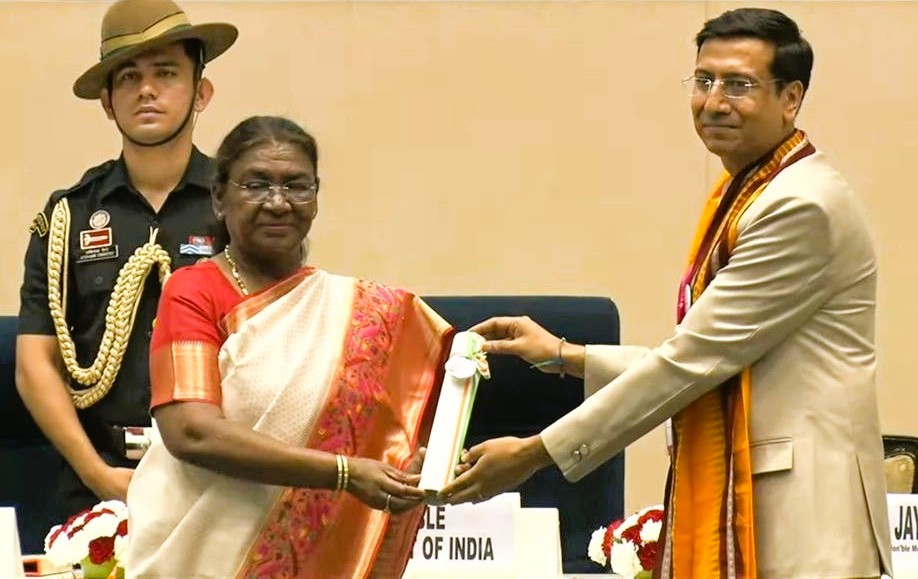
Prof. Kapil Ahuja is a Full Professor in the Department of Computer Science & Engineering at the Indian Institute of Technology Indore (IIT Indore), where he heads the Mathematics of Data Science and Simulation (MODSS) research lab. After completing dual Master's degrees and a Ph.D. from Virginia Tech (USA) followed by postdoctoral work at the Max Planck Institute in Germany, he has held visiting positions at UT Austin, IMT Atlantique, Sandia National Labs, TU Dresden, and TU Braunschweig. His administrative roles include founding Dean of International Affairs and former Head of Computer Science & Engineering at IIT Indore. Education: Ph.D. in Mathematics, Virginia Tech (2011) M.S. in Mathematics, Virginia Tech (2009) M.S. in Computer Science, Virginia Tech (2007) B.Tech. in Mechanical Engineering, IIT (BHU) Varanasi (2001) Research Focus: Prof. Ahuja's work bridges theoretical advances with real-world applications, emphasizing machine learning algorithms for plant/cancer studies, game-theoretic poverty reduction models, exascale climate modeling solvers, and drone trajectory optimization. His interdisciplinary approach integrates numerical linear algebra with network science to solve complex systems problems across healthcare, agriculture, and climate science, supported by 4.85 Crores INR in external funding. Publication Trends: Recent work demonstrates growing emphasis on AI-driven optimization for physical systems (drones, climate models) and biomedical applications (cancer classification). His publications increasingly feature cross-disciplinary collaborations between computer science, biology, and economics, with notable contributions in explainable AI for healthcare and resource allocation algorithms for social networks. Scientific Recognition: National Teacher's Award (2024) from the President of India Five-time recipient of IIT Indore's Best Teacher Award (2013-2023) Best Poster Award at International Workshop on Game Theory & Networks (2019) Steeneck Graduate Research Fellowship (Virginia Tech, 2011) Multiple SIAM travel awards for international conferences Mentorship & Service: Prof. Ahuja has graduated 5 Ph.D. and 4 M.S. (Research) students while mentoring 75 B.Tech. projects. He serves as Associate Editor for Applied Intelligence Journal (Springer Nature) and Knowledge and Information Systems, organizes international conferences, and reviews for 35+ academic sources. His administrative leadership significantly expanded IIT Indore's global partnerships through the Research Park initiative. Research Infrastructure: The MODSS lab maintains active collaborations with Oak Ridge National Lab, Sandia National Labs, and European institutions. Current projects include AI-optimized drone swarms for agricultural monitoring and game-theoretic models for poverty intervention, utilizing high-performance computing resources for large-scale simulations.
Dr. Akwum Onwunta is a researcher affiliated with the Max Planck Institute for Dynamics of Complex Technical Systems and holds a Ph.D. in Applied Mathematics from Otto von Guericke University, Magdeburg, Germany . His work bridges computational mathematics and quantitative finance. Research Focus: Uncertainty Quantification, Stochastic PDEs, Optimal Control, Numerical Linear Algebra, Tensor-based Algorithms, and Credit Risk Modeling. Onwunta's publications emphasize low-rank methods for solving high-dimensional problems in fluid dynamics and financial risk assessment. His expertise includes stochastic Galerkin systems and preconditioning techniques for unsteady PDEs with random inputs. Notable collaborations include work with Peter Benner and Martin Stoll on computational frameworks for uncertainty propagation in fluid mechanics. His academic output spans both theoretical and applied domains.
Miriam Schulte is a Professor at the Institute for Parallel and Distributed Systems (IPVS) at the University of Stuttgart . As Dean of Studies SimTech , she leads academic programs in simulation technology. Her research focuses on high-performance computing , multi-physics simulations , and scientific software development , with significant contributions to coupling libraries like preCICE and biophysical frameworks like OpenDiHu . Key Research Areas: High-Performance Computing (HPC) Multi-physics and Fluid-Structure Interaction (FSI) Sparse Grids and Hierarchical Numerical Methods Machine Learning in Simulation Software Parallel and GPU-Accelerated Algorithms Advising: Guided student projects on quantum neural networks , GPU-optimized sparse grids , and SYCL-based HPC frameworks . Coordinated SimTech Research Modules and IPVS/SGS team initiatives. Software Leadership: Maintains preCICE (coupling library for multi-physics) Develops OpenDiHu (neuromuscular simulations) Advances PLSSVM (parallel SVM library) and SG++ (sparse grids) Her recent publications (2022–2025) emphasize machine learning integration with multi-physics simulations , including groundwater heat pumps , brain tumor modeling , and neuromuscular EMG prediction . She actively promotes open-source software sustainability and collaborative research infrastructure at the University of Stuttgart.
Junior Professor Dr. Julia Westermayr leads the Theoretical Chemistry of Materials Design group at the Wilhelm-Ostwald-Institute for Physical and Theoretical Chemistry (Leipzig University). Her interdisciplinary research bridges machine learning , quantum chemistry , and materials science to advance molecular simulations and reaction mechanism discovery. Academic rank: Assistant Professor (Junior Professor) Research focus: AI-driven excited-state dynamics, interatomic potentials, CO₂ conversion, and photocatalysis Key collaborators: Bell Flavors & Fragrances GmbH, ScaDS.AI, TU Berlin, University of Vienna Her team develops transferable ML models for nonadiabatic molecular dynamics , enabling long-timescale simulations of photodriven processes at metal surfaces and solvent environments . Recent work includes equivariant neural networks for UV absorption spectra and generative AI for molecular design . The group actively trains PhD students like Daniel Bitterlich, Peter Fichtelmann, and Robin Curth, while hosting international researchers from institutions like Bologna and Vienna. Research trends span Computational Chemistry (15/15 articles), with subfields including Excited-State Nonadiabatic Dynamics , Interatomic Potential Modeling , Photochemistry , Semiconductor Design , Reaction Mechanism Discovery , and ML-Augmented Quantum Simulations . The group participates in major scientific collaborations (DFG Cluster of Excellence, ScaDS.AI) and industry partnerships (Bell Flavors & Fragrances GmbH). They host regular research stays (e.g., Sascha Mausenberger from Vienna) and student internships , while maintaining active presence at conferences like PsiK2025 .
Konrad Patyk serves as a Professor for Numerical Analysis within the Department of Mathematics at Justus Liebig University Giessen, part of the Faculty of Mathematics, Informatics and Natural Sciences. His office is located in room 149 at Heinrich-Buff-Ring 44, 35392 Giessen, Germany, with contact available via telephone (0641 99-32193) and email. His research centers on Numerical Analysis, focusing on computational methods and algorithms for solving complex mathematical problems. This field bridges theoretical mathematics with practical applications in scientific computing, engineering simulations, and data-intensive modeling. Key methodologies include finite element analysis, iterative solvers, and error estimation techniques. The Numerical Analysis Group at Justus Liebig University Giessen drives collaborative research in computational mathematics, maintaining strong ties with industry partners and international academic institutions. Current projects emphasize high-performance computing implementations and interdisciplinary applications in physics and engineering domains. Contact details: Email: Konrad.Patyk@math.uni-giessen.de Phone: 0641 99-32193 Office: Room 149, HRZ Building, Heinrich-Buff-Ring 44, 35392 Giessen