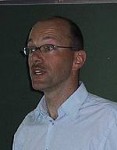
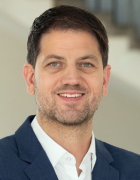
Marc Alexander Schweitzer is a Professor of Mathematics at the University of Bonn and affiliated with Fraunhofer SCAI. His work focuses on numerical methods and computational mechanics, particularly meshfree methods, peridynamics, and algebraic multigrid techniques. He contributes to advancing computational tools for engineering and materials science applications. Research interests include partition of unity methods, multiscale modeling, fracture mechanics, and efficient linear solvers. His work integrates mathematical theory with practical computational challenges, such as adaptive algorithms and parallel computing. Publications highlight contributions to peridynamic fracture models, scalable solvers for material design, and visualization of fracture progression in particle-based systems. Collaborative efforts with Fraunhofer SCAI emphasize industrial applications and algorithmic innovation.
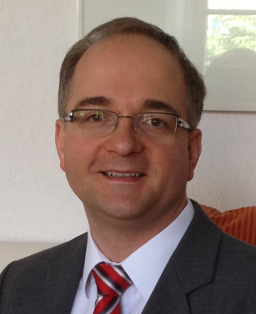
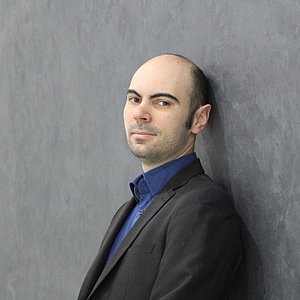
Joost-Pieter Katoen is a Professor at RWTH Aachen University's Department of Computer Science, part of the School of Computer Science. He leads the MOVES group and focuses on formal methods, probabilistic systems, and program verification. His research includes probabilistic programming, Markov models, Bayesian networks, and stochastic systems. He has co-authored over 200 publications in top venues like AAAI, CAV, and CONCUR, and developed tools like AMBER and SAFEST for probabilistic analysis. Notably, his student Kevin Batz received the ETAPS Dissertation Award in 2025 for work on deductive verification of probabilistic programs. He serves as an editor for Formal Methods and has advised PhD students such as Kevin Batz and Bahare Salmani Barzoki. His work bridges theoretical foundations with practical tools for analyzing complex systems.
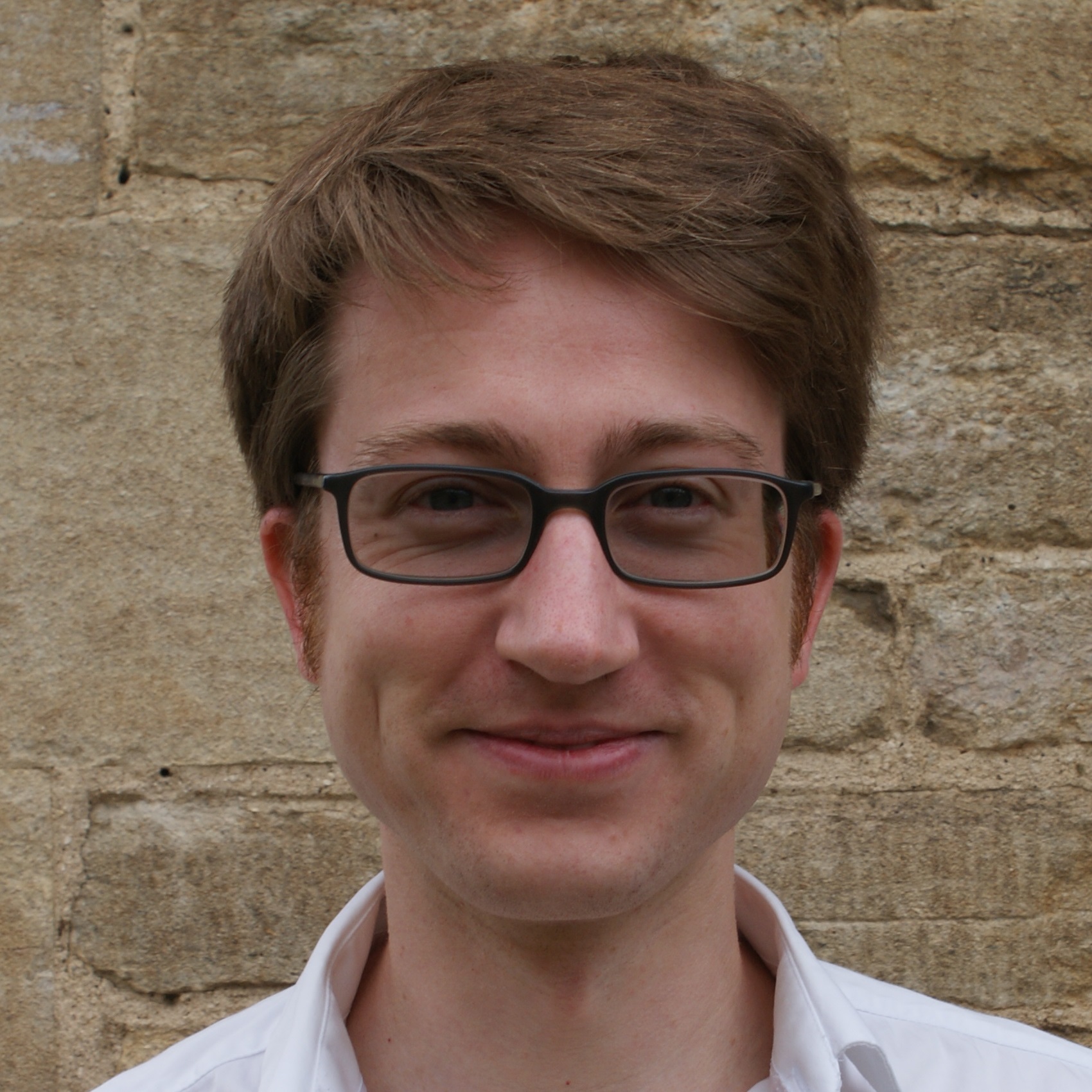
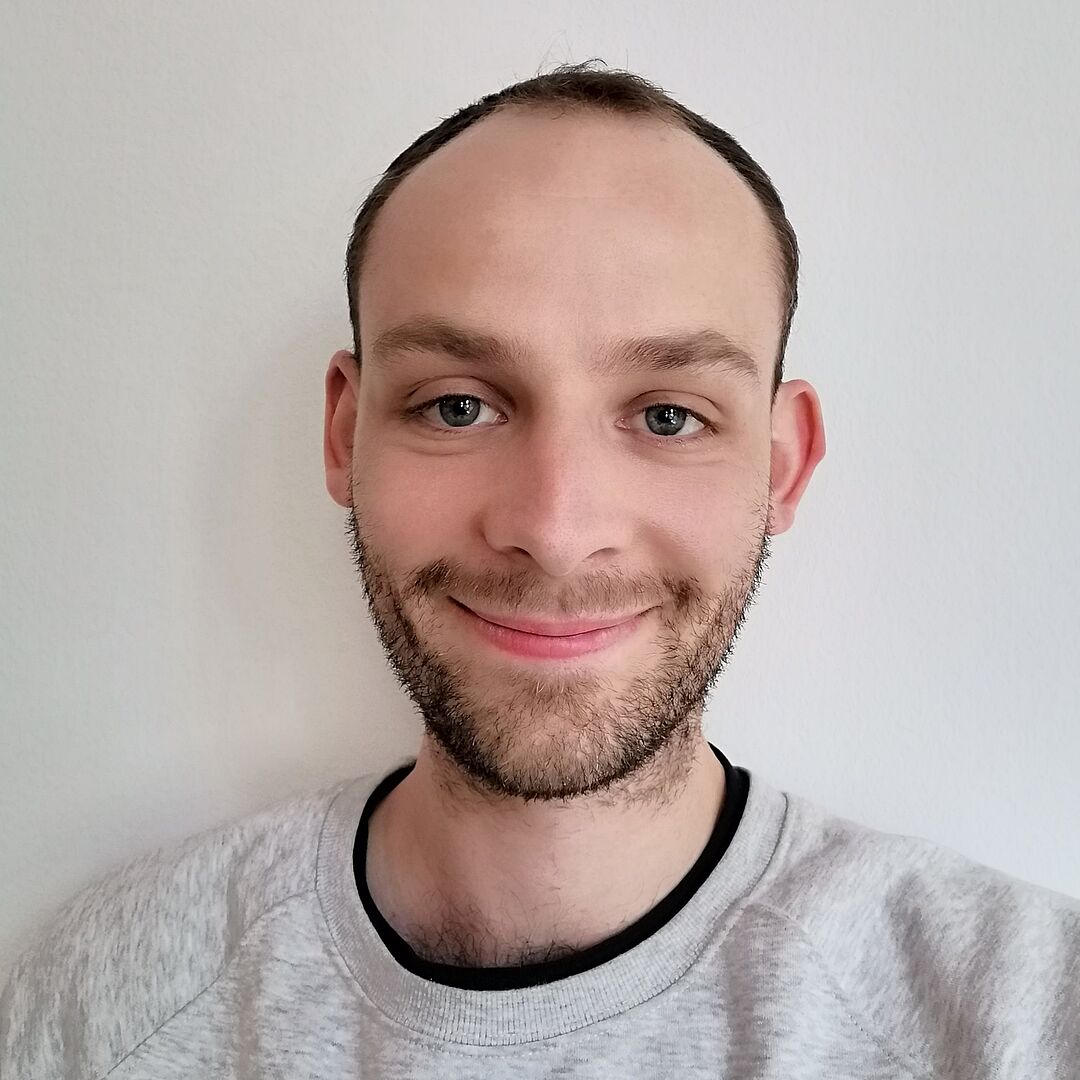
Olivier Sète is a postdoctoral researcher in mathematics at Universität Ulm. His work focuses on numerical mathematics, computational complex analysis, and their applications in mathematics and sciences. He has held teaching roles at institutions including TU Berlin and Universität Greifswald, covering courses such as Numerical Linear Algebra, Analysis, and Partial Differential Equations. His research interests include approximation theory, numerical methods for the Helmholtz equation, conformal mapping, potential theory, and harmonic mappings in astrophysics. Notable contributions include the AAA algorithm for rational approximation, which earned the Frontiers of Science Award in 2023. His research spans topics like lemniscatic domains, polynomial pre-images, and stochastic Galerkin methods. He has developed software tools like the Transport of Images Toolbox for computing zeros of harmonic mappings. His work bridges theoretical mathematics with computational applications, addressing challenges in complex analysis and numerical methods. Awards include the Frontiers of Science Award for his work on the AAA algorithm. He has collaborated extensively with researchers such as Yuji Nakatsukasa and Lloyd N. Trefethen. His academic background includes a PhD from TU Berlin (2016) and a Diplom from TU Berlin (2009).
Vera Kempe is a Professor of Psychology and Language Learning in the Department of Sociological and Psychological Sciences at Abertay University . She is a leading researcher in language acquisition, cognitive development, and bilingualism, with a strong publication record in top-tier journals such as Cognition , Journal of Experimental Psychology , and Frontiers in Psychology . Her research interests focus on language development , child-directed speech , second language acquisition , dialect processing , and the cognitive mechanisms underlying language learning. She investigates how linguistic input, cognitive abilities, and social factors shape language acquisition across the lifespan. Her work often employs experimental and computational methods to understand the emergence of structure in language. Recent publications highlight trends in iterated language learning , artificial language paradigms , literacy acquisition , and the role of teaching and social interaction in language evolution. Her research bridges developmental psychology, cognitive science, and linguistics, contributing to both theoretical and applied understanding of language. Vera Kempe has co-edited the Encyclopedia of Language Development and contributed to major handbooks. She has supervised numerous research projects and collaborated widely with scholars across Europe and North America. Editorial Roles: Guest editor for special issues on emergentist approaches and self-domestication in language evolution. Research Leadership: Pioneered studies on dialect exposure and literacy, iterated teaching, and the cognitive effects of music training on language learning. Open Science Advocacy: Contributed to the CHILDES project and promotes preprint peer review in undergraduate education. Key Labs/Teams: Collaborates with researchers at Abertay University and international institutions on projects involving artificial language learning, dialect variation, and child language development.
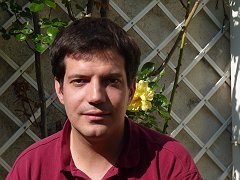
Thorsten Raasch is a Professor of Numerical Mathematics at the Institute of Mathematics, Johannes Gutenberg University Mainz, Germany. He is affiliated with the Department of Physics, Mathematics, and Computer Science, and leads research in numerical analysis, particularly adaptive methods for PDEs and inverse problems. Research Interests: His work focuses on adaptive discretization methods for partial differential equations and inverse problems, non-smooth numerical optimization , wavelet systems , multilevel frames , and GPGPU computing . These interests are deeply rooted in applied and computational mathematics, with applications in scientific computing and engineering. The most recent articles show a strong trend in developing adaptive wavelet-based numerical schemes for solving inverse and stochastic PDEs, with a particular emphasis on sparsity, convergence analysis, and preconditioning. His publications span high-impact journals in numerical analysis and inverse problems, indicating sustained scholarly activity. Teaching: He has taught a variety of courses including Fundamentals of Numerics, Convex Optimization, Numerical PDEs, Spectral Methods, and advanced seminars on topics like semi-smooth Newton methods and reduced basis methods. Thorsten Raasch earned his doctorate in 2007 from Philipps University of Marburg and has held academic positions at JGU Mainz, the University of Siegen, and the University of Rostock. He was appointed W2 Professor at JGU Mainz in 2015 and previously held a junior professorship there. No scientific awards are mentioned in the provided texts. Advising and Grants: While no students or grants are explicitly listed, his role as a professor and active researcher suggests involvement in supervising graduate students and participating in research projects, possibly within the 'Mathematics of Computation' research network. Labs and Teams: He is part of the Numerical Mathematics Working Group at JGU Mainz and contributes to the 'Mathematics of Computation' research network, indicating collaboration within a structured research environment.
Prof. Thomas Huckle is a Professor of Scientific Computing at the Technical University of Munich (TUM), affiliated with the TUM School of Computation, Information and Technology and the Department of Computer Science. His research focuses on numerical linear algebra, parallel computing, and their applications in physics and computer science. Key interests include solving linear problems on parallel architectures, image processing, multigrid methods, preconditioning, and tensor-based high-dimensional problem approximation. Education: Studied mathematics and physics at the University of Würzburg (diploma in mathematics, 1985 PhD, 1991 habilitation). Professional History: DFG-funded research at Stanford University (1993–1994), appointed to TUM in 1995, and member of the Mathematics Department since 1997. Research Interests: Prof. Huckle’s work spans numerical methods for large-scale systems, including structured matrices, regularization techniques, and quantum computing applications. He develops algorithms for parallel computing environments and contributes to software tools like ELPA for eigenvalue problems. Grants and Labs: Engaged in projects such as the ELPA-AEO eigensolver and ESSEX-II initiatives. Active in the SCCS (Scientific Computing and Computational Science) group at TUM, focusing on high-performance computing and numerical methods.
Prof. Dr. Ingo Weber is a Full Professor at the Technical University of Munich (TUM) in the Department of Information System Development and Operation within the TUM School of Computation, Information and Technology. He also serves as Director of Digital Transformation and ICT Infrastructure at the Fraunhofer-Gesellschaft. Previously, he held a full professorship at TU Berlin (2019–2022) and spent a decade in Australia researching at CSIRO, NICTA, and UNSW. His research focuses on Business Process Management (BPM), Process Mining, Blockchain technology, Software Architecture, DevOps, and AI Systems Engineering. Weber has authored/co-authored influential books including DevOps: A Software Architect's Perspective (Addison-Wesley, 2015) and Engineering AI Systems: Architecture and DevOps Essentials (2025). Education & Career - PhD in Semantic Methods for Business Process Modeling (University of Karlsruhe, 2009) - SAP Research parallel role during doctoral studies - Tenured Professorships at TU Berlin and TUM Research Interests Weber's work bridges academic theory and industrial applications. Key areas include: - Blockchain-based process execution (Caterpillar framework on Ethereum) - AI-driven DevOps practices - Scalable transaction creation in blockchain systems - Sustainability-oriented process analysis (SOPA framework) - Generative AI for large process models Awards - Two-time BPM Best Blockchain Paper Award (2019/2022) - ISSRE Best Paper (2015) - CSIRO/NICTA Excellence Awards (2015–2018) - EDOC 2023 Best Paper Grants & Labs - Leads Fraunhofer's digital transformation initiatives - Collaborates with industry partners like Commonwealth Bank (Australia) - Active in EU/CSIRO-funded blockchain research projects Key Contributions - Pioneered blockchain-based BPM systems (Caterpillar) - Defined blockchain pattern taxonomies - Developed tools like BLF (Blockchain Logging Framework) - Advocates for responsible AI engineering practices
Thorsten Hohage is a Professor at the Institute of Numerical and Applied Mathematics, Georg-August-Universität Göttingen, and a Max Planck Fellow at the Max Planck Institute for Solar System Research. His work bridges inverse problems, numerical analysis, and wave equation modeling. Research interests focus on computational methods for inverse problems in helioseismology, aeroacoustics, and imaging. Recent projects include iterative holography for solar differential rotation, phase retrieval in X-ray and EUV imaging, and regularization techniques in Banach spaces. Collaborations span institutions like Zuse Institute Berlin and Johannes-Kepler University Linz. Key publications since 2022 address viscous-inertial solar waves, phaseless scattering, and learned boundary conditions. His work employs advanced numerical algorithms for heterogeneous materials and dispersive media, with applications in astrophysics and biomedical imaging.
Michael Feischl is a Professor for Computational PDEs at the Institut für Analysis und Scientific Computing, TU Wien. His research focuses on numerical methods for partial differential equations, stochastic perturbations, machine learning mathematics, computational micromagnetism, and optimal mesh refinement techniques. He leads the ERC Consolidator Grant project "New Frontiers in Optimal Adaptivity" (2024–2029), which aims to develop mathematically guaranteed optimal adaptive algorithms for time-dependent PDEs. Feischl's research interests include the numerical analysis of PDEs with stochastic components, computational micromagnetism (particularly the Landau-Lifshitz-Gilbert equation), and the intersection of machine learning with computational mathematics. His work emphasizes adaptive algorithms that maximize accuracy while minimizing computational costs. His publications demonstrate a strong emphasis on adaptive finite element methods, neural network theory, and computational micromagnetism. Recent articles explore optimal time-stepping, neural operator networks, and convergence analyses for complex physical systems. Trends include machine learning-enhanced numerical methods and rigorous mathematical foundations for computational physics. Awards: ERC Consolidator Grant: "New Frontiers in Optimal Adaptivity" (2024–2029) Feischl has held prior positions as Associate Professor at TU Wien (2019–2022), Professor at the University of Bonn (2018–2019), and Junior Research Group Leader at KIT (2017–2018). He obtained his doctorate from TU Wien in 2015.
Jakob von Saldern is a Scientific Employee at the Technical University of Berlin within the Faculty of Transportation and Mechanical Systems , specifically the Institute of Fluid Mechanics and Technical Acoustics . His research focuses on thermoacoustic hydrogen burner design and physics-informed neural network applications for turbulent flow modeling. PhD candidate since 2019 Specializes in climate-neutral combustion technologies His work combines fluid mechanics and machine learning through: Development of mean field consistent closure models Research on hydrogen burner dynamics with MAN Energy Solutions Innovations in data assimilation methods for turbulent flows Recent publications demonstrate expertise in: Thermoacoustic instability analysis Reinforcement learning-augmented turbulence models Acoustic communication in can-annular combustors
Dr. Thomas Mach is a Postdoctoral Researcher at the Institute of Mathematics , University of Potsdam, Germany, focusing on Data Assimilation under Prof. Melina Freitag. His work bridges theoretical and applied numerical linear algebra. Research Interests Numerical linear algebra for large/structured matrices Krylov subspace methods and iterative eigenvalue solvers Adaptive cross approximation and regularization techniques Applications to inverse problems and parametric systems Publication Trends show expertise in matrix eigenvalue problems, regularization for ill-posed equations, and algorithm design for structured systems. Co-authored works with leading experts like David S. Watkins demonstrate methodological innovation. Awards : SIAM Outstanding Paper Prize (2015) for polynomial root-finding research Academic Service includes co-organizing workshops, serving as Associate Editor for numerical analysis journals, and active participation in international conferences like ILAS, SIAM, and GAMM.
Marianne Akian is a Researcher at INRIA Saclay – Île-de-France , affiliated with the Tropical team (joint with CMAP, École Polytechnique, IP Paris, and CNRS). Her research spans deterministic and stochastic optimal control, tropical mathematics, idempotent analysis, and nonlinear Perron-Frobenius theory. She has contributed to numerical methods for Hamilton-Jacobi-Bellman equations and mean payoff games. Education: PhD in Mathematics (1990), Université Paris IX-Dauphine Habilitation (HDR) in Mathematics (2007), Université Pierre et Marie Curie Her work integrates max-plus/tropical algebra with applications in portfolio optimization, dynamic programming, and epidemiological modeling. Recent articles focus on accelerating value iteration algorithms, tropical convexity, and entropy games. Scientific awards are not explicitly mentioned in the provided texts. She collaborates extensively with researchers like Stéphane Gaubert, Marouen B for Stochastic Control, and others in applied mathematics. Lab/Team: Tropical team at INRIA, which bridges tropical mathematics with control theory and optimization.
David Monniaux is a senior researcher (directeur de recherche) at CNRS and an adjunct professor at École polytechnique. He works at VERIMAG, a computer science laboratory jointly operated by CNRS and the University of Grenoble. Dr. Monniaux obtained his PhD in 2001 from Université Paris Dauphine under Professor Patrick Cousot, with a dissertation on the static analysis of probabilistic programs by abstract interpretation. He later earned his habilitation in computer science in 2009 from Université Joseph Fourier, Grenoble, and also holds an agrégation in mathematics. Monniaux's research focuses on program verification, with particular emphasis on proving software correctness. His work spans theoretical foundations in computability theory and practical applications in safety-critical systems. He has made significant contributions to abstract interpretation, static analysis, and the verification of numerical properties in programs. His research bridges computer science theory with practical engineering challenges, particularly in the context of critical embedded systems where software failures can have severe consequences. His work connects to diverse fields including game theory, algebra, and convex optimization. His recent publications demonstrate a strong focus on improving the precision and efficiency of static analysis techniques. Key themes include polyhedral approximation, program analysis with local policy iteration, abstraction of arrays and maps, synthesis of ranking functions, and computing worst-case execution times. These works collectively advance the field of program verification by addressing challenges in handling nonlinear constraints, branching, and complex data structures while maintaining computational feasibility. Monniaux has supervised several students including Julien Henry, Alexis Fouilhé, George (Egor) Karpenkov, and Alexandre Maréchal (now at LIP6), with current students Hang Yu and Valentin Touzeau. He has led significant research projects including VERASCO (2012-2015), which aimed at integrating a static analyzer into the CompCert certified compiler, and STATOR (2012-2017), an ERC starting investigator grant exploring advanced techniques for automatic inference of program invariants. At VERIMAG, Monniaux is part of a vibrant research community focused on critical systems. His work connects with broader efforts in formal methods, with applications in aviation, automotive systems, and other safety-critical domains where software reliability is paramount.
Antonio Orvieto is a Professor and Principal Researcher at the Max Planck Institute for Intelligent Systems and ELLIS Institute Tübingen, where he leads the Deep Models and Optimization research group. He is also a lecturer at the University of Tübingen and faculty for the CLS, ELLIS, and IMPRS-IS PhD Programs. His research focuses on improving the efficiency of deep learning technologies through theoretical understanding of optimization dynamics and innovative neural network architectures. Dr. Orvieto earned his PhD from ETH Zürich under the supervision of Prof. Dr. Thomas Hofmann and Dr. Aurelien Lucchi. Prior to his PhD, he obtained his master's degree in Robotics, Systems, and Control from ETH. His educational background also includes undergraduate studies at Universita' degli studi di Padova in Italy. During his academic journey, he gained research experience at DeepMind (UK), Meta (US), MILA (CA), INRIA (FR), and HILTI (LI). Dr. Orvieto's research spans two main areas: understanding the intricacies of large-scale optimization dynamics and designing innovative architectures and powerful optimizers capable of handling complex data. His work particularly focuses on decoding patterns in sequential data, with applications in biology, neuroscience, natural language processing, and music generation. His theoretical approach to deep learning has led to significant contributions in understanding recurrent neural networks, transformers, and optimization methods. His recent publications reveal a strong focus on sequence modeling, optimization theory, and the theoretical foundations of deep learning, with particular emphasis on improving training efficiency and model performance. Schmidt Sciences AI2050 Early Career Fellow Dr. Orvieto actively mentors PhD students and leads a vibrant research group at the Max Planck Institute for Intelligent Systems. His Deep Models and Optimization group includes PhD students Destiny Okpekpe, Felix Sarnthein, Diganta Misra, Sajad Movahedi, and Wenjie Fan, among others. He is deeply involved in doctoral education as faculty for multiple PhD programs including CLS, ELLIS, and IMPRS-IS. His teaching includes the course "Nonconvex Optimization for Deep Learning" at the University of Tübingen. The Deep Models and Optimization research group investigates the interplay between optimizers and architectures in deep learning, with a focus on developing new networks for long-range reasoning. The group's mission is to design new optimizers and neural networks to accelerate technology and scientific discovery, with a strong theoretical foundation in optimization theory. They strongly believe that deep learning will revolutionize science and technology, and they aim to make powerful deep learning solutions accessible to scientists and engineers regardless of resource limitations.
Dr. Wenhui Niu is a Research Fellow at the Max Planck Institute of Microstructure Physics in Halle, Germany, leading a research group focused on chiral nanographenes and helicenes since 2022. Her work bridges materials chemistry and nanotechnology to develop quantum chiral nanocarbons for advanced optoelectronic applications. Her academic foundation includes: Bachelor's degree in Polymer Engineering from Sichuan University (2016) PhD in Chemistry from Shanghai Jiao Tong University (2021), with collaborative research in Prof. Xinliang Feng's group at Technische Universität Dresden (2017-2020) Dr. Niu specializes in synthesizing high-strained chiral nanographenes and high-order helicenes through innovative structural regulation. Her group maintains in-house chiroptical characterization capabilities to directly correlate molecular architecture with dissymmetric factors and luminescent properties. Key research thrusts include engineering helicene-based systems for amplified circular dichroism, exploring chiral-induced spin selectivity effects, and developing circularly polarized luminescence emitters for next-generation photonic devices. Analysis of her 2019-2023 publications reveals an evolution from fundamental graphene nanoribbon engineering toward targeted chiral nanomaterial design. Early work emphasized solution processability and charge transport, while recent studies focus on chiroptical properties and device integration, demonstrating strategic progression toward functional quantum materials. Her laboratory at the Max Planck Institute features integrated chiroptical characterization infrastructure, enabling comprehensive in-house analysis of circular dichroism and polarized luminescence without external dependencies. This facility accelerates iterative development of novel chiral carbon architectures. As an independent group leader, Dr. Niu directs research strategy and team mentorship, though specific advisees and grant details are not documented in the source material.