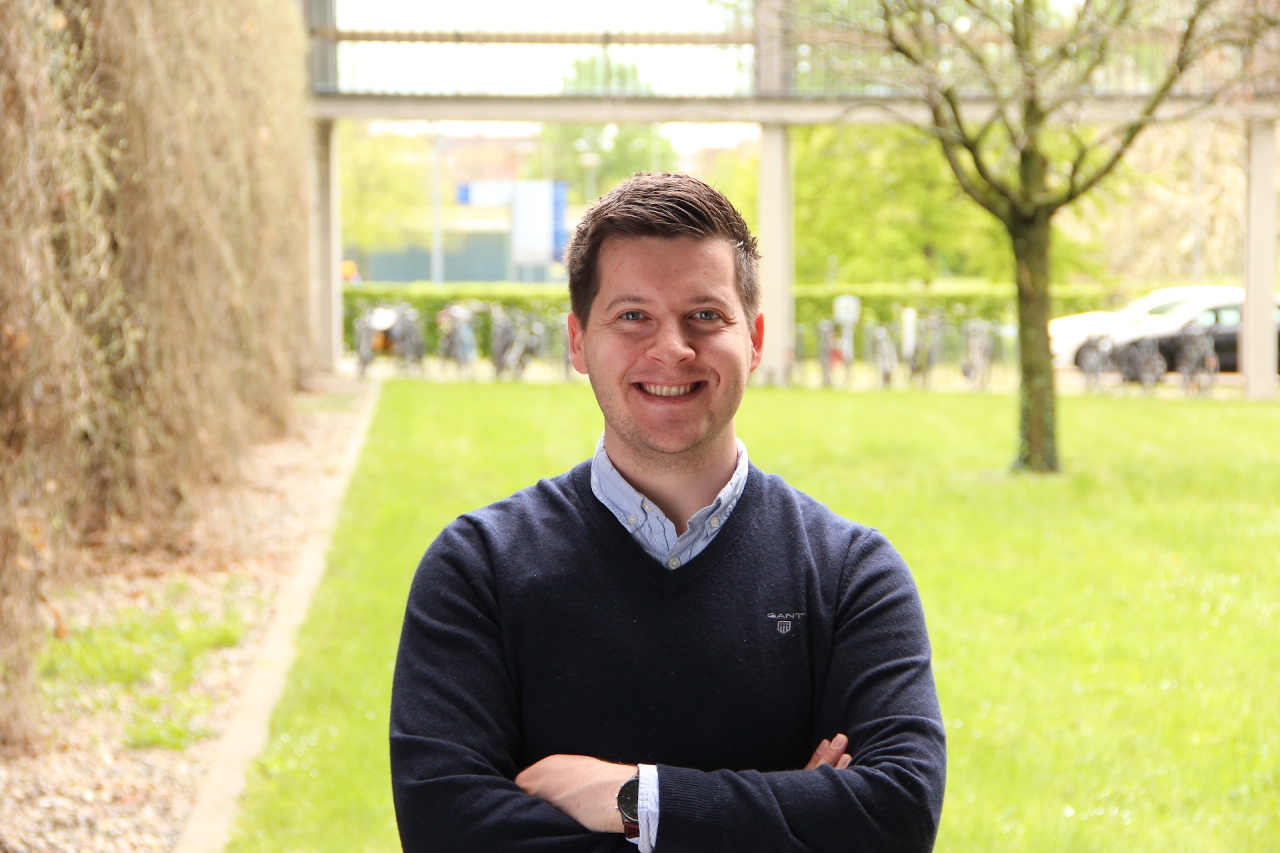
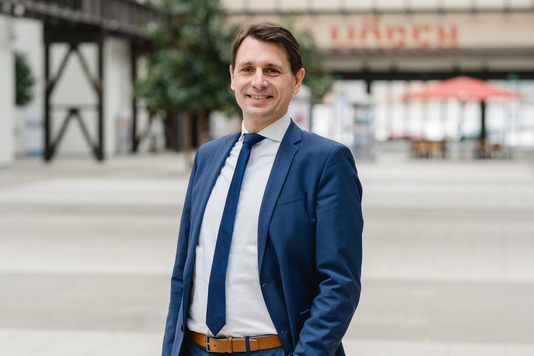
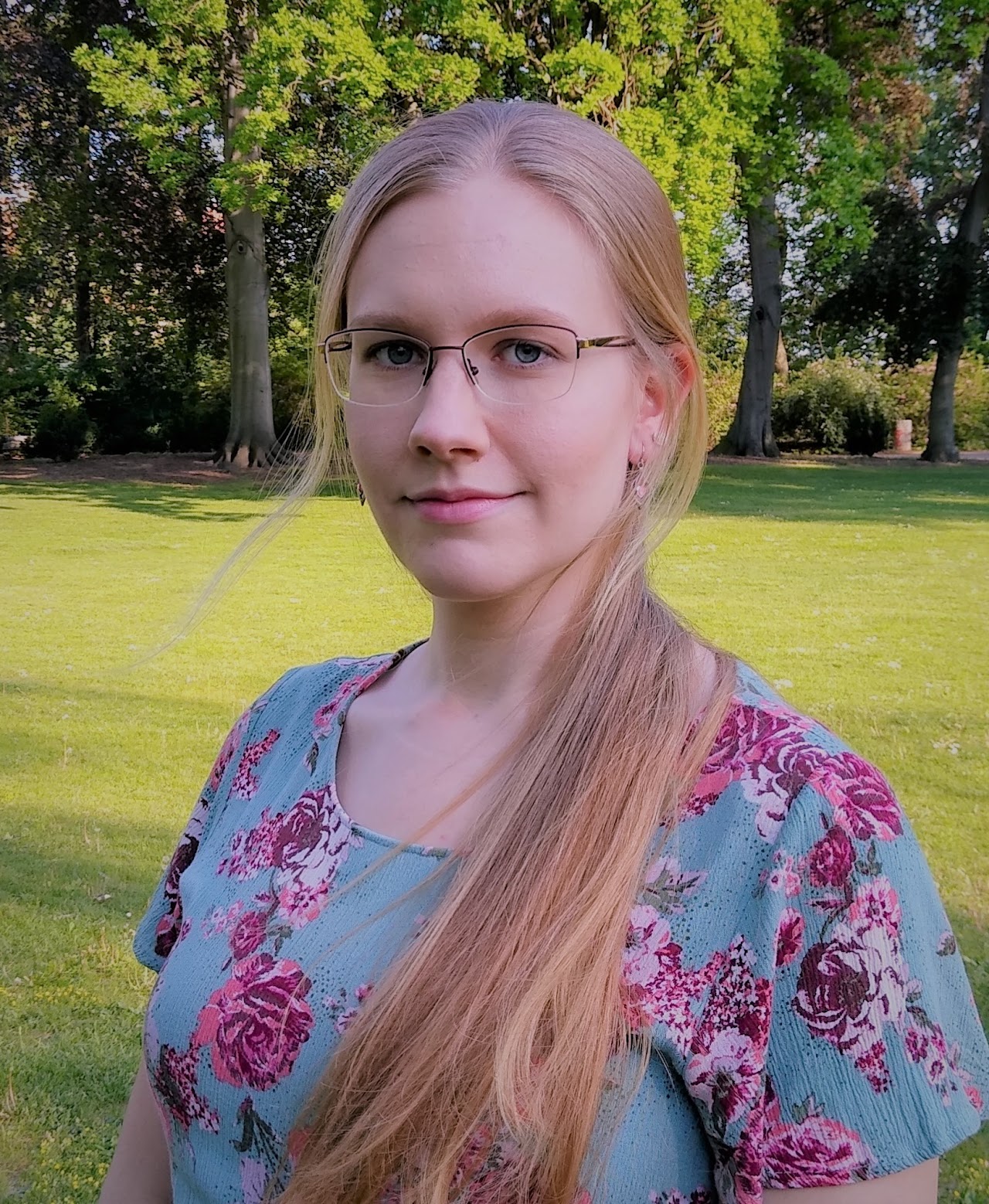
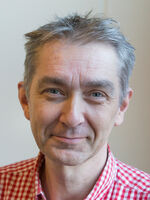
Meng Wu is a professor at the Department of Mathematical Sciences, University of Oulu, Finland. Previously, he held postdoctoral positions at the Einstein Institute of Mathematics, Hebrew University of Jerusalem (2017), and at the University of Oulu (2013-2016), followed by a University Researcher role there (2017-2018). His work bridges ergodic theory, dynamical systems, and fractal geometry. Research interests include multifractal analysis, self-similar sets, and geometric measure theory. Recent work explores Furstenberg-type slicing theorems, scaling limits of self-conformal measures, and projection theorems with applications to exact overlaps conjectures. His publications often employ ergodic theory and dynamical systems to analyze fractal dimensions and geometric properties of sets. Trends in his articles highlight connections between number theory, probability, and fractal geometry, focusing on Hausdorff and Assouad dimensions, oriented random walks, and renormalization techniques. Collaborations include A.H. Fan, J. Schmeling, L.M. Liao, and A. Algom.
Dr. Simon Noah Nowak is a researcher at the Faculty of Mathematics, Bielefeld University , focusing on nonlocal partial differential equations (PDEs) and regularity theory. He is currently involved in the SFB 1283 collaborative research center, contributing to projects on differential/integro-differential operators with degenerate coefficients (TP A07) and analysis of manifolds/metric spaces/graphs (TP A03). His work bridges functional analysis, potential theory, and nonlinear PDEs. Research trends in his publications emphasize nonlocal equations with irregular coefficients, including fractional calculus, Sobolev/Hölder regularity, and Calderón-Zygmund estimates. Key subfields span gradient estimates , parabolic equations , nonlinear potentials , and De Giorgi iteration for vectorial systems. He has collaborated with prominent researchers such as Lars Diening, Lars Kaßmann, Yannick Sire, and Giuseppe Mingione. His recent work includes 2025 contributions to Annals of PDE , Calculus of Variations , and Journal of the London Mathematical Society , alongside 2024 studies in Mathematical Annals and Archive for Rational Mechanics and Analysis .
Prof. Dr.-Ing. Joachim Denzler is a Professor leading the Chair for Digital Image Processing (Lehrstuhl für Digitale Bildverarbeitung) at Friedrich-Schiller-Universität Jena. His research spans computer vision, machine learning, medical imaging, and remote sensing applications across diverse domains including biomedical analysis, environmental monitoring, and facial recognition systems. His research interests focus on explainable AI, causal discovery, physics-informed neural networks, and bias mitigation in deep learning models. He has made significant contributions to fine-grained classification, concept activation vectors, and privacy-preserving techniques in facial recognition. His work often bridges theoretical computer vision with practical applications in medical diagnostics, environmental science, and infrastructure monitoring. His recent publications demonstrate a strong trend toward causal discovery methods, physics-informed neural networks, and addressing bias in machine learning systems. His work spans both theoretical advancements in model interpretability and practical applications in medical imaging, environmental monitoring, and infrastructure safety. The interdisciplinary nature of his research is evident from collaborations with ecologists, neuroscientists, and civil engineers. Best Paper Award at International Conference on Pattern Recognition (ICPR) 2024 Prof. Denzler actively mentors numerous PhD students and postdoctoral researchers, with frequent co-authors including Maha Shadaydeh, Niklas Penzel, Gideon Stein, and Tim Büchner appearing as first authors on significant publications. His laboratory has secured research funding across multiple domains including medical imaging, environmental monitoring, and AI safety. His work on CausalRivers represents a major contribution to benchmarking causal discovery methods with real-world time series data. The Chair for Digital Image Processing maintains strong industry and clinical partnerships, particularly in medical imaging applications for facial palsy analysis and neonatal care. Prof. Denzler's team has developed novel techniques for dam deformation monitoring using remote sensing data and created advanced methods for analyzing plant diversity effects on ecosystem functioning.
Dr. Armin Nurkanović is an interim professor at the Technical University of Braunschweig's Department of Mathematical Optimization, where he teaches courses on dynamic optimization and numerical methods. Previously, he completed his PhD at the University of Freiburg under Prof. Moritz Diehl, focusing on optimal control of nonsmooth dynamical systems. His research emphasizes numerical methods for hybrid systems, real-time optimization, and applications in robotics and renewable energy systems. He has received the IEEE Control Systems Letters Outstanding Paper Award (2022) and was a finalist for the 2024 European Systems & Control PhD Thesis Award. Education: Bachelor's in Electrical Engineering (University of Tuzla, 2015) Master's in Electrical Engineering and Information Technology (Technical University of Munich, 2018) PhD in Control (University of Freiburg, 2023) Research Interests: Optimal control of hybrid and nonsmooth systems (e.g., Filippov systems, switched systems) Real-time optimization for model predictive control (MPC) Robust control theory and stochastic optimization Applications in robotics and renewable energy systems Teaching & Software: Developed open-source tools nosnoc and nosnoc_py for optimal control Teaching courses on numerical optimization and optimal control at TU Braunschweig Collaborations & Students: Open to academic and industry collaborations Supervises Bachelor's/Master's theses in mathematics, engineering, and computer science
Prof. Dr. Matthias Meiners is a faculty member at Justus-Liebig-University Giessen, holding the Chair of Stochastics within the Mathematical Institute. His research focuses on Asymptotic statistics Branching processes Limit theorems Random walks in random environments Regenerative processes Renewal theory Statistical mechanics . Recent publications analyze complex stochastic phenomena across branching processes, random walks, and renewal equations, with 2025 preprints on CMJ explosions and Markov renewal expansions. 2024 works examine active Brownian particle dynamics and supercritical branching fluctuations. Earlier studies address kinetic equations, martingale convergence, and percolation model speeds. Contact: Email: Matthias.Meiners@math.uni-giessen.de Phone: 0641 99-32100 Office: Room 216, Arndtstr. 2, 35392 Gießen
Bernard Haasdonk is a Professor at the University of Stuttgart, affiliated with the Institute of Applied Analysis and Numerical Simulation (IANS), part of the Faculty of Mathematics and Computer Science. His research focuses on model reduction techniques for parametrized partial differential equations (PDEs), kernel-based methods, numerical analysis, and machine learning applications in scientific computing. He leads a research group in numerical mathematics and has contributed to software tools like RBMatlab and KerMor. Affiliations: Institute of Applied Analysis and Numerical Simulation, University of Stuttgart Roles: Academic Researcher, Software Developer, Grant Principal Investigator His work bridges numerical simulation, machine learning, and reduced basis methods, addressing challenges in optimal control, fluid dynamics, and biomechanics. Haasdonk has held multiple funded projects, including those on kernel methods for model reduction and certified RB-ML-ROM surrogate models. Research Interests: Model reduction for PDEs, kernel methods, greedy algorithms, numerical analysis, optimal control, and applications in fluid dynamics and porous media. He emphasizes structure-preserving methods for Hamiltonian systems and data-driven approaches for surrogate modeling. Publications: Over 200 articles in journals like SIAM, BIT Numerical Mathematics, and Physica D, focusing on convergence analysis, kernel-based approximation, and reduced-order modeling. Recent trends include adaptive greedy algorithms, symplectic model reduction, and energy-conserving surrogates. Awards: IEEE PerCom 2017 Best Paper Award, Teaching Excellence Awards (2012-2017), and early-career research grants. Grants: DFG-funded projects on model reduction, SimTech Cluster contributions, and collaborations on fuel cells and biomechanics. Teams: Leads the Numerical Mathematics Research Group at IANS, collaborating with interdisciplinary teams on projects like MORCOS (Model Order Reduction of Coupled Systems) and KerMor (Kernel Methods for Model Reduction).
Prof. Dr. Ingmar Ickerott is a faculty member at Osnabrück University of Applied Sciences, affiliated with the School of Management, Kultur und Technik (MKT, Campus Lingen) under the University management department. His academic career spans over two decades, focusing on logistics management, digitalization in supply chains, and smart technology applications like Smart Glasses and Augmented Reality . Academic Background : Diplom-Kaufmann in Business Administration (2001), Ph.D. in Economics (2006). Professional Roles : Senior Project Manager at arvato (2008–2010), Professor since 2010, Dean of MKT since 2019, Vice President for Digitalization since 2019. His research emphasizes logistics innovation , Lean Management , and digital solutions in rural healthcare . Key projects include Land.Digital (2019–2022) and LEAN 4.0 (Erasmus+, 2019–2021). Publications since 2004 cover agent-based simulation , Smart Device economics , and AR in logistics . He actively lectures on topics like Logistics 4.0 and Digital Onboarding . Projects & Grants : Land.Digital : €165,000+ (Erasmus+), 2019–2021. Dorfgemeinschaft 2.0 : €1.46M (BMBF), 2015–2021. Glasshouse : €208,557 (BMBF), 2015–2019.
Prof. Dr. Sebastian Mentemeier is a permanent Professor (W2) in the Department of Mathematics 2 at the Institute for Mathematics, Mathematics Education and Computer Science Education, University of Hildesheim, Germany, a position he has held since October 2019. He also holds significant administrative roles as Vice Dean and Dean of Studies in Faculty 4 (Mathematics, Natural Sciences, Economics & Computer Science), and is a member of the Institute's Board and the Central Commission for Studies and Teaching. His research is centered on advanced probability theory, with a focus on branching processes, products of random matrices, and extreme value theory for time series. His research interests include: Non-Gaussian limit theorems Branching processes, particularly Multitype Branching Random Walks Products of random matrices Extreme value theory for time series Heavy-tailed random variables Conditional limit theorems His recent publications, spanning from 2012 to 2022, demonstrate a consistent and high-impact research trajectory in theoretical probability. The articles reveal a strong trend in analyzing the asymptotic behavior of complex stochastic systems, particularly those defined by recursive equations and random matrix products. His work frequently intersects with statistical mechanics and time series analysis, often investigating the tail behavior and limit laws of solutions to stochastic fixed-point equations, with a particular emphasis on heavy-tailed and multivariate settings. Prof. Mentemeier has been a Principal Investigator on two major DFG projects: 'Nonlinear stochastic fixed-point equations with applications in statistical mechanics' (2017-2023) and 'Products of Random Matrices, Noncommutative Branching Random Walks, and Multitype Branching Random Walks in Random Environments' (since 2021). He is an active member of the academic community, serving as a referee for journals such as Stochastic Processes and their Applications and Journal of Theoretical Probability , and has co-organized international conferences on recursive stochastic processes and branching models. He supervises PhD and Master's students, although specific names are not listed on his profile. He has led a research group within the Department of Mathematics 2 and is a key member of the Institute's academic board. His work is conducted within the broader context of the Faculty of Mathematics, Natural Sciences, Economics & Computer Science at the University of Hildesheim.
Prof. Dr. André Uschmajew is a full professor and holds the Chair of Mathematical Data Science at the Institute of Mathematics, Faculty of Mathematics, Natural Sciences, and Materials Engineering, University of Augsburg, Germany. He has held prominent research and academic positions at institutions including the Max Planck Institute for Mathematics in the Sciences (Leipzig), University of Bonn, and EPF Lausanne. 2022–present: Chair of Mathematical Data Science, University of Augsburg 2017–2022: Research Group Leader, Max Planck Institute MiS Leipzig 2014–2017: Bonn Junior Fellow Professorship, University of Bonn 2013: Ph.D. in Mathematics, TU Berlin His research centers on the theoretical and computational aspects of low-rank tensor and matrix approximations, with deep connections to Riemannian optimization, functional analysis, and high-dimensional scientific computing. He investigates the geometry of low-rank varieties, convergence of alternating algorithms, and applications in data science and dynamical systems. His work combines rigorous mathematical analysis with algorithmic innovation. The recent publications (2023–2025) reflect a strong focus on optimization methods for low-rank structures, dynamical low-rank approximation for PDEs like the Vlasov-Poisson equation, randomized SVD, Sinkhorn-type algorithms with overrelaxation, and Kronecker product operator approximation. Key themes include convergence analysis, algorithmic acceleration, and applications in scientific computing and signal processing. Although no specific awards are listed, his publication record in top-tier journals such as Numerische Mathematik , SIAM Journal on Optimization , and Foundations of Computational Mathematics indicates significant recognition in applied mathematics and numerical analysis. He advises students and researchers in mathematical data science and numerical analysis, though specific advisees are not named. He teaches courses such as Kernel Methods and Linear Algebra II. He has collaborated with leading researchers including Bart Vandereycken, Daniel Kressner, and Wolfgang Hackbusch. His work is supported through institutional affiliations and likely research grants, though specific grants are not listed. He is actively involved in the development of numerical methods for high-dimensional problems, particularly using tensor networks and manifold optimization. He is affiliated with research teams at the University of Augsburg and previously led a group at the Max Planck Institute MiS Leipzig, focusing on mathematical aspects of data science and tensor methods.
Peter G. Kropf is a Professor in the Department of Computer Science at the University of Neuchâtel, Switzerland, with a distinguished research career spanning over three decades. His academic journey reflects significant contributions to distributed systems, peer-to-peer networks, and cloud computing, with recent focus on IoT analytics and scientific computing applications. Dr. Kropf's research interests center on Distributed Systems , Peer-to-Peer Networks , Cloud Computing , Wireless Mesh Networks , and Scientific Workflows . His work demonstrates a clear evolution from foundational distributed systems research to practical applications in environmental monitoring, IoT analytics, and large-scale scientific computing. He has maintained consistent research productivity throughout his career, with publications appearing regularly from 1990 through 2024. Analysis of his recent publications reveals a strong trend toward real-time data processing for environmental applications, IoT analytics , and cloud-based scientific workflows . His work often bridges theoretical distributed systems concepts with practical implementations, particularly in environmental monitoring and resource management contexts. The interdisciplinary nature of his research connects computer science with environmental science and hydrology. Dr. Kropf has established long-term collaborations with researchers including Gilbert Babin (15 joint publications), Pascal Felber (14 publications), and Sabina Serbu (7 publications), forming a productive research network focused on distributed systems challenges. His work has appeared in prestigious venues including IEEE Internet Computing, Future Generation Computer Systems, and Middleware conference proceedings.
Kathryn Lund is a Senior Computational Mathematician at the STFC Rutherford Appleton Laboratory in Didcot, UK, and a guest member of the Numerical Linear and Multilinear Algebra Team at the Max Planck Institute for Dynamics of Complex Technical Systems in Magdeburg, Germany. Her work aligns with the Mathematical Research Data Initiative (MaRDI) and focuses on numerical linear algebra, scientific computing, and high-performance computing. Education: Joint PhD in Mathematics (2015-2018) from Temple University and Bergische Universität Wuppertal. Her research interests include: Rounding-error analysis of algorithms Krylov subspace methods Matrix functions applied to multiple vectors Tensor t-product operations Recent work highlights advancements in reorthogonalized block Gram-Schmidt methods, with publications in SIMAX and arXiv. She also contributes to software development, including the BlockStab project. Active in international collaborations, Kathryn held postdoctoral positions at EPFL, Charles University, and the Max Planck Institute. She joined STFC in June 2024 after a career break in Zurich.
Bernadette Hahn-Rigaud is a Professor in the Department of Mathematics at the University of Stuttgart, leading the Optimization and Inverse Problems (OIP) group. Her expertise lies in dynamic inverse problems, imaging techniques, and data analysis with applications in medical and non-destructive testing. She holds a Ph.D. and has held academic positions at institutions like the University of Würzburg and Saarland University. Her research focuses on advancing imaging methodologies through regularization techniques, motion compensation in tomography, and dynamic reconstruction algorithms. Notable contributions include work on magnetic particle imaging (MPI), computed tomography (CT), and MRI motion correction using deep learning. Publications highlight advancements in inverse problem theory, regularization strategies for dynamic systems, and interdisciplinary applications. Awards include the EAIP Young Scientist Award (2018) and multiple recognitions in Inverse Problems . She actively contributes to academic leadership through editorial roles and organizing international workshops on tomography and imaging challenges.
Prof. Tobias Knopp is a Professor of Experimental Biomedical Imaging at Hamburg University of Technology (TUHH) and the University Medical Center Hamburg-Eppendorf (UKE). He leads the Institute for Biomedical Imaging and serves as Editor-in-Chief of the International Journal on Magnetic Particle Imaging (IJMPI). His expertise spans tomographic imaging, image reconstruction, and signal processing with a focus on Magnetic Particle Imaging (MPI). Education: Diplom in Computer Science (University of Lübeck, 2007) PhD in Biomedical Imaging (University of Lübeck, 2010) awarded the Klee Prize (2011) Research Interests: Tomographic imaging methods, MPI system development, model-based reconstruction, and hardware optimization. His work emphasizes MPI applications in clinical imaging and tracer development. Awards: Klee Prize from DGBMT (2011) for groundbreaking MPI research. Key Contributions: Pioneered the first commercial MPI system, developed open-source reconstruction frameworks (e.g., MRIReco.jl), and advanced MPI for real-time clinical applications. His research bridges theoretical models with practical hardware implementations.
Prof. Hans-Joachim Wunderlich is a Professor at the University of Stuttgart's Institute of Computer Architecture and Computer Engineering, within the Faculty of Computer Science, Electrical Engineering, and Information Technology. His research focuses on hardware reliability, fault tolerance, and testing methodologies for VLSI circuits and embedded systems. He specializes in areas such as delay fault testing under PVT variability, approximate communication, and aging-aware design. Key research interests include robust testing techniques for small delay faults, error-tolerant communication protocols (e.g., RAPPER and Gray code-based approaches), and GPU-accelerated simulation of faults. His work addresses challenges in functional safety, interconnect reliability, and securing reconfigurable architectures against security violations. He explores energy-efficient iterative solvers for approximate computing environments and develops methods for predicting device aging and early life failures. Prof. Wunderlich’s contributions span academic and industrial applications, with a focus on real-time systems and dependable multi-processor systems-on-chip (MPSoCs). His research integrates formal verification, machine learning for defect detection, and hybrid protection schemes for reconfigurable scan networks. Recent work emphasizes stress-aware testing strategies and optimization of sensor data streaming in resource-constrained environments.
Bo Bernhardsson is a Professor in Automatic Control at the Department of Automatic Control, Faculty of Engineering (LTH), Lund University. He has been a full-time professor at Lund since 2010, following a decade (2001–2010) as an Expert in Mobile System Design and Optimization at Ericsson. He is affiliated with major research initiatives including ELLIIT (Excellence Center in Information Technology), LCCC (Lund Center for Control of Complex Engineering Systems), and WASP-AS (Wallenberg AI, Autonomous Systems and Software research school), where he has played a leadership role since 2016. His research focuses on modeling and control of uncertain and large-scale systems, with applications spanning industrial automation, mobile communications, particle accelerators, biomedical systems, and navigation technologies. He integrates theoretical control methods with practical implementations, particularly under constraints such as communication limitations, noise, and delays. His recent publications reveal a strong trend in networked control, communication-constrained estimation, and optimization-based control design. The works span theoretical advances in signal estimation under SNR constraints, event-based and stochastic control, and practical applications like IMU-radio fusion for navigation and RF field control in particle accelerators. Keywords include Control Theory, Communication Systems, Optimization, Signal Processing, and Networked Control , with subfields such as encoder-decoder co-design, virtual antenna arrays, and dynamic programming for time-delay systems. PhD in Control, Lund University, 1992 Professor in Automatic Control, Lund University, since 1999 Expert, Mobile Systems, Ericsson, 2001–2010 Bo Bernhardsson has supervised over 20 PhD and licentiate students, including Jacob Bergstedt (immune system modeling), Anders Mannesson (navigation and radio), and Erik Johannesson (control under communication constraints). His research has been funded by major entities such as the European Spallation Source and the Wallenberg Foundation. He teaches advanced courses in Linear Systems, Convex Optimization, and Robust Control, and has contributed significantly to both academic and industrial advancements in control engineering. He leads and collaborates on interdisciplinary projects involving real-time control, autonomous systems, and machine learning, often in partnership with industry and international research centers. His work in the RobotLab at LTH and on cloud-based control systems highlights his engagement with emerging technologies.