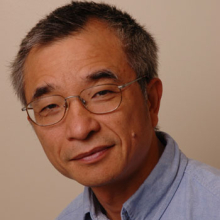
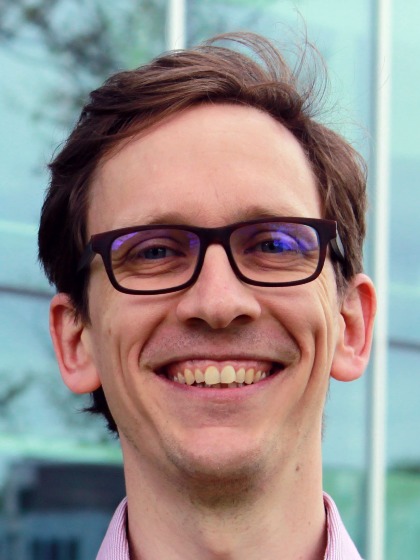
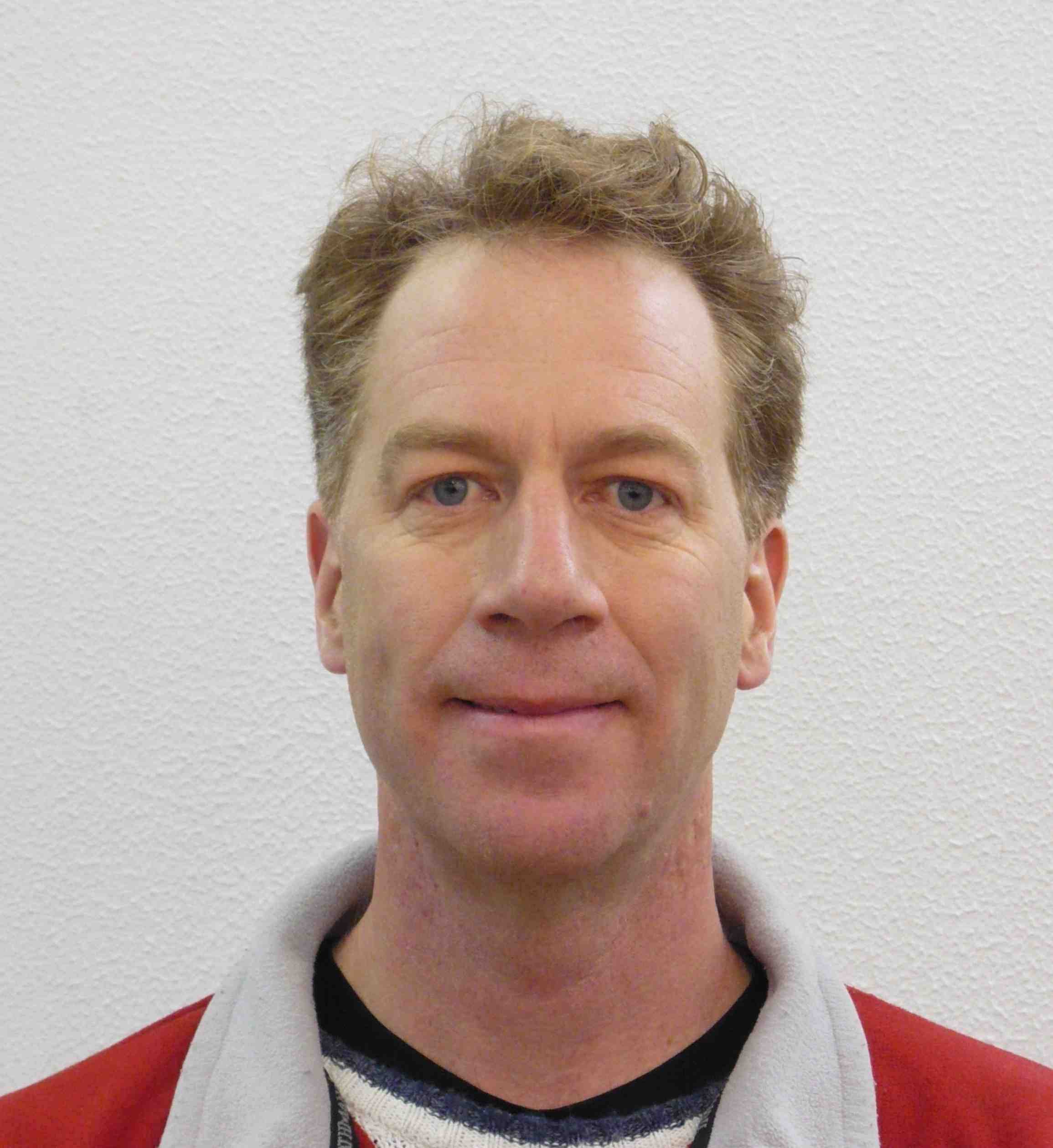
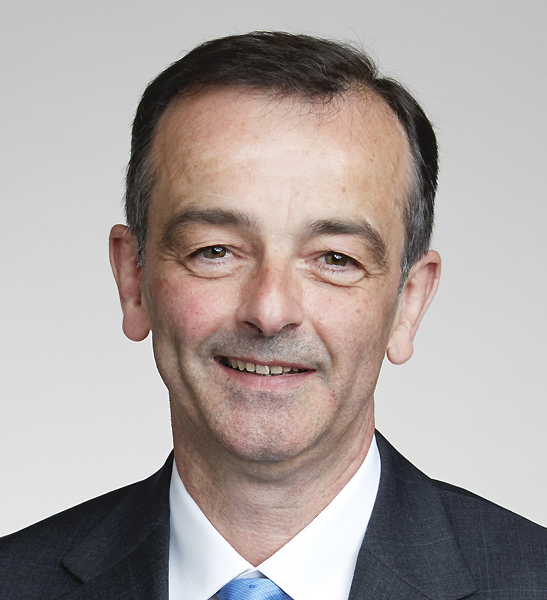
Pengfei Guan is a Distinguished James McGill Professor in the Department of Mathematics and Statistics at McGill University. He specializes in geometric analysis and nonlinear partial differential equations, with a focus on curvature flows, prescribed curvature problems, and fully nonlinear PDEs. His research bridges differential geometry and analysis, addressing topics such as the Christoffel-Minkowski problem, quermassintegral inequalities, and geometric flows in warped product spaces. Notable contributions include advancements in curvature estimates for hypersurfaces, entropy analysis in Gauss curvature flows, and proofs of uniqueness theorems for convex surfaces. Guan's work often appears in top-tier journals like Duke Math Journal, Inventiones Mathematicae, and Communications on Pure and Applied Mathematics. He maintains active collaborations in geometric analysis and hosts the Geometric Analysis Seminar at McGill. His research interests are reflected in publications spanning geometric flows, curvature equations, and the interplay between PDE theory and geometric structures.
Stephan Stadler is a researcher at the Max Planck Institute for Mathematics in Bonn, Germany. His primary research focuses on geometric analysis, metric geometry, geometric group theory, and geometric topology, with current projects exploring rank rigidity, minimal surfaces in metric spaces, quasi-isometric rigidity, and the geometry/topology of spaces with upper curvature bounds. He co-leads the DFG-funded project "Minimal surfaces in metric spaces II" under the SPP 2026 'Geometry at Infinity' program and co-organizes the Hausdorff Research Institute's 2024 Trimester Program on 'Metric Analysis'. Stadler's research interests emphasize understanding geometric structures through curvature constraints and their implications for topological and dynamical properties. His work frequently intersects with problems in CAT(0) spaces, minimal surface theory, and geometric measure theory in non-smooth settings. Key collaborations include projects with Alexander Lytchak, Ursula Hamenstädt, and international teams in geometric analysis. Recent research trends highlight investigations into higher rank CAT(0) structures, isoperimetric inequalities in metric spaces, and curvature bounds in low-dimensional geometries. These studies advance foundational knowledge in global Riemannian geometry and geometric group theory. He co-organizes the Differential Geometry Seminar at the University of Bonn and has led advanced lectures on topics like nonpositive curvature dynamics and the classical Plateau problem. His contributions bridge theoretical frameworks with concrete applications in geometric analysis.
Ryan Murray is an Assistant Professor in the Department of Mathematics at North Carolina State University (NC State). His research focuses on developing mathematical tools to address problems in applied analysis, including calculus of variations, partial differential equations (PDEs), and their applications to machine learning, fluid dynamics, and control theory. He holds a PhD in Mathematics from Carnegie Mellon University (2016). His expertise spans regularization methods for machine learning, singular perturbations in materials science, algorithms for distributed optimization, and singularity formation in fluid dynamics. His work is supported by the National Science Foundation (NSF) and the Simons Foundation. He actively collaborates with researchers in data science, PDE analysis, and optimization. Key research areas include adversarial training in classification, geometric data analysis via statistical depths, and the analysis of vortex sheet singularities. His teaching experience includes courses on partial differential equations, optimal control theory, and linear control systems. Ryan has published extensively in journals such as SIAM Journal on Mathematics of Data Science , Archive for Rational Mechanics and Analysis , and Journal of Machine Learning Research . His articles explore topics ranging from graph-based learning to fluid dynamics instabilities.
Luigi Ambrosio is a Full Professor at the Scuola Normale Superiore di Pisa (SNS), specializing in geometric measure theory, optimal transport, and partial differential equations. His research focuses on the interplay between geometric analysis, functional analysis, and calculus of variations, with applications to metric measure spaces and stochastic processes. He has organized numerous conferences and schools on optimal transport and geometric analysis, including the 2025 'XXXV Convegno Nazionale di Calcolo delle Variazioni.' Key research interests include the theory of currents, regularity of flows, and the application of optimal transport to problems in probability and geometry. Notable contributions include foundational work on metric Sobolev spaces, RCD spaces, and the analysis of geometric flows. Ambrosio frequently collaborates with leading institutions and has supervised numerous seminars on topics ranging from gradient flows to non-smooth geometric structures. His publications span over 150 papers, addressing topics such as the regularity of vector fields, entropy flows in Carnot groups, and the stability of action functionals. Recent works (2021–2025) explore superposition principles for currents, sharp PDE estimates for random matching, and embedding theorems for metric spaces. Ambrosio is also active in academic leadership, contributing to editorial boards and international research networks.
Fabio Cavalletti is a Full Professor at the University of Milan, specializing in geometric analysis, optimal transport theory, and synthetic curvature bounds. His work bridges differential geometry, mathematical physics, and functional inequalities, with particular focus on Lorentzian spaces and Ricci curvature. He has organized international workshops and conferences on optimal transport and geometric analysis. Research interests include optimal transport in Lorentzian and Riemannian settings, synthetic Ricci curvature conditions, isoperimetric inequalities, and geometric flows. Recent work explores timelike Ricci curvature bounds, null hypersurfaces in general relativity, and applications to quantum information geometry. Key contributions include foundational results on displacement convexity, quantitative Obata's theorem, and optimal transport in singular spaces. He has collaborated extensively with researchers like Andrea Mondino and Nicola Gigli, producing over 35 peer-reviewed publications. Notable activities include organizing the 2024 School and Conference on Metric Measure Spaces, 2025 Workshop on Optimal Transport and Metric Geometry, and mentoring junior researchers in geometric analysis. Current projects address synthetic timelike curvature in Lorentzian spaces and applications to general relativity.
Michele Rimoldi is an Associate Professor at the Department of Mathematical Sciences 'G. L. Lagrange' (DISMA) at Politecnico di Torino, specializing in geometric analysis and differential geometry. His research focuses on Riemannian geometry, mean curvature flow, and Ricci solitons. Research Interests: Differential geometry, geometric analysis, Ricci solitons, mean curvature flow, Sobolev spaces, and elliptic PDEs. Teaching: Courses in linear algebra, geometry, and mathematical analysis for biomedical, mechanical, and aerospace engineering students. Publications: 15 recent articles address topics like isoperimetric inequalities, stability of self-shrinkers, and density problems on manifolds.
Gilles Bonnet is an Assistant Professor at the Bernoulli Institute for Mathematics, Computer Science and Artificial Intelligence within the University of Groningen , Netherlands. He is also affiliated with the Groningen Cognitive Systems and Materials Center (CogniGron) . His academic journey includes a PhD from University of Osnabrück (2016) under Prof. Matthias Reitzner, followed by a postdoc at Ruhr University Bochum (2016-2021) . Research Interests: His work bridges Probability Theory and Convex Geometry , focusing on high-dimensional stochastic structures. Key areas include random polytopes , Poisson hyperplane tessellations , and geometric inequalities . He has explored phase transitions in random polytopes and combinatorial diameter bounds. Scientific Contributions: Co-organized the Workshop On Randomness and Discrete Structures (2025) and the Spring School and Workshop on Polytopes (2019). His 2016 paper on Poisson tessellation earned a best poster award at the 18th Stochastic Geometry workshop. Awards: Best poster award (2016) Teaching: Delivers courses on Probability and Measure , Random Geometry , and Stochastic Processes at the University of Groningen and Ruhr University Bochum.
Christophe Andrieu is a Professor in Statistics within the School of Mathematics at the University of Bristol. His research bridges theoretical probability, computational statistics, and applied mathematics, with significant contributions to Markov Chain Monte Carlo methodologies and Bayesian inference frameworks. He maintains active collaborations across engineering and data science domains. His educational background includes: M.A. from List.Natnl.Scis.App.Lyon Additional M.A. (institution unspecified) Ph.D. from Paris Andrieu's research focuses on Markov Chain Monte Carlo theory , where he develops convergence guarantees and efficiency bounds for complex samplers. His work extends to non-reversible MCMC algorithms , piecewise deterministic processes , and gradient-free optimization techniques. Recent publications demonstrate innovative approaches to state-space models and numerical integration, often addressing high-dimensional statistical challenges through stochastic approximation methods. His fingerprint reveals deep specialization in Markov chain convergence analysis and computational Bayesian statistics. His 15 most recent publications (2021-2025) exhibit consistent focus on theoretical foundations of Monte Carlo methods, particularly convergence analysis of Markov chains and novel sampler designs. Key trends include the application of weak Poincaré inequalities to pseudo-marginal MCMC, development of self-organizing state-space models, and exploration of hypocoercivity in piecewise deterministic processes. The work spans both theoretical advancements and practical implementations for engineering and statistical applications. Andrieu has secured significant research funding including: COmputational Statistical INference for Engineering and Security (COSINES) (2018-2023) New Approaches to Data Science (2018-2023) He has supervised 5 research students and maintains active collaborations in computational statistics and machine learning. His network shows strong connections with probability theory and engineering research groups.
Haotian Wu is a Senior Lecturer in the School of Mathematics and Statistics at The University of Sydney, where he maintains an active research program in geometric analysis. His academic appointments include membership in the Geometry, Topology and Analysis Research Group, and he has been involved in organizing significant mathematical events including the AMSI Summer School 2025 and the Symposium on Geometric Analysis and Non-linear PDEs. Dr. Wu's educational background includes a PhD in Mathematics from The University of Texas at Austin (2013) and dual Bachelor's degrees in Mathematics and Physics from Lafayette College (2007). His research aligns with the University's Faculty of Science Research Strengths in Understanding the Universe, Fundamental Laws of Nature, and Complex Systems. Wu's research focuses on geometric evolution equations, particularly Ricci flow and mean curvature flow. His work investigates singularity formation, stability properties, and asymptotic behavior in these flows, with significant contributions to understanding Type-II singularities. His research bridges pure mathematics and mathematical physics, with applications to general relativity and geometric analysis. He has developed novel analytical techniques for studying nonlinear partial differential equations arising in geometric contexts. Analysis of Wu's publication record shows a consistent trajectory of high-impact research in geometric analysis, with increasing focus on numerical methods for studying geometric flows in recent years. His work demonstrates strong international collaboration, particularly with researchers in the United States, including notable collaborations with Garfinkle, Isenberg, Knopf, and Zhang. The publications reveal a progression from foundational work on Ricci flow to increasingly sophisticated analyses of mean curvature flow and related geometric evolution equations. Australian Research Council (ARC) Discovery Early Career Researcher Award (DECRA) 2018 for 'Singularity Analysis for Ricci Flow and Mean Curvature Flow' Faculty of Science Faculty Startup Scheme 2023 for 'Elliptic and parabolic problems in geometric analysis' Dr. Wu currently supervises research students including Alexander BEDNAREK (working on General Kahler Ricci Flow) and Tiernan CARTWRIGHT (working on Hölder regularity of solutions to degenerate complex Monge–Ampère equations). He has received multiple research grants supporting his work in geometric analysis. Wu has been actively involved in teaching undergraduate mathematics courses including MATH1021 Calculus of One Variable, MATH2061 Linear Mathematics and Vector Calculus, and specialized courses like MATH3968 Differential Geometry. As an active member of the mathematical community, Wu co-organizes significant research events including the AMSI Summer School 2025 and the International Conference on Nonlinear Partial Differential Equations honoring Professor Neil Trudinger's 80th birthday. His research group focuses on geometric analysis problems with connections to mathematical physics and differential geometry.
Prof. Dr. Marco Cicalese is a Professor of Mathematical Continuum Mechanics at the Technical University of Munich (TUM), holding a position in the Department of Mathematics within the TUM School of Computation, Information and Technology. He has been at TUM since 2012, following roles as an Assistant Professor at the University of Naples (2005–2012) and a researcher at SISSA (2004–2005). His research focuses on variational analysis of atomistic and continuous systems, multiscale problems, and geometric inequalities. Education: PhD in Applied Mathematics from the University of Naples (2004), MSc in Physics (details not specified). His editorial roles include Associate Editorships at Acta Applicandae Mathematicae and Mathematics in Engineering . Research interests encompass calculus of variations, nonlinear elasticity, and phase transitions, with contributions to discrete-to-continuum limits and stability of geometric inequalities. Teaching includes courses on partial differential equations, calculus of variations, and mathematical modeling. His work often bridges discrete and continuous models, with applications to materials science and continuum mechanics. Recent publications explore topics like Wulff crystal emergence, fractional vortices, and surfactant effects in phase transitions.
Ben Andrews is a Professor and ARC Laureate Fellow at the Centre for Mathematics and its Applications within the Mathematical Sciences Institute at the Australian National University (ANU). He holds multiple prestigious fellowships including Fellow of the Australian Academy of Science, Fellow of the American Mathematical Society, and Fellow of the Australian Mathematical Society. His office is located in Room 2131B of the John Dedman Mathematical Sciences Building. Andrews received his BSc and PhD from ANU. His research spans multiple areas of geometric analysis with particular focus on differential geometry and partial differential equations. His work includes extensive investigations into curvature flows, geometric evolution equations, and their applications to problems in mathematical physics. Andrews' research demonstrates a consistent focus on understanding curvature flows from multiple perspectives - developing new techniques like non-collapsing estimates, cylindrical estimates, and modulus of continuity methods. His work bridges pure mathematics with applications in physics and geometry, with significant contributions to understanding the asymptotic behavior of geometric evolution equations. His publications reveal a progression from foundational work on curve shortening and Gauss curvature flows to more complex settings including hypersurfaces in non-Euclidean spaces and flows with non-smooth speeds. Fellow of the Australian Academy of Science Fellow of the American Mathematical Society Fellow of the Australian Mathematical Society ARC Laureate fellow As an ARC Laureate fellow, Andrews leads significant research initiatives in geometric analysis. He has supervised numerous PhD students including Charles Baker, Huy Nguyen, Chris Hopper, Paul Bryan, and Julie Clutterbuck, many of whom have become active researchers in geometric analysis. His collaborative work spans multiple institutions and has resulted in fundamental contributions to the field of geometric evolution equations. Andrews is an active member of the Applied and Nonlinear Analysis Research Group within the Mathematical Sciences Institute at ANU, where he contributes to both research and academic community building through seminars and collaborative projects.
Daniel A. Klain is a Professor in the Department of Mathematics & Statistics at the University of Massachusetts Lowell , part of the College of Sciences. His career focuses on geometric and discrete mathematics, with significant contributions to Convex Geometry and its intersections with probability and combinatorics. Education: Ph.D. in Mathematics (1994), Massachusetts Institute of Technology B.S. in Mathematics (1990), Massachusetts Institute of Technology Research Interests span Convex Geometry, Geometric Tomography, Integral Geometry, and Combinatorics. His work explores geometric inequalities, valuations, and symmetrization techniques, often bridging classical geometry with modern probabilistic and discrete methods. Article Trends highlight his focus on Convex Geometry and Integral Geometry, with studies on Steiner symmetrization, shadow covering, and valuations. His publications also reflect interests in geometric probability, number theory, and educational insights. Scientific Awards and Grants: Mathematical Sciences Teaching Excellence Award (2010, 2003) Sigma Xi Young Faculty Award (2000) Jon A. Bucsela Prize in Mathematics (1990) NSF Graduate Fellowship (1990) National Merit Scholar (1986) NSF grants (2003, 1998, 1996) for convex geometry and geometric analysis Service and Collaborations: Active in teaching, research, and academic service, Klain has co-authored works in geometric probability and presented at numerous international workshops and seminars. His career integrates rigorous mathematical inquiry with educational innovation.
Dr. Macarena Covadonga Robles Arenas is a Research Fellow at Clare College and a member of the Department of Pure Mathematics and Mathematical Statistics (DPMMS) at the University of Cambridge. She holds a PhD from DPMMS (supervised by Henry Wilton), a Master's from McGill University (supervised by Dani Wise), and a Bachelor's from UNAM (supervised by Max Neumann-Coto). Her research focuses on geometric group theory and geometric topology, including non-positively curved cube complexes, hyperbolic groups, and low-dimensional topology. She organizes the Cambridge Geometric Group Theory Seminar and previously co-organized the Junior Geometry Seminar and the virtual Geometric Group Theory without Boundaries summer school. Her work explores cubulation, small-cancellation theory, and asphericity in geometric contexts. She teaches advanced courses such as 'Cubulating spaces and groups' and has authored multiple influential papers in top journals like the Bulletin of the London Mathematical Society and International Mathematics Research Notices. Her research interests span hyperbolicity, cubical structures, and geometric properties of groups, with a focus on applying geometric techniques to algebraic problems. She actively contributes to the mathematical community through teaching, organizing conferences, and collaborative research initiatives.
Martin Bridson serves as President of the Clay Mathematics Institute since 2018 and holds the Whitehead Professorship of Pure Mathematics at the University of Oxford's Mathematical Institute, where he has been a Fellow of Magdalen College since 2007. Previously, he was Head of Oxford's Mathematical Institute (2015-2018), Professor of Pure Mathematics at Imperial College London (2002-2007), and Professor of Topology at Oxford (1999-2002). His academic journey began with undergraduate studies at Hertford College, Oxford, followed by PhD work at Cornell University. Bridson's research centers on Geometric Group Theory, Topology, and Spaces of Non-Positive Curvature. His work explores the deep connections between algebraic structures and geometric properties, particularly focusing on metric geometry, profinite completions, and the topology of non-positively curved spaces. His influential monograph "Metric Spaces of Non-Positive Curvature" (co-authored with André Haefliger) has become a foundational text in the field. His recent publications (2024-2025) demonstrate continued leadership in geometric group theory, with significant contributions to profinite rigidity, CAT(0) geometry, and automorphism groups. These works reveal evolving research directions toward computational aspects of group theory and deeper connections with low-dimensional topology. Steele Prize for Mathematical Exposition (2020, with Haefliger) Fellow of the Royal Society (2016) Fellow of the American Mathematical Society (2015) Royal Society Wolfson Research Merit Award (2012) London Mathematical Society Whitehead Prize (1999) Bridson has secured major research funding including EPSRC Senior Fellowships (2007-2012, 1997-2002), EPSRC Platform Grants (2010-2015), and multiple NSF grants. His leadership extends to directing the Mathematical Institute at Oxford and presiding over the Clay Mathematics Institute, where he influences global mathematical research directions. His collaborative work spans institutions including Princeton, Geneva, and Lausanne, reflecting his international research network.
Christina Sormani is a Professor in the Department of Mathematics at Lehman College, City University of New York (CUNY), and a doctoral faculty member at the CUNY Graduate Center. She has been a key figure in geometric analysis since joining Lehman College in Spring 2000. Her research spans Riemannian geometry, metric spaces, and geometric measure theory, with a focus on the intrinsic flat distance, a concept she co-developed with Stefan Wenger. She has held visiting positions at prestigious institutions including the Institute for Advanced Study (IAS), Simons Center for Geometry and Physics (SCGP), and MSRI. Her education includes a PhD from the Courant Institute (1996), followed by postdoctoral positions at Johns Hopkins and Harvard University. She is deeply committed to mentoring and outreach, especially for underrepresented groups in mathematics. Sormani’s research interests center on convergence of Riemannian manifolds, particularly in contexts involving scalar curvature, Ricci curvature, and general relativity. She investigates the stability of geometric theorems such as the Positive Mass Theorem and scalar rigidity results using intrinsic flat convergence. Her work often involves constructing explicit examples, analyzing limit spaces, and proving compactness theorems. She has organized major workshops like VWRS and long programs at SCGP and Fields Institute. Her publications reveal a consistent focus on intrinsic flat convergence, its applications in general relativity, and its interplay with other notions like Gromov-Hausdorff and measured Gromov-Hausdorff convergence. The articles show a trend toward geometric stability, limit spaces with singularities, and the behavior of scalar curvature under weak convergence. She has received significant recognition for her work and service: Fellow of the American Mathematical Society (2015) Fellow of the Association for Women in Mathematics (2024) Sormani has advised numerous doctoral students and postdocs, including Dan Lee, Sajjad Lakzian, Raquel Perales, and Brian Allen. She has secured research funding from the NSF and PSC-CUNY. Her outreach includes organizing the "Inspiring Talks in Mathematics" lecture series and maintaining online resources for underrepresented mathematicians. She is actively involved in editorial boards and professional committees, contributing to the broader mathematical community. She is affiliated with research groups and teams focused on geometric analysis, scalar curvature, and convergence, including collaborations with Misha Gromov, Stefan Wenger, and others. Her recent work explores spacetime intrinsic flat convergence and null distances in Lorentzian geometry.