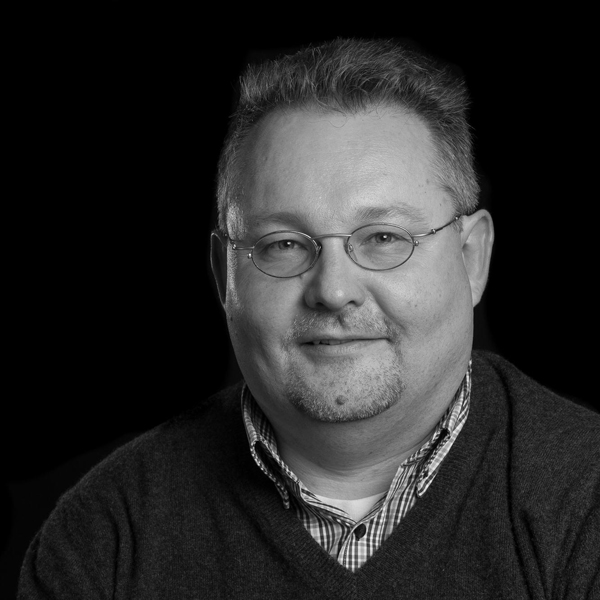
John Tolan is a Professor of Medieval History at the Université de Nantes since 2002, specializing in Islamic-European cultural relations and religious minorities. He has held leadership roles at the Maison des Sciences de l'Homme Ange Guépin and the RELMIN research project. His work spans comparative religious studies, legal history, and interfaith dynamics. PhD in History, University of Chicago (1990) Habilitation, École des Hautes Études en Sciences Sociales (2001) His research focuses on Medieval Mediterranean societies, examining legal frameworks for dhimmis , Crusades , and Quranic translations . Recent projects include the European Qur’an initiative and analysis of St. Francis-Sultan encounters. Publications since 2013 include comparative studies on Abrahamic historiographies , expulsion histories , and religious cohabitation in medieval towns. His work bridges academic research with public discourse through Radio France appearances and 20+ edited volumes . Académie Europæa member Reial Acadèmia de Bones Lletres de Barcelona fellow Professional activities include editorial board memberships for Medieval Encounters and Medieval Voyaging , alongside 80+ international conference participations. Current affiliations: Academia.edu profile .
Michael Cook is the Class of 1943 University Professor of Near Eastern Studies at Princeton University. Previously, he held positions at SOAS (University of London), including Lecturer in Economic History and Reader in the History of the Near and Middle East. His research focuses on Islamic history, theology, and the intersection of religious values with political movements. Cook has been recognized with prestigious awards such as the Balzan Prize (2019) and the Holberg Prize (2014). He has supervised over thirty doctoral students in diverse fields of Islamic and Near Eastern studies. Education: Studied at the University of Cambridge (English and European history) and the School of Oriental and African Studies (SOAS) in London, where he specialized in Ottoman population history. His academic journey includes extensive research on pre-Islamic Arabia, Quranic studies, and medieval Islamic law and ethics. Research Interests: His work spans Umayyad and Abbasid dynasties, Islamic theology, the Prophet Muhammad’s life, Wahhabism, and comparative religious fundamentalism. He explores how religious values shaped Islamic civilization, notably through studies of al-amr bi’l-ma'ruf (enjoining right and forbidding wrong). Awards and Honors: In addition to major prizes, he holds honorary doctorates, fellowship at the British Academy, and membership in the American Philosophical Society and American Academy of Arts and Sciences. His contributions have been acknowledged through awards like the Distinguished Achievement Award from the Mellon Foundation. Teaching and Advising: Cook teaches graduate and undergraduate courses centered on Arabic texts and primary sources. His advising has produced notable scholars across Islamic studies, including work on medieval legal systems, sectarian identities, and cultural histories.
Prof. Dr. habil. Karsten Lehmann is a Research Professor at the Church University of Education Vienna/Krems (KPH Vienna/Krems), specializing in Religious Studies with a focus on religious pluralism, interreligious dialogue, and the sociology of religion. He holds a habilitation from the University of Bayreuth (2014) and a doctorate from the University of Tübingen (2001). His career includes roles as Head of Social Sciences at KAICIID (2013–2016) and acting professorships in Fribourg and Bayreuth. His research explores contemporary religious cultures in Europe/US, migration-related religious dynamics, and the role of religious NGOs in global governance. Education: MA (Lancaster, 1995), PhD (Tübingen, 2001), Habilitation (Bayreuth, 2014) Key Research Areas: Secularization dynamics, interreligious competence in education, UN engagement of religious actors His work bridges empirical religious research with sociological and cultural studies approaches. Notable projects include the 'World Peace Map' (KAICIID) and studies on interreligious initiatives in Austrian schools. Active in academic networks like the German Association for Religious Studies (DVRW) and the American Academy of Religion (AAR).
Angelika Walser is a Professor at the University of Salzburg within the Faculty of Catholic Theology, specializing in the Department of Practical Theology. Her academic focus revolves around Bioethics , Gender Studies , and the Theology-Literature Dialogue , addressing contemporary moral and spiritual challenges through interdisciplinary lenses.
Maribel Fierro is a Research Professor at the Instituto de Lenguas y Culturas del Mediterráneo y Oriente Próximo, part of the Centro de Ciencias Humanas y Sociales (CCHS) at the Consejo Superior de Investigaciones Científicas (CSIC) in Madrid, Spain. She has held this position since 2005 and previously served as a Scientific Researcher at the Department of Arabic Studies, Institute of Philology, CSIC from 1992 to 2005. Fierro has held visiting positions at prestigious institutions including the University of Chicago (2011), Stanford University (2002), and research fellowships at the Institute for Advanced Study in Princeton and The Hebrew University of Jerusalem. Her educational background includes: Semitic Philology studies at Universidad Complutense Madrid (1974-1979) Research scholarship at SOAS, London (1982-1983) Doctorate in Semitic Philology from Universidad Complutense Madrid (1985) Professor Fierro's research spans the history of the Medieval Islamic West (8th-15th centuries), with special focus on al-Andalus, Islamic law, heresy and orthodoxy, violence in Islamic societies, gender and law, religious beliefs and practices, emotions in Islam, and political and religious legitimacy. Her work bridges historical methodology with legal studies, gender studies, and cultural anthropology to examine complex dynamics of pre-modern Islamic societies. Her recent publications demonstrate a consistent focus on intellectual and political history of Islamic societies in the Western Mediterranean, examining religious authority, legal interpretation, and cultural exchange. Fierro's scholarship often explores how knowledge produced in the Islamic West spread in wider Islamic contexts, as evidenced by her ERC Advanced Research Grant project (2009-2014) on 'Knowledge, heresy and political culture in the Islamic West.' Her notable scientific achievements include: R. Stephen Humphreys Distinguished Scholar award from UC Santa Barbara Center for Middle East Studies (2014) Waldo G. Leland Prize from the American Historical Association (2011) for editing volume II of The New Cambridge History of Islam Fierro has directed significant research projects, served on numerous academic committees, and participated in peer review activities for universities worldwide including Haifa, Chicago, Princeton, Yale, and others. She has edited multiple prestigious journals including Der Islam and Intellectual History of the Islamicate World, and serves on editorial boards for several book series. As Director of the research group 'Historia cultural de Mediterráneo' at CSIC, she leads projects examining cultural and intellectual history of the Mediterranean region with particular attention to knowledge transmission between the Islamic West and broader Islamic scholarly communities.
Matthias M. Tischler is a Research Professor at ICREA (Catalan Institution for Research and Advanced Studies) since 2017, affiliated with the Department of Ancient and Medieval Studies (IEM) at the Autonomous University of Barcelona. His career spans multiple European institutions including Technical University of Dresden, Austrian Academy of Sciences, and University of Notre Dame. PhD, Heidelberg (1998) under Walter Berschin Habilitation, Dresden (2009) under Gert Melville Academia Europaea member (2020) Tischler's research focuses on transcultural medieval studies, particularly Carolingian cultural transmission, interreligious encounters, and manuscript-based historiography. He integrates philology, paleography, and codicology to analyze identity formation in post-Carolingian Europe. His recent projects include critical editions of Einhart's Vita Karoli , Luculentius' Homiliary, and leadership in the FWF-project "Carolingian Culture in Septimania and Catalonia." He founded the Journal of Transcultural Medieval Studies and co-edits multiple academic series. Research Fellow, Herzog August Bibliothek (2020) Senior Research Fellow, University of Notre Dame (2016) Herder Prize recipient DFG Center Fellow, Tübingen (2024/25) Tischler supervises doctoral students and habilitations across Europe, maintains extensive international collaborations, and has contributed to major exhibitions and documentaries about Carolingian history. His methodology emphasizes manuscript analysis as key to understanding medieval intellectual networks.