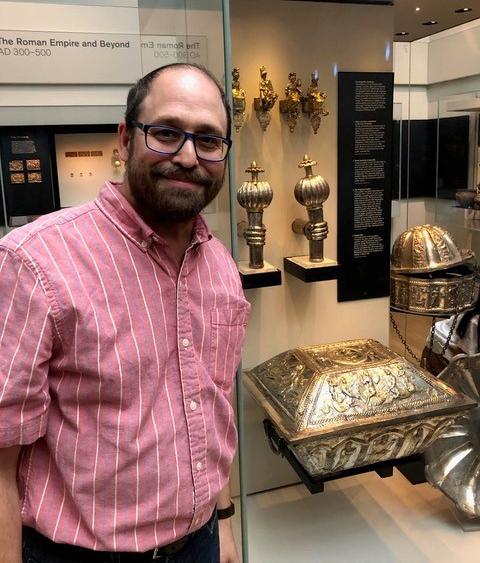
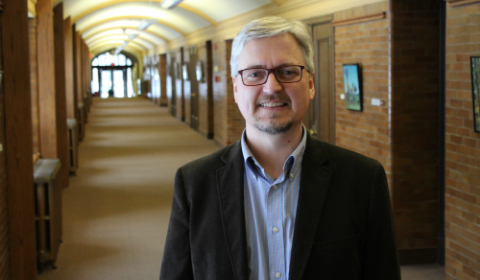
Adam S. Cohen is an Associate Professor in the Department of Art History at the University of Toronto. His research bridges Medieval European Book History , Jewish Art , and Monastic Manuscript Cultures , with a focus on illuminated manuscripts as intersections of theology, politics, and cross-cultural exchange. He co-authored the widely adopted textbook Art and Architecture of the Middle Ages: Exploring a Connected World (2023) and co-edited The Visualization of Knowledge (2020). Research Interests : Examines how medieval art connects abstract theory to daily practice Specializes in Hebrew illuminated manuscripts (e.g., Rothschild Pentateuch) Investigates digital methodologies for manuscript analysis (Utrecht Psalter project) Explores sensory theory in medieval liturgy through the Les cinq sens au Moyen Age volume (2011) Scientific Awards : Leverhulme Visiting Professor, University of Edinburgh (2023) Education : PhD in Art History from Johns Hopkins University (1995).
Paulo Jorge Soares Mendes Pinto serves as Assistant Professor at Lusophone University's Faculty of Social Sciences, Education and Administration, where he coordinates the Department of Science of Religions. He holds leadership roles including Academic Director of Lusophone Faculty of São Paulo and Secretary-General of the Executive Secretariat of the Superior Academic Board of Grupo Lusofona. His academic career spans over two decades with continuous appointments at Lusophone University since 1998. His research focuses on Religious Studies, Jewish Studies, Islamic Studies, and Interreligious Dialogue, with particular emphasis on religious freedom, cultural heritage, and contemporary religious dynamics in Portugal. His work bridges academic scholarship with practical policy development through numerous national and European projects addressing religious integration, cultural diversity, and freedom of religion. Pinto's scholarly contributions demonstrate consistent engagement with contemporary religious phenomena, particularly examining Muslim communities in Portugal, Jewish identity reconstruction, and the intersection of religion with urban culture. His recent publications increasingly explore the relationship between religious symbolism, body practices, and contemporary political movements. Ambassador of the World Parliament of Religions (since 2014) Founder of the European Academy of Religions Coordinator of the 'Database of Islamic Heritage in Portugal' project Scientific coordinator of 'Religions: History - Texts - Traditions' project Recipient of funding from Calouste Gulbenkian Foundation and FCT As advisor to Lusophone University administration and director of multiple postgraduate programs including 'Advanced Training for Islamic Leadership,' Pinto maintains active roles in both academic governance and practical religious education initiatives. His work connects academic research with policy development through projects like 'Charter of Religions Odivelas' and 'Policy Diffusion through the Charter of Religions.'
Helen A. Regis holds the Richard J. Russell Louisiana Studies Professorship at the Department of Geography & Anthropology, Louisiana State University (LSU). Her research bridges cultural anthropology with applied and public scholarship, focusing on urban spaces, cultural heritage, and diaspora studies. She has conducted fieldwork in the U.S., Europe, and West Africa, emphasizing collaborative ethnography and oral history. Regis earned her Ph.D. in Anthropology from Tulane University (1997). Her teaching spans introductory courses to advanced seminars on graphic narratives, feminist ethnography, and the history of anthropology. She actively engages with New Orleans communities through organizations like the Neighborhood Story Project and the House of Dance & Feathers. Her research interests include coastal subsistence practices, African trade routes, and cultural production in festivals like the New Orleans Jazz & Heritage Festival. Notable projects include studies on post-disaster resilience in Louisiana and a forthcoming book on subsistence practices in coastal regions. Regis has served on boards of the Louisiana Folklore Society and CubaNOLA Arts Collective. Her work often intersects with social justice, emphasizing participatory methods and community-driven knowledge production. She leads the LSU-based Climate Extremes and Modeling Group and collaborates with interdisciplinary teams on coastal adaptation strategies.
Assoc. Prof. Dr. Muhammet SEVİNÇ is a scholar of Turkish Religious Music affiliated with Ankara Social Sciences University's Faculty of Islamic Sciences, Department of Islamic History and Arts. He holds a Ph.D. from Marmara University (2020) and has served as Head of Department since 2020 and Deputy Director of the Research and Application Center since 2021. His academic career includes roles as Research Assistant (2015–2020) and lecturer in Islamic studies. Research focuses on historical musicology, Sufi musical traditions, and educational practices in religious music. Key interests include Fatimid-period music culture, Ottoman musical institutions, and pedagogical methods for Mawlid performance. He has authored chapters in books like Türk Din Musikisi (2023) and edited volumes on Yunus Emre and Hajj-related music. His 20+ publications include studies on Ney flute techniques, Imam Hatip school music curricula, and musical activities during the Hacı Bayram Veli era. He actively participates in national/international conferences and has performed in Diyanet TV Ramadan concerts. Current roles involve teaching courses on Islamic music theory, maqam systems, and mosque music forms.
Majid Hannoum is Professor of Anthropology at the University of Kansas within the College of Liberal Arts & Sciences. He earned a Ph.D. from Princeton University in 1996 and another from the Sorbonne, France. His research focuses on Middle East, North Africa, and France , with specific interests in migration, colonial historiography, secularism, and postcolonial theory. Research Trends: His work bridges anthropology and history , analyzing transnational migration (e.g., African and European movements ), secular narratives , and colonial power structures . Publications like The Invention of the Maghreb and Living Tangier critically examine how colonial knowledge shapes modern regional identities and migration politics . Key Themes: Violence and the state Sufism in Africa Discursive power in postcolonial France Ethnographic theory and nativism
Timothy A. Grose serves as Associate Professor of China Studies in the Humanities-Social Science-Arts Department at Rose-Hulman Institute of Technology. His academic profile centers on ethnic minority issues in China, with particular expertise in Uyghur and Tibetan populations, ethnic policy, and minority education. Dr. Grose has established himself as a leading scholar on Xinjiang region dynamics, with his expertise frequently sought by international and national media outlets. His educational background includes a Ph.D. from Indiana University's Department of Central Eurasian Studies (2008-2014), an M.A. from the University of Virginia's Department of East Asian Studies (2005-2007), and a B.A. in East Asian Studies from John Carroll University (2001-2005). Dr. Grose's research interests focus on ethnicity and ethnic politics in China, particularly regarding contemporary Xinjiang and Tibetan pop music. His work examines how Chinese government policies impact Uyghur identity formation, domestic space, religious practices, and cultural traditions. He has organized campus initiatives such as a four-day residency for Tibetan Buddhist monks to increase awareness of East Asian cultures. His scholarly contributions have been recognized with numerous awards including the Central Eurasian Studies Society Book Prize for his 2019 monograph Negotiating Inseparability in China , the ASIANetwork Embodied Learning about Asia Program (2023), and multiple research grants from Rose-Hulman Institute of Technology and external funding bodies. ASIANetwork Embodied Learning about Asia Program (2023) Social Science Humanities Research Council Partnership Development Grant (2022, collaborator) Rose-Hulman Institute of Technology Research Award (2018) RHIT Summer Professional Development Grant (2015) Central Eurasian Studies Society Book Prize (2019) Dr. Grose maintains an active research agenda with publications spanning academic journals, book chapters, and public commentary in platforms like ChinaFile, Foreign Policy, and The Diplomat. His work connects academic scholarship with public discourse on human rights, cultural identity, and ethnic minority policies in China.
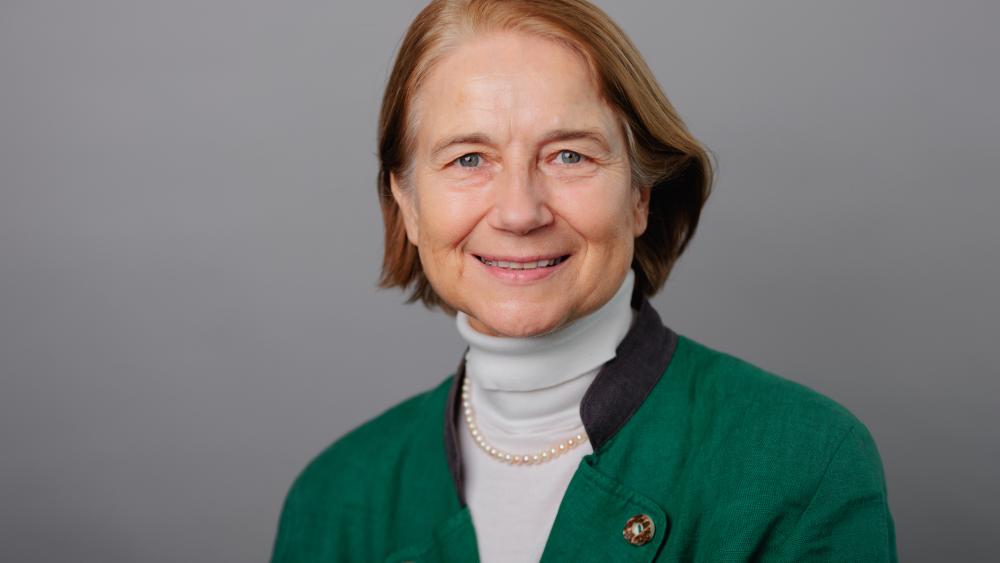
Professor Almut Hintze is the Zartoshty Brothers Professor of Zoroastrianism at SOAS University of London, jointly appointed in the Department of Religions and Philosophies and the School of History, Religions and Philosophies. She holds an MPhil from the University of Oxford, a Dr phil. from the University of Erlangen, and a Dr habil. from Humboldt University of Berlin. Her research focuses on Indo-Iranian philology, Zoroastrian literature, and religion. She directs the ERC Advanced Grant project 'The Multimedia Yasna' (2016–2021), which examines the performance and transmission of the Yasna ritual through digital humanities methodologies. The project integrates philological analysis with interactive film documentation to make ancient texts accessible globally. Her primary research interests include: Oral and written transmission of Avestan texts Zoroastrian ritual practices Cross-cultural religious exchanges Digital reconstruction of historical rituals Professor Hintze's publications emphasize linguistic analysis of ancient Iranian texts and material culture, often exploring intersections between philology, archaeology, and digital humanities. Her work frequently addresses themes of ritual performance, manuscript preservation, and religious evolution in pre-Islamic Iran. She received the distinction of Fellow of the British Academy in 2015 for her contributions to Iranian studies. As primary supervisor for ten PhD students, her mentorship spans topics including Sogdian literature, Yaghnobi linguistics, and Neo-Zoroastrian movements. She leads multiple international collaborations involving researchers from the UK, Germany, India, and Iran.
Nermeen Mouftah is an Assistant Professor in Sociocultural Anthropology at the University of Illinois at Chicago , where she also teaches in the Global Middle East Studies and Religious Studies programs. She holds a PhD from the University of Toronto , an MA from University College London , and a Graduate Diploma from the American University in Cairo . Prior to UIC, she served as a Postdoctoral Fellow at Northwestern University's Buffett Institute and as an Assistant Professor at Butler University. PhD, University of Toronto (Anthropology) MA, University College London (English Literature) Graduate Diploma, American University in Cairo (Arab and Islamic Civilizations) BA, University of Toronto, Trinity College Her research focuses on Muslim social interventions in development, humanitarianism, and care ethics, particularly their intersections with Christian, national, and international systems. Her 2024 book Read in the Name of Your Lord examines Islamic literacy campaigns in post-Mubarak Egypt. Current projects analyze Muslim approaches to child guardianship through fieldwork in Morocco and the U.S., while earlier work studied Pakistan's Eid al-Azha hide auctions and Egyptian NGO Islamic reform movements. Recent publications address cognitive dissonance in Islamic pedagogy , the paradox of orphan care in Islamic law, and scriptural reasoning across Abrahamic faiths. She co-edited a special issue centering Muslims in global humanitarian discourse. Though no specific awards are mentioned, her work has been published in International Journal of Middle East Studies , The Muslim World , and Contemporary Islam .
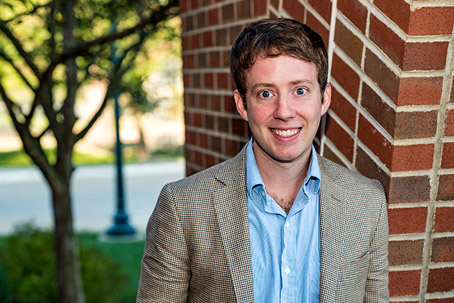
Alexander Bevilacqua is an Associate Professor of History at Williams College, where he has taught since 2017. He specializes in early modern Europe (ca. 1450 to 1800), with particular focus on the history of Europe from Renaissance to Enlightenment, global interactions, and their cultural and intellectual ramifications. Bevilacqua earned his B.A. from Harvard University (2007), M.Phil. from University of Cambridge (2008), and M.A. and Ph.D. in History from Princeton University (2010, 2014). Prior to Williams, he was a junior fellow in the Harvard Society of Fellows (2014-2017). His current book project, The Mask of Battle: European Chivalry in the Age of Discovery , examines the impact of chivalry on European imaginings of the world beyond Europe. His research interests span European intellectual history, Islamic studies, global interactions, and the Enlightenment. His work demonstrates particular expertise in cross-cultural encounters between Europe and the Islamic world, early modern religious thought, and the history of scholarly networks. He has published extensively on these topics in journals such as Past and Present , Journal of Modern History , and Journal of the Warburg and Courtauld Institutes . Bevilacqua's scholarship reveals a consistent focus on how knowledge was transmitted across cultural boundaries in early modern Europe, with particular attention to intellectual networks connecting Europe and the Islamic world. His work often examines how these exchanges shaped European thought during the Enlightenment period. Winner of the Herbert Baxter Adams Prize Winner of the Thomas J. Wilson Memorial Prize Shortlisted for the Longman/History Today Book Prize Bevilacqua has advised numerous senior theses at Williams College, with many winning departmental prizes. His research has been supported by prestigious organizations including the American Council of Learned Societies, the American Historical Association, and the American Philosophical Society. He has held fellowships at institutions including the Huntington Library, the Warburg Institute, and the Wissenschaftskolleg in Berlin.
Nazila Isgandarova serves as Associate Professor in the Teaching Stream and Director of the Supervised Psycho-Spiritual Education (SPE) Practicum at Emmanuel College, Victoria University within the University of Toronto. Her interdisciplinary work bridges theological education, clinical psychotherapy, and social work practice with a focus on Muslim communities. Her educational foundation includes: BA/MA from Baku State University MA from Carleton University MSW from University of Windsor DMin in Pastoral Counselling from Wilfrid Laurier University PhD from St. Michael’s College, University of Toronto Professor Isgandarova’s research centers on culturally and spiritually integrated care, specializing in Islamic spiritual care models, psychotherapy adaptations for Muslim populations, and gender-based violence interventions. She pioneers the integration of Muraqaba (Islamic mindfulness) into clinical practice while addressing contemporary ethical challenges including medical assistance in dying and pandemic-related spiritual crises through interfaith theological reflection. Her publication trajectory (2015-2024) reveals consistent focus on Islamic spiritual care methodology, with increasing emphasis on pandemic responses, intercultural communication in pastoral settings, and trauma resilience. Recent works demonstrate sophisticated integration of clinical psychology with Islamic theological frameworks across mental health, end-of-life care, and addiction treatment contexts. Honors include: Champion of Diversity Award Ontario Volunteer Service Award Order of Vaughan Forum for Theological Exploration Research Award (domestic violence focus) Canadian Association for Spiritual Care Senior Research Award Society for Pastoral Counselling Research Award As SPE Program Director, she oversees clinical training for pastoral care practitioners with emphasis on performance anxiety management and intercultural competence. Her research program has secured competitive awards including the Forum for Theological Exploration grant for domestic violence research, demonstrating significant scholarly impact in spiritual care innovation. She leads the Supervised Psycho-Spiritual Education program which trains clinicians in integrating Islamic spiritual practices with evidence-based psychotherapy, establishing a distinctive model for faith-based mental health interventions within academic medical settings.
Amy Catlin-Jairazbhoy serves as an Adjunct Professor in UCLA's Department of Ethnomusicology, specializing in South Asian and diasporic musical traditions with particular focus on the African-Indian Sidi community of Gujarat. Her interdisciplinary work bridges academic research with community development initiatives across the Indian Ocean region. Her educational foundation includes: Ph.D. from Brown University M. Mus. from Yale University B.A. from Vassar College Professor Catlin-Jairazbhoy's research centers on South Asian musical diasporas , African-Indian cultural syncretism , and applied ethnomusicology . She pioneers methodologies integrating ethnographic film and public sector engagement to document endangered traditions, notably through her groundbreaking work with Sidi performers. Her scholarship examines music's role in sacred practices across Hindu, Sufi, and indigenous frameworks while advocating for minority cultural preservation in diasporic contexts. Her publications consistently explore Indian Ocean connectivity , revealing how musical practices sustain identity across migration routes. Key thematic threads include Sufi-Bantu ritual fusion , goddess worship traditions , and post-colonial identity negotiation through sound, demonstrating music's function as both historical archive and living resistance. Her distinguished recognition includes: Bake-Jairazbhoy Chair Professor of Indian Ocean Studies at PSMO College (Calicut University affiliate) Professor Catlin-Jairazbhoy has curated pivotal cultural initiatives including the first international concert-lecture tour featuring African-Indian Sidi performers (England/Wales 2002), demonstrating her commitment to translating academic research into public engagement. While specific grant details remain undocumented, her collaborative projects with historians like Edward Alpers exemplify transnational scholarly partnerships advancing diaspora studies. Her institutional work at UCLA positions ethnomusicology as a vital tool for understanding cultural resilience, particularly through multimedia documentation of communities at the intersections of African, South Asian, and Islamic traditions.
Prof. Dr. Helene Basu is a Professor of Social and Cultural Anthropology at the Institute of Social and Cultural Anthropology, University of Münster, where she previously served as Vice Dean for Research, Young Scientists and International Affairs. She has maintained an active teaching schedule for many years, offering courses on research fields, mental health, decision-making, translocal relationships, and South Asian anthropology. Her academic background includes a Habilitation in Ethnology from Freie Universität Berlin in 2001, a Ph.D. in Social & Cultural Anthropology from Freie Universität Berlin in 1993, and an M.A. in Social & Cultural Anthropology, Sociology, and Religious Studies from Freie Universität Berlin in 1985. Prof. Basu's research spans multiple theoretical and regional specializations. Theoretically, she focuses on Cultural & Social Theory, Anthropology of Religion, Kinship & Gender, Emotion, Historical Anthropology, Anthropology of Finance, Migration and Diaspora Studies, Anthropology of Mental Health, and Visual Anthropology. Regionally, her expertise encompasses South Asia, East Africa, Indian Ocean Spaces, and South Asian Islam and Hinduism. Her work often explores the intersections between religion, mental health, and decision-making processes, with particular attention to ritual healing practices and their relationship with modern psychiatric approaches in India. Her recent publications demonstrate a sustained engagement with decision-making processes, mental health practices, and religious rituals, particularly in South Asian contexts. A significant portion of her work examines how traditional healing practices, especially those involving spirit possession and Sufi shrines, interact with and sometimes challenge secular psychiatric approaches. She has also made important contributions to understanding financial practices, migration patterns, and the cultural dimensions of voice and sound in religious contexts. Prof. Basu has supervised numerous doctoral students whose work reflects her diverse research interests, including projects on Brazilian Spiritism, gender and psychiatry in India, Sunni Vohras in Gujarat, Sri Lankan Tamil diaspora, and the role of voice in Indian religious practices. She has been involved in significant research collaborations, including the SFB 1150 'Cultures of Decision-making' and the Cluster of Excellence 'Religion and Politics.' Her ethnographic films, including 'Kabul Kiya - Do you accept?', 'Spirits of Envy,' and 'Drugs & Prayers,' document important aspects of her research on mental health, decision-making, and religious healing practices, providing valuable visual resources for anthropological study.
Dr. Aliyah Khan is an Associate Professor jointly appointed in the Department of Afroamerican and African Studies and the Department of English Language and Literature at the University of Michigan. She serves as Director of the Global Islamic Studies Center and holds affiliations with multiple research centers including the Center for South Asian Studies, Arab and Muslim American Studies Program, and Center for World Performance Studies. Her research specializes in postcolonial Caribbean literature and contemporary Muslim/Islamic literatures, with particular focus on intersections of race, gender, and Islam across the Americas. She examines these themes through diverse mediums including literature, music, and graphic novels. Dr. Khan's monograph Far from Mecca pioneered academic study of Caribbean Islam across Guyana, Trinidad, and Jamaica. Research Focus Postcolonial literary traditions of the Caribbean Representations of Muslim identities in diaspora Gender and sexuality in Islamic contexts Indo-Caribbean cultural history Graphic novel representations of Muslim experiences Honors & Recognition American Association of University Women Postdoctoral Fellowship (2017-2018) American Comparative Literature Association First Book Award (2018-2019) Editorial Board: Bloomsbury Critical Guides in Comics Studies Fellow, Center for World Performance Studies
Dr Diana Chester is a Senior Lecturer in Media and Communications at the University of Sydney, specializing in sound studies, ethnography, and interdisciplinary artistic research. Her affiliations include the Sydney Environment Institute and Sydney Nano Institute. She holds a BA from Mount Holyoke College, MA from Columbia University, and PhD from the University of Porto. Research focuses on acoustic ecology, data sonification, and sound's role in religion and culture. Notable projects include Sonic Encounters: The Islamic Call to Prayer (2021) and collaborations with institutions like the Smithsonian and Oxford University. She has been an artist-in-residence in Mongolia, Iceland, and Sweden. Current projects: 'Listening to Earth', 'Sounding Antarctica', and 'Nanoresonance' Key awards: 2024 RAWspace Residency, 2023 Oxford Visiting Scholar Teaching includes Media Production, Research Practices, and Sound Design Her work bridges art and scholarship through sound installations, audio essays, and sonic data visualization. International collaborations span Mongolia's ancestral listening practices to Yale's study of Brooklyn's Lipka Tatars. Grants: Sydney Environment Institute Fellowships, Sydney Nano Catalyst Grant Media: Featured in ABC Sydney, Sydney Morning Herald, and Silkway News
Dr. Paul Dyck is a Professor of English at Canadian Mennonite University (CMU), where he has taught since 2000. His work emphasizes interdisciplinary collaboration, exemplified by his dialogue with colleagues like Kenton Lobe on topics blending classical and modern agrarian poetry. He teaches courses on poetic forms such as the sonnet, exploring its enduring influence across cultures and eras. His research focuses on George Herbert’s poetry and the material history of books, particularly how theological meaning intertwines with physical text design in early modern England. Recent projects include a book analyzing Herbert’s devotional materiality and participation in the Anglican Diocese’s theological education reform. Dyck’s travel to Iran and engagement with Islamic studies reflect his broader curiosity about cultural intersections. His research spans early modern literature, book history, and religious poetry, with notable contributions to studies of Herbert, Tudor-Stuart drama, and material culture. His work often bridges textual analysis with historical context, as seen in studies of Little Gidding’s manuscript practices and the intersection of rhetoric and power in plays. Dyck’s publications demonstrate a commitment to exploring how form and content shape meaning in both sacred and secular texts. Outside academia, Dyck contributed to the Anglican Diocese of Rupert’s Land’s theological education reforms, emphasizing ministerial preparation and broad-based theological learning. His travel writings and collaborations highlight a dedication to bridging academic inquiry with communal and global perspectives.