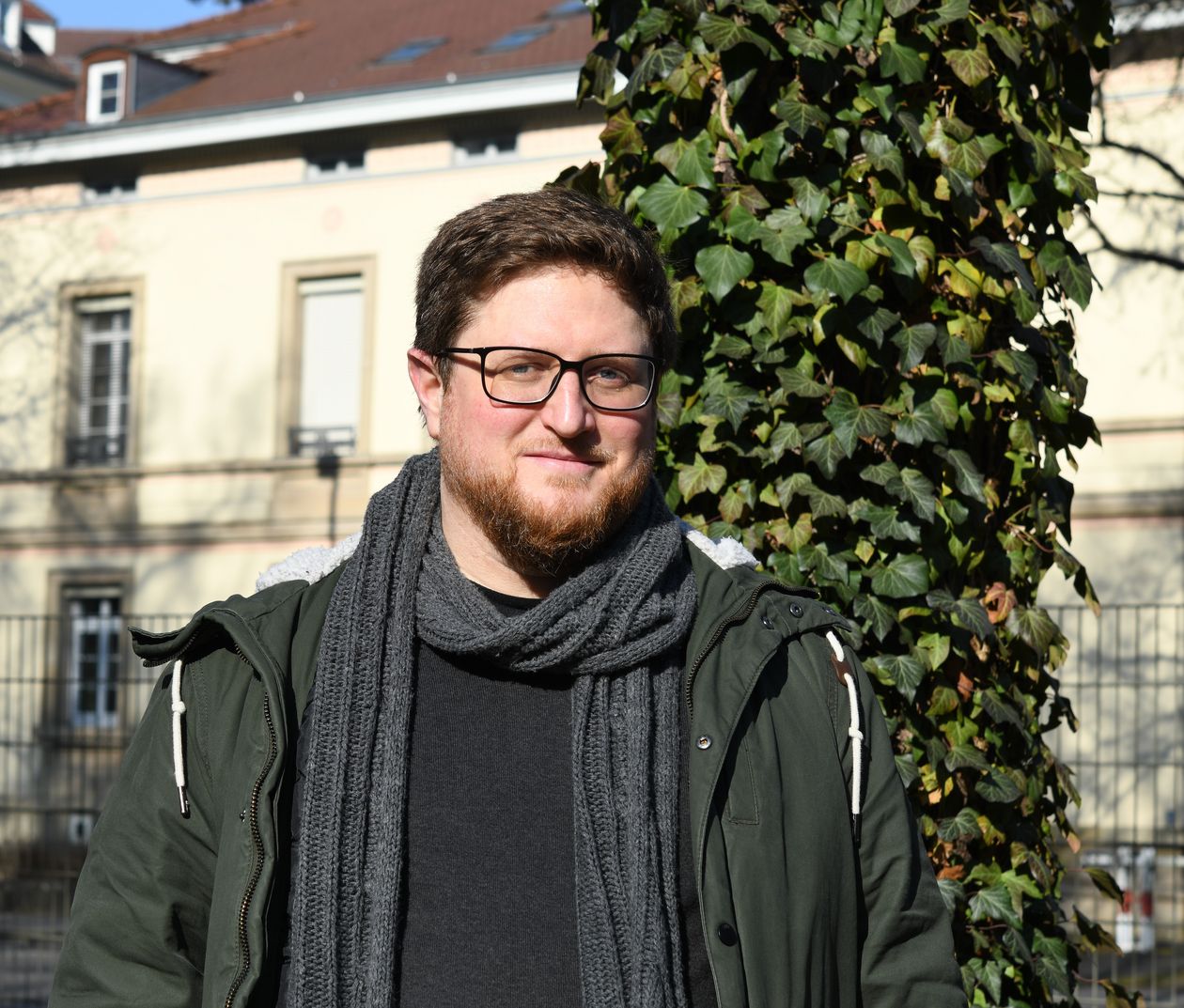
Albrecht Fuess is a Professor of Islamic Studies at Philipps University of Marburg since 2010, specializing in Middle Eastern History (13th–17th centuries), Mamluk socio-cultural dynamics, and contemporary European Islamic discourses. His research spans historical continuity in Ottoman-Mamluk-Safavid interactions, Islamic youth cultures, and Mediterranean geopolitics. Research Focus: Medieval Islamic history, Transottomanica mobility studies, Islam in Europe, and cultural integration of Muslim migrants. Awards: Le Studium Fellowship (2007–2009) at Université de Tours. His publications emphasize military-economy interplay, legitimacy through religious narratives, and resource management in empires, with a focus on Mamluk and Ottoman transformations. He has advised on doctoral projects covering topics like Islamic welfare, Arabic ʾAmālī literature, and Cypriot-Ottoman relations. Leadership: Co-coordinator of Transottomanica (DFG-SPP 1981), member of ANR and DAAD committees, and liaison professor for the German National Academic Foundation. Editorial Roles: Co-editor of 'Transottomanica' and 'Muslim Worlds' series, and advisory board member for journals in Cairo, Paris, and Leuven.
Prof. Dr. Ulrike Freitag is a distinguished scholar in Islamic Studies and social history of the Arab world, holding a Professorship at Freie Universität Berlin and serving as Director of the Leibniz-Zentrum Moderner Orient (ZMO) . Her work bridges urban history, transregional Islamic networks, and Arabian Peninsula studies within Indian Ocean and Red Sea contexts. Education : PhD in Islamic Studies (Freiburg, 1991), Habilitation (Bonn, 2002) Research : Focus on Ottoman urban violence, Saudi state formation, Hadhrami diaspora, and historical urbanism in Jeddah Her supervision of PhD projects spans topics from Moroccan Sufi sanctußen to Yemeni Jewish communities. Recent scientific awards include fellowships at Leiden University and Käthe-Hamburger Kolleg. She contributes to public discourse through Tagesspiegel op-eds and international conferences.
Prof. Dr. Ulrich Rebstock is a former full professor of Islamic Studies at the Albert Ludwig University of Freiburg, holding the position from 1993 to 2017. He specializes in Islamic history, Arabic studies, and African Islamic contexts, with a focus on Mauritania and North African intellectual traditions. His work bridges historical documentation, manuscript studies, and the analysis of administrative and legal practices in Islamic societies. Rebstock earned his doctorate in 1983 on Ibadi movements in the Maghrib and completed his habilitation in 1990 on computational practices in the Islamic Orient. Research interests include Islam in Africa, usul al-fiqh (Islamic legal theory), and Arabic mathematical history. He has led major projects such as the publication of the Mauritanian historical encyclopedia Kitāb Ḥayāt mūrītāniyā and the Moorish Literary History series. Current projects involve developing a collaborative web-based system for annotating Arabic texts to create complex indices. Key contributions include critical editions of historical manuscripts, studies on Moorish legal opinions, and analyses of reformist movements in Sudan. His work often emphasizes the intersection of textual analysis with socio-political contexts in Muslim-majority regions.
Dr. Razak Khan is a Research Fellow in the History Research Group at CeMIS (Center for Modern Indian Studies). His academic journey includes a DPhil from Freie Universität Berlin (2014) and postdoctoral fellowships at the Max Planck Institute for Human Development and Friedrich–Alexander University Erlangen–Nürnberg. Research Focus: Early modern/colonial India, South Asian Islam, Urdu public cultures, history of emotions, Indo-German comparative histories, and global intellectual history. Key Projects: His Habilitation project explores 'Minor Cosmopolitanism' through Syed Abid Husain's writings, while his book Minority Pasts (OUP, 2022) examines locality and belonging in Rampur. Publications: 15 recent works span transnational Indo-German intellectual histories, emotional geographies, Urdu archives, and Indo-Islamic cultural studies. Collaborations: Co-edited The Incomparable Festival (Penguin, 2021) and contributed to interdisciplinary volumes on emotions and migration.
Florian Zemmin is a Professor at Freie Universität Berlin's Institute of Islamic Studies , serving as Co-Director of the Berlin Graduate School Muslim Cultures and Societies (BGSMCS). His research focuses on Islamic reformism , Middle Eastern conceptual history , and Arabic sociologies of religion within broader debates about modernity and secularity . Current affiliations: Freie Universität Berlin (since 2020) Previous affiliations: Universität Bern (2010-2020), Universität Leipzig (2015-2021) His research interests examine how Islamic traditions intersect with modern secular concepts through: Historical conceptual analysis in Arabic and Ottoman contexts Comparative secularisms beyond Western frameworks Postcolonial critiques of Eurocentric theory Sociological approaches to Islamic knowledge production Current projects include: Das soziokulturelle Leben soziologischer Konzepte – creating a critical lexicon of 60 sociological terms in Arabic Global Secularity: A Sourcebook – co-editing a 7-volume series on secular formations across regions Arabic Sociologies of Religion – challenging Eurocentric sociology through Arabic theoretical work Key publications address: Conceptual transfers in Islamic modernism Secularism in Islamic intellectual history Arabic sociology of religion Ottoman conceptual transformations Islamic responses to global social theory
Prof. Dr. Rachid Ouaissa serves as University Professor and Head of the Department of Middle Eastern Politics at the Center for Near and Middle Eastern Studies (CNMS), Philipps University of Marburg since March 2009. He concurrently holds affiliations with the Center for Interdisciplinary Religious Studies and Center for Conflict Research at the same institution, and maintains active roles in Berlin-based research networks including EUME and the Wissenschaftskolleg zu Berlin. His academic formation includes a PhD from the University of Leipzig (2004) supervised by Prof. Hartmut Elsenhans, preceded by undergraduate studies at Martin-Luther-Universität Halle-Wittenberg (1994-1999) where he received the DAAD-Preis in 1997. His scholarly trajectory includes a Visiting Scholarship at Dalhousie University (2008) and prior research positions at the University of Leipzig. Ouaissa's research program centers on Middle Eastern and North African political dynamics with four interconnected pillars: cultural-identitarian political movements (comparing BJP in India and Algerian parties), moderate Islamist parties as potential EU partners, state-class behavior during resource scarcity (Iraq case study), and fundamentalist movement development (FIS in Algeria vs. Mahdia in Sudan). His conceptual innovation emphasizes blocked middle classes mobilizing religious identity to challenge state power, while his recent work develops 're-configuration' frameworks for understanding post-Arab Spring transformations. His publication trajectory from 1999-2021 reveals evolving scholarly priorities: early work focused on Algerian state formation and political Islam, shifting toward comparative cultural-identitarian movements (2007-2009), then moderate Islamist parties' foreign policy (2009-2012), with contemporary research addressing Hirak protests and theoretical re-configuration models. The corpus demonstrates consistent engagement with Algeria while expanding to regional comparative frameworks, particularly through co-edited volumes on Maghreb entanglements and MENA transformation processes. His scientific recognition includes: DAAD-Preis der Martin-Luther-Universität (1997) Friedrich-Ebert-Stiftung PhD Fellowship (2000-2002) Friedrich-Ebert-Stiftung Scholarship (1998-1999) Professor Ouaissa has secured major research funding including two German Research Foundation (DFG) projects: 'New Cultural-Identitarian Political Movements' (2007-2009) and 'Moderate Islamist Parties as EU Partners' (2009-2012). He actively mentors emerging scholars through the Friedrich-Ebert-Stiftung's doctoral programs and serves on its selection committees, while his policy engagement manifests through frequent media contributions analyzing Algerian protests and regional dynamics for outlets including Le Monde, El Watan, and Deutsche Welle. He leads the Department of Middle Eastern Politics at CNMS while contributing to the university's interdisciplinary research infrastructure through the Center for Interdisciplinary Religious Studies and Center for Conflict Research. His international scholarly integration is evidenced by co-editing the book series 'Politik und Gesellschaft des Nahen Ostens' and 'Studien zur Geschichte und Zeitgeschichte Westasiens und Nordafrikas', alongside editorial leadership of the journal META (Middle East Topics and Arguments).
PD Dr. Lutz Rzehak is an academic staff member at the Institute for Asian and African Studies (IAAW) within the Faculty of Humanities at Humboldt University of Berlin, serving as a Teacher for special tasks specializing in Modern Iranian languages and the ethnography and cultural history of Afghanistan and Central Asia. His educational background includes: Oriental Studies/History from the State University of Leningrad (1985) Doctorate in Iranian Studies, Humboldt University of Berlin (1991) Habilitation in Central Asian Studies / Iranian Studies, Humboldt University of Berlin (2001) Dr. Rzehak's research spans Central Asian Studies , Iranian Studies , Ethnography , and Linguistics , with fieldwork focusing on Baloch, Pashtun, and Tajik communities. His work examines language evolution, social structures, and cultural practices through historical and contemporary lenses, particularly regarding Soviet influence and post-Taliban Afghanistan. Key contributions include grammatical analyses of Iranian languages and ethnographic studies of religious rituals and tribal systems. His recent publications (2016-2021) reveal consistent focus on Iranian language dynamics (especially Dari and Pashto), ethnic identity politics in Afghanistan, and cultural history of Central Asia. These works address language change mechanisms, ethnic consolidation strategies, and the interplay between tradition and modernity, often utilizing comparative linguistic and ethnographic methodologies. His scientific awards include: Heisenberg Fellow of the German Research Foundation Dr. Rzehak has held significant research positions including Research Associate in the Crossroads Asia Competence Network (2011-2016) and Heisenberg Fellow (2002-2011). While his CV does not list formal PhD advisees, his language lecturing and research supervision have mentored numerous students in Central Asian and Iranian studies through course instruction and fieldwork guidance. He has been actively involved in the Crossroads Asia Competence Network, a major interdisciplinary research initiative examining transregional connections and historical trajectories across Central, South, and West Asia.
Dr. Idris Nassery serves as Assistant Professor of Islamic Jurisprudence at the Paderborn Institute of Islamic Theology (PIIT), Faculty of Arts and Humanities, Paderborn University. Since October 2021, he holds the junior professorship while leading the Department of Islamic Normative Science since October 2019. His academic credentials include: PhD (2017) on law-ethics relationship in Al-Ghazali's thought Master in Islamic Law (LL.M.) from SOAS, University of London Legal education at University of Bielefeld culminating in full legal qualification (2019) Certified training in Islamic Banking and Finance from LSE Master in Classical Islam from University of Johannesburg Research periods at Oxford, Al-Azhar University, Hamad bin Khalifa University, and Saint-Josef-University Nassery's research bridges classical Islamic legal theory with contemporary applications. His work spans Islamic jurisprudence fundamentals, legal philosophy, banking ethics, and critical analysis of Taliban ideology. Since 2022, he co-founded and chairs the Institute for Law and Society in Afghanistan (ILSAF), demonstrating practical engagement with his academic focus on Afghanistan. His publication trajectory shows evolution from classical scholarship (2023 edited volume on tradition dynamics) to urgent political commentary (2021-2022 FAZ articles analyzing Western failure in Afghanistan and post-jihad governance). This progression reflects his dual expertise in historical Islamic law and contemporary geopolitical realities. Teaching responsibilities include courses on economic ethics across Judaism and Islam, comparative religious theology, Islamic jurisprudence fundamentals (Usul al-fiqh), and 19th century Ottoman religious reforms. His departmental leadership since 2019 indicates significant institutional responsibilities beyond research and teaching duties.
Dr. Achim Rohde is a Middle East historian serving as Research Fellow at the University of Hamburg's Asia-Africa Institute and Head of Memorial Development at the Lower Saxony Memorials Foundation. He holds a doctorate from Freie Universität Berlin and has held academic positions at institutions including Philipps University Marburg, Goethe University Frankfurt, and TU Berlin. Research Focus: Modern Middle East history (20th/21st century), gender studies, memory politics, and critical analysis of Orientalism and educational systems. Publications: 15 most recent articles span topics from Jihadist masculinity to post-2003 Iraqi education reforms , Tunisian democratization , and German academic discourse on non-Christian religions . Teaching: Courses on Arab Spring legacies, Islamic popular culture, and gender dynamics in Middle Eastern societies across multiple universities between 2002-2021. Academic Network: Collaborations with institutions like German Institute for Global Area Studies, Heinrich-Böll-Stiftung, and editorial work on comparative Middle East studies. Key Projects: Contributions to Social Contexts of Rebellion in Early Islamic Period (SCORE) , InterSaME , and RomanIslam Center for transcultural empire studies.
Mouez Khalfaoui is Professor of Islamic Law at the Center for Islamic Theology at the University of Tübingen, where he has served since 2014. He previously held the position of Junior Professor for Islamic Law (2012-2014) and served as Deputy Director of the Center for Islamic Theology from 2021-2023. His administrative roles include Head of the Examination Board, Member of the Study Commission, and Member of the Center Council. Dr. Khalfaoui earned his Doctorate in Islamic Studies from the University of Erfurt in 2008 and completed his State Examination in Islamic Studies and Arabic Studies at Manouba University of Tunis, Tunisia in 1998. Prior to his academic career, he served in the Kuwaiti Embassy in Berlin (2010-2012) and worked as an Academic lecturer for Islamic and Arabic studies at the Free University of Berlin (2009-2012). His research focuses on Islamic law, normative theory and history, Islamic theology, minority rights, Islamic education, and social ethics with particular emphasis on Islam in European contexts. Dr. Khalfaoui has led major research projects including comparative studies of work ethics across Abrahamic religions, Islamic Law and Ethics from a European perspective, Islamic family law in Europe, and the normativity of the Quran in contemporary contexts. His work addresses critical issues such as Muslim minority rights, the role of women in Islam, Islamic family law in Europe, Sharia and secular law, and Islamic work ethics in global contexts. Analysis of his recent publications reveals a consistent focus on the intersection of Islamic legal tradition with contemporary European contexts, particularly examining how Muslim minorities navigate religious obligations within secular legal frameworks. His work demonstrates a methodological approach combining historical, sociological, philosophical, legal and theological perspectives to address current challenges facing Muslim communities in Europe. Dr. Khalfaoui has been awarded research funding for projects including the comparative study of work ethics across Abrahamic religions and research on Islamic family law in Europe. His work has been supported by institutions including the Akademie für Islam in Wissenschaft und Gesellschaft (AIWG) and the Deutsche Forschungsgemeinschaft (DFG), with a recent May 2024 application for research on 'The primacy of what is right in a plural and multi-religious society'. He supervises the interdisciplinary post-doc research group 'Religion and Rationality − Faith and Reason in the Life and Thought of Muslims, Christians and Jews in the Context of Plural Societies' and serves as consultant and reviewer for European foundations including DAAD, Humboldt Foundation, and Porticus Foundation. Dr. Khalfaoui is actively involved in academic organizations as co-founder of the German International Society for Theological Studies (DIGITS), founding member of the Berlin Institute for Public Theology, and founding member of the Tübingen School of Education.
GIGA German Institute of Global and Area StudiesGermany
Hager Ali is a Doctoral Researcher at the German Institute for Global and Area Studies (GIGA), specifically affiliated with the GIGA Institute for Middle East Studies, and is part of the GIGA Doctoral Programme since October 2018. Ali also serves as an External Editor for the thematic series "Autocracies with Adjectives" at the Loop, ECPR's Political Science Blog since March 2022, and maintains a career as a freelance journalist since 2010. German Institute for Global and Area Studies (GIGA) - Institute for Middle East Studies (2018-present) Central European University (CEU) - Teaching appointments (2025) Institute for Peace Research and Security Policy (IFSH) - Teaching appointments (2024) Ali's research focuses on civil-military relations in the Middle East and North Africa, military coups and civilian control of armies, authoritarian regimes and institutions, regime stability and destabilization, party systems and cleavages, and German military deployments in the MENA-Region and Sahel. The doctoral dissertation examines "Praetorianism in the MENA-Region: Military Governance and Civilian Control across Regime Types." Ali's work demonstrates sophisticated methodological approaches to understanding authoritarian resilience and military politics through comparative analysis. Ali's publication record reveals a consistent focus on Sudanese politics and civil-military relations, with increasing attention to contemporary conflicts since 2022. The research combines theoretical insights from comparative authoritarianism studies with detailed empirical analysis of military institutions and political transitions in the Middle East and North Africa. Recent work shows a growing emphasis on practical policy implications, particularly regarding peace negotiations in Sudan and the role of civilian actors in conflict resolution. Shortlisted for the Best Blog Award of 2022 by ECPR's Political Science Blog "The Loop" (2023) Ali actively contributes to academic discourse through conference presentations, policy papers, and media commentary. Recent engagements include serving as a discussant at the ECPR General Conference 2024 on "Trends in autocratic practices and behaviors" and scheduled lectures on the Sudan conflict in 2025. Ali has established collaborations with institutions like the German Institute for International and Security Affairs (SWP) and maintains strong connections with academic networks across Europe. As a member of the GIGA research programme on Accountability and Participation, Ali contributes to interdisciplinary research on governance and political institutions. Ali participates in multiple ECPR Standing Groups including Political Methodology, Political Violence, Comparative Political Institutions, and Critical Peace and Conflict Studies, demonstrating engagement with diverse methodological and theoretical approaches to political science research.
Prof. Dr. Tobias Berger is Junior Professor of Political Science with a focus on Transnational Politics of the Global South at the Otto Suhr Institute for Political Science, Freie Universität Berlin. He is also a Principal Investigator in the Excellence Cluster 'Contestations of the Liberal Script' (SCRIPTS). His work bridges international relations, political sociology, and legal anthropology, with a strong emphasis on the Global South. University: Free University of Berlin School: Otto Suhr Institute for Political Science Department: Department of Politics and Social Sciences Position: Junior Professor Education: PhD, Berlin Graduate School for Transnational Studies MPhil in Political Theory, University of Oxford BA in Politics & Development Studies, School of Oriental and African Studies (SOAS), University of London His research interests center on international political sociology , human rights beyond liberalism , legal pluralism , and transnational politics of South Asia . He employs ethnographic and interpretative methods to explore how global norms are translated in local contexts, particularly in Bangladesh and across the Global South. The recent articles reflect a strong trend toward critical approaches to human rights , translation theory , non-Western security practices , and post-liberal political orders . His work interrogates the liberal script in global governance, especially in education, security, and constitutionalism, often from a decolonial and relational perspective. Scientific Awards: No specific awards mentioned in the text. As a Principal Investigator in the SCRIPTS excellence cluster, he leads major research initiatives such as 'De-Centering Human Rights', 'Negotiating the Future of Education', and 'Security Doctrines in a Changing World'. He has collaborated with institutions like UNESCO and the OECD and has secured funding for interdisciplinary, transregional research. He has advised on development and humanitarian projects in Cambodia and worked with indigenous communities in Ecuador. He has edited influential volumes like World Politics in Translation (2018) and special issues on transnational non-state actors. He is affiliated with research networks across Europe and the Global South and contributes to debates on global governance, norm contestation, and epistemic justice.
Tom Khaled Würdemann is a researcher and freelance lecturer affiliated with the Heidelberg University of Jewish Studies and the University of Heidelberg , specializing in Middle East studies, political science, and transcultural analysis. His work focuses on Jewish-Arab relations, conflict resolution, and the historical and ideological dimensions of the Israeli-Palestinian conflict. Education: Pursuing a PhD in Palestinian Studies at the Institut für Palästina-Studien since 2023. Research Interests: Würdemann's research bridges political science, historical analysis, and social theory, examining themes such as settler colonialism, ideological alliances, and the role of media in conflict narratives. He critically analyzes state formation, antisemitism, and the complexities of Jewish identity in the Islamic world. Publications: His recent work includes analyses of the Assad regime, comparative perspectives on Maoism and Israeli military figures, and critiques of deradicalization strategies. He explores intersections between Islamist and right-wing movements and contributes to debates on democracy and peacebuilding in the Middle East. Contact: Email: tom.wuerdemann@hcts.uni-heidelberg.de
Besnik Sinani is a Research Fellow at the Center for Muslim Theology at Tübingen University. He holds a PhD in History and Islamic Studies from Freie Universität Berlin (Summa Cum Laude, 2020) and has held fellowships at institutions including the Leibniz-Zentrum Moderner Orient Berlin and New York University. His research focuses on contemporary Islamic movements, Saudi religious policy, transnational Sufi networks, and Sharia implementation in Europe. Current Position: Research Fellow (since 2022) Previous Affiliations: Leibniz-Zentrum Moderner Orient Berlin (2021) Research interests include post-Salafism evolution, religious reform in Saudi Arabia, transnational Sufi orders, and the intersection of Islamic law with modern European contexts. His work analyzes how political changes shape religious discourse in authoritarian regimes and explores the cultural dimensions of religious revival in post-communist Southeast Europe. His publications include studies on Saudi Salafism's transformation, debates over prophetic veneration, and the role of Sufi orders in shaping Islamic futures. He has received prestigious awards including the DAVO Dissertation Award (2021) and German Federal Excellence Program funding (2016–2020).
Professor Irene Schneider is a distinguished scholar of Arabic and Islamic Studies at the University of Göttingen, currently on sabbatical as a Distinguished Fellow at the Max Weber Institute/University of Erfurt since October 2024. She leads the ERC Advanced Grant project '(De)Colonizing Sharia?' focused on tracing transformation, change and continuity in Islamic Law in the Middle East and North Africa during the 19th and 20th centuries. Her research spans Islamic law (particularly family, criminal, and public law), gender studies with emphasis on gender constructions in law, legal history, and contemporary Muslim societies in Morocco, Egypt, Palestine, Iran, and Afghanistan. She has made significant contributions to understanding the relationship between international law and national legislation in Palestine, as detailed in her influential book 'Debating the Law, Creating Gender: Sharia and Lawmaking in Palestine, 2012-2018.' Professor Schneider's scholarly work demonstrates a remarkable historical depth, examining issues from Islam's formative period to contemporary contexts. Her publications span multiple languages including German, English, French, and Farsi, reflecting her interdisciplinary approach that combines historical analysis with contemporary legal and social issues. Her recent research particularly focuses on conceptual history, civil society development, and the translation of global legal concepts into local Islamic contexts. Among her notable achievements is the establishment of the 'Islamic Law' specialization in the Master's program at Göttingen in 2011, which allows students to gain intensive insight into Islamic legal language while simultaneously taking modules from the Faculty of Law. She has also established the research and teaching focus 'Palestine and the Middle East Conflict' in 2014. ERC Advanced Grant recipient (2024) Deputy Chair of the German Working Group on the Middle East (DAVO) since 2022 Director of SAI II since 2021 Former Chair of Gender Studies Working Group at University of Göttingen (2010-2013) Professor Schneider has supervised numerous academic projects and collaborations, including work with Judge Somoud al-Damiri on Palestinian women's legal status, and has been instrumental in fostering academic dialogue between German and Palestinian institutions. Her research methodology uniquely combines socio-legal analysis with detailed linguistic examination of legal terminology evolution, particularly examining how terms like 'moussab' (equality) transform during legal discourse.