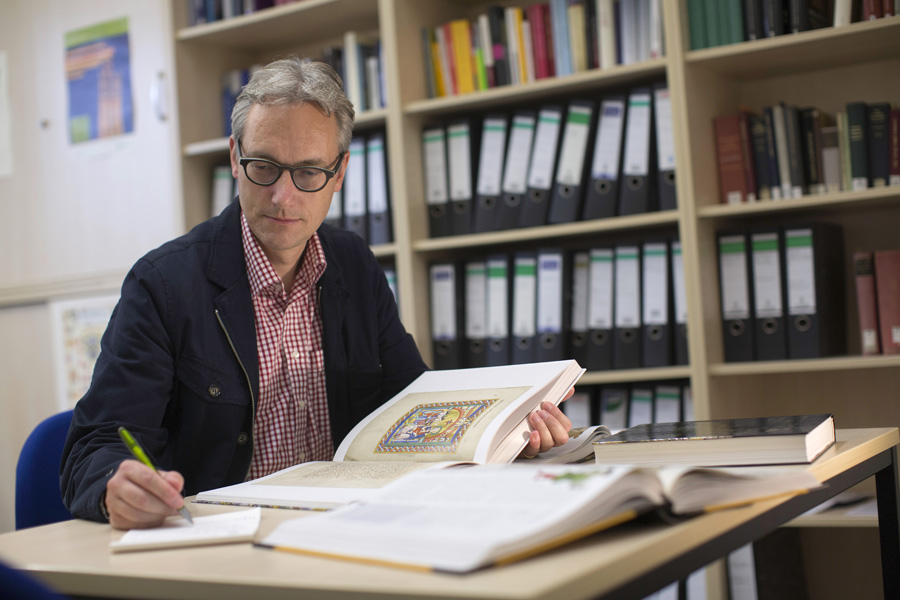
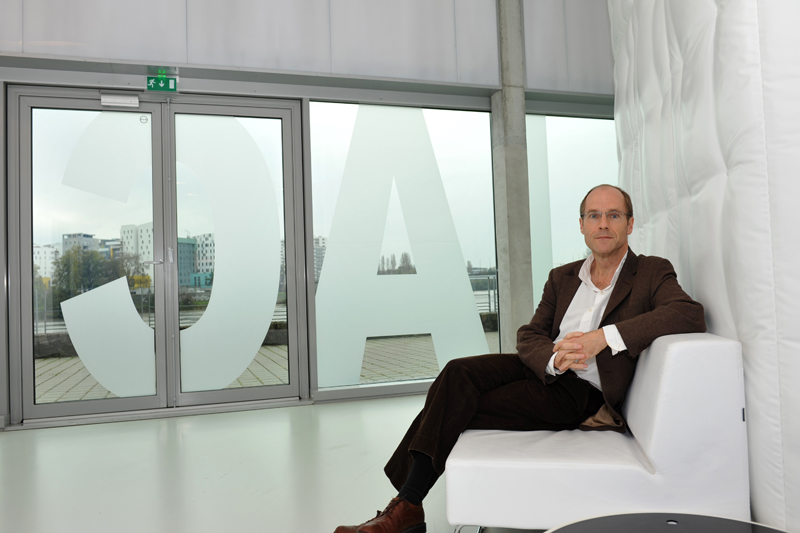
Rahim Shayegan is an Assistant Professor of Iranian at the University of California, Los Angeles (UCLA) Department of Near Eastern Languages and Cultures, and serves as Director of the Pourdavoud Center for the Study of the Iranian World and the Program of Iranian Studies. His research spans multiple historical periods and linguistic traditions of Iran. Education PhD in Iranian Philology & Ancient History, Harvard University MA in Old Iranian Philology & Ancient History, Sorbonne University BA in Philosophy, Comparative Philology, and History, University of Cologne His expertise includes Sasanian history, Iranian epigraphy, and comparative philology, with significant contributions to understanding ancient Iranian religions and historiography. He has received prestigious awards for his scholarship, including the Ehsan Yarshater Book Award and Guggenheim Fellowship. Academic Leadership Director, Pourdavoud Center (2017–present) Jahangir and Eleanor Amuzegar Chair (2013–present)
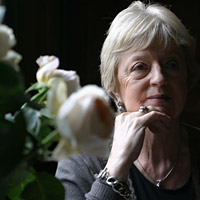
Averil Cameron is a distinguished Professor of Late Antique and Byzantine History at the University of Oxford, previously serving at King's College London from 1978–1994. Her research focuses on the intersection of political, religious, and cultural dynamics in late antiquity and Byzantium. She has held prominent roles such as President of the Council for British Archaeology in the Levant and has been honored with prestigious awards including the British Academy Kenyon Medal (2020) and DBE (2006). Her academic contributions include foundational texts on Procopius, Eusebius, and the Mediterranean world. Notable works like Byzantine Matters (2014) and Dialogues and Debates from Late Antiquity (2017) explore intellectual and religious discourses. She has edited volumes in the Cambridge Ancient History series, shaping scholarly narratives on Roman and Byzantine empires. Cameron’s publications consistently bridge micro-historical analysis with macro-historical trends, emphasizing how cultural and political shifts in late antiquity laid foundations for medieval Europe and the Islamic world. Her work integrates textual criticism, archaeological insights, and interdisciplinary approaches to reconstruct complex historical phenomena. Awards: Kenyon Medal, DBE, CBE, Fellow of British Academy Editorial Roles: Cambridge Ancient History series, British Archaeology Council Key Themes: Imperial governance, religious transitions, cultural continuity, and late antique socio-political structures
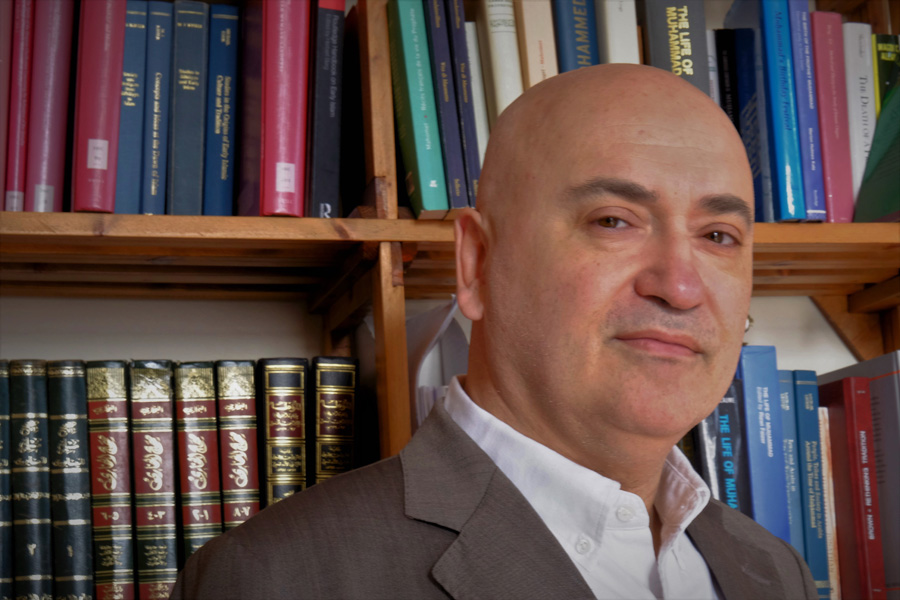
Prof. Dr. Christopher Markiewicz is a leading scholar in Ottoman and Islamic Studies at Ghent University's Department of Languages and Cultures (affiliated with the Department of History). He previously held positions as Associate Professor at University of Birmingham and Junior Research Fellow at Exeter College, University of Oxford. His research centers on the political, social, and intellectual history of the Ottoman Empire (15th-17th centuries), with special emphasis on state formation, diplomatic cultures, and the interplay between Islamic law and governance. Education PhD in Near Eastern Languages & Civilizations, University of Chicago (2015) Magna cum laude dissertation award from Middle East Studies Association (2016) His scholarship explores the transition from medieval Islamic political fragmentation to early modern imperial consolidation , focusing on how Persian émigrés shaped Ottoman sovereignty and diplomatic practices. Current research investigates pious endowments (waqf) through an ERC Starting Grant (2023-2028) , analyzing their role in Ottoman state-building. Scientific contributions include: Winner of Malcolm H. Kerr Dissertation Award (2016) Principal Investigator for Islamic Endowments project Series Editor for The Ottoman Empire and the World (I.B. Tauris) Trustee of EJW Gibb Memorial Trust Member of British Institute at Ankara committees His 2023-2024 teaching includes courses on Middle East politics and global historical developments. Publications reveal evolving research from waqf taxation controversies to diplomatic gift-giving protocols, with consistent focus on cross-cultural exchange and historiographical evolution.
Rahim Shayegan is an Assistant Professor of Iranian Studies at the University of California, Los Angeles (UCLA), affiliated with the Department of Near Eastern Languages and Cultures in the Division of Humanities. He currently holds the Pourdavoud Endowed Director's Chair (2018-present) and serves as Director of the Pourdavoud Center for the Study of the Iranian World. He also directs the Program of Iranian Studies at UCLA. PhD in Near Eastern Languages and Civilizations (Iranian Philology, Ancient History) from Harvard University MA in Old Iranian Philology and Ancient History from Université de la Sorbonne BA in Philosophy, Comparative Philology, and History from Albertus-Magnus-Universität zu Köln His research focuses on Iranian epigraphy, philology, and historiography across multiple eras, including Achaemenid, Arsacid, Seleucid, and Sasanian periods. He studies Persian epic traditions, ancient religions, and intersections between Greek and Islamic historiographical practices. Ehsan Yarshater Book Award for Arsacids and Sasanians (2011) Guggenheim Memorial Foundation Fellowship (2013-2014) UCLA Faculty Career Development Award (2008-2009)
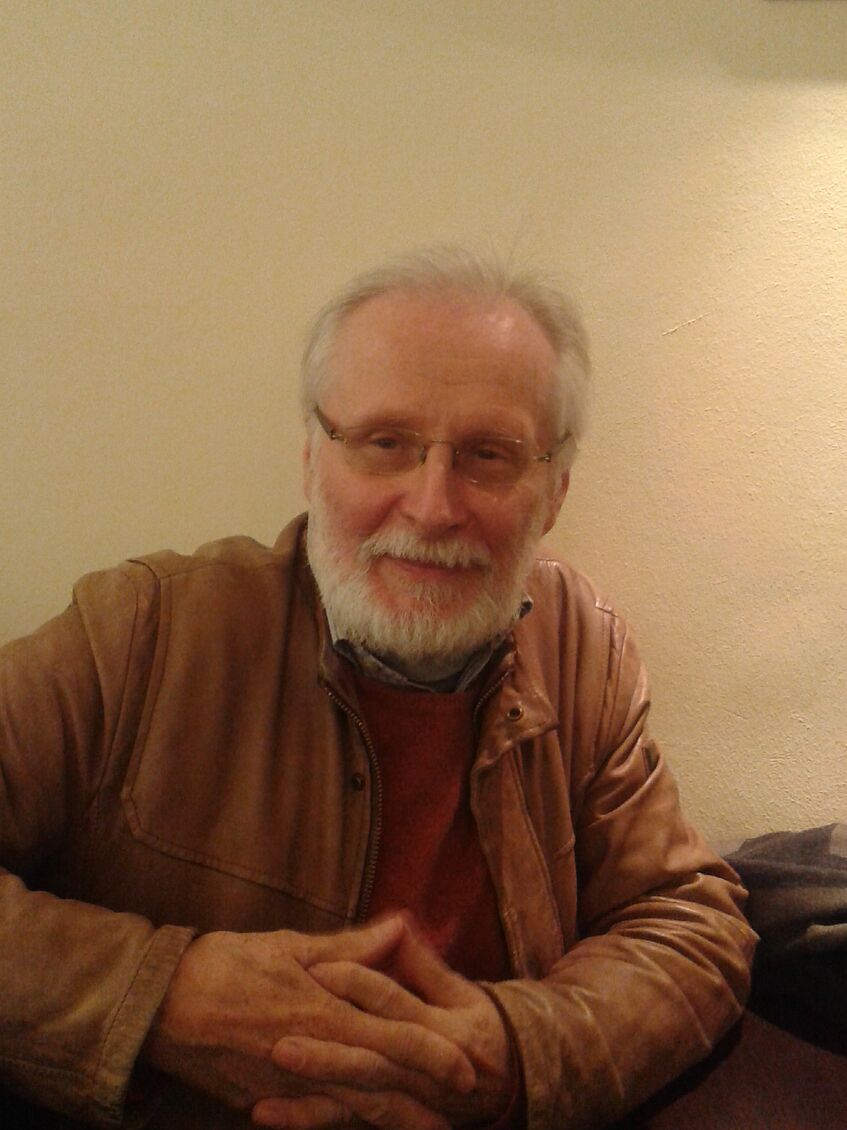
Wolfram Drews is a Professor of Medieval History at the University of Münster (Westfälische Wilhelms-Universität), Germany, since 2011. He holds a Dr. phil. (summa cum laude) from Freie Universität Berlin and completed his Habilitation in Medieval History at the University of Cologne. His research focuses on comparative and transcultural approaches to medieval history, examining themes like monarchical strategies, religious violence, and cultural entanglements between Christianity, Judaism, and Islam. Education: 1986–1991: Humboldt-Universität, Berlin (Languages: English, Spanish, French) 1992–1998: Freie Universität Berlin (History, Jewish Studies, Theology) 2001: Ph.D., Freie Universität Berlin (supervisor: Kaspar Elm) 2008: Habilitation, University of Cologne (supervisor: Georg Jenal) His research interests include medieval kingship, transcultural history, and the interplay between religion and power. He has led major projects like the Special Research Field 'Cultures of Decision Making' and the Cluster of Excellence 'Religion and Politics' in Münster. His work often bridges European and Islamicate contexts, as seen in studies comparing Carolingian and Abbasid dynasties. Dr. Drews has held visiting professorships at Cologne University, Ruhr-Universität Bochum, and Humboldt-Universität Berlin. He is a Fellow of Dumbarton Oaks (Harvard) and has served as President of the Mediävistenverband (Interdisciplinary Association of Medievalists). His honors include the Friedrich-Meinecke-Preis (2001) and leadership roles in global historical networks. He has organized conferences across Europe and North America and contributed to interdisciplinary research on premodern decision-making cultures and religious-political dynamics. His edited volumes and articles address topics ranging from medieval Spanish imperialism to the cultural emergence of Abbasid Iraq.
Gottfried Liedl is a Senior Lecturer (Univ.-Doz.) in the Department of Economic and Social History at the University of Vienna. He holds a Dr. phil. (1984) and Habilitation (2007) from the University of Vienna, and was appointed docent for social and economic history in 2007. His research focuses on the social and economic history of the Late Middle Ages and Early Modern period, global history, Mediterranean and Islamic World studies, physical culture, and ecological history. Key research areas include the interplay between economic systems and social structures in historical contexts, with a particular emphasis on the Mediterranean region and Islamic civilizations. His work explores themes such as minority policies, maritime trade, agricultural practices in Islamic societies, and the environmental dimensions of historical change. Liedl’s publications include monographs like Islamische Korsaren im Mittelmeer (2012) and Ökologiegeschichte (2018), which reflect his interdisciplinary approach to history. His recent work integrates ecological perspectives with traditional historical analysis, emphasizing the Anthropocene and sustainability. Notably, Liedl collaborates with scholars like Peter Feldbauer on comparative studies of Islamic and European societies. His academic contributions bridge medieval and early modern eras, offering insights into global interconnectedness and cultural dynamics.
Dr. Maribel Fierro is a distinguished Research Professor at the Institute of Languages and Cultures of the Mediterranean and Near East (ILC) , part of the Spanish National Research Council (CSIC) in Madrid. She has held this prestigious position since 2005 after serving as Scientific Researcher at CSIC's Arabic Studies Department (1992-2005) and previous academic appointments at Universidad Complutense Madrid (1983-1987). Education: Dr. in Semitic Philology (1985), Universidad Complutense Madrid Visiting appointments: Institute for Advanced Study (Princeton), Hebrew University (Jerusalem), École des Hautes Études (Paris) Her scholarly work focuses on Medieval Islamic History with particular emphasis on Al-Andalus, Islamic Law, Heresy and Orthodoxy, Political Legitimacy, and Gender Studies. She directed the European Research Council Advanced Grant project Knowledge, Heresy and Political Culture in the Islamic West (8th-15th centuries) (2009-2014). Notable publications include foundational studies on: Ẓāhirī legal school adoption in Islamic Spain Violence against women in Andalusi legal texts Heretical movements in Islamic political culture Christian-Muslim relations during Almoravid/Almohad periods Manuscript circulation networks in Islamic West Prophetic legitimacy narratives in cross-cultural contexts Scientific honors include: 2014: R. Stephen Humphreys Distinguished Scholar (UC Santa Barbara) 2011: Waldo G. Leland Prize (American Historical Association) Prof. Fierro serves on academic committees including the Italian MIUR evaluation board since 2011, and has held editorial leadership roles in major Islamic studies journals since 1989, currently serving as editor for Der Islam and Intellectual History of the Islamicate World .
John Hudson is a Professor of Legal History at the University of St Andrews (since 2003) and the William W. Cook Global Law Professor at the University of Michigan Law School (since 2012). His research spans Mediaeval history , Legal historiography , and the interplay of Law and Legal history . Education: D.Phil., Worcester College, Oxford (Thesis: 'Legal Aspects of Seignorial Control of Land in the Century after the Norman Conquest') Research Focus: His work examines the evolution of legal systems in medieval England and Normandy, emphasizing seignorial control, common law formation, and institutional development. Recent projects include the Civil Law, Common Law, Customary Law initiative funded by a €2.1 million ERC Advanced Grant (2017-2022). Scientific Awards: ERC Advanced Grant (2017-2022) Fellow of the British Academy Fellow of the Royal Society of Edinburgh Fellow of the Royal Historical Society Grants: Recipient of a €2.1 million ERC Advanced Grant (2017-2022) to study cross-regional legal systems.
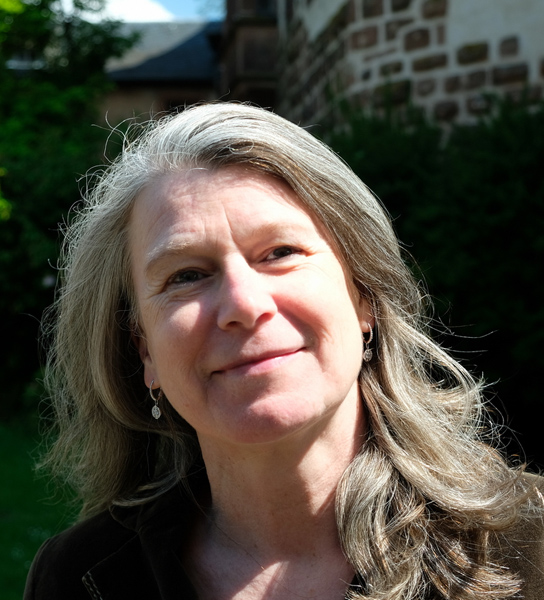
Dorothea Weltecke is Professor of European History of the Middle Ages at Humboldt-Universität zu Berlin, where she has held the chair since 2021. Previously, she served as Chair of Medieval History II at Goethe-Universität Frankfurt (2017–2021) and Chair of History of Religions at Universität Konstanz (2007–2017). Her academic foundation includes a PhD summa cum laude from Freie Universität Berlin (2000), supported by the Studienstiftung des Deutschen Volkes. Her research explores transcultural religious dynamics in medieval Afro-Eurasia, with emphases on: Interactions between Jews, Christians, and Muslims Syriac Christian traditions and religious deviance Historiography of religious plurality and violence Comparative studies of pre-modern religious systems Her publications consistently address the complexity of medieval religious landscapes, analyzing themes like atheism, interfaith contact, and violence across monographs and edited volumes. Recent works investigate the emergence of distinct religions in the Middle Ages and systemic religious violence. She has received significant recognition, including: Germany's largest DFG individual grant (POLYP project, 2019) Senior Fellowships at Historisches Kolleg München (2019–2020) and Kulturwissenschaftliches Kolleg Konstanz (2013–2014) Ernst-Reuter-Preis for outstanding doctoral research (2001) She directs collaborative projects like DAMASt, a digital system for analyzing multi-religious constellations, and leads editorial roles for journals including Entangled Religions and The Medieval Chronicle .
Dr. Ana Echevarria Arsuaga is a leading scholar in Medieval History at Universidad Nacional de Educación a Distancia (UNED), Madrid. She serves as Head of the Department of Medieval History and Paleography since 2020, following academic progression from Assistant Professor (2003-2008) to Tenured Associate Professor (2008-2020). Her international experience includes fellowships at the Ruhr-Universität Bochum (2011) and University of Constance (2015). Current: Full Professor & Department Head at UNED Previous: Academic posts at U. Constance, Ruhr-Universität Education: Degree in Geography and History from Universidad Complutense de Madrid, specializing in Medieval History. PhD in Medieval History from University of Edinburgh on 'The Perception of Muslims in Fifteenth Century Spain' (supervised by Angus MacKay). Postdoctoral research at UNED under José Luis Martín Rodríguez. Research Focus: Specializing in Iberian religious minorities (Mudejars, Moriscos, Mozarabs) and queenship studies. Her work examines legal frameworks for minority communities, interfaith dynamics in medieval Mediterranean, and cross-cultural knowledge transmission. Key projects include EU-funded 'Islamic Legacy' network and Gerda Henkel-funded 'Christian Society under Muslim Rule'. Academic Leadership: Serves on editorial boards of Medieval Encounters , Al-Masaq , and Anales de la Universidad de Alicante . Organized major conferences like the Society for the Medieval Mediterranean (2022) and RELMIN-ERC Advanced Grant Project (2014). Collaborates with leading scholars across Europe and Israel on religious minorities and queenship. Scientific Awards: 2023: Principal Investigator, 'Religious Minorities and Specialized Labour' (Spanish Ministry of Science & Innovation) 2020: Gerda Henkel Stiftung Grant for Canon Collections research 2018: International Recognition for 'Religious Boundaries' publication 2008: Al-Babtain Foundation Award for al-Andalus research Academic Contributions: Supervised 4 completed PhD theses and mentored 9 researchers. Co-organized 7 major international conferences. Peer reviewer for 15+ international journals. Elected member of the Academy of Europe (2023).
Tijana Krstic serves as Professor in the Medieval Studies Department at Central European University (CEU), which relocated from Budapest to Vienna in 2020. She has been continuously affiliated with CEU since 2009, progressing from Assistant Professor (2009-2011) to Associate Professor (2011-2023) before her promotion to full Professor in August 2023. Her academic foundation includes a BA from the American University in Bulgaria (1998) and a PhD in History from the University of Michigan, Ann Arbor (2004). Her doctoral research examined conversion narratives in the Ottoman Balkans, forming the basis of her 2011 monograph. Professor Krstic specializes in trans-imperial cultural exchanges, with research focusing on religious conversion dynamics, Ottoman-Spanish Muslim refugee experiences, and the circulation of texts and religio-political concepts across early modern Eurasian boundaries. Her work bridges Ottoman, Mediterranean, and European historical scholarship through comparative analysis of empire formation and confessional identity. Her ERC-funded OTTOCONFESSION project (2015-2022) fundamentally reshaped scholarly understanding of Sunni orthodoxy development in the Ottoman Empire. She currently represents CEU on the Board of Directors for the Austrian Science Fund's Cluster of Excellence 'Eurasian Transformations' (2023-2028), coordinating cross-institutional research initiatives. 2023-2028: Board Member, Cluster of Excellence 'Eurasian Transformations' (FWF) 2015-2022: Principal Investigator, ERC Consolidator Grant 'OTTOCONFESSION' 2019-2020: Fellow, Wissenschaftskolleg zu Berlin 2017: Distinguished Teaching Award, CEU 2009-2010: National Endowment for Humanities Fellowship 2009-2010: American Council of Learned Societies Fellowship As Principal Investigator for the OTTOCONFESSION project, she directed a multinational research team whose publications transformed discourse on Ottoman religious politics. Her current leadership in the Eurasian Transformations cluster fosters innovative comparative research across European and Asian historical contexts through coordinated teaching programs and joint publications.
John Tolan is a Professor of Medieval History at the Université de Nantes since 2002, specializing in Islamic-European cultural relations and religious minorities. He has held leadership roles at the Maison des Sciences de l'Homme Ange Guépin and the RELMIN research project. His work spans comparative religious studies, legal history, and interfaith dynamics. PhD in History, University of Chicago (1990) Habilitation, École des Hautes Études en Sciences Sociales (2001) His research focuses on Medieval Mediterranean societies, examining legal frameworks for dhimmis , Crusades , and Quranic translations . Recent projects include the European Qur’an initiative and analysis of St. Francis-Sultan encounters. Publications since 2013 include comparative studies on Abrahamic historiographies , expulsion histories , and religious cohabitation in medieval towns. His work bridges academic research with public discourse through Radio France appearances and 20+ edited volumes . Académie Europæa member Reial Acadèmia de Bones Lletres de Barcelona fellow Professional activities include editorial board memberships for Medieval Encounters and Medieval Voyaging , alongside 80+ international conference participations. Current affiliations: Academia.edu profile .
Roberto Tottoli is a Full Professor of Islamic studies at the University of Naples Oriental, leading the Department of Asia, Africa and the Mediterranean. He has held academic positions since 1999, progressing from Lecturer to Full Professor. His research focuses on Quranic studies, Islamic literature, and historical religious interactions between Europe and the Islamic world. Education: PhD in Islamic Studies, University of Naples Oriental (1996) Bachelor's Degree (Laurea) in Oriental Studies, University of Venice Ca’ Foscari (1988) Research Interests: Quranic textual history and translations Hadith and Sunna interpretation Islamic eschatology in Aljamiado literature European scholarly engagement with Islamic texts (16th-17th centuries) His work bridges historical analysis with contemporary cultural studies, emphasizing textual transmission and interfaith dynamics. Awards: 2018: Principal Investigator for the €9.8M Horizon 2020 ERC-Synergy Project 'The European Qur’an' 2015: King Abdullah International Translation Award for translating Mālik’s Al-Muwatta’ 2015: Elected Member of the Accademia Ambrosiana (Milan) Grants & Fellowships: Institute for Advanced Study (Princeton) Member (2016-17) Visiting Professorships at École des hautes études en sciences sociales (Paris) and Harvard University His research funding includes major European grants and international collaborations. Publications: Tottoli has authored/edited over 30 books and 50 articles, focusing on Quranic manuscripts, European Islamic scholarship, and Morisco cultural heritage. Key works include Introduzione all’Islam (2018) and co-authored studies on Ludovico Marracci’s Quran translations.
Clemens Gantner is a Senior Lecturer at the Faculty of History and Cultural Studies, University of Vienna, and a Post-doc Researcher at the Austrian Academy of Sciences' Institute for Medieval Research. His work focuses on early medieval European history, particularly papal sources, Carolingian Italy, Byzantine studies, and cultural exchange in the Mediterranean. University of Vienna (Mag. phil. 2005, Dr. phil. 2011) Institute for Austrian Historical Research (Master's 2009) Research interests span cultural identity in post-Roman Europe, manuscript traditions like the Liber Pontificalis , and Carolingian political strategies in Italy and the Mediterranean. His publications analyze papal constructions of 'Others', Carolingian emperors, and eschatological texts. Scientific awards and grants include collaborations on FWF Wittgenstein (2008-2010) and ERC Advanced Grant SCIRE (2013-2014) projects. He co-organizes international conferences at institutions like the British School in Rome and the International Medieval Congress in Leeds. Active in academic networks such as SAAME and SISMED, Gantner contributes to editorial boards and interdisciplinary initiatives like Global Eurasia III. His teaching and supervision align with his research on historical identity and manuscript studies.
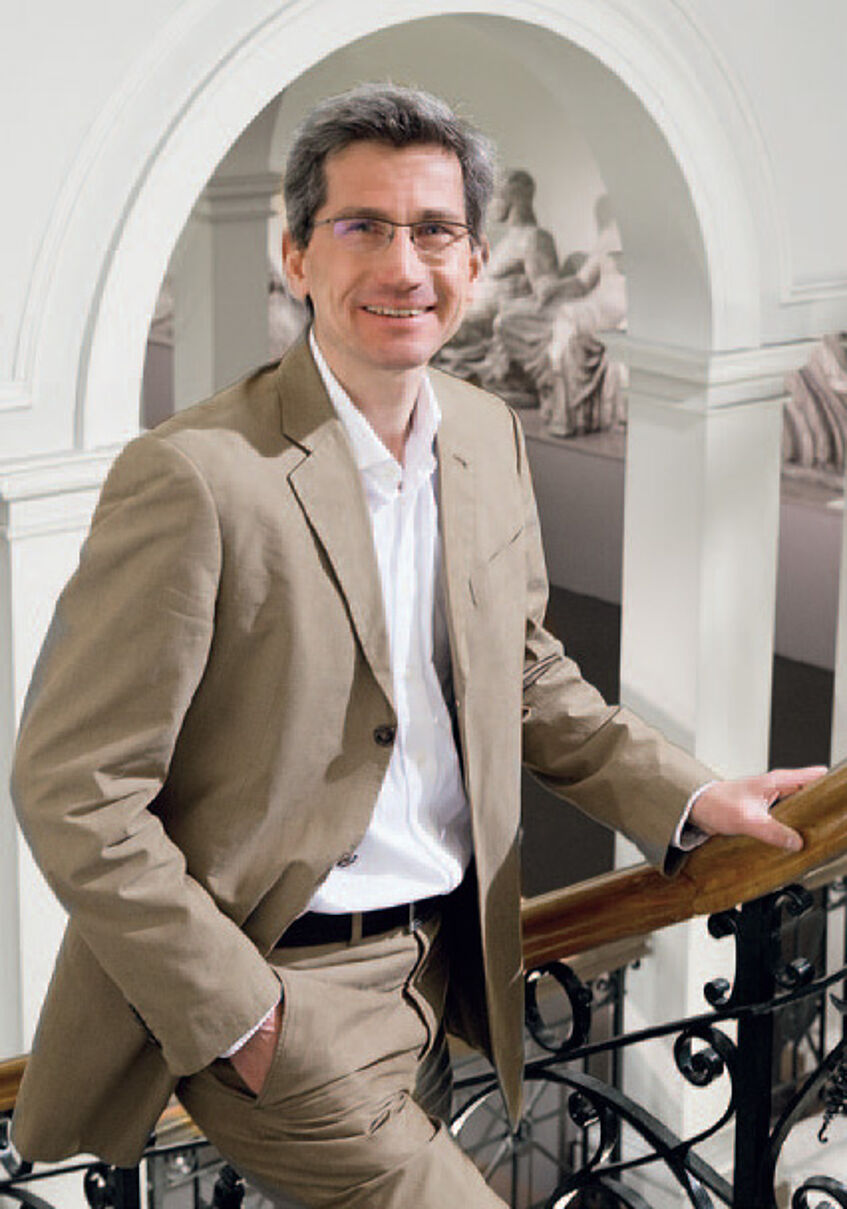
Markus Ritter is a full Professor of Islamic Art History and Head of the Institute of Art History at the University of Vienna's Faculty of History and Cultural Studies. He has held this position since August 2012, following an Assistant Professorship at the University of Zurich (2010-2012) and research work at the Austrian Academy of Sciences (2004-2009). His academic career spans over two decades of dedicated scholarship in Islamic art history. Professor Ritter's research focuses on Islamic architecture, particularly typology and iconography in Iran from the early Middle Ages to the 19th century, early medieval Arab palace construction, architectural decoration, and columned mosques. His visual art research encompasses wall painting, book illustration, and ruler iconography, with special interest in transfer and adaptation processes, particularly Islamic art in European contexts (collecting history and reception) and the history of Islamic art historiography. Ritter's scholarly output demonstrates consistent engagement with both historical and contemporary aspects of Islamic art. His recent publications explore topics ranging from Umayyad palace architecture to the reception of Islamic art in European historicism, reflecting his broad chronological and geographical expertise. His work often examines architectural elements like glass floors in Abbasid palaces, luster tile panels, and manuscript illumination, connecting technical analysis with cultural interpretation. Among his notable recognitions are the 2012 Farabi Award and the 2007 European Award for Iranian Studies. He serves as Chairman of the Ernst Herzfeld Society for the Study of Islamic Art and Archaeology (since 2017), sits on the Academic Advisory Board of the Institute for Islamic Studies (since 2013), and is a Member of the Advisory Board of the Swiss Asia Society (since 2010). Professor Ritter actively supervises numerous graduate students, with several Master's and Doctoral theses completed under his guidance and others currently in progress. His teaching includes courses on Islamic art history, with recent offerings for 2025W including Art History Survey III, Thesis Seminar, Islamic Art in Israel and the Syrian Lands, and Case Study on Islamic Architecture in Historic Photographs.