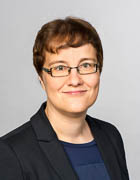
Prof. Dr. Katja Specht serves as Vice President for Studies and Teaching at the Technical University of Central Hesse, affiliated with the Department of Business Administration and Economics in Friedberg. She teaches core courses including Statistics, Operations Research, Logistics, and Logistics Management across Bachelor and Master programs in Wirtschaftsinformatik (Business Informatics), employing a blend of theoretical lectures and group exercises delivered through mandatory Moodle platforms. Her research spans Logistics, Operations Research, and Statistics with strong applications in financial mathematics, evidenced by her extensive publication record. Key areas include volatility modeling using GARCH frameworks, portfolio optimization under risk constraints (VaR, Mean-Variance), time series forecasting, and advanced statistical methods like the Moore-Penrose inverse. Her work bridges theoretical econometrics with practical financial engineering problems. Analysis of her 15 most recent publications reveals consistent focus on quantitative financial methods, with increasing interdisciplinary connections to educational research (e.g., student evaluation demographics) and mathematical applications in engineering. The majority combine rigorous statistical modeling with real-world economic data, particularly in European financial markets.
Yaohua Zang is a Professor at the Technical University of Munich , affiliated with the Department of Data-driven Materials Modeling . Their research bridges computational materials science, machine learning, and mathematical modeling, focusing on advanced methods for solving partial differential equations (PDEs), inverse problems, and optimal control in complex systems. Research Interests include: Physics-informed neural operators for PDEs Stochastic generative modeling for materials design Optimal control in robotics and dynamic systems Bayesian inference and uncertainty quantification High-dimensional numerical analysis Adversarial and weak formulation-based neural networks Recent work highlights physics-aware neural operators (DGenNO), weak adversarial networks for inverse problems, and applications in elastography and robotic assembly. Their scientific contributions span PDEs, materials science, and computational control. Labs & Teams : Part of the Chair of Data-driven Materials Modeling, located in Garching b. München, Germany.
Gil Robalo Rei is a Research Associate at the Institute for Numerical Mechanics within the TUM School of Engineering and Design at the Technical University of Munich (TUM). He has been working at the institute since 2021, contributing to research in computational mechanics and numerical methods, and is actively involved in teaching courses related to numerical methods and computational mechanics. His educational background includes: Master of Science (M.Sc.) in Mechanical Engineering from Technical University of Munich (2021) Bachelor of Science (B.Sc.) in Mechanical Engineering from Technical University of Munich (2018) Gil's research focuses on advanced computational methods for solving complex engineering problems. His primary interests span Uncertainty Quantification , Bayesian Methods , and Inverse Problems , with applications across multiple domains including solid-state battery technology, biomedical modeling, and materials science. His work often involves developing novel computational frameworks that integrate statistical methods with physics-based simulations to address challenges where traditional approaches fall short, particularly when dealing with computationally expensive forward models. Analysis of Gil's publication record reveals a strong trend toward interdisciplinary research that bridges computational mechanics with statistical inference. His work demonstrates expertise in applying Bayesian methods to inverse problems in diverse contexts such as tumor growth modeling, solid-state battery optimization, and powder system characterization. A notable pattern is his focus on developing computationally efficient approaches for problems with expensive forward models, often leveraging Gaussian processes and active learning techniques to reduce computational costs while maintaining accuracy. Gil has actively contributed to academic mentoring through supervision of student projects: Multiple Bachelor's and Master's theses in computational mechanics and related fields Research internships focused on engineering simulations Term papers and visualization labs exploring numerical methods His collaborative approach is evident in co-supervision with other researchers like Christoph Schmidt and Jonas Nitzler, reflecting the interdisciplinary nature of his work and the research environment at TUM. As part of the research group led by Prof. Wolfgang A. Wall, Gil contributes to the QUEENS framework development and participates in the broader activities of the Institute for Numerical Mechanics. His work connects with several research teams focusing on computational mechanics applications in energy storage systems, biomedical engineering, and advanced materials, demonstrating the versatility and applicability of his methodological contributions across different scientific domains.
Wolfgang Wall is a full Professor and founding Director of the Institute for Computational Mechanics at the Technical University of Munich (TUM). Born near Salzburg (Austria), he studied at the University of Innsbruck and received his PhD from the University of Stuttgart. He is a co-founder of AdCo Engineering GW GmbH and Ebenbuild GmbH, and currently serves as Rector of the International Centre for Mechanical Sciences (CISM) in Udine, Italy. A member of both the Austrian and Bavarian Academies of Sciences, he has received numerous prestigious awards including the O.C. Zienkiewicz Award and ERC Advanced Grant. 1983: Matura, Höhere Technische Bundeslehranstalt Salzburg (with distinction) 1991: Dipl.-Ing. degree from University of Innsbruck (with distinction) 1999: Dr.-Ing. (summa cum laude) from University of Stuttgart His research focuses on application-motivated fundamental research in computational mechanics, spanning coupled multifield/multiscale problems (fluid-structure interaction, contact dynamics, electro-chemo-mechano-thermo interaction) and applications in energy storage systems (all-solid-state batteries), additive manufacturing, and computational biophysics/biomedical engineering (patient-specific respiratory/cardiac modeling, cancer nanomedicine, musculoskeletal systems). His group develops advanced computational methods, software frameworks, and physics-based models for high-performance computing. Recent emphasis includes uncertainty quantification, inverse analysis, and machine learning integration. The 15 most recent publications reveal trends in computational mechanics (8/15 articles), biomedical engineering (5/15), and energy storage/additive manufacturing (7/15). Notable themes include novel finite element frameworks for multiphysics problems, Bayesian calibration methods for biological systems, and multiscale modeling of nanomedicine and battery materials. 1986-1988: Excellency in Studying Awards (~ top 1%) 1991: Best graduation ever in Civil Engineering at Innsbruck University 1994: European Academic Software Award 2000: Fritz-Peter-Müller Award, University of Karlsruhe 2000: Rotary Award for doctoral thesis, Stuttgart 2005: Golden Teaching Awards (TUM students) 2008: Fellow Award of the International Association of Computational Mechanics 2011: Chuo University Guest Professorship Award 2012: IACM Computational Mechanics Award 2013: Heinz Maier-Leibnitz Medal 2016: Prandtl Medal (ECCOMAS) 2018: EUROMECH Fellows Award 2021: ERC Advanced Grant 2022: JSCES Grand Prize 2024: O.C. Zienkiewicz Award (IACM) As a dedicated educator, he teaches courses ranging from foundational engineering mechanics (1000+ students) to specialized graduate topics like discontinuous Galerkin methods and biomedical applications. His leadership extends to founding the Munich School of Engineering (2010-2012), establishing the Center for Computational Biomedical Engineering (2012), and serving on multiple editorial boards (IJNME, CMAME, IJNMBE) and scientific councils.
Ivana Jovanovic Buha is a Researcher and Doctoral Candidate at the Technical University of Munich (TUM), affiliated with the Chair of Scientific Computing in Computer Science (SCCS) since June 2018. She holds an M.Sc. (Honours) in Computational Science and Engineering from TUM (2018) and a Diploma in Electrical Engineering from the University of Belgrade (2014). Her research focuses on applied computational mathematics, particularly uncertainty quantification (UQ), inverse problems, and data-driven modeling, with applications in hydrology. Research Interests: Her work bridges theoretical UQ methods with real-world hydrological challenges. Key areas include high-dimensional UQ, sensitivity analysis of distributed hydrologic models, sparse grids methods, Bayesian inversion, and machine learning integration. She emphasizes practical applications such as rainfall-runoff modeling and parameter calibration of complex hydrological systems. Teaching: She has taught courses like Algorithms for Uncertainty Quantification and Data Mining , and supervised numerous student projects on topics such as Bayesian filtering, MCMC methods, and deep learning in hydrology. Awards: She received the Best Poster Award (1st place) at CoSaS 2018 for her work on 3D deep learning in point cloud analysis. She also organizes the BGCE Student Paper Prize at SIAM CSE conferences. Student Projects: Current and past advisees include studies on combining Bayesian filtering with polynomial chaos expansions, efficient Bayesian inference for hydrological parameters, and sparse grids applications. She actively mentors students in developing tools like pyApprox and UM-Bridge for UQ simulations. Labs/Teams: She collaborates within SCCS under Prof. Bungartz, contributing to projects on computational methods for environmental science and high-performance computing.
Jian Qiu Zhang is a Professor at Fudan University in the School of Information Science and Technology , affiliated with the Key Laboratory for Information Science of Electromagnetic Waves and Research Center of Smart Networks and Systems in Shanghai, China. Previously, he was at the University of Greenwich (1999-2002) and earned his PhD in 1996 from Harbin Institute of Technology in the Department of Electrical Engineering . His research interests span Signal Processing , Image Analysis , and Machine Learning , with a focus on applications in Biomedical Imaging , Hyperspectral Data Analysis , and Smart Network Systems . His work often integrates Wavelet Transforms , Tensor Decomposition , and Bayesian Filtering to solve complex problems in Medical Imaging and Wireless Sensor Networks . Recent publications highlight advancements in Deep Learning for 3D Ultrasound , PARAFAC Decomposition , and Graph Neural Networks for Hyperspectral Classification . His technical contributions include Adaptive Filtering Algorithms , Nonlinear Unmixing , and Wavelet-Based Sensor Analysis . Key collaborations include researchers from institutions such as Harbin Institute of Technology, University of Greenwich, and international teams in IEEE Transactions and IGARSS conferences.
Ziye Yang is a researcher active in Speech Signal Processing and Machine Learning applications. His work focuses on advanced techniques like weighted prediction error , deep learning models , and noise reduction in audio systems. He has collaborated extensively with Jie Chen and Cédric Richard on topics including speech dereverberation and nonlinear residual echo suppression . His research spans multiple subfields including distributed speech processing , attention-based architectures , and deconvolution regularization . Recent publications (2024-2025) emphasize hybrid methods combining traditional signal processing with modern neural networks, particularly for reverberation modeling and echo suppression. Key trends in his work include Integration of data-driven priors in signal enhancement Development of plug-and-play frameworks for audio processing Application of attention mechanisms in dual-stream networks
Prof. Phaedon-Stelios Koutsourelakis is a Professor of Continuum Mechanics at the Technical University of Munich (TUM), affiliated with the TUM School of Engineering and Design. His research focuses on computational strategies for modeling and analyzing physical systems with a strong emphasis on uncertainty quantification, multiscale phenomena, and stochastic systems. He holds a PhD from Princeton University and has held academic positions at institutions including Cornell University, Heriot-Watt University, and the Lawrence Livermore National Laboratory. His educational background includes a degree from the National Technical University of Athens and a PhD from Princeton University (1998). Key research areas include data-driven coarse-graining techniques, Bayesian inference in engineering systems, and physics-aware machine learning models for high-dimensional problems. He has received notable awards such as the Top Teaching Trophy from the Munich School of Engineering (2014–2016) and the Dean’s First Year Merit Prize at Princeton (1998). His work bridges computational mechanics with statistical methods, addressing challenges in materials design, structural health monitoring, and predictive modeling under uncertainty. Recent projects include developing physics-constrained deep learning frameworks for surrogate modeling and quantifying model bias in digital twins of infrastructure systems. Notable contributions include the Predictive Coarse-Graining framework and probabilistic methods for uncertainty quantification in heterogeneous media. His research also extends to optimization under uncertainty and interdisciplinary applications in biomedical engineering and materials science.
Jürgen Dölz is a Professor at the Institut für Numerische Simulation (University of Bonn), specializing in uncertainty quantification, computational electromagnetism, and numerical methods for partial differential equations. His research bridges theoretical mathematics with engineering applications, focusing on efficient simulation techniques and data-driven modeling. Current research: Shape uncertainty in Maxwell eigenproblems, fast kernel methods, quantum computing algorithms Teaching: Advanced topics in scientific computing, randomized sketching, numerical simulation Projects: DFG-funded data-driven electromagnetic resonator modeling, CRC 1639 NuMeriQS (projects B04 and A03) Recent publications address Bayesian inverse problems, spectral clustering under uncertainty, and isogeometric boundary element methods for acoustic and electromagnetic wave scattering. He leads the development of Bembel (Boundary Element Based Engineering Library) and contributes to H-matrix acceleration techniques for rough random fields.
Dr. Sebastian Völkel is a Senior Scientist/Leibniz Fellow at the Max Planck Institute for Gravitational Physics (Albert Einstein Institute) in Potsdam, Germany, where he is part of the Astrophysical and Cosmological Relativity department led by Prof. Alessandra Buonanno. Previously, he was a postdoctoral researcher at SISSA and IFPU in Trieste, Italy, in the ERC group of Enrico Barausse, and completed his PhD at the University of Tübingen under Kostas D. Kokkotas. He holds a summa cum laude doctorate in Theoretical Astrophysics. His research centers on the quasi-normal modes of compact objects—neutron stars and black holes—using gravitational wave observations to probe their internal structure and test general relativity. He investigates inverse problems, aiming to reconstruct spacetime properties from observed oscillation spectra. His work spans theoretical modeling, data analysis, Bayesian inference, and the development of parametrized frameworks for modified gravity. He also studies black hole shadows, Hawking radiation analogs, and neutron star equations of state. Dr. Völkel has published over 30 articles in leading journals such as Physical Review Letters , Physical Review D , and Classical and Quantum Gravity . His recent work includes ringdown spectroscopy, Bayesian parameter estimation, and systematic error analysis in gravitational wave models. He has contributed to major collaborations and reviews on black hole spectroscopy and fundamental physics with LISA. Promotionspreis of the University of Tübingen (2021) Finalist, DPG Matter and Cosmos Dissertation Prize (2021) Honorable mention, GWIC-Braccini Thesis Prize (2020) He is actively involved in teaching, having lectured on general relativity at the Jürgen Ehlers Spring School, and in outreach, giving public talks and a podcast. He organizes workshops, leads journal clubs, and develops open-source software for quasi-normal mode analysis. He has served as a referee for Physical Review Letters , Classical and Quantum Gravity , and other journals.
Elizabeth Qian is a tenure-track Assistant Professor at Georgia Tech with joint appointments in the Schools of Aerospace Engineering and Computational Science and Engineering. She holds a visiting Hans Fischer Fellowship at the Technical University of Munich Institute for Advanced Study (TUM-IAS) since 2023. Her research develops computational methods for scientific machine learning, model reduction, and multifidelity approaches to accelerate engineering decision-making. Education : PhD (2021), SM (2017), and SB (2014) in Aerospace Engineering from MIT Her work focuses on enabling efficient simulations for complex systems through model reduction , scientific machine learning , and multifidelity methods . Recent publications address Bayesian inverse problems, neural operator learning trade-offs, and ensemble Kalman methods. Scientific awards include the 2025 NSF CAREER Award, 2024 AFOSR YIP Award, 2023 TUM-IAS Fellowship, 2022 SIAM Student Paper Prize, and 2014 Hertz/NSF/Fulbright fellowships. She mentors GT PhD researchers and contributes to diversity initiatives in engineering communities.
Dr. Kai Zhou is a Research Fellow at the Frankfurt Institute for Advanced Studies (FIAS) in the Theoretical Sciences division, where he leads the 'Deepthinkers' research group. Born in China in 1987, he completed his B.Sc. in Physics from Xi'an Jiaotong University in 2009 and earned his PhD with 'Wu You Xun' Honors from Tsinghua University in 2014. After postdoctoral research at Goethe University Frankfurt's Institute for Theoretical Physics, he joined FIAS in August 2017 as a Research Fellow focusing on Deep Learning applications in physics. Frankfurt Institute for Advanced Studies (FIAS), Theoretical Sciences (2017-present) Goethe University Frankfurt, Institute for Theoretical Physics (Postdoc) Tsinghua University, Physics (PhD, 2014) Xi'an Jiaotong University, Physics (B.Sc., 2009) Dr. Zhou's research bridges artificial intelligence and theoretical physics, with a focus on applying machine learning techniques to complex physical systems. His work spans heavy-ion collisions, lattice quantum field theory, seismology, and renewable energy systems. He has developed innovative deep learning approaches to extract physical insights from complex data, including constructing an Equation-Of-State meter for heavy ion collisions. His research demonstrates how physics can inform AI development while AI enhances our understanding of physical phenomena. Analysis of Dr. Zhou's recent publications reveals a strong trend toward integrating physics principles with machine learning architectures. His work increasingly focuses on Bayesian inference methods applied to QCD phase transitions, physics-informed neural networks for solving inverse problems in nuclear physics, and developing specialized architectures that preserve physical symmetries. The interdisciplinary nature of his research is evident in applications spanning from heavy-ion collisions to neutron star physics and industrial process optimization. Wu You Xun Honors (PhD) Third party funding through Samson AG: AI for science BMBF funding within ErUM data program: Deep Learning for CBM computing DAAD exchange program Xidian-FIAS International Joint Research Center: AI for science BMWI: AI for energy Nvidia: GPU Grant Dr. Zhou actively mentors doctoral and master's students, currently advising seven graduate students across multiple institutions. His research group 'Deepthinkers' has secured significant third-party funding from diverse sources including industrial partners (Samson AG), government agencies (BMBF, BMWI), and international collaborations (DAAD, Xidian University). His approach combines theoretical physics with cutting-edge AI techniques to address complex problems in both fundamental science and industrial applications. The 'Deepthinkers' research group operates at the intersection of AI and physics, developing novel methodologies that leverage physical principles to enhance machine learning and vice versa. Their work on applying deep learning to heavy-ion collisions represents a significant advancement in extracting meaningful physical insights from complex collision data. The group maintains strong international collaborations, particularly with Chinese institutions through the Xidian-FIAS International Joint Research Center.
Wolfgang Nowak is a Professor and Head of the Institute for Modelling Hydraulic and Environmental Systems at the University of Stuttgart. He also serves as Co-spokesperson of the Cluster of Excellence EXC 2075 'Data-Integrated Simulation Sciences'. His research focuses on stochastic simulation, uncertainty quantification, and safety research in hydraulic systems. He leads interdisciplinary projects involving Bayesian methods, machine learning, and computational modeling for environmental and geoscience challenges. His work integrates advanced statistical techniques with physical models to address hydrological processes, contaminant transport, energy systems optimization, and subsurface modeling. Notable contributions include developing hybrid machine learning-physics models (e.g., HydroStartML) to improve hydrological modeling efficiency and Bayesian inference frameworks for parameter estimation in complex systems. Key research areas include groundwater modeling, subsurface contaminant transport, climate change impact analysis, and energy-water nexus studies. He collaborates with international teams on projects like radioactive waste repository safety and renewable energy integration. His publications span high-impact journals in hydrology, environmental science, and computational methods.
Prof. Nils Thuerey is a Professor of Physically Based Simulation at the Technical University of Munich (TUM), within the TUM School of Computation, Information and Technology. He specializes in computer graphics, fluid dynamics, and machine learning applications in physics-based simulations. His work focuses on developing algorithms for fluid simulations, turbulence modeling, and differentiable physics solvers. He earned his doctorate in fluid simulations from the University of Erlangen-Nuremberg (2006) and held positions at ETH Zurich, ScanlineVFX, before joining TUM in 2013. Research Interests: Fluid Dynamics and Turbulence Modeling Machine Learning for Physics Simulations Deep Learning in Computer Graphics Differentiable Simulations and Inverse Problems Key Awards: Technical Oscar (2012) for contributions to fluid effects in films/games ERC Starting Grant (2014) for 'realFlow' research University of Erlangen Staedtler Graduation Award (2008) His recent work emphasizes integrating deep learning with physical models, such as differentiable solvers for fluid dynamics and probabilistic methods for weather forecasting. He leads projects like WeatherBench and develops tools like φ-ML and phiflow for scientific computing.
Prof. Elisabeth Ullmann is an Associate Professor for Scientific Computing and Uncertainty Quantification at the Technical University of Munich (TUM), affiliated with the TUM School of Computation, Information, and Technology and the Department of Mathematics. She holds a PhD from TU Bergakademie Freiberg (2008) and has held academic roles including postdoctoral positions at the University of Bath, University of Hamburg, and University of Maryland. Her research focuses on developing efficient algorithms for uncertainty quantification in partial differential equations with random coefficients, Bayesian inverse problems, and rare event simulation. She is an Associate Editor for the SIAM Journal on Scientific Computing and SIAM/ASA Journal on Uncertainty Quantification , and teaches courses on numerical methods for uncertainty quantification and partial differential equations. Her work emphasizes multilevel Monte Carlo methods, stochastic Galerkin discretizations, and probabilistic numerical methods. Notable contributions include error analysis for rare event probabilities and multilevel estimators for high-dimensional problems. She collaborates internationally and maintains an active research group in Scientific Computing & Uncertainty Quantification at TUM.