Prof. Lena Maier-Hein is a full professor at Heidelberg University and managing director of the National Center for Tumor Diseases (NCT) Heidelberg. She leads the division of Intelligent Medical Systems (IMSY) at the German Cancer Research Center (DKFZ) and oversees the cross-topic program 'Data Science and Digital Oncology'. Her research focuses on machine learning in biomedical imaging, particularly surgical data science and computational biophotonics. She chairs the Surgical Data Science initiative and serves on editorial boards for journals like Nature Scientific Data and IEEE TPAMI. Her awards include the 2024 German Cancer Award, 2013 Heinz Maier-Leibnitz Prize, and European Research Council grants. She advocates for trustworthy AI in healthcare, co-developing frameworks like Metrics Reloaded and TRIPOD+ AI. Her work bridges academic, clinical, and industrial sectors through initiatives like the FeTS challenge. Key contributions include advancing photoacoustic imaging, surgical AI systems, and validation methodologies. She emphasizes ethical AI deployment and interdisciplinary collaboration to address clinical challenges.
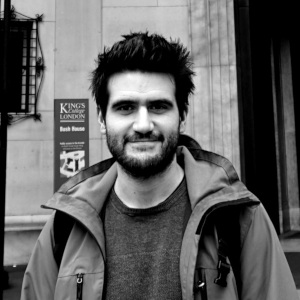
Martim Brandão is a Lecturer (Assistant Professor) in Robotics and Autonomous Systems at King’s College London, where he leads the Responsible Robotics and AI (RRAI) Lab and serves as Co-Director of the UKRI Centre for Doctoral Training in Safe and Trusted AI. His research focuses on ethical, explainable, and safe AI and robotics, with applications in human-robot interaction, motion planning, fairness, and societal impact. His research interests include: Explainable AI and Motion Planning Fairness and Bias in AI Systems Human-Robot Interaction and Social Robotics Adversarial Robustness in Robotics Value Alignment and Ethical AI Inclusive and Participatory Robotics Design His recent publications (2023–2025) reflect a strong trend toward socially responsible robotics, focusing on fairness in navigation, explainability of planning failures, worker-centered agricultural robotics, environmental justice in drone delivery, and the dangers of bias in drowsiness detection and LLM-driven robots. His work emphasizes user understanding, societal impact, and ethical safeguards in autonomous systems. He has advised and collaborated with numerous students and researchers across diverse topics in robotics and AI. He is actively involved in shaping responsible robotics through: Leadership in the RRAI Lab Co-directing a national CDT in Safe and Trusted AI Developing fairness-aware algorithms Advocating for inclusive and ethical design practices His lab and research group focus on: Responsible Robotics and AI Explainability in Multi-Agent Planning Fairness in Coverage and Navigation Human-Centered Evaluation of AI Systems
Yuying Xie is an Associate Professor holding dual appointments in the Department of Computational Mathematics, Science and Engineering and the Department of Statistics & Probability at Michigan State University. Her research bridges statistical theory, machine learning innovation, and biological discovery, with a focus on developing computational frameworks for high-dimensional biological data analysis. Education: B.S. in Biology, Fudan University, China (2005) Ph.D. in Genetics and Molecular Biology, University of North Carolina at Chapel Hill (2010) Ph.D. in Statistics, University of North Carolina at Chapel Hill (2015) Research Interests: Dr. Xie pioneers methodologies in single-cell data analyses , spatial transcriptomics , and statistical machine learning for biological applications. Her work addresses critical challenges in high-dimensional data analysis through graphical models and QTL/eQTL mapping , with emphasis on biological interpretability and computational efficiency. Current projects integrate deep learning with immunology and cancer biology to decode complex disease mechanisms. Recent Publications: Her 2023-2025 output reveals a strategic focus on transparent single-cell analysis tools (DANCE 2.0), tumor microenvironment modeling (MARVEL, SpatialCTD), and immune-microbiome interactions in disease. Key themes include graph neural networks for spatial data, generative models for biological imaging, and mechanistic studies of immune responses in Crohn's disease, food allergy, and cancer immunology, demonstrating consistent innovation at the statistics-biology interface. Academic Service: Dr. Xie contributes to computational biology through software development (DANCE framework) and large-scale dataset curation (SpatialCTD), enabling reproducible research in immuno-oncology and single-cell genomics.
Lian Shen is a Professor in the Department of Mechanical Engineering at the University of Minnesota and serves as the Director of the St. Anthony Falls Laboratory, a premier research center for fluid mechanics and environmental engineering. He is actively involved in interdisciplinary research with strong ties to atmospheric science, oceanography, and renewable energy systems. Position: Professor, Mechanical Engineering Leadership: Director, St. Anthony Falls Laboratory Institution: University of Minnesota, College of Science and Engineering His research focuses on fundamental and applied aspects of fluid dynamics, particularly turbulence, air-sea interaction, and environmental flows. Using advanced computational techniques such as Large Eddy Simulation (LES) and Direct Numerical Simulation (DNS), he investigates complex phenomena including marine atmospheric boundary layers, upper-ocean turbulence, floating offshore wind systems, and biofilm-sediment interactions. His work integrates high-performance computing, machine learning, and field data validation to address challenges in climate modeling and sustainable energy. The trends in his recent publications (2018–2025) show a consistent emphasis on computational modeling of turbulent flows influenced by waves, stratification, and biological factors. His articles span journals in fluid mechanics, geophysics, and applied mathematics, reflecting a highly interdisciplinary approach. Key themes include GPU-accelerated simulations, wind-wave generation theory, particle-laden convection, and the role of synthetic biofilms in sediment evolution. Dr. Shen has secured substantial funding from federal agencies including the U.S. Department of Defense (Navy), the U.S. Department of Energy, and the National Renewable Energy Laboratory. His active grants support projects such as: LES of moisture and aerosol in marine atmosphere with air-sea interaction Fundamental dynamics of upper-ocean turbulence Modeling bubble dynamics at field sites FLOWMAS: Floating Offshore Wind Modeling and Simulation Impacts of biofilms on seabed topography He advises postdoctoral researchers and graduate students, fostering the next generation of scientists in fluid mechanics and environmental engineering. His lab produces open datasets supporting transparency and reproducibility in research.
Christopher Lawrence is Assistant Professor of Science, Technology and International Affairs at Georgetown University's Edmund A. Walsh School of Foreign Service. He holds a PhD in Nuclear Science and Engineering from the University of Michigan and completed postdoctoral fellowships at Stanford’s Center for International Security and Cooperation, Harvard’s Program on Science, Technology and Society, and Princeton’s Program on Science and Global Security. His research focuses on the histories of U.S. nonproliferation engagement with North Korea and Iran, and the role of epistemic communities in shaping nuclear policy knowledge. Technical expertise includes neutron-spectroscopy techniques for nuclear warhead verification, blending scientific methods with policy analysis. Publications span academic journals like International Security and Social Studies of Science , alongside policy analysis for platforms such as the Bulletin of Atomic Scientists . His work bridges nuclear engineering, security studies, and the sociological dynamics of scientific communities. Advising and grants: No formal advisees listed; however, his postdoctoral training involved collaborative research teams across Stanford, Harvard, and Princeton. His technical research contributes to treaty verification methodologies with implications for arms control policy. Lab/Team Affiliations: Formerly affiliated with the University of Michigan’s Nuclear Science and Engineering program, Stanford’s CISAC, and Harvard’s STS program.
Aaron Snoswell is a Research Fellow at Queensland University of Technology (QUT), affiliated with the Faculty of Creative Industries, Education & Social Justice and the School of Communication. His work bridges technical AI development with social implications, focusing on ethical implementation of AI systems across multiple domains including healthcare, legal systems, and public policy. Snoswell's research interests span artificial intelligence, machine learning (particularly inverse reinforcement learning), AI ethics, automated decision-making systems, and the societal implications of AI technologies. His work demonstrates a consistent focus on making AI systems more transparent, accountable, and beneficial for society, with particular attention to healthcare applications, legal systems, and public understanding of AI technologies. Analysis of his most recent publications reveals a clear trajectory toward responsible AI deployment, with increasing focus on policy frameworks, public education about AI capabilities and limitations, and practical applications that address real-world problems in healthcare and justice systems. His work often combines technical AI development with critical social perspectives, reflecting an interdisciplinary approach that connects computer science with social sciences. Snoswell has been actively involved in policy submissions to governmental bodies including the Australian Senate Select Committee on Adopting Artificial Intelligence and responses to the G7 Guiding Principles for organizations developing advanced AI systems. His work with the ARC Centre of Excellence for Automated Decision-Making and Society (ADM+S) demonstrates his commitment to shaping responsible AI governance frameworks. He has established productive collaborations across multiple institutions and disciplines, working with researchers in communication studies, computer science, healthcare, and legal fields. His recent work on the GenAI Arcade project represents an innovative approach to public engagement with AI technologies through interactive learning environments.
Éric Lunéville is a Researcher in Applied Mathematics at ENSTA Paris, where he is affiliated with the Applied Mathematics Unit (UMA) and the Wave Propagation, Mathematical Study and Simulation (POEMS) research group. His work focuses on mathematical modeling and numerical simulation of wave phenomena, particularly in the context of acoustics and waveguides. Dr. Lunéville's research interests span wave propagation theory, mathematical simulation techniques, aeroacoustics, waveguide analysis, acoustic multicasting, optimization methods, inverse problems, and numerical approaches for high-frequency diffraction. His work demonstrates a strong connection between theoretical mathematics and practical engineering applications, particularly in the field of acoustics. Analysis of his publication record reveals a consistent focus on waveguide theory and numerical simulation methods. His research shows progression from fundamental mathematical modeling of wave phenomena to practical software implementations like the XLiFE++ library. A significant portion of his work addresses inverse problems in wave propagation, particularly related to crack detection and non-scattering phenomena in waveguides. His research also demonstrates expertise in developing transparent boundary conditions and multimodal approaches for complex waveguide configurations. Knight of the Order of Academic Palms Dr. Lunéville has made substantial collaborative contributions to wave propagation research, working with prominent researchers including Anne-Sophie Bonnet-Ben Dhia, Laurent Bourgeois, and Jean-François Mercier. His development of the XLiFE++ software library represents a significant bridge between theoretical mathematics and practical computational tools for engineers and scientists working in wave propagation and related fields. As part of the POEMS research group at ENSTA Paris, Dr. Lunéville contributes to a collaborative environment focused on mathematical wave propagation studies with applications across multiple disciplines including acoustics, structural mechanics, and non-destructive testing. His work supports broader institutional research goals in sustainable energy, transportation, and defense sectors through advanced mathematical modeling and simulation techniques.
Antonio Calà Lesina is a Full Professor in Computational Photonics at the Leibniz University Hannover , leading research at the Hannover Centre for Optical Technologies . His academic journey includes a PhD in Information and Communication Technology from the University of Trento (2013), followed by postdoctoral and associate professor roles at the University of Ottawa (2013–2020). His research spans Nanophotonics , Metamaterials , and Plasmonics , focusing on inverse design, topology optimization, and dynamic control of optical systems via multiphysics simulations. Education : PhD (University of Trento, 2013); MSc in Telecommunications Engineering (University of Catania); BSc in Electronics Engineering (University of Catania) Current Position : Full Professor (Leibniz University Hannover, 2020–2025) His work explores Light-Matter Interactions and Nanostructures , with recent publications on anapole states , multiresonant metasurfaces , and hyperbolic metamaterials . He employs Finite-Difference Time-Domain (FDTD) simulations and deep learning for inverse design in nanophotonics. Collaborations include institutions like the University of Ottawa and research centers in Europe, aligning with the EULiST alliance . Despite no explicit awards mentioned, his contributions to optical beam steering , nonlinear metasurfaces , and machine learning integration highlight his impact in the field.
Fazl Barez is a Senior Research Fellow at the University of Oxford leading research on Technical AI Safety and Governance. He is also affiliated with Cambridge's CSER, NTU's Digital Trust Centre, Edinburgh's Informatics, and is a member of ELLIS. Previously, he was a researcher at Amazon and Huawei, and Co-director and Head of Research at Apart Research. He currently serves as an advisor to Martian and has worked with Anthropic's Alignment team (2024-2025). University of Oxford: Senior Research Fellow Cambridge CSER: Affiliate NTU Digital Trust Centre: Affiliate Edinburgh Informatics: Affiliate ELLIS: Member Anthropic: Alignment Team Collaborator (2024-2025) Martian: Advisor Dr. Barez's research focuses on ensuring AI systems remain safe, interpretable, and beneficial as they grow in capability. His work spans four interconnected areas: Interpretability (developing methods to reveal how AI models process information internally), Safety and Alignment (creating tools to detect and address deceptive behaviors), Technical Governance (translating technical insights into governance frameworks), and Societal Impact (examining broader implications of AI on society). His research is funded by OpenAI, Anthropic, Schmidt Sciences, Future of Life Institute, and NVIDIA. The trends in Dr. Barez's publications show a consistent focus on making AI systems more transparent and safer. His recent work explores mechanistic interpretability techniques like sparse autoencoders, investigates how language models relearn removed concepts, examines machine unlearning for safety applications, and develops frameworks for value alignment measurement. His publications appear in top venues including NeurIPS, ICML, ICLR, ACL, and EMNLP, reflecting his significant contributions to both theoretical and practical aspects of AI safety. Future of Humanity Institute PhD Affiliate (2022-2024) EPSRC PhD Student Scholarship (2019-2023) MSc Scholarship (2017-2018) BA (Hons) Sports Performance Scholarship (2013-2017) Dr. Barez has mentored numerous students who have gone on to prominent positions at organizations like Microsoft Research, DeepMind, and Martian. His research is generously funded by major AI organizations including OpenAI, Anthropic, Schmidt Sciences, Future of Life Institute, and NVIDIA. He has served as an Area Chair for ACL 2025 and on program committees for major conferences including ECAI 2024. His work has practical impact, with algorithms like N2G adopted by OpenAI to evaluate sparse autoencoders for interpretability. Dr. Barez leads research at the intersection of technical AI safety and governance. His work connects with multiple research groups including the UK AI Security Institute, Alan Turing Institute, and various university centers. He has co-organized workshops such as the first Mechanistic Interpretability workshop at ICML 2024 and actively collaborates with researchers across the AI safety ecosystem. His research bridges the gap between theoretical safety research and practical implementation in real-world AI systems.
Robert J. Nemiroff , University Professor of Physics at Michigan Technological University's College of Sciences and Arts , is a distinguished astrophysicist and Fellow of the American Physical Society. Known for co-creating the Astronomy Picture of the Day (APOD) in 1995 and founding the Astrophysics Source Code Library (ASCL) in 1999, he has significantly advanced open science and public engagement. His research spans gamma-ray bursts, gravitational lensing, and cosmological constraints, with a focus on relativistic effects and observational innovation. Education PhD in Astronomy and Astrophysics, University of Pennsylvania Research Interests Nemiroff's work explores gamma-ray bursts as cosmological probes, gravitational lensing phenomena, and relativistic illumination fronts to orient nebulae. He pioneered CONCAMs , fisheye cameras deployed globally for all-sky monitoring, and investigated unconventional ideas like ultralight energy and dark energy-Higgs connections . His recent studies include Cherenkov radiation coherence and AI-generated astronomical imagery. Scientific Awards NSF CAREER Award (1997) MTU Research Award (2012) MTU University Professor (2021) Exceptional Graduate Mentor Award (2021) Advising and Grants Mentoring eight PhD students, including Bijunath Patla (Harvard) and Lior Shamir (Lawrence Tech), Nemiroff emphasized collaborative research. His NSF-funded projects included deploying CONCAMs at major observatories and developing the ASCL, which now lists 2600+ codes. He also led interdisciplinary efforts to post free online courses like 'Physics X' and 'Astro 101'. Labs and Teams He led the Night Sky Live (NSL) project, creating a global network of fisheye cameras for cloud and transient monitoring. The ASCL, now housed at MTU, remains a critical resource for code transparency. His work often involved partnerships with NASA, Kitt Peak, and institutions in Thailand, Chile, and Israel.
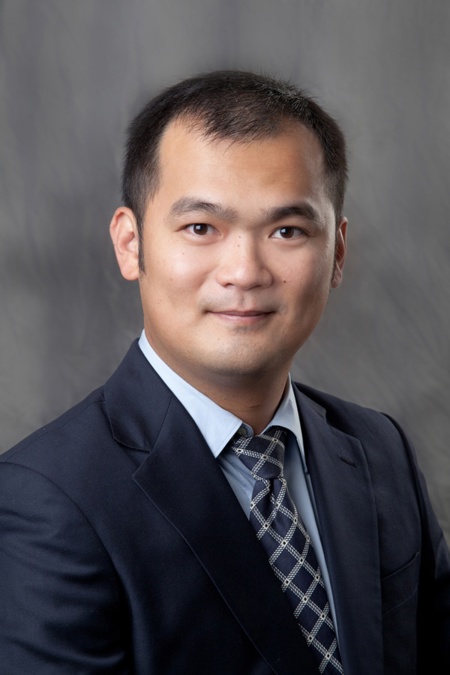
Dr. Shinichi Nakajima is a Senior Research Lead at the Technical University of Berlin, affiliated with the BIFOLD (Berlin Institute for the Foundations of Learning and Data) and the AIP – RIKEN Center of Advanced Intelligence Project . He leads the research group “Probabilistic Modeling and Inference” at BIFOLD. His academic journey includes a Master’s in Physics from Kobe University (1995) and a PhD in Computer Science from Tokyo Institute of Technology (2006). Prior to academia, he worked at Nikon Corporation (1995–2014) on statistical analysis, image processing, and machine learning. His research focuses on Bayesian inference , generative modeling , explainable AI , and quantum computing , with applications in computer vision, natural language processing, and scientific computing. Notable projects include developing NeuLat (a neural sampling toolbox for lattice field theories) and advancing techniques for symbolic XAI to enhance AI transparency. Dr. Nakajima has published extensively on topics such as diffusion models, federated learning, and physics-informed neural networks. His work bridges theoretical foundations (e.g., Bayesian learning) with practical applications in quantum computing and biomedical imaging. He actively contributes to open-source tools and collaborates with industry and academic institutions globally. Key technical achievements include improving sampling efficiency in quantum eigensolvers, enhancing brain source reconstruction via 3D neural networks, and developing anomaly detection systems using self-supervised autoencoders. His research emphasizes computational efficiency and robustness against adversarial attacks, leveraging Langevin dynamics and gradient-based optimization methods.
Dr Wencheng Yang is a Senior Lecturer in Computing at the School of Mathematics, Physics and Computing , University of Southern Queensland. He holds a PhD in Computing from UNSW, an MSc from Korea, and a BMgmt from Wuhan University of Technology. His research spans multiple domains including machine learning security , biometric authentication , privacy-preserving systems , and IoT applications . Education : BMgmt (Wuhan University of Technology), MSc (Korea), PhD (UNSW) Yang’s work emphasizes privacy and security in AI systems, particularly in biometric authentication (e.g., fingerprint, face, ECG) and IoT security. His recent publications focus on model inversion attacks , homomorphic encryption , and federated learning for healthcare applications. Key trends include secure face-swapping , Alzheimer’s disease prediction , and anti-forensic detection . His research has been cited 3378 times, with 1458 total downloads and 31 monthly views. While no explicit scientific awards are listed, his interdisciplinary work bridges computer science , healthcare , and cryptography . Current projects include privacy-preserving frameworks for implantable medical devices and military health systems .
Prof. Dr. Frauke Liers holds the Professorship of Optimization under Uncertainty & Data Analysis at the Department of Data Science (DDS), Friedrich-Alexander-University Erlangen-Nürnberg. Her research focuses on robust and distributionally robust optimization, mathematical programming, and applications in energy systems, healthcare logistics, and quantum computing. Email: frauke.liers@fau.de ResearchGate: Frauke Liers Research Interests span optimization under uncertainty, data-driven mathematical programming, and interdisciplinary applications. Key areas include: Distributionally robust optimization with scenario reduction and chance constraints Quantum computing optimization for gate routing and noise suppression Energy system modeling (photovoltaics, gas networks, electricity networks) Healthcare logistics (patient transport scheduling under uncertainty) Nanoparticle technology and chemical process optimization Recent Publications emphasize: Advancements in quantum circuit optimization (2025) Explainable optimization methods (2024) Robust approaches for particle precipitation control (2024) Dynamic trajectory optimization (2023) Time-expanded models for network flows (2022)
Mehmet Orgun is a Professor at the School of Computing, Macquarie University. He holds a BSc and MSc from Hacettepe University (Turkey) and a PhD from the University of Victoria (Canada). His research spans artificial intelligence, biomedical image processing, multi-agent systems, and secure systems. He has supervised over 30 PhD and master's students and led multiple ARC-funded projects totaling over $4M. His professional service includes roles at PRICAI 2010 and SIN 2019. Research Interests: Artificial Intelligence Quantum Cryptography Trusted Systems Medical Imaging Recommender Systems Awards: Best Student Runner Up Award (ADMA'23) Best Paper Award (MoMM2020) Best Student Paper Award (ICWS2016) Advising & Grants: 30+ PhD/Master's students ARC grants exceeding $4M Labs/Teams: Collaborations include Australian Taxation Office and DSTO. Projects focus on trust-oriented data analytics and secure systems.
Carina Prunkl is an Assistant Professor for Ethics of Technology at Utrecht University's Department of Philosophy and Religious Studies within the Humanities faculty. She is affiliated with the Ethics Institute and the Research Institute for Philosophy and Religious Studies . Her work focuses on AI ethics, algorithmic fairness, and governance frameworks for emerging technologies. Prunkl holds a DPhil in Philosophy from the University of Oxford and has previously worked at the Oxford Institute for Ethics in AI. Research Interests span ethics of artificial intelligence, thermodynamics philosophy, and applied data science. She emphasizes community governance models for AI and explores autonomy challenges posed by autonomous systems. Her interdisciplinary approach bridges philosophy, computer science, and policy design. Prunkl collaborates with international organizations like UNICRI, the UK Ministry of Defense, and Digital Catapult to implement responsible AI practices. Her recent work includes developing frameworks for algorithmic bias detection (LUCID project) and analyzing thermodynamic entropy interpretations in physics. Education includes BSc/MSc in Physics, MSt in Philosophy of Physics (Oxford), and a DPhil in Philosophy (Oxford).