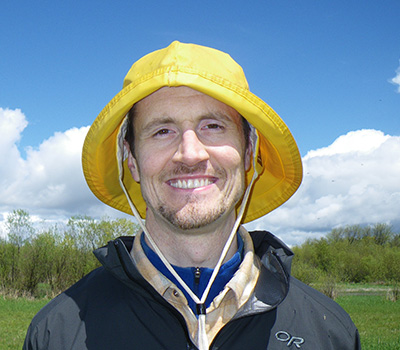
Associate Professor Bryce Frederick John Kelly is an academic at the University of New South Wales (UNSW), affiliated with the School of Biological, Earth and Environmental Sciences. His research focuses on greenhouse gas emissions, hydrogeology, and groundwater management, with a specialization in methane and carbon dioxide isotopic analysis. He leads the Greenhouse Gas Measurement Laboratory, which analyzes gas isotopes to trace emissions from coal seam gas (CSG), agriculture, and urban environments. Education: BSc (Hons) in Environmental Geology (UNSW, 1989); PhD in Environmental Geophysics (UNSW, 1995). Research Interests: Measuring methane emissions from CSG, coal mining, and agriculture Soil carbon sequestration and groundwater sustainability Isotope geochemistry for source attribution of greenhouse gases Satellite and airborne greenhouse gas monitoring Impact of CSG development on aquifers and ecosystems Key Projects: Leading the United Nations Environment Programme Methane Science Studies team, quantifying emissions in the Surat Basin. Co-supervising 60+ students. Collaborating with ANSTO on soil carbon and groundwater modeling. Awards: 2016 Cotton Seed Distributor Researcher of the Year finalist, 2011 Eureka Prize finalist for water research, and multiple industry awards for hydrogeological innovation. Labs/Teams: Connected Water Initiative, Centre for Ecosystem Science, Earth and Sustainability Science Research Centre (ESSRC). Active in policy outreach through The Conversation and Australian Geographic.
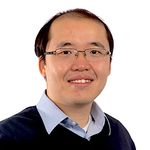
Karin Sigloch is a Visiting Professor at the Department of Earth Sciences , University of Oxford, and a member of Exeter College . Her research focuses on seismology and geodynamics , particularly using seismic tomography to image Earth's interior structure and link it to surface geological processes. She leads the DEEPTIME ERC-funded project, which integrates subduction zone studies with paleogeography. Teaching: Geophysical Methods (2nd year), Seismology (3rd year), Solid Earth seminars (4th year), and NERC Doctoral Training modules. Key Projects: RHUM-RUM ocean-bottom seismic experiment (2011-2014), DEEPTIME mantle tomography initiative. Research Interests: Seismic tomography advancements, mantle plumes dynamics, paleo-trench reconstructions, and vertical slab sinking hypotheses. Her work bridges seismic imaging with geological field data and geodynamic modeling. Awards: Philip Leverhulme Prize (2015) for outstanding contributions in Earth Sciences. Collaborations include the NERC Doctoral Training Programme and Leverhulme Trust-funded paleogeography studies. Her research group emphasizes cutting-edge waveform inversion techniques and interdisciplinary integration with plate reconstructions.
Pasquale Ferrentino is a Researcher at the Department of Applied Mechanics, Vrije Universiteit Brussel. His work focuses on soft robotics, self-healing materials, and finite element analysis (FEA) modeling. He has contributed to developing sustainable soft robots using self-healing polymers and recyclable materials, as well as advancing simulation techniques in the SOFA framework for soft actuator design. Ferrentino has published extensively on topics like material-based modeling of continuum robots, human-robot interaction interfaces, and biomedical robotics applications. He received the SOFA Award - Technical Committee Prize in 2024 for his contributions to robotics modeling. His research spans collaboration with international teams, addressing challenges in wearable robotics, soft tissue interaction, and multi-material actuator optimization. Ferrentino has presented his work at major conferences and co-created datasets for self-healing soft finger tutorials and FEA-based modeling.
Brian Ziebart is a Professor in the Department of Computer Science at the University of Illinois at Chicago. He earned his Ph.D. in Machine Learning from Carnegie Mellon University in 2010. Research Interests: Machine Learning, Robotics, Assistive Technologies, Human-Computer Interaction, Adversarial Prediction, Inverse Optimal Control, Structured Prediction. Key Grants: NSF CAREER (RI)-1652530, NSF EAGER (SCH)-1650900, NSF IIS-1526379, NSF III-1514126, Future of Life Institute grant, NSF NRI-1227495. Notable Awards: Best Paper Runner-Up (ECCV, 2012), Best Paper Award (ICML, 2011), CMU School of Computer Science Dissertation Honorable Mention (2011). Teaching & Leadership: Senior Lecturer at CMU, actively involved in mentoring students and leading research teams.
Dr. Nguyet (Moon) Nguyen is an Associate Professor in the Department of Mathematics & Statistics at Youngstown State University (YSU) , where she has been teaching since 2014 and was promoted to associate professor in 2020. Her work bridges financial mathematics with machine learning for predictive modeling in economics, stock markets, and risk assessment. She is currently writing a book titled Hidden Markov Model and Its Applications during her sabbatical leave in 2023, planned for publication in May 2025. PhD in Financial Mathematics, Florida State University (2014) MS in Financial Mathematics, Florida State University (2011) MS in Mathematics, Hanoi National University of Education (2002) BS in Mathematical Education, Hanoi National University of Education (1998) Her research focuses on applying Hidden Markov Models (HMM) , machine learning algorithms , and Monte Carlo methods to financial forecasting, including stock price prediction, economic recession modeling, and cryptocurrency volatility analysis. She also contributes to improving numerical algorithms for financial modeling, such as enhancing the Hull-White model with HMM. Recent publications highlight her expertise in ensemble learning for economic forecasting, predictive modeling for stock selection, and hybrid models combining statistical distributions (e.g., Normal Inverse Gaussian) with neural networks for risk assessment. These works span journals like Risks , Monte Carlo Methods and Applications , and MDPI publications. 2023: Sabbatical Leave Award, Youngstown State University Dr. Nguyen serves as an editor for MDPI journals and participates in professional service, including organizing mathematical modeling competitions in Vietnam and reviewing for the National Science Foundation (NSF).
Sandeep Gupta is a Professor and Director of the School of Computing and Augmented Intelligence at Arizona State University's Ira A. Fulton Schools of Engineering. He also serves as a Senior Global Futures Scientist. His work bridges computer science, engineering, and healthcare applications with a focus on creating reliable cyber-physical systems that interact safely with humans. Education: Ph.D. from The Ohio State University (1995) Research Interests: Professor Gupta's research spans cyber-physical systems, green and sustainable computing, mobile and pervasive computing, and parallel and distributed computing. His work increasingly focuses on human-in-the-loop systems where AI and humans collaborate safely, particularly in healthcare contexts. Recent research integrates large language models with cyber-physical systems to enhance safety and operational effectiveness in critical applications like medical monitoring and industrial automation. Research Trends: Analysis of Professor Gupta's recent publications reveals a strong focus on operational safety in human-AI collaborative systems, particularly in healthcare applications. His work combines physics-guided models with machine learning to detect "unknown-unknowns" in safety-critical systems, develops LLM-based approaches for medical image classification, and creates frameworks for ethical human-AI collaboration. The research increasingly addresses real-world challenges in diabetes management, epilepsy diagnosis, and industrial automation. Professional Service: IEEE Communication Letters Editorial Board, Area Editor (2008-Present) IEEE Journal on Special Areas in Communications - Issue on Body Area Network, Co-editor (2006-Present) Elsevier COMNET - Computer Network Journal, Reviewer (2008-Present) Technical Advisory Committee Chair for Networks (2005-Present) Advising and Grants: Professor Gupta has secured numerous research grants from NSF, NIH, Intel, Raytheon, and other organizations, totaling millions of dollars. His research portfolio includes projects on smart stadiums, mobile ECG sensing, power-aware scheduling, medical device verification, and sustainable data center management. He actively advises PhD and Master's students through thesis courses and research supervision, focusing on cyber-physical systems and healthcare applications. Labs and Research Groups: Professor Gupta leads research in cyber-physical systems with applications in healthcare, sustainable computing, and mobile networks. His work involves interdisciplinary collaboration across engineering, computer science, and medical domains, particularly through ASU's Global Futures initiatives.
Tanvir Arafin serves as an Assistant Professor in the Department of Cyber Security Engineering at George Mason University, where his research focuses on hardware security and trust mechanisms for emerging computing platforms. With publications in premier venues including IEEE Transactions on Very Large Scale Integration Systems, IEEE Transactions on Computers, and ACM International Conference on Computer-Aided Design, he addresses critical security challenges in next-generation systems through rigorous hardware-software co-design approaches. His research portfolio spans Hardware Security, Trusted Computing, and IoT Security, with specialized expertise in Side-Channel Attacks and Secure Hardware Design. Dr. Arafin investigates electromagnetic side-channel vulnerabilities in O-RAN networks, develops countermeasures for autonomous vehicle cybersecurity, and pioneers RRAM-based security solutions for memory-constrained devices. His work bridges theoretical security models with practical implementations, emphasizing real-world applicability in edge computing environments and autonomous navigation systems. Current projects explore machine learning integration for anomaly detection in connected vehicles and secure acceleration of cryptographic operations. Analysis of Dr. Arafin's 2022-2025 publications reveals strategic focus areas: electromagnetic fingerprinting for radio units in O-RAN (2025), spatial acceleration of Kolmogorov-Arnold Networks (2025), and NTT-based cryptography accelerators (2024). His research demonstrates consistent innovation in securing autonomous navigation systems and edge devices, with emerging work on in-memory computing architectures using resistive memory technologies. Key trends include hardware-centric defense against model inversion attacks, voltage overscaling for lightweight authentication, and robust multi-robot coordination in dynamic environments. Scientific Awards: No scientific awards, fellowships, or medals were documented in the source materials. Dr. Arafin leads significant collaborative research, including the NSF CISE-MSI grant (DP: CNS) for edge-based robust multi-robot systems. His educational initiatives feature Capture-the-Flag competitions targeting underrepresented students in cybersecurity. Current grant activities emphasize practical security solutions for autonomous navigation, multi-robot coordination, and IoT edge devices, with demonstrated focus on translating research into deployable countermeasures for real-world threats in dynamic operational environments.
Linda A. Reinen is Professor of Geology at Pomona College, where she has been a faculty member since 1995. She is currently on leave for Fall 2025. Her work bridges structural geology, rock mechanics, and earthquake science, with a focus on fault system behavior and earthquake initiation processes. Education: Ph.D., Brown University M.S., University of Massachusetts B.S., University of Massachusetts Her research centers on understanding how tectonic slip is accommodated on faults—either through earthquakes or stable creep—with a particular focus on serpentinite, a key rock in fault zones. She combines numerical modeling , laboratory friction experiments , and field studies to investigate the physical processes behind earthquake generation. Her recent work, supported by an NSF grant, explores serpentinite’s role in deep-focus earthquakes within subducting plates. The trends in her publications reflect a long-standing commitment to fault mechanics and rock friction , particularly in serpentinite-rich environments. Her work spans seismology , tectonics , and geohazards , with applications to major faults like the San Andreas. She employs both theoretical models (e.g., spring-slider systems) and empirical data to understand slip styles, precursory signals, and aseismic behavior. Scientific Awards and Honors: Geological Society of America, Biggs Award for Excellence in Earth Science Teaching (2003) Invited Speaker, International Symposium on Slip and Flow Processes, Sendai, Japan (2001) Counselor, Council on Undergraduate Research, Geology Division (1999–present) Steering Committee Member, Physical Properties of Earth Materials (AGU) (1998–2001) Linda Reinen is deeply committed to undergraduate research education , regularly supervising independent research and senior projects. She has taught courses such as Structural Geology, Tectonics, and Geohazards. Her grant funding, including from the NSF, supports experimental and modeling work on fault processes. She plays an active role in professional service and mentoring within the geoscience education and research communities. She leads a research program integrating computational, experimental, and field-based approaches, often involving undergraduate collaborators. Her lab and research team focus on rock friction testing and numerical simulation of fault behavior, contributing to broader understanding of earthquake hazards and fault zone evolution.
Sonia Fliss is a Full Professor at ENSTA Paris , affiliated with the Department of Applied Mathematics and the POEMS laboratory (UMR CNRS-INRIA-ENSTA) . She teaches applied mathematics courses on partial differential equations (PDEs) , finite element methods , and periodic homogenization to undergraduate and graduate students. Doctor in Applied Mathematics (2009) Authorized to supervise research (2019) Research Interests : Sonia Fliss specializes in the modeling and numerical analysis of wave propagation in periodic, quasi-periodic, and random media . Her work includes transparent boundary conditions , guided waves , and asymptotic methods for acoustic, electromagnetic, and elastic wave phenomena . Recent Publications highlight her contributions to the Half-Space Matching Method , edge states in honeycomb structures , and scattering problems in unbounded domains . Her numerical techniques address multi-scale waveguides and time-harmonic propagation . Laboratory : As a member of the POEMS team, she collaborates on interdisciplinary projects involving mathematical analysis , computational physics , and engineering applications in domains like defence, energy, and transport .
Christopher J. Earls is a Professor in the Department of Civil and Environmental Engineering at Cornell University's College of Engineering. His work bridges applied mathematics, artificial intelligence, and scientific computing to address challenges in understanding natural and engineered systems, particularly focusing on uncertainty quantification, sparse sensing, and complexity. B.S. (Civil Engineering), Virginia Tech 1990 M.S. (Civil Engineering), Virginia Tech 1992 Ph.D. (Civil Engineering), University of Minnesota 1995 Earls' research explores Scientific Artificial Intelligence (SciAI) and Inverse Problems, with applications to computer-aided diagnosis and complex systems. His recent publications highlight intersections with Large Language Models (LLMs), geometric analysis, and neural scaling laws in dynamical systems. Outstanding Young Alumni Award (Virginia Tech) 2004 Outstanding Professor of the Year Award (ASCE) 2001 James and Mary Tien Teaching Award (Cornell) 2016 Ralph E. Powe Junior Faculty Enhancement Award (ORAU) 2000 Peter S. Michie Outstanding Teacher Award (West Point) 1998
Dr Jack Betteridge is an Honorary Research Fellow in the Department of Mathematics, Faculty of Natural Sciences, at Imperial College London. His work bridges computational mathematics with environmental sciences, focusing on numerical methods for atmospheric and oceanic systems. His research interests include: Numerical and Computational Mathematics Atmospheric Sciences Oceanography Physical Geography and Environmental Geoscience Computation Theory and Mathematics Distributed Computing Analysis of his 2019-2024 publications reveals deep engagement with finite element methods, particularly through the Firedrake project for automated PDE solutions. His work emphasizes high-performance computing applications in geophysical fluid dynamics, developing novel preconditioners and solvers for atmospheric modeling while contributing to computational education for mathematicians.
Professor Georg Gottwald is a distinguished academic in the School of Mathematics and Statistics at the University of Sydney, where he has been a faculty member since 2002, progressing from Lecturer to his current position as Professor since 2013. He also holds a Visiting Professor position at the University of Surrey in the UK since 2013. His extensive research career spans dynamical systems theory, geophysical fluid dynamics, and the intersection of machine learning with complex systems. Professor Gottwald's research focuses on dynamical systems theory as an abstract formalism for studying systems evolving in time and space. His work has significant applications across diverse fields including climate modeling, biological systems, and complex networks. He is particularly known for developing methods for model reduction of complex dynamical systems, stochastic modeling approaches, and the application of machine learning techniques to dynamical systems. His research aligns with the Faculty of Science Research Strengths in Understanding the Universe, Fundamental Laws of Nature, Complex Systems, Climate and Environmental Change, Data and Decisions, and National Security. His most recent publications demonstrate a strong trajectory toward integrating machine learning with dynamical systems theory, particularly in developing stable generative models, learning dynamical systems with random feature maps, and combining data assimilation with machine learning for forecasting. His work spans pure mathematical theory to practical applications in climate science, finance, and biological systems, showing remarkable breadth while maintaining deep mathematical rigor. Future Fellowship, 'Stochastic methods in mathematical geophysical fluid dynamics', Australian Research Council, 2010-2014 Australian Research Fellowship, 'Stochastic methods in mathematical geophysical fluid dynamics', Australian Research Council, 2010-2015 (declined) Australian Research Fellowship, 'Geometric methods in geophysical fluid dynamics', Australian Research Council, 2004-2009 Professor Gottwald has successfully supervised numerous PhD and Master's students who have gone on to academic and industry positions worldwide. His current research group includes postdocs and PhD students working on machine learning for dynamical systems, stochastic model reduction, physics-informed machine intelligence, and tensor methods for scientific machine learning. He has secured multiple ARC Discovery Project grants and has been involved in significant international collaborative research projects. He is actively involved with the Sydney Dynamics Group, which he co-founded in 2007, fostering collaboration between the University of Sydney and UNSW. Professor Gottwald maintains strong editorial commitments as Associate Editor for Geophysical and Astrophysical Fluid Dynamics, SIAM Journal of Applied Dynamical Systems, and Journal of Computational Dynamics, and serves on the Editorial Advisory Board for Chaos and the Editorial Board for Physical Review E. His professional activities demonstrate leadership in the dynamical systems community through organizing workshops, seminars, and special journal issues.
Simon de Szoeke is a Professor in the College of Earth, Ocean, and Atmospheric Sciences at Oregon State University. His research focuses on atmosphere-ocean interaction and its influence on climate, with particular emphasis on tropical regions. He conducts observational studies and modeling work to understand air-sea interactions, cloud processes, and their representation in climate models. Dr. de Szoeke received his Ph.D. in Atmospheric Sciences from the University of Washington in spring 2004, with a dissertation on "Evolution of the cross-equatorial atmospheric boundary layer in the east Pacific: observations and models." He earned his B.A. summa cum laude in Physics with departmental honors and Mathematics from the University of Oregon Robert D. Clark Honors College in 1997. His research interests center on atmosphere-ocean interaction, stratiform clouds, and tropical meteorology . He investigates how clouds influence the Earth's radiative heating, the processes responsible for the transition from stratiform to cumuliform clouds, and the role of inversion strength in cloud maintenance. His work on the Madden-Julian oscillation (MJO) involves analyzing data from the DYNAMO international field campaign to study air-sea flux feedbacks and the role of sea surface temperature in tropical weather phenomena. Dr. de Szoeke is particularly known for his groundbreaking research on cold pools in the tropical ocean, which he describes as "footprints" of convection. His research shows that these cold, invisible phantoms play an important role in the atmospheric heat budget and can organize towering clouds at their intersection points. Contrary to previous assumptions, he found that cold pools are drier than their surroundings, challenging existing theories about their role in convection. His scientific contributions include numerous publications on air-sea interaction, tropical meteorology, and cloud processes. His research has been supported by major field campaigns including DYNAMO in the Indian Ocean and VOCALS in the southeastern Pacific, with findings published in leading journals such as Journal of Climate, Bulletin of the American Meteorological Society, and Monthly Weather Review. Dr. de Szoeke teaches courses in atmospheric sciences including The Changing Climate (AS 320), Atmospheric Thermodynamics and Cloud Physics (AS 411/511), and Large-Scale Interactions of the Atmosphere and Oceans (AS 615). He has advised several graduate students, including June Marion who graduated in summer 2014 with a thesis on turbulent heat flux estimates, as well as Michael Makiyama and Kathryn Verlinden.
Lei Tian is an Associate Professor in the Department of Electrical and Computer Engineering and the Department of Biomedical Engineering at Boston University's College of Engineering. He leads the Computational Imaging Systems Lab and maintains affiliations with the Neurophotonics Center, Photonics Center, Center for Information & System Engineering, Rafik B. Hariri Institute for Computing, and Nanotechnology Innovation Center. His educational background includes: PhD, Massachusetts Institute of Technology, 2013 MS, Massachusetts Institute of Technology, 2010 Professor Tian's research integrates optics and computation to overcome physical limitations in imaging systems. His work spans computational imaging and sensing, computational microscopy, imaging in scattering media, phase retrieval, and neurophotonics. He develops next-generation imaging systems with applications in biomedical microscopy, neuroscience, semiconductor metrology, and advanced vision applications, emphasizing the joint design of optical components and computational algorithms. His publication record shows a strong progression from fundamental computational imaging techniques to practical applications, with increasing integration of deep learning approaches to solve challenging imaging problems in scattering media and neural environments. His work consistently bridges theoretical advances with real-world applications. Professor Tian has received numerous prestigious awards: Boston University Provost's Scholar-Teacher of the Year Award (2025) Optica Fellow (2025) Early Career Excellence in Research, BU College of Engineering (2021) NSF CAREER Award (2019) Dean's Catalyst Award (2018) The Fumio Okano Best 3D Paper Prize (2018) As an advisor, he has successfully mentored at least 10 PhD students to completion as of mid-2025, with recent graduates including Jeffrey Alido, Jiabei Zhu, Chang Liu, Hao Wang, and Joseph Greene. His research is supported by substantial funding including a $2 million NIH grant for the Computational Miniature Mesoscope (CM2), a $1.75M grant from NIBIB for cancer cell metabolism research, and funding from the Chan Zuckerberg Initiative. His Computational Imaging Systems Lab pioneers innovative imaging techniques that synergistically combine optical hardware with computational algorithms, making significant contributions to computational microscopy, intensity diffraction tomography, neural imaging systems, and deep learning applications in optical imaging for both biomedical and industrial applications.
Bert Wouters is an Associate Professor at Utrecht University's Faculty of Science, affiliated with the Department of Dynamics Meteorology. He specializes in satellite-based observations of polar ice sheets and climate dynamics, with a part-time appointment since joining the Institute for Marine and Atmospheric Research (IMAU) in 2015. His work focuses on global glacier mass loss, ice-sheet interactions with climate change, and sea-level rise contributions. Research interests span glaciology, satellite geodesy, and climate modeling. Key themes include: Quantifying ice-sheet mass balance using GRACE/GRACE-FO and ICESat-2 data Analyzing surface melt processes on Antarctic ice shelves Assessing impacts of Arctic warming on glacier dynamics Developing machine learning methods for remote sensing of cryospheric changes Publications emphasize Antarctic and Greenland ice-sheet vulnerabilities, with recurring themes of satellite validation, meltwater hydrology, and decadal climate variability. Research consistently integrates field data, climate models, and novel remote sensing techniques. Wouters leads projects like Future Deltas (water/climate interactions) and Eratosthenes (glacier topography via shadow motion analysis). He collaborates with international teams on IPCC-relevant assessments and edits for The Cryosphere .