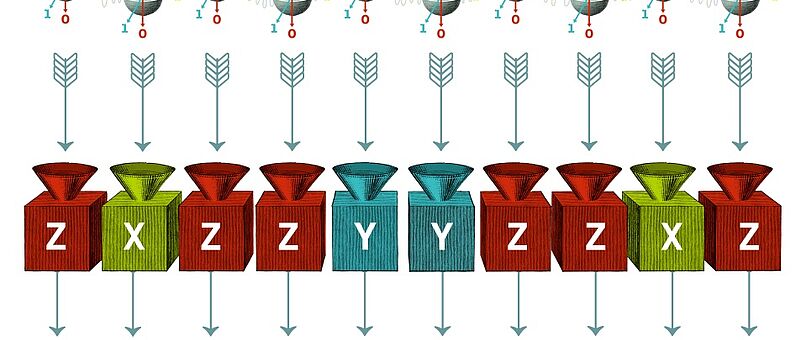
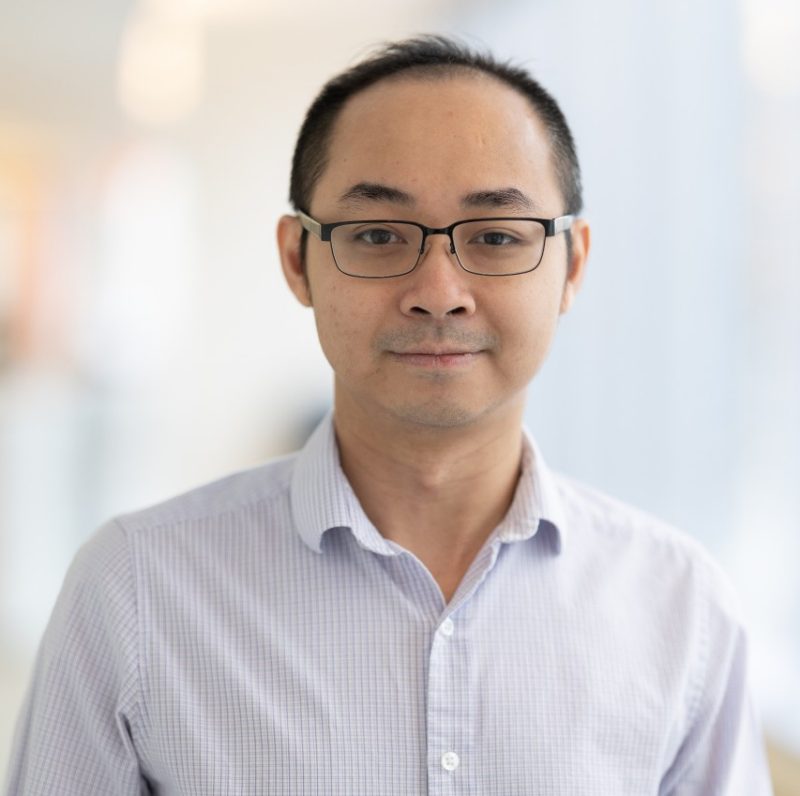
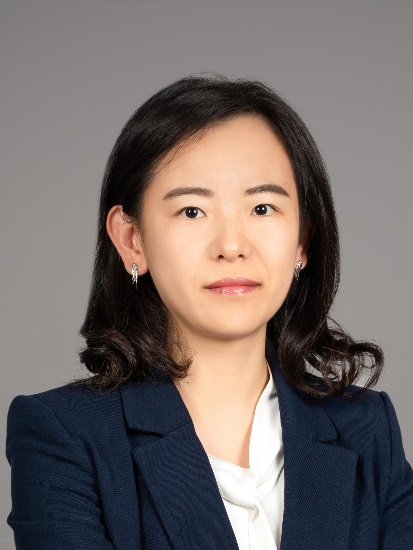
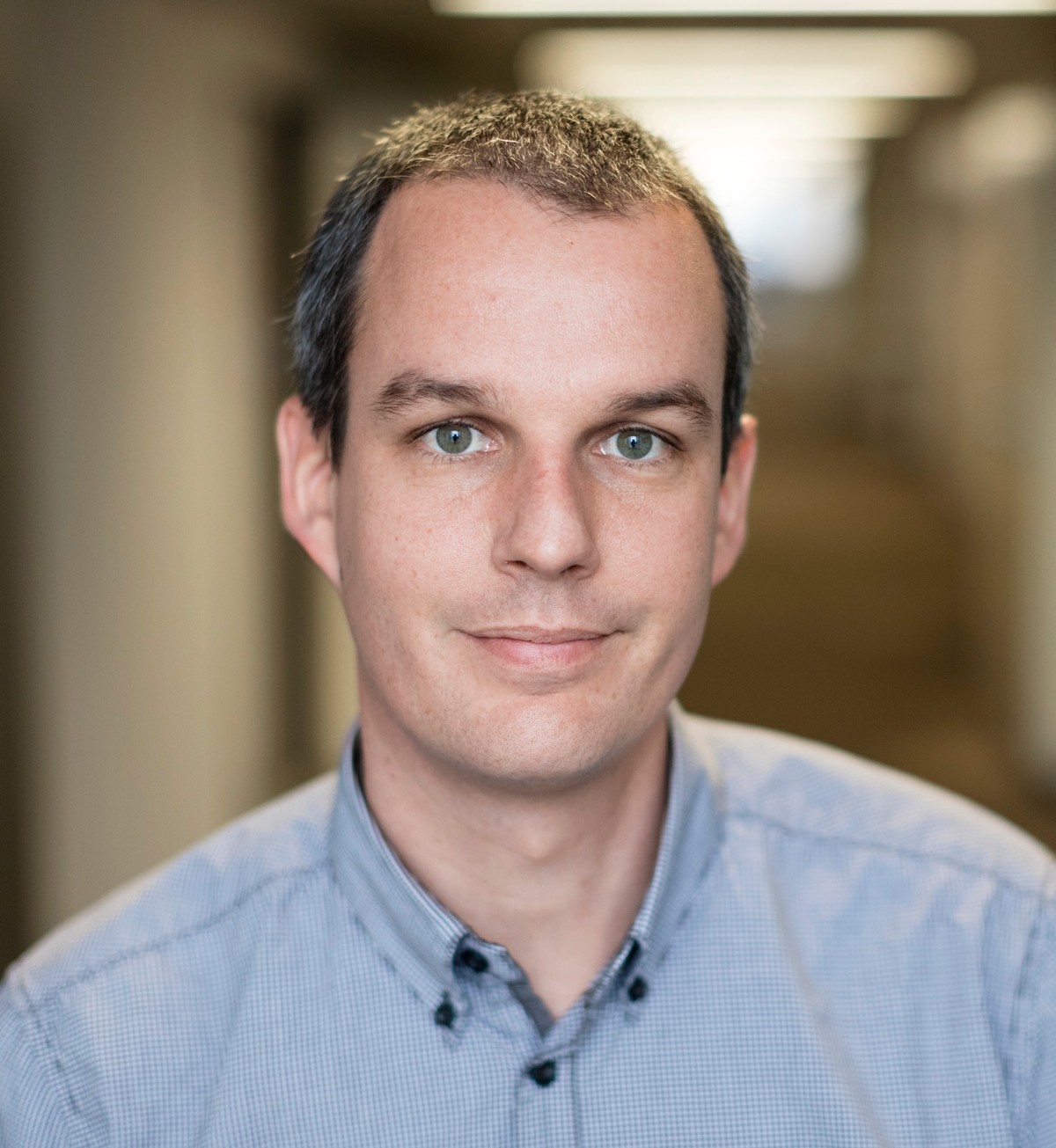
Dr. Borivoje Dakic is an Associate Professor at the University of Vienna , affiliated with the Faculty of Physics and the Quantum Optics, Quantum Nanophysics and Quantum Information department. His research spans foundational and applied aspects of quantum theory. Operational reconstruction of quantum formalism Quantum interference as a resource for communication Tomography of large-scale quantum systems Macroscopic quantum phenomena His work includes scalable verification techniques for quantum devices and collaborations with experimental teams like Philip Walther’s and Markus Aspelmeyer’s groups. He received the Marko Jarić Prize (2025) for his contributions. Recent projects focus on diagnostics of quantum devices (FWF BeyondC SFB), information-theoretic foundations of quantum interference (FWF P36994), and local operations in quantum field theory (Cluster of Excellence QuantA). His research on quantum coherence in networks and macroscopic entanglement challenges traditional assumptions about quantum-classical boundaries. Publications emphasize resource-efficient tomography, device-independent verification, and foundational frameworks for quantum statistics and field theory. Teaching: Quantum Information (2025W), Theory in Quantum Optics (2025S), VCQ Summerschool Labs: Dakić Group at University of Vienna
Hari Sundar is an Associate Professor in the Department of Computer Science at Tufts University, holding the Ada Lovelace Associate Professorship. Previously, he served as an Associate Professor at the Kahlert School of Computing, University of Utah. His research focuses on developing parallel algorithms for computational sciences and high-performance computing, addressing challenges in biosciences, geophysics, computational fluid dynamics, and computational relativity. He leads efforts in adaptive mesh refinement, geometric multigrid methods, and scalable scientific computing frameworks like Dendro-GR for numerical relativity. Education: Ph.D. in Computer Science from the University of Pennsylvania (2009), and a Bachelor of Engineering from the University of Delhi (2000). Postdoctoral work at the Oden Institute, University of Texas at Austin. Research Interests: Parallel algorithms, high-performance computing architectures, computational relativity (binary black hole simulations), multiphase flow modeling, and domain-specific languages for scientific computing. His work emphasizes scalability and efficiency on modern supercomputers. Key Contributions: Development of the Dendro-GR platform for gravitational wave simulations, scalable PDE solvers, and GPU-optimized algorithms for phonon transport and genomic sequence alignment. His recent work includes advancements in gravitational waveform modeling for LISA space missions and thermodynamically consistent two-phase flow simulations. Grants & Collaborations: Active in NSF-funded projects on computational relativity, multiphase flow algorithms, and scalable PDE solvers. Collaborates across disciplines in astrophysics, materials science, and bioinformatics.
Oliver G. Ernst is a Professor of Numerical Analysis at Technische Universität Chemnitz . His research focuses on Numerical Analysis , Uncertainty Quantification , and Inverse Problems , with applications in Thermo-Hydro-Mechanical (THM) processes , Electromagnetics , and Stochastic Partial Differential Equations . He is associated with the Numerical Analysis group at TU Chemnitz. Key Research Areas : Efficient numerical methods for PDEs Krylov subspace techniques Stochastic finite element methods Multi-physics modeling Geoscientific applications Recent Publications (2025-2010): THM simulations under uncertainty Neural network PDE solvers Bayesian inversion frameworks Rational Krylov algorithms Deflated restarting strategies Collaborations : TU Bergakademie Freiberg University of Manchester Technical University of Munich University of Maryland University of Geneva Software Development : Contributor to OpenGeoSys platform Developer of FEMALY MATLAB library Academic Recognition : h-index 32, i10-index 66, with over 4423 citations since 2020.
Peter Bienstman is a full professor at Ghent University, working in the Department of Information Technology (INTEC) where he has been since 1997. He is affiliated with the Photonics Research Group and also collaborates with imec. His research spans nanophotonics, neuromorphic computing, and biosensing applications. Bienstman received his electrical engineering degree from Ghent University in 1997 and completed his Ph.D. at the same institution in 2001. His doctoral work focused on "Rigorous and efficient modelling of wavelength scale photonic components." His research interests primarily revolve around nanophotonics and its applications, with specific focus areas including: Photonic Reservoir Computing for neuromorphic information processing Optical label-free biosensors based on ring resonators TE/TM biosensors for measuring conformational changes SiN biosensors operating in the visible spectrum Optical spiking neurons and neuromorphic architectures Nanophotonic information processing systems Analysis of his recent publications reveals a strong focus on advancing photonic reservoir computing for practical applications, particularly in communications signal processing and biomedical sensing. His work demonstrates how photonic systems can implement neuromorphic computing paradigms with energy efficiency advantages over traditional electronics. Recent trends show increasing integration of phase-change materials and exploration of quantum-inspired photonic computing approaches. Bienstman has received significant recognition for his work, most notably an ERC Starting Grant for the Naresco-project: "Novel paradigms for massively parallel nanophotonic information processing." This prestigious European grant supports his innovative research at the intersection of photonics and computing. As an advisor, Bienstman has supervised numerous doctoral students to completion and currently mentors a large research group with nine active PhD students and two postdoctoral researchers. His research is supported by multiple grants that enable the development of novel photonic computing architectures and biosensing platforms. The group's work bridges fundamental photonics research with practical applications in communications, healthcare, and computing. The Photonics Research Group at Ghent University, where Bienstman works, maintains state-of-the-art facilities for nanophotonic device design, fabrication, and characterization. The group collaborates extensively with imec and other international research institutions, creating a vibrant ecosystem for advancing photonic technologies from fundamental research to potential commercial applications.
Audrey Repetti is an Associate Professor in the Department of Actuarial Mathematics and Statistics within the School of Mathematical and Computer Sciences at Heriot-Watt University in Edinburgh, UK. She also holds a dual affiliation with the Institute of Sensors, Signals, and Systems in the School of Engineering and Physical Sciences, and is part of the Maxwell Institute for Mathematical Sciences - Edinburgh. Her research spans mathematical imaging, optimization, and computational methods with applications across astronomy, medical imaging, and optical engineering. Dr. Repetti's research focuses on developing advanced mathematical frameworks for solving imaging inverse problems. Her work centers on optimization algorithms, Bayesian uncertainty quantification, and the integration of machine learning with traditional mathematical approaches. She has made significant contributions to radio interferometric imaging, computational optical imaging with photonic lanterns, and uncertainty quantification in medical imaging. Her research bridges theoretical mathematics with practical applications in astronomy, healthcare, and engineering. Analysis of her recent publications reveals a clear trajectory toward integrating traditional mathematical imaging approaches with modern machine learning techniques. Her work increasingly focuses on 'hybrid' methodologies that combine data-driven models with optimization frameworks. Key themes include plug-and-play algorithms, uncertainty quantification in imaging, and the development of efficient computational methods for high-dimensional inverse problems. Her research demonstrates strong interdisciplinary connections between mathematics, signal processing, astronomy, and medical imaging. Dr. Repetti is actively involved in academic service, including co-organizing the 2026 ICMS Workshop on Imaging inverse problems and generating models. She has received research funding supporting her work in computational imaging and inverse problems, though specific grant details aren't listed in the provided materials. Her teaching portfolio includes advanced courses in scalable inference, deep learning, and statistics for sciences. She leads several research projects with associated software toolboxes including BUQO (Bayesian Uncertainty Quantification by Optimization), SARA-COIL (Compressive optical imaging with a photonic lantern), and CALIM (Self direction-dependent effect calibration and imaging in radio-interferometry). These projects demonstrate her commitment to developing practical computational tools that advance both theoretical understanding and real-world applications in imaging science.
Selin Aslan serves as an Assistant Professor in the Department of Mathematics at Koç University, Istanbul, Turkey, where she conducts research at the intersection of computational mathematics and imaging science. Her academic appointments and research activities are centered within the university's mathematics department, contributing to both undergraduate and graduate education in mathematical sciences. Her educational qualifications include: PhD in Mathematics from Virginia Polytechnic Institute and State University (2018) Master's in Mathematics from Rochester Institute of Technology (2013) B.A. in Mathematics from Ege University (2010) Dr. Aslan's research program focuses on developing advanced computational methods for solving inverse problems in imaging, with particular expertise in phase retrieval, tomographic reconstruction, and ptychography. Her work bridges theoretical mathematics with practical applications in medical imaging, microscopy, and materials science, emphasizing algorithmic innovation and computational efficiency. She integrates techniques from deep learning, optimization theory, and high-performance computing to address challenges in image reconstruction under physical constraints. Analysis of her publication record reveals a consistent trajectory toward solving complex imaging problems through hybrid approaches that combine physics-based models with data-driven techniques. Her recent work demonstrates increasing emphasis on scalability for large datasets, robustness in photon-limited scenarios, and real-time processing capabilities, with applications spanning biomedical imaging to advanced microscopy. No scientific awards were documented in the available sources. Information regarding student advising and research grant activities was not specified in the provided materials, though her publication record suggests active research collaboration. Her computational focus implies engagement with high-performance computing resources for large-scale image reconstruction tasks. While specific laboratory infrastructure details were unavailable, her research on multi-GPU implementations and distributed computing indicates utilization of advanced computational facilities for handling large-scale imaging datasets.
Srinivasa G. Narasimhan is the U.A. and Helen Whitaker Professor of Robotics at Carnegie Mellon University's Robotics Institute within the School of Computer Science. He directs the Illumination and Imaging Laboratory (ILIM) and leads the Computational Imaging group, focusing on the physics of computer vision and graphics. His research develops novel imaging technologies for applications in robotics, transportation, medical imaging, and environmental sensing. Research interests span computational imaging, light transport modeling, and active perception systems. Key areas include: Physics-based vision for atmospheric and material interactions Novel camera designs and programmable lighting systems Robust perception for autonomous vehicles and medical diagnostics Non-line-of-sight imaging and computational scatterography Publications demonstrate strong emphasis on 3D reconstruction, computational optics, and vision systems for intelligent transportation. Recent works leverage self-supervised learning for dynamic scene understanding and develop novel sensors for medical and automotive applications. Awards and honors include: Best Paper awards at CVPR (2019, 2022), IV (2021), and ICCP (2020) Marr Prize Honorable Mention (ICCV 2013) Multiple demo awards at CVPR/ICCP Current advising includes 5 PhD students and 1 master's student. Major grants include NSF EXPEDITIONS (Computational Photo-Scatterography), DARPA REVEAL, and industry support from Ford, GM, Adobe, and Zillow. Manages multiple labs developing technologies like adaptive headlights, thermal imaging systems, and MHz-rate light steering devices.
Zin Lin is an Assistant Professor in the Bradley Department of Electrical and Computer Engineering at Virginia Tech, based at the Virginia Tech Research Center in Arlington. His research focuses on inverse design principles in nanophotonics, computational modeling, and scientific machine learning, with applications in quantum photonics, electromagnetics, and optical imaging. He leads the Inverse Design and Discovery Group, emphasizing large-scale optimization for physical systems and novel device discovery through physics-based AI. Education: Postdoc in Applied Mathematics at MIT (2018–2022), Ph.D. in Applied Physics from Harvard University (2018), and a B.A. in Physics and Mathematics from Wesleyan University (2012). He is a recipient of the National Science Foundation Graduate Fellowship (2014–2018). Research interests include inverse design of nanophotonic devices, topology optimization, quantum optics, and computational imaging. His group explores cutting-edge topics like metasurface engineering, terahertz wave generation, and bio-chemical sensing through physics-driven optimization frameworks. Recent work emphasizes scalable optical systems, such as end-to-end optimized metalenses and meta-optics for imaging, as well as quantum control in graphene-based metasurfaces. Key contributions span nonlinear frequency conversion, high-energy particle detection via nanophotonic scintillators, and topology-optimized multi-layered optical systems. Notable awards include the NSF Graduate Fellowship. His team actively pursues interdisciplinary projects at the intersection of wave physics, machine learning, and high-performance computing, with open positions for PhD students and postdocs.
Audrey Repetti is an Associate Professor at Heriot-Watt University, affiliated with both the School of Mathematical and Computer Sciences and the School of Engineering and Physical Sciences. She holds a PhD in optimization from Université Paris-Est Marne-la-Vallée (2015) and an MSc in applied mathematics from Université Pierre et Marie Curie (2011). Her research focuses on optimization (convex/nonconvex/stochastic), deep learning, Bayesian inference, and inverse problems in imaging and graph processing. She received the Royal Society of Edinburgh Fellowship (2022) for her work in optimization for data science. Her teaching includes courses like Bayesian Inference and Computational Methods. She collaborates internationally on projects in radio astronomy imaging, medical imaging, and computational optics. Repetti’s work bridges optimization theory with practical applications, emphasizing scalable algorithms for large-scale data problems.
Associate Professor Wu Dan at Shenzhen University of Technology, School of New Materials and New Energy, is a leading researcher in advanced photonic integration. His work focuses on high-brightness quantum dot circularly polarized electroluminescent devices and low-defect-state-density single-crystal thin films. With a distinguished academic background from Nanyang Technological University and Huazhong University of Science and Technology, he has published 83 SCI-indexed papers and secured 32 patents. Educational Background: PhD in Electrical and Electronic Engineering (2013-2018), Nanyang Technological University, Singapore MSc in Optical Engineering (2009-2011), Huazhong University of Science and Technology BSc in Electronic Science and Technology (2005-2009), Harbin Institute of Technology His research spans four key directions: room-temperature circularly polarized electroluminescence, micro-nanostructure light field control, quantum dot lasers on silicon substrates, and light field detection technology in optoelectronic fusion chips. His publications cover high-impact journals including Nature, Advanced Materials, and Light: Science & Applications. Scientific Awards: Shenzhen Peacock Plan Category C Talents Asia Innovation Forum Young Entrepreneur Award (2012) China Petroleum and Chemical Industry Excellent Publication Award (2021) International Conference on Electronics Technology Young Scientist Award (2024) Nano-Optoelectronic Materials Development Forum Science Exploration Award (2024) Shenzhen University of Technology 'Outstanding Researcher' (2022) Wu Dan serves as a reviewer for major journals and leads research projects funded by national and regional organizations, including grants from the National Natural Science Foundation of China and Shenzhen Basic Research Program.
Raphaël Pestourie is an Assistant Professor in the School of Computational Science and Engineering at Georgia Tech (2023–present). He holds a PhD in Applied Mathematics (Harvard University, 2020) and an MBA from ESSEC. His research focuses on scientific machine learning and inverse design in electromagnetism, combining AI with physics-based models for engineering optimization. Notable contributions include fast approximate PDE solvers, surrogate models for metasurface design, and end-to-end optimization frameworks. **Education**: PhD in Applied Mathematics, Harvard University (2020) Secondary field in Computational Science & Engineering, Harvard MBA, ESSEC Masters in Nanosciences (Paris Saclay), Engineering (École Centrale Paris), and Statistics (Harvard) **Research Interests**: His work bridges applied mathematics and AI to solve large-scale engineering problems. Key areas include: Inverse design of metasurfaces for optical applications Scientific machine learning for PDE-based optimization Hybrid models combining theory-driven and data-driven approaches End-to-end optimization of electromagnetic systems **Awards & Support**: Funded by MIT-IBM Watson AI Lab, DARPA, Simons Foundation, and others Arthur Sachs Fellow (French Fulbright Commission) Member of Harvard's Graduate School Leadership Institute **Advisees & Collaborations**: Advises PhD/MSc students at Georgia Tech and collaborates with MIT, Yale, and UC Berkeley researchers Current projects include metasurface design for chemical detection and imaging **Teaching**: Created new courses: CSE 8803 (Scientific Machine Learning) and CSE 8801 (Linear Algebra/Probability/Stats)
Prof. Mathieu Luisier is a Full Professor of Computational Nanoelectronics at ETH Zurich's Department of Information Technology and Electrical Engineering. He earned his PhD in 2007 from ETH Zurich, followed by postdoctoral research there and a role as Research Assistant Professor at Purdue University (2008–2011). His research focuses on nanoscale device modeling, including nanowire transistors, memristors, and 2D semiconductors, with a strong emphasis on quantum transport and high-performance computing. ERC Starting Grant (2013) SNSF Advanced Grant (2022) ACM Gordon Bell Prize (2019) His work integrates advanced simulation techniques like GW approximations and parallel algorithms to address challenges in nanoelectronics. He teaches courses on digital circuits and integrated systems, and leads research groups exploring next-generation devices for applications in quantum computing and neuromorphic systems.
Jiaqi Gu is an Assistant Professor at the School of Electrical, Computer and Energy Engineering at Arizona State University. His work bridges photonics, quantum computing, and machine learning to develop next-generation hardware for efficient computing. PhD in Electrical and Computer Engineering, University of Texas at Austin (2023) His research focuses on emerging hardware design (photonics, post-CMOS electronics, quantum), hardware-algorithm co-design , AI/ML algorithms , and electronic-photonic design automation . He explores how photonic and quantum systems can be optimized for AI workloads, with recent work on differentiable photonic simulation, compact optical neurons, and quantum component placement tools. His publications include 20+ papers in 2025 on topics like photonic tensor cores, optical neural networks, and quantum-aware design. Key trends: integrating machine learning with photonic device simulation, optimizing photonic circuits for adversarial robustness, and advancing quantum computer compilation. Scientific awards include: Best Paper at ASP-DAC 2020 Best Poster at NSF Workshop on Machine Learning Hardware 2020 Margarida Jacome Dissertation Prize 2023 Outstanding Dissertation Award 2024 Dr. Gu advises students through EEE 490/590/790 courses and leads the ScopeX research group , which develops tools for photonic and quantum hardware design.
David Russell Luke is a Professor of Continuous Optimization at the Institute for Numerical and Applied Mathematics, University of Göttingen, where he also serves as Managing Director of the Institute. He holds editorial positions as Area Editor for the Open Journal of Mathematical Optimization and Associate Editor for multiple prestigious journals including Journal of Optimization Theory and Applications, ESAIM: Control, Optimization and Calculus of Variations, SIAM Journal on Optimization, and Advances in Computational Mathematics. Dr. Luke earned his BSc with honors in Applied Mathematics from the University of California, Berkeley in 1991, followed by an MSc (1997) and PhD (2001) in Applied Mathematics from the University of Washington under James Burke. His academic journey included positions at the University of Göttingen (2001-2003), Simon Fraser University (2002-2004), and University of Delaware (2004-2009) before returning to Göttingen. His research focuses on Continuous Optimization, Variational Analysis, and Inverse Problems , with particular expertise in nonsmooth and nonconvex optimization, phase retrieval, and computational imaging. His work bridges theoretical mathematics with practical applications in photonic imaging, tomography, and adaptive optics. Current research projects include atomic orbital tomography, stochastic computed tomography for X-FEL imaging, probabilistic analysis in fixed point theory, and topological optimization for tree structure analysis. Analysis of his recent publications reveals a strong trend toward computational methods for imaging science, particularly phase retrieval problems, with increasing focus on three-dimensional reconstruction techniques and applications in photoemission orbital tomography. His work consistently integrates theoretical convergence analysis with practical algorithm development, often implemented in the ProxToolbox software framework. NASA/GSFC Graduate Student Research Fellow (1998-2001) Editorial roles with multiple leading optimization journals Principal investigator on numerous DFG-funded research projects Dr. Luke has advised several PhD students including Patrick Neumann and Thao Nguyen. His research has been supported by significant grants from the National Science Foundation, German Research Foundation (including Collaborative Research Center 755, Graduiertenkolleg 2088), Bundesministerium fuer Bildung und Forschung, German Israeli Foundation, and Australian Research Council. He leads the Working Group on Continuous Optimization, Variational Analysis and Inverse Problems at the University of Göttingen, which maintains the ProxToolbox software laboratory for proximal algorithms and optimization methods. The group actively develops computational tools for inverse problems and optimization, with applications ranging from space telescope wavefront reconstruction to atomic-scale imaging. Current projects are organized within the Collaborative Research Center 1456 and Graduiertenkolleg 2088 frameworks, focusing on mathematical modeling of complex imaging scenarios and developing efficient numerical algorithms for large-scale optimization problems.
Alejandro W. Rodriguez serves as Professor of Electrical and Computer Engineering at Princeton University's School of Engineering and Applied Science, where he directs the Program in Materials Science and Engineering and the MIRTHE+ Education Program while acting as Associate Director of Undergraduate Studies. His leadership extends to the Princeton Materials Institute as an Associated Faculty member. Rodriguez earned both his Ph.D. (2010) and B.S. (2006) in Physics from the Massachusetts Institute of Technology, establishing a strong foundation in theoretical principles. His educational journey reflects a deep commitment to fundamental physics before transitioning to applied engineering research. His research program centers on nanophotonics , developing computational frameworks to manipulate light in engineered nanostructures. Key thrusts include fluctuation phenomena (Casimir forces, thermal radiation), nonlinear optical processes at low power levels, and large-scale photonic optimization for device design. This work bridges quantum electrodynamics with practical applications in energy harvesting, optical communications, and quantum information systems, often revealing counterintuitive optical behaviors in structured materials. Analysis of his 2017 publications reveals a cohesive research trajectory focused on computational nanophotonics, with significant contributions to Casimir physics, thermal radiation engineering, and topology optimization for nonlinear optical devices. These works demonstrate his group's dual expertise in theoretical modeling and practical implementation of nanoscale optical phenomena. Rodriguez's scientific contributions have been recognized through prestigious awards: Presidential Early Career Award for Scientists and Engineers (2019) National Science Foundation CAREER Award (2015) Society of Hispanic Professional Engineers Young Investigator Award (2016) Princeton SEAS Faculty Award (2016) National Academy of Sciences Kavli Fellowship (2014) He actively mentors graduate researchers including Alessio Amaolo, Francis Chen, Thomas Maldonado, and Jewel Mohajan, with his group receiving substantial federal support through NSF grants and other funding mechanisms. His collaborative approach integrates theoretical advances with experimental validation across multiple disciplines. Rodriguez leads the Nanophotonics Design and Computation Group, a dynamic research team developing cutting-edge computational tools for photonic structure design. The group maintains strong connections with Princeton's photonics and quantum science initiatives, fostering interdisciplinary collaborations that push the boundaries of light manipulation in engineered materials for next-generation technologies.