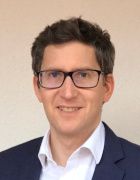
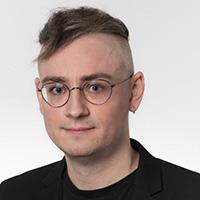
Prof. Stefan Leutenegger is a tenure-track Assistant Professor at Technische Universität München (TUM), leading the Machine Learning for Robotics group within the TUM School of Computation, Information, and Technology. Previously, he held roles as Senior Lecturer (2018–2021) and Lecturer (2014–2018) at Imperial College London's Dyson Robotics Lab, where he founded the Smart Robotics Lab. He earned his PhD (2014) from ETH Zurich, focusing on autonomous solar-powered aircraft navigation, and holds BSc (2006) and MSc (2009) in Mechanical Engineering from ETH Zurich. His research centers on mobile robotics, particularly enabling robots (e.g., drones) to perceive and navigate complex environments using machine learning and sensor data fusion. Key focus areas include SLAM, event-based vision, 3D reconstruction, and autonomous exploration. He has pioneered algorithms like BRISK (2011), OKVIS (2014), and ElasticFusion (2016), advancing real-time robotics perception. Notable Awards: Imperial College President's Award (2018), Best ECCV Paper (2016), ETH Medal for Dissertations (2015). Labs: TUM's Machine Learning for Robotics Group, Imperial's Smart Robotics Lab. Publications: Over 100 papers, including seminal works in CVPR, ECCV, and Robotics: Science and Systems. Current projects include DigiForests (forest inventory via robotics), aerial additive manufacturing, and object-centric semantic mapping. His work bridges theory and practice, with applications in autonomous drones, construction robotics, and human-robot interaction.
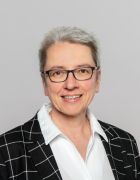
Prof. Dr. Gudrun P. Kiesmüller is a full professor of Operations Management at TUM Campus Heilbronn since 2019. Previously, she held full professorships at Kiel University (Supply Chain Management) and Otto von Guericke University Magdeburg (Operations Management). She studied mathematics at Julius-Maximilians-University of Würzburg and later worked as a postdoc and assistant professor at Eindhoven University of Technology. Her research focuses on supply chain management, inventory management (particularly spare parts), maintenance process planning, and manufacturing system design. She develops optimization approaches for decision support, with publications in journals like IISE Transactions and Production and Operations Management . Key awards include an Honorary Doctorate (2023), ISIR Service Award (2022), and multiple teaching and reviewer awards. She has contributed to advancing stochastic inventory models and operational efficiency in complex systems. Her work integrates theoretical rigor with practical applications, addressing challenges in inventory routing, buffer allocation, and component reliability optimization. Current research emphasizes dynamic maintenance planning and capital goods design.
Dr. Jing Wang is a Professor in the Department of Bioinformatics at Southern Medical University's School of Medicine, with extensive research at the intersection of artificial intelligence and biomedical applications. Her work demonstrates strong cross-disciplinary collaboration across medical institutions, engineering departments, and computer science research groups. Her primary research interests include Artificial Intelligence in Healthcare , Biomedical Engineering , and Traditional Chinese Medicine Informatics , with recent publications showing particular expertise in medical imaging analysis, diagnostic assistance systems, and clinical decision support. Her work spans both theoretical algorithm development and practical clinical implementations. Analysis of her 15 most recent publications (2025-2026) reveals a strong trend toward clinically applicable AI systems, with approximately 60% of publications focused on medical diagnostics and treatment support systems. The remaining publications demonstrate expertise in industrial applications of computer vision and fundamental AI research. Her work shows consistent collaboration with both domestic Chinese institutions and international research groups. Notable scientific contributions include: Development of 'Tianyi', a traditional Chinese medicine language model for clinical practice Innovations in bionic soft robotics for rehabilitation assistance Novel approaches to medical image analysis for cancer diagnostics Her research program appears well-funded with consistent publication output across high-impact journals in biomedical engineering, AI, and medical informatics. Current work suggests strong emphasis on translating AI research into clinical practice, particularly in diagnostic support systems and rehabilitation technology.
Prof. Dr. Sandra Transchel is a Full Professor of Supply Chain and Operations Management at Kühne Logistics University (KLU) in Hamburg, Germany. She has held this position since 2019, previously serving as Associate Professor (2011-2019) and Dean of Programs (2014-2015). Her academic journey includes appointments as Assistant Professor at Pennsylvania State University (2008-2011) and Visiting Assistant Professor at Tuck School of Business at Dartmouth (2011). Education includes: PhD in Business Administration, University of Mannheim (2008) Diploma in Business Mathematics, Otto-von-Guericke University Magdeburg (2004) Her research integrates supply chain management, inventory control, and revenue management with a strong focus on retail operations optimization and food supply chain sustainability . Key investigations examine perishable inventory systems, demand-supply synchronization, and substitution behavior. Current projects address food waste reduction through contract-based coordination in fresh food supply chains and development of urban food production networks (FabCity). Publications demonstrate consistent focus on inventory optimization under uncertainty, with recent work extending into pandemic impacts on humanitarian logistics and perishable inventory systems with lead-time variability. Research consistently bridges theoretical models with retail/manufacturing applications. Teaching includes Decision Analysis, Inventory and Warehouse Management, and Warehousing and Intralogistics across BSc, MBA, and MSc programs at KLU.
Dr. Marion Schrumpf is a Group Leader in the Soil Biogeochemistry research group at the Max Planck Institute for Biogeochemistry, affiliated with the Department of Biogeochemical Processes. Her work focuses on soil carbon dynamics, mineral-organic matter interactions, and climate change impacts on soil systems. Research areas: Soil biogeochemistry, carbon cycling, mineral-soil interactions, nutrient stoichiometry, microbial ecology, and climate modeling. Email: mschrumpf@... Phone: +49 3641 57-6182 Office: B2.015 Her recent publications address themes like mineral control over soil carbon stabilization, drought effects on soil processes, microbial stoichiometric adaptation, and the Jena Soil Model's role in simulating carbon-nutrient interactions. She leads efforts to disentangle the complex relationships between land use, mineralogy, and soil organic matter turnover across diverse ecosystems.
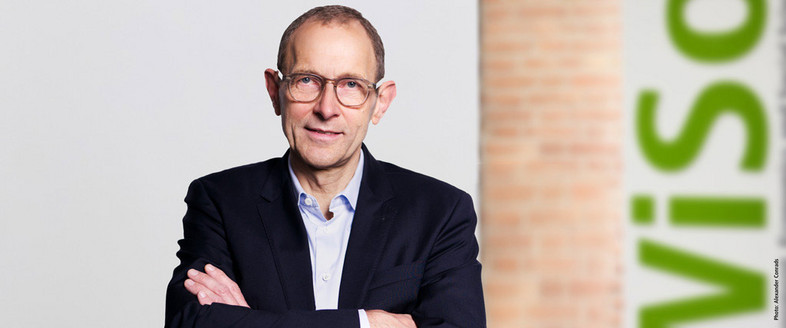
Prof. Ulrich W. Thonemann is a Full Professor and Director of the Department of Supply Chain Management & Management Science at the University of Cologne's Faculty of Management, Economics and Social Science. Since 2019, he has served as Dean of the Faculty and President of the University of Cologne Executive School since 2018. His research spans Supply Chain Management Optimization Behavioral Operations Information Systems . His recent work focuses on Incentive systems for forecast sharing Behavioral inventory metrics Contract design for newsvendor problems Demand information sharing Capacity rationing . He has served on the scientific advisory board of Bundesvereinigung Logistik and as Associate Editor for Production and Operations Management . Scientific Awards: Terman Fellow (1999-2000) Anderson Faculty Scholar (1998-2000) Outstanding Academic Achievements at Stanford (1992) Contact: ulrich.thonemann@uni-koeln.de | Research Group Website
Prof. Dr. Kai Hoberg is a Professor of Supply Chain and Operations Strategy at Kühne Logistics University (KLU) since 2017, where he also served as Department Head of the Operations and Technology Department from 2017 to 2023. Prior to joining KLU as an Associate Professor in 2012, he was an Assistant Professor at the University of Cologne (2010–2012) and a strategy consultant at Booz & Company (2006–2010). His research interests span supply chain analytics and technology integration inventory modeling for intermittent demand digital transformation in operations management additive manufacturing in after-sales services human-machine interaction in forecasting pharmaceutical supply chain challenges IoT-enabled vendor-managed inventory behavioral aspects of operations . Recent publications highlight empirical studies leveraging machine learning for semiconductor order fulfillment, typologies for additive manufacturing adoption, and process mining applications in SCM. His work frequently combines theoretical modeling with real-world validation, including partnerships with firms in food manufacturing, postal services, and medical devices. He earned a PhD in Supply Chain Management from Münster University (2006) and a Diplom in Industrial Engineering from Paderborn University and Monash University. He has held visiting scholar roles at institutions like Cornell, NUS, Oxford, and Stellenbosch.
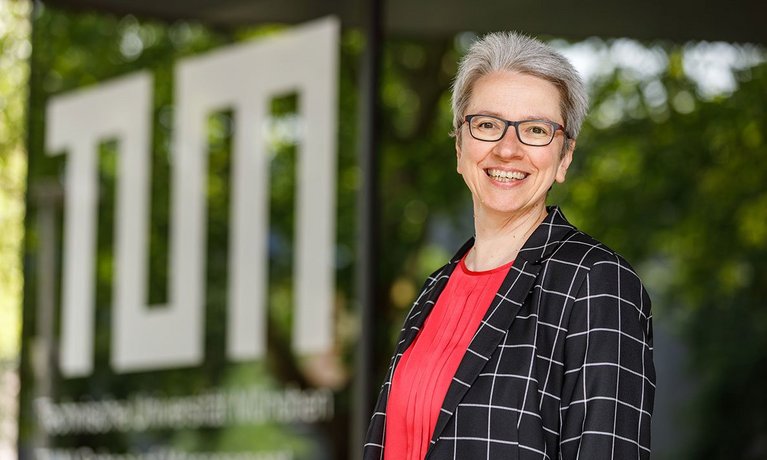
Prof. Dr. Dr. h.c. Gudrun Kiesmüller serves as Full Professor holding the Chair for Operations Management at TUM School of Management, Technical University of Munich, based at Campus Heilbronn since July 2019. She concurrently holds the position of Hedda Andersson Guest Professor at Lund University's Department of Industrial Management & Logistics since January 2021. Previously, she held professorial positions at Otto-von-Guericke-University Magdeburg (2013-2019), Christian-Albrechts-University zu Kiel (2010-2013), and Technical University Eindhoven (2002-2009). Her research program focuses on Operations Management with particular emphasis on the implications of digitization in Industry 4.0, especially in after-sales services. She develops analytical methods to optimize processes across manufacturing and supply chains. Her work spans three interconnected domains: stochastic manufacturing systems design (examining buffer sizing and spare parts planning), safety stock optimization under uncertain demand and supply conditions, and maintenance-reliability integration. She investigates how digitization transforms traditional operations, with growing emphasis on AI applications for supply chain optimization and inventory planning. Prof. Kiesmüller's extensive publication record reveals consistent contributions to operations research methodology with practical business applications. Her work demonstrates increasing integration of data-driven approaches, particularly in the most recent publications which explore AI applications for supply chain optimization. The research shows progression from theoretical inventory models toward more complex, integrated systems that consider multiple uncertainties simultaneously, reflecting the growing complexity of modern supply chains. Her professional recognition includes: 2022 Service Award from the International Society for Inventory Research Multiple Outstanding Reviewer Awards from OR Spectrum (2017, 2020) EURO Best Paper Award (2014) for influential review on lateral transshipments Multiple teaching awards recognizing excellence in both bachelor and master level instruction At TUM, Prof. Kiesmüller teaches a comprehensive curriculum in Operations Management, emphasizing both theoretical foundations and practical applications. Her courses equip students with skills to analyze supply chain planning problems, apply quantitative models, and solve complex operational challenges. She maintains an active research group investigating how digitization transforms operations management practices, particularly in after-sales service contexts where Industry 4.0 technologies enable new optimization possibilities.
Prof. Jörn Meissner, PhD, is a Full Professor of Supply Chain Management & Pricing Strategy at Kühne Logistics University (KLU) since 2011. He holds a PhD and Master’s in Management Science from Columbia Business School and a Diploma in Business from University of Hamburg . As an academic and entrepreneur, he founded Manhattan Review and Lancaster Executive . Education: PhD in Management Science, Columbia University (2005) Master of Philosophy, Columbia University (2005) Diplom-Kaufmann, University of Hamburg (1997) Research Expertise: Focus on stochastic and dynamic decision-making using mathematical optimization and machine learning Key projects: Global supply chain optimization , Inventory control , Revenue management , and Operations & service management Industry collaborations with British Telecom , British Airways , Apple Europe , and SAP Germany Publication Trends: Recent work addresses intermittent demand forecasting for spare parts, lateral transshipment optimization , and risk-sensitive capacity control Historical contributions include progressive interval heuristics for multi-item lot sizing and dynamic pricing with customer choice models Teaching Experience: Previously held academic positions at Lancaster University Management School , University of Hamburg , and University of Mannheim Developed MBA electives in Advanced Decision Models , Supply Chain Management, and Revenue Management
Cornelia Aust is a Research Fellow at the University of Duisburg-Essen , affiliated with the Salomon Ludwig Steinheim Institute for German-Jewish History since 2023. Previously, she served as a Research Associate at Bielefeld University (2018-2024) and the Leibniz Institute of European History (2013-2018). Her work focuses on Jewish history from the Early Modern period to modernity, with particular emphasis on Central and East Central Europe. Education MA in History, Eastern European History, and Religious Studies (Free University of Berlin, 2003) PhD in Jewish History (University of Pennsylvania, 2010) Research interests include: Jewish economic history and mercantile networks Analysis of Jewish communal autonomy structures Transcultural historical perspectives Cultural history of clothing and material culture Polish-Lithuanian Commonwealth studies Early modern sumptuary laws and body politics Publication trends show consistent focus on Jewish commercial practices, material culture analysis, comparative methodologies, and visual representations of Jewish identity across Europe. Her work frequently employs interdisciplinary approaches combining economic, cultural, and social history. Awards and fellowships : Katz Center Affiliated Fellow (2020) Louis Apfelbaum Fellowship (2008/09) Social Science Research Council IDRF (2006/07) Memorial Foundation for Jewish Culture Fellow (2006/07) DAAD Stipend (1999/2000) Professional memberships encompass major scholarly organizations including the European Association for Jewish Studies , Association for Jewish Studies , and Collaborative Research Center 1288 at Bielefeld University. She also serves as a co-editor of WerkstattGeschichte since 2019.
Constantin Grigo is a PhD researcher at the Technical University of Munich (TU Munich), actively engaged in the Continuum Mechanics group. His work focuses on Uncertainty Quantification (UQ) and Machine Learning (ML), particularly for applications in maritime safety, bicycle traffic modeling, and stochastic systems. He has presented his research at major conferences like SIAM UQ and WCCM, and has been recognized with Student Travel Awards from SIAM UQ 2018 and SIAM CSE 2019. Education: Master of Science in Physics, LMU Munich (2015) Bachelor of Science in Physics, LMU Munich (2012) Year abroad at Grenoble INP (2010-2011) Research Interests: Probabilistic machine learning for coarse-graining high-dimensional systems Bayesian model and dimension reduction Stochastic differential equations in heterogeneous media Microscopic traffic simulation for bicycles and autonomous vehicles Digital twin applications for maritime and urban mobility Reduced-order modeling of random materials Selected Awards: SIAM UQ 2018: Student Travel Award Winner SIAM CSE 2019: Student Travel Award Winner His publications span topics such as data-driven scenario specification for autonomous vehicles, bicycle maneuver prediction using neural networks, and physics-constrained surrogates for UQ. He also contributes to open-source simulation tools like SUMO for traffic modeling.
Klaus von Gadow is a Professor with a focus on forest ecology and management. He has supervised numerous doctoral theses across diverse topics in forestry, including GIS visualization, biomass estimation, and silvicultural strategies. Research Areas : Forest Management, Ecology, Biomass Estimation, GIS Applications, Population Genetics, and Tropical Forestry. Advisory Role : Supervised 18 theses from 2000–2015, covering topics like invasive species monitoring, dry savanna ecosystems, and fire succession. Key Projects : Development of k-NN methods for biomass analysis, simulation of mixed-species forest treatment pathways, and sustainable management of tropical watersheds. Trends in Publications : Recent works emphasize ecological resilience, technical innovations in forestry machinery, and data-driven forest planning. Earlier articles focus on genetic studies and post-fire succession dynamics. Advising Legacy : His supervised research has driven advancements in forest inventory systems, silvicultural modeling, and sustainable resource use.
Prof. Michael Schneider is Universitätsprofessor and Chair of Computational Logistics at RWTH Aachen University since 2016. Previously, he held positions at TU Darmstadt (2013-2016) and earned his doctoral degree from TU Kaiserslautern (2012). His research focuses on logistics optimization, including transportation routing, warehouse management, and metaheuristic methods for solving complex operational challenges. He leads the Global Challenges Lab and serves as communication chair of VeRoLog (EURO's vehicle routing group). Research interests include: quantitative modeling for supply chains, heuristic/exact optimization methods, electric vehicle routing, territory design, and production planning. Notable achievements include the INFORMS Journal on Computing Meritorious Paper Award (2021) and editorial roles in journals like Applied Mathematical Modelling. Publications span topics like vehicle routing with time windows, electric logistics networks, and warehouse automation strategies. His work integrates advanced algorithms with real-world industry applications (e.g., DHL, Picnic). The Computational Logistics group collaborates on projects addressing sustainability, autonomous systems, and modern warehousing challenges. Education: Business Admin & Computer Science (University of Mannheim), PhD (TU Kaiserslautern) Professional Roles: VeRoLog Communication Chair, EURO Working Group Key Projects: Electric vehicle routing optimization, warehouse automation, and sustainable logistics networks
Dr. Parm von Oheimb is a Researcher in the Mollusc Collection at the Museum für Naturkunde – Leibniz Institute for Evolution and Biodiversity Research in Berlin, Germany, where he has worked since 2019. His research focuses on malacology, biodiversity patterns, evolutionary biology, and biogeography, with particular emphasis on land snails and freshwater mollusks across diverse ecosystems including the Tibetan Plateau, Vietnam, and urban environments. Previously, he held postdoctoral positions at The Natural History Museum in London (2015-2019) and Justus Liebig University Giessen (2013-2015). Dr. von Oheimb earned his Dr. rer. nat. in 2013 from Justus Liebig University Giessen with a dissertation titled "Phylogeography at the 'Roof of the World' – Diversity and distribution of freshwater mollusks at the Tibetan Plateau and the Himalayas." He completed his Diploma in Biology with distinction in 2008 from the same institution. His educational background provided the foundation for his extensive research on mollusk systematics, biogeography, and evolutionary patterns across diverse geographical regions. Dr. von Oheimb's research interests span multiple areas of malacology and biodiversity science. His work on Tibetan Plateau freshwater gastropods has contributed significantly to understanding high-altitude adaptation and historical biogeography. His research in Vietnam has focused on limestone karst ecosystems and the biodiversity of land snails, revealing cryptic species diversity and community assembly patterns. More recently, he has investigated urban biodiversity, particularly examining cemeteries as habitats for terrestrial gastropods in Berlin. His methodological approaches integrate field surveys, molecular phylogenetics, morphological analysis, and biogeographical modeling to address fundamental questions in evolutionary biology and ecology. His extensive publication record demonstrates consistent research output across multiple continents and habitats, with a clear trajectory from high-altitude freshwater systems to tropical limestone karsts and urban environments. The research shows a consistent focus on molluscan biodiversity patterns while adapting methodologies to address specific ecological and evolutionary questions in each system. His work often involves large international collaborations, reflecting the global nature of biodiversity research. Dr. von Oheimb has received several scientific awards including a Research Fellowship from the Deutsche Forschungsgemeinschaft (2015-2017), a Travel Award from the Malacological Society of London (2016), and the J. Frances Allen Institute of Malacology Outstanding Publication Award (2013). He has also received multiple awards for poster presentations at international conferences. As a dedicated researcher, Dr. von Oheimb has served as a Subject Editor for Zoosystematics and Evolution since 2025 and is an active member of several scientific societies including The Malacological Society of London, Unitas Malacologica, and the German Malacological Society. His work contributes to multiple research programs at the Museum für Naturkunde, particularly the "Dynamics of Nature" initiative and the "Life between Graves" project examining cemetery biodiversity. Dr. von Oheimb also contributes to science communication through the "Schemenkabinett" project and has developed various popular science formats. His research leverages the extensive mollusk collections at the Museum für Naturkunde, connecting traditional taxonomy with modern molecular approaches to address contemporary questions in biodiversity science.
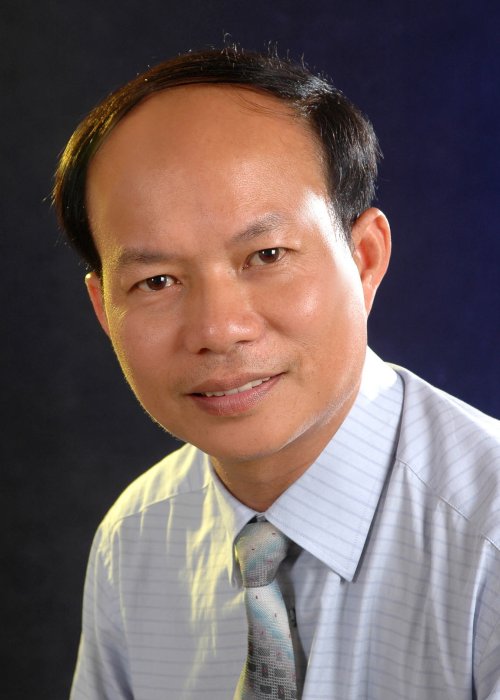
Professor Hoang Xuan Phu is a renowned mathematician affiliated with the Institute of Mathematics , Vietnam Academy of Science and Technology , where he has served since 1984 (Researcher), 1992 (Associate Professor), and 1996 (Professor). He is an elected member of multiple prestigious academies: the Heidelberg Academy of Sciences and Humanities (2004), Bavarian Academy of Sciences and Humanities (2010), TWAS - The World Academy of Sciences (2013), and acatech - National Academy of Science and Engineering, Germany (2019). His email contact is hxphu@math.ac.vn and phu@iwr.uni-heidelberg.de . Education : University of Leipzig (Diploma 1979, PhD 1983, Habilitation 1987) Research Areas : Optimization, Optimal Control, Functional Analysis, Numerical Analysis, Rough Analysis Applications : Inventory Problems, Hydroelectric Power Plant Control, Robotics, Open Channel Hydraulics Editorial Roles : Editor-in-Chief of Vietnam Journal of Mathematics (2011-2022), Honorary Editor-in-Chief (2023-present), Associate Editor for multiple journals His recent publications focus on convex hull algorithms, optimal path planning, and function perturbation analysis, reflecting his expertise in mathematical optimization and computational methods. He has organized numerous international conferences on High Performance Scientific Computing in Hanoi (2000-2024) and Optimization & Scientific Computing (2003-2024).