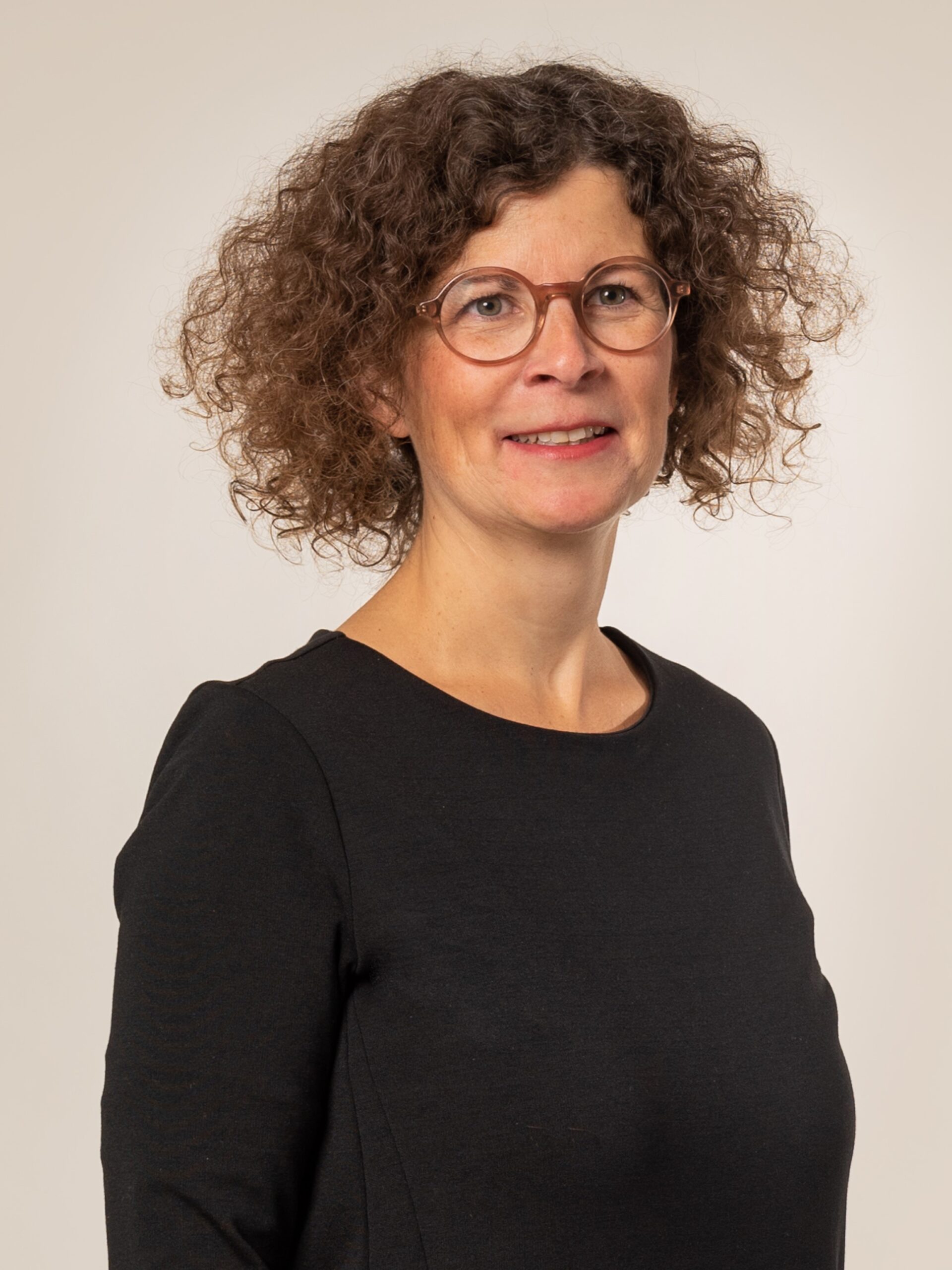
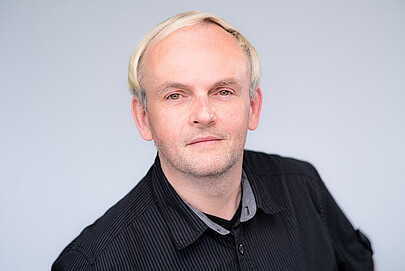
Deepak Kumar is a Professor at Bryn Mawr College, dedicated to advancing computer science education and innovative pedagogical approaches. His work focuses on integrating creative computation, robotics, and interdisciplinary methods into curricula. He has contributed extensively to introductory computer science education, emphasizing project-based learning and the use of tools like Processing for visual programming. Research Interests: Revolutionizing introductory CS education through creative coding and robotics Designing interdisciplinary curricula that bridge technology with humanities Evaluating the impact of hackathons vs traditional lab environments Developing accessible educational tools like the Pyro robotics framework Publications highlight trends in pedagogy innovation, with a focus on K-12 outreach and undergraduate curriculum design. His work often addresses equity in computing education through creative and inclusive methodologies.
Dr. Julia Pfahl is a Scientific Associate and Head of the Student Office / Study Manager at the Institute for Film, Theatre, Media and Cultural Studies, Johannes Gutenberg University Mainz. She specializes in Theatre and New Media, Dramaturgy, Gender Studies, and Theatre History as Media History. Her teaching includes lectures on Perspectives on Theatre History and introductory sessions for first-year students in BA Theatre Studies. She is affiliated with FB05 - Philosophy and Philology, located at Jakob-Welder-Weg 11, Mainz. Contact: +49 6131 39-26184. Research Interests: Her work explores the intersection of theatre with media, cultural practices, and historical narratives, emphasizing how theatre constructs public spheres and engages with power dynamics. She employs archival methods, including analysis of director's books, program booklets, and interviews to critically examine historical representations. Academic Contributions: While no specific articles are listed, her courses and research focus reflect engagement with GDR theatre historiography and media studies. She co-teaches with Dr. Constanze Schuler and oversees student advising. No awards are mentioned, but her administrative and teaching roles highlight her institutional contributions.
Stephen H. Edwards is a Professor in the Department of Computer Science at Virginia Tech, specializing in computing education and automated grading systems. His work focuses on improving programming pedagogy through tools like Web-CAT, CodeWorkout, and Sofia Framework, emphasizing equitable assessment, mutation analysis, and behavioral nudges in CS1/CS2 courses. Research Themes : Automated feedback, software testing education, educational data mining, gamification for learning. Collaborations : Manuel A. Pérez-Quiñones, Adrienne Decker, Clifford A. Shaffer, Bob Edmison. Trends : Recent publications highlight grading equity (2024-2025), student testing behaviors (2020-2022), and tool development (2007-2017).
Ömer Genc is a Researcher at the Department of Geometry and Approximation, Technische Universität Darmstadt. He specializes in Mathematics Education and Educational Technology, focusing on digital tools for STEM learning. His work emphasizes integrating web-based learning platforms (e.g., STACK) into first-year engineering mathematics courses to enhance student performance and reduce tutor workload. He leads the TU-WAS project, which develops digital task collections for engineering students. Key activities include organizing math preparatory courses (VEMINT), designing adaptive diagnostic tests, and conducting teacher training programs for mathematics educators. He collaborates with institutions like the Hessian Teachers Academy and participates in statewide initiatives like DigLL-HessenHub to promote digital education. His research explores effects of digital tasks on student learning behavior and tutor efficiency, with publications in mathematics education journals and conference proceedings. Genc also contributes to interdisciplinary projects like WiGeMath-Transfer, studying support measures for mathematics learning in introductory university phases.
Dr. Lutz Graner is an academic staff member and lecturer at Bielefeld University, affiliated with the Faculty of Linguistics and Literary Studies. He is based in the Department of Literary Studies and also associated with the Department of Cultural Studies. He serves as the program coordinator (curator) for the subject area of Literature, Romance Studies, and Latin, and provides academic student counseling in Literary Studies. His research interests include German-language literature since the 18th century, reception history, literary theory, the grotesque, and stylistics. These areas reflect a deep engagement with literary analysis, historical context, and theoretical frameworks in both German and Romance literatures. Dr. Graner holds significant academic responsibilities, including module coordination for core components of the literature program such as the final module, introductory modules, genre perspectives, literary history, and practical studies. His involvement in the Habilitation Committee and the Senate’s group of academic staff highlights his role in academic governance and faculty-level decision-making. He is also a member of the Recognition Contact Point for Bachelor and Master degrees in literature and is affiliated with BiSEd, the university's educational development network. His office is located in UHG D4-138, and he can be reached at +49 521 106-3490, with a secretariat at +49 521 106-6916.
Prof. Dr. Nils Pancratz is a full Professor in the Department of Computer Science Education at the Institute for Mathematics, Mathematics Education and Computer Science Education, University of Hildesheim. He is actively involved in academic governance, serving in multiple roles including Chair of the Standing Examination Board for the Polyvalent Dual-Subject Bachelor’s Program with Teaching Option (B.Sc.) and the Standing Examination Committee for Master’s Degree Programs in Teaching (M.Ed. G/HR). He also represents the Professors’ Group in the Department Council and is a Deputy Senate Member for Faculty 4. His office is located in room SC.B.1.51, and he is available by appointment via email. Research Interests: His research focuses on core challenges in computer science education, particularly in teacher training and K–12 instruction. Key areas include: Ethics and moral concepts in artificial intelligence education Students’ and teachers’ conceptions of computing systems, the Internet, and AI Gender-sensitive teaching methods and the promotion of girls in computer science Stereotypes of computer scientists and self-concept development among trainee teachers Use of serious games (e.g., MoralBot, Moral Machine unplugged) and simulation tools in teaching Introductory programming education using Scratch and notional machines Curriculum integration of 'Computer Science and Society' competencies Textbook analysis and teaching materials in vocational and secondary computer science education Theses Supervision: Prof. Pancratz has supervised numerous master’s and bachelor’s theses at both the University of Hildesheim and the University of Oldenburg. His supervisees have explored topics such as AI ethics, Internet literacy, gender inclusivity, student misconceptions in programming, and the design of educational games. Many of these works reflect a strong empirical and didactic orientation. Academic Service: He is a key figure in examination boards and university committees, contributing significantly to teacher education programs and quality assurance in computer science curricula at both undergraduate and graduate levels. Labs and Projects: He is associated with the Lehr-Lern-Labor Informatik (Teaching-Learning Laboratory for Computer Science), where innovative teaching methods and learning environments are developed and evaluated. This includes projects like PIONIERIN and initiatives focused on extracurricular engagement with ethical aspects of AI.
Georgiana Haldeman is an active computer science educator and researcher specializing in programming education, particularly for introductory courses (CS1). Her work focuses on improving code quality, program decomposition, and developing educational tools that enhance student learning experiences in computer science education. Her research interests center around CS1 pedagogy, autograding systems, and code quality assessment. She has developed frameworks for teaching program decomposition and created educational tools like RAVIC (Runtime Analysis Visualizer for Introductory Courses) to help students visualize program execution. Her work often addresses both procedural and conceptual knowledge dimensions in programming education, recognizing the importance of developing both skill sets in novice programmers. Analysis of her publication record shows a strong focus on practical educational interventions in computer science. Her work spans multiple dimensions of CS education including assessment methods, educational tool development, classroom activities for improving code quality, and gender diversity in computer science. She frequently collaborates with researchers like Monica Babes-Vroman, Andrew Tjang, and Thu D. Nguyen, suggesting established research partnerships in the CS education community. Her recent publications (2023-2025) indicate active research in program decomposition frameworks, notional machines for databases, and synthesized teaching models that balance procedural and conceptual learning. This demonstrates continued innovation in computer science pedagogy and a commitment to addressing fundamental challenges in teaching introductory programming.
Prof. Dr.-Ing. Beate Lauterbach is affiliated with the Technical University of Central Hesse in the Department of Mechanical Engineering and Energy Technology . She serves as a Foreign Representative and a Representative for the GettING Started study program , and can be contacted via email or phone at 0641 / 309 - 2248. Specializes in Materials engineering for non-metallic materials Teaches courses: Materials Science 3 , Composite materials , Technical Mechanics 1 , and Introductory seminar Office located at C11.1.10, Wiesenstrasse 14, 35390 Giessen
PD Dr.-Ing. habil. Thomas Jambor serves as scientific staff in the Department of Didactics of Electrical Engineering and Computer Science at Leibniz University Hannover's Faculty of Electrical Engineering and Computer Science. With office hours by appointment, he maintains active roles in teaching, research, and academic administration. His position as Privatdozent (PD) with habilitation signifies his advanced academic qualifications in the German university system. Dr. Jambor's research spans five interconnected dimensions of electrical engineering education. At the subject level, he examines content selection for future engineers, disciplinary boundaries, and competence modeling. His teaching-level research investigates VR/AR technologies, activating methods for large cohorts, and robotics applications. Student-level work focuses on identifying preconceptions, supporting first-generation students, and reducing entry barriers. Social requirements research utilizes eye-tracking analysis, while teacher training research addresses requirements for future educators and introductory phase design. His work consistently bridges theoretical frameworks with practical classroom implementation. His publication trajectory demonstrates increasing emphasis on immersive technologies and data-driven educational approaches. Recent works show sophisticated integration of eye-tracking, mixed reality systems, and constructivist frameworks into electrical engineering pedagogy. He has developed numerous teaching-learning arrangements that combine traditional and digital approaches, with particular attention to practical implementation across different educational contexts. Subject advisor for multiple programs including Bachelor's "Technical Education" and Master's "Teaching at Vocational Schools" Third-party projects include "Leibniz works 4.0" (2020-2023), "Leibniz Prinzip" (2019-2024), and "TechColleges" (2014-2016) Institutional roles: Safety Officer, Fire Protection Assistant, Room Officer, StudIP administrator Externally, Dr. Jambor serves as Vice President of the Engineering-Pedagogical Scientific Society, board member at VDE Hannover, and holds teaching positions at University of Kassel and Hamburg Distance Learning University. His community involvement includes leadership roles at Michael Ende School as Deputy Chairman of the Parents' Council and Chairman of the Friends Association.
Frank Schuhmacher is a researcher at the Seminar for General Rhetoric within the Faculty of Philosophy at the University of Tübingen. He has been a member of the Collaborative Research Center "Other Aesthetics" since July 2023, working on subproject A05 "Abundance, Redundancy, Excess: Methods of Intensification in Early Modern Epideictics". His academic profile combines rigorous teaching in rhetoric with specialized research on political discourse and historical rhetorical practices. His educational foundation includes: Studies in general rhetoric and political science at Eberhard Karls University and Università degli Studi di Perugia Master's thesis examining the rhetorical potential of sermon teaching Doctorate on Benito Mussolini's fascist rhetoric under Prof. Dr. Dietmar Till Dr. Schuhmacher's research program centers on Fascism and Propaganda, Baroque Rhetoric, and Ancient Rhetoric, with particular emphasis on myth construction in political contexts. His work interrogates how rhetorical devices function in authoritarian regimes, analyzes intensification techniques in early modern epideictic discourse, and traces continuities between classical rhetorical theory and baroque stylistic practices. This interdisciplinary approach bridges historical analysis with contemporary political rhetoric studies. His publication trajectory reveals a consistent focus on rhetoric's intersection with power structures, spanning from ancient foundations to 20th-century fascist propaganda. Key thematic threads include myth-making in political imagery, paradoxical praise genres in Renaissance literature, and the visual dimensions of rhetorical persuasion. His scholarship demonstrates methodological versatility across textual analysis, historical reconstruction, and theoretical synthesis. Scientific recognition: No formal awards documented in source materials Dr. Schuhmacher's academic service includes significant teaching responsibilities across multiple semesters, from introductory rhetoric courses to specialized seminars on baroque literature and fascist propaganda. His involvement in the Collaborative Research Center represents substantial institutional research funding, supporting his investigation of rhetorical intensification methods in early modern contexts. He actively mentors students through course supervision and research guidance. He maintains active collaboration within the Seminar for General Rhetoric and contributes to the interdisciplinary network of the Collaborative Research Center "Other Aesthetics", participating in scholarly exchanges that connect rhetoric with broader aesthetic theory and historical practice.
Dr. Katrin Sturm-Richter serves as the Coordinator of the CHEMBIO introductory phase at the Faculty of Chemistry and Biosciences, Karlsruhe Institute of Technology (KIT). Her role focuses on academic program development and student integration in research-oriented teaching. She holds a doctoral degree and specializes in interdisciplinary education strategies and microbial electrochemistry. Research Interests: Her work bridges bioelectrochemical systems and higher education didactics. Key areas include microbial biofilm dynamics, extracellular electron transfer mechanisms, and innovative teaching methodologies such as 'Advance Organizer' frameworks. She also explores sustainable wastewater treatment via bioelectrochemical systems and material optimization for microbial fuel cells. Publications Trends: Recent articles emphasize participatory educational transformations and bioelectrochemical innovations. Her work spans 2009–2022, with notable contributions to Shewanella oneidensis biofilm studies and interdisciplinary curriculum design. Affiliations: She is affiliated with the KIT Faculty of Chemistry and Biosciences, collaborating closely with academic didactics teams and microbiology research groups. No listed awards or grants are mentioned in the provided data.
Svetlana Peltsverger is a Professor in the Department of Information Technology within the College of Computing and Software Engineering at Kennesaw State University. With over two decades of academic contributions since 2004, she has established herself as a leading figure in Information Technology education, particularly in curriculum development and assessment. Specializes in IT curriculum design and implementation Active contributor to ACM/IEEE curriculum standards Principal investigator on multiple educational research projects Regular presenter at major computing education conferences including SIGITE and ITiCSE Professor Peltsverger's research focuses on practical approaches to IT education, with particular emphasis on privacy education, cybersecurity curriculum development, and data systems education. Her work consistently bridges theory and practice, developing hands-on learning experiences that prepare students for real-world IT challenges. She has pioneered innovative approaches to program assessment using data-driven methodologies and has developed comprehensive frameworks for evaluating IT curricula. Recent research has increasingly focused on diversity and inclusion in computing education, with several publications examining women's participation in computing fields and developing strategies to improve gender balance in IT programs. Her 2023-2025 publications reveal a strong commitment to equitable student allocation methods and understanding the factors that influence women's elective choices in computing disciplines. Developed hands-on privacy labs integrated into standard IT curriculum Created data-driven program review models adopted by multiple institutions Conducted extensive research on IT alumni career trajectories using LinkedIn data Contributed significantly to the ACM/IEEE-CS Information Technology Curriculum 2017 Published influential work on adapting IT curricula for transfer students from two-year programs Professor Peltsverger's collaborative approach is evident in her extensive co-authorship network, particularly with colleagues Lei Li, Guangzhi Zheng, and Rebecca Rutherfoord at Kennesaw State University. Her work has had significant impact on how Information Technology programs are designed, implemented, and assessed across multiple institutions, with practical applications that directly improve student learning outcomes and career preparedness.
Colleen M. Lewis is a Professor at the University of Illinois Urbana-Champaign specializing in computer science education research with a strong focus on equity, inclusion, and pedagogical innovation. Her work spans K-12 through higher education computing contexts, examining systemic barriers and developing evidence-based interventions to broaden participation in computing. Her research interests include: Equity and inclusion in computer science education Microaggressions and bias in computing environments Physical and tangible models for teaching abstract programming concepts Goal-congruity theory applications in computing education Organizational change strategies for diversity initiatives Dr. Lewis's recent work demonstrates a sophisticated multi-institutional approach to studying critical issues in computing education. Her publications reveal a consistent focus on intersectional analyses of student experiences, with particular attention to how gender, race, and other identity factors interact with learning environments. She has developed innovative teaching approaches including physical Java models and syntax exercises for Python, while simultaneously addressing systemic issues like the 'diversity-hire narrative' that can undermine inclusion efforts. Her scientific contributions include: Pioneering research on goal-congruity interventions in computing education In-depth analysis of microaggressions in CS classrooms Development of the Teaching Practices Game for TA training Multi-institutional studies of computing self-efficacy across identity groups Dr. Lewis actively shapes the field through leadership roles in SIGCSE, ICER, and RESPECT conferences, often organizing panels and workshops on broadening participation in computing. Her collaborative work across numerous institutions demonstrates her commitment to generating generalizable knowledge that can transform computing education nationwide.
Briana B. Morrison is a prominent academic affiliated with the University of Virginia, specializing in computer science education and pedagogical innovation. She actively contributes to academic conferences such as SIGCSE and ICER, serving roles like organizing the ICER 2024 Call for Participation. Her research focuses on subgoal labeling in programming instruction, broadening participation in computing, and teacher training programs. She collaborates extensively with institutions and researchers globally to advance CS education practices and policy. Her work emphasizes evidence-based teaching methods, including studies on subgoal labeling efficacy and the integration of large language models in educational tools. Morrison also advocates for K-12 CS curriculum development and has led initiatives to enhance diversity and inclusion in computing fields. Her recent publications highlight her commitment to ethical curriculum design and the transition of educational resources like EngageCSEdu. Morrison’s contributions extend to advising and collaborative research, evidenced by her numerous co-authored papers on topics ranging from cognitive load theory to outreach strategies. While specific student advisees are not listed, her collaborative projects suggest a strong mentorship role in academic communities.
Steve Cooper is a Senior Lecturer in the Department of Computer Science at Stanford University's School of Engineering. With a career spanning over four decades, he has established himself as a leading figure in computer science education research and practice, particularly in K-12 education and innovative teaching methodologies. Dr. Cooper's research centers on making computer science education more accessible and engaging for learners of all ages. His work emphasizes visual programming environments, curriculum development, and assessment strategies that support effective learning. He has been instrumental in advancing the field of computing education research through numerous publications and collaborations with prominent researchers in the field. His publication record demonstrates a consistent focus on educational tools, particularly the Alice programming environment which revolutionized introductory programming education through its visual, drag-and-drop interface. Analysis of his recent work shows increasing attention to language-independent assessment methods, community building among CS educators, and the evolving landscape of computing education research. Dr. Cooper has played pivotal roles in major educational initiatives including the development of the CSTA K-12 computer science standards and Stanford's MOOC programs. His collaborative approach is evident in his extensive co-authorship network spanning multiple institutions and research areas within computing education.