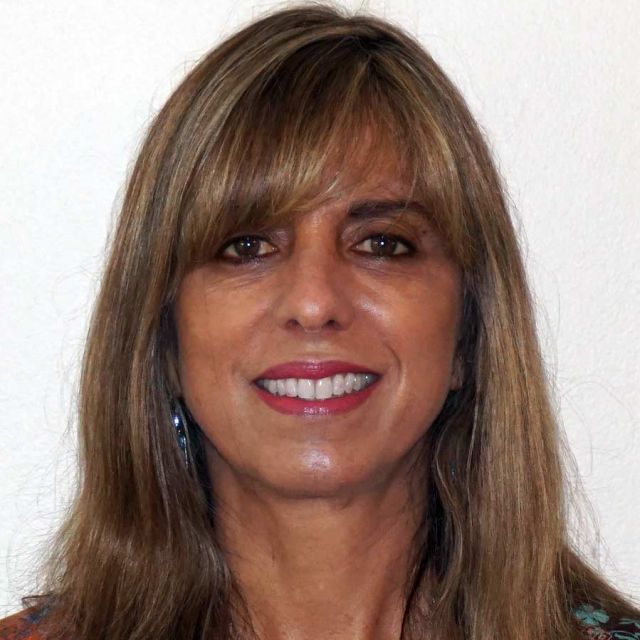
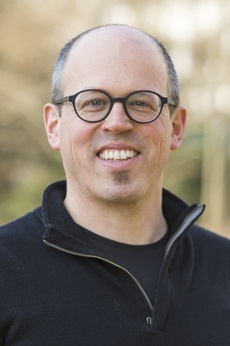
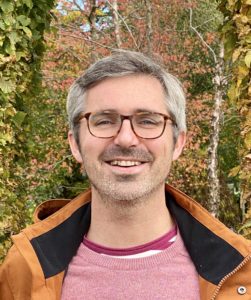
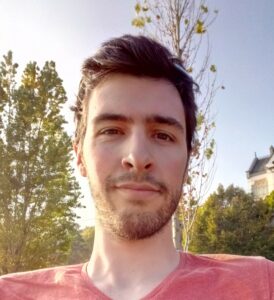
Maria Valdivieso Da Costa is an academic researcher specializing in oceanography, climate dynamics, and atmospheric science. She is affiliated with institutions focusing on coupled modeling frameworks, air-sea interaction, and reanalysis systems. Her work emphasizes the Indian monsoon, North Atlantic circulation, and Arctic sea ice dynamics. Key contributions include regional coupled modeling for the Indian Ocean and validation of ocean reanalysis systems. Focus areas: Climate variability, ocean heat/salinity content, and energy fluxes between atmosphere and ocean. Recent research highlights include analysis of wintertime mixed layer depths in the North Pacific and evaluation of global net surface energy flux estimates. She collaborates extensively with international teams on projects like ORA-IP and MyOcean.
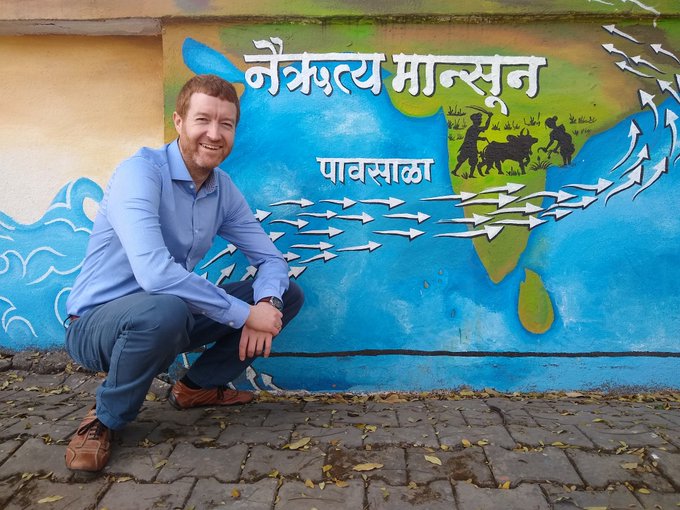
Andy Turner is a Professor at the University of Reading, specializing in climate science and meteorology. His research focuses on monsoon dynamics, climate change impacts, and atmospheric processes, particularly in South and East Asia. He has contributed to over 130 publications, including studies on monsoon variability, aerosol effects, and extreme weather events. Turner's work explores mechanisms governing monsoon systems, climate model biases, and future projections under global warming scenarios. He collaborates extensively on initiatives like the INCOMPASS field campaign and contributes to IPCC assessments. Despite no explicit mention of awards or students in the provided texts, his research emphasizes interdisciplinary approaches to understanding climate systems and their societal implications.
Sarah Keeley is a researcher specializing in climate dynamics and atmospheric science, with a focus on polar regions, ocean-atmosphere interactions, and climate modeling. Her work spans Arctic cyclones, sea-ice predictability, ozone-climate links, and North Atlantic-European climate simulations. Research Themes : Polar climate systems, climate variability, and numerical modeling Key Contributions : Published 10 peer-reviewed articles (2007-2023) in journals like Geophysical Research Letters and Climate Dynamics Her articles explore Arctic cyclone climatology, seasonal sea-ice forecasting, ozone impacts on Southern Hemisphere climate, and North Atlantic climate simulations. While specific affiliations aren't listed in the provided text, her collaborations with institutions using GCMs (General Circulation Models) and stratospheric-atmospheric modeling suggest a prominent role in climate research.
Leila Carvalho is a Professor in the Department of Geography at the University of California, Santa Barbara (UCSB), part of the College of Letters and Science. She holds a BSc, MSc, and Ph.D. in Atmospheric Sciences from the University of São Paulo, Brazil. Her academic career includes roles as an Assistant Professor at USP (1998–2008) before joining UCSB in 2009. She leads the CLIVAC research group, focusing on climate variability, monsoon systems, extreme weather, atmospheric rivers, mountain meteorology, and wildfire dynamics. Research interests include physical processes driving monsoon variability, extreme precipitation, tropical-extratropical interactions, Atmospheric Rivers, and downslope windstorms like Sundowner Winds. Her work integrates global and regional models, remote sensing, and observational data. Recent projects include the Sundowner Winds Experiment (SWEX) studying windstorms in Santa Barbara and their wildfire risks. She collaborates widely on climate change impacts, fire weather, and mountain meteorology. Publications emphasize climatology of Sundowner Winds, Atmospheric River dynamics, and fire modeling. Her team addresses climate change effects on extreme weather and wildfire risks. She advises four graduate students and has led interdisciplinary studies on regional climate trends and environmental hazards. Her work contributes to advancing predictive capabilities for high-impact weather events, wildfire risk mitigation, and understanding climate teleconnections. Ongoing research explores the South American Low-Level Jet, Pacific climate oscillations, and mountain circulation impacts on Himalayan climate.
Dr Liang Guo is a climate researcher at the University of Reading specializing in East Asian monsoon dynamics and hydrological systems. His work integrates climate modeling with observational analysis to address regional climate variability and change impacts. Research focus areas include: Monsoon system mechanics and prediction Atmospheric moisture sourcing and transport Aerosol influences on air quality and precipitation Subseasonal forecasting techniques Tropical cyclone hydrological contributions Global warming effects on regional water cycles Publication trends reveal increasing emphasis on climate change projections since 2020, particularly regarding East Asian hydrological shifts under warming scenarios. His methodology heavily features the Met Office Unified Model (MetUM), with recent work evaluating resolution dependencies and air-sea coupling effects in monsoon simulations. No awards, grants, or student supervision details were documented. Dr Guo maintains active collaboration within Reading's climate research cluster, notably with the Met Office Hadley Centre-affiliated scientists on monsoon modeling initiatives.
Julia Slingo is a Professor at the University of Reading, affiliated with the Department of Meteorology within the School of Mathematical, Physical and Computational Sciences. Her work focuses on climate dynamics, tropical meteorology, and the development of high-resolution climate models. She has contributed extensively to understanding monsoon systems, the Madden-Julian Oscillation (MJO), and climate variability through influential publications in journals like the Quarterly Journal of the Royal Meteorological Society and Journal of Climate. Her research integrates atmospheric and oceanic processes, emphasizing the role of coupled models in simulating climate phenomena. Notable contributions include studies on the Madden-Julian Oscillation's interaction with the Maritime Continent and the impact of climate change on monsoon patterns. She also explores the application of climate models in agricultural and environmental contexts, such as crop-climate interactions. Her publications span over 70 peer-reviewed articles, reflecting her expertise in modeling climate systems and advancing computational infrastructure for climate research. Despite her prolific output, no specific awards or grants are highlighted in the provided texts.
Professor Andrew G Turner is a Professor in Monsoon Systems at the University of Reading's Department of Meteorology, jointly funded by the University's Academic Investment Programme and the National Centre for Atmospheric Science (NCAS). He serves as Departmental Director of Internationalisation and leads the Climate & Global Change programme at NCAS. Turner is a Lead Author for the IPCC Sixth Assessment Report and was awarded the Gulbenkian Prize for Humanity in 2022 as part of the IPCC team. Turner's research focuses on fundamental monsoon processes and observations, tropical variability and prediction, and climate change. His work particularly emphasizes the South Asian monsoon system, examining its variability, predictability, and response to climate change. He investigates the interactions between monsoon systems and other elements of the climate system, with a special interest in the Indian monsoon and its connections to global climate patterns. Turner's publication record shows a strong focus on monsoon dynamics, climate modeling, and climate change impacts. His recent work explores topics such as monsoon duration changes, the influence of ocean basins on monsoon systems, extreme rainfall events, and the role of atmospheric circulation patterns in monsoon behavior. His research bridges fundamental climate science with practical applications for monsoon prediction. Buchan Award for Scientific Advances, Royal Meteorological Society, 2023 LF Richardson Prize, Royal Meteorological Society, 2009 Gulbenkian Prize for Humanity 2022 (as IPCC Lead Author) Professor Turner actively supervises numerous PhD students and postdoctoral researchers, fostering the next generation of climate scientists. He leads several major research projects including WCSSP-India OUTBREAK and NERC MiLCMOP, focusing on monsoon predictability and climate change impacts. His work involves extensive collaboration with international partners, particularly in India, and he has led significant field campaigns such as INCOMPASS to study the Indian monsoon.
Milan Curcic is an Assistant Professor in the Department of Ocean Sciences at the Rosenstiel School of Marine, Atmospheric, and Earth Science, University of Miami. His research focuses on air-sea interaction processes, wind-wave dynamics, and hurricane physics, with significant contributions to coastal meteorology and ocean modeling. 2025: Demonstrated whitecap foam's role in reducing air-sea momentum flux 2025: Quantified nearshore wind patterns using Gaussian Process Regression 2024: Developed open-source Clouddrift Python package for Lagrangian data 2023: Validated aerodynamic sheltering theory in extreme wind conditions His work examines coastal wind dynamics through field studies (CLASI project) and laboratory experiments (SUSTAIN facility), revealing critical insights into wind stress parameterization and wave growth mechanisms. Recent publications analyze: Cyclone-related ocean transport processes Wave-induced pressure fluctuations Coastal bathymetry measurement limitations
Masashi Kohma is an Assistant Professor in the Department of Earth and Planetary Science, Graduate School of Science, The University of Tokyo, a position he has held since April 2014. His research centers on middle-atmosphere dynamics, atmospheric turbulence, and polar meteorology using the Antarctic PANSY radar, satellites, radiosondes, and reanalyses. Education Ph.D. in Earth and Planetary Science, The University of Tokyo, March 2014 M.S. in Earth and Planetary Science, The University of Tokyo, March 2011 B.S. in Geophysics, Kyoto University, March 2009 Research Interests Dr. Kohma investigates the dynamics of the middle atmosphere, focusing on gravity-wave propagation, wave breaking, and turbulence. He quantifies turbulent energy dissipation rates, studies polar stratospheric and mesospheric clouds, and examines tropopause variability. His work leverages unique Antarctic datasets to understand coupling processes across troposphere–stratosphere–mesosphere layers. Recent Publications & Trends From 2023-2025 his publications emphasize Antarctic gravity-wave climatology, large-amplitude inertia-gravity waves, and high-resolution numerical simulations of orographic wave breaking. Earlier works explore tropopause folding events, intraseasonal oscillations in the equatorial mesosphere, and statistical analyses of PMWE-derived turbulent dissipation. Scientific Awards Yamamoto Prize 2016, Meteorological Society of Japan Best Poster Prize, SPARC General Assembly 2014 Grants & Advising Principal Investigator, JST ERATO Project (2023-2026) “Unexplored Areas of Atmospheric Observation: Whole-Atmospheric Distribution of Turbulent Energy Dissipation Rate” JSPS Young Scientist Research (2019-2023) “The role of turbulent mixing in the mass distribution and heat balance near the UTLS” JSPS Young Scientist Research (B) (2016-2019) “Study on minimum cloud occurrence frequency and seasonality of TIL in polar UTLS” JSPS Research Fellowship (DC1) (2011-2014) Labs & Teams Dr. Kohma is a key member of the PANSY radar consortium—the first MST/IS radar in Antarctica—and participates in the Interhemispheric Coupling Study by Observations and Modelling (ICSOM). He also contributes to the JAGUAR whole-atmosphere data-assimilation development.
Shoichi Shige is an Associate Professor at Kyoto University's Graduate School of Science, Division of Earth and Planetary Science, since 2009. He has held visiting positions at Colorado State University (2013-2014) and has been affiliated with institutions like Osaka Prefecture University and JAXA's Earth Observation Research Center. Education: PhD in Earth and Planetary Sciences from Kyoto University (2001). Professional Memberships: American Meteorological Society, American Geophysical Union, IEEE Geoscience and Remote Sensing Society (2008-2019), and Japanese meteorological societies. Research Interests Latent heat retrieval algorithms using TRMM/GPM satellite data. Global precipitation mapping via microwave radiometers (GSMaP project). Orographic rainfall dynamics in monsoon regions. Rain/no-rain classification methods for remote sensing. Scientific Contributions Developed the Spectral Latent Heating (SLH) algorithm. Collaborated on TRMM latent heating intercomparisons. Published 15+ peer-reviewed articles since 1999, focusing on tropical convection, precipitation profiles, and satellite data validation. Awards 2018 Meteorological Society of Japan Award for contributions to precipitation research.
De Viron Olivier is a Professor at La Rochelle University , associated with the DPL team. His research focuses on Geodesy , Climate System , and Data Analysis , with emphasis on geodetic data accuracy, source separation in mixed datasets, and climate dynamics' impact on geodetic observations. Research Interests : Geodetic data precision assessment Climate-induced signal separation in geodetic datasets Atmospheric and oceanic loading effects on Earth rotation Nonlinear coastal hydrodynamic modeling Earth's core variability studies via magnetic/gravity data Recent Publications highlight expertise in coastal engineering , climate-ocean mass interactions , hydrological connectivity , and Earth rotation dynamics . His work integrates GNSS , GRACE satellite , and superconducting gravimeter data across interdisciplinary teams. Affiliations : La Rochelle University Reference Institute: INSU (Institut National des Sciences de l'Univers) Research Section: CNU 35 (National Council for Universities - Earth, Planetary, and Environmental Sciences) Contact: olivier.de_viron@univ-lr.fr | Tel: +33(0)5 46 50 76 34
Peter Knippertz is a Professor at the Karlsruhe Institute of Technology (KIT), leading research at the Institute of Meteorology and Climate Research. He serves as the representative for the collaborative research center 'Waves to Weather'. His work focuses on atmospheric dynamics, dust storms, monsoons, and machine learning applications in weather prediction. Recent publications emphasize West African climate systems, tropical waves, dust particle analysis, and forecast optimization. He coordinates field campaigns (e.g., CADDIWA) and develops educational tools like the TEEMLEAP testbed for atmospheric prediction training.
Dr. Christopher H. O'Reilly is a Royal Society University Research Fellow at the Department of Meteorology, University of Reading . His research focuses on the dynamics of Earth's climate system, particularly mechanisms of climate variability, predictability of future climate, and ocean-atmosphere interactions across multiple timescales. Climate system dynamics Ocean-atmosphere coupling Teleconnection patterns (ENSO, NAO) Atmospheric blocking and jet stream behavior Decadal climate prediction Climate model evaluation His work addresses fundamental questions about climate predictability and the role of external forcing versus internal variability in shaping regional climate. He has published extensively in top-tier journals like Geophysical Research Letters , Climate Dynamics , and Quarterly Journal of the Royal Meteorological Society . A summary analysis of his publications reveals strong emphasis on: Jet stream dynamics and biases ENSO teleconnection mechanisms Atlantic Multidecadal Variability (AMV) Atmospheric blocking patterns Climate model limitations Seasonal-to-decadal forecasting Dr. O'Reilly serves as Co-Editor-in-Chief for the Royal Meteorological Society journal Atmospheric Science Letters . He has collaborated extensively with leading institutions including Hokkaido University and the University of Oxford.
Dr. Emmanuel Rouges is a Research Fellow at the Department of Meteorology, University of Reading, working within the XAIDA project under Professors Theodore Shepherd and Marlene Kretschmer. His postdoctoral research focuses on causal inference and storyline methods applied to winter cold extremes and their impacts on the energy sector. Previously, he completed a PhD on subseasonal prediction of heatwaves (CAFE project, ECMWF) and a Master’s in Atmospheric Sciences at ETH Zurich, with prior research in atmospheric and glaciology at ETH. His research interests span meteorological extremes, subseasonal forecasting, climate-energy system interactions, and Arctic climate dynamics. Key contributions include analyzing drivers of European heatwaves and cold air outbreaks, and participating in sea ice model intercomparison studies (ITMIX2). His recent publications explore linkages between atmospheric patterns (e.g., Madden-Julian Oscillation, weather regimes) and energy sector vulnerabilities, advancing subseasonal prediction techniques for heatwaves. Current work emphasizes translating weather prediction insights into actionable energy resilience strategies.
Ping Liang is a Professor in the Department of Biological Sciences at Brock University, where he leads a research group focused on genetic diversity and genomics. His laboratory is situated in Mackenzie Chown F 236, and he can be reached at pliang@brocku.ca or by phone at 905 688 5550 x5922. Dr. Liang's research program centers on the mechanisms of inter- and intra-species genetic diversity, with a particular emphasis on transposable elements and their contribution to biological trait diversity. His work employs an integrated approach that combines computational and experimental comparative and functional genomics technologies. Key areas of investigation include: Analysis of transposable elements, particularly retrotransposons, in human and primate genomes Development of computational methodologies for identifying retrotransposon insertion polymorphisms Creation of databases such as dbRIP (Database of Retrotransposon Insertion Polymorphisms) Investigation of how genetic variations impact gene function and phenotype, including disease susceptibility Development of bioinformatics tools for genomic analysis, including fatools and other software packages Dr. Liang's recent publications reveal a strong focus on transposable elements and their role in gene regulation, with significant contributions to understanding retrotransposon dynamics in primate genomes. His work spans multiple disciplines including genetics, genomics, bioinformatics, and computational biology, with applications in human health and evolutionary biology. His research group has made notable advancements in identifying and characterizing different types of genetic variations, including retro-DNAs and other mobile genetic elements. Dr. Liang actively mentors graduate students interested in genomics and bioinformatics, seeking candidates with both biological knowledge and computational skills. His laboratory provides training in computational approaches as well as advanced genomics and molecular techniques.