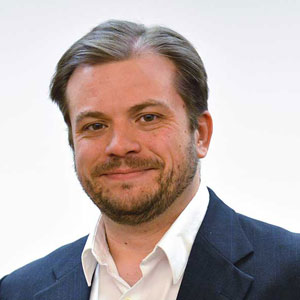
Pascal R. Deboeck is an Associate Professor of Developmental Psychology at the University of Utah, specializing in quantitative methods for analyzing intensive longitudinal data. His research develops statistical approaches for studying intraindividual change and variability in psychological processes. Deboeck's methodological innovations include: Differential equation modeling of psychological regulation Continuous time models for longitudinal data Empirical Bayes derivative estimation Intraindividual variability analysis His applied work examines dynamical processes in depression, attachment, chronic pain, and substance use. Current projects analyze passive sensor data for eating disorder behaviors, neurocognitive variability, and neonatal opioid withdrawal prediction. Deboeck leads multiple NIH-funded projects developing dynamic systems approaches for clinical research. He mentors graduate students combining quantitative methods with developmental, clinical, and cognitive neuroscience research.
Ole Martin Drevland is a Research Fellow at the Department of Pharmacy, University of Oslo, affiliated with the Faculty of Mathematics and Natural Sciences. His work focuses on clinical pharmacology and drug metabolism, particularly in immunosuppressive therapies for transplant recipients. He holds a student affiliation with the Faculty of Mathematics and Natural Sciences. Research interests include pharmacokinetics, drug-drug interactions, and analytical methods validation for immunosuppressants. His projects explore host-microbiome-drug interplay to optimize immunosuppressive therapy in renal transplant patients. Publications highlight advancements in quantifying mycophenolic acid, tacrolimus pharmacokinetics, and midazolam bioavailability. He has contributed to understanding fasting and circadian effects on mycophenolate metabolism. No scientific awards are listed, but his work is supported by institutional affiliations and collaborations with pharmacology and transplantation teams.
Jason Allaire is an Associate Professor in the Department of Psychology at North Carolina State University’s College of Humanities and Social Sciences. His research focuses on aging and cognition, health disparities, intraindividual variability, and unconventional interests like bee wrangling. He is affiliated with the Lifespan Developmental Psychology faculty group and maintains an office in Poe Hall 718. His work examines cognitive aging processes in African American populations, emphasizing socioeconomic factors, health disparities, and daily fluctuations in cognitive performance. Notable contributions include studies on the impact of social support on physical health outcomes, the role of vascular risk factors in cognitive decline, and the application of video games for cognitive training in older adults. Recent publications (2018–2024) highlight themes such as area deprivation index effects on health, within-person coupling of affect and leisure activities, and the neural mechanisms underlying cognitive reserve. He collaborates across disciplines, integrating epidemiology, psychology, and technology to address aging-related challenges. No awards were explicitly listed in the provided texts, though his prolific research output indicates significant scholarly engagement. Dr. Allaire’s advising and grant activities remain unspecified in the data, but his research spans institutions like the Baltimore Study of Black Aging. He is reachable at jason_allaire@ncsu.edu and resides at 106 Caldwell Hall, Raleigh, NC.
Remus Ilies serves as Full Professor in the Department of Management and Technology at Bocconi University, where he directs the PhD program in business administration and management and holds a fellowship at the Invernizzi Center for Research on Innovation, Organization, Strategy and Entrepreneurship (ICRIOS). Previously, he held Provost’s Chair and Full Professor positions at the National University of Singapore (NUS) for a decade and remains a current Visiting Professor there, following an earlier Full Professorship at Michigan State University where he began his academic career in 2003. His research centers on employee well-being, work-family dynamics, leadership, and motivational processes, with specialized focus on emotional mechanisms linking work experiences to family functioning and personal well-being. He employs intraindividual methodologies including daily diary studies to examine how positive work events, emotional resources, and interpersonal capitalization influence organizational outcomes and life satisfaction. Analysis of his 12 publications (2009-2024) reveals consistent contributions to top-tier journals like the Journal of Applied Psychology and Academy of Management Journal, with emerging trends emphasizing positive psychology interventions, gratitude dynamics in service settings, and emotional resource preservation. His work bridges organizational behavior with family studies through rigorous examination of spillover processes. Scientific awards: No specific awards or fellowships were documented in the provided text As PhD program director, Ilies oversees doctoral training in business administration and management, though the text provides no details about specific advisees or grant-funded research projects. His leadership extends to curriculum development and academic administration within Bocconi's management programs. Ilies maintains active research collaboration through his fellowship at ICRIOS, which focuses on innovation, organizational strategy, and entrepreneurial ecosystems, suggesting involvement in cross-disciplinary projects examining workplace dynamics within broader business contexts.
Cecilia Wåhlstedt is a Senior Lecturer at Uppsala University, Department of Psychology, Division of Developmental Psychology. She holds a Doctor of Psychology degree from Uppsala University (2009) and a Bachelor of Science in financial planning from Lund University (1984). Her research focuses on the heterogeneity of ADHD, encompassing symptom domains, neuropsychological processes, and comorbid behavioral problems. Doctor of Psychology, Uppsala University (2009) Bachelor of Science, Lund University (1984) Her work explores ADHD's complexity through three dimensions: symptom domains (hyperactivity/impulsivity vs. inattention), neuropsychological impairments (executive functions, reaction time variability), and comorbid behavioral issues (conduct problems, anxiety). She also investigates Asperger syndrome and callous-unemotional traits in adolescents, examining their impact on emotional reactivity and social collaboration. Recent publications highlight ADHD and ASD interactions, emotional processing deficits, and longitudinal developmental patterns. She supervises doctoral students Erik Truedsson and Matilda Frick, and collaborates with municipalities on child health initiatives.
Overview Dr. Christopher Ching is an Assistant Professor at the Imaging Genetics Center within the Mark and Mary Stevens Neuroimaging and Informatics Institute at the University of Southern California. His research focuses on neuroimaging and genomic markers of psychiatric and neurodegenerative disorders, including bipolar disorder, schizophrenia, and rare genetic mutations like 22q11.2 Deletion Syndrome. As a core member of the ENIGMA Consortium , he leads the ENIGMA Bipolar Disorder Working Group, coordinating over 200 international researchers to study brain correlates of mental illnesses. His work emphasizes large-scale neuroimaging harmonization and machine learning applications. Education & Training Postdoctoral Fellowship : Biomarkers in Alzheimer’s Disease (USC, 2019–2021) Predoctoral Fellowship : Neurobehavioral Genetics (UCLA, 2015–2016) Neuroimaging Training : NIH-funded programs (UCLA, 2012–2013) Research Interests Dr. Ching’s research integrates neuroimaging and genomics to uncover biological mechanisms underlying psychiatric disorders. Key areas include: ENIGMA Consortium : Standardizing large-scale neuroimaging analyses for conditions like bipolar disorder and chronic pain Rare Genetic Mutations : Studying 22q11.2 Deletion Syndrome and other copy number variants Multisite Collaboration : Developing reproducible methods for cross-diagnostic studies Machine Learning : Predicting treatment responses and diagnosing mental illnesses using MRI data Publications & Awards His work has yielded over 150 publications, including high-impact studies on: Bipolar disorder brain structure alterations Genetic influences on brain volume Meditation’s neuroscientific effects He has received awards from NIH, NSF, and UCLA training programs. Labs & Initiatives Leads the ENIGMA Bipolar Disorder Working Group and ENIGMA-Meditation Consortium , advancing global neuroimaging research in mental health.
Dr. Lijuan Wang is a Professor at the University of Notre Dame, affiliated with the Department of Psychology. Her research focuses on advanced quantitative methodologies including longitudinal data analysis, mediation/moderation analysis, multilevel modeling, and structural equation modeling. She leads the Lab for Developmental and Health Research Methodology, emphasizing applications in clinical, developmental, education, and health disparities research. Education: Ph.D. from University of Virginia. Research interests span Bayesian modeling, cumulative data analysis, dyadic data analysis, and innovative study designs. She emphasizes methodological advancements such as integrating mediation with longitudinal perspectives and developing tools for sample size planning. Substantive interests include applying these methods to clinical, developmental, and health disparity contexts. Her recent work explores discrimination impacts on Mexican-origin youth mental health, intergenerational trauma in families, and affect dynamics in depression. Methodological contributions include improving missing data handling in longitudinal studies and refining mediation analysis techniques. No scientific awards explicitly listed. Her advisory role involves mentoring through research projects, though specific students/grants are not documented here. The lab focuses on interdisciplinary approaches to psychosocial development and health outcomes.
Sascha Zuber is a Research and Teaching Fellow at the Center for the Interdisciplinary Study of Gerontology and Vulnerability (CIGEV) at the University of Geneva's Faculty of Psychology and Educational Sciences. They lead the research group 'Variability and Plasticity in Lifespan Development (V+Life)' and are a member of the Swiss Centre of Expertise in Life Course Research LIVES at the Universities of Lausanne and Geneva. Additionally, Zuber serves as an associate member at the Institute on Aging & Lifelong Health at the University of Victoria and holds editorial positions with Swiss Psychology Open, Cognitive Development, and Discover Psychology. Zuber's research focuses on developmental psychology from a lifespan perspective, with particular emphasis on prospective memory and executive functions. Their work explores plasticity, cognitive training, and interventions across the lifespan, investigating how early life experiences affect later health outcomes. They also examine the reliability and validity of cognitive assessments across different populations and contexts, and study cognitive architecture in clinical populations including those with autistic traits, dementia, or Parkinson's disease. Zuber has developed innovative cognitive assessment tools including the Geneva Space Cruiser, a self-administered online tool for assessing prospective memory across the adult lifespan, and has contributed to the validation of the Cognitive Telephone Screening Instrument (COGTEL). Their publication record demonstrates consistent contributions to understanding memory development and cognitive aging, with recent work examining longitudinal changes in prospective memory and individual differences across the lifespan. LIVES Young Scholar grant (2024) for 'Creating a Prospective Memory Longitudinal Data Catalogue' LIVES Young Scholar grant (2024) for expanding the Geneva Space Cruiser Swiss National Science Foundation Fellowship (2021-2023) Vontobel Award for Research on Age(ing) (2016) As a Research and Teaching Fellow since 2023, Zuber has secured multiple research grants and leads a vibrant research group focused on lifespan cognitive development. Their work bridges theoretical and applied research, with a strong commitment to open science principles through the development and sharing of cognitive assessment tools. Zuber's research has practical implications for understanding cognitive aging and developing interventions to maintain cognitive health across the lifespan.
Dr. David Vance is a Professor at the University of Alabama at Birmingham (UAB) School of Nursing with extensive joint appointments across multiple departments including Psychology, O'Neal Comprehensive Cancer Center, and the Comprehensive Neuroscience Center. With over 390 publications (310+ peer-reviewed) and 750+ presentations across 24 countries, his research focuses on neurocognitive aging, HIV and aging, cognitive remediation, and neuroplasticity. Dr. Vance's research program centers on understanding cognitive challenges in aging populations, particularly those living with HIV. His work explores positive and negative neuroplasticity mechanisms, neurocognitive remediation strategies, and more recently, neurocognition in cancer survivors. He investigates how cognitive frailty phenotypes interfere with everyday functioning and quality of life in older adults with HIV, with special attention to vulnerable populations in the Deep South. His laboratory develops and tests cognitive interventions, particularly speed of processing training and individualized-targeted cognitive training approaches. Analysis of Dr. Vance's recent publications reveals significant trends in cognitive interventions for HIV-associated neurocognitive disorders (HAND), with growing emphasis on individualized-targeted approaches and cognitive intra-individual variability as both an outcome measure and potential moderator of treatment response. His research increasingly examines intersections between HIV, aging, and comorbid conditions like cancer and cardiovascular disease, reflecting the complex health needs of aging populations with chronic conditions. White House invitation to attend the first forum on aging with HIV Invited member of the NIH Think Tank - Working Group on HIV and Aging As an active educator and mentor, Dr. Vance teaches courses in research methods, scientific dissemination, and data analysis while serving on numerous dissertation committees. He has secured substantial NIH funding as Principal Investigator and Co-Investigator for studies on cognitive training interventions for older adults with HIV, neurocognitive aging, and HIV-associated neurocognitive disorders. His interdisciplinary collaborations span psychology, neurology, oncology, and gerontology, reflecting the comprehensive nature of his research program addressing cognitive aging in the context of chronic diseases.
Michael Busseri is a Professor in the Department of Psychology at Brock University, Canada. His research focuses on subjective well-being, exploring how individuals perceive and evaluate their lives across time. He holds a PhD from Brock University and leads a lab dedicated to advancing understanding of temporal perspectives and the structure of psychological well-being. Research Interests: Temporal self-appraisals: Investigating beliefs about life trajectories (e.g., improvement/decline over time) and their cognitive/emotional consequences. Subjective well-being structure: Analyzing the interplay between life satisfaction, positive/negative affect, and their functional roles. Lay theories: Examining how beliefs about mental health, aging, and personality influence behavior and well-being. Publications reflect a focus on lifespan developmental psychology, cultural differences in well-being, and experimental validation of theoretical models. Recent work emphasizes temporal perspectives in mental health and the motivational implications of life satisfaction beliefs. Labs/Teams: Visit Lab Website for ongoing projects and collaborations.
Richard Lerner is a Professor and Bergstrom Chair in Applied Developmental Science at Tufts University's Eliot-Pearson Department of Child Study & Human Development within the School of Arts and Sciences. He holds a PhD from the City University of New York (1971). His research focuses on applying developmental science across the lifespan, emphasizing systems theory, positive youth development, and university-community collaboration. Lerner has authored over 575 scholarly works and secured $37 million in grants, leading the Institute for Applied Research in Youth Development (IARYD) since its founding in 1999. His work bridges academic research with societal impact, addressing marginalized youth globally. Education : PhD (1971), MA (1967), BA (1966) in Psychology from Hunter College, CUNY. Research Interests : Developmental systems theory, character development, positive youth development programs, and rejecting genetic determinism. Lerner emphasizes idiographic approaches to understanding individual differences and promoting social justice through evidence-based interventions. Grants & Awards : Over 55 grants, including Bergstrom Chair (2000–present), Editor of Review of General Psychology (2024–), and Pontifical Academy for Life membership (2017–). His collaborations span global partners like Compassion International and the Vatican. Labs & Teams : Directs IARYD, fostering interdisciplinary teams of over 35 PhD graduates, postdocs, and students. Projects include Uganda, Rwanda, and El Salvador initiatives, focusing on spirituality, safety, and program efficacy.
Vadim Zipunnikov is an Associate Professor at the Department of Biostatistics, Johns Hopkins Bloomberg School of Public Health. He co-leads the Wearable and Implantable Technology (WIT) group and serves as biostatistics co-director for the Motor Activity Research Consortium for Health (mMARCH). His research focuses on advanced statistical methods for analyzing multi-modal data from wearables and traditional epidemiological databases. Academic affiliation: Johns Hopkins University (Bloomberg School of Public Health) Research groups: SMART, WIT, mMARCH His methodological work emphasizes functional data analysis and matrix/tensor-variate regression to model complex physiological signals. Key applications include: Frailty and fatigue in heart disease patients Physical disability in multiple sclerosis Circadian disruption in mood disorders Sleep quality in aging populations Collaborations span Johns Hopkins departments (Epidemiology, Neurology, Psychiatry) and NIH institutes (NIA, NHLBI, NIMH, NIDA). Contact: vzipunni@jhsph.edu
Magnus Sverke is a Professor of Work and Organizational Psychology at the Department of Psychology, Stockholm University since 2006. He has held academic roles since 11995, including Associate Professor (2000) and Full Professor (2004), after early career work in non-academic roles (healthcare, navy, education, etc.). Research focuses on psychosocial work environments, organizational change, job insecurity, employment contracts, and union dynamics. Teaching spans organizational psychology , leadership , structural equation modeling , and research methodology since 1994. Supervision includes 24 completed PhDs (12 as main adviser), 1 licentiate, 25 Master's, and 65 Bachelor's theses. Current projects: Forte-funded NOWSTARS (non-standard employment) and Retail as an Attractive Workplace . Scientific Contributions: Recipient of SEK 70 million as principal investigator from agencies like AFA Insurance , Forte , and Svenskt Näringsliv . Editorial leadership: European Journal of Work and Organizational Psychology (2007-2011), Nordic Journal of Working Life Studies (2018-), and board roles at journals like Scandinavian Journal of Work Environment and Health . Policy engagement: Board member of Forte (2009-2015), Swedish School of Sport and Health Sciences (2007-2013), and Scientific Council of the Swedish Psychological Association (2012-). Key Themes in Research: Job insecurity's impact on performance and health, non-standard employment contracts, organizational justice in pay-setting, and military leadership dynamics.
Kara D Federmeier is a Professor at the University of Illinois, holding appointments in Psychology, Kinesiology and Community Health, Neuroscience Program, and Beckman Institute for Advanced Science and Technology. She specializes in cognitive neuroscience, focusing on language processing, semantic memory, aging, and electrophysiological methods like EEG/ERP. Her work explores how context influences meaning comprehension across the lifespan, with particular attention to neural mechanisms in aging populations. Education: Ph.D. in Psychology from the University of California, San Diego. Research interests include hemispheric differences, semantic processing, and the neural underpinnings of language and memory. She has published extensively on topics like word prediction in older adults, semantic predictability, and animal cognition. Key awards include AAAS Fellow (2022), Association for Psychological Science Fellow (2011), and CNS Young Investigator Award (2010). Her recent work emphasizes interdisciplinary collaborations, with studies on emotional memory, neural dynamics in reading, and the cognitive impacts of aging. Federmeier’s research integrates electrophysiological techniques with behavioral experiments to uncover how knowledge and context shape brain function.
Lize Verbeke is a Professor at Ghent University specializing in developmental psychopathology, personality disorders, and forensic applications in adolescent populations. Her research bridges clinical psychology, criminology, and juvenile justice through extensive collaborations, primarily with Barbara De Clercq. Research Focus Her work centers on maladaptive personality traits (particularly DSM-5 PID-5), developmental trajectories of psychopathology, and gender differences in forensic settings. Key themes include childhood precursors of personality disorders, situational judgment in borderline traits, and gender-based violence frameworks. Methodologically, she pioneers ambulatory assessment for within-person variability analysis. Publication Trends Analysis of her 2014-2025 publications reveals evolving focus from foundational personality pathology (2014-2017) to forensic/clinical integration (2019-2025), with increasing emphasis on gender-based violence and juvenile justice applications. Her work consistently employs dimensional models while addressing measurement challenges in adolescent populations. Academic Background PhD in Psychology, Ghent University (2016) - Dissertation: Developmental manifestations of Oddity: content, structure and significance Professional Context As a core researcher within Ghent University's psychology network, she contributes to major projects on youth psychopathology assessment and forensic mental health. Her leadership in multi-country studies (e.g., Massachusetts Youth Screening Instrument) demonstrates international collaboration scope.