Nu ZhangView profile
Associate Professor
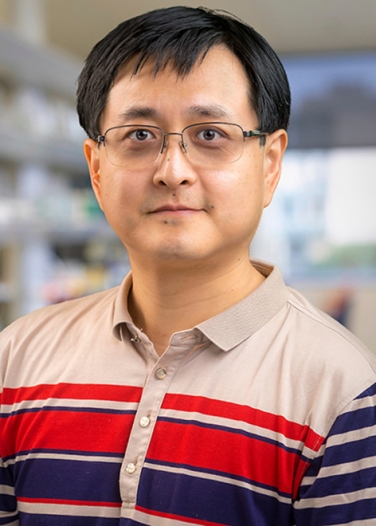
Nu Zhang, Ph.D. is an Associate Professor in the Department of Microbiology, Immunology & Molecular Genetics at the University of Texas Health Science Center at San Antonio (UTHSCSA) School of Medicine. Dr. Zhang leads an active research laboratory focused on T cell biology with a particular emphasis on tissue-resident memory T cells and their regulation by transforming growth factor-beta (TGF-β) signaling. Their work has significant implications for understanding immune responses to infections, autoimmune diseases, and cancer immunotherapy. Ph.D. in Immunology from Duke University Dr. Zhang's research primarily investigates the mechanisms underlying the differentiation and retention of tissue-resident memory T cells controlled by TGF-β signaling following acute infections. Their work spans multiple organ systems including the gut, kidney, lung, and skin, examining how tissue-specific factors influence T cell residency and function. A key finding from their laboratory is that TGF-β signaling is critical for the formation and maintenance of tissue-resident memory T cells across different organs, though the specific mechanisms vary by tissue type. They have also made significant contributions to understanding how TGF-β regulates the stem-like properties of T cells, which has important implications for chronic infections and cancer immunotherapy. Analysis of Dr. Zhang's publication record reveals a strong focus on TGF-β signaling in T cell biology, with increasing attention to cancer immunology in recent years. Their work demonstrates how TGF-β-dependent lymphoid tissue residency of stem-like T cells can limit response to tumor vaccines, providing important insights for improving cancer immunotherapies. They have also explored the role of tissue-resident memory T cells in age-associated chronic lung sequelae after viral pneumonia and in balancing immunity with fibrotic responses. Dr. Zhang has maintained a highly productive research program with numerous publications in top immunology journals including Nature Immunology, Immunity, Journal of Experimental Medicine, and Science Immunology. Their work frequently involves collaborations with other leading immunologists and spans basic mechanistic studies to translational research with clinical implications. Dr. Zhang runs an active laboratory (nuzhanglab.org) that trains graduate students and postdoctoral fellows in advanced immunological techniques. Their research has been supported by multiple NIH grants focused on T cell biology and immunological memory. The laboratory employs cutting-edge approaches including advanced flow cytometry, in vivo infection models, and molecular techniques to dissect T cell differentiation and function.