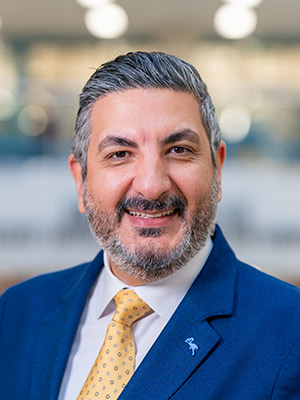
Dr. Julie Parker is a Professor at Mississippi State University 's College of Agriculture and Life Sciences. She holds a PhD in Education from Northcentral University, a Master’s in Early Intervention from the University of Southern Mississippi, and a Bachelor’s in Family Life Studies. Email: jcp162@msstate.edu Research interests include: Child life services and facility dogs Rural health education interventions Equine-assisted learning for at-risk youth Child death education Anti-bullying strategies in early childhood Key publication trends highlight her focus on: Early childhood health and development Behavioral and nutritional education Therapeutic interventions for trauma and inclusion Community-based health programs Scientific awards and honors: Teaching Excellence Award DAFVM Superior Faculty Award Ernst Brown Good Change Award (2022) Professional Research Award (2022) Stennis Public Policy Fellowship Social Science Research Center Fellow (2016) Graduate students include: Jennifer Smith Stephanie Haney
Robert Mitchell is an Assistant Professor and Doctoral Program Coordinator in the Leadership, Research, and Foundations Department at the University of Colorado Colorado Springs (UCCS). He holds a Ph.D. in Global Education from The Ohio State University (2013), an M.A. in History from Northeastern University (2001), and a B.S. in Journalism from University of Colorado Boulder (1992). His research focuses on global rural education, teacher recruitment/retention in remote areas, and educational policy development. Mitchell has collaborated internationally with institutions in Australia, Morocco, Iran, Egypt, Brunei, and Bahrain. Education Background: Ph.D. in Global Education, The Ohio State University (2013) M.A. in History, Northeastern University (2001) B.S. in Journalism, University of Colorado Boulder (1992) Research Interests: Dr. Mitchell explores challenges in global rural education systems, including teacher shortages, workforce sustainability, and policy solutions. He emphasizes cross-cultural collaboration and legislative advocacy to improve rural education outcomes. His work spans international partnerships to develop scalable strategies for educator training and retention. Key Contributions: Co-authored A Practical Guide to Theoretical Frameworks for Social Science Research (2024) Published in journals such as The Rural Educator and Journal of Education Human Resources Presented at conferences including the National Forum to Advance Rural Education and Society for the Provision of Education in Rural Australia Grants & Advising: Mitchell has advised on teacher recruitment initiatives and collaborated with governmental agencies in Massachusetts and Colorado. His research informs legislation to address rural education workforce gaps. Labs/Teams: Active in UCCS’s Leadership, Research, and Foundations department, leading interdisciplinary projects on global rural education challenges.
Mala Htun is a Professor of Political Science at the University of New Mexico, specializing in comparative politics, women’s rights, and social inequalities. She holds a Ph.D. from Harvard University and an A.B. from Stanford University. Her research focuses on gender justice, policy analysis, and strategies to promote inclusive environments in STEM. Education: PhD in Political Science (Harvard University, 2000), A.B. in International Relations (Stanford University, 1994). Research Interests: Gender equality policies and their implementation Comparative analysis of women’s rights legislation Impact of feminist activism on policy change STEM inclusion and institutional accountability Awards and Recognition: Best Book Award (Human Rights Section, ISA, 2019) Andrew Carnegie Fellow (2015) Recognized by New Mexico legislature for scholarly contributions (2016) Leadership Roles: Vice President of the American Political Science Association (APSA) Chair of APSA’s Committee on the Status of Women in the Profession Co-chair of APSA’s Presidential Task Force on Women’s Advancement Key Contributions: Authored three influential books, including The Logics of Gender Justice (2018) and Inclusion Without Representation in Latin America (2016). Her work bridges theory and practice, analyzing how states respond to gender justice demands globally.
Jean-Sébastien Fallu is an Associate Professor at the School of Psychoeducation, part of the Faculty of Arts and Science at the Université de Montréal. He holds a PhD in Psychology from the same institution and completed a postdoctoral fellowship at the Centre for Addiction and Mental Health (CAMH) in Toronto. His research focuses on the etiology and prevention of problematic substance use, public health policies, and cannabis-related issues. Dr. Fallu is a regular contributor to media discussions on drug policy and addiction science, with over 800 media interviews. He is affiliated with the Institut universitaire sur les dépendances (IUD), the Centre de recherche en santé publique (CReSP), and the Groupe de Recherche et intervention sur les substances psychoactives du Québec (RISQ). He currently serves as the director of the journal Drogues, santé et société (DSS) and is involved in several research projects funded by the Fonds de recherche du Québec (FRQ) and the Canadian Institutes of Health Research (CIHR). Education: PhD in Psychology (Université de Montréal), Postdoctoral Fellowship (CAMH, Toronto) Research Interests: Adolescent substance use, cannabis policy, harm reduction, prevention strategies, public health policies Awards: Forces Avenir 2002 Award for Société, communication et éducation Affiliations: CIUSSS du Centre-Sud-de-l’Île-de-Montréal, IUD, CReSP, RISQ His research has led to over 30 publications and 60 scientific presentations. He supervises graduate students in Master's and PhD programs, focusing on topics such as cannabis use among youth, alcohol consumption during the pandemic, and the impact of policy interventions. He has led projects on substance use prevention, evaluating the efficacy of school transition programs and harm reduction strategies. Dr. Fallu’s current grants include initiatives on opioid interventions, psilocybin therapy in palliative care, and the role of cannabis use onset in substance use disorders. His work bridges academic research with community outreach, emphasizing evidence-based policy and reducing stigma around substance use.
Christine Moe is a Professor and the Eugene J. Gangarosa Chair in Safe Water and Sanitation at Emory University’s Rollins School of Public Health. Her primary appointment is in the Hubert Department of Global Health, with joint roles in Environmental Health and Epidemiology. She holds a PhD from the University of North Carolina and has conducted postdoctoral research at the CDC. Moe’s research focuses on environmental transmission of pathogens, particularly noroviruses and waterborne diseases, with fieldwork in over 30 countries. Her work includes studies on sanitation systems, water quality, and wastewater surveillance. She directs Emory’s Center for Global Safe Water, emphasizing global health equity. Awards include the prestigious Eugene J. Gangarosa Chair. Her contributions span lab-based viral studies and community-level interventions to improve water and sanitation in low-resource settings. Education: PhD in Environmental Sciences (UNC-Chapel Hill), MS in Environmental Science (UNC), BA in Biology (Swarthmore College). Research Interests: Environmental health, waterborne pathogens, norovirus transmission, and global sanitation infrastructure. She has pioneered wastewater-based epidemiology to monitor disease outbreaks and assess public health risks in healthcare and urban environments.
Dr. Amanda Gigliotti is a Senior Lecturer at the School of Education, University of Wollongong , with expertise in technology-enhanced learning and teacher design practice. Her research investigates how educators integrate technology into pedagogy, focusing on design decisions and professional development. Current role (2025–present): Senior Lecturer, University of Wollongong Previous appointments: Lecturer (2023–2024), Career Development Fellow (2020–2023) PhD in Education (2020), Bachelor of Primary Education (Honours) (2011) Her work emphasizes inclusive digital learning , with grants totaling $292,797.25 as lead investigator. She co-authored 6 journal articles, 2 book chapters, and 2 reports, often collaborating on topics like online curriculum design and WIL simulations. Key awards include the University of Wollongong's Vice Chancellor (Early Career) Award for teaching excellence. She chairs UOW’s Early Career Researcher Committee and founded ASSH’s Early Career Academic Network, mentoring over 100 international academics.
Linda J. Graham is a Professor at Queensland University of Technology (QUT) and Director of the Centre for Inclusive Education (C4IE). Her research focuses on education policy, disruptive student behavior, and inclusive pedagogies. PhD, Master of Education, and Bachelor of Arts from QUT and Macquarie University Chaired the 2020 Inquiry into Suspension, Exclusion and Expulsion Processes in South Australia Her work explores the intersection of inclusive education , student voice , and teacher-student relationships . She advocates for systemic reform to address overrepresentation of Indigenous and disabled students in exclusionary discipline. Recent publications highlight accessible assessment redesign , equity in education , and student perspectives on discipline . Notable awards include the Spencer Foundation Mentorship Excellence Award (2021) and Macquarie University's Early Career Researcher of the Year (2011). Scientific Awards: Spencer Foundation Mentorship Excellence Award (2021) Macquarie University Early Career Researcher of the Year (2011) Paul Bourke Award (2011) She supervises PhD and professional doctorate students in projects related to language disorders , student voice , and curriculum adjustments . Her leadership extends to the AARE Inclusive Education Special Interest Group and collaborations with institutions like Speech Pathology Australia and the QCAA.
Prof. Dr. Vita Akstinaitė is a Professor and Vice-Rector for Research and Faculty at ISM University of Management and Economics (Lithuania). She leads the Master's program 'Global Leadership and Strategy' and the Executive Master's module on rhetoric/communication. As a Visiting Researcher at IDIAP (Switzerland) and Visiting Fellow at the University of Lausanne, she bridges academic and applied research. Her work focuses on leadership dynamics, hubris, linguistic markers, and AI applications in leadership assessment. Education: MSc Organizational Psychology (King's College London) and PhD in Business (University of Surrey), with research on linguistic markers of hubris. She co-founded The Hubris Hub and Knowledge4Hubris initiatives, fostering interdisciplinary collaboration. Notable projects include EU-funded AI leadership research (2021) and NordForsk's remote work study (2023-2026, €99k+). Research emphasizes innovative methods like AI-driven text analysis to evaluate leadership behaviors. Key areas include: executive hubris measurement, AI's role in leadership skill assessment, and ethical leadership frameworks. Her work spans international collaborations with institutions like Umeå University (Sweden), Murdoch University (Australia), and the London School of Economics. Awards include ISM Research Communicator of the Year (2023), Murdoch Teaching Excellence (2021), and EU research grants. Her publications explore topics like linguistic predictors of hubris, AI in leadership diagnostics, and pandemic leadership failures. Recent articles address data-driven executive role transformations and ethical leadership in AI contexts. Grants include €59k for AI leadership research (2021-2023) and €99k NordForsk funding. Active in conferences such as British Academy of Management and interdisciplinary leadership symposia. She advises on leadership development and serves as a module leader for global leadership courses. Labs/Teams: Co-leads The Hubris Hub research collective and directs ISM's executive communication initiatives. Current work explores AI ethics in leadership assessment and cross-industry sustainability leadership preferences.
Marcelo Orias, MD, PhD, is an Adjunct Associate Professor affiliated with the Yale Institute for Global Health and the Department of Internal Medicine at the Yale School of Medicine. His research focuses on hypertension, nephrology, and global health initiatives, particularly in Latin America. He holds a MD from the National University of Córdoba (1987) and a PhD from the University of Córdoba (2003). Key projects include leading the HEARTS Initiative in Argentina to standardize hypertension control in primary care and contributing to international guidelines on antihypertensive medication timing and sodium intake policies. He has received the Teacher of the Year Award (2021) and serves as a representative for the Latin American Society of Nephrology. His recent publications emphasize global health policy, clinical trials for anemia treatments, and evidence-based hypertension management. Collaborations include work with the World Hypertension League and Resolve to Save Lives.
Le Khanh Ngan Nguyen is a Chancellor’s Fellow and Lecturer in the Department of Management Science at the University of Strathclyde. Her research focuses on hybrid simulation models (system dynamics, agent-based, and discrete-event) to evaluate health and social care policies. Previously, she conducted systems thinking research at University College London. She holds a PhD from the University of Strathclyde (2022), a Master of Public Health from the University of Sydney, and a Bachelor of Pharmacy. Research Interests: Combining simulation techniques like system dynamics and agent-based modeling to enhance decision-making in healthcare systems. Specializes in hybrid models for evaluating interventions against healthcare-associated infections and pandemic responses (e.g., COVID-19). Key Focus Areas: Healthcare Policy, Sustainability, Pandemic Modeling, Infection Control UN SDG Contributions: Aligns with goals related to Good Health & Well-being and Sustainable Cities Recent work highlights include analyzing kidney replacement therapy policy in Thailand using causal loop diagrams and exploring unsustainable pressures in UK health systems via qualitative system dynamics. Her research bridges operational research with real-world policy implementation challenges. Recent Awards: Finalist for 2022 EURO Prize for OR in Common Good, SBS Knowledge Exchange Award (2023) Collaborations involve projects on data value chains for evidence-based policymaking and collaborative research cultures in academia. Active in conferences like the Royal Statistical Society Conference (2025) and workshops on occupational health innovations.
Linda G. Castillo is a Professor in the Department of Educational Psychology at Texas A&M University, specializing in counseling psychology and school counseling. She holds Fellow status with the American Psychological Association (2009) and has secured over $10 million in federal grants. Her work focuses on Latine educational persistence, mental health, and program development for at-risk youth. Education: Ph.D., Counseling Psychology, University of Utah (1999) M.S., Counseling Psychology, University of Utah (1996) B.A., Psychology, Southwest Texas State University (1994) Research Interests: Latine educational and mental health disparities Scale development for cultural constructs (e.g., Marianismo Beliefs Scale) Evaluation of GEAR UP programs for college readiness Her current NIH-funded Heart of Texas GEAR UP project ($6.3M) serves 1,200+ students to enhance postsecondary success. Key Contributions: Published over 100 peer-reviewed articles on acculturation stress, ethnic identity, and counseling interventions Edited for journals like Cultural Diversity and Ethnic Minority Psychology and Journal of Hispanic Higher Education Recipient of APA Fellow recognition for research on college student mental health Leadership: Ombuds Officer, Texas A&M Graduate School (2018–present) Principal Investigator for multiple GEAR UP federal grants
Dr. Terrance Fitzsimmons is an Associate Professor in Leadership at the University of Queensland Business School , with over 35 years as a Chartered Accountant. He serves as Managing Director of the Australian Gender Equality Council (AGEC) and holds advisory/board positions with Women and Leadership Australia and the Abbey Museum of Art and Archaeology . His research applies Pierre Bourdieu's theoretical frameworks to analyze gender inequality through concepts like field , capital , and symbolic violence . Key projects include the 'Filling the Pool' (2015) and 'Employer of Choice for Gender Equality' (2020) reports, addressing systemic workplace disparities. Recent publications focus on gendered leadership progression (2024), maverick-driven organizational change (2025), and Indigenous knowledge integration (2024). Collaborations with Dr. Miriam Yates and Professor Victor Callan examine CEO pathways, boardroom diversity, and pandemic impacts on work-life balance. Dr. Fitzsimmons supervises PhD projects on topics like Indigenous women's leadership and STEM diversity , with current grants including ARC Linkage Projects (2025-2028) for Indigenous environmental rangers' leadership amplification.
Dr. Farzan Sasangohar is an Associate Professor in the Department of Industrial & Systems Engineering at Texas A&M University, holding the Mike and Sugar Barnes Faculty Fellowship. He also serves as an Assistant Professor at Houston Methodist Hospital's Center for Outcomes Research and Department of Surgery. His academic roles include affiliations with the Environmental and Occupational Health, Biomedical Engineering, and multiple centers focused on health technologies and systems design. Education: PhD in Industrial Engineering (Human Factors Engineering), University of Toronto (2015) Research Interests: Human factors in healthcare delivery and telehealth systems Wearable technology for stress/health monitoring Crisis management team cognition and decision-making Remote patient monitoring systems Mental health self-management interventions Awards: Jack A. Kraft Innovator Award (HFES, 2023) Dr. Hamed K. Eldin Early Career Award (2022) William C. Howell Young Investigator Award (2021) TEES Young Faculty Fellow (2021) Nominated for Ergonomics Journal Best Paper (2021) Advising & Grants: Mentored over 15 graduate students including Dr. Mahnoosh Sadeghi (PhD 2023) Recipient of NSF PATHS-UP Engineering Research Center funding Active grants in offshore worker fatigue management and telehealth integration Labs/Teams: Director of the Applied Cognitive Ergonomics Lab (ACE-lab) , focusing on human-system interactions in healthcare, aviation, and disaster management. Current projects include: - Wearable stress monitoring systems - Telehealth integration frameworks - Crisis team cognition analysis
Fay E. Brown serves as an Associate Research Scientist at Yale University's Child Study Center and Director of Child and Adolescent Development for the School Development Program. Her work bridges child developmental psychology with practical educational applications, focusing on creating developmentally appropriate school environments that foster holistic child development. Dr. Brown earned her Bachelor of Arts in Psychology from the University of Connecticut (1984), followed by a Master of Education in Guidance and Counseling and a Ph.D. in Educational Psychology from Howard University (1996). Her professional journey spans teaching and counseling at elementary, high school, and college levels. Dr. Brown's research centers on the critical intersection of child development and education, with particular emphasis on how developmental understanding informs effective teaching practices. Her work explores the relationship between reading difficulties and behavioral issues in elementary students, demonstrating that targeted literacy interventions can simultaneously improve both academic performance and behavior. She has developed assessment instruments to measure educators' application of developmental principles and their impact on student outcomes. Her publication record reveals a consistent focus on literacy development, child psychology in educational settings, and equity issues in special education. Brown's research demonstrates how developmentally appropriate practices can transform educational outcomes, particularly for struggling students. Recognized by the National Association for Personal Workers (NAPW) for outstanding contribution to student development (1993) As Director of Child and Adolescent Development for the School Development Program, Dr. Brown consults with educational organizations including the United Church of Christ's educational task force. She is also a sought-after motivational speaker who presents at local, national, and international events on child development and educational practices. Her work continues to influence school improvement initiatives through evidence-based approaches to child development in educational settings.
Dr. Dina Ferdman is an Associate Professor of Pediatrics at Yale School of Medicine, serving as Director of the Pediatric Echocardiogram Program and Co-director of the Yale Fetal Care Center. She practices pediatric cardiology at Yale Pediatric Specialty Centers in Trumbull and Greenwich, providing comprehensive care for congenital heart disease from prenatal diagnosis through adolescence. Education & Training: MD: University of Massachusetts Medical School (2008) Pediatrics Residency: Columbia University Medical Center (2011) Chief Residency: Columbia University Medical Center (2012) Pediatric Cardiology Fellowship: Columbia University Medical Center (2015) Her research focuses on advancing diagnostic techniques in fetal and pediatric cardiology, particularly through echocardiography innovations. She investigates prenatal detection of congenital heart defects, ventricular strain analysis, and quality improvement initiatives for high-risk infant care. Her work integrates clinical practice with translational research to optimize outcomes for children with structural heart disease. Dr. Ferdman's publications demonstrate consistent focus on echocardiography techniques, prenatal diagnosis, and pediatric cardiac management. Recent work explores the application of high-sensitivity biomarkers for myocarditis diagnosis and quality improvement in preventive cardiology. Her longitudinal studies provide valuable insights into cardiac complications of inflammatory conditions like MIS-C. As Co-director of the Yale Fetal Care Center, she leads interdisciplinary teams providing comprehensive care for pregnancies complicated by fetal heart anomalies. She also directs the Pediatric Echocardiogram Program, implementing advanced imaging protocols and quality standards. She contributes to multicenter collaborative studies through the Fetal Heart Society Research Collaborative.