Donald Robertson is a Lecturer in Pure Mathematics at the University of Manchester, specializing in ergodic theory with applications to additive combinatorics. His work connects measurable dynamics with combinatorial number theory problems. Research explores ergodic properties of interval exchange transformations, sumset configurations in infinite sets, and equidistribution in homogeneous dynamics. Recent publications address Erdős' sumset conjecture (2022), saddle connection distributions (2023), and disjointness in measurable group actions. He teaches measure theory and ergodic theory courses, employing problem-based learning through weekly take-home tests. Coursework emphasizes Lebesgue integration, ergodic theorems, and connections between dynamics and combinatorics.
Mark Pollicott is a Professor of Mathematics at the University of Warwick, where he has held positions since 1992 and 2005. He previously served at Edinburgh, Porto, and Manchester Universities, including a Fielden Chair. His research focuses on Thermodynamic Formalism, Ergodic Theory, and Dynamical Systems, with applications to geometry, number theory, and fractal analysis. Pollicott earned his BSc (1981) and PhD (1984) in Mathematics and Physics from Warwick, under the supervision of William Parry. He has held prestigious fellowships, including Royal Society and ERC grants, and organized major programs at the Newton Institute, CIB-Lausanne, and ICERM. He serves on editorial boards for journals like Nonlinearity and Journal of Fractal Geometry . His research explores topics such as fractal dimensions, geodesic flows, and validated numerics. Notable contributions include studies on the Hausdorff dimension of Cantor sets and Bernoulli convolutions. He has supervised 19 PhD students and mentored 18 postdoctoral researchers. Recent grants include EPSRC funding for computational ergodic theory and dynamical zeta functions. His work bridges pure mathematics with applications in geometry, analysis, and number theory. Awards: ERC Advanced Grant, EPSRC Leadership Fellowship, Royal Society Fellowships, Jean Morlet Chair Grants: EPSRC (2019-2025, 2026-2030), ERC (2019-2025) Collaborations: Co-organized programs on Thermodynamic Formalism and Dynamics at CIRM and Warwick
Òscar Jordà serves as Professor of Economics at the University of California, Davis and Senior Policy Advisor at the Federal Reserve Bank of San Francisco. His academic career bridges rigorous econometric methodology with practical monetary policy applications, maintaining active roles in both academic and central banking institutions. Dr. Jordà's research spans five major areas: econometric methodology (particularly local projections), macroeconomics, monetary economics, economic history, and international economics. His methodological innovations in local projections have transformed how economists estimate dynamic causal effects, providing alternatives to traditional VAR approaches with greater robustness to model misspecification. His historical work with Moritz Schularick and Alan Taylor on centuries of financial data has revealed critical patterns in credit cycles, financial crises, and their macroeconomic consequences. His recent publications demonstrate significant evolution in research focus from traditional monetary policy analysis toward contemporary challenges including pandemic economic impacts, climate economics, and labor market stress measurement. The methodological thread connecting these diverse topics remains his expertise in dynamic causal inference and time series analysis. Dr. Jordà maintains extensive editorial responsibilities across leading economics journals including as Co-editor of the International Journal of Central Banking, Guest Editor for the European Economic Review, and Associate Editor for both the Journal of Applied Econometrics and the Journal of International Economics. He previously served on editorial boards for the Journal of Business and Economic Statistics and the Journal of the Spanish Economic Association. As Founding Chair of the Spanish Business Cycle Dating Committee, he has contributed to establishing systematic historical chronologies of economic activity. His work with Schularick and Taylor has produced influential datasets covering bank credit, financial crises, and asset returns across 17 advanced economies since 1870, enabling unprecedented historical analysis of financial stability.
W. Patrick Hooper serves as Professor, Chair, and Majors Advisor in the Department of Mathematics at City College of New York, part of the City University of New York system. He maintains a dual appointment as Math Doctoral Faculty at the CUNY Graduate Center, where he holds office in Room 4217.02 and can be reached at 212-817-8567. Hooper completed his undergraduate studies in mathematics at the University of Maryland, where he participated in the Experimental Geometry Lab. He earned his PhD in 2006 from Stony Brook University under Yair Minsky, focusing on billiards in polygons and their connections to Teichmüller theory. Following approximately three years as a Boas Assistant Professor at Northwestern University, he joined City College in spring 2010. His research centers on dynamical systems defined by piecewise continuous maps that preserve geometric structure away from discontinuities. By studying piecewise continuous isometries, Hooper explores richer classes of dynamical systems that reveal novel phenomena beyond the constraints of continuous isometry groups. His work frequently connects to geometry through interval exchange maps and their relationship to Teichmüller theory, examining how discretization creates new dynamical behaviors bridging geometric and dynamical perspectives. Analysis of Hooper's publication record shows consistent advancement in understanding infinite translation surfaces and their ergodic properties, with recent work extending to prism geometries and stellar foliation structures. His research demonstrates increasing sophistication in connecting abstract dynamical systems to concrete geometric constructions, particularly through the lens of cube surfaces and periodic structures. Professor Hooper has mentored students including Kadar He, who recently advanced to the PhD program at CUNY's Graduate Center. His research has been presented at numerous international conferences including at the Hausdorff Institute in Bonn, Germany, and the Fields Institute in Toronto. The IT-ROCS REU program at CCNY, mentioned in August 2025 news, likely represents current undergraduate research initiatives he oversees. His mathematical image gallery showcases the visual dimension of his research, featuring eigenfunction curves, quasi-periodic truchet tilings, and the Necker cube surface, demonstrating how geometric visualization informs his theoretical work in dynamical systems.
Natalie Priebe Frank is a Professor of Mathematics and Statistics at Vassar College. She has been affiliated with the university since 2000 and specializes in hierarchical tiling systems, quasicrystals, and dynamical systems. Her work bridges mathematical theory with applications in materials science and art. Education: BS from Tulane University of Louisiana; PhD from the University of North Carolina at Chapel Hill. Research interests include the study of aperiodic tilings, their spectral properties, and connections to quasicrystal structures. She explores how tiling patterns model natural phenomena and has contributed to breakthroughs like the discovery of the aperiodic monotile. Her recent work discusses the implications of hierarchical tilings in understanding non-repetitive patterns and their diffraction properties. Notably, she co-authored the 2023 discovery of the 'einstein' tile, an aperiodic monotile, and has published extensively on substitution tiling dynamics and fractal geometry. Publications span foundational texts like The Tiling Book and peer-reviewed articles on spectral theory and geometric patterns. She actively engages in science communication, featured in Quanta Magazine for her insights on aperiodic tilings' real-world relevance.
Richard Kenyon is the Erastus L. DeForest Professor of Mathematics at Yale University, serving as Director of Undergraduate Studies. His research focuses on statistical mechanics, probability, and discrete geometry, with notable contributions to dimer models, random tilings, and integrable systems. He has explored topics such as limit shapes, phase transitions, and combinatorial configurations. His work intersects algebraic geometry, combinatorics, and mathematical physics, often involving the analysis of lattice models and their applications. His research includes open problems such as tiling optimization, geometric spanning surfaces, number theory questions, and rigidity of tilings. Kenyon's gallery showcases visualizations of mathematical concepts, including random triangulations, Vinnikov curves, and conformal mappings. His academic contributions span over three decades, with recent articles addressing dimers, webs, and eigenvalue properties. He actively collaborates on projects like the six-vertex model, multiwebs, and renormalizable dynamical systems. Kenyon’s academic service includes directing undergraduate studies at Yale and contributing to initiatives in discrete differential geometry. His work highlights the interplay between pure mathematics and applied probability, with applications in physics and combinatorial optimization.
Kenneth R. Jackson is a Full Professor of Computer Science at the University of Toronto, where he has been active since 1981. He retired in 2020 but continues research in numerical computation, computational finance, and scientific computing. Born in Montreal and raised in Toronto, Jackson earned all his degrees from the University of Toronto: BSc (1973), MSc (1974), and PhD (1978). He held roles as Gibbs Instructor and Visiting Assistant Professor at Yale University before returning to Toronto. Recognized as an NSERC University Research Fellow, he also served as Associate Chair for Graduate Studies (2002–2005) and President of the Canadian Applied and Industrial Mathematics Society (2001–2003). His research focuses on numerical methods for ODEs, parallel computation, validated solutions, and applications in finance, medical imaging, and climate modeling. He has advised over 30 graduate students, many of whom contributed to groundbreaking work in computational finance and scientific computing. Jackson organized the 2001–02 Thematic Year on Numerical Challenges in Science at the Fields Institute and currently advises YetiWare. He teaches advanced courses in numerical methods, optimization, and computational finance, and has published extensively on topics ranging from high-dimensional ODE systems to GPU-accelerated financial modeling.
Dr. Olga Lukina is an Assistant Professor at the Mathematical Institute of Leiden University , focusing on Probability Theory . Her research sits at the intersection of Dynamical Systems , Topology , and Geometry , with applications in Number Theory and Percolation on non-abelian Cayley graphs. Key Research Areas: Cantor dynamics, profinite group actions, flows on infinite-genus surfaces, geometric aspects of percolation, and renormalization in group theory. Her recent work includes collaborations on profinite iterated monodromy groups and skew-product systems over infinite interval exchanges. She organizes Probability and Analysis in Leiden and Delft (PALD) seminars and co-organized the 2024 Lorentz Center workshop on Dynamics on Zero-Dimensional Spaces. Publications span journals like Ergodic Theory and Dynamical Systems , Advances in Mathematics , and Groups, Geometry, and Dynamics .
Distinguished Professor Jie Lu AO is an internationally renowned scientist in computational intelligence at the University of Technology Sydney, where she serves as Associate Dean (Research Excellence) in the Faculty of Engineering and Information Technology and Director of the Australian Artificial Intelligence Institute (AAII), the largest AI hub in Australia with 35 researchers and 230 PhD students. She has been a Professor at UTS since 2007 after serving as Associate Professor from 2004-2006. Professor Lu earned her PhD from Curtin University, Perth, Australia. Her research focuses on computational intelligence with significant contributions to fuzzy transfer learning, concept drift, data-driven decision support systems, and recommender systems. She has developed machine learning models, intelligent recommender systems, and AI-driven decision support systems through collaborations with industry partners including Optus, Sydney Trains, Domain Holdings Australia Ltd, and Workforce Health Assessors Transport NSW. Her recent publications demonstrate a strong focus on addressing challenges in non-stationary environments, out-of-distribution detection, multi-stream concept drift, and applying AI to healthcare applications such as stroke risk prediction and cancer risk assessment. She has pioneered approaches combining traditional AI techniques with large language models for more robust and explainable systems, particularly in legal case recommendation and women's health applications. Officer of the Order of Australia (AO) IEEE Fellow, IFSA Fellow, Australian Computer Society Fellow Australian Laureate Fellow in AI and Industry Laureate Fellow in AI-for-Health UTS Chancellor's Research Medal for Research Excellence (2019) IEEE Transactions on Fuzzy Systems Outstanding Paper award (2019, 2022) Australian Most Innovative Engineer award (2019) NeurIPS 2022 Paper Award Australasian AI Distinguished Research Contribution Award (2022) Australian NSW Premier Prize on Excellence in Engineering (2023) Professor Lu has supervised 60 PhD students to graduation and serves as Editor-In-Chief for Knowledge-Based Systems journal. She has secured 47 ARC grants and over 110 industry projects since 2017, with funding from ARC Discovery projects, ARC Laureate Fellowships, and industry partners. Her leadership has established UTS as a leading center for AI research in Australia, with significant impact across multiple sectors including transportation, telecommunications, healthcare, and education. As Director of the Australian Artificial Intelligence Institute, Professor Lu has built a thriving research ecosystem that bridges academic research with practical industry applications. Her work on concept drift and transfer learning addresses fundamental challenges in adapting machine learning models to changing environments, with direct applications to real-world problems requiring continuous learning and adaptation.
Dr. Adam T. Naito serves as Assistant Professor in the Department of Earth, Environmental and Geographical Sciences at Northern Michigan University, where he began teaching in 2020. His work integrates field methods, GIS, remote sensing, and simulation modeling to study landscape-scale vegetation changes across diverse environments including Arctic Alaska, southwestern rangelands, Appalachian forests, and the North Woods. His research interests focus on physical geography, landscape ecology, and GIS applications , with specific expertise in shrub expansion dynamics, fire ecology, and ecosystem services. Key projects examine industrial hemp biomass using lidar, hemi-boreal forest composition, rangeland services in the southwestern U.S., fire impacts on eastern forests, and Arctic vegetation change. His approach combines terrestrial laser scanning with field validation to quantify carbon storage and landscape processes. Dr. Naito's recent publications reveal strong trends in applied remote sensing for ecosystem management , particularly using lidar to assess biomass and restoration potential. His work bridges fundamental landscape ecology with practical resource management challenges, especially regarding vegetation transitions in changing climates. The research spans Arctic tundra, desert grasslands, and temperate forests, demonstrating methodological consistency across biomes. NMU Faculty Emerging Leadership Award (2024-2025) NMU Excellence in Teaching Award (2023-2024) U.S. Senator Phil Gramm Doctoral Fellowship (2014) Multiple student awards including Outstanding Graduating Senior (2024) As an advisor, he has mentored approximately 110 students, many now working in environmental science fields or pursuing advanced degrees. His grant portfolio includes the $64,703 Northern Woodshed Project examining forest composition and carbon storage. Professional service includes Secretary-Treasurer of ESA's Early Career Ecologists Section and active roles in AAG, AGU, and fire ecology networks. Current leadership roles involve NMU's Academic Senate and General Education Assessment initiatives.
Damien Garreau is Professor for the Theory of Machine Learning at Julius-Maximilians-Universität Würzburg , Germany. Until March 2024 he served as Associate Professor in the Probability and Statistics team of the J. A. Dieudonné laboratory at Université Côte d'Azur and was a member of the Inria Maasai team in Sophia-Antipolis. Earlier positions include post-doctoral research at the Max Planck Institute for Intelligent Systems in Tübingen and PhD studies in the Inria Sierra team in Paris. Education & Career Path PhD, Inria Sierra team, Paris – advisors Sylvain Arlot & Gérard Biau Post-doc, Max Planck Institute for Intelligent Systems, Tübingen – mentor Ulrike von Luxburg Associate Professor, Université Côte d’Azur / Inria Maasai (until March 2024) Professor for Theory of Machine Learning, Julius-Maximilians-Universität Würzburg (since 2024) Research Focus Garreau’s research centers on trustworthy machine learning . He investigates how to explain, audit, and robustify modern AI systems, with particular emphasis on post-hoc interpretability , statistical guarantees of explanation methods, fairness , and causality . Representative contributions include theoretical analyses of LIME and Anchors, novel explanation methods such as SMACE and GLEAMS, and practical tools for vision and NLP that remain faithful under adversarial or out-of-distribution settings. Across computer vision, natural-language processing, and healthcare applications, his work bridges rigorous theory with impactful algorithms, advancing the societal goal of deploying AI systems whose decisions can be trusted and understood by humans. Scientific Awards & Recognition Best Paper Award , ECML 2024 Area Chair , ICML 2025 ANR JCJC Grant NIM-ML (2021–2025) Université franco-allemande support for Winter School on Causality and Explainable AI Advising, Grants & Collaborative Projects Garreau has successfully supervised or co-supervised a growing cohort of doctoral and master’s students, including Gianluigi Lopardo, Kensuke Mitsuzawa, Martin Charachon, Jonas Wacker, Samuel, Antonio, Magamed, Arthur Assad, Charbel Yahchouchi, and Mariana Chaves. He is the PI of the ANR JCJC project NIM-ML , whose goal is to develop next-generation interpretability methods endowed with statistical guarantees. He co-organizes the annual Winter School on Causality and Explainable AI , fostering Franco-German academic exchange. Labs & Teams Since 2024 he leads the Professorship for the Theory of Machine Learning at Julius-Maximilians-Universität Würzburg. Previously he was a core member of the Maasai Inria team on the Sophia-Antipolis campus, and an active collaborator of the J. A. Dieudonné mathematics laboratory. He maintains strong ties with the TML group at the Max Planck Institute for Intelligent Systems and regularly hosts joint visitors and workshops.
Stefano Marmi is a Full Professor of Mathematical Physics at the Faculty of Sciences, Scuola Normale Superiore in Pisa, Italy. He joined the institution as a full professor of Dynamical Systems on November 1, 2003, after serving as an associate professor at the University of Udine and a researcher at the University of Florence. His academic journey began with Physics studies at the University of Bologna, where he graduated in June 1986 and later earned his PhD in Theoretical Physics (specializing in Mathematical Methods for Physics) in 1990. Professor Marmi's research primarily focuses on Dynamical Systems , with particular emphasis on quasiperiodic motions, KAM theory, and geometric renormalization in holomorphic and Hamiltonian dynamical systems. His work also extends to analytic number theory (including Lambert series and continued fractions), elliptic curves, and applications of mathematics to life sciences and medicine. His publication record demonstrates consistent contributions to the field since the early 1990s, with recent work concentrating on interval exchange maps, small divisor problems, and complex dynamics. His research trends show a consistent thread connecting dynamical systems theory with number theory, particularly through the study of continued fractions and their dynamical properties. The most recent publications (2010-2012) reveal an increasing focus on quantitative aspects of dynamical systems, including entropy calculations and numerical analysis of alpha-continued fractions. His work maintains strong connections with mathematical physics applications. ISAAC Prize winner in 1999 Invited speaker at Bourbaki Seminar (exposé 854, November 14, 1998) Professor Marmi has maintained significant international collaborations throughout his career, particularly with Jean-Christophe Yoccoz at the Collège de France in Paris, Pierre Moussa at SPhT, CEA in Saclay, France, and Carlo Carminati at the University of Pisa. His teaching portfolio includes courses on Dynamical Systems, Statistical Mechanics, Rational Mechanics, and specialized PhD courses on Holomorphic Dynamical Systems, Hamiltonian Systems, Small Divisors, and Analytic Number Theory. He has also developed courses connecting dynamical systems theory with financial time series analysis.
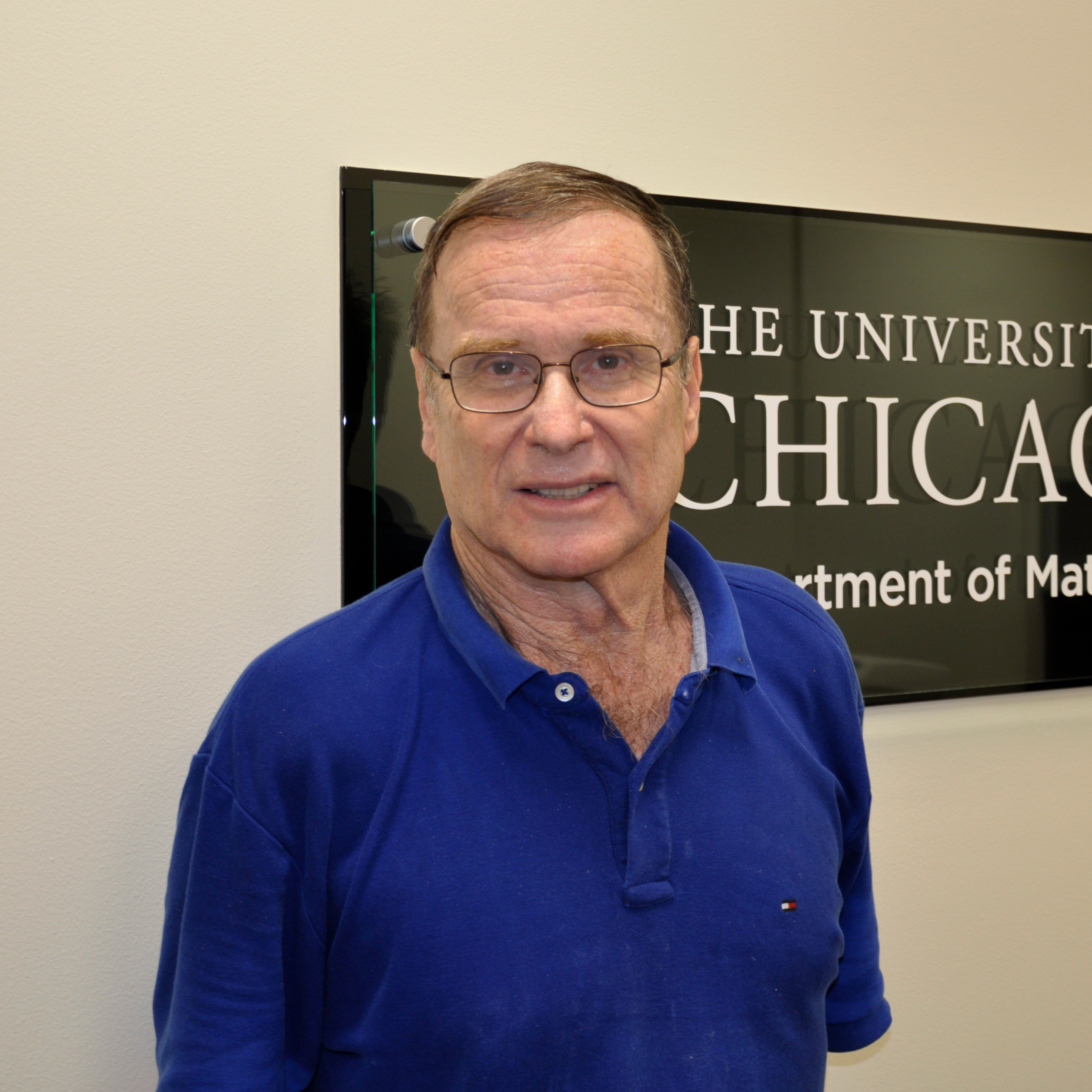
Howard Masur is a Visiting Professor in the Department of Mathematics at the University of Chicago. His research spans geometric topology and dynamical systems, with particular emphasis on Teichmüller theory and surfaces. Professor Masur investigates the geometric and dynamical properties of moduli spaces, with recent work focusing on generic translation surfaces and geodesic flows. His research connects complex analysis, topology, and ergodic theory to solve fundamental problems in geometry. Recent publications demonstrate innovations in understanding the statistical behavior of geometric flows and generic properties of moduli spaces. These studies contribute to bridging discrete and continuous methods in geometric analysis.
Dr. Thomas Durant is an Associate Professor of Laboratory Medicine at Yale School of Medicine with a secondary appointment in Biomedical Informatics & Data Science. He serves as Medical Director of Chemical Pathology and Laboratory Informatics at Yale-New Haven Hospital and Associate Director for the ACGME Chemical Pathology Fellowship. His dual expertise bridges clinical laboratory practice with cutting-edge informatics research. Dr. Durant's educational background includes: MD from University of Connecticut, School of Medicine (2015) MA in Physical Therapy from Quinnipiac University BA in Health Sciences from Quinnipiac University (2008) Winchester Clinical Microbiology Fellowship at Yale-New Haven Hospital (2019) Residency and Chief Residency at Yale-New Haven Hospital (2018) Board certified in Clinical Pathology (2018), Medical Microbiology (2019), and Clinical Informatics (2022), Dr. Durant's research focuses on practical applications of data science in laboratory medicine. His work centers on clinical informatics, quality care initiatives, and artificial intelligence applications including machine learning for automated image classification, quantum computing in healthcare, and laboratory data analytics. He investigates stream processing of interface data for sample identification and develops innovative data management technologies to improve laboratory operations and patient care. Analysis of Dr. Durant's publication record reveals a strong progression from traditional laboratory medicine into advanced computational methods. His recent work demonstrates expertise in ensemble learning for detecting IV fluid contamination, quantum computing applications, AI model verification protocols, and biomarker analysis for acute kidney injury prediction. The research spans multiple disciplines including clinical chemistry, informatics, and data science, addressing critical challenges in diagnostic medicine. Dr. Durant maintains extensive collaborations with Yale researchers including Wade Schulz (14 publications), Joe El-Khoury (10 publications), Harlan Krumholz (5 publications), and Richard Torres (4 publications). These partnerships support research on laboratory informatics, AI applications, and quality improvement initiatives that enhance diagnostic accuracy and healthcare delivery. As Medical Director of Laboratory IT Services, Dr. Durant oversees the technological infrastructure supporting laboratory operations at Yale-New Haven Hospital. His leadership in the Chemical Pathology Fellowship program trains future specialists, while his research continues to push the boundaries of how data science transforms diagnostic medicine.
Vincent Guirardel is a Researcher at the Rennes Institute for Research in Mathematics (IRMAR) within the University of Rennes 1. He specializes in Geometric Group Theory, focusing on hyperbolic groups, group actions on trees, and JSJ decompositions. His research explores topics such as boundary amenability, automorphism groups, and the interplay between algebraic structures and geometric properties. Teaching responsibilities include the 'Mathematical Tools 2' course (OM2) for first-year students, emphasizing Markov chains, martingales, and linear algebra. He has developed course materials, tutorials, and organized workshops like 'Maths in jeans.' Distance learning resources, including video lectures and problem sets, are hosted on Moodle. Key research contributions include studies on hyperbolically embedded subgroups, rotating families in hyperbolic spaces, and the isomorphism problem for hyperbolic groups. His work often involves collaborations with leading mathematicians like Mladen Bestvina and Gilbert Levitt. Publications span over two decades, with notable contributions to Annals of Mathematics, Geometry & Topology, and Memoirs of the AMS. Recent preprints address boundary amenability of Out(Fₙ) and vastness properties of automorphism groups of RAAGs. His academic activities include advising on curriculum design and maintaining an active presence in geometric group theory through conferences, workshops, and editorial work.