Avi Loeb , the Frank B. Baird Jr. Professor of Science at Harvard University, is a leading astrophysicist and former Chair of Harvard's Department of Astronomy (2011-2020). He directs the Institute for Theory and Computation (ITC) and the Galileo Project (2021-present), while holding the Sackler Senior Professorship at Tel Aviv University. His research spans cosmology, black holes, interstellar objects, and the search for extraterrestrial life. Education: PhD in Physics from Hebrew University of Jerusalem (1986) Former Positions: Member of the Institute for Advanced Study, Princeton (1988-1993) Loeb's research interests include: Gravitational wave detection and interstellar object analysis Simulation hypothesis and cosmic reality Technological signatures beyond the Standard Model His recent publications focus on 3I/ATLAS , gravitational SETI, and AI alignment in space exploration. Awards include being named among TIME's 25 Most Influential People in Space (2012), 14 Most Inspiring Israelis (2020), and ranking #3 in global astronomical impact (2024). He chairs the Breakthrough Starshot Initiative and advises the National Academies' Board on Physics and Astronomy.
Marilyn J Smith is the David S. Lewis Professor and Director of the Vertical Lift Research Center of Excellence (VLRCOE) at the Georgia Institute of Technology's Daniel Guggenheim School of Aerospace Engineering. She leads a seven-university consortium conducting vertical lift research for the U.S. Army, Navy, and NASA, and has secured over $200 million in collaborative research funding. Computational Nonlinear Computational Aeroelasticity Lab Director NASA FUN3D development team contributor Aerospace Systems Design Lab (ASDL) affiliate Her research spans unsteady aerodynamics, computational aeroelasticity, and sustainable energy applications across rotary-wing, fixed-wing, and launch vehicles. She serves on the Vertical Lift Consortium (VLC) Board of Directors and Vertical Flight Society (VFS) Board, while acting as VFS Deputy Technical Director for Aeromechanics and leading international NATO AVT panels on UAV aerodynamics. Recent publications focus on galaxy cluster cosmology, ship-helicopter dynamic interface modeling, and Type Ia supernova analysis. She has won prestigious awards including the AIAA Aerodynamics Award and multiple American Helicopter Society honors for research, mentoring, and service. 2022 AIAA Aerodynamics Award 2015 Best Paper Awards at AHS Forum 2014 & 2012 AHS Agusta-Westland International Fellowships Her laboratory work integrates high-performance computing with aerospace design and develops advanced turbulence models through partnerships with Georgia Tech Research Institute (GTRI). She contributes to public science communication with appearances on National Geographic, PBS, NPR, and local media.
Jay Strader is a Professor in the Department of Physics and Astronomy at Michigan State University, where he serves as Graduate Director for the astronomy PhD program and Associate Chair for astronomy. His research focuses on compact objects, particularly black holes and neutron stars in globular clusters, neutron star binaries in Fermi gamma-ray sources, and intermediate-mass black holes. He has received a Packard Fellowship for Science and Engineering and grants from NSF and NASA. His research group includes postdoc Ryan Urquhart, graduate students Thomas Do and Rebecca Kyer, and several undergraduates, with past students like Teresa Panurach (now director of NoVEL Consortium) and Samuel Swihart (NRC fellow at Naval Research Lab). Education: PhD in Astronomy, UC-Santa Cruz/Lick Observatory Awards: Packard Fellowship Collaborations: Member of Rubin Observatory's Stars, Milky Way, and Local Volume science collaboration since 2008 Previous Positions: Hubble Fellow and Menzel Fellow at Harvard-Smithsonian Center for Astrophysics (2007-2012) Program Initiatives: Co-founder of PAREDS program for early research opportunities at MSU His work has been supported by NSF and NASA grants, and he has contributed to studies on black holes in M22, hypervelocity globular clusters around M87, and transitional millisecond pulsars. His group collaborates with Laura Chomiuk and contributes to data catalogs like the M31 globular cluster velocity dispersion database.
Paul Wiegert is a Full Professor in the Department of Physics and Astronomy at the University of Western Ontario , where he has been since 1996 after positions at York University and Queen's University. He is a member of the Institute for Earth and Space Exploration (IESX) and the Centre for Planetary Science and Exploration (CPSX) . His research spans asteroid dynamics , exoplanet systems , and celestial mechanics , with notable work on Earth co-orbital asteroids like (3753) Cruithne and Earth's first Trojan asteroid 2010 TK7. Education : PhD in Astronomy (University of Toronto, 1996) Research Domains : Planetary Science, Astronomy, Big Data Analytics His recent publications focus on interstellar transport mechanisms , asteroid impact risks , and exomoon detection . Key findings include quantifying risks from asteroid 2024 YR4's potential lunar impact and demonstrating the feasibility of detecting alpha Centauri-origin material in our solar system. He actively supervises graduate students like Cole Gregg and participates in NSERC-funded summer research programs for undergraduates. For planetary defense, he has analyzed collision probabilities for Apophis and developed meteoroid hazard models for spacecraft. His work appears in Planetary Science Journal , Nature Astronomy , and Astrophysical Journal Letters , with media coverage in 60+ outlets and 126 X (Twitter) mentions .
University of California, Los AngelesUnited States
Distinguished Professor David Jewitt is a prominent planetary scientist at UCLA's Department of Earth and Space Sciences within the College of Letters and Science. He has held this position since 2009 and also serves as a Professor in the Department of Physics and Astronomy since 2010, and as Director of the Institute for Planets and Exoplanets since 2011. Dr. Jewitt earned his B.Sc. in Astronomy from the University of London (1979), followed by M.S. (1980) and Ph.D. (1983) in Planetary Science from Caltech. Prior to UCLA, he served on the faculty at MIT (1983-1988) and the University of Hawaii (1988-2009), where he became a full Professor in 1993. His research focuses on primitive bodies of the Solar System, particularly comets which he considers remnants from planetary accretion processes. His work aims to understand solar system formation and evolution through studying these objects. Recent publications explore non-gravitational forces in planetary systems, interstellar interlopers, and the asteroid-comet continuum, reflecting his continued leadership in solar system small body research. Shaw Prize (2012) Kavli Prize (2012) Member of the National Academy of Sciences (2005) Exceptional Scientific Achievement Medal, NASA (1996) Professor Jewitt has mentored numerous students including Jane Luu (co-discoverer of the Kuiper Belt) and Chadwick Trujillo. As Director of the Institute for Planets and Exoplanets, he fosters interdisciplinary research connecting planetary science with exoplanet studies. His work continues to shape our understanding of the solar system's formation through analysis of its smallest constituents.
Norwegian University of Science And TechnologyNorway
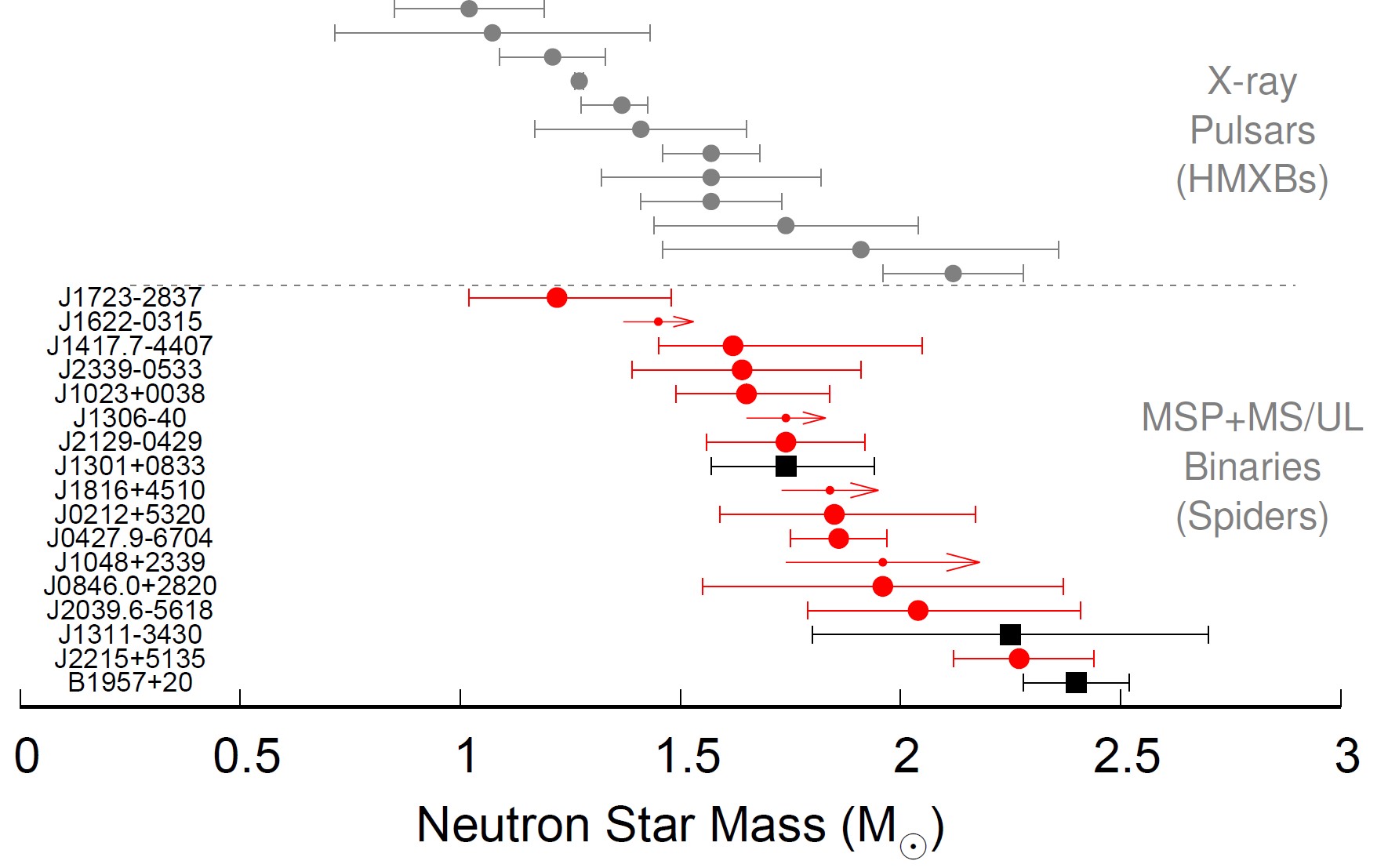
Manuel Linares Alegret is a Professor in the Department of Physics at the Norwegian University of Science and Technology (NTNU) in Trondheim, Norway, where he has been employed since September 2021. He also holds an Associate Professor position at the Polytechnic University of Catalonia (UPC) in Barcelona, Spain, since 2018. His research focuses on high-energy astrophysics with particular emphasis on neutron stars, black holes, white dwarfs, and compact objects in binary systems. Dr. Linares earned his Physics Degree from Universitat de Barcelona (1998-2004) followed by a PhD in Astronomy from Universiteit van Amsterdam (2004-2009). His subsequent career includes prestigious fellowships including Rubicon Fellow at MIT (2009-2012), IAC Fellow (2012-2017), and Marie Curie Fellow at UPC (2017-2018). His research interests primarily center on compact binary systems, particularly millisecond pulsars known as 'spiders' (including black widows and redbacks), neutron star physics, accretion flows, thermonuclear bursts, and the search for super-massive neutron stars. His work combines observational astronomy with theoretical modeling to understand extreme physics in these systems. He leads the LOVE-NEST project, which investigates compact binary millisecond pulsars to find the most massive neutron stars and understand the interaction between accretion flows, pulsar winds, and neutron star magnetospheres. An analysis of his recent publications reveals a strong focus on spider pulsar systems, with particular attention to mass measurements, orbital dynamics, irradiation effects, and the relationship between accretion and rotation-powered states. His work spans multiple observational wavelengths including optical, X-ray, and radio, often utilizing data from major telescopes and space observatories. ERC Consolidator Grant for LOVE-NEST project Marie Curie Fellow IAC Fellow Rubicon Fellow Dr. Linares has supervised numerous students at various levels, including PhD candidates, Master's students, and undergraduate research projects. He currently leads a substantial research team under the LOVE-NEST project, which has received 2M EUR in funding. His group includes multiple postdoctoral fellows and PhD candidates working on various aspects of compact object astrophysics. He teaches Observational Astrophysics (FY3215) at NTNU and has previously taught Quantum Physics and Physics I at UPC. He is the principal investigator of the LOVE-NEST (Looking for Super-Massive Neutron Stars) research group at NTNU, which focuses on compact binary millisecond pulsars. This team conducts research using multiple observational facilities worldwide and collaborates with international groups including those at the Instituto de Astrofísica de Canarias and the University of Manchester.
Dr. Jacqueline McCleary is an Assistant Professor of Physics at Northeastern University's College of Science, specializing in observational cosmology with a focus on galaxy clusters and dark matter. She leads research using weak gravitational lensing to study cosmic structures, collaborating on projects like the COSMOS-Web (JWST), SuperBIT (balloon telescope), and LoVoCCS surveys. Her work leverages multi-wavelength data from space, stratospheric, and ground-based observatories. Education: M.S. in Astronomy (New Mexico State University), M.S. and Ph.D. in Physics (Brown University), Postdoctoral Fellow at NASA's Jet Propulsion Laboratory. She transitioned to Northeastern as an ADVANCE Future Faculty Fellow before becoming a tenure-track faculty member in 2022. Research Interests: Dark matter interactions, galaxy cluster dynamics, gravitational lensing techniques, and next-generation observational platforms. Her team develops advanced algorithms and instrumentation for high-resolution imaging. Recent Contributions: COSMOS-Web has enabled unprecedented observations of distant galaxies using JWST, while SuperBIT's stratospheric flights provide diffraction-limited data. Key publications focus on lensing surveys, data reduction techniques, and dark matter-halo relationships. Awards: Recognized as a Northeastern ADVANCE Future Faculty Fellow. Media Engagement: Regularly comments on space exploration, asteroid risks, and cosmic phenomena for public outlets.
Bryan E. Penprase is a Professor of Physics and Astronomy and Vice President for Sponsored Research and External Academic Relations at Soka University of America. He holds a PhD from the University of Chicago and degrees from Stanford University. His research spans archeoastronomy, quasar absorption line spectroscopy, and liberal arts education in Asia. Penprase has served as Dean of Faculty at SUA, a founding faculty member of Yale-NUS College, and Chair of Physics and Astronomy at Pomona College. Education: PhD, Astronomy and Astrophysics, University of Chicago (1992) MS, Applied Physics, Stanford University BS, Physics, Stanford University Research interests include: Global liberal arts curriculum design Cultural astronomy Type Ia supernova dynamics His recent academic leadership includes developing SUA's interdisciplinary Life Sciences program, launching Teaching Innovation Grants, and organizing international conferences on STEM education. Penprase has authored/co-authored over 20 peer-reviewed articles and two books on astrophysics and education. Key administrative roles: Director, Yale-NUS Centre for Teaching and Learning Member, NUS Teaching Academy Co-founder, Liberal Arts Consortium for Online Learning (LACOL)
Professor Leah Morabito is a Professor (Research) - UKRI Future Leaders Fellow at Durham University, affiliated with the Department of Physics and the Institute for Computational Cosmology. She specializes in high-resolution imaging at low frequencies using the LOFAR telescope to study how supermassive black holes co-evolve with their host galaxies. As leader of the LOFAR Imaging of Resolved AGN (LIRA) group, she has made significant contributions to our understanding of active galactic nuclei and galaxy evolution through numerous high-impact publications. Professor Morabito's research primarily focuses on AGN physics, galaxy surveys, and radio interferometry. She has pioneered techniques for sub-arcsecond imaging at low radio frequencies, which has opened new windows for studying radio jets, galaxy evolution, and the interstellar medium. Her work reveals critical insights about AGN feedback mechanisms and the connection between supermassive black holes and their host galaxies across cosmic time. The analysis of her recent publications shows a strong emphasis on utilizing LOFAR's unique capabilities to study radio sources with unprecedented resolution at low frequencies. Scientific Recognition: UKRI Future Leaders Fellowship Professor Morabito actively mentors the next generation of astronomers, currently supervising PhD students Benite Tantely, Ciera Sargent, and Emmy Escott. Her research is supported by significant funding through her UKRI Future Leaders Fellowship and her role as co-Principal Investigator of the new LOFAR2.0 Large Programme, which extends her work on high-resolution low-frequency radio surveys. She has secured substantial research funding that enables cutting-edge observations and supports her research team. As leader of the LOFAR Imaging of Resolved AGN (LIRA) group, Professor Morabito oversees a collaborative research effort focused on advancing our understanding of how AGN help shape galaxy evolution. Her team utilizes unique high-resolution, low-frequency observations to study radio jets, AGN feedback mechanisms, and the connection between supermassive black holes and their host galaxies, contributing significantly to one of the most fundamental questions in modern astrophysics.
Chris Matzner is a Professor and Associate Graduate Chair at the University of Toronto's Department of Astronomy and Astrophysics, affiliated with the Dunlap Institute for Astronomy & Astrophysics. He earned his Ph.D. from UC Berkeley in 1999. His research focuses on astrophysical fluid dynamics, particularly star formation processes (protostellar disks, molecular clouds, energy feedback) and stellar explosions (supernovae, gamma-ray bursts), employing analytical, numerical, and observational approaches. His research encompasses: Dynamics of protostellar outflows and molecular cloud interactions Models for supernova shocks and gamma-ray burst mechanisms Fragmentation in star and planet formation Massive black hole accretion processes Evolution of giant molecular clouds Stellar feedback in galactic environments Analysis of his 15 most recent publications reveals strong emphasis on supernova dynamics (particularly Type Ia explosions), star formation mechanisms in clusters and molecular clouds, shock wave physics in astrophysical contexts, and the development of astronomical instrumentation. The works demonstrate consistent focus on explosive transients, fluid dynamics in cosmic environments, and observational constraints on theoretical models. As Associate Graduate Chair, he oversees academic programs and student development. His laboratory affiliations include the Dunlap Institute's computational astrophysics and instrumentation groups. Current work involves modeling star cluster-galaxy interactions, tidal disruption events, and developing next-generation UV/IR detectors.
Jane Luu is a Professor II at the Centre for Planetary Habitability (UiO), specializing in comets, asteroids, and interstellar objects . Her research focuses on dynamic processes in small Solar System bodies, including fragmentation, disintegration, and dust behavior. She collaborates with international teams using facilities like the Nordic Optical Telescope (NOT) and WIYN Telescopes. Email: jane.luu@geo.uio.no Address: Sem Sælands vei 13, Svein Rosseland's house, 0371 Oslo Her work includes studies on comet outbursts (e.g., 12P/Pons-Brooks), disintegration mechanisms (C/2019 J2), and interstellar interlopers like 2I/Borisov and ’Oumuamua, where she proposed fractal dust aggregate models. Recent publications examine episodic activity in asteroids (6478 Gault) and discus-shaped comets (C/2014 B1).
Harald Kucharek is a Research Professor in the Physics & Astronomy Department at the University of New Hampshire (UNH), part of the College of Engineering and Physical Sciences. He is affiliated with the Space Science Center and holds a dual Ph.D. in Physics from the Technical University of Munich and an M.S. in Physics from the University of Regensburg. His research focuses on heliospheric physics, interstellar medium interactions, and space plasma dynamics, leveraging data from missions like IBEX and Solar Orbiter. Dr. Kucharek's work centers on understanding the global structure of the heliosphere, interstellar neutral gas flow, and particle acceleration at shocks. He has contributed to studies of pickup ions, energetic neutral atoms (ENAs), and magnetic reconnection processes. His teaching includes courses on Space Plasma Physics and Magnetohydrodynamics of the Heliosphere. He has been involved in over 22 grants (2005–2024), including mission-related research for IMAP and interstellar probe concepts. Key research trends include analyzing IBEX observations of interstellar helium and oxygen, investigating shock dynamics and ion acceleration, and modeling the heliospheric boundary. His recent work explores the implications of hybrid simulations and multi-spacecraft data for understanding plasma behavior in extreme environments. Collaborations with institutions like NASA and ESA highlight his role in advancing space physics through both observational and theoretical contributions.
Prof. Adam Deller is a Professor at Swinburne University of Technology, affiliated with the School of Science, Computing and Emerging Technologies. His academic journey includes a BSc, BE (1st class honours), and PhD in Astrophysics from Swinburne. He specializes in radio interferometry, neutron star physics, fast radio bursts (FRBs), and space domain awareness. His research focuses on compact objects like pulsars and black holes, using radio telescopes for high-resolution imaging. He co-founded Fourier Space Pty Ltd, developing signal processing solutions for radio astronomy and space industries. **Research Interests**: Radio interferometry instrumentation, neutron star magnetospheres, FRB localization and cosmological applications, and space domain awareness through radio observations. **Awards**: Includes the Pawsey Medal (2020), Newcombe Cleveland Prize (2022), and multiple grants from ARC and industry partners. His grants focus on SKA pulsar timing, FRB studies, and gravitational wave astronomy collaborations. **Teaching**: Teaches Computational Astrophysics, emphasizing numerical simulations for astrophysical problems. **Grants & Collaborations**: Key roles in ARC Centre of Excellence for Gravitational Wave Discovery, SKA pulsar timing projects, and international telescope collaborations like ASKAP and VLBI networks.
Dr. Sarah Burke-Spolaor is an Associate Professor in the Department of Physics and Astronomy at West Virginia University and a member of the Center for Gravitational Waves and Cosmology (GWAC) . Her research focuses on dynamic astrophysical phenomena , including binary supermass of mass black holes , pulsar timing arrays for gravitational wave detection , and Fast Radio Bursts (FRBs) . Key Research Areas : Gravitational wave detection via pulsar timing Observational studies of binary supermassive black holes Fast Radio Burst detection and classification Galaxy formation and merger dynamics Dr. Burke-Spolaor mentors a team of students and postdocs including Gregory Walsh, Jessica Sydnor, Reshma Thomas , and Kshitij Aggarwal , whose work includes projects like the BHBinary/Galaxy Evolution Survey and The Petabyte Project for Radio Transients . Her awards include the Alfred P. Sloan Fellowship and recognition as a CIFAR Azrieli Global Scholar . Selected Article Trends : Leading gravitational wave research through NANOGrav's 15-year data set Multi-messenger astronomy targeting binary black hole systems FRB host galaxy characterization across telescopes Exploring unconventional astrophysical transients in the Galactic bulge Advancing pulsar timing array methodologies Developing next-generation radio interferometry techniques Scientific Awards : Alfred P. Sloan Fellow CIFAR Azrieli Global Scholar
Emmanuel Fonseca is an Assistant Professor in the Department of Physics and Astronomy at West Virginia University (WVU), joining in Fall 2021. Previously, he was a postdoctoral researcher at McGill University (2016–2021) and completed his Ph.D. in Astronomy at the University of British Columbia (2016). His research focuses on radio astronomy, particularly pulsars and fast radio bursts (FRBs), leveraging facilities like CHIME, the Green Bank Telescope, and NANOGrav. He specializes in using pulsars as laboratories for testing fundamental physics and detecting gravitational waves via pulsar timing arrays. Education: Ph.D. in Astronomy, University of British Columbia (2016) M.Sc. in Astronomy, University of British Columbia (2012) B.Sc. in Physics and Astronomy, Pennsylvania State University (2010) Research Interests: Emmanuel’s work spans three key areas: Compact Objects: Investigating neutron stars and extreme environments using pulsar binaries and relativistic dynamics. CHIME Pulsar/FRB Science: Developing instrumentation and analyzing data from the Canadian Hydrogen Intensity Mapping Experiment to study FRBs and pulsars. Gravitational Waves: Contributing to NANOGrav’s efforts to detect nanohertz gravitational waves via millisecond pulsar timing arrays. Collaborations: He is a core member of NANOGrav and instrumental in maintaining CHIME’s pulsar and FRB backend systems. His work bridges hardware/software development with observational astronomy. Labs/Teams: Involved with the CHIME/FRB Collaboration and the NANOGrav Collaboration, advancing both observational infrastructure and theoretical astrophysics.