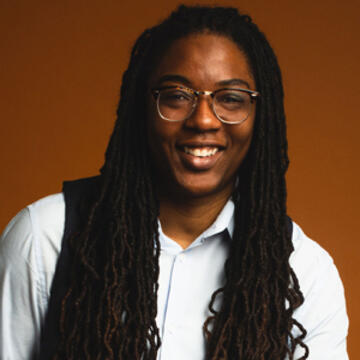
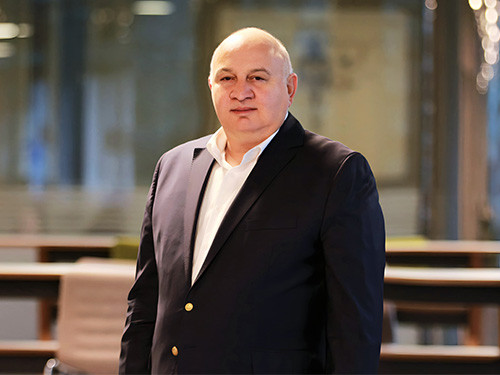
Sharese King is the Neubauer Family Assistant Professor of Linguistics at the University of Chicago, where she has taught since 2018. She earned her Ph.D. and Master's in Linguistics from Stanford University, focusing on language variation across African American communities. Her research bridges sociolinguistics, critical race theory, and phonetics to examine how African American speech is constructed, racialized, and socially evaluated. Education: Ph.D., Linguistics, Stanford University (2018) M.A., Linguistics, Stanford University Research Interests: Sociolinguistics Language Variation & Change African American Language Critical Race Theory Phonetic and experimental analysis Dialect and judicial systems Notable Contributions: Interdisciplinary studies on raciolinguistics and courtroom bias Analysis of /s/ articulation in intersectional contexts Reconceptualization of AAVE as AAL to emphasize linguistic diversity Fieldwork in Bakersfield, Rochester, and Chicago Publications in American Speech , Journal of Sociolinguistics , Language , and Nature Scientific Awards: Provost's Postdoctoral Fellowship Neubauer Family Assistant Professorship Labs & Projects: Co-founder of the Chicagoland Language Project
Dr Alison Powell is an Associate Professor in the Department of Media and Communications at the London School of Economics and Political Science (LSE), serving as Programme Director for the MSc Media and Communications (Data and Society). Her research focuses on technology design, public sector technology, and digital futures. She is known for her book Undoing Optimization: Civic Action in Smart Cities (2021) and her participatory research method, data walking. From 2019–2023, she directed the JUST AI network, supported by the Ada Lovelace Institute and UKRI, advancing AI ethics research. Her work integrates critical theory, participatory methods, and interdisciplinary collaboration. Education: PhD in Communication from Concordia University (Canada), MA in Media Studies from Toronto Metropolitan University, and postdoctoral research at the Oxford Internet Institute. Prior to academia, she worked in the film and TV industry. Research interests include civic engagement in data-driven governance, ethical AI, and participatory urbanism. She has advised projects like Africa Just AI and Operationalising Ethics for AI, funded by Horizon Europe, AHRC, and the Open Society Foundations. Her articles address topics such as AI governance, urban light ecology, feminist research praxis, and the ethical implications of technology for marginalized communities. She contributes to blogs like Media@LSE and leads initiatives at Polis and the LSE’s Digital Futures for Children project. Grants and collaborations include work with Projects by IF, Open Rights Group, and the Human Data Interactions Network (EPSRC). She explores intersections of technology, justice, and sustainability, emphasizing equitable and inclusive innovation.
Rovincer Najjuma is a Lecturer in Digital Education and the Global South at the University of Edinburgh's Moray House School of Education and Sport, affiliated with the Centre for Research in Digital Education. His research focuses on digital education ecosystems, intersectionality frameworks, and leveraging technologies to enhance access for marginalized populations in post-conflict regions and the Global South. Education: PhD in Education; Master of Education in Curriculum Design; Postgraduate Diplomas in ICT in Education and Education; Bachelor of Social Science (Political Science & Public Administration). Research explores digital education policy, mobile learning, refugee education, and generative AI applications. He has pioneered digital professional development programs in Africa, including designing Makerere University's first fully online Masters in Instructional Design Technology. Grants include Royal Society of Edinburgh funding (2024-2025), USAID/Resilient Africa Network grants (2021-2024), and Commonwealth Academic Fellowships. Key collaborations include work with University of Oxford on mobile technologies in teacher preparation, University of Stellenbosch's Emerging Scholars Initiative, and UNICEF-funded projects on non-state schools in Uganda.
Dan Lizotte is an Associate Professor jointly appointed to the Department of Computer Science in the Faculty of Science and the Department of Epidemiology and Biostatistics in the Schulich School of Medicine & Dentistry at Western University. Additional affiliations include the Schulich Interfaculty Program in Public Health and a cross-appointment to the Department of Statistics and Actuarial Sciences. Based in Middlesex College, London, Ontario, his contact email is dlizotte@uwo.ca. His research centers on machine learning and biostatistics for health decision support, with emphasis on sequential decision-making in chronic disease management where evolving patient health status and preferences inform adaptive interventions. Core contributions involve adapting reinforcement learning frameworks to model dynamic health decisions in public health and primary care settings, addressing methodological challenges in personalized medicine and risk prediction. Analysis of his publication record reveals consistent focus on healthcare applications of machine learning, particularly in chronic disease risk modeling using electronic medical records, intersectionality frameworks in public health AI, and Bayesian methods for dose personalization. His work bridges reinforcement learning with clinical decision support systems, advancing dynamic treatment regimes and statistical methodologies for evolving patient data. No scientific awards were mentioned in the provided text. The text does not specify any advisees, grant funding, or educational background details. Lizotte leads a research laboratory focused on machine learning applications in health, as evidenced by the dedicated lab site referenced in his contact information. His team likely explores intersections of statistical methodology, AI ethics, and clinical implementation for personalized health interventions.
Summary Clotilde Coron is a Full Professor of Management Sciences at the Faculté Jean Monnet, Université Paris-Saclay. She previously held an Associate Professor position at IAE Paris (2017–2022). Her research focuses on gender equality, gender stereotypes, and the role of quantification in HR management. She earned a PhD in Management Sciences (Université Paris-Est, 2015) and a HDR (Université de Poitiers, 2021). She is also a graduate of ENSAE (2012) and Sciences Po (2013). Academic Roles: Full Professor, Université Paris-Saclay Vice-President for Equality, Diversity, and Inclusion (since 2024) Elected member of the Research Committee (since 2024) Co-responsible for the M1 Master in Management (since 2023) Research Interests: Dr. Coron’s work critically examines gender equality policies, the societal impact of gender stereotypes, and the ethical implications of algorithmic HR practices. She emphasizes the need for organizations to adopt intersectional frameworks to address systemic inequalities. Grants and Projects: ANR funding for lesbian workplace inclusion (2024–2025) Research on gender in health innovation (2023–2024) Studies on chatGPT in education and LGBTQ+ mental health (2023–2024) Awards: EFMD-FNEGE Best Research Book Award (2023, 2019) FNEGE Label for multiple academic contributions Teaching: She teaches advanced courses in quantitative methods, HR analytics, and gender studies at undergraduate and graduate levels. Recent courses include Data Analysis Tools (M1), Quantitative Methods (M2), and distance-learning modules on HR management.
Academic Profile Christina Harrington is an Assistant Professor at Carnegie Mellon University with dual appointments in the School of Computer Science (Human Computer Interaction Institute) and School of Design. She directs the Equity and Health Innovations Design Research Lab , focusing on community-centered technology design. Her work bridges industrial design, interactive systems, and human factors psychology to advance health equity through technology. Research Focus Harrington's research employs participatory and speculative design methods to address systemic inequities in technology. She examines how design can support health autonomy for older adults, people with disabilities, and historically excluded communities (particularly Black and Latinx populations). Her work actively challenges corporate design paradigms through frameworks like design justice and community collectivism , with recent emphasis on ethical AI and conversational technologies. Research methodologies include: Community-based participatory research Speculative co-design Critical race and disability frameworks Intersectional analysis of technology impacts Publications Focus Her recent publications (2023-2025) demonstrate strong focus on equity-centered design with three dominant themes: 1) Health technology disparities affecting Black older adults, 2) Participatory AI and algorithmic justice, and 3) Design justice pedagogy. Over 60% of recent works explicitly examine racial equity in AI systems, health interfaces, and design education. Honors & Recognition Google Award for Inclusive Research (2022) for "Transforming theory into practice: eliciting cultural imaginaries and design thinking to understand Black-Centered Design" Skip Ellis Early Career Award (2022) Data & Society Faculty Fellow (2022-2023) Leadership & Impact As lab director, Harrington leads community-engaged projects that translate design justice principles into practice. She serves on committees for community tech initiatives and has industry experience at Apple, Lenovo, and Motorola. Her work influences both academic discourse (ACM CHI, CSCW, DIS) and industry practices in ethical design.
Dr Anita Hammer is a Reader in International Employment Relations at King’s Business School, King’s College London. She specializes in comparative and international work and employment relations, focusing on the Global South, informal/precarious work, and the impact of technology/climate change on labor markets. Her research addresses socio-economic inequalities, sustainability, and the future of work through interdisciplinary approaches combining history, political economy, and labor process theory. Education: PhD, MSc, PGCHE (University of London); MPhil in History (Jawaharlal Nehru University), MA Area Studies (SOAS), BA History (St Stephen’s College, Delhi University). She is a Senior Fellow of the Higher Education Academy (SFHEA). Research Interests: Automation’s impact on work in India, migrant labor in Saudi Arabia, just transitions for informal workers, and climate change’s labor implications. She collaborates with civil society, trade unions, and policy bodies like ACAS and the ILO. Her recent books include *Global Rupture* (2023) and *The Political Economy of Work in the Global South* (2020). Publications span peer-reviewed journals (*Work, Employment and Society*, *Journal of Labor and Society*) and edited volumes. She leads the CRIMT international research project on work improvement and is affiliated with King’s India Institute and Climate Research Hub. Editor roles include *Work Employment and Society* and *Journal of Industrial Relations*. Awards: 2019 Outstanding Doctoral Supervisor, Thomas Holloway Fellowship (2002). She supervises PhD students and examines theses at Cardiff Business School and SOAS. Labs/Teams: Part of the Critical Global Capitalism Studies Collective at King’s, fostering collaborations on global capitalism research and activism.
Jeremy Julian Sarkin is a Distinguished Research Professor of Law at NOVA School of Law, NOVA University of Lisbon, and a member of the Centro de Investigação e Desenvolvimento sobre Direito e Sociedade (CEDIS). He holds the rank of Invited Full Professor, indicating a significant academic appointment within the institution's Law faculty. His research spans critical areas in International Law , with a focus on Human Rights Violations , Transitional Justice , and Refugee Law . His work addresses Conflict Zones , Gender-Based Violence , and Climate Justice . He has explored the intersection of technology and law, particularly regarding AI Arms Races , and contributed to studies on Truth Commissions and Amnesties globally. Recent publications analyze Migration Law through intersectional frameworks in Israel, Greece, and Uganda, and examine Drone Warfare in Ukraine. His articles reflect a commitment to International Humanitarian Law and Victim Rights . While no specific awards are listed, his 119 h-index and 78 research outputs (including books, articles, and reports) demonstrate substantial academic impact. He has no listed students, suggesting his work is primarily independent or collaborative with peers.
Kimberly B. Rogers is an Associate Professor of Sociology at Dartmouth College , where she has been employed since 2015. She is affiliated with the Quantitative Social Science Program and the Neukom Institute for Computational Science . Her research focuses on how inequalities are produced, maintained, and resisted through behavior and emotion dynamics in social interactions , with particular attention to status and power hierarchies , occupational inequality , and mental health outcomes . She teaches courses such as Introductory Sociology , Research Methods , and Status and Power in Social Interaction , integrating computational tools into her pedagogy. PhD in Sociology, Duke University (2013) MA in Sociology, Duke University (2008) MA in Psychology, Wake Forest University (2005) BA in Psychology, Randolph-Macon Woman's College (2003) Rogers' research spans three key areas: cultural consensus in identity sentiments , behavioral/emotional responses to inequality , and computational modeling of social processes . Her work reveals how micro-social mechanisms perpetuate or disrupt status hierarchies across contexts like occupational roles , racialized interactions , and digital collaboration . Recent publications examine technological co-diffusion , pandemic-induced identity shifts , and gendered occupational perceptions . Her scholarly output follows trends in computational social science and cross-cultural emotion analysis . She employs Bayesian affect control theory to model dynamic identity processes and uncertainty in interactions , while her 2025 work on violence against women demonstrates applications of general strain theory to contemporary social issues. Senior Faculty Grant (2023-24) , Dartmouth College Wilson Fellowship (2021-22) , Dartmouth College Outstanding Article Award (2017) , American Sociological Association Seed Funding Grant (2016-17) , Dartmouth Provost Doctoral Dissertation Grant (2010-11) , National Science Foundation Rogers has received multiple grants for collaborative projects like THEMIS.COG , examining identity and sentiment modeling in groups . She mentors students through engaged scholarship and social impact practicums , though specific advisees aren't listed. Her 2019-2020 involvement with Campus Compact and 2016 DCSI teaching grant highlight her commitment to community-engaged pedagogy .
Cem Zafer is an academic researcher affiliated with İstanbul Okan University , specifically the Faculty of Humanities and Social Sciences . His scholarly work spans interdisciplinary topics in sociology, religious studies, and technology's societal impacts. Research Focus: Digital transformation, gender dynamics, and cultural identity. Publications: 15+ peer-reviewed articles and book contributions since 2012. Key Themes: Social media ethics, religious discourse, and labor sociology. His recent publications highlight the interplay between artificial intelligence, social justice, and historical narratives in modern Turkey. While no formal awards or grants are documented in the provided text, his academic output demonstrates sustained engagement with contemporary sociocultural challenges.
Dr Glenda Cooper is Reader in Journalism Studies and Head of the Department of Journalism at City St George's, University of London , where she leads a team of 25 staff, 50 visiting lecturers, and over 500 students from 53 countries. She holds a PhD in Journalism from City and an MA in English Language and Literature from Oxford, and has played a pivotal role in elevating the BA Journalism programme to 1st place nationally in the Guardian and Complete University Guide (2023), as well as 1st for Graduate Prospects (Sunday Times 2022). Education: MA in Academic Practice, City, University of London (2022) PhD in Journalism, City, University of London MA in Creative Writing, City, University of London BA (Hons) English Language and Literature, St Hilda's College, University of Oxford PG Diploma in Newspaper Journalism, City University of London Glenda's research focuses on crisis and humanitarian reporting , journalism ethics , live journalism , and the intersection of media and politics, particularly through the legacy of Alistair Cooke’s Letter from America . She has led major funded projects with the British Academy, ESRC, Google Digital News Initiative, and HEIF. Her current research explores AI’s impact on journalism through the DMINR project and innovative storytelling formats via the News on Stage initiative and the Contemporary Narratives Lab . Her recent publications span topics such as AI in newsrooms, humanitarian scandals (#AidToo), refugee representation, and digital narrative innovation. These works reflect a strong interdisciplinary trend, combining journalism studies with media technology, ethics, performance, and political communication. The articles indicate a growing focus on digital transformation, ethical challenges in sourcing, and the evolving role of journalists in public discourse. Scientific Awards and Recognition: Laurence Stern Fellow at the Post (2001) Guardian Research Fellow at Nuffield College, Oxford (2006–2007) AURORA Role Model for Future Women Leaders in Academia (2018) Glenda has supervised PhD students on topics ranging from political communication in Istanbul to the manosphere's influence on journalism. She has been instrumental in curriculum development, notably designing a core ethics module for final-year journalism students. She also serves as Reviews Editor for Journalism: Theory, Practice and Criticism , UK Director of the European Journalism Observatory, and Board Member of The Conversation UK . She co-founded and co-presented the Knowhow podcast, bridging academia and media. She co-directs the Contemporary Narratives Lab and co-founded the News on Stage project, which merges journalism with theatre through live events such as News Cabaret and News on the Street . Her play Aid Memoir , based on her PhD research, was performed at the Pleasance Theatre and featured in the ESRC Festival of Social Science.
Jackson G. Lu is the General Motors Associate Professor of Management and an Associate Professor of Work and Organization Studies at the MIT Sloan School of Management. His scholarly work bridges cultural psychology with organizational behavior, examining how cultural differences manifest in AI adoption, creativity, and leadership dynamics. He serves as senior editor for Organization Science and Management and Organization Review , and associate editor for Journal of Personality and Social Psychology . Dr. Lu earned his PhD from Columbia Business School in 2018 and received tenure at MIT in 2023. His research has been published in top-tier journals across psychology, management, and general science domains, including Nature Human Behaviour , Psychological Bulletin , and Annual Review of Psychology . His work has garnered over 300 media mentions globally. Cross-Cultural Psychology AI Ethics and Creativity Leadership Emergence Stereotype Research Technological Adoption Workplace Diversity Recent research focuses on cultural tendencies in generative AI , AI's impact on creativity , and structural barriers faced by Asian professionals . He has received numerous accolades from professional societies including the Wegner Theoretical Innovation Prize and multiple Best Senior Editor Awards. 40 Best Business School Professors Under 40 Thinkers50 Radar Class of 2021 Academy of Management Award Outstanding Dissertation Award (2019) SAGE Early Career Award Dr. Lu teaches through MIT Sloan Executive Education's 5-day program Leading the AI-Driven Organization , and his findings have been featured in The New York Times , BBC , and The Economist . His editorial leadership spans multiple journals, reflecting his influence across academic networks.
Etienne Ollion is a Professor of Sociology at École Polytechnique and a Research Director at the Centre national de la recherche scientifique (CNRS). He maintains dual appointments that position him at the intersection of traditional political sociology and emerging computational methods. His academic work spans both French and international institutions, with teaching invitations at ENS-Paris, Berkeley, University of Chicago, Sciences Po Paris, and other leading universities worldwide. His research program focuses on two interconnected domains: the sociology of politics and power, and computational social sciences. Ollion's work examines political professionalization, parliamentary dynamics, and the transformation of political fields, particularly through his ethnographic study of the 2017 French National Assembly documented in his book The Candidates: Amateurs and Professionals in Politics (Oxford University Press, 2024). Simultaneously, he pioneers methodological innovations applying machine learning and natural language processing to social science research. Ollion's recent publications reveal a trajectory increasingly focused on the intersection of AI and social science methodology, with numerous 2024-2025 publications addressing LLM applications, text annotation, and the ethical considerations of proprietary AI systems in research. His work demonstrates how computational methods can enhance traditional social science approaches while maintaining critical awareness of technological limitations. As an academic leader, Ollion directs the Computational Social Sciences initiative at the IPP and has developed educational resources including online courses and the aweSOM software for data analysis. He regularly organizes summer schools (SICSS-Paris) and workshops to disseminate computational methods across the social sciences. Ollion serves on the editorial board of Actes de la recherche en sciences sociales and maintains an active public presence through media appearances, including a notable interview on France Inter about AI and Social Sciences in September 2024. His upcoming book talk at The Seminary Co-op in Chicago on March 7, 2025 further demonstrates his active engagement with the international academic community.
Sharla Alegria is an Associate Professor at the University of Toronto (Downtown Toronto campus), specializing in sociological research focused on race, gender, and technology. Her work intersects colonialism, racialization, and indigeneity with computational methods and organizational studies. She examines how systemic inequalities manifest in tech workforces and AI systems, emphasizing intersectional analyses of labor markets and workplace dynamics. Her research interests include the sociology of artificial intelligence, racialized and gendered labor in tech industries, and the sociotechnical reproduction of inequality. She critiques structural barriers in STEM fields and explores pathways to enhance diversity and inclusion in science and engineering workforces through policy and organizational interventions. Key themes in her recent publications (2024–2016) include algorithmic bias in machine learning, gender pay gaps in federal science agencies, and the invisibility of marginalized workers in global tech supply chains. Her work bridges sociological theory with empirical analyses of contemporary technological and organizational challenges. Despite her prolific output, no specific awards or grants are explicitly listed in the provided materials. Her research often engages with interdisciplinary methods, combining quantitative and ethnographic approaches to study systemic inequities in high-tech environments.
Margaret Burnett is a Distinguished Professor at Oregon State University's School of Electrical Engineering and Computer Science (EECS). She specializes in software engineering, human-computer interaction (HCI), and inclusive design. Her research focuses on end-user programming, gender-inclusive software (via the GenderMag method), and improving accessibility in AI systems. She leads the EUSES Consortium and the AgAID Institute, fostering collaboration between academia and industry. Education: Ph.D., Computer Science (with honors), University of Kansas (1987–1991) M.S., Computer Science, University of Kansas (1979–1981) B.A. Mathematics, Cum Laude, Phi Beta Kappa, Miami University (1967–1970) Research & Awards: Recipient of the 2023 AnitaB.org Technical Leadership Abie Award, ACM Fellow, IEEE Fellow, and numerous university awards. Her work has been recognized for advancing inclusive design methodologies and mentoring students in computing. Teaching & Mentorship: Teaches courses like Inclusive Design with Personas (CS 468/568). Mentored over 50 graduate students, many of whom became professors, researchers, or UX professionals. Current students include Sadia Afroz, Alec Busteed, and Fatima Moussaoui. Labs & Collaborations: Leads the EUSES Consortium (multi-institution collaboration on end-user software engineering) and the AgAID Institute (AI for agriculture). Active in developing the GenderMag and InclusiveMag methodologies to address gender and socioeconomic biases in software.