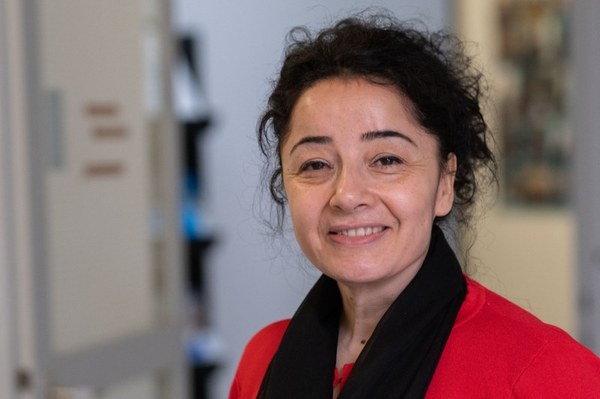
Prof. Dr. Naime Çakir-Mattner serves as Professor of Islamic Theology with a specialization in Muslim lifestyles at Justus Liebig University Giessen, Germany. Her office is located in Building D, Room 104 at Otto-Behaghel-Str. 10, D-35394 Gießen, with contact available via phone (+49-641-99-31040) and email. Her research spans critical contemporary issues including: Islamic Social Ethics and Social Work Migration, Gender, and Religion Islamophobia and systemic racism Intercultural education frameworks Diversity mainstreaming in European contexts Interreligious dialogue mechanisms Islam and Muslim communities in Europe Her work addresses the intersection of religious identity, social policy, and cultural integration within European Muslim communities, emphasizing practical applications in social work and education.
Philosophical-Theological University of MünsterGermany
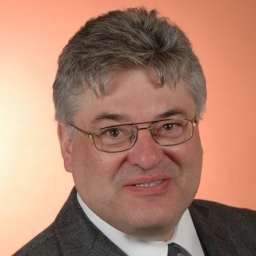
Klaus-Bernward Springer serves as Professor of Medieval and Modern Church History at the Philosophical and Theological University of Münster since 2016, concurrently holding leadership roles as Managing Director of the Institute for Research into the History of the Dominican Order in German-speaking Areas (IGDom) and archive employee for the Dominican Province Teutonia in Cologne. His academic formation includes: Doctorate in Catholic Theology from Johannes Gutenberg-Universität Mainz (1998) Habilitation in Church History of the Middle Ages and Modern Times at University of Erfurt (2011) Studies in Philosophy and Catholic Theology at Mainz University and St. Peter's College Glasgow (1982-1988) Specializing in Church History with emphasis on Medieval and Modern periods, Springer's research centers on the Dominican Order's institutional development, Reformation-era religious transformations, and regional ecclesiastical histories of Erfurt and Mainz. His work integrates monastic studies, inquisition procedures, and the interplay between religious orders and secular authorities across German-speaking territories. Analysis of his 15 most recent publications reveals consistent focus on Dominican historical networks, Meister Eckhart's ecclesiastical context, and regional church histories during pivotal transition periods. The research demonstrates methodological integration of archival archaeology, liturgical manuscript analysis, and institutional history within broader European religious frameworks. Professor Springer maintains active editorial leadership as member of the Advisory Board for Archivum Fratrum Praedicatorum (Rome) and editorial board for Sources and Research on the History of the Dominican Order in the German-Speaking World. His third-party funded research positions, including a 1990-1992 project at Mainz University, demonstrate sustained external research support. As Managing Director of IGDom since 2014, he oversees comprehensive research into German-speaking Dominican history through archival projects, publication initiatives, and international scholarly collaboration centered at the Cologne archive facilities.
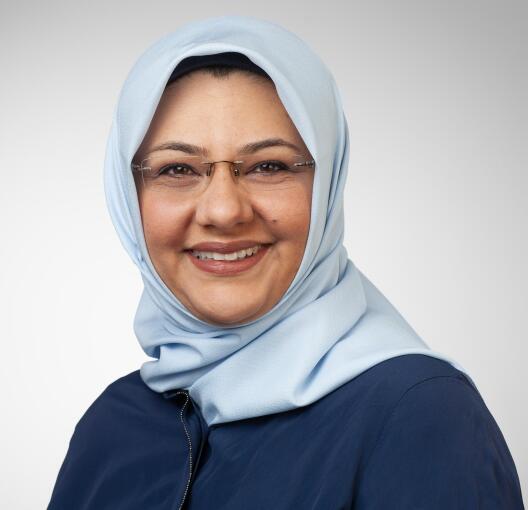
Prof. Dr. Fahimah Ulfat serves as Professor of Islamic Religious Education and Subject Didactics at the University of Münster's Center for Islamic Theology. Her office is located in Room 102 of the rear building at Hammer Str. 95, 48153 Münster. With an active teaching schedule extending through 2026, Prof. Ulfat plays a central role in developing Islamic religious pedagogy within Germany's academic landscape. Her research focuses on contemporary approaches to Islamic religious education: Quran and Sunna Didactics Islamic Religious Pedagogy Religious Learning in Schools and Communities Islamic Elementary Education Approaches Interreligious and Intercultural Dialogue Education strategies against Antisemitism and antimuslim racism Prof. Ulfat actively mentors graduate students through the Master's and Doctoral Colloquium. She leads multiple intensive weekend seminars and collaborates with colleagues Erkan Binici and Canan Balaban on specialized courses. Her current research includes the project "Addressing Discrimination Through Education: Interdisciplinary Approaches and International Perspectives" (2025), funded by the Fritz Thyssen Foundation (grant number: Az. 30.25.0.052SO).
Professor Muna Tatari is a distinguished scholar of Islamic theology at Paderborn University's Faculty of Arts and Humanities, where she serves as Professor of Islamic Systematic Theology at the Paderborn Institute of Islamic Theology. With a career spanning over two decades, she has established herself as a leading voice in Islamic theological studies in Germany and internationally. Her research focuses on scholastic and contemporary approaches to Islamic systematic theology, concepts of the theological principle of Tawhid, God and Creation, Faith and Action, liberation theological approaches, public theology, and comparative theology. Professor Tatari's work is characterized by its engagement with both classical Islamic thought and contemporary challenges facing Muslim communities in Europe. Professor Tatari's recent publications reflect her expertise across multiple dimensions of Islamic theology, with particular attention to divine attributes, theological anthropology, and interreligious dialogue. Her scholarly output demonstrates consistent engagement with both theoretical theological questions and practical applications of Islamic thought in contemporary contexts. Member of the German Ethics Council (since 2020) Speaker of the Advisory Board of AIWG (Akademie für Islam in Wissenschaft und Gesellschaft) (since 2017) Editorial Board member of Political Theology journal (since 2021) Member of DEGITS (German Society for Islamic-Theological Studies) Active participant in multiple interreligious dialogue initiatives As an educator, Professor Tatari has supervised numerous students and maintains an active teaching schedule, though she is currently unavailable during the winter semester 2025/2026. Her teaching approach emphasizes dialogue between Islamic theology and other religious traditions, particularly Christianity, and addresses contemporary issues such as secularism, ethics, and the relationship between religion and modern technology. She collaborates extensively with colleagues across disciplines and institutions, reflecting her commitment to interdisciplinary and interreligious scholarship.
Dr. Ahmed Husic serves as a Research Associate at the Paderborn Institute of Islamic Theology (PIIT) within the Faculty of Arts and Humanities at Paderborn University since January 2020. He completed his doctoral studies at Ruhr University Bochum, where he earned his doctorate in January 2024 with a dissertation on the essential attributes of God in the theology of Sayf ad-din al-Amidi (d. 1233). His research concentrates on classical and contemporary questions of Islamic systematic theology (Kalām), with particular emphasis on divine attributes and their significance throughout theological history, as well as Islamic ethics and its societal implications. Dr. Husic explores the connections between theological concepts and ethical questions such as social justice, freedom, responsibility, and the problem of evil within the context of Kalām. His scholarly output shows a clear focus on the theological works of Sayf ad-din al-Amidi, examining divine attributes, omnipotence, and will within the classical Islamic theological tradition. His publications demonstrate rigorous engagement with primary Arabic sources and contribute to contemporary discussions about the relevance of classical Islamic theology. Research Associate at Paderborn Institute of Islamic Theology since 2020 Doctorate from Ruhr University Bochum (2024) Specializes in Kalām (Islamic systematic theology) Focus on divine attributes in classical Islamic thought Dr. Husic maintains an active teaching schedule at Paderborn University, regularly instructing students in scientific methodology for Islamic theological studies while also teaching specialized courses on Islamic theology, ethics, and history. His community involvement includes board positions with the Islamic Community of Bosnians in Germany and the Islamic Competence Center for Welfare Services, demonstrating his commitment to both academic scholarship and practical community engagement. His research group and collaborations include partnerships with the Center for Theological Studies and Interreligious Dialogue (CTSI) in Bonn and the Center for Religious Studies (ZeKK) in Paderborn, where he participates in doctoral workshops and collaborative research projects focused on Islamic theology.
Dr. Stephan Kokew is a Research Associate at the Paderborn Institute of Islamic Theology, part of the Faculty of Arts and Humanities at Paderborn University. He joined PIIT in October 2024 after serving as a Postdoc/Lecturer at the Centre for Islamic Theology, University of Münster from 2019 to 2024. His academic journey includes research positions at FAU Erlangen-Nürnberg and completing his PhD at Leipzig University in 2014. Dr. Kokew's educational background includes: Magister Artium (M.A.) in Islamic Studies, Arabic Studies and Religious Studies from Leipzig University (2007) PhD in Islamic Studies from Leipzig University (2014) focusing on contemporary discourses of tolerance in the Islamic world Studies in Islamic Studies, Arabic Studies and Religious Studies at the Universities of Freiburg and Leipzig (2001-2007) His research primarily focuses on conceptions of tolerance and pluralism in Islamic contexts, relations between Islam and non-Muslims in Islamic history, theology and law, and modern discourses on Abu Hamid Al-Ghazali's 'Ihya ulum ad-din' (20th/21st Century). Dr. Kokew examines the historical development and current re-evaluation of Islamic ethical concepts in the Qur'an that relate to the coexistence of Muslims and non-Muslims. His work bridges traditional Islamic scholarship with contemporary ethical challenges, particularly through his current project on the modern Arabic reception of classic Islamic theological works. Dr. Kokew has received recognition for his academic work, including a nomination for the German Thesis Award 2015 of the Körber Foundation (final round). His scholarly contributions span publications on Islamic tolerance concepts, Muslim-non-Muslim relations, and modern interpretations of classical Islamic texts, with recent works appearing in 2022-2025. He is actively involved in the academic community through memberships in several scholarly organizations: Zentrum für Komparative Theologie und Kulturwissenschaften (ZeKK) since 2025 Centre for Euro-Oriental Studies (CEOS) at FAU Erlangen-Nürnberg since 2016 German Middle East Studies Association (DAVO) since 2006 Association for Arabic and Islamic Law (GAIR) since 2006 (serving on the Executive Board 2016-2023) Dr. Kokew regularly presents at major academic conferences and has organized significant scholarly events, including the ITS-Colloquium 'Ressourcen für Resilienz in islamischer Tradition' at the University of Münster (2025) and the Al-Ghazali Workshop-Seminar at the Centre for Islamic Theology (2023), demonstrating his active engagement in shaping contemporary discourse in Islamic studies.
Hans-Christoph Goßmann serves as a Senior Lecturer in Practical Theology (Protestant) at the Institute for Protestant Theology within the Faculty of Cultural Studies at the University of Paderborn. Holding the German academic rank of Privatdozent (Private Lecturer), he maintains an active teaching role in the department. His research focuses on theological interpretation across religious boundaries, particularly evident in his current course Interreligious Hermeneutics of Sacred Scriptures . This work bridges Protestant practical theology with comparative religious studies, emphasizing textual analysis methodologies and interfaith dialogue frameworks. His scholarship operates at the intersection of hermeneutical theory, scriptural interpretation, and contemporary religious practice. Dr. Goßmann's institutional affiliation remains exclusively with the University of Paderborn's theology department, where he contributes to both academic instruction and theological discourse. Contact is available via email at hcgo@campus.uni-paderborn.de or phone at +49 157 86020104.
Dr. Darius Asghar-Zadeh is a PostDoc researcher at the Center for Comparative Theology and Cultural Studies (ZeKK) within the Faculty of Arts and Humanities at the University of Paderborn, where he has been active since April 2021. Concurrently, he is pursuing his Habilitation in Interreligious Theology at the Institute for Catholic Theology since October 2016. His career includes significant research appointments at the University of Münster's Center for Islamic Theology (2017-2021) and teaching roles at Otto-Friedrich-University Bamberg. His academic foundation: Magister Artium (M.A.) in Catholic Theology, Islamic Studies, and English Studies from Otto-Friedrich-University Bamberg (2011), achieved with grade 1.0 PhD in Comparative Theology from the University of Paderborn (2016), awarded summa cum laude for dissertation 'Christentum und Islam in theologisch-anthropologischer Interreligiosität' Dr. Asghar-Zadeh's research establishes him as a significant voice in Comparative Theology and Interreligious Theology , with specialized expertise in Christian-Muslim relations. His work innovatively bridges theological anthropology and hermeneutics to develop frameworks for authentic interfaith dialogue. Key contributions examine divine action through Islamic philosophical theology and Christian Open Theism, soteriological concepts across traditions, and Quranic interpretation as a site for mutual understanding. His methodology treats religious differences as resources rather than obstacles, particularly through his 'relational ontology' approach that emphasizes interconnectedness. His publication trajectory (2016-2021) reveals evolving sophistication from foundational comparative analyses to theoretical framework development. Approximately 30% of his output addresses peacebuilding applications, while 40% engages deeply with Quranic studies and Christology. Recent work (2020-2021) shows increased international collaboration and focus on hermeneutical openness in interreligious contexts. Research funding: German Research Foundation (DFG) project 'Jesus im Koran' at University of Münster (2017-2018) Institutional support for Habilitation project at University of Paderborn As an educator, he has taught interreligious studies at Bamberg University and University of Münster, with potential for master's thesis supervision at ZeKK. His mentorship likely emphasizes primary text analysis and interdisciplinary methodology. The Center for Comparative Theology and Cultural Studies (ZeKK) provides his primary research environment - an interdisciplinary hub fostering dialogue between religious traditions through collaborative projects and academic exchange.
Professor Thomas Popp serves as President of the Protestant University of Applied Sciences Nuremberg (EVHN) , a position he has held since October 1, 2022. Previously, from 2013 to 2022, he held dual roles as Professor of Practical Theology (Diaconia) at EVHN and Training Leader of Rummelsberger Deacons and Deaconesses . His academic authority stems from his professorial rank and ongoing theological leadership within this church-affiliated university focused on social work and diakonia. His educational foundation includes: PhD in New Testament from Martin-Luther-Universität Halle-Wittenberg (2000) Habilitation in New Testament from Martin-Luther-Universität Halle-Wittenberg (2009) Specialized training in community counseling (1998-2000) and volunteer management (2010-2011) Professor Popp's research centers on the intersection of theology and social practice, with particular emphasis on: Practical Theology and Diaconic Service Models Biblical Theology, especially New Testament Hermeneutics through diaconic lenses Community Development and Volunteer Management Systems Theology of Recognition and Coexistence (Konvivenz) His scholarly output demonstrates consistent focus on applying theological insights to contemporary social challenges, with recent publications (2021) addressing education, family dynamics, humility, and self-care within diakonic frameworks. These works appear primarily in church-social work handbooks and theological journals, reflecting his commitment to practice-oriented theology. Professor Popp maintains significant connections beyond academia: 17-year tenure (1996-2012) as Officer in the Office for Community Service of the Evangelical Lutheran Church in Bavaria Leadership role (2013-2022) training deacons for Rummelsberger, Germany's largest charitable organization Board membership (2007-2010) at Evang. Bildungswerk Nürnberg focusing on biographical work