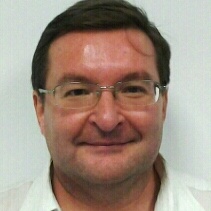
Josep Curto is a full Professor at Universitat Oberta de Catalunya and Adjunct Professor at IE University . He serves as Academic Director of the Master in Business Analytics (MIBA) , Facilitator at the Center for AI Safety , and founder of AthenaCore and Delfos Research . His career spans 25+ years in data science education across 15+ institutions.
Ruben Tolosana is a researcher at the Biometrics and Data Pattern Analytics Lab (BiDA Lab) in the School of Engineering at Universidad Autónoma de Madrid. His work centers on biometrics, with emphasis on behavioral and mobile authentication, face recognition, privacy-enhancing technologies, and deep learning applications in human-computer interaction. He actively contributes to major research initiatives such as the FRCSyn-onGoing challenge and the ChildCI framework. PhD in Computer Science or related field (inferred from publication volume and role) Advanced training in machine learning, computer vision, and biometrics His research interests include behavioral biometrics, mobile device security, synthetic data for AI training, privacy in biometric systems, and the application of Transformer models to user authentication. Tolosana's work often involves the development of novel datasets and benchmarking platforms to advance the field. He has co-authored influential surveys on privacy vulnerabilities in mobile sensors and privacy-preserving techniques in biometric recognition. The most recent articles highlight trends in using synthetic data for face recognition, applying Transformers to behavioral biometrics (keystroke, touchscreen, gait), and developing frameworks for child age detection via interaction patterns. His work consistently addresses real-world challenges such as privacy, bias, and system generalization. Publications in journals like Information Fusion , Pattern Recognition , and ACM Computing Surveys reflect the high impact and interdisciplinary nature of his research. Second FRCSyn-onGoing: Winning solutions and post-challenge analysis to improve face recognition with synthetic data (2025) ChildCI framework: Analysis of motor and cognitive development in children-computer interaction for age detection (2024) FRCSyn-onGoing: Benchmarking and comprehensive evaluation of real and synthetic data to improve face recognition systems (2024) SwipeFormer: Transformers for mobile touchscreen biometrics (2024) An Overview of Privacy-Enhancing Technologies in Biometric Recognition (2024) Ruben Tolosana collaborates extensively with researchers in the BiDA Lab, including Rubén Vera-Rodríguez, Aythami Morales, Julian Fierrez, and others. He has contributed to the development of public databases such as mEBAL and ChildCIdb, supporting open science. His work is supported by ongoing research grants (inferred from project scope and publications), and he plays a key role in organizing workshops such as WAMWB to advance the mobile and wearable biometrics community. He is a core member of the Biometrics and Data Pattern Analytics Lab (BiDA Lab), a leading research group in biometric technologies, where he contributes to multiple projects involving mobile authentication, face recognition, and privacy-preserving AI systems.
Matthieu Defrance is an Associate Professor in the Computer Science Department at Université Libre de Bruxelles (ULB), Belgium, a position he has held since October 2016. Prior to this, he worked as a PostDoc at ULB's Laboratory of Cancer Epigenetics from May 2010 to September 2016. Dr. Defrance's research bridges computer science with biological sciences, focusing on computational methods for analyzing complex biological data. His work spans epigenetics, genomics, and algorithm development for biological applications. His primary research interests include: Gene Regulation and Chromatin Biology Epigenetics and Epigenomics DNA Methylation analysis Computational Statistics for biological data Algorithm Development for genomic applications Next Generation Sequencing data analysis Dr. Defrance's publication record demonstrates a strong interdisciplinary approach, with recent work focusing on improving DNA methylation analysis techniques, developing novel bioinformatics tools like RedRibbon for gene expression signature comparison, and applying these methods to understand diseases like diabetes and cancer. His research shows consistent innovation in computational biology, with publications spanning from method development to biological applications across diverse fields including diabetes genetics, cancer epigenetics, and evolutionary adaptations in desert ants. With 61 publications and nearly 5,000 citations, Dr. Defrance has established himself as a significant contributor to computational biology and epigenetics research.
Bogdan Kulynych is a research scientist at Lausanne University Hospital in Switzerland, working within the Clinical Data Science group. He holds a Ph.D. in Computer Science from EPFL (Switzerland), where he was advised by Carmela Troncoso, and a B.Sc. in Applied Mathematics from Kyiv Mohyla Academy in Ukraine. His academic journey also includes a visiting fellowship at Harvard University with Flavio du Pin Calmon, and internships at Google and CERN. His research spans three interconnected domains: Algorithmic Accountability, Verification, and Reliability; Privacy-Preserving Learning and Statistics; and Algorithmic Systems in Healthcare. Kulynych develops methods for obtaining practical guarantees on model stability, robustness, and reliability, while also auditing these properties. His privacy work focuses on systems ensuring practical privacy guarantees with legally legible and interpretable operational risk analyses. In healthcare, he critically studies algorithmic system deployment in clinical practice through collaboration with clinicians and medical informatics practitioners. Kulynych's publication record demonstrates significant impact in top venues including NeurIPS, ICML, ICLR, FAccT, and PETS. His recent work addresses fundamental questions in differential privacy, operational privacy metrics, and healthcare AI applications. His research trend shows increasing focus on translating theoretical privacy guarantees into practical healthcare settings while addressing the social implications of algorithmic systems. Unifying Re-Identification, Attribute Inference, and Data Reconstruction Risks in Differential Privacy (NeurIPS 2025) (ε,δ) Considered Harmful: Best Practices for Reporting Differential Privacy Guarantees (2025) Attack-Aware Noise Calibration for Differential Privacy (NeurIPS 2024) As an active member of the academic community, Kulynych regularly presents at major conferences and seminars, including recent talks at Harvard Privacy Tools Seminar, NeurIPS, and Imperial College London. His work has received media attention in The Guardian, Wired, The Verge, and CNET regarding algorithmic bias challenges. Kulynych maintains an active presence on Bluesky (@bogdankulynych) where he engages in critical discussions about AI ethics, privacy, and the societal implications of technology.
Pooran Memari is a CNRS Researcher at the Laboratoire d'Informatique de l'École Polytechnique (LIX), UMR CNRS 7161, Institut Polytechnique de Paris, and an Affiliate Professor (part-time) at École Polytechnique. She leads research in geometric modeling within the GeomeriX team at LIX-Inria, focusing on theoretical foundations and applications in accessibility and neurocognition. Her academic journey includes: HDR (Habilitation à diriger des recherches), Institut Polytechnique de Paris, 2024 Ph.D. in Geometric Modeling, INRIA Sophia-Antipolis, 2010 Master in Image and Geometry, University of Nice-Sophia Antipolis, 2006 Engineering Degree, École Polytechnique, 2005 Bachelor in Mathematics, Sharif University of Technology, 2002 Dr. Memari's research bridges geometric modeling, computational geometry, and computer graphics with real-world impact. She pioneers techniques in shape representation, point pattern synthesis, and surface reconstruction, advancing proximity encoding and clustering algorithms. Her work extends to accessibility applications—developing geometric models for visually impaired navigation through multisensory perception—and neurocognition validation via tactile interfaces. This interdisciplinary approach integrates theoretical rigor with practical tools like the CGAL library. Recent publications (2024-2019) reveal a cohesive trajectory in geometric processing: advancing point pattern synthesis through image-based editing (Patternshop), stability-incorporated neighborhood graphs (SING), and multi-class disk distributions; innovating surface reconstruction via Voronoi-based methods (BallMerge); and expanding applications to virtual worlds simulation and neurocognitive accessibility. Key themes include bridging discrete geometry operators with high-dimensional data analysis and translating theoretical insights into tools for visual computing. Dr. Memari actively mentors the next generation of researchers, advising eight PhD students on topics ranging from generalized Voronoi diagrams to neurocognition-driven tactile navigation. She coordinates Computer Science Projects for École Polytechnique's Bachelor program since 2019 and co-leads the Interaction, Graphics & Design master's program at IP-Paris. Her leadership extends to editorial roles at Computer Graphics Forum and Graphical Models Journal, alongside prominent conference positions including SGP Program Co-Chair (2023) and Eurographics STARs Co-Chair (2025). As a core GeomeriX team member, she drives collaborative projects in geometric modeling and virtual environments. She coordinates the LIX Seminar since May 2025 and serves on the French Eurographics Chapter board, fostering community engagement through initiatives like the IGD master's program and Eurographics symposia.
Jose A. Rodriguez Serrano is a Senior Lecturer at the Department of Operations, Innovation and Data Sciences within the Esade Business School. He is affiliated with the Institute for Data-Driven Decisions (ESADE D3), a research group focusing on leveraging data science for strategic decision-making. His work contributes to the UN Sustainable Development Goals, particularly in areas involving technology and equitable access to services. Dr. Rodriguez Serrano's research expertise spans Machine Learning, Deep Learning, and their applications in finance, healthcare, and real estate. He explores topics like generative AI for financial modeling, explainable AI in real estate valuation, and deep learning techniques for healthcare fraud detection. His contributions include developing non-crossing quantile models and attention-based learning systems. He is a core member of the ESADE D3 research group (2022–2025), funded by the Agència de Gestió d'Ajuts Universitaris i de Recerca (AGAUR). This project integrates interdisciplinary approaches to advance data-driven methodologies in business and public policy. His work has been published in prestigious venues like the ACM SIGKDD Conference and the Annals of Operations Research, with over 700 citations and an h-index of 13. His research collaborations span global institutions, focusing on applying machine learning to solve complex problems in healthcare, finance, and real estate valuation. Notable outputs include prototypes for real estate price prediction and deep learning models to detect malpractices in healthcare sectors.
Richard Clouet serves as a Professor in the Department of Modern Philology, Translation and Interpretation at the University of Las Palmas de Gran Canaria (ULPGC). His academic profile shows active engagement in research through the GIR Translation and Interpreting, Interculturality, Applied Languages and Travel Literature research group, with significant contributions across multiple institutional collaborations including the IUIAText and GIR Discourse, Communication and Society groups. Clouet's research focuses on the intersection of translation studies, intercultural communication, and language pedagogy. His work emphasizes practical applications in tourism translation, telecollaboration, and machine translation integration in educational contexts. Recent publications demonstrate particular interest in developing intercultural competence through innovative teaching methodologies, with strong focus on ESP (English for Specific Purposes) frameworks and virtual exchange programs. His scholarship bridges theoretical discourse analysis with practical translator training concerns. Analysis of his 15 most recent publications reveals consistent thematic progression toward technology-enhanced intercultural communication, with increasing emphasis on telecollaboration frameworks, machine translation applications, and tourism-specific translation challenges. The research trajectory shows evolution from traditional discourse analysis toward contemporary digital communication contexts, while maintaining focus on cultural adaptation and professional translator competencies. Clouet maintains active research collaborations with scholars including Isabel Cristina Alfonzo De Tovar, Susan Isobel Cranfield McKay, and María Soraya García Sánchez. His work appears in journals such as Revista de Linguística y Lenguas Aplicadas and Hikma, with publications spanning articles, book chapters, and conference proceedings. Current research directions include gamification in adult language learning, multimodal communication in ubiquitous learning environments, and intercultural intelligence models for translation professionals.
Ricard Gavaldà is a Professor in the Department of Computer Science at Universitat Politècnica de Catalunya (UPC), affiliated with the LARCA research group. Since February 2020, he has been on academic leave to work full-time at Amalfi Analytics, focusing on healthcare data analytics. His research interests include Machine Learning, Data Mining, and their applications to healthcare and social good. He has supervised numerous PhD students and contributed to impactful projects in clinical decision support, traffic prediction, and energy-efficient systems. Education details are not explicitly mentioned in the provided texts. His work spans data stream mining, algorithmic frameworks (e.g., MOA), and healthcare informatics. He has co-founded Amalfi Analytics to develop AI-driven solutions for healthcare management. Notable recent activities include co-chairing the Nectar Track at ECML PKDD 2025 and organizing workshops on Data Science for Social Good. Key technical contributions include methods for adaptive learning, probabilistic modeling, and interpretable AI systems. His research bridges theoretical foundations and real-world applications, with a focus on improving healthcare outcomes and sustainable practices.
Dieuwke Hupkes is a Researcher at Meta AI Research and an ELLIS Scholar, focusing on understanding neural networks' ability to process hierarchical structure and generalize compositional patterns. Her work bridges computational linguistics, cognitive science, and artificial intelligence, emphasizing interpretability of language models. She holds a PhD from the University of Amsterdam (ILLC) and has supervised numerous student theses on neural network analysis and language processing. Notable contributions include the Llama 3 models, GenBench generalization taxonomy, and studies on compositional learning in recurrent networks. Education: PhD in Logic (University of Amsterdam, 2020), MSc in Artificial Intelligence, and earlier studies in Physics. Awards include ELLIS Scholar (2024), CoNLL 2019 Honourable Mention, and MLRC 2022 Best Paper Award. She has taught courses on natural language processing and co-organized workshops on neural network interpretability. Research interests span generalization in NLP, emergent language structures, and alignment of large language models. Her work frequently employs diagnostic classifiers and benchmarking to probe model behavior, with applications to both theoretical understanding and practical model evaluation.
Pedro Cabalar is Full Professor at the Department of Computer Science of the University of Corunna, Galicia, Spain, and current coordinator of the inter-university Master in Artificial Intelligence (Universities of A Coruña, Santiago de Compostela and Vigo). He also serves as Area Editor (Theory Foundations) for Theory and Practice of Logic Programming and as Standard Editor for the Artificial Intelligence journal. Education: PhD in Computer Science, University of Corunna, 2001 Master in Computer Science, Politéchnic University of Madrid, 1993 Bachelor in Computer Science (3-year degree), University of Santiago de Compostela / University of Corunna, 1989 Research interests revolve around Knowledge Representation & Reasoning , especially Answer Set Programming , non-monotonic reasoning , temporal and modal logics , and causal reasoning . He investigates theoretical foundations (equilibrium logic, temporal extensions, deontic operators) and practical systems (telingo, eclingo, aspBEEF), with applications ranging from planning and diagnosis to explainable AI and healthcare decision support. His recent articles (2023-2025) exhibit a clear trend toward temporal and metric extensions of ASP , explainability , and hybrid reasoning systems , often combining logic programming with deontic or probabilistic features. Scientific awards & recognition: University of Corunna Dissertation Award, 2003 Best Paper Award at LPNMR 2019 Best Student Paper at ICLP 2020 Best Student Paper at JELIA 2019 Grants & projects: He currently leads or co-leads nationally funded Spanish projects (GEISER 2024-2028, ARLEKIN 2021-2024) and has coordinated EU COST actions (DigForASP) as well as earlier MINECO projects on temporal ASP and medical reasoning (TARDIS, MERLOT, FEAST, etc.). PhD supervision: He has successfully supervised three PhD theses (Martín Diéguez, Jorge Fandiño, Brais Muñiz) and continues to advise students within the Information Retrieval Laboratory (IRLab) and the Spanish node of Potassco Solutions.
Rosa Elvira Lillo Rodriguez is a Full Professor in the Statistics Department at Charles III University of Madrid, affiliated with both the Flores de Lemus Institute and the UC3M-Santander Big Data Institute. Her research spans multiple disciplines including Statistics, Computer Science, Medicine, and Environmental Sciences. Her primary research interests focus on advanced statistical methodologies, particularly in functional data analysis, multivariate statistics, and machine learning applications. She has developed innovative techniques for outlier detection, variable selection, and classification algorithms with applications across healthcare, engineering, and social sciences. Her work bridges theoretical statistics with practical implementations in real-world problems. Her publication portfolio shows a clear trend toward interdisciplinary research, with recent work applying statistical methods to COVID-19 detection, hydraulic system monitoring, intimate partner violence risk assessment, and neural network interpretability. The articles demonstrate expertise in developing robust statistical frameworks that handle complex, high-dimensional data while maintaining computational efficiency. Dr. Lillo Rodriguez has secured significant research funding as principal investigator for projects including 'Advanced Statistical Modeling for Complex Systems in Health, Industry and Society (ASMOCS)' funded by the Spanish National Research Agency (2023-2027) and the 'UC3M-Universia Chair of Data Economics and Responsible Artificial Intelligence' (2024-2026). She also serves as researcher on multiple European Commission projects. She has supervised numerous doctoral theses on topics including functional modeling techniques, variable selection algorithms, and spatial depth-based methods for functional data, demonstrating her commitment to training the next generation of statisticians. Her current research involves developing statistical frameworks for big data applications across multiple sectors including healthcare, finance, and public policy.
Federico Divina is a Professor in the Department of Sports and Computer Science at Universidad Pablo de Olavide, Spain. His research focuses on evolutionary computation, machine learning, and bioinformatics. PhD in Artificial Intelligence from Vrije Universiteit Amsterdam Former postdoc at University of Tilburg (NEWTIES EU project) Research Interests : Bioinformatics, Evolutionary Computation, Machine Learning, Big Data, and Soft Computing. He specializes in knowledge extraction from massive datasets through genetic algorithms and heuristic optimization. Recent Publications span time series forecasting, feature selection in high-dimensional data, and biomedical image analysis. His work combines evolutionary algorithms with practical applications in energy consumption prediction, ocular disease diagnosis, and genomic data analysis. Labs & Collaborations : Leads the DS&BD Data Science & Big Data Lab and has collaborated with groups like DATAi and DASE. His projects include Differential (multi-university energy analysis), GALICIAME (SMA genetic data analysis), and NEWTIES (artificial society modeling).
Manuel Ricardo Torres Soriano is a Catedrático de Universidad (Full Professor) in Public Law at Pablo de Olavide University in Seville, Spain. His academic work focuses on political and administrative science with a specialization in terrorism studies, particularly jihadist terrorism and cyberterrorism. He serves as one of the 15 international advisors on the Advisory Council on Terrorism and Propaganda of the European Counter-Terrorism Centre (ECTC) within Europol, contributing to European counterterrorism efforts since the center's establishment nearly three years ago. PhD in Political Science from Universidad de Granada (2007), thesis: "La dimensión propagandística del terrorismo yihadista global" Academic experience at institutions including London, Stanford, and Harvard Professor at both Pablo de Olavide University and the University of Granada (UGR) Professor Torres Soriano specializes in the intersection of terrorism, technology, and political communication. His research examines jihadist propaganda ecosystems, cyberterrorism, disinformation campaigns, and the evolving nature of modern terrorism. He has pioneered work on the concept of "technophobic terrorism" as a potential fifth wave of terrorism, building on David Rapoport's theoretical framework of terrorism waves. His expertise spans both historical analysis of terrorist movements and forward-looking assessments of emerging threats in the digital age, with particular focus on how technology transforms both terrorist tactics and counterterrorism responses. His recent publications reveal a consistent analytical framework examining how terrorist organizations adapt to technological change, particularly in the digital realm. He has documented the evolution of jihadist media platforms, analyzed Russian disinformation tactics using false-flag cyber operations, and explored the relationship between technological advancement and potential future terrorist motivations. A recurring theme across his work is how digital technologies both enable new forms of terrorism while simultaneously providing tools for counterterrorism efforts, creating a complex dynamic that requires sophisticated analytical approaches. Member of the Advisory Council on Terrorism and Propaganda of the European Counter-Terrorism Centre (ECTC) within Europol Recipient of recognition from Spain's Ministry of Defense for his doctoral thesis Author of influential books including "Espejismos del mañana" and "#Desinformación. Poder y manipulación en la era digital" Professor Torres Soriano actively contributes to security policy through his work with European security institutions and Spanish government advisory bodies. He has collaborated extensively with state security forces in both analytical and training capacities, translating academic insights into practical counterterrorism strategies. His research has informed counterterrorism approaches in Spain and at the European level, particularly regarding online radicalization, digital countermeasures, and the evolving nature of terrorist propaganda. He regularly engages with policymakers through institutional reports and advisory roles, ensuring his academic work has direct relevance to contemporary security challenges. His work bridges academic research with practical security applications through collaborations with the European Counter-Terrorism Centre, Spanish security services, and international academic networks focused on extremism and counterterrorism. As digital technologies continue to transform the security landscape, his research remains at the forefront of understanding how terrorist organizations adapt their strategies and how societies can develop effective countermeasures in the digital age.
Dr. Borja Sanz Urquijo serves as a Senior Lecturer at the Faculty of Engineering, University of Deusto, and has been a core researcher at DeustoTech-Computing since 2008, including a tenure as Head Researcher (2015-2018). He holds a cum laude PhD in Information Systems (2012) from the University of Deusto, specializing in Android malware detection. Education PhD in Information Systems, University of Deusto (2012, cum laude) His research spans machine learning, big data, and knowledge discovery, with critical expansion into AI ethics, fairness, accountability, and societal impact. He investigates AI applications in domestic violence intervention, health rights, law enforcement transparency, and Edge Computing optimization, consistently bridging technical innovation with social responsibility. His work demonstrates rigorous methodology in small-dataset machine learning and genomic sequence analysis. Dr. Sanz Urquijo's publication trajectory reveals evolving expertise from foundational cybersecurity (Android malware analysis, spam filtering) to contemporary societal challenges (feminist AI frameworks, quantum software security). Recent articles emphasize interdisciplinary collaboration, particularly in feminist technology studies and ethical AI governance, while maintaining technical depth in Edge Computing and genomic analytics. Advising and Projects He has supervised multiple theses including doctoral work on Edge Computing for digital twins and cybersecurity competency frameworks. As lead researcher in over 50 projects (H2020, national, private), he currently directs BEACON (industrial AI systems) and contributes to EU initiatives like IMPROVE (domestic violence response) and ELKARTEK (Industry 5.0 ethics). His collaborations span social organizations, enterprises, and research centers globally. Research Environment As a pillar of DeustoTech-Computing, he operates within a multidisciplinary unit advancing AI, cybersecurity, and Edge Computing applications. His leadership in projects like AI-Driven Cognitive Robotic Platforms and REal tiME control systems demonstrates integration of theoretical research with industrial implementation in smart manufacturing contexts.
Jose Tomas Palma Mendez is an Associate Professor at the University of Murcia's Faculty of Informatics, affiliated with the Department of Information and Communication Engineering. He holds a PhD in Computer Science from the same institution (1999), specializing in knowledge engineering for real-time systems. His research focuses on artificial intelligence, knowledge engineering, machine learning, and their applications in healthcare and environmental monitoring. He leads the AIKE research group (Artificial Intelligence and Knowledge Engineering), previously contributing to the 'Inteligencia Artificial e Ingenieria del Conocimiento' group. Key research themes include explainable AI, feature selection in high-dimensional datasets, time series forecasting (e.g., air quality, water consumption), and computational methods for medical prognosis (e.g., cancer outcomes, long-COVID prediction). His work integrates evolutionary algorithms, deep learning, and spatio-temporal modeling. Notable contributions span AI-driven healthcare systems, ambient intelligence for elderly care, and ontology-based decision support tools. His methodologies emphasize multi-objective optimization, surrogate modeling, and interpretable machine learning frameworks. Education: PhD in Computer Science, University of Murcia (1999) Key Projects: Development of SAVIA (agricultural pest management tool), T-CARE (temporal case retrieval), and InSCo-Gen (model-driven web applications) Labs/Teams: AIKE Research Group (University of Murcia) Publications highlight advancements in imbalanced learning frameworks, multi-criteria environmental forecasting, and medical diagnostic support systems. His work bridges theoretical AI innovations with real-world applications in healthcare, environmental science, and smart infrastructure systems.