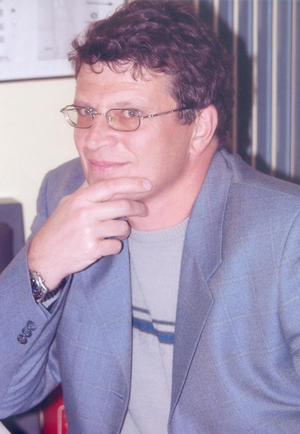
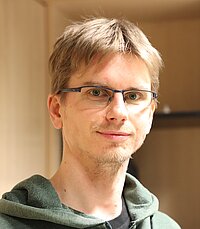
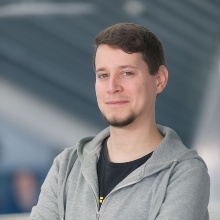
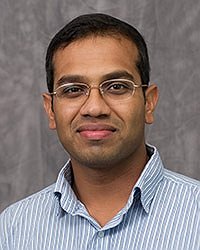
Frederic Bechet is a researcher affiliated with Aix-Marseille Université, CNRS, and the LIF UMR 7279 laboratory. His work spans Natural Language Processing, Computational Linguistics, and Machine Learning, focusing on task structure analysis, factual knowledge robustness, and semantic-driven evaluation methodologies. Research Interests: Semantic Parsing, Question Answering, Text Summarization, and Multitask Learning. Recent Trends: Empirical studies on task inclusion via statistical deficiency, POS-driven specialization in Mixture-of-Experts models, distractor-based factual evaluation, and temporal knowledge decay in LLMs. His work on WikiFactDiff introduces a realistic framework for atomic fact updates in causal language models. Collaborations: Co-authored with experts in semantic annotation (Géraldine Damnati), QA systems (Alexis Nasr), and adversarial learning (Gabriel Marzinotto). Labs/Teams: Involved in the DECODA corpus for call-center analysis and the MEDIA corpus for dialogue understanding.
Wolfgang Nejdl is a distinguished Professor at Leibniz University Hannover, working within the Faculty of Mathematics and Computer Science and affiliated with the Institute of Information Systems. With an extensive publication record spanning over two decades, he has established himself as a leading researcher in Natural Language Processing, Information Retrieval, and Web Personalization. His work bridges theoretical advances with practical applications, particularly in clinical NLP and semantic web technologies. Nejdl's research interests encompass a broad spectrum of topics including Natural Language Processing, Information Retrieval, Web Personalization, Semantic Web technologies, Machine Learning applications, Clinical NLP, and Recommender Systems. His recent work has focused on critical challenges such as clinical outcome prediction using MIMIC datasets, financial literacy evaluation of large language models, and developing resources for low-resource languages like Tigrinya. He has made significant contributions to understanding data drift in clinical applications and developing interpretable AI systems for healthcare. His publication record shows a consistent trajectory of impactful research, with recent articles demonstrating his ability to tackle emerging challenges in NLP and AI. From his foundational work on web personalization using ODP metadata to his current research on clinical NLP and low-resource language processing, Nejdl has consistently addressed important problems at the intersection of information systems and human needs. His work on stance detection incorporating toxicity and morality analysis represents innovative approaches to understanding social media discourse. Among his notable achievements are the development of the EDUTELLA P2P infrastructure based on RDF, significant contributions to boilerplate detection algorithms, and pioneering work on preventing shilling attacks in recommender systems. His research has been widely cited, reflecting its substantial impact on the fields of web science and natural language processing. Nejdl has supervised numerous students and collaborated extensively with researchers worldwide, particularly with Alexander Loeser, Jens-Michalis Papaioannou, and Paul Grundmann. His work demonstrates a consistent focus on practical applications of theoretical advances, particularly in healthcare and web technologies. He has also worked on important infrastructure projects like the L3S Research Center, contributing to the broader academic and technological ecosystem.
Prof. Dr.-Ing. Boris Resnik is a full professor at Berlin University of Technology (BHT Berlin) in the Department of Civil Engineering and Geoinformation. Born in 1960 in Leningrad, he holds a diploma in Geodesy from the Leningrad Mining Institute (1982) and a doctorate from VNIMI (1990). His academic career spans over two decades at BHT Berlin, with prior positions at Rostock University and Brandenburg Technical University Cottbus. His research focuses on: Geodetic monitoring and deformation analysis Structural health assessment of wind turbine foundations AI and neural network applications in structural monitoring Sensor technologies (MEMS, accelerometers, inclinometers) Automated early warning systems for infrastructure He leads significant projects including the IFAF-funded WEsaFE (2014-2016) on wind turbine foundation monitoring and the DAAD Eastern Partnerships initiative (2018-2023) with Central Asian universities. Publication analysis shows a strong evolution toward AI-driven methodologies since 2019, with recent works focusing on neural networks for real-time structural monitoring, vehicle classification, and vibration analysis. His 2023-2025 publications demonstrate increasing integration of drone-based thermography and advanced sensor networks. No scientific awards are documented in the provided materials. Contact is maintained through resnik@bht-berlin.de, with office at Building D (Civil Engineering) Room D 422.
Yi Cheng is an active academic researcher with a prolific publication record spanning multiple disciplines in computer science and engineering. Their work demonstrates strong affiliations with research institutions in China, frequently collaborating with researchers from Chinese Academy of Sciences and other Chinese universities. The publication pattern shows consistent high-quality output across top venues in machine learning, computer vision, and control systems. Yi Cheng's research interests center around artificial intelligence applications across diverse domains. Their work bridges theoretical advances in machine learning with practical applications in medical imaging, robotics, control systems, and natural language processing. Recent publications show increasing focus on multimodal learning approaches, domain adaptation techniques, and interpretable AI systems. The research demonstrates both theoretical depth in algorithm development and practical implementation in real-world scenarios. Analysis of recent publications reveals a strong trend toward developing robust, efficient AI systems that can operate across different domains with minimal adaptation. The work spans from fundamental control theory to applied medical imaging, showing versatility across the AI spectrum. Key methodological contributions include novel transformer architectures, multi-view learning approaches, and stability analysis for complex systems. Yi Cheng has received recognition through publications in top-tier venues including IEEE transactions, ACL, AAAI, and other prestigious conferences and journals. While specific awards aren't detailed in the publication record, the consistent acceptance in high-impact venues indicates peer recognition of research quality. The research trajectory shows increasing collaboration with interdisciplinary teams, particularly in medical applications where AI techniques are applied to healthcare challenges. Current work emphasizes practical deployment considerations including computational efficiency, robustness to domain shifts, and interpretability of models - addressing key challenges in real-world AI deployment.
Sebastian Wankerl is a researcher at the Chair of Data Science (Informatics X) within the Faculty of Mathematics and Computer Science at the University of Würzburg. His work focuses on machine learning applications in mathematics education, natural language processing, and structured sentiment analysis. He collaborates with Prof. Andreas Hotho and other colleagues on projects involving pointer networks, cross-lingual models, and imbalanced data challenges. Key research areas: Mathematical reasoning, NLP, and deep learning Recent publications explore tree-structured pointer networks for axiom detection and cross-lingual sentiment analysis Active in ML explainability and multilingual model adaptation His publications demonstrate expertise in adapting transformer architectures for specialized tasks while addressing overfitting challenges through novel regularization techniques.
Frank Heyen is a Researcher at the Visualization Institute of the University of Stuttgart (VISUS) , focusing on interdisciplinary applications of visualization and interactive systems in music, education, and data analysis. His work bridges computer science, music technology, and human-computer interaction. Research Interests : Heyen specializes in creating visualization tools for AI-assisted music composition, augmented reality (AR) applications for instrument learning, and immersive analysis of musical performance data. His projects include interactive systems for classifier comparison (ClaVis), AR guitar tutorials (AR Hero), and haptic feedback devices (PropellerHand). Scientific Contributions : His publications highlight collaborations with Michael Sedlmair and others, emphasizing user-centered design and real-time data interaction. In 2025, his paper MAICO received the Replicability Stamp by the Graphics Replicability Stamp Initiative (GRSI), underscoring methodological rigor. His work spans conferences like IEEE Transactions on Visualization and Computer Graphics , ISMIR, IEEE VR, and ACM CHI workshops. Awards : Replicability Stamp by GRSI for MAICO (2025)
Varish Mulwad is a Senior Scientist at GE Research with 14 years of experience in algorithm development and knowledge graph construction from structured/unstructured data. He holds a Ph.D. and M.S. in Computer Science from the University of Maryland, Baltimore County (UMBC), where he worked under Prof. Tim Finin and collaborated with Prof. Anupam Joshi, and a B.E. in Computer Engineering from University of Mumbai. Ph.D. & M.S. in Computer Science (UMBC) B.E. in Computer Engineering (University of Mumbai) His research focuses on semantic interpretation of tabular data through linked data frameworks, information extraction from unstructured text, and knowledge graph population using probabilistic reasoning and graphical models. He has pioneered domain-independent systems for table interpretation and developed novel methods for cloud SLA automation and cybersecurity threat detection via social media analysis. Recent work trends include: Context-aware web table annotation Relational table representation learning Linked data generation from spreadsheets Pre-training/fine-tuning paradigms for web tables Application of semantic web standards to cybersecurity He has led 3-4 member project teams in developing production-ready solutions, contributed to 19 peer-reviewed publications, and secured 7 patents with 900+ citations. During his academic tenure at UMBC's Ebiquity Research Lab, he co-developed the TABEL framework for table semantics inference and produced the first interactive system for meta-analysis report generation from linked data.
Thomas Reps is a Professor at the University of Wisconsin-Madison 's Computer Sciences Department. He has held the J. Barkley Rosser Professor and Rajiv and Ritu Batra Chair since joining in 1982. His research spans program analysis , model checking , abstract interpretation , computer security , and quantum computing . Ph.D. in Computer Science from Cornell University (1982), ACM Doctoral Dissertation Award winner Co-founder of GrammaTech, Inc. (1988) Held visiting positions at INRIA (France), University of Copenhagen (Denmark), CNR (Italy), and University Paris Diderot (France) Research Interests include program slicing, interprocedural dataflow analysis, pointer analysis, software model checking, and code instrumentation. His recent work focuses on quantum circuit verification , CFLOBDDs , and unrealizability logic . His scientific awards include: ACM Fellow (2005) Foreign Member, Academia Europaea (2013) ACM SIGPLAN Achievement Award (2017) He has advised Ph.D. students like Akash Lal (SIGPLAN Dissertation Award) and Gogul Balakrishnan (ETAPS Best Paper Award). His work has produced influential papers such as the 1988 PLDI paper on interprocedural slicing (50 most influential PLDI paper, 2004) and the 2003 TOPLAS paper on parametric shape analysis.
Mayur Naik is the Misra Family Professor in the Department of Computer and Information Science at the University of Pennsylvania’s School of Engineering and Applied Science. His research lies at the intersection of programming languages and artificial intelligence, with a current focus on neurosymbolic programming, trustworthy AI for healthcare, and AI-enabled software engineering tools. Education & Career: Ph.D. in Computer Science, Stanford University (2008) – advisor Alex Aiken M.S. in Computer Science, Purdue University (2003) – advisor Jens Palsberg B.E. in Computer Science, BITS Pilani (1999) Former faculty at Georgia Institute of Technology and researcher at Intel Labs, Berkeley Research Interests: Naik’s group develops languages, algorithms, and compilers for neurosymbolic programming, an emerging paradigm that unites symbolic reasoning with data-driven learning. Their flagship system is the open-source Scallop language and toolchain, applied to computer vision, cybersecurity, medicine, and bioinformatics. He also investigates AI-assisted programming tools that boost productivity and software quality by marrying traditional program analysis with modern machine learning. Recent Highlights: In 2024 he was named Misra Family Professor; his former student Elizabeth Dinella received the 2025 ACM SIGSOFT Outstanding Dissertation Award; his team released IRIS , an LLM-assisted static analysis framework for security vulnerabilities, and published the first comprehensive book on Neurosymbolic Programming in Scallop . Teaching: He regularly teaches CIS 5470 (Software Analysis) every Fall and CIS 5500 (Database Systems) every Spring, both of which are also delivered in Penn’s MCIT Online and Georgia Tech’s OMSCS programs. Advising & Service: Naik has graduated 8 Ph.D. students and mentored numerous postdocs and undergraduates; many alumni now hold faculty or research positions worldwide. He has served on organizing, program, and steering committees for premier venues such as PLDI, POPL, OOPSLA, SPLASH, ESEC/FSE, ISSTA, SAS, and others.
Prof. Eva Vitting is a Professor in the Department of Design at Aachen University of Applied Sciences, where she leads research and teaching in information visualization and design theory. Her work bridges the gap between complex data systems and human understanding through innovative visual communication approaches. Her educational philosophy emphasizes that "Good design requires dedication and a critical mind. It's about developing new ideas with curiosity, openness, and playfulness, methodically experimenting to create a variety of variants, and using analytical focus to filter out which design most convincingly solves the task." She has developed a conceptual design approach that alternates between experimental and analytical phases to find new solutions, with sustainability as a fundamental principle throughout her projects. Prof. Vitting's research portfolio demonstrates consistent activity from 2008 through 2021, with recent work focusing on interactive data visualizations for Industry 4.0 applications, energy systems, and financial data. Her publications and conference presentations reveal a strong emphasis on making complex information accessible through thoughtful visual coding that considers human perception. Her supervised student projects show expertise across multiple visualization domains including: Interactive weather data visualization (Caelum project) Robotics and human-machine interaction Plastics material properties catalog Time zone visualization for international teams Social media usage patterns Prof. Vitting leads the ongoing research interest in Visual Coding in Information Design and has secured significant research funding through BMBF and BMWI projects including: "Matchbox" (BMBF StartUpLab@FH) "Founded@FH Aachen" (EXIST-Potentiale) ProSense project (2012-2015) with RWTH Aachen Her teaching extends to foundational design principles through the Color Form Composition program where students learn that "All elements of a design should be optimized in their visual form to match the content, because graphic syntax implies semantic messages."
Sebastian Thrun is a Professor at Stanford University, USA, with a prolific research career spanning robotics, artificial intelligence, and machine learning. His work has significantly impacted autonomous vehicle technology, computer vision, and medical AI applications. Thrun's research interests focus on robotics, particularly simultaneous localization and mapping (SLAM), autonomous driving systems, and probabilistic state estimation techniques. His work extends to deep learning applications in medical imaging, notably achieving dermatologist-level skin cancer classification. He has pioneered approaches in meta-learning, vector quantization, and efficient clustering algorithms using multi-armed bandits. His recent publications demonstrate a strong trend toward improving efficiency in machine learning algorithms, particularly in areas like decision trees, vector quantization, and nearest neighbor search. Thrun has also made significant contributions to medical AI, applying deep learning to skin cancer detection and molecular property prediction. Max Planck Research Award (2011) Thrun has advised numerous PhD students who have become prominent researchers in robotics and AI, including David Stavens, Anna Petrovskaya, and Jesse Levinson. His research has been supported by significant grants, particularly for autonomous vehicle development, including Stanford's entry in the DARPA Urban Challenge (Junior). His work bridges theoretical advances with practical applications across multiple domains. Thrun has led research teams focused on autonomous driving systems, 3D reconstruction, and medical AI applications. His work on the DARPA Urban Challenge demonstrated advanced capabilities in urban autonomous navigation, while his more recent research explores the intersection of deep learning and efficiency optimization in machine learning algorithms.
Prateek Mittal is a Professor in the Department of Computer Science at Princeton University's School of Engineering and Applied Science. His research spans multiple critical areas at the intersection of security, privacy, and machine learning, with a particular focus on developing robust and privacy-preserving AI systems. Dr. Mittal's research interests center on machine learning security and privacy, with specific expertise in adversarial machine learning, differential privacy, backdoor attacks and defenses, and network security. His work addresses fundamental challenges in ensuring that AI systems remain secure against sophisticated attacks while preserving user privacy. He has made significant contributions to certifiable defenses against adversarial examples, privacy-preserving machine learning techniques, and security mechanisms for large language models. His recent publications demonstrate a strong trend toward addressing emerging security challenges in large language models and foundation models, including privacy auditing, safety alignment, and robustness against novel attack vectors. His work shows increasing focus on practical applications of theoretical security concepts to real-world AI systems. Dr. Mittal has mentored numerous PhD students who have become active contributors to the security and machine learning research community. His lab has received significant research funding from various sources to support their innovative work at the security-privacy-ML intersection. He leads research efforts in multiple labs and collaborative projects focused on building trustworthy AI systems, with strong connections to both theoretical computer science and practical security applications. His team regularly publishes in top-tier venues including IEEE S&P, USENIX Security, NeurIPS, ICML, and ICLR.
Professor Marc Goerigk holds the Chair of Business Decisions and Data Science at the Faculty of Economics, University of Passau, a position he has held since 2023. He previously held academic positions at TU Kaiserslautern, Lancaster University Management School, and the University of Siegen. He earned his doctorate in applied mathematics from the University of Göttingen and is recognized as a leading researcher in robust optimization. PhD in Applied Mathematics, University of Göttingen Research and teaching at TU Kaiserslautern, Lancaster University, University of Siegen His research centers on robust combinatorial optimization, focusing on decision-making under uncertainty. He develops mathematical models and algorithms that yield solutions resilient to data uncertainties, with applications in traffic, logistics, and corporate planning. He emphasizes abstract problem structures over specific instances, seeking generalizable optimization frameworks. His work bridges operations research, data science, and algorithm design, aiming to enhance decision robustness in complex systems. The recent publications highlight a strong trend in robust optimization, particularly in multi-stage and recoverable models, data-driven scenario generation, and interpretable optimization. His work increasingly integrates machine learning concepts with classical optimization, especially in explainability and preference modeling. Applications span scheduling, routing, project management, and logistics, demonstrating both theoretical depth and practical relevance. Scientific Awards: Most research-intensive business professor under 40 in the German-speaking world (WirtschaftsWoche, 2024) Professor Goerigk leads a research group focused on optimization under uncertainty. He supervises doctoral and master's students in seminars on optimization and data science. He teaches courses such as Decision Making Under Uncertainty, Combinatorial Optimization, and Artificial Intelligence and Optimization. His work is supported by ongoing research in robust modeling and algorithm development, with future directions likely involving deeper integration of AI and optimization for real-world decision support systems. No specific grants are mentioned, but his prolific output suggests active funding. He leads the Chair of Business Decisions and Data Science at the University of Passau, where his team works on theoretical and applied aspects of robust optimization, scenario modeling, and decision support systems.
Hilde Kuehne is a Full Professor at the University of Tuebingen's Tuebingen AI Center with significant affiliations at MIT-IBM Watson AI Lab, Goethe University Frankfurt, and University of Bonn. Her research leadership spans computer vision, multimodal learning, and artificial intelligence, with emphasis on video understanding and foundational model development. She actively collaborates with IBM Research and MIT across multiple high-impact projects. Her research program focuses on critical challenges in visual intelligence: Developing explainability methods for Vision Transformers to enhance model transparency Creating robust multimodal frameworks for audio-visual alignment and spatio-temporal grounding Addressing representation biases in video benchmarks through structured debiasing approaches Advancing zero-shot recognition capabilities using large language models Exploring associative memory mechanisms for next-generation foundation models Analysis of her 15 most recent publications (2024-2025) reveals three dominant research thrusts: (1) Multimodal foundation models showing strong emphasis on fine-grained audio-visual synchronization, (2) Explainable AI techniques targeting Vision Transformer interpretability, and (3) Systematic debiasing methodologies for video understanding benchmarks. Her work consistently bridges theoretical innovation with practical applications, particularly in instructional video analysis and training-free recognition systems. Key scientific recognition includes: NeurIPS 2024 Oral Presentation for "Convolutional Differentiable Logic Gate Networks" (top 2% acceptance rate) Professor Kuehne mentors a productive research group with notable PhD students including Walid Bousselham (ICCV 2025 first-author), Sivan Doveh (ICCV 2025 first-author), and Nina Shvetsova (CVPR 2025 first-author). Her research is supported through strategic partnerships with IBM Research and MIT, evidenced by consistent co-authorship on high-impact publications. She serves on the Scientific Advisory Board of the Carl-Zeiss-Foundation and contributed to Germany's 2024 Commission of Experts for Research and Innovation annual report. She leads research initiatives within the Tuebingen AI Center and MIT-IBM Watson AI Lab, while co-organizing influential workshops including the 3rd Workshop on What is Next in Multimodal Foundation Models (CVPR 2025) and New Frontiers in Associative Memories (ICLR 2025), demonstrating her leadership in shaping next-generation multimodal AI research directions.
Dirk Wulff serves as Senior Research Scientist at the Max Planck Institute for Human Development's Center for Adaptive Rationality and Senior Adjunct Researcher at the University of Basel's Center for Cognitive and Decision Science. His work bridges cognitive psychology, computational modeling, and artificial intelligence to address fundamental questions in human decision-making and semantic representation. Education: PhD in Psychology, University of Berlin & Max Planck Institute for Human Development (2015) Research Interests: Wulff's primary focus spans large language models, semantic networks, and learning mechanisms, with significant contributions to information search strategies, generalizability in psychological measurement, and sustainability applications. His work integrates cognitive network science with behavioral experiments to model risk perception, decision processes, and age-related cognitive changes. He pioneers methods for using LLMs to enhance psychological measurement validity and address taxonomic incommensurability in theoretical constructs. Publication Trends: His 2024-2025 publications reveal intense focus on LLM applications in behavioral science, particularly semantic embeddings for psychological measurement, experiential simulations for risk communication, and open-source tools development. Key themes include resolving conceptual ambiguities in psychological constructs, modeling pre-decisional information search, and translating network science into practical cognitive aging research. His work consistently bridges theoretical cognitive models with real-world applications in sustainability and clinical contexts. Scientific Awards: Otto Hahn Medal, Max Planck Society (€7,000) Grants and Advising: Wulff secured €617,320 from the German Research Foundation for addressing the generalizability crisis using LLMs, €398,972 from the Swiss National Science Foundation for studying age-related semantic network changes, and €49,258 from the Biäsch Foundation for harnessing simulated experiences. While no formal advisees are listed, his R packages (text2sdg, cstab, mousetrap) support widespread methodological training in behavioral science. Labs and Tools: As Head of the 'Search and Learning' Research Area at the Center for Adaptive Rationality, Wulff leads a team developing computational models of human information search. His open-source R packages enable semantic network analysis (text2sdg), cluster validation (cstab), and mouse-tracking data processing (mousetrap), establishing critical infrastructure for cognitive and behavioral research globally.