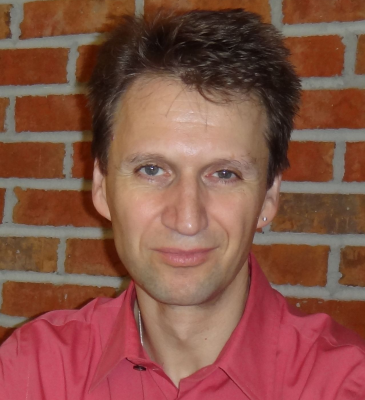
Guilherme Maia de Oliveira Wood is a University Professor and head of the Neuropsychology/Neuroimaging department at the University of Graz, where he has been employed since 2011. His research focuses on developing high-tech tools for neuropsychological rehabilitation, clinically testing their efficacy, and understanding the mechanisms influencing neural plasticity. He is actively involved in the interdisciplinary Master's program 'Computational Social Systems' offered jointly by the University of Graz and Graz University of Technology. His educational background includes: Psychology studies at the Federal University of Minas Gerais (1994-1999), Brazil Doctorate in Psychology at RWTH Aachen (2001-2005), Germany Habilitation in Psychology at the University of Salzburg (2005-2011) Wood's research interests center on combining technological innovation with cognitive science, particularly in neuropsychology and neurofeedback applications. He investigates neural plasticity as the brain's ability to organize itself as a dynamic system, with special attention to psychosocial influences on treatments and rehabilitation. His work bridges technical neuroimaging approaches with ethical considerations regarding neurotechnologies. His recent publications demonstrate a strong interdisciplinary approach spanning neuroscience, psychology, data science, and ethics. The articles reveal consistent focus on methodological rigor in neuroimaging, cognitive mechanisms in learning and rehabilitation, and critical examination of psychosocial factors influencing scientific evidence interpretation. His work increasingly addresses the emotional embedding of scientific communication and placebo effects in neurofeedback research. Wood actively supervises master's students through the 'Computational Social Systems' program and offers thesis topics on brain aging, neurofeedback mechanisms, graph theory applications in neuroscience, and the relationship between motor learning and cognitive function. He leads an FWF-funded research project investigating brain plasticity through fMRI-based neurofeedback training. He is affiliated with several research initiatives including COLIBRI (Complexity of Life), Human Factor in Digital Transformation X, and Neurofeedback Research Graz. His laboratory employs multi-sequence MRI techniques including T1-weighted recordings, diffusion-weighted imaging, resting-state fMRI, and GABA spectroscopy to investigate changes in brain structure, function, and chemistry in response to neurofeedback training.