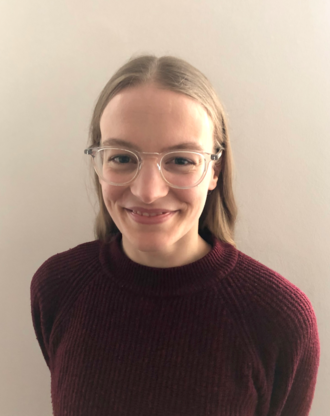
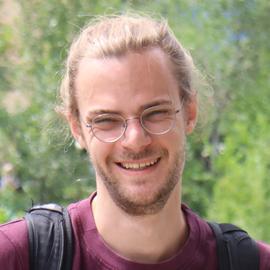
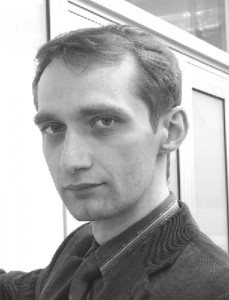
Yuxi Xia is a researcher affiliated with the Faculty of Computer Science, specializing in data mining and machine learning. Current research activities focus on artificial intelligence validation, surrogate modeling for railway systems, and multimodal question-answering frameworks. BSc, MSc in Computer Science Active in AI Review publications (2024) Research interests span large language model calibration , digital twin technologies , and model ensembling . Recent articles address overfitting, multimodal fusion, and ethical implications of machine-generated text detection. Key publication trends include industrial AI applications for railway systems, federated learning security, and explainability in black-box models. Collaborations extend to interdisciplinary AI validation studies.
Katharina Hoedt is a University Researcher and Assistant at the Institute of Computational Perception at Johannes Kepler University Linz (JKU), with a Vienna-based research presence. She holds a PhD in Computer Science from JKU (2020) and has been involved in research roles since 2016, including at the Austrian Research Institute for Artificial Intelligence (OFAI). Her work focuses on adversarial machine learning, model interpretability, and neural network robustness, particularly within music information retrieval domains. Education: PhD in Computer Science (2019–2020), DI (Diploma) in Computer Science (2013–2016), Bachelor of Science in Informatics (JKU Linz). She has taught courses on Machine Learning and Pattern Classification, and Artificial Intelligence at JKU. Research Interests: Adversarial examples and robustness, interpretable machine learning, neural network inner workings, and applications in music classification. Her publications explore adversarial attacks, explanation validity, and model defense strategies in audio and music contexts. Labs/Teams: Active member of the Institute of Computational Perception, collaborating on interdisciplinary projects combining AI with musicology and signal processing.
Peter Filzmoser is a Professor at the Institute for Statistics and Mathematical Economics (E105) of Vienna University of Technology, leading the Computational Statistics Research Area (E105-06) and affiliated with the Network Lab. His research focuses on: Compositional Data Analysis Robust Statistics Outlier Detection Machine Learning for High-Dimensional Data with applications in geochemistry, mobility data, tribology, and sustainable development. Recent publications (2023) demonstrate significant advances in explainable outlier detection using Shapley values, robust techniques for compositional data analysis, and applications in forecasting heterogeneous time series. His work extends compositional data analysis through graph signal processing and develops novel robust methodologies for real-world problems. Professor Filzmoser has advised over 15 Master's and PhD students from 2021-2023. Key research projects he leads include: Automotive Intelligence for/at Connected Shared Mobility CSTAT: Blind Source Separation Generalized relative data and Robustness in Bayes spaces
Christian Beckmann is a Full Professor of Statistics in Imaging Neurosciences at Radboud University Medical Centre Nijmegen and a Principal Investigator at the Donders Institute for Brain, Cognition and Behaviour. His career spans institutions including the University of Twente, Imperial College London, and the University of Oxford, with a focus on interdisciplinary approaches integrating cognitive neuroimaging, imaging genetics, and pharmacology. Education: MSc and DPhil degrees at the University of Oxford (20014). His research centers on developing novel computational analysis methods for neuroimaging data, particularly Independent Component Analysis (ICA), applied to connectomics, imaging epidemiology, and big data analytics. He emphasizes creating sensitive, specific, and interpretable tools for neurobiological applications, such as the widely used FSL (FMRIB Software Library), which impacts over 650 institutions globally. Scientific Awards: Thomson Reuters/Clarivate Analytics Highly Cited Researcher (2014–2016) NWO VIDI Fellowship (2014) Wiley OHBM Young Investigator Award (2011) Membership, Young Academy, University of Twente (2011) Advising & Grants: He has trained over 20 PhD students (8 completed) and 9 postdoctoral researchers, securing grants from the Netherlands Organisation for Scientific Research and other international bodies. His work bridges technical innovation with clinical applications, advancing diagnostics and treatment strategies.
Sebastian Ordyniak is an Associate Professor in the Department of Algorithms and Complexity at TU Wien. His research focuses on parameterized complexity, algorithms, computational complexity, and applications in artificial intelligence and graph theory. He holds a PhD and the prestigious START Prize (2014–2022), a renowned Austrian award for outstanding researchers. Key projects include the ERC-funded 'Parameterized Complexity of Local Search' (2010–2014) and ongoing initiatives like 'Parameterized Analysis in Artificial Intelligence' (2021–2026). His work bridges theoretical foundations with practical applications, such as algorithmic fairness, machine learning interpretability, and graph drawing. Research highlights include contributions to SAT solving, backdoor analysis, and clustering algorithms. He has advised at least one student, Hossein Maleki, on practical algorithms for deletion to small components. His interdisciplinary approach integrates logic, computational geometry, and multi-agent systems.
Alexander Pluska is a PreDoc Researcher at TU Wien's Faculty of Informatics, affiliated with the Department of Formal Methods in Systems Engineering. He holds an MSc and is engaged in research at the intersection of formal methods, logic, and machine learning. His work includes projects like StruDL (2023–2027) and NanoX (2024–2028), focusing on logic embeddings, graph neural networks, and knowledge representation. He teaches courses such as Formal Methods in Computer Science (UE/VU), Program and System Verification (VU), and a project on Trends in Cloud Computing (PR). His research interests emphasize automated deduction, intuitionistic logic, and applying formal methods to AI systems. Recent work includes logical distillation of GNNs and embedding intuitionistic logic into classical frameworks. Alexander contributes to academic events like the ICML 2024 Workshop on Mechanistic Interpretability and the International Conference on Principles of Knowledge Representation and Reasoning (KR 2024).
Maximilian Thiessen is a PhD student in machine learning at Technische Universität Wien , supervised by Thomas Gärtner. He is affiliated with the machine learning research unit and collaborates with the Laila lab in Milan. Research Interests : Learning with graphs Active learning frameworks Convexity theory in ML Computational learning theory Recent Research Trends include: (1) Expressive GNN architectures for outerplanar graphs (2025), (2) Generalized boosting theory through game frameworks (2024), (3) Efficient monophonic halfspace learning (2024), (4) Abstention mechanisms in contextual bandits (2024), (5) Global feature extensions in GNNs (2023), and (6) Expectation-complete graph representations (2023). Scientific Awards : 2024: DOC Fellowship from Austrian Academy of Sciences 2023: Best Poster Award at G-Research's ICML Poster Party Community Contributions : Organizer of Mining and Learning with Graphs (MLG) workshops at ECMLPKDD 2022-2024, co-organizer of Graph Learning on Wednesdays (GLOW) reading group, and session chair at ECMLPKDD'23.
Manuela Waldner is an Associate Professor in the Department of Computer Graphics at Technische Universität Wien (TU Wien). Her research focuses on visual data exploration, human-computer interaction, and immersive analytics. She leads projects like 'Visual Analytics and Computer Vision meet Cultural Heritage' (FWF doc.funds.connect) and 'Joint Human-Machine Data Exploration' (FWF). She teaches courses including 'Computer Graphics', 'Information Visualization', and 'Visual Research Methods'. Awards include the Best Paper Award at EuroVA 2024. Her work spans medical visualization, VR navigation, and bias analysis in AI models. She advises numerous PhD and Master's students, contributing to 43+ publications.
Valentine P. Ananikov is a Professor at the Chemistry Department of Moscow State University and holds leadership positions at the Zelinsky Institute of Organic Chemistry, Russian Academy of Sciences. He serves as Head of the Division of Structural Studies and Head of the Laboratory of Transition Metal and Nanoparticle Catalysis at the Zelinsky Institute. Elected as a Member of the Russian Academy of Sciences in 2008 at age 33, he has established himself as a leading figure in modern chemistry research with international recognition including membership in Academia Europaea since 2018. Dr. Ananikov received his undergraduate training at Zelinsky Institute, obtained his PhD in Organic Chemistry in 1999, and completed his Habilitation (Dr.Sci.) in 2003 under the mentorship of Prof. Irina Beletskaya at Moscow State University. His academic progression includes becoming Professor in 2004, Elected Member of Russian Academy of Sciences in 2008, and full Academician of Russian Academy of Sciences in 2019. Professor Ananikov's research spans cutting-edge areas of chemistry with particular emphasis on catalysis mechanisms and sustainable chemical processes . His work explores molecular complexity and transformations, metal complexes and nanoparticles, and the development of next-generation catalysts. Recent publications reveal a strategic shift toward integrating artificial intelligence and digital technologies with traditional chemistry research, demonstrating his forward-looking approach to scientific challenges. His laboratory actively investigates sustainable alternatives to conventional chemical processes with applications in green chemistry and environmental protection. His 15 most recent publications (2024-2025) show a clear trend toward digital chemistry, with significant focus on AI applications, toxicity assessment tools (Tox-Scapes), sustainable catalyst design from biomass waste, and advanced analytical techniques combining machine learning with mass spectrometry. This represents an evolution from his earlier work on fundamental catalytic mechanisms toward more applied, sustainability-focused research with digital integration. Professor Ananikov's scientific excellence has been recognized with numerous prestigious awards: International Markovnikov Prize by Tatarstan Republic (2024) "Gravity" International Prize for AI research (2023) Zelinsky Prize for outstanding achievements in organic chemistry (2020) Reaxys Award Russia (2019) Organometallics Distinguished Author Award Lectureship (2016) Hitachi High-Technologies Award (2016) Scopus Award Russia (2016) MegaGrant of St.Petersburg State University (2013) He serves on multiple prestigious editorial boards including Angewandte Chemie International Edition, JACS Au, ACS Catalysis, and Chemistry - A European Journal. His research has been supported by significant funding including MegaGrants and multiple Research Grants from the President of Russia. Professor Ananikov maintains an active international presence with recent keynote lectures at major conferences across China, USA, India, and Europe in 2023-2024. He leads the Ananikov Laboratory (AnanikovLab.ru), which focuses on developing innovative catalytic systems and studying reaction mechanisms at the molecular level. The laboratory has established extensive international collaborations, as evidenced by Professor Ananikov's participation in numerous international conferences and invited lectures worldwide, reflecting his significant influence in the global chemistry community.
Prof. Gerald Steinbauer-Wagner is an Associate Professor at TU Graz's Institute of Software Engineering and Artificial Intelligence. He specializes in autonomous intelligent systems, focusing on decision-making architectures for robots in uncertain environments. His research integrates software engineering, AI, and robotics to develop reliable systems for applications in disaster response, planetary exploration, and industrial automation. Research Interests: Steinbauer-Wagner's work addresses challenges such as robot navigation in unstructured terrains, human-robot collaboration, and trustworthiness in autonomous systems. Key areas include explainable AI, fault diagnosis, and multi-robot coordination. His team explores solutions for off-road robotics, collective perception, and certification of autonomous systems. Recent Projects: Current initiatives include developing autonomous systems for subterranean rescue missions (ROBO-MOLE), optimizing robot localization using machine learning, and creating educational frameworks for AI literacy in schools. His group also contributes to the RoboCup Logistics League and planetary exploration cascades through analog missions like AMADEE-20. Awards & Recognition: No specific awards listed, but his work has been recognized through extensive publications in top venues like IEEE/RSJ IROS, ICRA, and RoboCup symposiums. Lab & Teams: Leads the Autonomous Intelligent Systems (AIS) research group at TU Graz, collaborating with industry partners like the Smart Factory. His team develops integrated robot systems for production, logistics, and disaster response scenarios.
Nikolaus Umlauf is an Associate Professor at the Department of Statistics, University of Innsbruck. He specializes in Bayesian distributional regression, structured additive models, and spatiotemporal analysis, with applications in public health, climate science, and real estate valuation.
Christoph Gollob is a researcher at the Institute of Forest Growth within the Department for Economics and Social Sciences at the University of Natural Resources and Life Sciences, Vienna . His work focuses on integrating advanced technologies like LiDAR and personal laser scanning (PLS) into forestry operations for improved inventory, monitoring, and safety. Gollob leads projects such as Digitization of round wood measurements along the forestry/wood value chain using laser scanning (2024–2027) and contributes to subprojects like Lidar based forest monitoring and harvesting planning (2023–2026). Research Interests: Digital transformation in forestry, remote sensing, forest engineering, tree species classification, and sustainable forest management. Projects: 3 active or completed research projects funded by Austrian federal ministries and the Austrian Research Promotion Agency (FFG). Advising: Supervised 13 theses (7 master’s, 6 diploma) related to laser scanning applications, timber measurement, and forest safety. Media Appearances: 16 media mentions (print, web) discussing digital forestry solutions, including interviews and public outreach on forest monitoring and safety. Presentations: 78 lectures across 10 countries (Austria, USA, Italy, Germany, etc.), with keynotes on digital forestry and human-centered AI. Publications: 106 publications, including high-impact journal articles and conference proceedings on LiDAR, forest inventory, and smart sensor systems.
Viktoria Dorfer is a Professor at the University of Applied Sciences Hagenberg, affiliated with the Bioinformatics Center of Excellence and Medical Engineering/TIMed Center HEAL. She holds an ORCID iD (0000-0002-5332-5701) and has published 66 research outputs with an h-index of 9 and 676 citations. 2007–2012: Doctoral research on algorithmic approaches 2013–2016: FWF Translational Research on MS Amanda 2020–2022: PI for b-tastic project Research Interests: Spanning bioinformatics, mass spectrometry, and medical engineering, her work focuses on: Algorithm development for peptide identification Evolutionary algorithms in data analysis Mass spectrometry software platforms (AMANDA, Annika) Cross-linked peptide analysis Precision agriculture applications Medical device optimization 2024 Trends: Recent contributions include symbolic regression in livestock farming, enhanced rescoring platforms, and structural analysis of the C. elegans Box C/D complex. Awards: EuPA Bioinformatics Mass Spectrometry Award (2020) Leadership: Organized Austrian Proteomic Research Symposia (2017), served as reviewer/peer-reviewer for journals, and led interdisciplinary collaborations.
Valentine Ananikov is a Professor at Moscow State University and Head of the Division of Structural Studies at the Zelinsky Institute of Organic Chemistry. Elected as a Member of the Russian Academy of Sciences in 2008 and Academia Europaea in 2018, his work focuses on catalysis, nanoparticle chemistry, and sustainable processes. Research Interests : Mechanistic studies of chemical reactions, development of nanoscale and molecular catalysts, biomass conversion, and AI integration in chemistry. His team combines experimental and theoretical methods to advance green chemistry. Scientific Awards : 2024 International Markovnikov Prize 2023 "Gravity" International Prize for AI research 2016 Organometallics Distinguished Author Award 2016 Hitachi High-Technologies Award 2004 Russian State Prize for Young Scientists Notable Contributions : Pioneering hybrid catalytic systems (homogeneous/heterogeneous), sustainable catalyst design from biomass, and AI applications in reaction discovery. His work addresses environmental safety and carbon-neutral chemical processes.
Univ.-Prof. Dr. Georg Moser is a Professor in the Department of Computer Science at the University of Innsbruck. His research focuses on theoretical computer science, complexity analysis, automated reasoning, and formal methods. He leads the Theoretical Computer Science (TCS) group, with expertise in term rewriting systems, programming language semantics, and algorithmic learning theory. Key research areas include: complexity analysis of programs via rewriting techniques, automated tools for resource analysis (e.g., ATLAS), and foundational work on proof theory and logic. His work bridges theory and practice, addressing challenges in program verification and probabilistic systems. Selected publications (2021–2025) highlight advancements in reinforcement learning, quantum program analysis, and modular rule-based systems. He teaches courses like 'Discrete Mathematics' and 'Introduction to Theoretical Computer Science'.