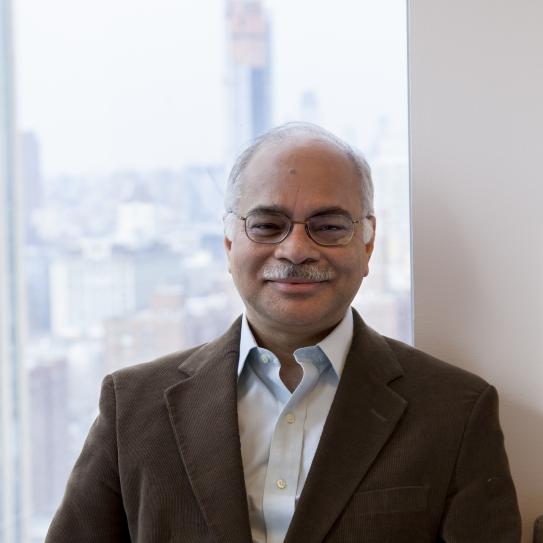
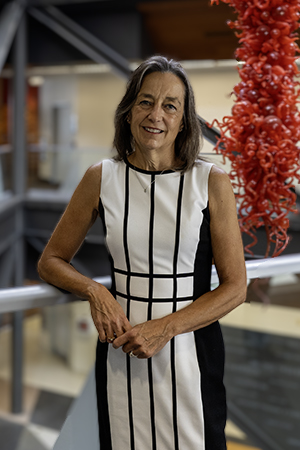
Shivendra Panwar is a Professor in the Electrical and Computer Engineering Department at the NYU Tandon School of Engineering and Director of the New York State Center for Advanced Technology in Telecommunications (CATT). He holds IEEE Fellow and NAI Fellow distinctions. His research focuses on wireless networks (5G/6G, mmWave, terahertz), video distribution over wireless, AR/VR/XR applications, and R&D policy. Education: B.Tech from IIT Kanpur (1981), M.S. and Ph.D. from University of Massachusetts Amherst (1983, 1986). He co-founded the NY City Media Lab and is a member of NYU Wireless. Notable awards include the IEEE Leonard G. Abraham Prize (2004), 2011 Multimedia Best Paper Award, and Sony Research Awards (2016-2017). Recent work addresses challenges in millimeter wave systems, full-duplex cellular networks, and latency-sensitive applications. His contributions span protocol design, network architecture innovation, and economic analysis of telecom systems. He has authored/co-authored influential books on TCP/IP and network management.
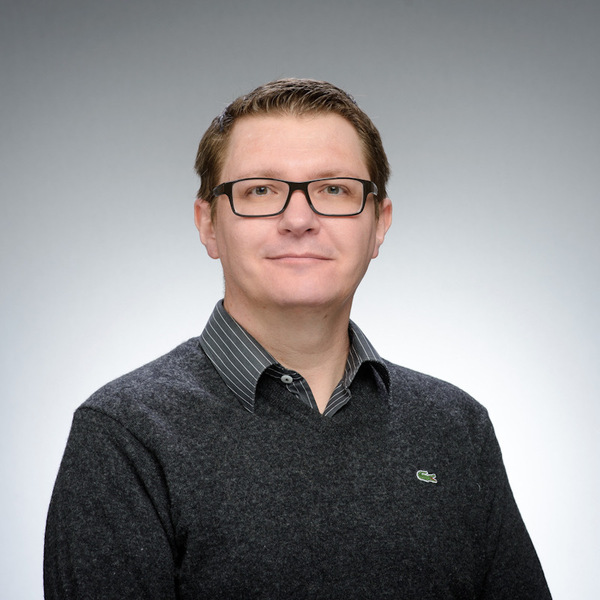
Andrey Kuehlkamp is a Postdoctoral Research Associate at the Center for Research Computing (CRC) of the University of Notre Dame. He holds a Ph.D. from the same institution, focusing on iris biometrics. His research spans blockchain analytics, supply chain management applications of blockchain, computer vision, machine learning, and distributed systems. He is particularly known for contributions to biometric security, including post-mortem iris recognition and presentation attack detection. Educational Background: Ph.D. in Biometrics and Computer Vision, University of Notre Dame Research Focus: Dr. Kuehlkamp’s work bridges theoretical advancements in biometrics and practical implementations in blockchain technologies. His biometric research emphasizes forensic applications and the ethical use of AI in recognition systems. In blockchain, he explores trust frameworks, decentralized applications, and security protocols to enhance transparency and reliability. Articles Trends: His publications reflect a dual focus on biometrics and blockchain innovation. Early work (2014–2020) centered on iris recognition techniques, including post-mortem analysis and gender prediction challenges. Recent contributions (2022–2025) pivot toward blockchain’s role in trust systems, fraud detection, and cross-chain interoperability, demonstrating interdisciplinary collaboration between computer science and cybersecurity. Labs/Teams: As part of the CRC, he collaborates on projects requiring high-performance computing and data analysis, leveraging the center’s resources to tackle complex problems in distributed systems and forensic technology.
Charles F. Vardeman II is a Research Professor in the Department of Computer Science and Engineering at the University of Notre Dame, where he also holds an appointment at the Center for Research Computing (CRC). He earned his B.S. and Ph.D. in Chemistry from Notre Dame, focusing on theoretical chemistry and molecular dynamics simulations of nano-metallic and glassy systems. His research integrates computational models with linked data and semantic web principles, emphasizing ontology design patterns (ODPs) to enhance data integration and discovery. He explores AI-driven approaches for knowledge representation in machine learning and symbolic neural networks. Education: B.S. in Chemistry (Notre Dame), Ph.D. in Theoretical Chemistry (Notre Dame). Research interests include computational modeling, semantic web technologies, ontology engineering, and the application of AI to material science and environmental sustainability. His work bridges domains like molecular dynamics simulations, geospatial data systems, and cyberinfrastructure design. Recent projects address hurricane risk assessment, resilient building design, and open-source molecular dynamics tools like OpenMD. Publications focus on advancing open-source computational tools, ontology-driven data integration, and interdisciplinary cyberinfrastructure. Notable contributions include developing the OpenMD molecular dynamics engine and frameworks for geospatial data interoperability. He has contributed to initiatives like the Cyberinfrastructure Center of Excellence and CyberEye for disaster response systems. His efforts emphasize linking computational experiments with real-world applications through semantic technologies.
Katy Vaughan is a Senior Lecturer at Swansea University's School of Law within the Faculty of Humanities and Social Sciences, serving as the School's Student Engagement Partner since 2021. She is an active researcher in counterterrorism law, human rights, and legal education, with significant involvement in major international initiatives addressing online terrorist content. Her educational background includes an LLB with First-class honours from Swansea University and an LLM in Human Rights and International Law with Distinction from the University of Birmingham. Her PhD focused on the tension between national security considerations and the right to a fair trial, specifically examining closed material procedures under the Justice and Security Act 2013. Vaughan's research centers on counterterrorism law and policy with particular emphasis on how these intersect with human rights protections. She approaches these global challenges through multi-stakeholder collaboration, regularly engaging with governments, tech industry representatives, and civil society organizations. Her work has increasingly focused on the regulation of online terrorist content and the balance between security measures and fundamental rights in digital spaces. Analysis of her recent publications reveals a consistent focus on practical approaches to moderating terrorist and extremist content online while maintaining respect for human rights and freedom of expression. Her work demonstrates expertise in developing frameworks for cross-sector collaboration between governments, technology platforms, and civil society to address the complex challenges of online content governance. Vaughan holds significant leadership positions including Co-Chair of the Christchurch Call Advisory Network and membership in the Global Internet Forum to Counter Terrorism (GIFCT) Legal Frameworks Working Group, where she has contributed to international efforts to combat terrorist content online while protecting fundamental rights. She actively supervises PhD students on topics including deepfakes and human rights accountability, cybersecurity standards, and bulk surveillance compliance with human rights law. Her grant portfolio includes ESRC Impact Accelerator funding for building inclusive multistakeholder networks and projects focused on student engagement barriers. Vaughan is prominently affiliated with research centers including the Cyber Threats Research Centre (CYTREC), VOX-Pol Network of Excellence, and contributes to major international policy initiatives addressing the complex intersection of counterterrorism, human rights, and digital governance.
Reza Tadayoni is an Associate Professor at the Department of Electronic Systems, part of the Technical Faculty of IT and Design at Aalborg University. His research focuses on cybersecurity, digital transformation, IoT, media and internet concentration, and policy analysis. He has led and participated in numerous projects, including the Global Media & Internet Concentration Project and DINNOCAP, which explore regulatory frameworks and innovation strategies. His work spans technical and societal dimensions, addressing challenges in cross-border e-government services, SME cybersecurity, and sustainable technology adoption. Tadayoni has contributed to over 80 publications, with recent work emphasizing EU sustainability regulations, 5G deployment challenges, and AI industry dynamics. His research bridges academia and policy, aiming to inform digital governance and technological resilience. Projects: Global Media & Internet Concentration Project (2021–2028) Cybersecurity in Baltic Sea Region SMEs (2022) DINNOCAP: Digital Innovation Capacity Building (2021) Research Interests: Cybersecurity strategies for SMEs and critical infrastructure Regulatory frameworks for digital product passports and IoT Market dynamics in video conferencing and AI industries Cross-border e-government service interoperability His activities include organizing workshops on sustainable healthcare futures and participating in EU policy dialogues. Media engagements highlight his work on 5G spectrum allocation, hybrid cloud architectures, and network neutrality debates.
Mladen Kezunovic is a Distinguished Professor, Regents Professor, and Eugene E. Webb Professor in the Department of Electrical and Computer Engineering at Texas A&M University. He leads the Power Engineering Research Center (PSerc) and specializes in protective relaying, computational intelligence, and smart grid technologies. With over 600 publications and 10 books, his work bridges academic research with industry applications through his consulting firm XpertPower™. Affiliations: College of Engineering, PSerc Consortium, IEEE Life Fellow, CIGRE Fellow Educations: Ph.D. (1980), M.Sc. (1977), and Dipl. Ing. (1974) in Electrical Engineering from University of Kansas and University of Sarajevo His research focuses on data-driven grid resilience , including machine learning for outage prediction, synchrophasor analytics, and smart grid cybersecurity. Recent projects address weather-related outages, transformer life-cycle management, and hybrid energy system integration. Key awards include membership in the US National Academy of Engineering (2022), IEEE Life Fellowship (2017), and global collaborations as a Guest Professor at Tsinghua University (2018–2021). Grants & Advising: Over $10M in sponsored research, advisor to 50+ industry projects, mentor to visiting scholars from Brazil, China, and Europe Labs: Power Systems Engineering Research Center (PSERC), Synchrophasor Analytics Lab, Smart Grid Cybersecurity Initiative
Sharon Crook is a Professor in the School of Mathematical and Statistical Sciences at Arizona State University, where she serves as Associate Director for Graduate Programs. Her research focuses on computational neuroscience, developing standardized modeling approaches like NeuroML for multi-scale simulations of neural systems. Her work bridges computational neuroscience, cognitive science, and machine learning, creating integrative frameworks for model development. Research interests include neural oscillations, computational neuroanatomy, model interoperability, and data-driven approaches to understanding neural dynamics. Her recent publications demonstrate a strong focus on developing standardized modeling frameworks and computational tools. She explores applications in medical imaging analysis, neural simulation platforms, and collaborative neuroscience resources.
Miguel Pupo Correia is a Full Professor in the Department of Computer Science and Engineering at Instituto Superior Técnico, University of Lisbon. He serves as President of the Executive Committee of INESC-ID and is a researcher in the Distributed, Parallel and Secure Systems (DPSS) group. He represents Portugal in the European Blockchain Partnership (EBP) and holds roles in Associação .PT. He holds a PhD in Computer Science from the University of Lisbon Faculty of Sciences. His research focuses on cybersecurity, dependability in distributed systems, and their applications in blockchain, cloud, and mobile environments. Key projects include TRUSTyFOOD, BIG, and MAFTIA, among others. He is an Associate Editor for IEEE Transactions on Computers and a Senior Member of IEEE. His work spans blockchain interoperability, secure cloud storage, intrusion detection, and fault-tolerant algorithms. Notable contributions include BlockSim (a blockchain simulator) and SRX (SGX data recovery). He has over 200 publications and leads initiatives like BLOCKCHAIN.PT to advance Portugal’s blockchain adoption.
Pavlos Fafalios is an Assistant Professor of Information Systems at the School of Production Engineering and Management, Technical University of Crete, and an Affiliated Researcher at the Centre for Cultural Informatics (CCI) and Information Systems Laboratory (ISL), Institute of Computer Science, Foundation for Research and Technology - Hellas (FORTH). He holds a PhD and MSc in Information Systems from the University of Crete and an Engineer's Diploma from the University of the Aegean. His academic journey includes postdoctoral research at L3S Research Center, Leibniz University of Hanover, and FORTH-ICS, as well as teaching roles at Hellenic Mediterranean University and the University of Crete. His research interests span Information Systems , Data and Knowledge Management , and Linked Data , with a strong interdisciplinary focus on applications in Cultural Heritage and the Humanities . He develops semantic technologies, knowledge graphs, and information management systems for complex, real-world domains. The recent publications highlight a strong trend in applying semantic technologies to cultural and historical data, including earthquake data modeling, feminism history documentation, and museum data integration. His work consistently focuses on knowledge representation, ontology development, and data interoperability, particularly using CIDOC CRM and Linked Data principles. Individual postdoctoral research fellowship 'Marie Skłodowska-Curie' (H2020-MSCA-IF-2019) Finalist for the '2019 ERCIM Cor Baayen Young Researcher Award' Fellowship from legacy 'Maria Michael Manasaki' (2014-2015) 1st prize in Hack4Med 2014 1st prize in Blue Hackathon 2013 PhD and MSc scholarships by FORTH Pavlos Fafalios has been involved in significant research projects such as PortADa (MSCA Staff Exchange), RICONTRANS (ERC Consolidator Grant), FE.P.I.B., ReKnow (Marie Curie project), SeaLiT (ERC Starting Grant), and ALEXANDRIA (ERC Advanced Grant), where he served as principal investigator, scientific responsible, or lead researcher. He has supervised student projects that led to award-winning software tools. He is active in scientific committees and regularly publishes in international venues. He leads and contributes to research in the Centre for Cultural Informatics (CCI) and Information Systems Laboratory (ISL) at FORTH-ICS, collaborating on interdisciplinary projects that bridge computer science with humanities and cultural heritage. His lab work emphasizes practical tools for semantic data integration, exploration, and analysis.
Ann Fruhling is a Distinguished Professor in the College of Information Science & Technology at the University of Nebraska at Omaha, where she serves as the founding Director of the School of Interdisciplinary Informatics and Chair of the Ph.D. in Computing and Information Science program. She is also co-Director of the Nebraska University Center for Biomedical Informatics Research and Innovation and Director of the Consortium for Public Informatics (CPHI). Education: Ph.D. in Management Information Systems, Strategy, Marketing, Computer Science, and Human-Computer Interaction – University of Nebraska–Lincoln, 2003 MBA – University of Nebraska at Omaha, 1991 BS in Computer Information Systems – Colorado State University, 1983 Dr. Fruhling's research centers on human-computer interaction, usability, health and biomedical informatics, and agile system development. Her work emphasizes designing and evaluating information systems for high-stakes environments, particularly emergency response and public health laboratories. She is the Principal Investigator of STATPack™, a widely deployed bioterrorism surveillance system. Her recent publications reflect a strong focus on usability in health IT, emergency informatics, agile methodologies, and public health system design. The research spans disciplines including information systems, cognitive science, software engineering, and public policy, with recurring themes of user-centered design, system reliability, and real-world implementation challenges. Scientific Awards: Charles W. and Margre H. Durham Distinguished Professor (2017) UNO Graduation Marshal (2016) Mutual of Omaha Distinguished Professor (2011) Nebraska Navy Admiral Award (2006) Dr. Fruhling has secured over $8.5 million in research funding across more than 100 projects, supporting the training and development of over 85 students. She advises doctoral students in the CIS Ph.D. program and leads collaborative research initiatives through CPHI and the Biomedical Informatics Center. Her teaching portfolio includes Human-Computer Interaction, Health Informatics, Agile Development, and MIS Capstone courses. She leads the STATPack™ research lab in PKI 363 and collaborates with public health laboratories across the Midwest. Her team focuses on developing, evaluating, and deploying informatics solutions for emergency preparedness and response.
Leonardo Magela Cunha is a Lecturer in Computer Science at King's College London's Department of Informatics, part of the Faculty of Natural, Mathematical & Engineering Sciences. He holds a PhD from the Pontifícia Universidade Católica do Rio de Janeiro (PUC-Rio) and previously worked as a Software Engineer at Petrobras. His research focuses on Artificial Intelligence, Multi-agent Systems, Agent-based Modeling, Semantic Web technologies, and Responsible AI Education. He is affiliated with King's Computing Education Research Centre (CERC) and contributes to the Sustainability Hub, exploring Distributed Artificial Intelligence in socio-economic contexts. Key research interests include the intersection of AI ethics with education, semantic frameworks for collaborative environments, and agent-based approaches to group formation in e-learning platforms. He co-authored the influential 2023 working paper on Responsible AI Education frameworks, blending technical and pedagogical insights. Earlier work centered on semantic web applications, model-driven architecture (MDA), and collaborative learning platforms like AulaNet, leveraging agent-based approaches for group management and task allocation. His academic contributions span over 15 publications since 2001, emphasizing both foundational technical research and applied educational technology. He leads the Computing Education Research Centre's initiatives in curriculum design and pedagogical innovation, particularly in computer science education. Current projects aim to integrate sustainability metrics into distributed AI systems and address ethical challenges in AI curricula. Labs/Teams: Sustainability Hub, Computing Education Research Centre (CERC) Key Collaborations: Multi-institutional AI ethics frameworks, Agent-based learning systems Future Work: Expanding Responsible AI education programs, semantic web interoperability standards
David A. Hanauer is a Clinical Associate Professor at the University of Michigan, holding joint appointments in Pediatrics, Learning Health Science, and the School of Information. He focuses on healthcare informatics, clinical data analysis, and AI applications in medicine. His work addresses challenges in reproducibility of large language models, healthcare data standards, and privacy-preserving techniques. Education: BA, Cornell University (1995) MD, University of Michigan Medical School (1999) MS, Harvard–MIT Division of Health Sciences and Technology (2004) Pediatric Residency, New York University (2002) Research Interests: Dr. Hanauer explores clinical natural language processing, healthcare AI validation, interoperability standards like LOINC, and privacy-preserving methods for training clinical models. He develops tools like EMERSE to enhance unstructured data utilization. Affiliations: Institute for Healthcare Policy and Innovation, Rogel Cancer Center, Center for Computational Medicine and Bioinformatics. Grants & Mentoring: Available to mentor researchers. His grants likely support clinical informatics projects given his publication focus.
Marzio Sorlini is an Associate Professor of Industrial Process Sustainability at the University of Applied Sciences and Arts of Southern Switzerland (SUPSI), affiliated with the Department of Innovative Technologies (DTI) and the Sustainable Production Systems Laboratory (LSPS). He has been active at SUPSI since 2009, combining teaching in Management Engineering with research in sustainability, manufacturing innovation, and circular economy. His work focuses on integrating sustainability into industrial processes through methodologies like Life Cycle Assessment (LCA) and Lean manufacturing. Education: Master of Science in Management Engineering (Politecnico di Milano, 2001) and PhD in Industrial Engineering (Università degli Studi di Parma, 2017). Professional roles include co-founding Technology Transfer System s.r.l. (2006) and leading SUPSI’s Sustainable Production Systems research initiatives. Research interests emphasize sustainable manufacturing systems, industrial symbiosis, and digital tools for environmental performance assessment. Key projects include SAM (sustainability in mould&die industry), CO-VERSATILE (pandemic response manufacturing), and Circular TwAIn (AI-driven circularity). His publications address topics like LCA methodologies, industrial agglomeration sustainability, and anthropocentric workplace design. Notable contributions include developing the Sustainability Platform (SP) for LCA applications and advising on mass customization and lean-green production paradigms. Current roles involve strategic leadership in EU projects targeting sustainable manufacturing resilience and circular economy innovation.
Dr. Simon Miles Polovina is a researcher affiliated with Sheffield Hallam University in the United Kingdom, specializing in the intersection of enterprise architecture, conceptual structures, and business computing. His work focuses on applying formal concept analysis to enterprise systems modeling and developing frameworks for layered enterprise architecture development. His research spans several critical areas in information systems: Enterprise Architecture methodologies and layered development approaches Conceptual Structures including Conceptual Graphs and Formal Concept Analysis Transaction-oriented architectures for enterprise systems Ontology engineering and semantic interoperability Application of these techniques to business process management and knowledge representation Polovina's publication record demonstrates a consistent research trajectory spanning over 15 years, with recent work focusing on metadata-driven enterprise architecture, endeavor architecture for societal adaptation, and active semantic relations. His research shows strong connections between theoretical conceptual structures and practical enterprise applications across domains including healthcare, accounting systems, and crime detection frameworks. He maintains an extensive collaborative network with researchers including Mark von Rosing, Wim Laurier, and Simon Andrews, resulting in numerous publications in prestigious venues such as Lecture Notes in Computer Science and the International Journal of Conceptual Structures and Smart Applications. His work bridges theoretical computer science with practical business applications, making complex conceptual frameworks accessible and applicable to real-world enterprise settings.
Mira Burri is a Tenured Professor of International Economic and Internet Law at the Faculty of Law, University of Lucerne, where she also serves as Director for Internationalization. She is the principal investigator of the ERC project 'Trade Law 4.0: Trade Law for the Data-Driven Economy' (2021–2026) and a member of the National Research Council of the Swiss National Science Foundation (SNSF) since 2022. University: University of Lucerne School: Faculty of Law Position: Tenured Professor Email: mira.burri@unilu.ch Office: Frohburgstrasse 3, CH-6002 Luzern, Raum 4.A31 She teaches courses including International Law of Contemporary Media, Digital Copyright, Internet Law, International Intellectual Property Law, and International Trade Law. She also lectures at IMD Lausanne, the World Trade Institute, and the University of Göttingen’s LIPIT programme. Education: Law Degree – University of Sofia Master of Advanced European Studies (MAES) – Europe Institute, University of Basel Doctorate in EU Competition Law – awarded Professor Walther Hug Prize (2006/2007) Habilitation (2015) – venia docendi in international economic law, European and international communications and media law, and Internet law Research Interests: Mira Burri’s research lies at the intersection of law, technology, and globalization. She specializes in international economic law, digital trade, Internet governance, and intellectual property in the digital age. Her work explores how traditional legal frameworks adapt to the challenges posed by data-driven economies, artificial intelligence, and digital platforms. She investigates regulatory responses to digital monopolies, cross-border data flows, and the balance between free trade and cultural diversity. Publication Trends: Her recent publications reflect a strong focus on digital transformation in trade and cultural law. Themes include big data governance, digital copyright, platform regulation, and the classification of digital services. Her editorial and authorial work emphasizes interdisciplinary approaches, combining legal analysis with insights from economics, media studies, and policy. She consistently contributes to high-impact journals and edited volumes on global trade law, digital rights, and cultural policy. Scientific Awards and Recognition: Professor Walther Hug Prize (2006/2007) for doctoral thesis Advising, Grants, and Leadership: As principal investigator of the ERC-funded 'Trade Law 4.0' project, Prof. Burri leads a major research initiative on trade law in the data-driven economy. She has secured significant research funding and supervises a research team exploring legal frameworks for digital trade. She advises international organizations including UNESCO, the European Parliament, the Canadian government, the International Centre for Trade and Sustainable Development, EFTA, and the World Economic Forum on digital innovation, cultural diversity, and Internet governance. Labs, Teams, and Networks: She is a member of the editorial boards of the International Journal of Cultural Property and Arts and International Affairs . She participates in the EU Expert Network for Culture and Audiovisual, the TaPP Network, and the Digital Trade & Data Governance Hub (Washington D.C.). Her research is supported by institutional affiliations with the University of Lucerne’s Faculty of Law and its international networks, fostering interdisciplinary collaboration on digital governance.