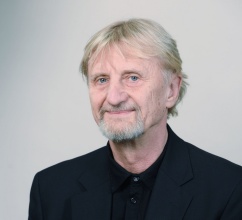
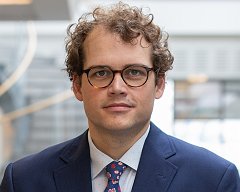
Mohammed ShafaeView profile
Assistant Professor
Mohammed Shafae is an Assistant Professor in the Department of Systems and Industrial Engineering at the University of Arizona, where he has been serving since 2018. He is also a member of the Graduate Faculty, contributing to advanced research and mentorship in engineering disciplines. Education: PhD in Industrial and Systems Engineering, Virginia Tech, Blacksburg, Virginia, United States MS in Industrial and Systems Engineering, Virginia Tech, Blacksburg, Virginia, United States MS in Production Engineering, Alexandria University, Alexandria, Egypt BS in Production Engineering, Alexandria University, Alexandria, Egypt His research centers on cyber-physical systems security , smart manufacturing systems , and data-driven quality control , with a strong emphasis on leveraging manufacturing data for process monitoring, modeling, and securing machining and additive manufacturing systems. His work integrates statistical process monitoring, machine learning, and advanced metrology to enhance manufacturing resilience and efficiency. His recent publications (2022–2025) reflect a clear trend toward securing Industry 4.0 systems, with a focus on digital twin security, attack detection in machining, and anomaly detection in additive manufacturing using photodiode and thermal data. He also explores futuristic applications such as in-situ lunar manufacturing using regolith-based materials. Scientific Awards: First Place in the ASCEND Propel Pitch Competition (AIAA, Fall 2020) Virginia Tech Teaching Excellence Award (Spring 2017) Harold Schneikert Graduate Fellowship (Spring 2016) David H. Burrows Graduate Fellowship (Fall 2015) Best Track Paper Award (IEOM 2012) Prize for Excellence in Senior Design Project (Cairo, 2009) Dr. Shafae actively mentors graduate students, co-authoring numerous publications with advisees in areas such as cybersecurity, additive manufacturing, and process monitoring. While specific grant details are not listed, his research is clearly funded through competitive fellowships and likely external grants given the volume and quality of his outputs. He has no listed labs or teams in the provided text, but his collaborative work suggests active participation in research groups focused on smart manufacturing and cybersecurity.