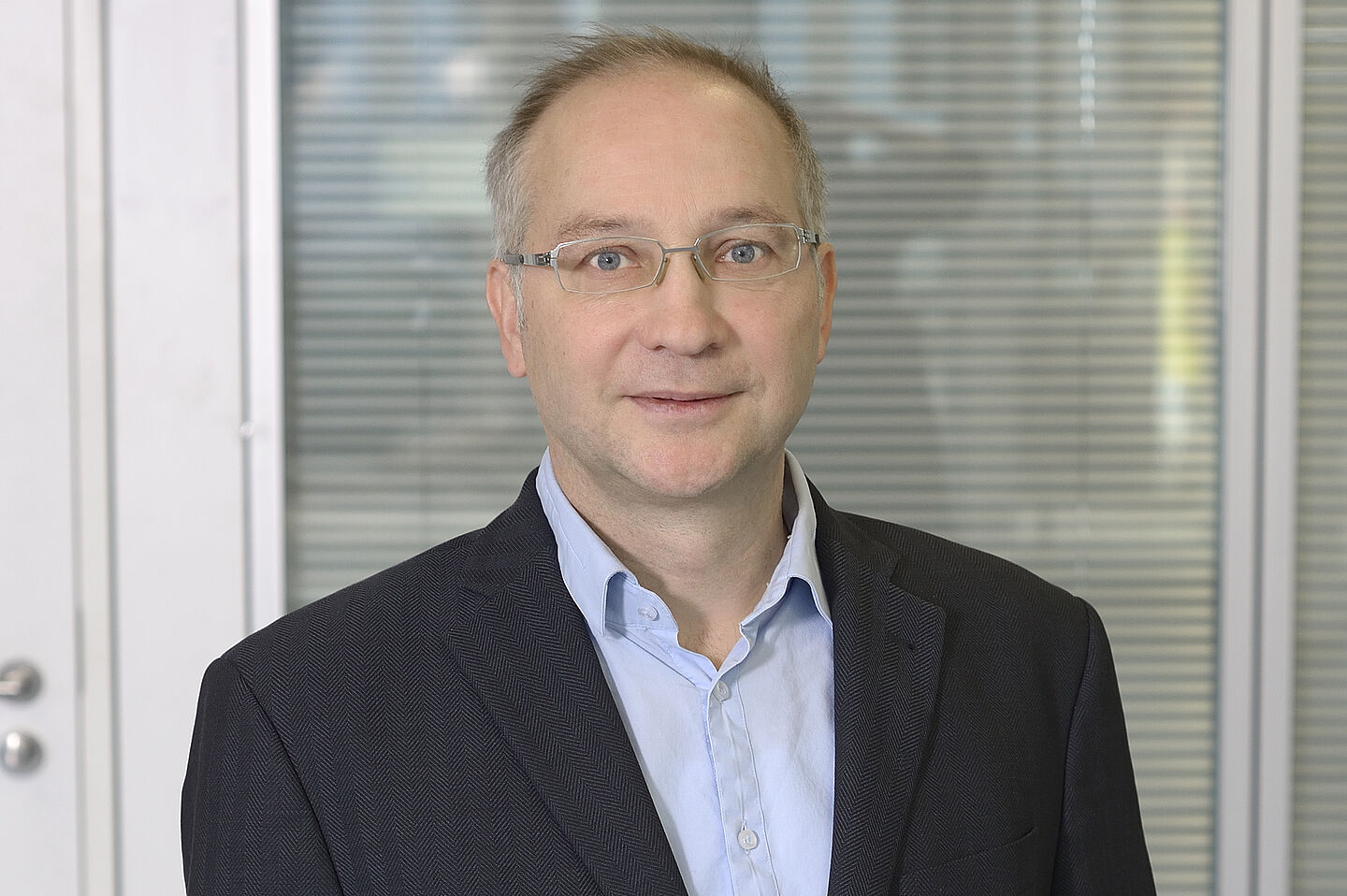
Frederik Lesage is an Associate Professor at Simon Fraser University’s School of Communication, specializing in digital media, communication technology, and media software inscription strategies. His research explores the intersection of artistic practices with technological systems, affect theory in public engagement, and the role of software in shaping creative capabilities. PhD in Media and Communication (LSE) MA in Cultural and Creative Industries (KCL) Lesage investigates how digital tools like Photoshop influence cultural production and how data journalism bridges objective reporting with open-source practices. His publications examine media ethnography, big data communication, and the evolving relationship between users and software ecosystems. His teaching includes courses on data and society, contemporary communication studies, and specialized topics in media software. While no specific awards are listed, his research has been supported by collaborative grants and institutional projects.
Dr. Elinor Carmi is a Senior Lecturer in Data Politics and Social Justice at the Department of Sociology & Criminology , School of Policy and Global Affairs , City, University of London . She is also the Co-Director of the MSc Data, Policy and Society and serves as Associate Dean for Postgraduate Research. Her research sits at the intersection of data politics, digital rights, feminist media studies, and social justice, with a strong focus on data literacies, disinformation, and platform governance. Dr. Carmi holds a PhD from Goldsmiths, University of London, an M.A. from Tel Aviv University, and a B.A. from College of Management Academic Studies, Israel. Her academic journey includes postdoctoral and teaching roles at the University of Liverpool, Royal Holloway, and Goldsmiths. Her research interests span data citizenship , critical data studies , feminist critiques of digital consent , algorithmic accountability , and sound studies as a framework for understanding media power. She has developed key concepts such as processed listening and rhythmedia to analyze how platforms like Facebook engineer sociality and filter behavior. Her recent work emphasizes resistance to big tech, digital inclusion, and the development of societal immunity to misinformation. Her publications and funded projects reveal a strong trend toward interdisciplinary, policy-relevant research. She has led and collaborated on major grants from UKRI, ESRC, Nuffield Foundation, and Google, focusing on digital living standards, fake news immunity, and responsible AI education. Her recent articles explore feminist epistemologies in media, cyber espionage (e.g., Pegasus), and the political use of chatbots. Expert Member, UK Information Commissioner’s Office (ICO) Technology Advisory Panel (2024–present) Trustee, Media and Information Literacy Alliance (2024–present) Open Fellow, Weizenbaum Institute (2024) Parliamentary Academic Fellow, POST (2021–2023) Academic Editor, Internet Policy Review Dr. Carmi is an active public intellectual, advising organizations such as WHO, UNESCO, Amnesty International, and the Royal Society. She has testified before the UK House of Lords and contributed to high-impact policy reports, including the WHO’s Public Health Research Agenda for Managing Infodemics . She mentors PhD students and leads collaborative research teams focused on digital equity and resistance. She is also involved in public engagement, frequently appearing in media and delivering talks at institutions like MIT. Her work bridges academia, policy, and activism, with a clear commitment to democratizing data and challenging structural inequalities in digital systems.
Taejoong (Tijay) Chung is an Associate Professor at the Computer Science Department, Virginia Tech, and Adjunct Professor at POSTECH. He previously served as Assistant Professor at RIT (2018-2020) and Postdoctoral Researcher at Northeastern University (2015-2018). Ph.D. in Computer Science and Engineering, Seoul National University (2015) His research focuses on Internet security protocols for DNS, TLS, Routing, and Email, with emphasis on Public Key Infrastructure (PKI), DNSSEC, RPKI, and Email Security. He develops scalable measurement frameworks (e.g., RoVista) and security enhancements (e.g., RevDNS, AccuRevoke) for global internet infrastructure. Recent publications (2023-2026) address RPKI validation risks , DNSSEC operational challenges , email authentication protocols , and scalable TLS monitoring . He explores post-quantum DNSSEC transitions and decentralized revocation mechanisms. Scientific awards include: NSF CAREER Award (2024) Outstanding New Assistant Professor, Virginia Tech (2024) IRTF Applied Networking Research Prize (2019) ACM CCS Best Paper Honorable Mention (2022) He mentors Ph.D. and Master’s students in cybersecurity, with former advisees securing positions at Meta, Cloudflare, and UVA. His research receives grants like the IRTF travel grant for IETF meetings (2025).
Ali Shariq Imran is an Associate Professor at the Department of Computer Science, Norwegian University of Science and Technology (NTNU), within the Faculty of Information Technology and Electrical Engineering. He holds a Ph.D. from the University of Oslo and a Master's from NUST, Pakistan. His research focuses on deep learning applications in speech analysis, image/video processing, semantic web technologies, and eLearning. He has published extensively in journals like IEEE Access, Engineering Applications of Artificial Intelligence, and Frontiers in Computational Neuroscience, with notable work on hate speech detection, biomedical signal analysis, and sentiment analysis in social media contexts. His awards include the HEC and UIUC scholarships and a 2015 Best Paper Award at HCI Intl. He serves on the board of the HCI International Conference and is an IEEE member. Teaching includes courses on coding/compression, software engineering, and web development. His competencies span AI, digital signal processing, and multimedia systems. Research interests include contextual understanding, OCR, and object identification in multimedia, alongside eLearning innovations like MOOCs and LMS integration. He has co-edited special issues on healthcare systems and software standards in journals like JMIHI and IEEE Access. His work frequently employs explainable AI (XAI) to enhance transparency in medical diagnostics and social media analysis.
Peter Swire is the J.Z. Liang Chair in the School of Cybersecurity and Privacy at the Georgia Tech College of Computing, and Professor of Law and Ethics in the Scheller College of Business at Georgia Institute of Technology. He also holds an appointment by courtesy with the School of Public Policy. In addition to his academic roles, Swire serves as Senior Counsel with Alston & Bird, LLP in the Privacy & Data Security Practice, and as Research Director of the Cross-Border Data Forum which he founded in 2018. Swire has been a leading privacy and cyberlaw scholar, government leader, and practitioner since the rise of the Internet in the 1990s. His research focuses on privacy, cybersecurity, data protection, and law of cyberspace, with particular expertise in cross-border data flows and the risks to cybersecurity from data localization. His work on the Cross-Border Requests for Data Project directly influenced the development of the U.S. CLOUD Act enacted in 2018. Swire's research has significant policy impact, having served in high-level government positions including as Chief Counselor for Privacy under President Clinton (the first person to have U.S. government-wide responsibility for privacy policy) and as Special Assistant to the President for Economic Policy under President Obama. He also served as one of five members of President Obama's Review Group on Intelligence and Communications Technology, and was co-chair of the global Do Not Track process for the World Wide Web Consortium. Swire has received notable recognition for his work: 2018 Andrew Carnegie Fellow to study "Protecting Human Rights and National Security in the New Era of Data Nationalism" 2015 Privacy Leadership Award from the International Association of Privacy Professionals As an educator, Swire teaches "Privacy Technology, Policy, and Law" (with Prof. Antón) and "Information Security Strategies and Policy." He published a framework in 2018 for teaching the non-code aspects of cybersecurity. His research has been supported by significant grants including the Andrew Carnegie Fellowship which provided $200,000 in research funding. Swire leads the Cross-Border Data Forum, which builds on the successful Georgia Tech "Cross-Border Requests for Data Project." The Forum has produced influential research on data localization and cybersecurity, mutual legal assistance, and international data flows. His work often bridges academic research, government policy, and private sector practice.
José María Gutiérrez Martínez is an Associate Professor in the Department of Computer Science at the University of Alcalá. He is part of the PMI (Intelligent Mobile Platforms) research group, focusing on mobile computing, AI, and educational technology. His work integrates interdisciplinary approaches, including IoT, gamification, and healthcare IT. He holds a Doctorate from the University of Alcalá with a thesis on intelligent agents for internet-based learning systems (2006). His academic contributions span over 50 publications since 2017, addressing challenges in accessibility, mobile applications, and sustainable technologies. Research interests include: 1) Developing accessible mobile applications for diverse users, 2) AI-driven solutions for healthcare and education, 3) Optimizing lighting systems for energy efficiency, and 4) Gamification strategies in university environments. Recent projects include ESCOGPT (AI-powered search tools) and μDevOps (cybersecurity microservices). His work bridges theory and practice through collaborations with industry partners. Ongoing efforts focus on applying machine learning to environmental conservation and improving workplace ergonomics via IoT systems.
Salvador Sánchez Alonso is a Professor at the Department of Computer Languages and Systems, Universidad de Alcalá. He holds a PhD from Universidad Politécnica de Madrid (2005) under Dr. Miguel Ángel Sicilia Urbán. His research focuses on blockchain technology, cybersecurity, linked data, healthcare informatics, and educational technology. He actively contributes to the I4 research group (Intelligence, Innovation, Internet, and Information), exploring topics like privacy-preserving systems, social network analysis, and open data principles. His work bridges theoretical advancements with practical applications, such as predictive modeling for healthcare innovation, quality assessment of educational resources, and decentralized identity systems. Recent publications highlight innovations in quantum software measurement, KlimaDAO analysis, and ethical AI traceability. He has also explored the impact of political events on social networks and hospital resource management through predictive analytics. Key contributions include frameworks for metadata quality in digital repositories, interlinking educational data with the Web of Data, and applying blockchain for secure metadata deployment. His research often intersects interdisciplinary domains, emphasizing social data visualization and user-centric repository design.
Daniela Schiek is a full Professor for Methods of Empirical Social Research with a focus on qualitative methods at the Faculty of Sociology, University of Bielefeld, holding a prestigious DFG Heisenberg Professorship. She is affiliated with Department 2 - Methods of Empirical Social Research and leads the Schiek Group. Her work is also connected to BiSEd, the Bielefeld School of Education. Her research centers on qualitative methodologies , the sociology of the life course and generations , and social inequalities . She investigates how qualitative methods, particularly online and asynchronous interviews, can be effectively employed to understand complex social phenomena. Her work critically examines intergenerational poverty, welfare attitudes, biographical research, and the impact of digitalization on social inquiry. The trends in her recent publications show a strong focus on the adaptation and innovation of qualitative methods in the digital age, particularly asynchronous online interviews and web forums as research tools. Her work bridges methodological rigor with substantive sociological questions about poverty, family, and social marginalization. Her scientific recognition includes the prestigious DFG Heisenberg Professorship, a significant award for outstanding researchers in Germany. She is also an active contributor to the academic community as a co-editor of the journal "Soziale Welt" and through leadership roles in the German Sociological Association. Daniela Schiek has been the principal investigator or co-investigator on multiple externally funded research projects, primarily supported by the German Research Foundation (DFG), on topics such as online interviewing, intergenerational poverty, and internet forums as research instruments. She has advised on national policy reports, including the German government's poverty and wealth report. She actively mentors students and early-career researchers, as evidenced by her numerous academic presentations and teaching roles. She is a key member of the "FAITH" (Foundations and Implications of Human-AI Teamwork) interdisciplinary focus area at Bielefeld University, demonstrating her engagement with cutting-edge research on the intersection of digital technology, human interaction, and social research. Her research group, the Schiek Group, is a central hub for methodological innovation in qualitative social science at Bielefeld.
Xue Liu is a Professor and William Dawson Scholar at McGill University's School of Computer Science, affiliated with the Department of Mathematics and Statistics (courtesy appointment) and the Department of Electrical and Computer Engineering. He holds positions as Vice President R&D and Chief Scientist at Samsung AI Center Montreal, and serves as Chair (2021-2023) of ACM SIGBED. His research focuses on intelligent computing, cyber-physical systems, sustainable computing, AI/ML applications, IoT, and blockchain technologies. Dr. Liu has received multiple Best Paper Awards from conferences such as IEEE GLOBECOM, IEEE HPCC, and IEEE/ACM IWQoS. He is a Fellow of the Canadian Academy of Engineering (FCAE) and IEEE (FIEEE). His work bridges academia and industry, with entrepreneurial ventures including advisory roles at Infinity Stones Inc., TandemLaunch, and Aerial Technologies. He co-edits the Journal of Blockchain Research and serves on editorial boards of major journals like ACM Transactions on Cyber-Physical Systems and IEEE Transactions on Networking. Key research contributions include innovations in blockchain infrastructure, smart grid optimization, and AI-driven systems. His labs, including the Cyber-Physical Intelligence Lab and MILA affiliation, advance interdisciplinary research in machine learning, robotics, and networked systems. Dr. Liu mentors startups and advises initiatives like Learnable Inc., integrating AI into education and healthcare. Education Affiliations: McGill University School of Computer Science (prestige rankings include top 25 globally per QS 2023) Awards: Multiple Best Paper Awards, FCAE & FIEEE Fellowships Labs: Cyber-Physical Intelligence Lab, MILA, CIM, SYTACom Publications: Over 150 peer-reviewed articles, including books on cloud computing, smart grids, and cyber-physical systems
Stefania Pinnelli is a Full Professor in the Department of Human and Social Sciences at the University of Salento , where she teaches Didactics and Special Pedagogy (sector M-PED 03). She is the scientific director of the Center for New Technologies for Disability and School Integration (CNTHI) and plays a key role in academic leadership through coordination of specialization and Master's programs in special education. Master’s in Educational Technology – University of Ulster, UK PhD in Multimedia Educational Technologies and Communication Systems – University of Calabria, Italy Her research centers on inclusive education , with a focus on vulnerable learners, assistive technologies, and digital integration. She investigates human-machine interaction in learning environments, web accessibility , online addictions , and pedagogical approaches for students with specific learning disabilities (DSA) and giftedness (plusdotazione). Her work bridges theory and application in special and inclusive education. Her recent publications reflect a strong thematic focus on assistive technologies , digital inclusion , and evidence-based interventions for students with special needs. The research spans educational technology, psychology, and social integration, emphasizing practical solutions for inclusive classrooms and smart learning environments. Professional Memberships & Editorial Roles: Member, Italian Society of Educational Research (SIRD) Member, Italian Society of Pedagogy (SIPED) Member, Italian Society of Special Pedagogy (SIPES); Board Member (2017–2020) Scientific Committee, Sipes Journal (PensaMultimedia) Review Committee, Integrazione Scolastica e Sociale (Erickson) Member, Biòtopi Series Editorial Board (Liguori ed.) Referee, Universal Journal of Educational Research Chair Organizer, EULEARN Conference She leads multiple research initiatives and funded projects, including Rare Box and Data System Platform for Smart Communities , and serves as a scientific consultant for CNR Lecce and EU-funded projects like ROBIN and Lecturio+ . She also supervises doctoral candidates within the Doctoral School in Human and Social Studies and contributes to academic governance via ISUFI (Higher Institute for Interdisciplinary Education). Laboratories & Research Centers: Scientific Director, Center for New Technologies for Disability and School Integration (CNTHI) , University of Salento Head, Pedagogical Area, Third-Party Help Desk - SUD (services on SEN and DSA)
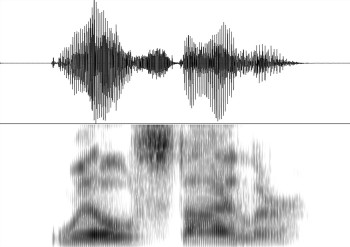
Will Styler is an Associate Teaching Professor in the Department of Linguistics at the University of California San Diego (UCSD), where he also serves as Director of the Computational Social Science (CSS) Program. He specializes in computational approaches to speech, speech technologies, and innovative teaching methods in linguistics, with a strong interest in open scholarship, open tools, and the linguistics of internet culture, including memes. Current Position: Associate Teaching Professor, UCSD Linguistics (2023–Present) Previous Position: Assistant Teaching Professor, UCSD Linguistics (2018–2023) Director, UCSD Computational Social Science Program (2022–Present) Ph.D. in Linguistics, University of Colorado Boulder (2015) His research spans acoustic and articulatory phonetics , natural language processing , and pedagogy , with a focus on speech perception, machine learning applications in phonetics, and trauma-informed, equitable teaching practices. He is a strong advocate for open-access educational resources and open-source software in linguistics. His recent publications reflect a strong trend in computational phonetics , speech processing , and clinical NLP , often combining experimental methods with machine learning. Themes include pause articulation, vowel nasality, coarticulation, and annotation of clinical texts. Scientific Awards: UC San Diego Student Centeredness Award (2024) UC San Diego Legacy Lecture Award (2022) UCSD Linguistics Graduate Student Recognition of Faculty Excellence (2021–22) University of Colorado Graduate Student Teaching Excellence Award (2012–13) Will Styler has advised numerous doctoral and honors students in linguistics, cognitive science, psychology, and computational social science. He has secured grant funding from NSF and UCSD, focusing on speech perception and detection technologies. He leads the CSS program, mentors capstone projects, and develops open educational tools such as Using Praat for Linguistic Research , Using Unix for Linguistic Research , and the EnronSent Corpus . He is actively involved in academic service, including as Site Coordinator for NACLO, Faculty Tech Mentor during the pandemic, and Cyber Champion at UCSD. His lab and team work intersect across phonetics, NLP, and social science, promoting interdisciplinary collaboration through the CSS program.
Dr. Farzad Tahmasebi Aria is an Academic Assistant at the Visual Analytics Research Institute of Middlesex University's Computer Science Department. His research spans electronic customer relationship management (eCRM) , IoT-based education technologies , and image processing . Education: PhD in Computer Science from Middlesex University (2019) Recent research focuses on eCRM readiness in banking (2024) and emotion detection in hybrid learning environments (2023). His work integrates technology solutions for organizational maturity and educational innovation. Publications highlight trends in CRM systems, IoT applications, and global ethical commerce challenges. Affiliated with the Visual Analytics Research Institute , he collaborates with researchers like G. Dafoulas and K. Mistry.
Prof. Dr. Ulf Schemmert is a Professor for Telecommunication Infrastructures and their Physical Foundations at the HTWK Leipzig , Faculty of Digital Transformation. He has served as Dean of the Faculty of Digital Transformation from 2020 to 2024 and held academic positions at institutions like the Leipzig University of Telecommunications (2005-2019) and University of Leipzig (doctorate 1995-2001). Research focuses on mobile applications , optical transmission systems , photonic networks , and 3GPP networks . Active in digital teaching and e-learning initiatives, including projects like the Smart Physics Laboratory (2019-2020) and Agri-Photovoltaics (2023-2024). Publications bridge IoT middleware and physics education , emphasizing practical applications in telecommunications and educational technology.
Alex Gabriel is an Associate Professor at the University of Lorraine, affiliated with the National School of Engineering in Systems and Innovation (ENSGSI) and the Research Team on Innovative Processes (ERPI). His work bridges the gap between engineering and digital innovation, with a focus on developing tools for creativity and innovation processes. His research interests span across several cutting-edge domains including Artificial Intelligence, Extended Reality, Knowledge Engineering, and Innovation Processes. Gabriel's work particularly emphasizes the application of AI technologies (ontology, machine learning, neural networks) to enhance creativity support systems and innovation management. His expertise extends to the design of embedded electronic systems, development of data processing programs, and deployment of web services for laboratory tools. Recent publication trends show a strong focus on XR technologies, with numerous papers on virtual reality applications in education, design, and healthcare. His work demonstrates a consistent trajectory from foundational research on creativity support systems toward practical applications of immersive technologies in professional training and educational contexts. Gabriel has been particularly active in developing authoring tools for XR content, with multiple related publications in 2024-2025. As a researcher and educator, Gabriel has been instrumental in developing the HELP XR platform, which includes both web and VR components for creating educational content. His work connects theoretical research with practical applications, particularly in engineering education and professional training contexts. His collaborative approach is evident in his numerous multi-author publications spanning multiple institutions and disciplines, reflecting his engagement with interdisciplinary research communities focused on innovation processes and digital transformation.
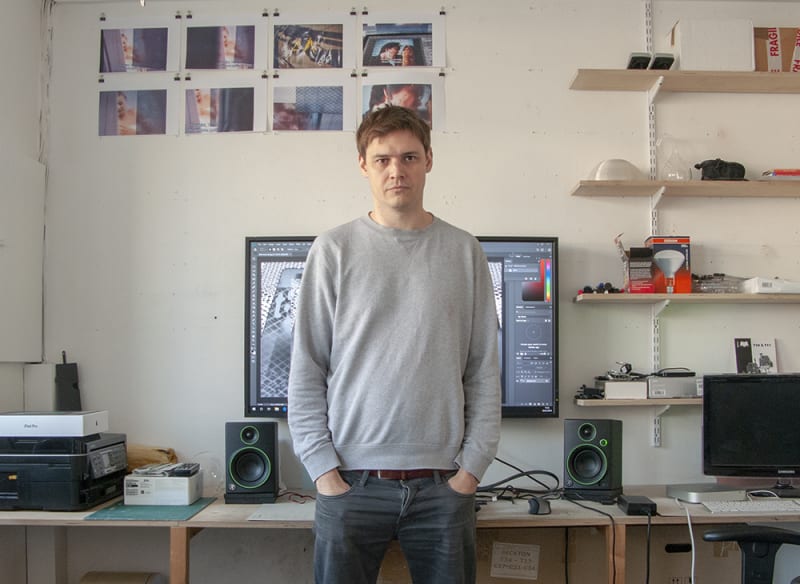
James Irwin is an artist and Associate Lecturer in MA Illustration and Visual Media at the London College of Communication, University of the Arts London. He is also a PhD candidate at the Contemporary Art Research Centre, Kingston School of Art, Kingston University, where his research investigates authenticity in post-digital image-making using printmaking and moving image. BA (Hons) Fine Art, Newcastle University MFA Computational Studio Arts, Goldsmiths, University of London His research focuses on the interplay between physical and digital media, exploring how anxiety and over-mediation shape authentic experience in a post-truth context. Working across digital media, printmaking, sculpture, sound, and moving image, Irwin manipulates content from online and offline sources to destabilize digital realities and foreground the artifacts of creation. His recent artistic projects include a networked robotic soundscape of human breathing and remediations of Thomas Vinterberg’s film Festen . He curated the SuperHumanCorporation series (2017–2019), pairing UK and US artists to explore digital materiality. Irwin’s work has been exhibited widely, with solo shows such as Listening to Xanax (2018), Binary Translations (2013), and Hopeless Communication (2011), and web-based projects like The Edge and Spread the Virus . His publications and exhibitions reflect a sustained engagement with digital culture, authenticity, and mediated experience. 2012 Emerging Artists Bursary Award, Royal British Society of Sculptors Irwin has no formal students listed but contributes to art education through teaching and curatorial practice. He has no grants explicitly mentioned, but his research is supported through his PhD candidacy. He is actively involved in artistic and academic communities, with a strong online presence via his website, Instagram, and Vimeo.