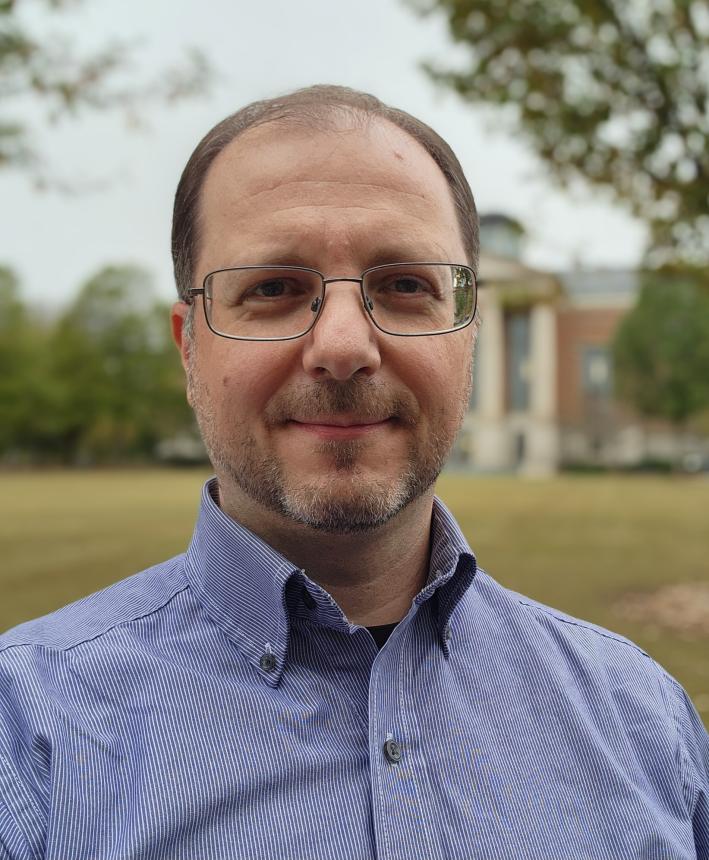
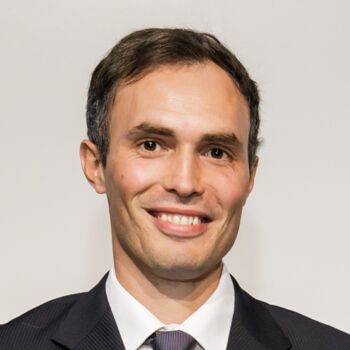
Professor Guy-Vincent Jourdan is affiliated with the School of Electrical Engineering and Computer Science at the University of Ottawa. He holds a Ph.D. from Université de Rennes/INRIA (France, 1995) focusing on distributed systems analysis. Prior to academia, he served as CTO and CEO of Decision Academic Graphics, an Ottawa-based firm. His research interests span software security, cybersecurity (including cybercrime prevention), distributed systems modeling, formal methods, mobile applications, and rich internet applications. Specific technical emphases include phishing detection systems, blockchain fraud analysis, and adversarial machine learning. Professor Jourdan has pioneered tools like D-ForenRIA for reconstructing user interactions in Rich Internet Applications and contributed to cybersecurity frameworks such as HEART for log anomaly detection. His work integrates machine learning techniques with domain-specific challenges in network security and software verification. His publications (2023-2025) reflect advancements in AI-driven vulnerability analysis, blockchain fraud detection, and automated phishing detection systems. Notable projects include SV-TrustEval-C for source code vulnerability analysis and Intellitweet for social media threat detection. While no scientific awards are explicitly listed, his prolific publication record and industry-academia transition highlight sustained contributions to computer science and cybersecurity domains.
Dr. Chutima Boonthum-Denecke is a Professor in the Department of Computer Science at Hampton University's School of Science. She joined Hampton University in 2006 as an Assistant Professor and now serves as Director of the Information Assurance and Cyber Security Center (IAC@HU). She leads the NSF CyberCorps Scholarship for Service program and has contributed to NSF initiatives like ARTSI and STARS Alliances. Her educational background includes a Ph.D. in Computer Science from Old Dominion University (2007), an MS in Applied Computer Science from Illinois State University (2000), and a BS in Computer Science from Srinakharinwirot University (1997). Dr. Boonthum-Denecke's research integrates artificial intelligence, natural language processing, and cybersecurity. Key interests include: Developing intelligent tutoring systems and educational games Secure coding practices for software engineering NLP applications in information retrieval and assessment tools Cyber-physical security for IoT and robotics Her recent publications (2016-2021) focus on machine learning applications in cybersecurity, including sentiment analysis for threat detection, blockchain-enhanced IoT security, and vulnerability assessments of emerging technologies. Collaborative work with students frequently addresses privacy ethics in AI assistants, RFID implants, and cloud systems. She mentors students through the IAC@HU lab, resulting in award-winning conference presentations on cybersecurity topics. As Principal Investigator of NSF CyberCorps, she oversees scholarship programs that bridge academic research with national security needs.
Roberto Perdisci is a Professor at the University of Georgia , holding the Patty and D.R. Grimes Distinguished Professorship in Computer Science . He also serves as an Adjunct Associate Professor at the Georgia Tech School of Cybersecurity and Privacy and is a faculty member of the UGA Institute for Artificial Intelligence . His research focuses on securing networked systems through web security , malware detection , and machine learning applications. Directed the UGA Institute for Cybersecurity and Privacy Post-Doctoral Fellow at Georgia Institute of Technology Research Scholar at Georgia Tech Information Security Center His work combines systems research with data mining to address challenges in network security , malware analysis , and Internet-scale measurements . Key contributions include DNS reputation systems analysis , CAPTCHA attack frameworks , and robocall mitigation prototypes . He has received the NSF CAREER award for adaptive malware detection research. Conference service includes: Program Chair for ACSAC 2024 and EuroS&P 2024 Area Chair for WWW 2024 Security Track Best Reviewer Award at ACM CCS 2022 Current affiliations span multiple institutions, with research groups focusing on: Phishing and Social Engineering (PhishInPatterns, TRIDENT projects) Web Browser Forensics (WEBRR, Clickminer) IoT Device Identification (IoTFinder)
Joss Wright is an Associate Professor and Senior Research Fellow at the Oxford Internet Institute , University of Oxford. He co-directs the Oxford EPSRC Cybersecurity Doctoral Training Centre and the Oxford Martin Programme on the Wildlife Trade, focusing on computational approaches to social science questions about information control and privacy. Education : PhD in Computer Science from the University of York (research on anonymous communication systems), postdoctoral work at the University of Siegen (cloud computing security). His research spans internet censorship , privacy-enhancing technologies , and cyber-enabled crime (notably the online illegal wildlife trade ). He bridges technical analyses of security systems with their social and political implications, advising the European Commission and UK Parliamentary Science Committee on digital policy. Recent work includes machine learning applications to detect patent filing trends related to wildlife trade and analyzing Chinese smart city surveillance for human rights risks. He has contributed to media outlets like the Guardian and New Scientist. Notable projects include the Oxford Martin Programme on Wildlife Trade and studies on discriminatory effects of internet filtering . He supervises students like William Lugoloobi (DPhil in Social Data Science) and former advisee Samantha Bradshaw (now Assistant Professor at American University).
Jelena Mirkovic serves as Principal Scientist at USC Information Sciences Institute (USC/ISI) and Research Associate Professor at the University of Southern California's Thomas Lord Department of Computer Science. She has held faculty positions at USC since 2010, progressing from Research Assistant Professor to her current role as Research Associate Professor since 2017, while also serving as Project Leader at USC/ISI. Her educational background includes: PhD in Computer Science from UCLA (2003) MS in Computer Science from UCLA (2000) B.Sc. in Computer Science from University of Belgrade, Serbia (1998) Mirkovic's research spans network security, human-centered attacks, and cybersecurity experimentation infrastructure. Her work focuses on critical security challenges including botnets, denial-of-service attacks, IP spoofing, vulnerability scanning, and user-centric privacy. She has pioneered methodologies for security experiments and led major infrastructure projects including the DETER testbed and SPHERE (Security and Privacy Heterogeneous Environment for Reproducible Experimentation). Analysis of her recent publications reveals consistent innovation across multiple security domains. Her work demonstrates strong technical depth in DDoS defense systems (particularly DNS protection), binary vulnerability analysis, privacy-preserving systems, and security experimentation infrastructure. A notable trend is her focus on bridging theoretical security concepts with practical implementation through large-scale testbeds and real-world data analysis. Her significant scientific achievements include: IEEE Senior Member distinction Best paper award at IEEE COMSNETS 2023 for DNS DDoS defense research Mirkovic has secured substantial research funding as Principal Investigator or Co-PI on numerous grants from NSF, DHS, and other agencies. Current major projects include SPHERE (Security and Privacy Heterogeneous Environment for Reproducible Experimentation), DISCERN (Datasets to Illuminate Suspicious Computations), and modernizing DeterLab education infrastructure. She has successfully led multiple REU sites focused on cybersecurity education and workforce development. She directs the STEEL (Security Research Lab) at USC/ISI, which develops innovative security solutions through interdisciplinary research in network security, human factors in security, and cybersecurity experimentation infrastructure. The lab emphasizes practical implementations that address real-world security challenges while advancing theoretical understanding of security systems.
Luigi De Russis is an Associate Professor at the Department of Control and Computer Engineering (DAUIN) within Politecnico di Torino . He serves as Deputy Director of DAUIN and is a member of the PIC4SeR (PoliTO Interdepartmental Centre for Service Robotics). His academic roles focus on Human-Computer Interaction , Digital Wellbeing , and Artificial Intelligence applications. Research interests: Accessibility, Conversational agents, Developers tools, Digital wellbeing, Intelligent user interfaces, Internet of Things Teaching: Courses in Human-AI Interaction, Web Applications, and Computer Vision at undergraduate and graduate levels Leadership: Vice-President of ACM SIGCHI (2024-), Executive Committee member (2021-2024) His research explores: Digital wellbeing education for teens through gamified systems AI-assisted UI design tools Smart home interaction via multimodal commands End-user development for self-control technologies Integration of accessibility guidelines in AI systems Recent article trends show a focus on generative AI for interface design, attention-capturing heuristics, and educational systems for step-by-step learning. He has received the Most Influential Paper Award (2024) and Best Late Breaking Results Award (2025) from ACM SIGCHI. Scientific awards: Award of Scientific Excellence, University of Salamanca (2011) Most Influential Paper Award, International Conference on Intelligent Environments (2024) Best Late Breaking Results Paper Award, ACM SIGCHI Symposium (2025) As advisor, he supervises PhD students in Artificial Intelligence and Computer Engineering , focusing on topics like user-centered AI, generative models, and digital self-control interfaces. He leads the ELITE research group and contributes to commercial projects including TEIA (AI tourism) and MAPP (interactive museums).
Seth Frey is an Associate Professor in the Department of Communication at the University of California, Davis, with affiliate status at Indiana University's Ostrom Workshop and as Research Director at Metagov. His research focuses on computational social science approaches to understanding self-governance in complex social systems, particularly through the lens of online communities as model institutions. Education: Ph.D. in Cognitive Science and Informatics (complex systems), Indiana University, 2013 B.A. in Cognitive Science, UC Berkeley, 2004 Research Interests: Frey specializes in computational approaches to institutional analysis and the cognitive science of strategic behavior . His work examines how communities design governance systems to overcome collective action problems, with emphasis on: Emergent institutional structures in digital commons Policy-as-data through NLP and institutional grammar frameworks Cognitive mechanisms underlying cooperative behavior Design principles for participatory change in online platforms His methodology integrates large-scale data analysis, web-based experiments, and computational modeling across diverse contexts including Minecraft, Reddit, and professional sports ecosystems. Publication Trends: Recent publications (2023-2025) demonstrate a cohesive trajectory toward computational institutional analysis, with increasing focus on NLP-driven policy analysis (e.g., NLP4Gov), decentralized governance architectures (DAOs, multi-level platform governance), and the cognitive foundations of collective action. His work consistently bridges theoretical institutional analysis with practical applications in digital community design, showing particular growth in translating Ostrom's design principles into computational frameworks. Awards: Honorable Mention Award for Best Paper at ACM CSCW 2019 Advising and Grants: Frey mentors students interested in data science applications at the intersection of communication, cognition, and complex systems, emphasizing resourcefulness and intellectual curiosity. His research has secured substantial funding from: National Science Foundation (NSF) NASA Ford Foundation Google Open Source Foundation He actively encourages aspiring graduate students with strong self-directed research skills to explore computational approaches to social phenomena. Labs and Teams: He leads the Computational Communication Lab at UC Davis and co-directs the Institutional Grammar Research Initiative. Through Metagov, he develops the 'Governance API' framework for modular community governance. His past affiliations include Disney Research (Walt Disney Imagineering) where he applied complexity science to theme park systems, and the New England Complex Systems Institute (NECSI). Current collaborations span Ethereum governance, Minecraft server ecosystems, and Colorado's cannabis monitoring infrastructure.
Steve Sprecher is a Lecturer in the Department of Computer Science at Northeastern University. His research focuses on network and web security, systems security, practical applications of machine learning in security, censorship measurement, and privacy. He holds a PhD from Northeastern University, advised by Engin Kirda, and earned his MS and BS in Computer Science from the University of Michigan, where he worked with J. Alex Halderman and Roya Ensafi on censorship, ransomware, and network measurement. His teaching experience includes serving as the Instructor of Record for Foundations of Computer Security & Privacy at Northeastern (Winter 2023), and as Head Graduate Student Instructor for the introductory computer security course at the University of Michigan (2017-2019). He has also held roles as a Teaching Assistant and Guest Lecturer in multiple security-related courses. Sprecher's publications address cutting-edge security challenges such as HTTP protocol vulnerabilities, third-party script management, and decentralized internet control mechanisms. His work bridges theoretical research with practical applications, emphasizing both technical depth and real-world impact.
Marco Di Renzo is a CNRS Professor (Directeur de Recherche Titulaire) at University of Paris-Saclay, affiliated with CentraleSupelec and the Signals and Systems Laboratory (L2S). He serves as Coordinator of the Communications Networks Area at the DigiCosme Laboratory of Excellence and Editor-in-Chief of IEEE Communications Letters. His academic leadership includes membership in the Ph.D. School on ICT Admission Committee at Paris-Saclay University. His educational background includes a Laurea (cum laude) and Ph.D. in Electrical Engineering from University of L'Aquila, Italy (2003, 2007), and a Habilitation à Diriger des Recherches from University Paris-Sud (2013). Laurea (cum laude), Electrical Engineering, University of L'Aquila (2003) Ph.D., Electrical Engineering, University of L'Aquila (2007) Habilitation à Diriger des Recherches, University Paris-Sud (2013) Di Renzo's research focuses on next-generation wireless communications, particularly reconfigurable intelligent surfaces (RIS), 6G technologies, and stochastic geometry modeling. His work bridges theoretical communication theory with practical implementations in cellular networks, millimeter-wave communications, and ultra-wide band systems. Recent publications demonstrate leadership in holographic metasurfaces, integrated sensing and communication (ISAC), and AI-empowered network design, establishing him as a pioneer in electromagnetic wave manipulation for future networks. His award-winning publications span RIS-aided communications, channel modeling, and security frameworks. Analysis of his recent work reveals consistent focus on three pillars: (1) fundamental electromagnetic theory for wave manipulation, (2) practical RIS implementations across frequency bands, and (3) integration with AI for network optimization. His articles frequently address industrial applications including factory automation and space-air-ground networks. Di Renzo's scientific recognition includes: IEEE Fellow (2020) and IET Fellow (2020) Highly Cited Researcher (Web of Science, 2019) SEE-IEEE Alain Glavieux Award (2017) Multiple Best Paper Awards (IEEE ICC, EURASIP) Nokia Foundation Visiting Professorship (2020) As Principal Investigator for CNRS, he coordinates multiple Horizon 2020 projects including SURFER, PathFinder, and MetaWireless. His leadership extends to serving as Project Coordinator for H2020 5Gwireless, 5Gaura, MAPNET, and REDESIGN. With over 350 publications, 17,000+ citations, and h-index of 66+, his research group maintains strong industry partnerships with Nokia and other telecommunications leaders. Di Renzo directs the Signals and Systems Laboratory (L2S) at Paris-Saclay and coordinates the DigiCosme Excellence Lab's Communications Networks Area. His team specializes in electromagnetic modeling for wireless networks and has pioneered the European Telecommunications Standards Institute (ETSI) Industry Specification Group on RIS. The group maintains active collaborations with Aalto University (Finland), University of Technology Sydney (Australia), and University of L'Aquila (Italy).
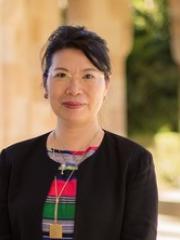
Dongming Xu is an Associate Professor in Business Information Systems at the University of Queensland Business School. She holds a PhD from the City University of Hong Kong in Information Systems and has established herself as a prominent researcher in the field of information systems with over 100 publications in top-tier journals and conference proceedings. Her educational background includes a PhD from City University of Hong Kong in Information Systems, though specific details about earlier degrees are not provided in the available text. Dr. Xu's research focuses on the confluence of information technology use and innovation, with particular emphasis on IT entrepreneurship, social media applications in business contexts, and business intelligence systems. Her work explores how information systems influence society and business performance, with applications spanning disaster management, eFinance, eHealth, and knowledge management. She combines theoretical model building with laboratory and field experiments, often developing prototype systems to validate her research. Her publication record demonstrates consistent high-quality output across multiple domains of information systems research, with recent work emphasizing digital disruption, platform ecosystems, social media in disasters, healthcare technology, and micro-learning applications. Her research shows a clear trajectory from foundational work on intelligent agents and decision support systems toward contemporary topics in digital transformation and platform-based innovation. Associate Editor, Information & Management Associate Editor, Journal of Electronic Commerce Research Associate Editor, Australasian Journal of Information Systems Dr. Xu has supervised numerous PhD students to completion, with research topics spanning digital disruption, IT startup development, social media in disasters, conceptual modeling, and environmental management. She has received multiple research grants, including current funding for 'Empowering Australia's Visual Arts via Creative Blockchain Opportunities' (2023-2026) and past projects on 'Smart micro learning with open education resources' (2018-2022). Her research has been supported by various agencies including the Hong Kong Government Research Grant Council, The National Natural Science Foundation of China, The University of Queensland, and City University of Hong Kong. She leads research in several key areas including IT entrepreneurship, business intelligence systems, and social media applications across multiple domains. Her work often involves developing innovative systems such as web-service-agent-based family wealth management systems, decision support systems for securities exception management, and knowledge management systems for disaster management.
Juan Carlos De Martin is a Full Professor of Computer Engineering at the Polytechnic of Turin, where he is also co-founder and co-director of the Nexa Center for Internet & Society. He holds a Faculty Associate position at the Berkman Klein Center for Internet & Society at Harvard University and is a member of the Scientific Council of the Treccani Institute and the Steering Committee of Biennale Democracy. He previously served as Vice Rector for Culture and Communication at the Polytechnic of Turin (2018–2023) and as president of its libraries (2007–2015). His research centers on the societal implications of digital technologies, with a strong emphasis on algorithmic and data justice, digital power, and the democratic challenges posed by modern technology. He advocates for a more democratic and ethical technological future, particularly critiquing the dominance of smartphones and promoting digital sovereignty. His recent publications reflect a clear trend toward ethical AI, data protection, and the social impact of algorithms. He has published on gender bias in language models, GDPR compliance tools, and non-discrimination audits in software, demonstrating a sustained commitment to fairness, transparency, and accountability in digital systems. Best Student Paper Award IEEE ISCC 2011 Best Student Paper Award IEEE ICME 2005 Fellow at Harvard University (Berkman Klein Center) (2011–2015, 2016–2024) Faculty Associate at Collège d'études mondos, France (2016) De Martin has advised PhD students like Marco Rondina on Responsible AI and has led numerous EU-funded research projects such as COMMUNIA and DECODE. He has also played a key role in public policy, serving on ministerial working groups on AI and online hate. He is the founder of the Biennale Tecnologia and has authored influential books on the future of universities and technology, all published under Creative Commons licenses. He leads the Nexa Center for Internet & Society, a multidisciplinary research group focused on the legal, economic, and social aspects of the Internet. The center fosters collaboration between computer scientists, legal scholars, and social scientists to address pressing digital challenges.
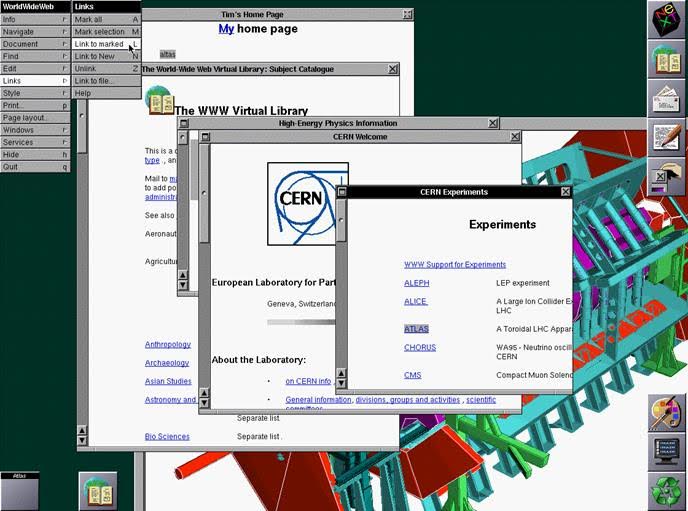
Tim Berners-Lee is a British computer scientist and inventor of the World Wide Web. He holds the 3Com Founders Chair at the Massachusetts Institute of Technology (MIT) Computer Science and Artificial Intelligence Laboratory since 1994 and is a Professor at the University of Southampton (2004-present) and the University of Oxford (2016-present) in Computer Science. His work revolutionized global information sharing through the creation of HTML, HTTP, URLs, and the first web browser/server, enabling the Web's scalability via existing Internet protocols. Key research areas include networked hypertext systems, semantic web technologies, Internet architecture, and societal impacts of digital infrastructure. He founded the World Wide Web Consortium (W3C) in 1994 to standardize web technologies and the World Wide Web Foundation in 2008 to advocate for digital equality. His technical minimalism prioritized immediate utility over theoretical perfection, leveraging Unix and TCP/IP foundations. ACM A.M. Turing Award (2016) Knighted as KBE (2004) Order of Merit (2007) Fellow of Royal Society, IEEE, and American Academy of Arts and Sciences Berners-Lee's advocacy spans data privacy, open standards, and resistance to centralization. He criticized proprietary social media dominance and promoted decentralized systems like Solid for personal data control. His career bridges technical innovation with profound societal reflection, emphasizing harmonious global digital cooperation and ethical governance.
Professor Catherine Easton serves as Professor in Information Technology and Intellectual Property Law at Lancaster University's School of Law, with additional affiliations at Security Lancaster and the Centre for Law and Society. Her work bridges legal scholarship with practical technology implementation, focusing on digital inclusion and governance frameworks. Her research centers on internet governance, domain name regulation, intellectual property law, and accessibility for disabled users. She examines how legal frameworks interact with human-computer interaction systems, particularly in crisis response scenarios and educational technology. Her scholarship consistently addresses the tension between regulatory compliance and genuine digital inclusion, with special attention to the UN Convention on the Rights of Persons with Disabilities. Her recent publications reveal growing emphasis on autonomous systems regulation, particularly regarding disability access in driverless vehicles, and ethical frameworks for cloud-based disaster response. The scholarly trajectory shows evolution from foundational website accessibility analysis toward complex systems governance in emerging technologies. Higher Education Academy International Scholarship recipient MMU Promising Researcher Fellow (2011) Co-chair of UN Internet Governance Forum's Internet Rights and Principles Dynamic Coalition Treasurer of British and Irish Law, Education and Technology Association Guest editor for Web Journal of Current Legal Issues Disability Special Edition Professor Easton actively develops legal education technologies, having created interactive teaching resources for major textbooks and pioneered clicker technology applications in law classrooms. She leads initiatives like the National Law Student Forum and has presented extensively on MOOCs and legal pedagogy. Her Security Lancaster affiliation connects her work to broader research on information transparency and crisis response ethics, where she examines big data's implications for inclusion and human rights.
Zakir Durumeric is an Assistant Professor of Computer Science at Stanford University, leading the Stanford Empirical Security Research Group. His research focuses on Internet security, trust, and safety, emphasizing large-scale network measurement and open-source tool development. He founded Censys, a platform providing global Internet device data, and maintains tools like ZMap, ZGrab, and Retina. Research interests include cybercrime prevention, censorship analysis, disinformation tracking, and platform governance for online harassment. Notable contributions include studies on the Mirai botnet, TLS certificate ecosystems, and vulnerabilities like Heartbleed and Logjam. Awards include the IRTF Applied Networking Research Prize (2015) and a Test of Time Award (2022). Teaches courses: CS155 (Computer & Network Security), CS356 (Systems & Network Security), and CS249i (Modern Internet). Advises over 20 students, including Catherine Han, Kimberly Ruth, and Liz Izhikevich. Develops open-source software such as ZMap Toolkit and ASdb, and maintains datasets like CrUX Top Million Websites. Recent work explores toxic online behavior, misinformation ecosystems, and regional censorship mechanisms in China. His lab’s tools are widely adopted in academia and industry for security research and policy guidance.
Oliver Gasser is a researcher at the Max Planck Institute for Informatics (MPI-INF) and the Technical University of Munich (TUM), where he has co-lectured courses such as Advanced Computer Networking and Master Course Computer Networks. His research focuses on Internet measurement, security, and privacy, with a strong emphasis on IPv6, DNS, BGP, and web tracking technologies. His research interests include Internet measurement, IPv6 deployment, BGP security, DNS infrastructure, web tracking, privacy technologies, and network resilience. He has made significant contributions to understanding IPv6 hitlists, router fingerprinting, hypergiant content delivery networks, and consent banner manipulation on the web. His work combines large-scale active measurements with data analysis to uncover systemic issues in Internet infrastructure and privacy practices. The recent publications highlight a consistent focus on measurement-driven research across networking, security, and privacy. Trends include analyzing IPv6 adoption patterns, detecting covert tracking mechanisms in web cookies, evaluating security of Internet protocols like DNS and BGP, and improving measurement methodologies for large-scale network studies. His work often involves developing open tools and datasets that advance reproducibility in networking research. PAM 2023 Best Paper Award TMA 2023 Best Paper Award TMA 2023 Fast Track Award PAM 2018 Best Paper Award IRTF Applied Networking Research Prize 2018 IMC 2017 Community Contribution Award TMA 2017 Best Dataset Award CoNEXT 2023 Community Contribution Award Oliver Gasser has advised or co-advised over 40 master’s and bachelor’s theses at MPI-INF and TUM, demonstrating strong mentorship in academic research. He has led several measurement projects that have received external funding, including development of the IPv6 Hitlist Service and tools for analyzing web tracking. His community service includes extensive participation in program committees for major networking conferences such as IMC, CoNEXT, PAM, and TMA. He leads and contributes to several open research initiatives including the IPv6 Hitlist Service, SNMPv3 Measurement Service, MPTCP Measurement Service, DNS Observatory, and the BannerClick tool for automated cookie banner interaction. These platforms provide valuable resources for the global networking research community and support reproducible science.