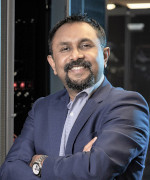
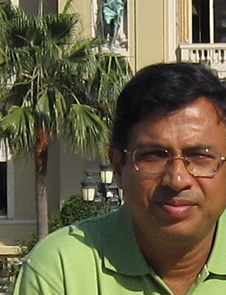
Dr. Anwar Haque is an Associate Professor in the Department of Computer Science at Western University, Canada, and a Faculty of Science Distinguished Research Professor. He holds a Ph.D. in Electrical and Computer Engineering and an M.Sc. in Computer Science from the University of Waterloo. Prior to academia, he was Associate Director at Bell Canada. His research focuses on 5G networks, IoT, cybersecurity, AI, and autonomous systems, with over 100 peer-reviewed publications and $15M in collaborative grants. Dr. Haque leads the Western Information & Networking Group (WING) Lab and is the founder/CEO of Bamboo Innovations Inc., a tech startup developing socially responsible smart technologies. Leadership roles include industry expert-in-residence in the Faculty of Science, Undergraduate Chair of the Computer Science Department, and member of Western’s Senate. He has delivered over 30 keynote talks and media features include BBC Earth and The Globe and Mail. Awards include the IEEE CCECE Leadership Award and multiple grants from NSERC, MITACS, and Bell Canada. His work spans network reliability, smart grids, and cybersecurity, with industry partnerships like the Bell-Western 5G Research Centre.
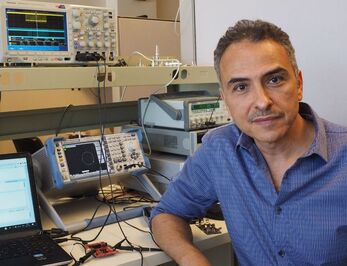
Hossam Hassanein is a Professor and Director of the School of Computing at Queen's University. He received his B.Sc. in Electrical Engineering from Kuwait University in 1984, M.Sc. in Computer Engineering from the University of Toronto in 1986, and Ph.D. in Computing Science from the University of Alberta in 1990. He joined Queen's University School of Computing in 1999 and has established himself as a leading researcher in telecommunications and networking. Dr. Hassanein's research interests span wireless sensor networks, mobile ad hoc networks, edge computing, Internet of Things (IoT), radio resource management, and data-centric networks. His seminal contributions include pioneering work on WSN planning, load-balanced routing protocols, and energy-efficient network designs. He has championed research in IoT, developing frameworks for smart spaces that use contextual information to enhance IoT applications in healthcare, transportation, and infrastructure. His recent publications (2023-2025) demonstrate a strong focus on cutting-edge areas including extreme edge computing, vehicular networks, and AI/ML integration in networking. Research trends show increasing emphasis on practical applications in telesurgery, digital twins, and industrial IoT, addressing challenges in resource allocation, task offloading, and real-time processing in constrained environments. Dr. Hassanein has received numerous recognitions for his work: Fellow of the IEEE Queen's University School of Graduate Studies Award for Excellence in Graduate Student Supervision (2015) Multiple best paper awards from top international conferences As founder and director of the Telecommunications Research Lab (TRL), Dr. Hassanein has supervised over 75 students who have made substantial contributions in academia and industry. The TRL is one of Queen's largest research groups with extensive international collaborations. Dr. Hassanein has successfully attracted significant research funding from government and industry sources in the competitive telecommunications field. The Telecommunications Research Lab has developed innovative platforms including SPROUTS, a rugged sensor platform used in mining, steel manufacturing, and smart-grid monitoring. TRL's work has had significant impact in WSN planning, data dissemination, and resource reuse in wireless networks, with contributions featured in IEEE Wireless Communications Magazine.
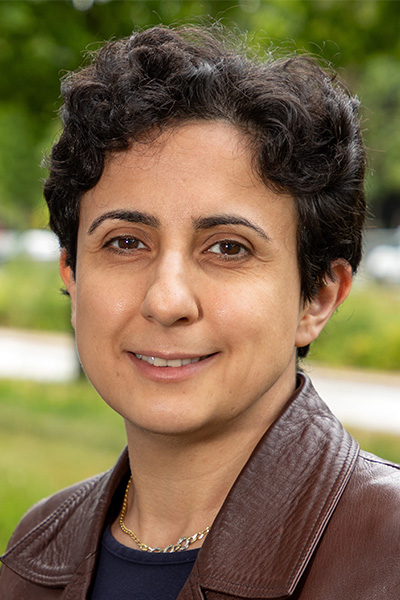
Maher Elshakankiri is an Assistant Professor, Teaching Stream at the University of Toronto's Faculty of Information. He holds a Ph.D. in Computer Engineering from Ain Shams University (Egypt), followed by a postdoctoral fellowship at the University of Regina. His research focuses on IoT, Wireless Sensor Networks (WSN), and pedagogical integration of technology and gaming. He has supervised over 100 student projects and authored a book on WSNs. Education: Ph.D. in Computer Engineering, Ain Shams University, Egypt M.Eng., B.Eng. in Engineering, Ain Shams University, Egypt Postdoctoral Fellowship, University of Regina, Canada Research Interests: IoT in healthcare, agriculture, and sports Active learning classrooms and technology in education Wireless communication protocols (V2V, UAV, RFID) Leadership & Grants: Director, Bachelor of Information (BI) Program (2024–present) Coordinator, Information Systems and Design (ISD) Concentration (2023) SSHRC Grant: 'Gaming in teaching towards a more inclusive class' (2022–2023) Professional Activities: Member, SCC IoT & Digital Twins Standards Committee Reviewer for journals including Wireless Networks , Telematics and Informatics , and Computational Intelligence Technical Program Committee member at multiple conferences Teaching: Courses include INF1340 (Programming for Data Science), INF1005/1006 (IoT Workshops), and INF452 (Information Design Coding).
Dr. Yujie Tang is an Assistant Professor in the Faculty of Computer Science at Dalhousie University, Canada, where she has been serving since September 2022. Prior to this, she was an Assistant Professor at Algoma University (2019–2022) and a Post-Doctoral Fellow at the University of Waterloo (2017–2019). Her academic journey includes a PhD from the University of Waterloo and earlier degrees from Harbin Institute of Technology and Lanzhou Jiaotong University. PhD – University of Waterloo (2017) M.E. – Harbin Institute of Technology, Shenzhen, China B.E. – Lanzhou Jiaotong University, Lanzhou, China Her research focuses on intelligent networking and computing technologies for future IoT and 5G/6G systems. Key areas include Internet of Vehicles (IoV), AI-empowered edge computing, resource management in heterogeneous networks, software-defined networking, and UAV-assisted communications. She employs machine learning and optimization techniques to design energy-efficient and high-performance network protocols. The most recent publications reflect a strong trend in applying AI and machine learning to solve complex problems in vehicular networks, edge caching, and spectrum management. Her work spans top-tier IEEE journals such as IEEE Transactions on Vehicular Technology , IEEE Internet of Things Journal , and IEEE JSAC , with a clear emphasis on real-world deployable solutions for next-generation wireless systems. Faculty Research Startup Fund, Dalhousie University, 2022 NSERC Discovery Grant, 2021–2026 Algoma University Research Fund, 2021 Faculty Research Startup Fund, Algoma University, 2019 Best Speaker Award, University of Waterloo, 2017 Faculty of Engineering Award (4 times), University of Waterloo, 2013–2017 University of Waterloo Graduate Scholarship, 2013–2015 International Doctoral Student Award, 2012–2016 Graduate Research Studentship (twice), 2011–2012 Provost Doctoral Entrance Award for Women, 2011 Dr. Tang actively supervises graduate and undergraduate students and has secured competitive research grants, including the NSERC Discovery Grant. She serves on the technical program committees of major IEEE conferences such as INFOCOM, GLOBECOM, and ICC, and regularly reviews for top journals like IEEE JSAC , IEEE TWC , and IEEE TVT . She currently leads a research group focusing on B5G/6G networks, IoV, and edge computing, and she is actively recruiting new students and visiting scholars. Her research group operates within the Faculty of Computer Science at Dalhousie University, where she leads projects in intelligent resource management, AI-driven networking, and integration of space-air-ground networks. She is a member of IEEE, IEEE Communications Society, and IEEE Vehicular Technology Society.
Xuemin (Sherman) Shen is a University Professor in the Department of Electrical and Computer Engineering at the University of Waterloo. He is a Fellow of the Institute of Electrical and Electronics Engineers (IEEE), the Royal Society of Canada, the Canadian Academy of Engineering, and the Engineering Institute of Canada. Professor Shen serves as Editor-in-Chief of multiple prestigious journals including the IEEE Internet of Things Journal and Springer Peer-to-Peer Networking and Applications. Dr. Shen received his Doctorate in Electrical Engineering from Rutgers University in 1990, following a Master of Applied Science from the same institution in 1987. His undergraduate degree is a Bachelor of Applied Science in Electrical Engineering from Dalian Marine University, China (1982). Professor Shen's research spans wireless communications and networking, with particular expertise in resource allocation, mobility management, wireless network security, and privacy preservation. His work extends to IoT applications, connected and automated vehicles, network digital twins, and satellite-terrestrial networks. His research has been applied to vehicular networks, wireless body area networks, remote e-healthcare systems, and smart grid technologies, demonstrating both theoretical depth and practical impact across multiple domains. His recent publications reveal strong trends in AI-assisted networking, security and privacy preservation for IoT applications, and energy management in vehicular and smart grid systems. The research shows an increasing focus on integrating AI techniques with traditional networking approaches, addressing critical challenges in security, privacy, and resource management for next-generation wireless systems. R.A. Fessenden Award (2019) from IEEE Canada James Evans Avant Garde Award (2018) from the IEEE Vehicular Technology Society Joseph LoCicero Award (2015) from the IEEE Communications Society Education Award (2017) from the IEEE Communications Society West Lake Friendship Award from Zhejiang Province (2023) President's Excellence in Research from University of Waterloo (2022) Canadian Award for Telecommunications Research (2021) Professor Shen has mentored over 100 graduate students and postdoctoral fellows throughout his career, with many now holding prominent academic positions at top universities worldwide. His supervision has been recognized with multiple awards including the Award of Excellence in Graduate Supervision (2006) from the University of Waterloo. He has served in numerous leadership roles including Past President of the IEEE Communications Society and has chaired major international conferences including IEEE Globecom 2024.
Shiva Nejati is a Professor at the University of Ottawa 's School of Electrical Engineering and Computer Science . He holds a PhD in Computer Science from the University of Toronto and previously worked as a Senior Scientist (2012-2019) and Scientist (2009-2012) at the SnT Centre (University of Luxembourg) and Simula Research Laboratory. Research focus: Software engineering for cyber-physical systems (autonomous vehicles, IoT), blending formal verification, machine learning, and search-based testing Key tools developed: ARIsTEO, SOCRaTEs, SimCoTest, EPIcuRus Editorial roles: Associate Editor for EMSE Journal (2025–), ASE Journal (2025–), IEEE Transactions on Software Engineering (2020–2024) His work combines formal methods , empirical software engineering , and AI/ML to address verification challenges in complex systems, particularly through evolutionary algorithms and surrogate modeling . Notable collaborations include industry partners in telecommunications, automotive, and aerospace sectors. Recent publications emphasize large language models for requirements analysis, adversarial testing of vision systems, and multi-objective optimization for test generation. His Sedna Research Lab actively trains graduate students in these cutting-edge methodologies.
Georges Kaddoum is a Professor at École de technologie supérieure (ÉTS) , specializing in Electrical Engineering. He holds the Canada Research Chair in Unlocking the Power of IoT 6G-Networks and the LACIME – Communications and Microelectronic Integration Laboratory affiliation. His work bridges wireless communications, IoT, and machine learning. Research Interests include wireless communication systems, physical layer security, machine learning for networking, and 6G technologies. He focuses on optimizing network performance in challenging environments (impulsive noise, underwater, non-terrestrial networks) and developing AI-driven solutions for jamming mitigation, resource allocation, and secure IoT frameworks. Recent Publications highlight 6G-enabled vehicular networks, quantum-safe blockchain integration, federated learning for transportation systems, and deep learning-based receivers for chaotic communication systems. His work emphasizes semantic communication, interference management, and digital twin applications. Awards IEEE TCSC Award for Excellence in Scalable Computing (2022) Prix d’excellence de la relève (Université du Québec, 2018) Prix d’excellence en recherche (ÉTS, 2018) Multiple IEEE Exemplary Reviewer and Best Paper Awards (2014–2022) Supervision includes 15+ PhD/Master’s students working on topics like index modulation, physical layer security, UAV communications, and intelligent resource management. Research Units Ultra Research Chair on Intelligent Tactical Wireless Networks LACIME Laboratory Canada Research Chair in IoT 6G-Networks
Kaiyang Liu is an Assistant Professor at the Department of Computer Science, Memorial University of Newfoundland. He holds a Ph.D. from Central South University (2019) and was a Postdoctoral Fellow at the University of Victoria, Canada. His research focuses on distributed cloud/edge computing, data center networks, and distributed machine learning, emphasizing optimization for data-intensive services. He is an IEEE Senior Member and has received prestigious awards, including the NSERC Discovery Grants and IEEE TCCLD Outstanding Ph.D. Thesis Award. Education: Ph.D. in Information Science and Technology, Central South University (2014–2019) M.Sc. in Information Science and Technology, Central South University (2012–2014) B.Eng. in Information Science and Technology, Central South University (2008–2012) Research Assistant at the University of Victoria (2016–2018) Research Interests: Kaiyang’s work bridges AI and cloud computing, exploring optimization strategies for next-generation systems. Key areas include learning-based congestion control, energy-efficient resource management, and scalable distributed storage solutions. His research has been published in top-tier journals like IEEE Transactions on Parallel and Distributed Systems and conferences such as IEEE ICDCS. Awards & Grants: NSERC Discovery Grants & Discovery Launch Supplement (2024) IEEE TCCLD Outstanding Ph.D. Thesis Award (2020) CSC-UVic Fellowship (2016–2018) Teaching: He teaches courses on Computer Networks, Advanced Computer Networks, and Operating Systems at Memorial University and previously at the University of Victoria. Labs & Teams: His research group focuses on Space Edge Computing, leveraging LEO satellites for resilient, low-latency networks. Ongoing projects include optimizing distributed systems for AI workloads and satellite-based data centers.
René Jr Landry is a full Professor in the Department of Electrical Engineering at École de technologie supérieure (ETS), Université du Québec, specializing in Global Navigation Satellite Systems (GNSS), avionics, and wireless communication technologies. His academic journey includes a B.Ing. from Polytechnique Montréal, M.Sc. from University of Surrey (UK), and Ph.D. from SupAréo in Toulouse. He maintains active research leadership through two key laboratories: LASSENA (Laboratory of Space Technologies, Embedded Systems, Navigation and Avionics) and LACIME (Communications and Microelectronic Integration Laboratory). His research spans critical aerospace navigation domains including GNSS signal processing, inertial navigation systems, software-defined radio for avionics, radio frequency interference mitigation, and indoor positioning technologies. Landry's work addresses real-world challenges in satellite navigation robustness, precision positioning in urban/denied environments, and next-generation avionic system security. His current projects focus on blockchain-enhanced IoT security, AI-driven GNSS disruption analysis, and adaptive RF front-ends for multi-band avionics applications. Analysis of his recent publications reveals strong emphasis on resilient positioning systems through multi-constellation integration (particularly Iridium-NEXT), blockchain applications for navigation security, and explainable AI techniques for GNSS signal quality assessment. His work increasingly bridges traditional navigation engineering with cutting-edge security and machine learning paradigms. 2014 Prix d'excellence du c.a. pour les services à la collectivité Landry has supervised over 100 graduate students across doctoral, master's, and research projects since 2005, with current supervision extending through Summer 2025. His research funding supports multiple industry partnerships focused on avionics certification, software-defined radio implementations, and next-generation navigation systems. The LASSENA laboratory under his leadership develops certified avionic products from open-source SDR platforms and advances multi-sensor fusion techniques for challenging navigation environments. His research infrastructure includes specialized facilities for GNSS signal simulation, avionics hardware testing, and multi-sensor integration. Current work emphasizes flight-tested validation of RF front-end technologies, blockchain-secured navigation data, and real-time interference mitigation systems for aviation applications.
Lei Lei is an Associate Professor at the University of Guelph, specializing in Computer Engineering. Her research focuses on Machine Learning/Deep Reinforcement Learning, Internet of Things (IoT)/Internet of Vehicles (IoV), Mobile Edge Computing, and Smart Grid Optimization. She explores cutting-edge applications in energy-efficient systems, autonomous vehicles, and intelligent transportation networks. Her work integrates advanced AI techniques with real-world challenges in communication and control systems. Key research areas include optimizing electric vehicle charging schedules using hierarchical deep reinforcement learning and enhancing vehicular networks through 6G communication protocols. She has pioneered methods for joint communication-control systems, securing federated learning models, and developing robust resource allocation strategies in IoT and edge computing environments. Lei Lei’s publications emphasize interdisciplinary solutions, bridging computer science, electrical engineering, and transportation systems. Her recent work addresses challenges in smart grid security, multitimescale control systems, and the application of AI tools like ChatGPT in connected vehicles. She is affiliated with the AI Affiliated Faculty at the University of Guelph, reflecting her contributions to artificial intelligence research.
Dr. Mohamed Hassan is an Assistant Professor in the Department of Electrical & Computer Engineering at McMaster University. His research focuses on Cyber-Physical Systems-on-Chip (iCPSoCs) , emphasizing design, analysis, and deployment for critical domains like Unmanned Aerial Vehicles (UAVs), Autonomous Cars, and healthcare systems. Key research areas include hardware/software codesign, real-time systems, embedded systems, and security. He teaches courses such as COMPENG 4DM4 (Computer Architecture) and COMPENG 4DS4 (Embedded Systems) . His work bridges foundational theories (e.g., scheduling, AI) with infrastructure-level innovations (e.g., compilers, memory systems). The Fanos Research Lab he leads explores interdisciplinary solutions for efficient CPS-on-Chip, addressing challenges in multicore predictability, memory latency, and edge computing. Recent contributions include frameworks for explainable memory-centric workloads and techniques to accelerate TinyML inference. Dr. Hassan serves on Technical Program Committees for conferences like RTAS and OSPERT, highlighting his role in advancing real-time embedded systems research.
Kamal Al Haddad is a Lecturer in the Department of Electrical Engineering at École de technologie supérieure (ÉTS). He holds a Doctorate from INTP, Toulouse, and advanced degrees from UQTR. His research focuses on power electronics, renewable energy integration, and smart grid technologies. He leads the GREPCI research group, specializing in Power Electronics and Industrial Control. Education: B.Eng., M.Sc.A. (UQTR), Doctorate (INTP, Toulouse). Research interests span energy conversion, industrial electronics, power quality, and electromagnetic interference. He emphasizes sustainable energy solutions, electric traction systems, and high-efficiency power sources. His work includes developing advanced power electronic converters and grid stability solutions. Recent articles highlight advancements in modular converters for STATCOM, AI-driven fault detection in hydrogenerators, and renewable energy policy frameworks. He has received notable awards, including the 2014 IEEE Eugene Mittelmann Prize and Fellowships from IEEE and other institutions. Supervised over 60 students, including doctoral theses on topics like hydrogenerator diagnostics, EV charging systems, and renewable energy integration. His research also involves real-time simulation of power systems and FPGA-based implementations. Labs/Teams: GREPCI – Power Electronics and Industrial Control Research Group, leading projects on smart grids and energy efficiency.
Soumaya Cherkaoui is a Full Professor in the Department of Computer Engineering and Software Engineering at Polytechnique Montréal. Previously, she served as a Full Professor at Université de Sherbrooke and held industrial roles as an aerospace project manager. Her research integrates artificial intelligence with telecommunications, focusing on quantum computing, frugal edge intelligence, and applications in connected vehicles and IoT. Current Position: Full Professor, Polytechnique Montréal Prior Academic Role: Full Professor, Université de Sherbrooke Industry Experience: Aerospace Project Manager Research Interests: Convergence of AI and communications, quantum computing for networking, frugal intelligence at the edge, and applications in autonomous vehicles, industrial IoT, and smart grids. She leads government and industry-funded projects, including a $6 million quantum initiative in 2025. Recent Publication Trends: Her 2025–2024 work emphasizes quantum-enhanced anomaly detection (via QGANs), Open RAN slicing with quantum optimization, and reinforcement learning for secure cognitive radio networks. Topics span 5G/6G, vehicular networks, and zero-trust architectures. Scientific Awards: IEEE Communication Society Distinguished Lecturer (2020) ACM Mirela Notare Award (2023) IEEE Bio-Inspired Computing STC Leadership Award (2023) N2Women: Stars in Networking and Communications (2023) Best Paper Awards at IEEE ICC 2017, IEEE LCN 2021, ICCSPA 2024 Advising and Grants: Supervised 3 Master's students in 2024, with research on quantum GANs and federated learning for vehicular networks. Secured grants like the $6 million quantum project (2025) and participated in CFI-QC government funding (2022). Editorial and Leadership: Served as Associate Editor for IEEE, Wiley, and Elsevier journals. Chaired conferences like IEEE LCN 2019 and IEEE ICC2025, and held leadership roles in IEEE Communications Society committees.
Li Yang is an Assistant Professor in the Department of Information Technology , part of the Faculty of Business and Information Technology at Ontario Tech University. His research focuses on applying AI and machine learning to cybersecurity, particularly in intrusion detection and anomaly detection for 5G/6G networks and IoT systems. He holds a PhD in Electrical and Computer Engineering from Western University (2022), and has held roles such as Vice Chair of IEEE Computer Society, London Section (2022–2023). Education: PhD in Electrical and Computer Engineering, Western University (2022) Master of Science, University of Guelph (2018) Bachelor of Engineering, Wuhan University of Science and Technology (2016) Research Interests: His work spans cybersecurity, machine learning, deep learning, AutoML, model optimization, network automation, IoT security, intrusion detection, and adversarial machine learning. He develops frameworks for concept drift adaptation and online learning to enhance cybersecurity measures, with a focus on trustworthy AI and defense strategies against adversarial attacks. Awards: Graduate Student Award for Excellence in Research (2022) Graduate Symposium Award for Best Presentation (2022) Mitacs Accelerate Fellowship (2021) OC2 Lab Industrial Research Excellence Award (2020) Ranked in Stanford/Elsevier's Top 2% Scientists (2024) Grants & Involvement: Li Yang has contributed to conferences like IEEE GlobeCom and IEEE CCECE, and authored patents such as 'Convenient primary-secondary barrels' (2009). His work has garnered thousands of citations and GitHub stars, emphasizing practical applications of AI in cybersecurity.
Amiya Nayak is a Professor at the School of Electrical Engineering and Computer Science of the University of Ottawa. His research focuses on Fault-Tolerant Computing , Distributed Systems , and Ad hoc and Sensor Networks . He specializes in cybersecurity, IoT security, blockchain integration, and machine learning applications in healthcare and vehicular networks. His work addresses challenges in secure communication protocols, distributed learning frameworks, and energy-efficient network designs. Notable research areas include: IoT Security : Developing frameworks for threat detection, privacy-preserving systems, and blockchain-empowered IoT defenses. Federated Learning : Enhancing healthcare predictions and IoT management through decentralized, privacy-aware machine learning. Vehicular Networks : Securing Vehicle-to-Everything (V2X) communication and optimizing QoS in cooperative internet of vehicles (IoV). Network Optimization : Leveraging deep reinforcement learning and graph neural networks for WDM network restoration and edge computing. His publications (2020–2025) highlight contributions to: Secure authentication protocols in medical sensor networks. AI-driven metaverse security solutions. Decentralized energy trading using NFTs. Energy-efficient sleep scheduling in wireless body area networks (WBANs). Nayak holds a Ph.D. and is a P.Eng. (Professional Engineer). His work bridges theoretical computer science with practical applications in telecommunications and healthcare systems.