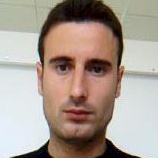
Roberto Berjón Gallinas is a Professor at the School of Computer Science, Deusto University. His research focuses on semantic technologies, internet of things, and data integration, with a strong emphasis on mobile applications and open data. He leads two research groups: ICS (Innovación en Ciencias Sociales) MARATON (Mobile applications, internet of things, data processing, semantic technologies, open data) His recent work includes developing smart tracking frameworks for IoT workflows and digital twins, event-driven architectures for IoT systems, and semantic integration solutions for university research. His projects often bridge technical innovation with practical applications in collaborative e-learning and spatial analytics. Key trends in his publications highlight advancements in IoT frameworks , semantic technologies for data integration, and real-time systems using BLE and open data. These works frequently intersect with collaborative e-learning , university transparency , and adaptive mobile platforms .
Agustín Zaballos Diego is an Assistant Professor in the Department of Computer Engineering at University Ramon Llull (URL), Barcelona, Spain, since 1999. He serves as Research Coordinator in the Department of Engineering at La Salle Campus Barcelona and leads the R&D Networking and Security Area since 2002. His academic background includes a PhD in Data Networks and Internet Technologies (2012), an International MBA (2014), and an M.S. in Electronic Engineering (2000). University: University Ramon Llull (URL) Department: Department of Computer Engineering Research Group: GRITS Research Focus: Real-time QoS-aware routing protocols in Smart Grids, Ubiquitous Sensor Networks, and IoT communications. His work bridges telecommunications, computer science, and energy systems through projects like OPERA (FP6), INTEGRIS (FP7), and FINESCE (FP7). Publication Trends: Recent articles highlight advancements in HF communications for Antarctic research, hybrid genetic algorithms for traffic engineering, IPv6 testing, and Industry 4.0-related networking solutions. Keywords span Smart Grids, IoT, Sensor Networks, and QoS optimization. Collaborative Projects: Key initiatives include the Antarctica Project , ATHIKA (ICT in healthcare), ENVISERA (environmental sensor networks), HOTSUP (online teaching innovation), PLANET4 (AI/ML in industry), and XIoT (IoT scalability challenges).
Alan Briones Delgado is a researcher at the La Salle School of Engineering , Universitat Ramon Llull , with a focus on Internet of Things , Cybersecurity , and Transport Protocols . His work spans projects funded by the European Commission and national grants, including EXCEL4HOUSING4.0 , WeB-Nimbus , and NG-SOC , addressing challenges in cloud computing education, ecological monitoring, and security operations. His research integrates Artificial Intelligence and Wireless Sensor Networks for sustainable solutions. Key research areas include Quality of Service in heterogeneous networks, Environmental Conservation via IoT, and Teaching and Learning strategies for Big Data. Projects like EcoSentinel and BTL-COP highlight his commitment to Environmental Monitoring and Community Policing applications. His collaborations extend to institutions in the UK , Albania , and Western Balkans . Contact: alan.briones@salle.url.edu
Florina Almenares Mendoza is an Associate Professor at the Telematics Engineering Department of Carlos III University of Madrid , where she also serves as the Director of the University Master's Degree in Cybersecurity. Her research focuses on addressing security challenges in emerging technologies such as IoT, post-quantum cryptography, and privacy-preserving systems. Email: florina.almenares@uc3m.es Contact: 916246234 Location: 4.0.F06 - Quevedo Towers (Leganés) Research Interests Florina's work spans cybersecurity , Internet of Things (IoT) , and post-quantum cryptography , with a focus on scalable authentication, quantum-resistant protocols, and privacy. She explores machine learning applications for security, federated identity management , and smart grid security frameworks. Recent Publications Her recent research includes papers on DNSSEC soft delegation, hybrid quantum security for TLS/IPsec, PUF-based authentication in IoT, and blockchain-enabled auditability. These studies emphasize IoT security , quantum-resistant algorithms , and privacy-enhancing technologies .
Jorge Garcia Vidal is a Professor in the Department of Computer Architecture at the School of Computer Science, Universitat Politècnica de Catalunya (UPC). He is a key member of the CNDS - Computer Networks and Distributed Systems research group, with a sustained record of research activity from the late 1980s to the present, including publications projected into 2025. His work bridges theoretical network performance analysis and applied IoT systems, particularly in environmental monitoring. His research interests center on Computer Networks , Internet of Things (IoT) , Sensor Networks , and Data Quality in IoT . He has made significant contributions to ATM network performance, medium access control, and traffic modeling. More recently, his focus has shifted to air quality monitoring using low-cost sensor networks, employing techniques in Graph Signal Processing , Machine Learning , and Anomaly Detection to improve data reliability and estimate pollutants like black carbon. The recent article trends show a strong emphasis on developing data-driven frameworks, virtual sensors, and robust models for environmental IoT platforms. His work integrates advanced signal processing and machine learning to address the challenges of heterogeneous, low-cost sensor data in urban settings. His scientific achievements have been recognized with awards including the Premio Extraordinario de Doctorado and the Premio Mejor Tesis Doctoral . He has advised several doctoral students, including Pau Ferrer-Cid, David Fusté Vilella, Steluta Iordache, and Julian David Morillo Pozo. He is actively involved in numerous competitive and non-competitive R&D projects, such as those related to digital twins, IoT platforms for smart cities, and nature-based urban solutions, often funded by state and regional programs. He collaborates extensively within UPC and with external partners. His research is conducted primarily within the CNDS research group at UPC, a collaborative environment focused on computer networks and distributed systems, with connections to broader initiatives in smart cities and environmental monitoring.
Rubén Garvi Jiménez Ortiz is an Assistant Professor at Carlos III University of Madrid (UC3M), affiliated with the Grupo Universitario de Tecnologías de Identificación (GUTI). His research focuses on RF engineering, wireless communication, and identification technologies, including applications in IoT and wearable systems. Contact: Email ruben.garvi@uc3m.es | Phone 916248753 | Office 1.2.F11, Agustín de Betancourt Building (Leganés Campus). His work aligns with emerging technologies in smart devices and communication protocols.
Jose Miguel Espi Huerta is an Associate Professor in the Department of Electronic Engineering at the School of Engineering, University of Valencia. He is an active researcher in power electronics and control systems, contributing significantly to grid-connected converters, renewable energy integration, and digital control techniques. His research interests include: Power Electronics and Inverter Control Predictive and Robust Control Strategies Renewable Energy Systems (Photovoltaic and Wind) Induction Heating Technologies Remote and Web-Based Educational Labs The analysis of his recent publications reveals a strong focus on improving the efficiency and reliability of grid-connected power converters using advanced control methods such as predictive current control and MPPT strategies. His work spans both industrial applications and academic education, particularly in developing remote laboratory platforms for control systems. Scientific awards and honors: No awards listed in the provided text. He has supervised academic theses and is affiliated with the LEII (Laboratory of Industrial Electronics and Instrumentation) research group. While no formal grants are listed, his extensive publication record indicates sustained research activity. He has contributed to the development of educational tools such as air levitation systems accessible via PLC and web interfaces, promoting innovative teaching methods in engineering education. The LEII research group focuses on industrial electronics, instrumentation, and power systems, providing a collaborative environment for applied research in energy conversion and control technologies.
Dr. Alfonso José López Rivero is a Professor at the School of Computer Science , Pontifical University of Salamanca , specializing in Statistics and Operations Research . He earned his PhD from the Universidad Pontificia de Salamanca in 2004 with a thesis on Software Quality in Information Selection and Classification , supervised by Dr. Luis Joyanes Aguilar. Education: PhD in Computer Science (2004), Universidad Pontificia de Salamanca. His research spans Digital Transformation , Machine Learning , and Sustainable Mobility , with a focus on applications in healthcare, battery recycling, and strategic management. Recent work includes IoT systems for voice-based disease detection and AI-driven sustainability in SMEs. Key trends in his publications include Electric Vehicle (EV) Optimization , IoT in Healthcare , and Ethical AI . He leads the Gestión tecnológica y ética del conocimiento research group, emphasizing technological ethics and data-driven decision-making.
Francisco Javier Pérez Castelo is a Professor in the Department of Industrial Engineering at Universidade da Coruña (UDC), specializing in Systems and Automation Engineering. He is affiliated with the Escola Técnica Superior de Enxeñaría and leads research in the Cyber Science and Technology Research Group. His research focuses on Intelligent Instrumentation, Industrial Internet of Things (IIOT), Knowledge Engineering, Expert Systems, and Intelligent Systems for modeling, optimization, and control . His work bridges theoretical control systems with practical applications in marine engineering, power electronics, and industrial automation. His research has significant applications in ship automation, marine systems control, and industrial robotics. Pérez Castelo's publication record shows a consistent trajectory in control systems and automation, with recent work emphasizing intelligent instrumentation, IIOT applications, neural networks, and expert systems in marine environments. His research has evolved from fundamental control theory to applied intelligent systems with strong industry connections. Patent: Universidade da Coruña (UDC) - 22/03/2013 request date, 11/08/2015 grant date Patent: Universidade da Coruña (UDC) - 01/10/2010 request date, 26/12/2013 grant date Patent: Universidade da Coruña (UDC) - 04/02/2008 request date, 29/03/2011 grant date Patent: Universidade da Coruña (UDC) - 19/07/2005 request date, 20/05/2009 grant date He has supervised numerous bachelor's and master's theses on topics including autonomous vehicles for ship maintenance, marine stability optimization, digital camera stabilization systems, and solar-powered LED lighting. His research has been supported by various funding entities including EMALCSA, CONSELLERIA DE EDUCACIÓN, Instituto Nacional de Ciberseguridad, and Ministerio de Ciencia e Innovación. Pérez Castelo actively collaborates with researchers across Spain and internationally, with projects spanning from 1995 to the present, demonstrating sustained research productivity. He teaches across multiple programs including the Master's Degree in Industrial Informatics and Robotics, Degree in Naval Engineering, and Degree in Marine Technologies, covering subjects such as Industrial Drives, Automation and Control Systems, Ship Installation Automation, and Advanced Control of Marine Systems. His teaching laboratory is located in the Laboratorio de Automática (ETSNM).
Daniel Hernández de la Iglesia is a researcher at the University of Salamanca , affiliated with the School of Informatics and the Department of Computer Science and Artificial Intelligence . He completed his PhD at the University of Salamanca in 2018 with the thesis titled "Embedding smart software agents in resource constrained internet of things devices." Research Focus: Specializes in integrating Multi-Agent Systems and IoT for sustainable applications, including electric vehicle optimization, battery reuse, and smart urban solutions. Academic Contributions: Published extensively on AI-driven energy management, smart mobility, and ethical implications of technology. Key Trends in Publications (2022-2025): His work spans IoT , Artificial Intelligence , and Sustainable Mobility , with a focus on electric vehicle battery health, strategic management in digitalization, and ethical considerations in technology. Collaboration: Supervised by Dr. Gabriel Villarrubia González and Dr. Juan Francisco de Paz Santana , his research bridges academic rigor with real-world applications in smart systems and renewable energy.
Ramon Canal is a Professor at the Universitat Politècnica de Catalunya (UPC), affiliated with the Barcelona School of Informatics and the Computer Architecture Department. He has served as Vice Dean of postgraduate studies and leads the VirtuOS (Virtualization and Operating Systems) research group. His academic background includes BSc, MSc, and PhD from UPC, with thesis supervision by Antonio González (UPC) and James E. Smith (University of Wisconsin-Madison). He completed sabbaticals at Harvard University (2006-2007) and University of Cyprus (2019-2020). Education: PhD, MSc, BSc in Computer Engineering (UPC) Research focus: Microarchitecture security, reliability across circuit/system levels, cloud optimization Recent publications address privacy in IoT, secure hardware accelerators, and safety-critical systems. His work contributes to the DRAC project (2019-2022), Red-RISCV network, and Horizon's Vitamin-V project. Awards include HiPEAC Paper Awards, IEEE Senior Member status, Fulbright recognition, and multiple education excellence accolades. Scientific Honors HiPEAC Paper Award (ISCA-44, 2017) IEEE Senior Member (2016) Best Paper Nominee (ICCD-32, 2014) UPC Outstanding PhD Award supervision (2011) He advises current MSc students and has mentored multiple PhD graduates. Professional activities span academic leadership, research collaborations with Barcelona Supercomputing Center (BSC), and technical contributions to reliability analysis frameworks like RECIPE and FRACTAL.
Luis Castedo Ribas is a Professor at the Faculty of Informatics , University of A Coruña (UDC) , Spain, since 2001. Previously held research positions at the University of Southern California (USC) and École supérieure d'électricité (SUPELEC). PhD in Telecommunications Engineering (1993), Technical University of Madrid Department of Computer Engineering Research Group: Electronic and Communications Technology Group Research Interests: Specializing in Signal Processing and Information Theory for Wireless Communications Engineering , with focus on MIMO Communication Systems , 5G Radio Interfaces , Joint Source-Channel Coding , and High-Speed Wireless Communications . His work bridges theoretical advancements with practical prototyping of digital communication systems. Recent Article Trends: Publications span Massive MIMO , Beamforming , AI/ML for Wireless , and Quantum-Inspired Coding , reflecting his leadership in evolving telecom standards (5G→6G). Collaborative work with institutions like IEEE and European consortia. Scientific Awards: Best Student Paper (2007, 2013, 2017) General Co-Chair, IEEE Sensor Array Workshop (2014) General Co-Chair, European Signal Processing Conference (2019) Grants & Collaborations: Principal Investigator in over 50 projects funded by Spanish Ministry of Science, EU programs, and companies like Atos Origin. Key roles in national and international research consortia.
Asier Perallos Ruiz is a Professor in the Faculty of Engineering at the University of Deusto, specializing in the Department of Computing, Electronics and Communication Technologies. His research focuses on RFID technology, wireless sensor networks, and computational intelligence applications with significant contributions to intelligent transport systems and antenna design. Dr. Perallos Ruiz's research interests span multiple domains with a focus on RFID technology , Wireless sensor networks , Internet of Things (IoT) , Computational intelligence , Evolutionary algorithms , and Intelligent transport systems . His work bridges theoretical advancements with practical applications, particularly in transportation systems, healthcare, and industrial automation. His research often involves interdisciplinary collaboration across engineering disciplines. His publication portfolio shows a consistent trend toward improving RFID systems, developing efficient anti-collision protocols, and applying computational intelligence to real-world problems. Recent work has focused on polarization-diversity rotation sensing, customizable RFID platforms, and the integration of RFID with IoT applications. His research demonstrates a progression from foundational RFID technology to more complex system integration and application-specific solutions. Dr. Perallos Ruiz has supervised several graduate students including Muralter Florian (2021), Arjona Aguilera Laura (2018), Cmiljanic Nikola (2018), Lopez Garcia Pedro (2016), and Moreno Emborujo Asier (2016). His research has been supported by various projects focusing on RFID technology, intelligent transportation systems, and wireless communication applications. He leads research teams focused on RFID systems development, wireless sensor networks, and computational intelligence applications. Current work appears to be advancing RFID sensing capabilities, energy-efficient protocols, and system integration for practical applications in transportation and industry.
Jorge Bernal Bernabe is an Associate Professor at the University of Murcia , affiliated with the Faculty of Informatics and the Department of Information and Communication Engineering . He holds a PhD in Computer Science from the University of Murcia (2015), focusing on 'Authorization and Trust Management in Distributed Systems Based on the Semantic Web.' His research group, Intelligent Systems and Telematics , explores cutting-edge cybersecurity solutions for IoT, 5G/6G networks, and privacy-preserving technologies. He is a key contributor to frameworks like OLYMPUS (privacy-aware identity management) and ARIES (European identity ecosystem). Education : PhD in Computer Science, University of Murcia (2015) Research Interests : His work centers on securing next-generation networks (e.g., 5G/6G), IoT privacy, federated learning applications for intrusion detection, blockchain-based identity systems, and policy-driven security enforcement. He emphasizes privacy-by-design principles and explores challenges in digital sovereignty and decentralized governance. Notable Projects : OLYMPUS: Oblivious identity management system ARIES: Pan-European identity framework ANASTACIA: Security agents for CPS/IoT INSPIRE-5Gplus: Cognitive security for 5G networks Labs/Teams : Active in the Intelligent Systems and Telematics Group , collaborating with industry partners on secure IoT deployments and 5G cybersecurity solutions.
Dr. Gregorio López López is an Associate Professor at the School of Engineering (ICAI) of Universidad Pontificia Comillas and a member of the Institute for Research in Technology (IIT). His research focuses on Smart and Sustainable Grids, Intelligent Systems, and Bioengineering. He holds a PhD in Telecommunications Engineering from Universidad Carlos III de Madrid (2014), recognized with the Extraordinary PhD Dissertation Award and CISCO-COIT Prize. Education: PhD in Telecommunications Engineering (UC3M, 2014), MSc and BSc in similar fields. His research interests include M2M communications optimization, IoT cybersecurity, and smart grid technologies. He has led over 17 national/EU projects including eFORT and InteGrid. His work spans 64 conference papers and 31 journal publications. Key awards: CISCO-COIT Prize (2015), Extraordinary PhD Award (2015), Deloitte Prize (2021), Lyntia Prize (2022). He advises 4 PhD students, teaches telecommunications subjects, and contributes to cybersecurity initiatives like the RAYUELA project. His lab focuses on integrating cybersecurity with smart grid systems and youth tech safety.



.JPG)