Seamus Dowling is a Lecturer in Cybersecurity at the Department of Computer Science & Applied Physics, and serves as Principal Investigator at the Centre for Research and Community Engagement (EPIC). His research focuses on cybersecurity frameworks, data privacy regulations (especially GDPR), and adaptive honeypot technologies. Dowling has contributed to understanding Ireland's cybersecurity landscape and has developed novel approaches for securing IoT environments through machine learning. His recent work includes analyzing GDPR compliance in healthcare sectors, designing adaptive honeypot systems, and evaluating cybersecurity postures in Irish industries. With an h-index of 12 and over 100 citations, his research bridges theoretical cybersecurity principles with real-world regulatory challenges. Dowling collaborates internationally on projects addressing malware detection, privacy-preserving data processing, and dynamic network defense mechanisms. No scientific awards or grants are explicitly listed in the provided information.
Univ.Prof. Helmut Habersack is a Professor in Hydraulic Engineering at the University of Natural Resources and Life Sciences, Vienna. His research focuses on sediment transport dynamics, river restoration, flood management, and hydropower impacts in large river systems. He leads the Hydraulic Engineering, Hydraulics and River Research department, specializing in fluvial processes and their environmental implications. His work integrates field measurements, laboratory experiments, and computational modeling to address challenges in sustainable water resource management. Key areas include bedload dynamics in glacial catchments, floodplain evaluation, and sediment management strategies for hydropower systems. He collaborates internationally on projects such as DanubeSediment and EFRE initiatives, emphasizing transboundary river management and climate change adaptation. His contributions span over 150 peer-reviewed articles, advancing methodologies in tracer-based sediment tracking and floodplain resilience assessment. Education and qualifications include Dipl.-Ing. (FH), Dr.nat.techn., and Dr.hc honoris causa. Consultation hours are available by appointment. Research highlights include innovative approaches to river restoration in the Thaya border section, critical flood flow analysis during extreme events like the 2024 Wien River flood, and development of the Floodplain Evaluation Matrix (FEM) for multi-criteria river assessments. He also investigates microplastic transport in large rivers and hydraulic infrastructure impacts on aquatic ecosystems. His laboratory facilities support advanced experimental studies on sediment-particle interactions and ecohydraulic modeling.
Karsten Schulz is a Professor in the Department of Hydrology and Water Management at the University of Natural Resources and Life Sciences (BOKU), Vienna. His research focuses on hydrological processes in alpine environments, remote sensing applications, and machine learning-driven environmental modeling. He leads studies on snow cover dynamics, groundwater recharge, and the integration of big data into hydrological systems analysis. Teaching responsibilities include courses on geoecology, hydrology, and uncertainties in water flow modeling. His research emphasizes interdisciplinary approaches, combining field observations with advanced computational methods to address challenges in climate change, water resource management, and sustainable agriculture. Recent work highlights include regional-scale assessments of Austrian water balance components, the application of superconducting gravimeters for snowpack monitoring, and the development of machine learning models for soil hydraulic property prediction. He collaborates internationally on projects involving transboundary hydrology and agricultural sustainability in East Africa. Consultation hours are held weekly (except cancellations), and his lab (iHYWA) focuses on hydrological innovation for environmental resilience. Research outputs span over 50 peer-reviewed articles since 2018, addressing topics from snow hydrology to AI-driven water temperature forecasting.
Julien Colaux is a Researcher at the University of Namur (UNamur), affiliated with the Namur Institute of Structured Matter (NISM). He holds a Doctor of Science (2009) from UNamur, specializing in carbon nitride synthesis via ion implantation. His roles include Co-Principal Investigator in projects like PHOENIX (2024-2029) and NEP (2021-2026), focusing on materials science and nuclear physics applications. Colaux has extensive experience in ion implantation, thin film deposition (e.g., magnetron sputtering), and material characterization techniques like XPS and RBS. His research bridges nuclear reactions, environmental geochemistry, and biomedical applications of nanoparticles. He collaborates internationally, including as a Liaison Fellow at the University of Surrey (2012-2015). Key projects include cross-sectional studies of nuclear reactions, nanostructure fabrication for solid targets, and environmental impact analysis of mineral oxidation. His work spans over 50 peer-reviewed articles and datasets, notably on optical coatings, proton dosimetry, and dinosaur feather preservation. Colaux manages the Synthesis, Irradiation and Analysis of Materials (SIAM) platform, enabling advanced material research. His activities include organizing conferences like IBAF 2024 and participation in interdisciplinary initiatives linking physics, chemistry, and environmental science.
John Lumkes is a Professor in the Department of Agricultural & Biological Engineering and serves as Assistant Dean & Associate Director of the Office of Academic Programs at Purdue University. His research focuses on machine systems engineering, agricultural robotics, and sustainable technologies for developing countries. He leads projects like the Purdue Utility Project, addressing transportation and energy challenges in Sub-Saharan Africa. Lumkes is also involved in educational initiatives, including global design teams and K-12 STEM outreach programs, emphasizing fluid power and engineering education. His work integrates fluid power systems, digital hydraulics, and autonomous technologies to enhance agricultural machinery efficiency. He has authored numerous publications on topics such as digital pump design, actuation systems, and agricultural safety. Education & Career: While formal education details are not provided, his roles indicate extensive academic leadership and research experience. He oversees academic programs and collaborates internationally on sustainable development projects. Research Interests: Lumkes specializes in intelligent machine systems, autonomous vehicle technologies, and fluid power innovation. Recent projects include electrifying heavy equipment, optimizing digital pump strategies, and improving agricultural safety through interdisciplinary approaches. His work bridges engineering principles with global sustainability challenges. Publications & Trends: His articles (2010–2025) reflect a focus on fluid power systems, digital hydraulics, and sustainable technologies. Key themes include valve actuation mechanisms, energy-efficient designs, and global agricultural equipment solutions. Recent work emphasizes electrification and automation trends in heavy machinery. Grants & Advising: Though specific grants are not listed, his projects suggest significant funding for international development and educational outreach. He advises on global design teams and has mentored students in sustainable technology development. Labs & Teams: Engaged with Purdue's Agricultural & Biological Engineering labs, focusing on machine systems, digital agriculture, and global engineering solutions. Collaborates with international partners on multifunctional clean energy centers and agricultural vehicle design.
Prof. Simone Schütz-Bosbach is a Professor of Experimental Neuro-Cognitive Psychology at Ludwig Maximilian University of Munich (LMU), leading the Body Social Cognition & Action Lab. Her research focuses on human sensation, perception, and action using methodologies like fMRI, EEG, and TMS. She has held academic positions at institutions including the Max Planck Society and Friedrich-Alexander University Erlangen-Nürnberg. Her awards include the Otto Hahn Medal (2004) and a Heisenberg Fellowship (2013). Education: Diploma in Psychology (University of Bonn, 2000), PhD (LMU Munich, 2004), Habilitation (FAU Erlangen-Nürnberg, 2015). Research interests include cognitive neuroscience of action, self-other distinction, and body perception. She has explored topics like sensory attenuation, interoceptive processing, and neural mechanisms of agency. Publications span 20+ years, with recent works on social evaluative stress, cardiac-phase effects on motor inhibition, and neural dynamics in belief updating. Her lab investigates the interplay between interoception, action, and social cognition. She collaborates internationally and engages in interdisciplinary research, bridging neuroscience and psychology. Awards and memberships include the Junge Akademie (2008–2013), Leopoldina (2008–2013), and VolkswagenStiftung-funded European Platform for Life Sciences. Her work emphasizes embodied cognition and predictive coding frameworks to understand self-representation and action.
Professor Kristin M. Bakke is a leading scholar in Political Science and International Relations at University College London (UCL), affiliated with the Department of Political Science and the School of Public Policy. She co-founded UCL's Conflict & Change research cluster and teaches in the European and International Social and Political Studies program. Her research focuses on political violence, post-war state-building, self-determination struggles, and geopolitical dynamics in post-Soviet regions. She has held academic positions at UCL since 2009, previously serving as Assistant Professor at Leiden University and a post-doctoral fellow at Harvard University's Belfer Center. She holds a PhD from the University of Washington and BA from Indiana University. Her research employs both quantitative and qualitative methods, including fieldwork in Northern Ireland, India, Guatemala, and post-Soviet states. Key themes include state responses to opposition, wartime legacies, and memory politics. She authored *Decentralization and Intrastate Struggles* and contributes to journals like the *Journal of Peace Research*. She chairs the Conflict Research Society and sits on editorial boards of top journals. Her recent work addresses challenges in polling during wartime, memory politics in Ukraine, and Putin's influence in post-Soviet states. She collaborates internationally, including with PRIO and WIDER, focusing on conflict dynamics and policy implications.
Christine Eriksen is a Research Professor at the Institute of Geography , University of Bern (Switzerland), leading the Geographies of Disasters research group focused on wildfire resilience. She holds an Honorary Associate Professor title at the School of Geography and Sustainable Communities , University of Wollongong (Australia). Her academic journey includes a PhD in Human Geography (University of Wollongong, 2010), an MA from King's College London (2004), and a BA from SOAS (2003). Research Interests: Eriksen specializes in the social dimensions of disasters, particularly wildfire coexistence, gendered vulnerability, and climate adaptation. Her work bridges cultural norms, political agendas, and environmental history to enhance community resilience. She has authored two books and over 100 publications. Recent Research Trends: Her articles (2022–2025) emphasize wildfire resilience in Europe, cyber security social dimensions, and marginalized groups' inclusion in disaster policies. Key themes include policy reform, interdisciplinary frameworks, and equity in risk management. Awards: Resilient Australia Awards (2013, 2018), Women of Impact (2016), and World Social Science Fellow (2013). Grants: SNSF Consolidator Grant (2023–2028) for the FiRES project, ARC Discovery grants for bushfire and underinsurance studies. Teaching: Coordinated courses on disaster geographies and guest-lectured on wildfire hazards and Indigenous fire knowledge. Labs/Teams: Leads the FiRES project team at the University of Bern, collaborating internationally on wildfire resilience strategies.
David Browne is a Professor and Head of Subject in Materials Science & Engineering at University College Dublin (UCD). He holds a DPhil from the University of Oxford and has held academic roles at UCD since 1990, including Vice-Principal for Research, Innovation, and Impact (2014–2019). His research focuses on alloy solidification, bulk metallic glasses, additive manufacturing, and microgravity experiments. He has published over 230 papers and led projects such as the ESA-funded microgravity solidification study in 2015. His Phase Transformation Research Group (PTRG) explores topics like dendritic growth modeling, welding processes, and biomedical applications of BMGs. Browne has supervised numerous PhD students and collaborates internationally with institutions like Yale University and TU Delft. Education: BE (Mechanical Engineering, UCD, 1985), MSc (Materials Science, Oxford, 1987), DPhil (Oxford, 1996). Professional memberships include TMS and MIEI. He co-edits Philosophical Magazine Letters and has pioneered experimental and computational methods for solidification analysis, including in-situ synchrotron imaging and microgravity studies. Research highlights include developing methodologies for quantifying dendrite growth and solute pile-up, advancing additive manufacturing models, and discovering strain-induced ductility in BMGs. His work on space-optical applications and medical devices demonstrates interdisciplinary impact. Current interests include high entropy alloys and sustainable material design.
Dr. Ilya V. Buynevich is an Associate Professor and Undergraduate Advisor in Geology at Temple University's College of Science and Technology , Department of Earth and Environmental Science. He holds a PhD and BA from Boston University (2001 and 1994, respectively), and a Dipl. Program in Marine Geology from Odesa University, Ukraine (1989-1991). As a 2022-2023 Fulbright U.S. Scholar in Estonia, he focuses on coastal and marine geology, process geomorphology, and ichnology. His research integrates geophysical techniques like ground-penetrating radar (GPR) to study coastal barrier evolution, extreme events (storms, tsunamis), and paleoenvironmental reconstruction through animal traces (zoogeomorphology and ichnology). His teaching portfolio includes courses such as Physical Geology , Coastal Processes and Geomorphology , and Process Geomorphology . Awards include the Fulbright grant for research in Estonia. His work bridges geology, ecology, and archaeology, with applications in geoarchaeology and geoforensics. Education: PhD in Geology, Boston University, 2001 BA in Geology (Magna Cum Laude), Boston University, 1994 Diplom Program in Marine Geology, Odesa University, Ukraine, 1989–1991 Research Interests: Coastal geoarchaeology, zoogeomorphology (e.g., beaver, bison, and rodent impacts), aeolian sediment dynamics, and the geological signatures of extreme events. He employs multi-method approaches, including GPR imaging and sedimentological analysis, to explore coastal morphodynamics and paleoenvironments. Recent studies include storm impacts on Ukrainian and Bahamian coastlines, and the role of large animals in shaping landscapes. Awards: 2022–2023 Fulbright U.S. Scholar Award (Geology, Estonia) Advising & Grants: Oversees undergraduate advising in Geology. Research has been supported by grants focusing on coastal resilience, extreme event impacts, and interdisciplinary geoarchaeological studies. Collaborates internationally, including projects in Ukraine, Estonia, and the Bahamas. Labs/Teams: Directs research on coastal processes, ichnology, and zoogeomorphology. Engages in fieldwork and geophysical imaging projects globally, emphasizing applied solutions for coastal management and environmental conservation.
Lance Strate is Professor of Communication and Media Studies at Fordham University, where he has held administrative roles including Department Chair and Associate Chair for Graduate and Undergraduate Studies. He also served as the Harron Family Endowed Chair at Villanova University in 2015 and holds an honorary appointment at Henan University in China. Education: Ph.D., New York University Internationally recognized for pioneering work in media ecology, Strate's research centers on Marshall McLuhan, Walter Ong, and Neil Postman's theories. His scholarship spans new media, digital technologies, popular culture, and symbolic communication, with interdisciplinary explorations into autism, ethics, language, and the philosophy of time and technology. He examines how media environments shape human cognition and social structures through historical and contemporary lenses. His recent publications reveal consistent focus on ethical dimensions of media environments, the human condition within media ecology, and narrative structures in storytelling. Key trends include analyzing technology's non-neutrality, information's relationship to media forms, and autism's communication challenges within digital contexts, demonstrating his commitment to foundational media ecological principles. Scientific Awards: Media Ecology Association's Walter J. Ong Award (2013) Marshall McLuhan Award (2018) New York State Communication Association's John F. Wilson Fellow Award (1998) Neil Postman Mentor Award (2018) Eastern Communication Association's Distinguished Research Fellow Award (2019) Global Listening Centre’s Outstanding Research Award (2020) Malahat Review Poetry Contest Winner (2012) As mentor and academic leader, Strate founded the Media Ecology Association and served over a decade as its President. His editorial work includes founding Explorations in Media Ecology and editing multiple book series. He actively advises autism groups in Northern New Jersey and serves on international academic boards, demonstrating commitment to both scholarly advancement and community engagement through his leadership roles in the Institute of General Semantics and Global Listening Centre.
Dr. Daniel Peppe is an Associate Professor in the Department of Geosciences at Baylor University, located in Waco, Texas. He holds a Ph.D. from Yale University and leads the Peppe Research Group, which focuses on paleoclimatology, paleobotany, and paleomagnetism. His research integrates methods from ecology, stratigraphy, and sedimentology to study ancient climates and ecosystems in North America and East Africa. Key initiatives include developing paleoclimate proxies using leaf traits, reconstructing Neogene East African environments linked to hominid evolution, and analyzing Paleocene plant communities' responses to mass extinctions. Education: Ph.D., Yale University Research Interests: Paleoclimatology, Paleoecology, Geoarcheology, Stratigraphy, and Tectonic Processes His lab's work emphasizes field-based research and methodological integration, such as digital leaf physiognomy and paleomagnetic dating. Current projects include studying Pleistocene environments in the Lake Victoria Basin and early Miocene hominoid habitats in Kenya and Uganda. Dr. Peppe advises multiple graduate students (e.g., Dava Butler, Evan Cerna) and has an extensive record of publications across paleontology, geology, and climate science. His group collaborates internationally on projects like the REACHE initiative to understand East African hominoid evolution. Lab facilities at Baylor support fieldwork and analyses of fossils, sediments, and geochemical data. Dr. Peppe’s research contributes to understanding climate change impacts on ecosystems, with implications for modern environmental challenges.
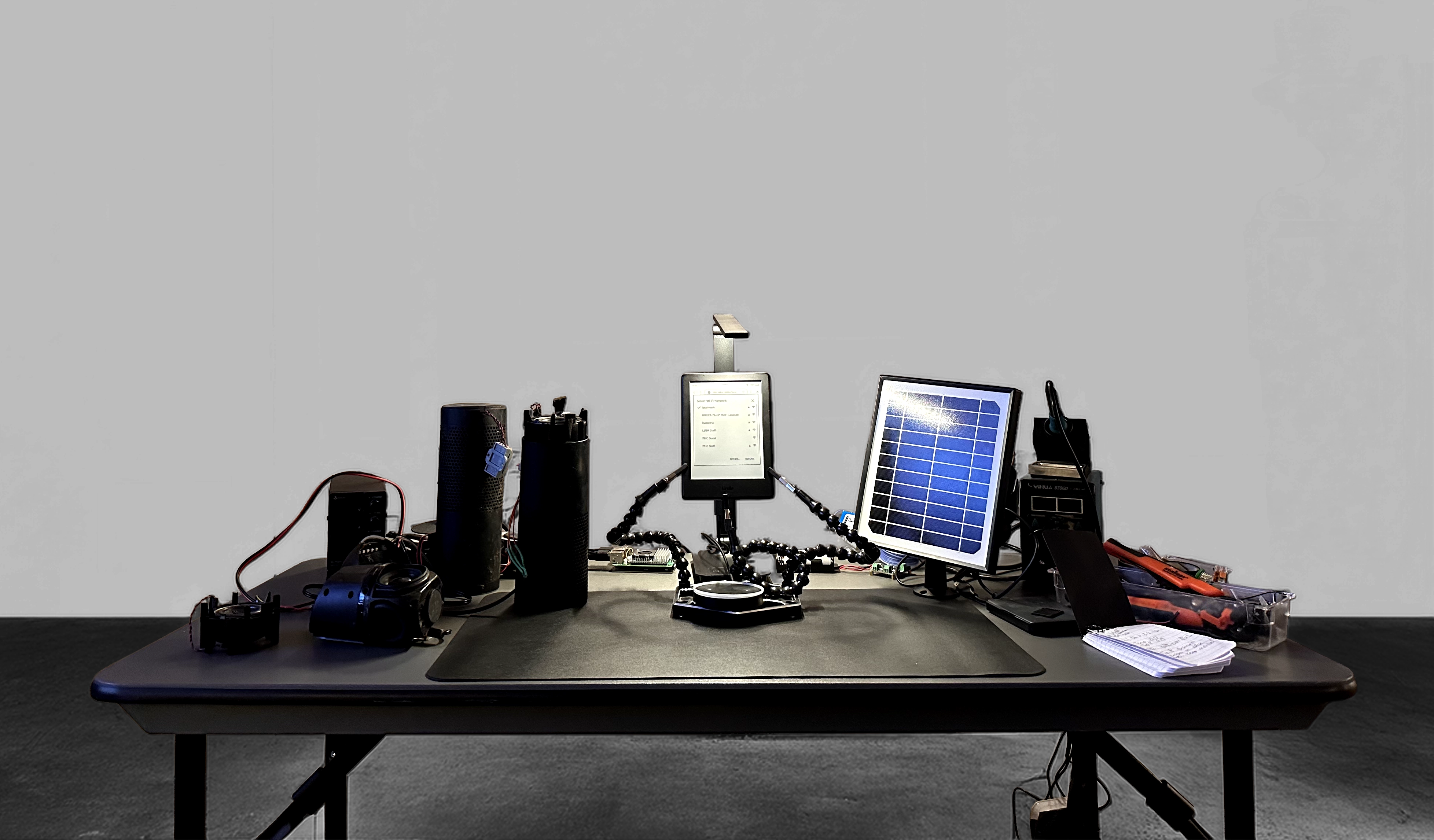
Wesley Goatley is an Acting Programme Director of Interaction Design and Visual Communication at the London College of Communication (LCC), part of University of the Arts London. With a doctorate in Creative and Critical Practice from the University of Sussex, he is a critical artist and researcher whose work examines Artificial Intelligence technologies and their relations to society, geopolitics, and the climate crisis. Goatley's research interests focus on critical data aesthetics, the sociopolitical implications of AI, and speculative futures. His work investigates how art practice can intervene and explore AI technologies, emphasizing their ecological impact and the myths they represent. He creates installations, performances, and films that expose the hidden mechanisms of AI listening, smart devices, and surveillance technologies, often using deconstructed synthetic voices to highlight their non-human nature. His artistic outputs form a cohesive body of work that critically examines the relationship between humans and AI. Through soundtracked speculative fiction, interactive installations, and performance art, Goatley explores alternative futures where AI is banned, forgotten, phased-out, or surpassed. His works consistently address themes of climate crisis, e-waste, surveillance, and the geopolitical forces behind seemingly friendly consumer technologies. EMARE/EMAP residency prize with Impakt Festival (2017) Goatley has presented his work internationally at venues including Eyebeam in New York, Berghain in Berlin, The Nam June Paik Art Center in Seoul, and the Victoria & Albert Museum in London. His installations have been commissioned by organizations including Tactical Tech Berlin, Science Gallery London, and the Bridging Responsible AI Divides (BRAID) Programme. He has also consulted for organizations such as BBC R&D and the University of the Creative Arts, London. Goatley maintains an active presence in the critical AI community, having given talks at international events such as Milan Design Week, Global Art Forum Singapore, CTM Festival Berlin, and the European Data Forum in Eindhoven. His work bridges artistic practice with critical theory, creating tangible experiences that make abstract technological systems visible and critique-able.
Lesley Knoll is an Assistant Professor at Miami University, affiliated with the Ecology Research Center, Center for Aquatic and Watershed Sciences, and the Department of Biology. Her research focuses on lake dynamics, nutrient fluxes, and phytoplankton ecology, with emphasis on winter/spring conditions, lake browning, and combined stressors on freshwater ecosystems. She employs long-term datasets, field experiments, and advanced sensors to explore ecosystem-level processes. Education details are not explicitly stated in the text. Current research themes include the impact of winter ice loss, consequences of browning on nutrient mismatches, and effects of resource subsidies. She teaches courses such as Limnology (BIO 463W/563) and Ecosystem and Global Ecology (BIO 672). Her lab is located in 153 Pearson Hall, and her office is in 194 Pearson Hall. Publications highlight her contributions to understanding climate-driven changes in lake ecosystems, including oxygen depletion, chlorophyll dynamics, and societal impacts of ice loss. While no awards or grants are listed, her work spans collaborative projects on browning-related feedbacks and global lake metabolism trends. Knoll’s research integrates interdisciplinary approaches, bridging community and ecosystem ecology. She collaborates internationally on projects like the LTREB Renewal and global lake ice phenology records, emphasizing scalable sentinel responses to climate change.
Christine SCHILTZ is a Full Professor in Cognitive Neuroscience at the University of Luxembourg's Faculty of Humanities, Education and Social Sciences, Department of Behavioural and Cognitive Sciences. Her work focuses on numerical cognition, spatial attention, face perception, and cognitive development, employing neuroimaging techniques such as EEG/MEG. She leads research initiatives addressing multilingual education challenges, particularly in diagnosing learning disorders in mathematics within Luxembourg's multicultural context. Her team develops innovative assessment tools like the LuxMatheTest to evaluate numerical competencies in multilingual children. Her research integrates neuroscientific methods with educational applications, exploring how language and environment influence mathematical learning. Key projects include studying dyslexia's neural underpinnings, spatial coding in arithmetic, and the impact of bilingualism on numerical processing. Recent studies investigate socioeconomic factors affecting math education and the role of visual stimulation in understanding word and number recognition. Publications highlight advancements in neuroimaging analysis (e.g., FPVS techniques), early childhood development, and educational policy. She collaborates internationally on large-scale assessments of cognitive abilities and contributes to evidence-based strategies for inclusive education systems. Her work bridges fundamental cognitive science with applied educational research, emphasizing practical solutions for multilingual learning environments.