Professor Marinella Marmo is a leading academic in criminology, human rights, and gendered migration studies at Flinders University's College of Business, Government and Law . She serves as a Professor and contributes to institutions like the Centre for Social Impact and the Jeff Bleich Centre for Democracy and Disruptive Technologies . Education: PhD in Applied Social Science (University of Lancaster, UK), LLB (Honours) (Università di Salerno, Italy). Her research spans international criminal justice , transnational crime , modern slavery , and gendered border control , with work influencing national policies and documentaries. She has secured funding from the Australian Research Council and EU-Australian Government initiatives . Recent publications focus on state-corporate harm and migrant deportation regimes , reflecting her commitment to human rights centred criminology . Awards include the 2023 BGL Team Teaching Award and the 2018 ANZ Society of Criminology Excellence in Teaching Award . She supervises projects on modern slavery , gig economy exploitation , and state crime , aligning with UN Sustainable Development Goals like SDG 5 (Gender Equality) and SDG 8 (Decent Work).
Professor Stuart James Khan is an Adjunct Professor in the School of Civil & Environmental Engineering at the University of New South Wales (UNSW). He previously served as Director of the Australian Graduate School of Engineering (AGSE). His research focuses on sustainable urban water management, water treatment processes, and chemical contaminant analysis. Khan holds a PhD in Environmental Engineering from UNSW (2003) and a BSc (Hons 1 in Organic Chemistry) from the University of Sydney (1995). His research interests include water recycling, desalination, disinfection byproduct formation, and the safe management of chemical contaminants. He has advised over 15 PhD students on topics ranging from advanced treatment technologies to risk assessment frameworks. Khan has published extensively, with over 200 journal articles and 18 book chapters, emphasizing interdisciplinary approaches to water quality challenges. Key contributions include advancing membrane bioreactor performance, optimizing water recycling systems, and assessing risks associated with emerging contaminants. His work bridges fundamental science and practical engineering solutions, addressing global water security challenges. Current projects explore wastewater-based epidemiology, PFAS remediation, and climate-resilient water infrastructure. Khan collaborates internationally on water reuse strategies and has contributed to policy frameworks for safe water management. His teaching spans courses like Water & Wastewater Treatment and Environmental Risk Analysis, reflecting his commitment to educating future engineers in sustainable practices.
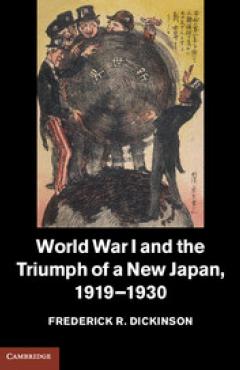
Frederick R. Dickinson is a Professor of Japanese History and Director of the Center for East Asian Studies at the University of Pennsylvania’s College of Arts & Sciences. He specializes in Modern Japan, East Asian diplomacy, and World History, with a focus on imperialism, nationalism, and transnational dynamics. Born in Tokyo, Dickinson holds a Ph.D. from Yale University and has authored seminal works including War and National Reinvention: Japan in the Great War, 1914–1919 and World War I and the Triumph of a New Japan, 1919–1930 . His research examines Japan’s global entanglements during WWI, postwar diplomacy, and the Meiji Restoration’s global implications. He has held visiting professorships at Kyoto University, Swarthmore College, and others. Dickinson’s work bridges cultural, diplomatic, and political histories, emphasizing Japan’s role in shaping 20th-century Asia-Pacific relations. His grants include support from the Japanese Ministry of Education, Fulbright Commission, and Japan Foundation, alongside fellowships at Stanford’s Hoover Institution and Kyoto’s International Research Center for Japanese Studies. His courses include Modern Japanese History, East Asian Diplomacy, and Global History frameworks. Education: Ph.D. and M.A. in History (Yale University), M.A. in International Politics (Kyoto University). His research interests span Japanese imperialism, transnational networks, and the interplay between domestic politics and international relations. Current projects include a global history of modern Japan. Professional service includes co-directing the Lauder Institute of Management and International Studies (2012–2019) and advising on East Asian studies initiatives. Professional contributions include over 50 peer-reviewed articles and book chapters, focusing on WWI’s impact on Japan, Meiji constitutionalism, and interwar diplomacy. His work highlights Japan’s contested path to modernity and its global connections. Office locations include College Hall and Williams Hall at Penn.
Titu Andreescu is a retired Associate Professor in the Science/Mathematics Education Department at the University of Texas at Dallas (UTD), affiliated with the School of Natural Sciences and Mathematics. He holds a Ph.D., M.S., and B.A. in Mathematics from the University of West Timisoara, Romania. His research focuses on enhancing mathematics education through problem-solving initiatives, particularly via AwesomeMath—a program encompassing summer camps, correspondence courses, and journals for gifted students. He specializes in Diophantine Analysis, particularly quadratic equations and their applications in advanced mathematics. Andreescu has authored numerous publications, including textbooks like Complex Numbers from A to Z and contributed to Olympiad problem design for competitions such as the IMO and W.L. Putnam. He has received prestigious awards, including the Edith May Sliffe Award and led the U.S. IMO team to historic victories, including a first-place finish in 1994. His professional roles include directing the Mathematical Olympiad Summer Program (MOSP) and serving as a coach for national teams in Romania and the U.S. Key projects include keynote speaking at international math camps and consulting for competitions. He has secured grants totaling over $800,000 for mathematics education initiatives, including funding from Akamai Technologies and the U.S. Army Research Office.
Malcolm von Schantz is a Professor and Deputy Faculty Pro Vice-Chancellor at Northumbria University, affiliated with the HLS Faculty Management and Administration. Previously, he held leadership roles at the University of Surrey, including Associate Dean (International) and acting Pro-Vice Chancellor (International Relations). He is also an Honorary Professor at the University of the Witwatersrand, South Africa. He holds a PhD in Zoology from an unspecified institution (awarded 10 Dec 1994). His research focuses on human circadian rhythms and sleep, their molecular determinants, and links to physical/mental health. He has secured over £6.4M in research funding from bodies like the MRC, Wellcome Trust, and NIH. Key research areas include sleep architecture, chronotype variability, HIV-related sleep disruptions, and cardiometabolic health correlations. His work has been published in high-impact journals and widely featured in media. He actively participates in international conferences and public outreach, including translating sleep education materials into multiple languages. Notable collaborations include the BioClocks UK initiative and the Baependi Heart Study in Brazil. His recent articles address daylight saving policies, gender-specific sleep-cardiovascular links, and light sensitivity in bipolar disorder. He supervises PhD students and engages in editorial roles across journals. Public impacts include translating educational comics and participating in community health events. His research emphasizes global health equity, particularly in low-resource settings.
Dorothea Schulz is a Professor of Anthropology at the Institute of Ethnology, University of Münster, where she has been serving since March 2018. She is a Principal Investigator in the Cluster of Excellence, a member of the Board of Directors, and a member of the General Assembly. Her research focuses on religious diversity and legal-political unity, with particular emphasis on Muslim communities in Africa. She leads two major projects: B3-48 on 'The role of social identities in interreligious arrangements' and B3-20 on 'Testing and contesting religious pluralism in Uganda'. Professor Schulz received her academic training at several prestigious institutions: 2005: Postdoctoral Degree (Habilitation), Institute of Social and Cultural Anthropology, Freie Universität Berlin 1991-1996: PhD in Anthropology, Yale University 1984-1990: Study of Anthropology, Sociology and Biology, Johannes Gutenberg-Universität Mainz 1990: Master of Arts in Anthropology, Sociology and Biology, Johannes Gutenberg-Universität Mainz 1982-1983: Study of Art History, Université Paul-Valéry, Montpellier Dorothea Schulz's research spans several interconnected fields within anthropology and religious studies. Her work primarily examines the dynamics of religious diversity, particularly focusing on Muslim communities in Africa. She investigates how religious identities intersect with political structures, social formations, and media technologies. Her anthropological approach emphasizes the lived experiences of Muslim communities, especially regarding gender relations, youth aspirations, and educational systems. Professor Schulz has made significant contributions to understanding how religious pluralism functions in contemporary African contexts, with particular attention to Uganda and Mali. Her research on media and religion explores how digital technologies reshape religious practice and authority in African Muslim communities. Professor Schulz has received numerous recognitions for her scholarly work: 2016: Fellow, Center for African Studies – Harvard University 2010: Teaching Prize – Faculty of Arts and Humanities, University of Cologne 2005: Fellow – Society for the Humanities, Cornell University 2000: Visiting Scholar – Department of Anthropology, University of Chicago 1996: Frobenius Society's Research Award – Johann Wolfgang Goethe-Universität, Frankfurt am Main Throughout her career, Professor Schulz has been actively involved in mentoring students and securing research funding for her projects. She has served on numerous academic committees and editorial boards, contributing significantly to the development of her field. Her leadership as Academic Director of the Research and Teaching Unit 'Media, Culture and Society' at the University of Cologne (2008-2018) demonstrates her commitment to interdisciplinary research collaboration. She currently oversees major research projects examining religious pluralism in African contexts, which involve international teams of researchers and provide opportunities for doctoral students. Professor Schulz co-leads research initiatives within the Cluster of Excellence, working with interdisciplinary teams to investigate religious diversity and legal-political unity. Her projects B3-48 and B3-20 bring together scholars from anthropology, religious studies, political science, and African studies to examine how social identities shape interreligious arrangements and how religious pluralism is tested and contested in specific African contexts, particularly Uganda.
Jaume Ventura is a Professor at Universitat Pompeu Fabra (UPF) in the Department of Economics and Business, where he has held the position since 2002. He also serves as Director of the Centre de Recerca en Economia Internacional (CREI) since October 2017 and has been a Senior Researcher there since 2002. Additionally, he is a Research Professor at the Barcelona Graduate School of Economics (Barcelona GSE) since 2012. Previously, he held academic positions at MIT, including Associate Professor with Tenure (2002–2003) and Assistant Professor (1995–1999). His affiliations include leadership roles in various academic institutions and research centers. Jaume Ventura holds a PhD in Economics from Harvard University (1995), an M.A. in International Affairs from The Johns Hopkins University’s Paul Nitze School of Advanced International Studies (1989), and a Llicenciat en Ciències Econòmiques from the Universitat de Barcelona (1986). His research focuses on International trade, Macroeconomics, and Political economy. His work explores topics such as globalization’s impact on economic policies and political structures, asset bubbles, and the interplay between economic systems and governance. His contributions have significantly influenced these fields through both theoretical and applied analyses. Ventura has received notable recognition for his contributions, including: Elected Fellow of the Econometric Society (since 2018) Fellow of the European Economic Association (since 2006) He has secured prestigious research grants, such as the ERC Horizon 2020 Programme (2016–2021) and the ERC Advanced Grant (2010–2015). His editorial roles include serving as Editor of The Economic Journal (2006–2007) and on editorial boards of multiple economics journals. His academic leadership includes directing programs at UPF and Barcelona GSE, and his involvement with institutions like the Center for Economic Policy Research (CEPR) and the National Bureau of Economic Research (NBER) underscores his collaborative and influential career. He leads the Centre de Recerca en Economia Internacional (CREI), fostering interdisciplinary research in economics and global policy analysis.
Professor John Eu-Li Wong serves as Senior Vice President (Health Innovation & Translation) at the National University of Singapore (NUS) and Senior Advisor to the National University Health System (NUHS). Previously, he held pivotal roles including Dean of NUS's Yong Loo Lin School of Medicine (2003-2011), Senior Vice President (Health Affairs), and Director of the National University Cancer Institute. His leadership has been instrumental in developing Singapore's Health and Biomedical Sciences initiative through strategic international partnerships. His educational background includes an MBBS from NUS, residency and fellowship at New York Hospital-Cornell Medical Center (where he served as Chief Resident in Medicine), and specialized training at Memorial Sloan-Kettering Cancer Center. He maintains active clinical expertise as a medical oncologist-haematologist. Professor Wong's research spans comprehensive cancer centers , healthy longevity initiatives , and value-based healthcare systems . His work focuses on translating biomedical research into national health strategies, with particular emphasis on global health security , academic health system integration , and cancer clinical trials infrastructure . He champions multinational collaborations to address transnational health challenges through frameworks like the Cancer Therapeutics Research Group. His scholarly output demonstrates consistent leadership in global health policy and translational medicine , with recent publications addressing pandemic response systems (2020), genomic medicine implementation (2015), and sustainable healthcare models (2021-2022). The work reveals a strategic shift toward healthy longevity roadmaps and value-based healthcare ecosystems while maintaining foundational focus on cancer therapeutics. International Member, US National Academy of Medicine (2019) Doctor Philosophiae Honoris Causa, Hebrew University of Jerusalem (2019) President’s Science & Technology Medal, Singapore (2014) Public Administration Medal (Gold), Singapore National Day Awards (2016) Fellow of Royal Colleges of Physicians (London, Edinburgh) and American College of Physicians Professor Wong co-founded the multinational Cancer Therapeutics Research Group (nine institutions) and serves on editorial boards for JAMA and American Journal of Medicine. His grant leadership includes directing Singapore's National University Cancer Institute and spearheading the Global Genomic Medicine Collaborative. Current initiatives focus on the National Academy of Medicine's Healthy Longevity Roadmap and Qatar's Academic Medicine Advisory Board. He established the Cancer Therapeutics Research Group and maintains strategic partnerships with Karolinska Institute, University of Cambridge, Harvard, and Stanford. His leadership extends to the M8 Alliance of Academic Health Centers (past World Health Summit President) and Global Genomic Medicine Collaborative Steering Committee, driving transnational research infrastructure.
Dr. Jack McDonald is a Senior Lecturer in War Studies at King’s College London’s Department of War Studies, and Director of the Centre for Science & Security Studies. He holds affiliations with the Environmental Security research group, Military Innovation Network (MIN), and the Leverhulme Centre for Research on Slavery in War. His research examines the intersection of ethics, law, technology, and warfare, focusing on issues like targeted killings, autonomous weapons, and the legal frameworks governing modern conflict. Education details are not explicitly stated, but his academic output demonstrates expertise in international law, military strategy, and technology’s role in warfare. He has authored two major books and contributed to peer-reviewed journals and policy papers for entities including Chatham House and the UN Mine Action Service. Recent publications emphasize digital technology’s impact on warfare ethics, including works on data privacy in conflict zones and the legitimacy of remote warfare tactics. His research also addresses emerging challenges like climate change’s role in conflict dynamics and the slavery-war nexus. Dr. McDonald supervises PhD students in his specialist areas and teaches courses such as Dirty Wars and War, Technology, and Innovation . He regularly participates in international conferences and public discussions on modern warfare trends, including panels on drones, cyber warfare, and the Ukraine conflict’s strategic implications.
Dr. Ahmad Sadri is the Gorter Professor of Islamic World Studies and Professor of Sociology at Lake Forest College. His primary affiliations include the Sociology and Anthropology department. He holds a PhD from the New School for Social Research (1981) and has held significant academic positions including the James P. Gorter Chair (2007–2010). His research focuses on the sociology of intellectuals, religion in Iran, and Middle Eastern politics. Notable awards include the Bird Award for Intellectual Contributions (1999) and the William L. Dunn Teaching Award (1994). Sadri has authored influential books like Max Weber’s Sociology of Intellectuals (1992) and Saddam City (2004). His work bridges sociological theory with contemporary issues in Islamism, democratization, and intercivilizational dialogue. He has been a frequent media commentator on NPR, BBC, and academic conferences worldwide. His 2008 Senate testimony on Middle East policy exemplifies his engagement with public intellectualism. Current research emphasizes civilizational imagination and reform movements in Iran.
Naz K. Modirzadeh is a Professor of Practice at Harvard Law School and Founding Director of the Program on International Law and Armed Conflict (PILAC). She holds affiliations with the Board of Trustees of the International Crisis Group and is a non-resident Senior Fellow at the Lieber Institute for Law and Warfare at West Point. Her academic background includes a B.A. in Political Science from UC Berkeley (1999) and a J.D. from Harvard Law School (2002). Her research focuses on public international law, armed conflict, counterterrorism, and UN Security Council policy. PILAC, under her leadership, produces analyses on international law and peace/war dynamics, supporting governments and humanitarian bodies. Key areas include Security Council resolutions, humanitarian carve-outs, and balancing counterterrorism with humanitarian imperatives. Modirzadeh’s work integrates policy advocacy, legal frameworks, and empirical research. Recent publications address U.N. Security Council Resolution 2664’s humanitarian carve-outs and critiques of TWAIL’s potential for Global South empowerment. She advises senior decision-makers and fosters interdisciplinary dialogues through PILAC’s convening initiatives. Recipient of the Francis Lieber Prize, her contributions emphasize safeguarding humanitarian action amid security policies. Her career includes a decade of applied research with conflict-affected communities in Afghanistan, the Middle East, and North Africa, alongside training diplomats and humanitarian actors on international law implementation.
Singapore University of Technology and DesignSingapore
Harvey NEO is a Professorial Research Fellow at Singapore University of Technology and Design (SUTD), leading the Cities and Urban Science programme at the Lee Kuan Yew Centre for Innovative Cities (LKYCIC). He holds a PhD in Geography from Clark University, USA, and previously served as an Associate Professor at the National University of Singapore (NUS). His research focuses on urban sustainability, citizen-centric urban science, and nature-society interactions. He is the Southeast Asian editor for Human Geography and Frontiers in Sustainable Cities , and sits on multiple international advisory boards. Key roles include Director of SUTD's Master in Urban Science, Policy and Planning programme, and co-leader of the Tote Board's Future Ready Society initiative. Education: PhD, Graduate School of Geography, Clark University (2007); MSc, Geography, NUS (2002); BA (Hons), NUS. Research interests emphasize urban futures, participatory governance, and environmental policy, with a focus on Southeast Asian cities like Ho Chi Minh City, Jakarta, Manila, and Phnom Penh. His work bridges academia and practice through projects on electric vehicle policies, urban heat adaptation, and 3P+ (People, Public, Private + Academia) partnerships. Publications span urban mobility, pandemic responses, and eco-city development, reflecting a commitment to interdisciplinary solutions for sustainable urbanization. He has secured grants from Singapore’s Social Sciences Research Council and Housing Development Board, fostering collaborations across sectors to address societal challenges. Labs/Teams: LKYCIC's Urban Environmental Sustainability Programme and the Future Ready Society Initiative, which integrate research with policy and community action.
Thomas Michael Sattich is an Associate Professor at the University of Stavanger , affiliated with the Faculty of Social Sciences and Department of Media and Social Studies . His research focuses on geopolitical implications of sustainability transitions, particularly energy policy interdependence and EU-China relations. PhD in Political Science and Economics Expertise in qualitative methods, mixed methods (cluster analysis), and data visualization Lead researcher on EU-funded digital climate negotiation simulation projects His recent publications examine renewable energy geopolitics, industrial policy competition, and sustainability education frameworks. Methodologically, he specializes in Qualitative Comparative Analysis (QCA) and network analysis, contributing to debates on energy security and regional cooperation.
Jesper Rangvid is a Professor of Finance and Director of the Pension Research Centre (PeRCent) at Copenhagen Business School (CBS), where he also serves as Associate Dean of the Executive MBA program . His research focuses on financial markets, macroeconomics, financial crises, household finance, and mutual funds. He has authored influential works such as How Low Interest Rates Change the World (Oxford University Press, 2025) and From Main Street to Wall Street (Oxford University Press, 2021), exploring topics like interest rate trends, economic growth, and policy impacts. He chairs the Council for Return Expectations and holds board positions at Formuepleje, Advantage Investment Partners, and Finansiel Stabilitet, among others. His advisory roles include Levring & Levring and projects for Danish institutions like Forenet Kredit and BankInvest. Recent research highlights include analyzing Denmark’s pension system reforms, fiscal-monetary policy interactions, and the implications of low interest rates on global economies. Rangvid’s publications combine rigorous academic analysis with policy relevance, addressing topics like dividend predictability, economic growth’s impact on asset returns, and the behavior of professional investors. His work often bridges theoretical frameworks with empirical data, offering insights into macro-financial linkages and policy design.
Rory Horner is a Senior Lecturer in Globalisation and Political Economy at the Global Development Institute (GDI), University of Manchester. He joined GDI in 2013 after completing his PhD in Geography at Clark University. His roles include Research Director (2020–2023) and leadership in academic programs such as the MSc International Development. He has held external roles including Co-Convenor of Network O (Global Value Chains) under SASE (2019–2023) and Co-chair of the Development Studies Association Annual Conference (2018). Horner’s education includes a B.A. in Economics and Geography (Trinity College Dublin), M.A. and PhD in Geography (Clark University). His research focuses on three core themes: the political economy of pharmaceuticals in global development, global value chains (GVCs) and South-South trade dynamics, and the conceptual shift to global development paradigms. His work spans fieldwork in Africa, India, and beyond, emphasizing implications for public health, industrial policy, and equitable globalisation. His publications address topics like India’s role as a generic medicine supplier, pharmaceutical value chains in sub-Saharan Africa, and the evolving geographies of global production networks. He has secured funding from UK ESRC, British Academy, and US NSF, and his media engagements include contributions to BBC News, El País, and NPR. Awards: Area Prize for new research in geography (2014) Economic Geography Specialty Group Best Student Paper Award (2009) Regional Development and Planning Specialty Group A.K. Dutt Best Graduate Student Paper Award (2013) Advising/Grants: Supervised 4 PhD students focusing on vaccine manufacturing, EV value chains, and textile trade. Led projects on India’s pharmaceutical production networks in Africa and South-South trade implications. Platforms: Convened research groups on Global Production Networks and taught courses including Globalisation, Trade and Development (MGDI 60271).