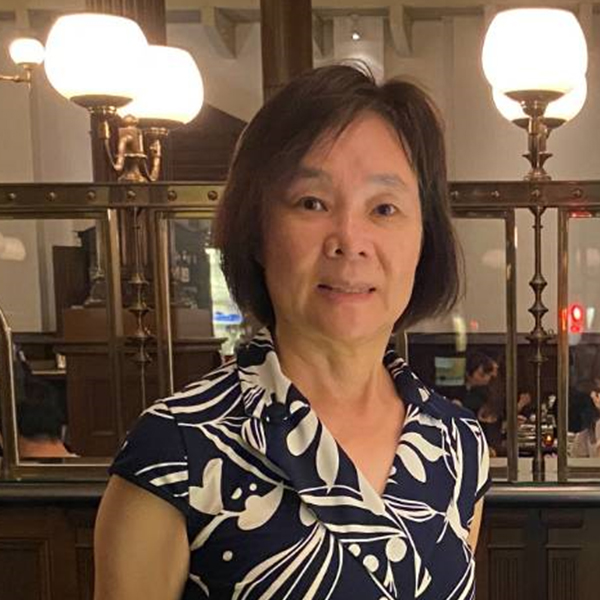
Professor Yen-Fen Tseng is a sociologist at the National Taiwan University's Department of Sociology, specializing in migration studies with a focus on Asia. Her research examines skilled migration patterns, migration policies, and transnational mobility, particularly involving Taiwan's connections with global cities like Tokyo, Hong Kong, and Shanghai. She holds a Ph.D. in Sociology from UCLA (1994) following M.A. (1989) and B.A. (1984) degrees from National Taiwan University. Her work critically analyzes how migration policies interact with migrants' lived experiences, emphasizing gaps between official regulations and practical realities. Key research themes include: Skilled labor mobility across East Asia Policy frameworks governing guest workers and dual citizenship Urbanization dynamics in global cities Cross-border career development strategies Recent publications explore topics such as Taiwanese migrants' settlement intentions in Tokyo/Hong Kong (2023), Japan's corporate talent challenges (2021), and migration policy paradoxes in Taiwan (forthcoming 2025). Her work often bridges sociological theory with policy analysis, contributing to both academic discourse and practical governance strategies. Her research has consistently addressed migration's geopolitical dimensions, including the impact of Sino-Taiwan relations on mobility patterns and the evolving social identities of Hong Kong immigrants in Taiwan. She has also examined historical migration phenomena like 1990s Taiwanese immigrant entrepreneurship in Los Angeles.
Guang-Hwa Yang is a Professor at the Department of International Business, College of Commerce, National Chengchi University (NCCU) in Taiwan. He has served as Director of the International Trade Organization and Legal Research Center at NCCU since 2002. His academic career spans over three decades, with extensive contributions to international trade law, WTO jurisprudence, and international economic relations. Yang received his Bachelor's degree in Law from National Taiwan University (1982-1986) and his PhD in Law from Columbia University in the United States (1989-1992). His academic journey reflects a deep commitment to bridging Eastern and Western legal traditions in the context of global trade governance. International Trade Law and WTO Jurisprudence Trade in Services and Financial Services Regulation Trade Remedies (Anti-dumping, Countervailing Duties) Economic Integration and Regional Trade Agreements Digital Economy and Emerging Trade Issues Professor Yang's recent scholarly output demonstrates a clear evolution from traditional WTO topics toward contemporary challenges in digital trade, WTO institutional reform, and the intersection of trade rules with emerging policy areas like climate change and digital taxation. His work consistently bridges theoretical legal analysis with practical policy implications for Taiwan's international economic relations. 30-year Outstanding Teacher Award from National Chengchi University (2022) Distinguished Professor at National Chengchi University (2014) 20-year Outstanding Teacher Award from National Chengchi University (2012) Multiple Academic Research Excellence Awards Multiple Outstanding Teaching Awards Professor Yang has served as Principal Investigator for numerous research projects funded by Taiwan's Ministry of Science and Technology (MOST), with continuous funding from 1986 through planned projects extending to 2026. His research portfolio demonstrates remarkable longevity and relevance, evolving from early work on financial services regulation to current projects addressing digital trade rules and WTO reform. He has also advised multiple Taiwanese government agencies on international trade matters. As Director of the International Trade Organization and Legal Research Center at NCCU since 2002, Professor Yang has cultivated a vibrant research community focused on WTO law and international economic relations. The Center hosts annual academic conferences and publishes research that bridges academic scholarship with practical policy considerations for Taiwan's engagement with the global trading system.
Professor Raylin Tso is a distinguished faculty member at National Chengchi University (NCCU), serving as a Professor in the Department of Computer Science within the College of Informatics. He also holds significant administrative positions including Vice Dean of the College of Informatics and Director of the Information Security Center. With extensive research experience spanning over two decades, Professor Tso has established himself as a leading expert in cryptography and information security. Professor, Department of Computer Science, NCCU (2020-present) Vice Dean, College of Informatics, NCCU (2024-2026) Director, Information Security Center, NCCU (2023-present) Director, Master Program in Information Security, NCCU (2023-present) Professor Tso earned his PhD in Systems and Information Engineering from the University of Tsukuba, Japan (2004-2006), following two master's degrees from the same institution in Systems Engineering (2002-2004) and Business Administration (2000-2002). He completed his undergraduate studies in Industrial Engineering at National Tsing Hua University, Taiwan (1991-1995). Professor Tso's research focuses on advanced cryptographic systems with particular emphasis on post-quantum cryptography, blockchain security, and privacy-preserving technologies. His work spans theoretical foundations of cryptographic protocols to practical implementations in real-world systems. Recent research has increasingly concentrated on quantum-resistant cryptographic schemes, secure multi-party computation, and applications of cryptography in emerging technologies like IoT and smart contracts. His research group actively explores the intersection of traditional cryptographic techniques with modern computing paradigms, addressing security challenges in cloud computing, distributed systems, and digital identity management. Analysis of Professor Tso's recent publications reveals a strong trajectory toward post-quantum cryptography and privacy-enhancing technologies. His work demonstrates increasing sophistication in addressing quantum computing threats to traditional cryptographic systems while maintaining practical efficiency. A significant portion of his recent research focuses on identity-based encryption systems, searchable encryption techniques, and secure protocols for distributed environments. The interdisciplinary nature of his work is evident in applications spanning financial technology, healthcare data security, and vehicular networks. Distinguished Professor, National Chengchi University (2022, 2024) MOST Research Award (2020-2023) Best Journal Paper Award, Algorithms and Computational Theory Society (2017) Outstanding Researcher, Korea Information Processing Society Senior Excellent Teacher Award (10 years), National Chengchi University Professor Tso has successfully mentored numerous graduate students, including PhD candidate Zi-Yuan Liu who frequently appears as a co-author on recent publications. He has secured substantial research funding from Taiwan's National Science and Technology Council (NSTC), formerly known as MOST, with multiple ongoing projects focused on next-generation cryptography, blockchain security, and privacy-enhancing technologies. His current research portfolio includes several multi-year projects totaling millions in funding, with particular emphasis on post-quantum cryptography migration, secure digital identity systems, and quantum-resistant blockchain technologies. Professor Tso leads the Information Security Center at NCCU and is actively involved with multiple research laboratories including the Blockchain Payment Network Research Lab and the Quantum Security Research Group. His team collaborates extensively with industry partners including Chunghwa Telecom Research Institute and the Financial Information Corporation, bridging academic research with practical security applications. The research group maintains strong international collaborations with institutions in Japan, South Korea, and the United States, contributing to the global advancement of cryptographic research.