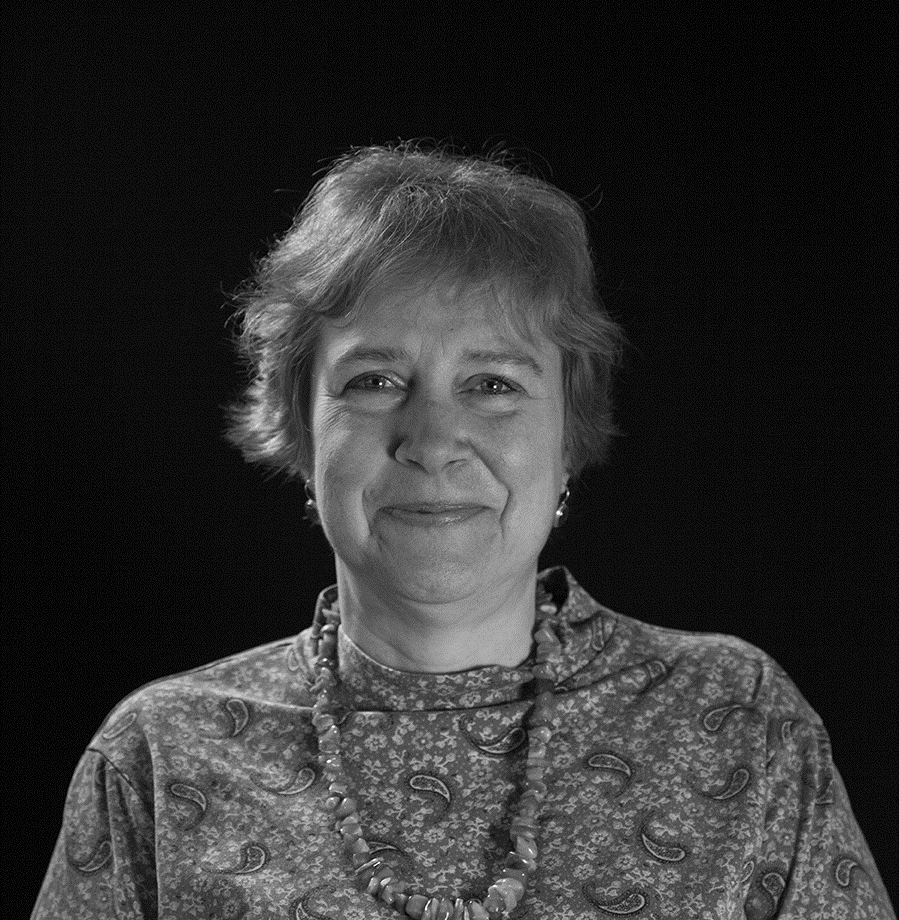
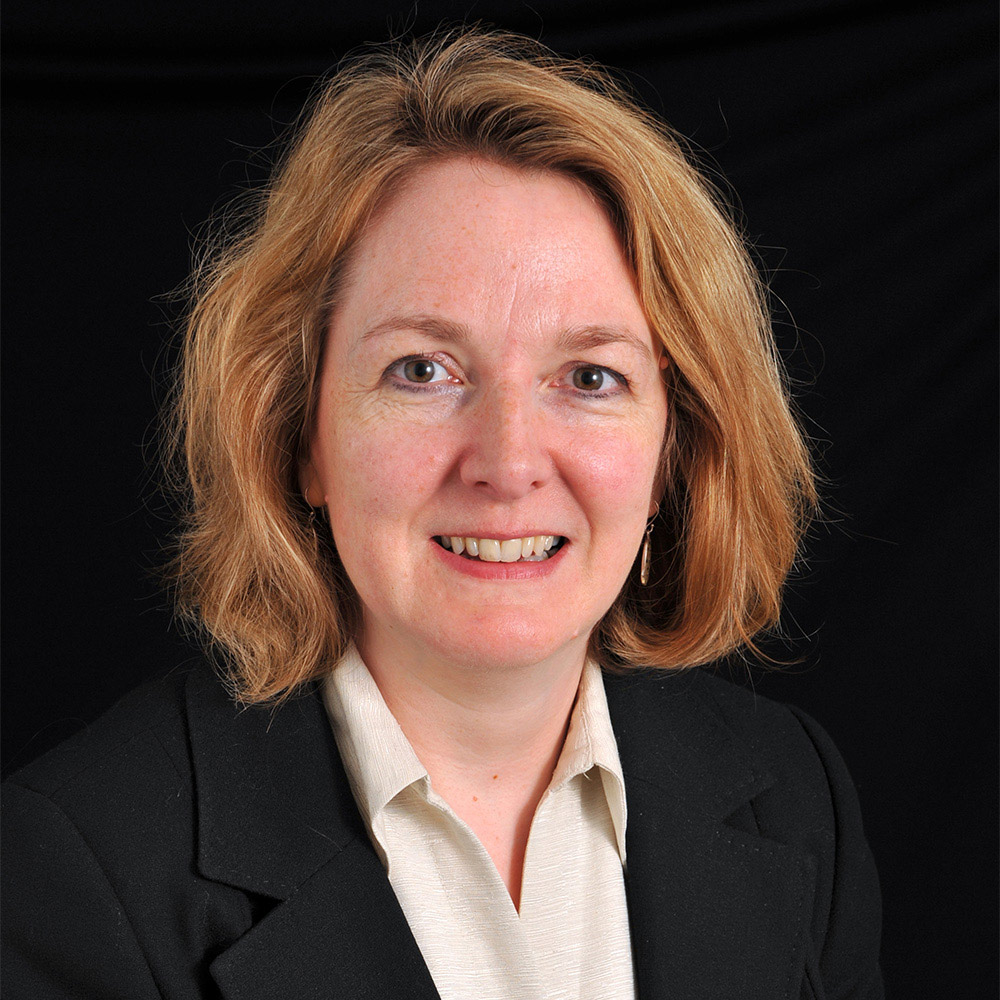
Dr Rod Thornton is a Senior Lecturer in Russian Defence and Security Studies at King’s College London, affiliated with the Defence Studies Department and School of Security Studies. He specializes in the Russian military's kinetic and sub-threshold warfare, with a focus on cyber capabilities, space warfare, and UK homeland resilience. His research includes recent British Academy-funded work on UK civil defense capacity during the pandemic, advocating for dedicated civil defense organizations. He has published extensively on Russian military tactics in Ukraine, AI-cyber integration, and space-based deterrence. Russian military cyber operations Space warfare dynamics UK resilience capacity gaps Scientific awards include a British Academy grant (2020). His students focus on asymmetric warfare, AI, cyber, and regional security issues. He teaches at the UK Defence Academy and has collaborated with institutions in Finland, South Korea, and the Freeman Air and Space Institute.
Professor Mette Eilstrup-Sangiovanni serves as Senior Lecturer in International Studies within the Department of Politics and International Studies (POLIS) at the University of Cambridge and holds a Fellowship in International Relations at Sidney Sussex College. Her teaching portfolio encompasses International Organization, International Relations Theory, International Security, History and Theory of European Integration, and Research Design and Methodology, reflecting her dual institutional commitments. Her research program centers on International Security, International Organizations, and European Integration with specialized expertise in Global Governance and Transnational Networks. She investigates how formal and informal institutions shape security governance frameworks, weapons proliferation regimes, and European defense architectures through rigorous application of network theory. This analytical lens reveals critical insights into cooperation dynamics and institutional evolution within international security contexts. Publication analysis shows consistent thematic development from foundational work on balance-of-power theory (2008-2009) toward contemporary examinations of multipolarity's institutional impacts (2013-2014). Her scholarship demonstrates methodological continuity in applying network analysis to diverse security challenges, from terrorist organizations to EU defense policy, while maintaining focus on institutional interplay in global governance structures.
Anna Lukina is a Research Fellow in Law at the London School of Economics and Political Science and a PhD candidate at the University of Cambridge's Faculty of Law. Her research focuses on jurisprudence, legal history, and public law, with a specialization in Soviet legal systems, Nazi legal frameworks, and the philosophical underpinnings of 'evil law.' She holds a B.A. (Jurisprudence) and B.C.L. from the University of Oxford, and an LL.M. from Harvard Law School. Her doctoral work, Towards a Jurisprudence of Evil Law , examines the relationship between law and immorality in authoritarian regimes, funded by the Institute for Humane Studies, Modern Law Review, and Cambridge Law Journal. Key research areas include: Legal justifications for totalitarian regimes Resistance to morally corrupt legal systems Historical analysis of Soviet, Nazi, and antebellum U.S. legal structures Publications span legal-historical analyses of Soviet legal education, Schmittian dictatorship theory, and Kelsen's critiques of communist jurisprudence. She actively engages with legal theory through blogs like Legal Form and academic networks such as the Cambridge Legal Theory Discussion Group. Her work bridges theoretical jurisprudence and historical case studies, offering critical perspectives on law's role in enabling or resisting evil. Grants and fellowships support her exploration of legal systems' moral boundaries and their societal impacts.
Janina Dill holds the Dame Louise Richardson Chair in Global Security at the Blavatnik School of Government, University of Oxford. She is also a Professorial Fellow at Trinity College and Co-Director of the Oxford Institute for Ethics, Law, and Armed Conflict (ELAC). Her academic work focuses on the intersection of law, morality, and international relations in the context of war. Her research spans three interconnected strands: the legal requirements for military operations under international law; theoretical frameworks for understanding how international law serves as an instrument of morality in war; and empirical investigations into how moral and legal norms affect real-world military decision-making and public opinion in conflict zones. Professor Dill's work has particular relevance to contemporary conflicts, with extensive analysis of the wars in Ukraine and Gaza. She has examined how international humanitarian law applies to these conflicts, the moral arguments employed by different parties, and the practical challenges of implementing legal constraints in complex warfare environments. Her research has been recognized with the prestigious Philip Leverhulme Prize in 2021, which she has used to advance her work on the moral psychology of decision-making in war. She is currently leading multiple significant research projects, including a three-year ESRC/NSF-funded study on "Cumulative Civilian Harm" and an expert process with the ICRC on military objectives under international humanitarian law. Professor Dill is frequently consulted by international media outlets including The Guardian, The Economist, BBC, CNN, and major European publications. Her expertise is regularly sought on matters related to the laws and ethics of war, particularly regarding the conflicts in Ukraine and Gaza. She has received recognition for her contributions to the field through numerous speaking engagements, media appearances, and her influential research that bridges theoretical legal scholarship with practical applications in contemporary conflicts.
Dr. Jeni Mitchell is a Lecturer in the Department of War Studies at King’s College London, affiliated with the School of Security Studies under the Faculty of Social Science & Public Policy. She specializes in future war studies, space security, and the evolution of rebellion, serving as co-director of the Future Threats Lab within the Centre for Science & Security Studies. Her work emphasizes human-centric approaches to analyzing existential threats and their societal impacts. Her education includes a PhD from King’s College London, where her doctoral research focused on civilian victimization by non-state armed groups. She has held positions at Chatham House, the Brookings Institution, and the Middle East Institute. Teaching responsibilities include MA modules on future warfare, spacepower, and insurgency, while she also directs the MA International Relations and War program. Mitchell’s research explores future threat perceptions (particularly in space), futures research methodologies, and the intersection of war, genocide, and utopian ideologies. Her methodological innovations, termed ‘future-crafting,’ employ creative formats like films and games to model conflict scenarios. Notable collaborations include work with the Freeman Air and Space Institute and King’s Wargaming Network. Recent publications address Ukraine’s apocalyptic imaginary, space-based threat analysis, and refugee-warrior dynamics. Her research group activities include the Environmental Security research group and contributions to widening participation initiatives like the 2024 Summer School in international security.
Dr. Mark B. Smith is an Associate Professor in Modern European History at the University of Cambridge’s Department of History. His research focuses on Soviet and European history, particularly the Soviet Union’s social structures, welfare policies, urban development, and cultural dynamics from Stalinism through late socialism. He teaches courses on welfare states, Soviet life, and 20th-century European violence. Key research areas include Soviet urban housing programs, welfare state evolution, and Cold War-era cultural exchanges. His publications analyze topics like Khrushchev’s housing reforms, post-Stalin urban welfare systems, and Soviet pension policies. Smith has co-edited special issues on European urban societies and authored books such as *The Russia Anxiety* (2019) and the forthcoming *Exit Stalin* (2026). He advises doctoral students on Soviet history, welfare states, and Cold War topics. His work bridges legal history, social policy analysis, and cultural studies, emphasizing how everyday life reflected broader ideological and structural changes in Soviet society.
Anthony F Lang Jr is Professor of International Political Theory at the University of St Andrews , affiliated with the School of International Relations and the Centre for Global Law and Governance . His work bridges politics, law, and ethics in global contexts. PhD, MA - Johns Hopkins University BA - University of Notre Dame Research focuses on global constitutionalism , human rights , and just war theory , with historical influences from Aristotle, Hugo Grotius, and 20th century thinkers like Hannah Arendt. Recent publications include analyses of Alasdair MacIntyre's moral philosophy and normative frameworks in global ethics. Current projects examine universality in narratives of global politics, with future research plans spanning science-policy intersections, literary IR analysis, and military ethics. He has advised institutions like the UNODC, UK Ministry of Defense, and church groups on ethical frameworks. 2021 : ISA Ethics Section Distinguished Scholar As Editor-in-Chief of the Journal of International Political Theory , he shapes discourse in the field. His career spans roles at American University in Cairo, Carnegie Council for Ethics, and multiple UK universities as external examiner.
Dr. Sara Caputo is a British Academy Postdoctoral Fellow at the Department of History and Philosophy of Science and an Affiliated Lecturer at the Faculty of History, University of Cambridge. She serves as Director of Studies in History, History and Politics, and History and Modern Languages at Magdalene College. Her research spans transnational maritime history, the history of medicine, cartography, and imperial history. Education: PhD in History from the University of Cambridge (Robinson College), MSc in History from the University of Edinburgh, BA (Hons) in History from Cardiff University. Career Highlights: Lumley Junior Research Fellow (2019–2022), Senior Research Fellow (2022–present) at Magdalene College, Scouloudi Fellow (2018–2019), Lewis-AHRC Scholarship (2015–2018), Honorary Vice-Chancellor’s Scholar (2015–2018). Research Focus: Dr. Caputo explores maritime mobilities, knowledge exchange, and the instability of national boundaries in the British and European navies. Her work integrates transnational perspectives into the study of a quintessentially national institution, challenging notions of Britishness and foreignness. She combines qualitative and quantitative methodologies to analyze legal, social, and cultural contexts of naval service and cartographic practices. Notable Articles: Recent publications include studies on British naval medicine, the evolution of ship tracks into surveillance tools, and the transnational dimensions of naval exploration. Her articles span journals like Past & Present , English Historical Review , and Social History of Medicine , with chapters in edited volumes on transport history and postwar naval recruitment. Scientific Awards: Royal Historical Society Whitfield Prize (2024) British Commission for Maritime History Boydell & Brewer Prize (2020) Fachverband Medizingeschichte wissenschaftlichen Förderpreis (2022) International Committee for History of Technology Maurice Daumas Prize (2021) Scottish History Society Rosebery Prize (2020) Teaching and Outreach: Dr. Caputo teaches courses on the Global Eighteenth Century, Union and Disunion in Britain, and Mediterranean history. She actively participates in outreach programs with the Cambridge University Admissions Office and The Brilliant Club, focusing on widening participation in history education.
Renaud Morieux is Professor of European History at the University of Cambridge and Fellow of Pembroke College. His research explores borders between Britain, France, and the wider world since the 18th century, with focus on migration, oceans, incarceration, and the social history of war. He holds editorial responsibilities for journals including Past & Present and Revue d'Histoire Moderne et Contemporaine . Research Interests: Morieux investigates maritime borders through interdisciplinary lenses combining legal history, family studies, and global perspectives. His projects examine political deportation in the Indian Ocean and a reflexive history of European statelessness. His award-winning publications analyze cross-Channel relations, war captivity, and oceanic governance. Article Analysis: Morieux's scholarship demonstrates consistent focus on transnational networks, legal pluralism, and subaltern agency. Recent work explores colonial knowledge systems, penal transportation, and epistolary communities, reflecting innovative methodological approaches to reconstructing marginalized histories across imperial spaces. Awards and Honors: Philip Leverhulme Prize for History (2014) Leo Gershoy Award for The Channel: England, France and the Construction of a Maritime Border (2017) Mémoires de la Mer book prize (2009) Advising and Grants: Morieux has supervised 10+ PhD students on topics ranging from naval mutinies to famine philanthropy. Current doctoral candidates explore Sir Joseph Banks' networks, WWI prisoner repatriation, and oral culture in the French Atlantic. His research receives international funding including EU and UK research council support.
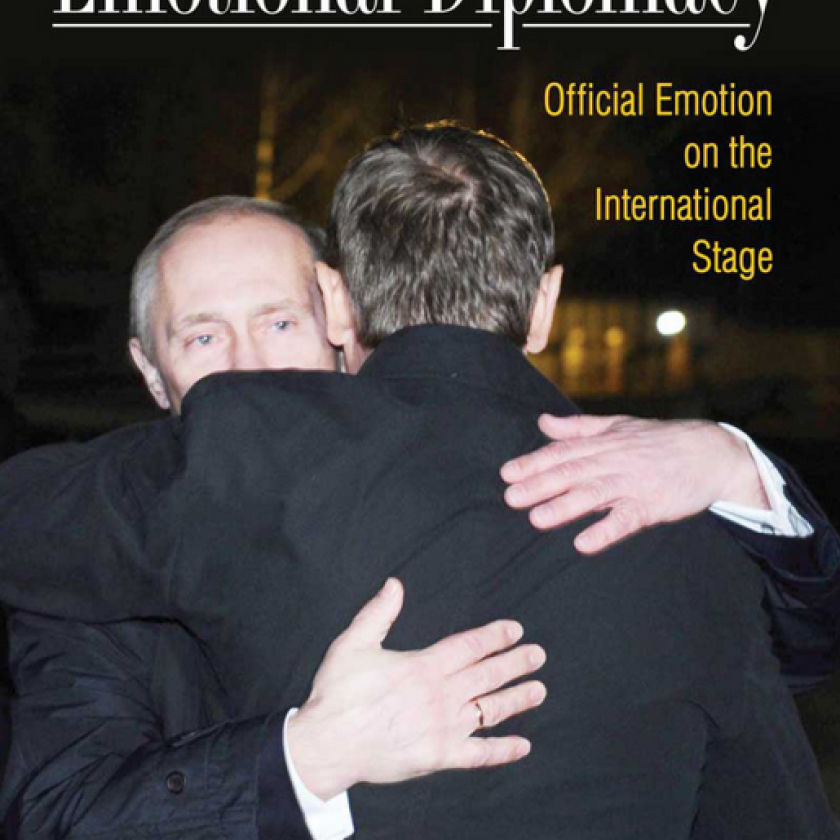
Todd H. Hall is a Professor of International Relations at the University of Oxford's Department of Politics and International Relations (DPIR) and a Tutorial Fellow in Politics at St Anne's College. He directs the University of Oxford China Centre and holds affiliations with the International Relations Network and the Centre for International Studies (CIS). His research focuses on international relations theory, emotional dimensions of diplomacy, and Chinese foreign policy, with particular emphasis on Sino-Japanese relations and East Asian security dynamics. Education: PhD in Political Science from the University of Chicago (2008). Postdoctoral fellowships at Princeton and Harvard Universities, and visiting scholar appointments at Free University of Berlin, Tsinghua University, and University of Tokyo. Research interests include the role of emotions in international politics, China's foreign policy, and the historical parallels between early 20th-century European tensions and contemporary East Asian geopolitics. His award-winning book *Emotional Diplomacy* (2015) explores how states strategically deploy emotion in international relations. Recent publications analyze Huawei's 5G policy dilemmas, China's Belt and Road Initiative, and dispute escalation mechanisms. He advises on East Asian security, including repeated tensions in the South China Sea and Sino-Japanese territorial disputes. Awards include the ISSA 2016 Diplomatic Studies Book Award. Active in policy commentary, his op-eds address Taiwan Strait tensions, China's diplomatic rhetoric, and historical memory conflicts. Labs/Teams: Leads the Oxford China Centre's research initiatives on modern Chinese diplomacy and emotional geopolitics. Collaborates with institutions like the National University of Singapore and Missouri S&T on East Asian security studies.
Professor Astrid Nordin holds the Lau Chair of Chinese International Relations at King's College London's Lau China Institute, within the School of Global Affairs. Previously, she was a Professor and Director at Lancaster University's China Centre. Her research bridges Chinese studies and critical international relations, focusing on relational theories and China's global role. Key areas include Chinese foreign policy, surveillance technologies, and decolonial approaches. Education: Peking University, Jilin University, City University Hong Kong, University of Warwick, University of Manchester Research Interests: Chinese world order concepts, relational approaches, critical social theory, and ontology of war. Her work emphasizes interdisciplinary collaboration, impacting policy, media, and cultural sectors. Notable projects include the 'Chinese Anger Diplomacy' study and the 'ESRC IAA: Community-led support for overseas Chinese' initiative. She co-edited the Routledge Handbook of Social Futures (2021) and contributes to public discourse on China's global influence. Awards: KingsCAT Tool Development (2024) alongside interdisciplinary team.
Dr Daniel Franchini is a Lecturer in International Law at the School of Law , University of Sheffield. He is also Deputy Director of the Sheffield Centre for International and European Law Research Cluster and Editor in Chief of its Working Papers Series. DPhil and MJur, University of Oxford MA Law, University of Trento (Italy) His research focuses on Public International Law , with specialization in international dispute settlement, state responsibility, jurisdiction and immunities of states, sanctions, and international investment law . His work explores intersections between domestic and international legal frameworks, particularly in cyber conflicts and financial diplomacy. Recent publications highlight his expertise in cyber dispute resolution , state immunity, and sanctions as tools for international conflict management. He has contributed to edited volumes and journals, emphasizing judicial roles in cyber conflicts and the legal implications of economic measures. Dr Franchini has received grants from the Society of Legal Scholars for collaborative research on international dispute settlement. He previously clerked at the Special Tribunal for Lebanon and the International Criminal Tribunal for the former Yugoslavia, and coached Oxford's Jessup International Law Moot Court team.
Professor Beatrice Heuser is a distinguished academic in the Department of Politics within the School of Social & Political Sciences at the University of Glasgow. Her career spans multiple prestigious institutions across Europe, including King's College London, University of Reading, and visiting professorships at Sciences Po Paris, Bundeswehr University Munich, and MGIMO. She maintains significant affiliations with major strategic research institutes including Chatham House, RUSI, IFRI, and IRSEM. Education: BA from Bedford College London, MA from LSE, DPhil from Oxford (St Antony's/St John's), Habilitation from University of Marburg Professional Experience: Former Director of Studies at German Bundeswehr's military history research office, NATO Headquarters consultant, and extensive teaching across European institutions Her research centers on strategic studies with particular focus on the cultural dimensions of warfare, nuclear strategy, and the historical evolution of strategic thought. Key research areas include strategic culture, military exercises as political instruments, laws of war development, and European defense policy. Her work bridges historical analysis with contemporary security challenges, examining how cultural narratives shape strategic decision-making from antiquity to the nuclear age. Professor Heuser's recent publications demonstrate consistent scholarly output across strategic theory, military history, and contemporary security issues. Her work shows particular emphasis on the conceptual foundations of strategic culture, historical analysis of warfare evolution, and practical applications to modern security challenges including nuclear deterrence and asymmetric warfare. The interdisciplinary nature of her research connects political theory, historical analysis, and security studies. She actively supervises graduate students in strategic theory, nuclear strategy, insurgency studies, and defense policy-making within NATO/EU contexts. Her teaching portfolio includes War and International Relations, Defense Policy, and Strategic Theory courses.
Professor Katharine Cockin is a leading scholar in Victorian theatre, women's suffrage history, and interdisciplinary literary studies at the University of Essex. She holds the Chair of English Literature in the Department of Literature, Film, and Theatre Studies (LiFTS). Her research focuses on Ellen Terry and Edith Craig, pioneering figures in theatre and suffrage activism, with major publications including Edith Craig and the Theatres of Art (2017) and the Collected Letters of Ellen Terry (8 vols., 2010–). She leads the AHRC-funded Searching for Theatrical Ancestors and Ellen Terry and Edith Craig Database projects, recognized nationally for their impact on cultural heritage. Education: BA, MA, and PhD in English Literature from the University of Leicester. Her doctoral thesis examined the Pioneer Players theatre society (1911–25). She previously held professorial roles at the University of Hull, where she established interdisciplinary programs in literature and law. Research interests include archival studies, women's suffrage literature, modern literature, and the 'Literary North'. She advises on topics like science fiction and autobiography. Awards include a Principal Fellowship of the Higher Education Academy and AHRC Peer Review College membership. Administrative roles at Essex include Director of the Centre for Interdisciplinary Research in Literary Studies and former Director of Research for LiFTS. Publications span over 50 articles and edited volumes, emphasizing feminist historiography and cultural preservation. Her work bridges academia and public engagement through digital archives and collaborative projects.
Dr. Hillary Briffa is a Senior Lecturer in National Security Studies and Assistant Director of the Centre for Defence Studies at King’s College London. She holds a Ph.D. in War Studies from King’s College London, focusing on small states’ grand strategy. Her roles include teaching National Security Studies, Small States and International Security at MA level, and leading BA3 Dissertation training. Research interests span small states’ security, climate security, grand strategy, and First World War propaganda. She leads the Climate Change and International Order portfolio at the Centre for Grand Strategy and co-organizes the annual U.S.-U.K. World Order summer school. Grants include maritime security for small states (with Georgetown University Qatar), national energy transitions, and foresight with the Estonian Defence Forces. Briffa advises the UK government on strategic reviews, international organizations, and defense policy. Awards include the U.S. State Department’s Emerging Young Leaders Award (2016), Hans J. Morgenthau Fellowship (2020/21), and Fellow of the Higher Education Academy (2023). She serves on King’s Academic Board, EDI committees, and chairs the Circle-U Climate Knowledge Hub. Her work bridges academia and policy, emphasizing small states’ strategic agency in global challenges. Publications include analyses of Maltese neutrality, Indo-Pacific maritime security, and small states’ pandemic responses. She co-authored sections in volumes on war studies, climate policy, and international order. Briffa’s research and outreach aim to enhance small states’ resilience and influence in evolving security landscapes.