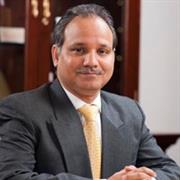
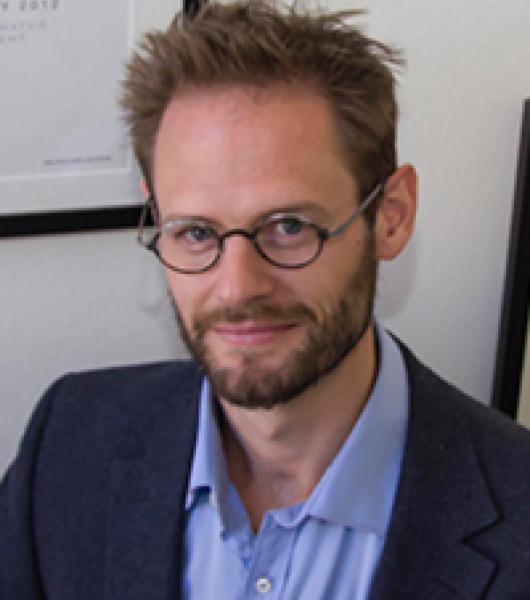
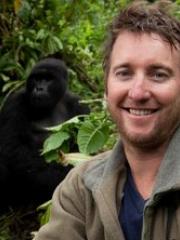
Andrew Mitchell is a Professor at the Faculty of Law, Monash University, and a member of the WTO Dispute Settlement Panelists Indicative List. He has extensive legal practice experience with Allens Arthur Robinson and consults for governments, international organizations, and the private sector. Mitchell has taught law in Australia, Canada, Indonesia, Singapore, and the US. He holds law degrees from the University of Melbourne, Harvard Law School, and a PhD from the University of Cambridge. His research focuses on international economic law, public international law, and digital trade governance, with a particular emphasis on the intersection of trade law and public health. Mitchell has secured six major grants, including an Australian Research Council Future Fellowship, and has authored over 170 books and articles. He serves as an editor for Edward Elgar’s International Economic Law Series and multiple journal editorial boards. Recent projects include 'Safeguarding Health in International Investment Agreements' (2022–2025) 'Maritime Cooperation for a Sustainable Indo-Pacific' (2021–2022) 'Global E-Commerce and Cottage Industries in India' (2020–2021) He has contributed to policy submissions on bilateral investment treaties and delivered lectures on data sovereignty and digital trade. His awards include editorial leadership roles at journals like the Journal of World Investment and Trade and Asia Pacific Law Review .
Associate Professor Mark Humphery-Jenner is a distinguished faculty member at the University of New South Wales (UNSW) Business School, specifically within the School of Banking and Finance. With an exceptional academic pedigree including multiple PhDs from prestigious institutions worldwide, he has established himself as a leading researcher at the intersection of finance, law, and corporate governance. Dr. Humphery-Jenner's educational background demonstrates remarkable breadth and depth, featuring PhDs from UNSW, Tilburg University, and Leiden University, along with master's degrees from Columbia University and the University of Washington. His undergraduate achievements include a BCom with First Class Honours and University Medal, and an LLB with First Class Honours, both from UNSW. This multidisciplinary foundation spanning business, law, and finance informs his comprehensive research approach. His research spans corporate finance, venture capital, and law, with particular focus on how legal frameworks shape financial decision-making and corporate behavior. Humphery-Jenner has published extensively in top-tier finance journals including the Journal of Financial Economics, Journal of Financial and Quantitative Analysis, Review of Finance, and Journal of Corporate Finance, as well as leading management journals such as Strategic Management Journal and Journal of International Business Studies. His scholarly contributions address critical issues in executive compensation, securities litigation, corporate governance, and private equity markets. Analysis of his recent publications reveals a sophisticated research trajectory increasingly focused on the relationship between litigation risk and financial reporting practices, corporate governance mechanisms, and investor protection frameworks. His work demonstrates particular attention to Australian regulatory contexts while maintaining a strong international comparative perspective, especially regarding Asian capital markets and cross-border investment. With substantial industry experience including work in investment banking and consulting for hedge funds, Humphery-Jenner brings practical insights to his academic work. He has been teaching in various capacities since 2006 and has served as an assistant professor in finance since 2012, contributing significantly to business education at UNSW. His professional background enhances his ability to bridge theoretical research with real-world financial practice.
Dr. Rajesh Sharma is an Associate Professor in the School of Global, Urban and Social Studies (GUSS) at RMIT University, Melbourne, Australia. He specializes in Dispute Resolution, Investment Arbitration, and International Trade Law. His research focuses on arbitration laws in Asia, WTO-related issues, and mediation innovations. He holds a PhD in Law from China's Chinese University of Political Science and Law, complemented by degrees from Monash University and the University of Delhi. Dr. Sharma has advised governments and transnational companies on trade policies and has conducted trainings in over 20 countries. He is a winner of the ADR Teacher Award 2022 in Australia. His professional roles include: Associate Editor of the Manchester Journal of International Economic Law Editorial Board member of China and WTO Review and Asia-Pacific Mediation Journal Member of ICC Australia National Committee and Singapore Convention preparation He has designed unique moot competitions, including the Asia-Pacific Vis Pre Moot, promoting disability inclusion in legal advocacy. His current projects include a book comparing China-India investment laws and commentary on the Singapore Convention. Dr. Sharma's service engagements include roles as Panel Arbitrator for the Shanghai Arbitration Commission and leadership in organizations like the Hong Kong Basic Law Education Association.
Professor Will Bateman is a distinguished academic at the Australian National University (ANU) College of Law, where he serves as a Professor and recently completed his term as Associate Dean (Research) from 2021 to 2024. He is also a Chief Investigator for the ANU Grand Challenge project "Humanising Machine Intelligence" and a Fellow at the Gradient Institute, a leading ethical AI research organization based in Sydney. Professor Bateman's educational background is impressive, having earned a PhD and LLM (Hons) from the University of Cambridge and a BA/LLB (Hons) from the Australian National University. Prior to his academic career, he worked in appellate litigation, commercial disputes, and banking as a solicitor at Herbert Smith Freehills, and served as an associate to Justice Stephen Gageler AC of the High Court of Australia and Justice Steven Rares of the Federal Court of Australia. Professor Bateman's research spans two major interdisciplinary domains that sit at the intersection of law with finance and technology. His work on financial regulation focuses on the legal aspects of central banking, sovereign debt markets, digital currencies, and sustainable investing. He has provided expert evidence to the UK Parliament's House of Lords Inquiry into Quantitative Easing, and has collaborated with major financial institutions including the Federal Reserve Bank of New York and the Bank of England. His research on artificial intelligence examines regulatory frameworks for AI in the public sector, with collaborations including the Minderoo Foundation and the Gradient Institute. His recent publications demonstrate a remarkable breadth across legal theory, financial regulation, and AI governance. The articles reveal a consistent theme of examining how traditional legal frameworks adapt to new financial technologies and monetary policy challenges. His work bridges theoretical legal scholarship with practical policy implications, as evidenced by his numerous government consultations and collaborations with central banks worldwide. 2020 Yorke Prize by the University of Cambridge for his work on public finance and constitutionalism Top 10 all-time most downloaded SSRN paper on central banking ("Central Bank Money: Liability, Asset, or Equity of the Nation?") Professor Bateman actively supervises research students, currently mentoring Benjamin Ettinger who is pursuing a PhD on "Legal Method, Cartels and Public Monopolies: A View From the High Court 1908 - 1948." He has secured significant research funding, including projects funded by the Economic and Social Research Council (UK), the German Research Foundation (Deutsche Forschungsgemeinschaft), and The Minderoo Foundation. His "Rebuilding Macroeconomics Initiative: Legal and Economic Conceptions of Money" received £245,000, while the "FA Mann" project was funded with €620,000 (approximately A$1,012,500). He leads the "Humanising Machine Intelligence" project, an ambitious interdisciplinary initiative involving computer scientists, mathematicians, philosophers, sociologists, psychologists, and lawyers aimed at developing democratically legitimate machine intelligence. He also co-led a major project with the University of Western Australia to formulate model legal frameworks for AI regulation in the public sector, funded by The Minderoo Foundation.
Professor Begona Dominguez is a faculty member in the School of Economics at The University of Queensland (UQ), within the Faculty of Business, Economics and Law. She holds a Doctor of Philosophy in Economics from Universitat Autònoma de Barcelona. Her research focuses on Macroeconomics, Public Finance, and Monetary Economics, with emphasis on fiscal policy design, central bank balance sheets, and optimal taxation frameworks. Her key projects include Supporting Entry and Growth of Australian Businesses via Tax and Transfers (2022–2024) and The role of a central bank's balance sheet in shaping the economy (2021–2024) . She is available for PhD supervision and actively contributes to applied macroeconomic analysis, particularly in urban economic advantages and policy evaluation. Publications span topics like fiscal sustainability, inflation dynamics under central bank policies, and the implications of constitutional constraints on taxation. Her work bridges theoretical models (e.g., Ramsey frameworks) with empirical applications in tax policy and public debt management. Professor Dominguez maintains affiliations with the Centre for Applied Macroeconomic Analysis (ANU) and has reviewed prominent texts such as John Taylor's Reform of the International Monetary System . She is based in Room 507, Colin Clark Building at UQ.
Saule Burkitbayeva is a Research Fellow at the ANU College of Law , focusing on intersections of climate change , agriculture , and policy . Her work emphasizes embedded emissions accounting and carbon footprinting in agri-food systems. PhD in Economics (KU Leuven) MSc in Agricultural Economics (University of Saskatchewan) Bachelor in Agricultural Economics (University of Saskatchewan) Her career spans research institutes and international organizations in Canada, Belgium, Germany, Ukraine, Kazakhstan, and Australia, with fieldwork in Central and South Asia. Current research themes include: Climate Change & Climate Finance Environmental Law International Economic Law Law & Economics She has collaborated with the World Bank , Asian Development Bank , and UNDP , and her publications appear in high-impact journals and edited volumes.
Dr Tracy Qu is a Lecturer in the School of Accountancy at Queensland University of Technology (QUT), within the Faculty of Business & Law. She holds a PhD in Accounting from Griffith University (2018) and is a CPA Australia member (since 2021). Her research focuses on executive remuneration, corporate governance, financial reporting, and environmental accounting. Tracy teaches undergraduate and postgraduate courses in accounting fundamentals, financial analysis, and business valuation. She has also served as a referee for journals like Accounting and Finance and Australian Journal of Management . Tracy’s research explores intersections between governance structures and executive compensation design, particularly in mitigating agency conflicts. Her work examines topics such as carbon emissions policy impacts on corporate behavior, labeling effects in financial disclosures, and CEO celebrity influence on investment decisions. She actively contributes to academic debates on environmental accounting and sustainability reporting. Tracy is currently accepting research students for Honours, Masters, and PhD programs, focusing on topics like executive compensation efficiency, board interlocks, and compensation consultants’ roles.
Michael Ward is a Professor in the Department of Economics at Monash University, with a joint appointment at the Monash Sustainability Institute. His research focuses on applied microeconomics and econometrics, particularly addressing environmental and resource sustainability challenges such as water management, pollution regulation, land use policies, and biodiversity conservation. He joined Monash in 2012 after faculty positions at ANU and UC Berkeley. Ward has led multiple research projects, including the RACE for 2030 CRC (Cooperative Research Centre) and adaptive urban water management initiatives. He has been recognized with the 2008 Best Economics Paper Award from the Agricultural and Applied Economics Association for his work on food safety and nutrition. His research outputs span 23 peer-reviewed articles, including influential studies on regulatory compliance mechanisms, water pricing strategies, and biodiversity conservation. Ward collaborates internationally and contributes to the UN Sustainable Development Goals related to climate action and sustainable cities. Projects : RACE for 2030 CRC (2020–2031), Adaptive Urban Water Management (2012–2017), and household electricity use research (2022). Awards : 2008 Best Economics Paper Award for work on food safety and nutrition. Labs/Teams : Monash Sustainability Institute, interdisciplinary collaborations on energy and environmental policy.
Wen He is a Professor of Accounting at the Department of Accounting, Monash Business School, Monash University. He holds an MBA from Lancaster University and a PhD from National University of Singapore (NUS). Prior to joining Monash in 2020, he worked at UNSW and the University of Queensland. His research focuses on auditing, corporate governance, corporate social responsibility, dividends, financial reporting, and financial analysts. He has published in top journals such as Contemporary Accounting Research and Journal of Business Finance and Accounting , with recent works exploring regulatory cooperation, climate risk, and cross-border financial policies. Research Interests include: Auditing methodologies and regulatory enforcement Corporate governance in China Climate risk and financial flexibility Dividend policies and payout strategies Financial reporting transparency Recent articles highlight themes such as cross-border regulatory frameworks, auditor performance metrics, and shareholder dissent mechanisms in digital voting systems. His work contributes to UN Sustainable Development Goals through studies on corporate social responsibility and environmental accountability. He is actively supervising PhD students and accepting new candidates, particularly in auditing and governance contexts. He has held visiting positions at NUS and Xiamen University, fostering collaborative research networks in Asia. Labs/Teams: Impact Labs (Monash Business School).
Overview Professor Mile Terziovski is a Professor of Entrepreneurship and Innovation at Swinburne University of Technology's School of Business, Law and Entrepreneurship. He previously held leadership roles including Dean of Curtin Graduate School of Business, Head of UniSA's International Graduate School of Business, and Director of the Masters of Entrepreneurship and Innovation program at Swinburne. His academic journey spans over 25 years across multiple Australian universities, alongside a 17-year industrial career at Rio Tinto Group. Education PhD in Quality and Innovation Management (Melbourne Business School, University of Melbourne) MBA (RMIT University) BEng and MEng (University of Wollongong) GAICD (Australian Institute of Company Directors) Research Focus Terziovski's research focuses on innovation strategy, SME innovation practices, quality management systems, and sustainable business practices. His work bridges theory and practice, addressing challenges in manufacturing, healthcare, and energy sectors. He has published 60+ peer-reviewed articles, including in Strategic Management Journal and Journal of Operations Management , and authored books on innovation capability development. Grants & Awards He has secured $3M+ in research grants, including ARC Discovery and Linkage grants. Recognitions include the 2023 Stanford Top 2% Cited Scientists award, two Best Paper Awards from the Academy of Management, and multiple teaching excellence awards. His leadership extends to advisory roles with ACEM, SEAANZ, and Macedonian community organizations. Professional Contributions Terziovski advises global corporations like Motorola, Dow Chemical, and Eurocopter. His visiting professorship at the University of Versailles highlights international academic engagement. He currently supervises doctoral research on AI in entrepreneurship education, leadership in emergency medicine, and cross-border entrepreneurial ecosystems.
Professor James Watson is a leading conservation scientist and biogeographer at The University of Queensland , affiliated with the Centre for Marine Science and Centre for Biodiversity and Conservation Science. As a Professor of Conservation Science, he specializes in biodiversity policy, climate change impacts, and species recovery strategies. PhD from University of Oxford (Rhodes Scholar) Co-leader of Green Fire Science and RARES research groups Over 400 peer-reviewed publications His research focuses on ecosystem integrity , protected area effectiveness , and conservation economics , with recent work addressing mining impacts on biodiversity, climate change adaptation, and the global 30x30 initiative. He advocates for evidence-based strategies to save Australia’s rarest species. 2025-2024 research trends show expertise in tropical forest regeneration, climate-species interactions, and policy implementation gaps. Collaborative projects span scientific modeling , GIS analysis , and international conservation frameworks . International Panel on Biodiversity and Ecosystem Services (IPBES) Task Force member Research Fellow, United Nations Environment Program Senior Technical Expert, UNDP’s Nature for Development Program Founding Chair, IUCN Climate Change Specialist Group Supervision includes 12 current PhD candidates working on topics such as night parrot conservation , ecological corridors , and urban biodiversity . Completed students have addressed threatened species recovery and climate adaptation planning . He leads lab teams at Green Fire Science (www.greenfirescience.com) and RARES (https://raresgroup.com.au), focusing on applied conservation solutions.
Arianto Patunru is a Research Fellow at the Arndt-Corden Department of Economics within the Crawford School of Public Policy at the Australian National University (ANU). He joined ANU in 2012 and holds a PhD from the University of Illinois at Urbana-Champaign. His roles include coordinating the ANU Indonesia Project, overseeing policy engagements such as the Australia-Indonesia High Level Policy Dialogue, and managing the Indonesia Project on COVID-19 initiatives. Patunru previously headed the Institute for Economic and Social Research (LPEM-FEUI) in Jakarta and taught economics at Universitas Indonesia. His research focuses on international trade, economic development, globalization, and policy analysis. He has published in journals like the American Journal of Agricultural Economics , Journal of Development Studies , and Bulletin of Indonesian Economic Studies , where he serves as an editor. Patunru frequently contributes to policy debates through op-eds in platforms like East Asia Forum and The Conversation , addressing issues such as Indonesia’s economic strategy, trade policies, and climate change. Key research themes include the impact of economic reforms (e.g., Indonesia’s Omnibus Law), trade policy dynamics, and the role of foreign investment. He has explored topics like labor share declines in manufacturing, environmental policy challenges, and vaccination strategies during the pandemic. Patunru’s work bridges academic analysis with practical policy advice, emphasizing Indonesia’s integration into global value chains and the need for balanced economic strategies.
Dr. Nafis Alam is a Professor and Head of the School of Business at Monash University Malaysia. With over 20 years in higher education, he has held leadership roles at institutions including the Henley Business School Malaysia, University of Reading Malaysia, and Asia Pacific University. His expertise spans FinTech, financial regulation, and Islamic finance, with over 50 peer-reviewed publications and nine co-authored books. He actively engages with global industry and policy, contributing to reports by the Cambridge Centre for Alternative Finance (CCAF). Awards include the Global Islamic Finance Award's 'Upcoming Personality' (2016) and Monash University's Vice-Chancellor Medal (2016). Education: PhD in Banking and Finance (Monash University), MBA (Multimedia University), and Economics (Patna University). He holds a Postgraduate Certificate in Higher Education (PGCHE) from the University of Nottingham and is a Senior Fellow of the Higher Education Academy (SFHEA). Research focuses on FinTech regulation, digital currencies, AI ethics, and Islamic finance innovation. Recent projects include Malaysia's consumer credit framework and blockchain in energy legal systems. Media contributions include commentaries on cryptocurrency, fiscal reforms, and ESG evaluations. Key Supervision Areas: FinTech, Financial Regulation, Technology Adoption Grants/Projects: Active roles in 2023-2026 projects on legal frameworks for blockchain and consumer credit Labs/Teams: Collaborations with global institutions like CCAF and industry partners in Southeast Asia. Advocates for market-driven education programs and adult learning strategies.
Associate Professor Dallas Rogers is the Head of Urbanism at the University of Sydney's School of Architecture, Design and Planning. His research focuses on the colonial and contemporary politics of land, housing, property, and urban development, with expertise in urban and historical geography. Key themes include race, class, nature, technology, and capital. Rogers has published extensively on topics such as geopolitical real estate, housing policy, and the digital transformation of housing markets. He leads research projects like 'Waste to Resilience' and 'Mapping the Frontiers of Private Property in Australia,' funded by institutions including the Australian Research Council. His work bridges academic inquiry with public engagement through platforms like the City Road Podcast and collaborative documentaries. Recent grants include studies on sanitation resilience in informal coastal areas and implications of data hunger in housing. Rogers collaborates with interdisciplinary teams and is affiliated with the Sydney Environment Institute. His research emphasizes critical urban studies, policy impact, and decolonial perspectives in urban planning.
Kanchana Kariyawasam serves as Associate Professor in the Department of Accounting, Finance and Economics within Griffith University's Business School. Holding a PhD in IP Law from Griffith University, an LL.M (Advanced) in IP Law from The University of Queensland, and an LL.B (Hons) from the University of Colombo, she maintains active research affiliations with the Law Futures Centre (2009-2024) and Griffith Asia Institute (2019-present). Her research spans Intellectual Property Law with specialized focus on Copyright and Artificial Intelligence, IP and Right to Repair, Patent Law in Biotechnology, and Gender Equality in IP systems. Current projects examine AI-generated works, digital exhaustion doctrine, and NFT legality under Australian copyright frameworks, reflecting strong alignment with Sustainable Development Goals 4 (Quality Education) and 9 (Industry Innovation). Professor Kariyawasam's funded research portfolio includes significant projects such as the WIPO Study on Illegal Retransmission of Live Broadcasts (2023), Queensland Government Ewaste initiatives (2022), and Griffith University's Right to Repair Workshop (2020). Her publications demonstrate consistent output in high-impact journals including European Intellectual Property Review and International Journal of Law and Information Technology , with recent works analyzing AI copyright challenges, spatial data protection, and medical device repair rights. Deputy Vice-Chancellor's 2024 Student Experience of Teaching Survey Commendation Green Impact Gold Award Recipient (2023, Griffith Repair Cafe) Highly Commended Griffith Award for Excellence in Teaching (Large Classes) Two GBS teaching citations She currently supervises five doctoral candidates researching AI data privacy, patent law intersections, and agricultural IP issues, while having successfully completed supervision of four doctoral theses including works on female entrepreneurship and agribusiness marketing. As Coordinator of Griffith Repair Cafe and Steering Committee Member of Australian Repair Network, she bridges academic research with community engagement on repair rights and e-waste reduction.