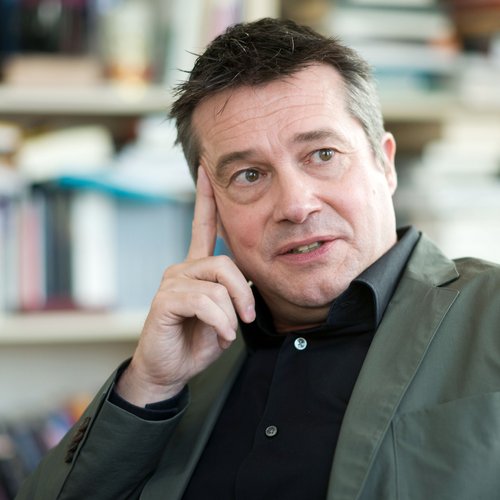
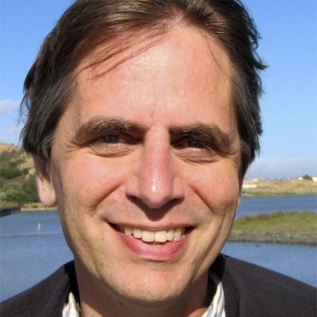
Albrecht Fuess is a Professor of Islamic Studies at Philipps University of Marburg since 2010, specializing in Middle Eastern History (13th–17th centuries), Mamluk socio-cultural dynamics, and contemporary European Islamic discourses. His research spans historical continuity in Ottoman-Mamluk-Safavid interactions, Islamic youth cultures, and Mediterranean geopolitics. Research Focus: Medieval Islamic history, Transottomanica mobility studies, Islam in Europe, and cultural integration of Muslim migrants. Awards: Le Studium Fellowship (2007–2009) at Université de Tours. His publications emphasize military-economy interplay, legitimacy through religious narratives, and resource management in empires, with a focus on Mamluk and Ottoman transformations. He has advised on doctoral projects covering topics like Islamic welfare, Arabic ʾAmālī literature, and Cypriot-Ottoman relations. Leadership: Co-coordinator of Transottomanica (DFG-SPP 1981), member of ANR and DAAD committees, and liaison professor for the German National Academic Foundation. Editorial Roles: Co-editor of 'Transottomanica' and 'Muslim Worlds' series, and advisory board member for journals in Cairo, Paris, and Leuven.
Dr. Benjamin Rusteberg serves as a Lecturer and Chair Representative at the University of Münster's Faculty of Law, specifically within the Chair of International Public Law and International Human Rights Protection. His office is located at Wilmergasse 28, 48143 Münster, and he can be reached via +49 251 83 21360 (Secretary: Jutta Meier) or brustebe@uni-muenster.de. His research focuses on international public law frameworks and mechanisms for human rights protection, with particular attention to contemporary challenges in global legal governance. He actively participates in the International Human Rights Protection team at the university. No specific academic awards, grants, or advised students are explicitly listed in the provided information. Consultation hours for the winter semester 2023/2024 are noted, though specific times are not detailed here.
Max Planck Institute for Social AnthropologyGermany
Katia Bianchini is a Research Fellow at the Max Planck Institute for Social Anthropology in Halle, Germany, with a focus on the intersection of law and anthropology in refugee and immigration contexts. She holds a PhD in Law (University of York), an LLM in Comparative Laws (University of San Diego), and a Law degree (Università di Pavia). Her work bridges empirical legal analysis with anthropological methodologies to address issues such as statelessness, asylum adjudication, and the rule of law in migration policies. Education PhD in Law, University of York (2011–2016) LLM in Comparative Laws, University of San Diego (1999–2000) Law degree, Università di Pavia (1992–1998) Bianchini’s research interests include refugee law , immigration law , statelessness , EU law , and human rights law . Her current project examines legislation and responses to missing and deceased sea migrants in Italy , analyzing legal frameworks for search, identification, and burial practices, particularly along the Central Mediterranean Route. She emphasizes the importance of legal anthropology to understand gaps between abstract law and its real-world application. The trends in her publications reflect a focus on statelessness determination procedures , asylum law (notably witchcraft-based claims), humanitarian visas , and rule of law challenges in migration contexts. Her work spans journal articles , book chapters , and monographs , often combining legal analysis with empirical data from interviews and fieldwork. Scientific Awards Erasmus scholarship, University of Leuven, Belgium (1997–1998) Grants and Professional Activities include visiting researcher roles at Fordham University and the University of Oxford, as well as editorial work for the Statelessness and Citizenship Review and the CUREDI Database . She has presented extensively on topics like statelessness in the UK , cultural diversity in asylum adjudication , and NGO criminalization in Mediterranean rescue operations .
Prof. Dr. Thomas Duve is a Director at the Max Planck Institute for Legal History and Legal Theory and holds the Professorship for Comparative Legal History at Goethe University Frankfurt am Main. His research focuses on global legal history, particularly the interplay between secular and religious knowledge in the Iberian empires of the early modern period, and the method of legal history and comparative law. Director, Max Planck Institute for Legal History and Legal Theory Professor of Comparative Legal History, Goethe University Frankfurt Co-editor of 'The School of Salamanca Working Paper Series' Duve’s research explores normative knowledge production, colonial law, and the glocalization of legal norms. He has led projects such as 'Glocalizing Normativities' and 'Mapping Conflicts in Iberian Worlds', emphasizing cross-cultural legal exchange and historical normativity regimes. His recent publications (2018–2025) address global legal history, transnational legal practices, and the role of canon law in colonial settings. Key themes include legal pluralism, indigenous rights, and the translation of legal norms across cultures, with methodological innovations in comparative and transnational legal studies. Duve collaborates extensively with international scholars and institutions, including the Max Planck Partner Group and the Oxford Handbook of Legal History. His work bridges European and Latin American legal traditions, offering critical insights into legal globalization and postcolonial legal analysis.
Prof. Nicole Deitelhoff is Executive Director at the Peace Research Institute Frankfurt (PRIF) and holds a chair in International Relations and Theories of Global Order at Goethe University Frankfurt. She leads PRIF's International Institutions research department and co-leads the Frankfurt section of the Research Institute Social Cohesion (RISC). Her work examines contestation of international norms, world order politics, and democratic conflict integration. She has held visiting roles at Harvard, Hebrew University, and the European University Institute. Recognized with the Ernst-Otto Czempiel Award and Hessian Peace Prize, her research bridges academic rigor with policy relevance. Education : Ph.D. (summa cum laude) TU Darmstadt (2004), M.A. Political Science SUNY Buffalo (1998) Key Roles : Head of PRIF's Research Department since 2017, LOEWE Top Professor (2023), Co-speaker of Normative Orders Research Center Research Interests : Focuses on institutional legitimacy crises, norm dynamics, and security governance. Recent work analyzes the Ukraine war's impact on European order and democratic cohesion mechanisms. Awards : Includes the prestigious Hessian Peace Prize (2020) and sustained academic honors reflecting her contributions to global governance studies. Grants & Projects : Leads projects on Cold War comparisons ( PATTERN ), radicalization studies, and normative orders. Active in policy dialogue through initiatives like Global House of Young Voices .
Rainer Forst is Professor of Political Theory and Philosophy at Goethe University Frankfurt, where he holds positions in both the Institute of Political Science and the Institute of Philosophy. He serves as Director of the Research Center for Normative Orders, Co-speaker of the cluster initiative "ConTrust – Trust in Conflict," Spokesperson of the Leibniz Prize Research Group "Transnational Justice," and Deputy Spokesperson of the Coordinating Institute Frankfurt at the Research Institute for Social Cohesion. Additionally, he is a Permanent Fellow at the Research College for Human Sciences Bad Homburg, Director of the Justitia Center for Advanced Studies, and Head of the Master's program in Political Theory. Since 2017, he has also been a Research Professor of Political Theory at the Social Science Research Center (WZB) in Berlin. Forst received his education studying philosophy, political science, and American studies in Frankfurt/Main, New York, and at Harvard University. His academic journey includes: Ph.D. under Jürgen Habermas with thesis "Contexts of Justice: Political Philosophy Beyond Liberalism and Communitarianism" (1993) Habilitation in 2003 with "Tolerance in Conflict: History, Content, and Present of a Controversial Concept" Professor Forst's research focuses on foundational questions of political philosophy and critical theory. His work centers on justice theory, democracy, toleration, normative orders, and social cohesion. He has developed a distinctive approach he terms "critical constructivism," which builds on Kantian philosophy while engaging with the Frankfurt School tradition of critical theory. His research examines how justification processes form the basis of legitimate political orders and how concepts like solidarity and tolerance function within democratic societies. Forst's work is notable for its systematic integration of historical analysis with normative theory, creating frameworks for understanding contemporary political challenges through the lens of philosophical tradition. His recent publications reveal a growing focus on democratic regression, trust in conflictual societies, and the philosophical foundations of social cohesion. Forst has increasingly addressed the dual crises of democracy - both the political-normative justification crisis and the global structural crisis. His work connects Kantian philosophy with contemporary democratic theory, exploring concepts like the "noumenal republic" as frameworks for understanding justice and legitimacy in complex societies. A consistent thread throughout his scholarship is the examination of how power relations intersect with normative claims in political justification processes. Professor Forst has received significant recognition for his contributions to political philosophy: Gottfried Wilhelm Leibniz Prize (2012), Germany's highest research honor Member of the Berlin-Brandenburg Academy of Sciences and Humanities Corresponding Fellow of the British Academy Permanent Fellow at the Research College for Human Sciences Bad Homburg As an educator and mentor, Forst has directed numerous research initiatives and supervised many doctoral students who have gone on to prominent academic positions. He leads the international MA program in Political Theory funded by the German Academic Exchange Service and has established several significant research centers including the Research Center for Normative Orders, the Leibniz Prize Research Group "Transnational Justice," and the Center for Advanced Studies "Justitia Amplificata." His editorial work includes serving as Associate Editor of Ethics and member of editorial boards for numerous prestigious journals including Political Theory and Constellations. Forst's research infrastructure includes the Research Center for Normative Orders, which he directs, and the cluster initiative "ConTrust – Trust in Conflict," which examines political coexistence under conditions of uncertainty. His Leibniz Prize Research Group "Transnational Justice" investigates justice beyond national borders, while the Justitia Center for Advanced Studies serves as a hub for interdisciplinary research on justice-related topics. These institutions form an integrated network supporting collaborative research across philosophy, political science, and law.
Kristine Andra Avram is a Visiting Researcher at the Center for Conflict Research (ZfK) at Philipps University of Marburg, serving as a Post-doctoral fellow in the BMBF project 'Transformations of Political Violence' (2024-2025). Her work bridges peace and conflict studies, narratology, and social sciences with a focus on meaning-making in contexts of political violence and state repression. Her educational background includes a PhD in Political Science (summa cum laude, 2022) from Philipps University of Marburg, an MA in Peace and Conflict Studies (2010-2013) with study abroad at the University of Haifa, and a BA in Communication Science and Romance Studies (2007-2010) from the University of Erfurt, including Erasmus at Complutense University of Madrid. Avram's research examines how narratives shape interpretations of violence, influence reckoning with traumatic pasts, and inform transitional justice efforts. Using interdisciplinary narrative and (auto)ethnographic methods, she reveals storytelling as a site of agency and resistance—both for processing historical violence and envisioning just futures. Her work centers on concepts like responsibility, truth, and hope within post-communist contexts, particularly Romania. Her recent publications (2023-2025) demonstrate methodological innovation in narrative analysis applied to political violence, with increasing attention to researcher positionality and reparative methodologies. Articles span qualitative frameworks, courtroom narratives, postcolonial critiques of peacebuilding, and ethical dimensions of studying violence. Key scientific awards include: Dissertation Award from Südost-europagesellschaft (2023) Honorable Mention from Gert-Sommer-Award for Peace Psychology (2023) Mobility Grant from EISA (2023) Scholarships from MARA, Friedrich Ebert Foundation, and University of Haifa She has secured significant research funding including a Fritz Thyssen Foundation grant (2017-2022) as co-applicant and has taught courses on narrative reconstructions of the past at Philipps University Marburg and Goethe University Frankfurt. Her advisory work includes designing memory projects and conflict resolution initiatives with pax christi Rhein-Main. Avram actively collaborates within the Center for Conflict Research's interdisciplinary teams, focusing on political violence, transitional justice, and narrative methodologies in post-communist contexts through projects like 'Ascribing Individual Criminal Responsibility' and 'Transformations of Political Violence'.
Prof. Dr. Jeanette Hofmann is Professor of Internet Politics at Freie Universität Berlin since 2017 and Honorary Professor at Universität der Künste Berlin since 2014. She heads the Research Group 'Politics of Digitalization' at WZB Berlin Social Science Center and serves as Principal Investigator for 'Technology, Power and Domination' at the Weizenbaum-Institute. Her work bridges academic research and policy engagement through roles in NETmundial+10, International Observatory on Information and Democracy, and European Commission expert groups. Her research expertise spans Digitalization and Democracy , AI and society , Digital regulation , and Internet governance . Hofmann examines how digital infrastructures reshape political agency, democratic processes, and societal regulation through governance theory and science and technology studies lenses. Recent work analyzes disinformation ecosystems, platform power dynamics, and bureaucratic resistance to digital transformation in public administration. Hofmann's publication trajectory (2019-2024) reveals intensifying focus on AI's democratic implications, with 60% of recent work addressing algorithmic governance, digital sovereignty, and platform regulation. Her scholarship appears in Big Data & Society , Internet Policy Review , and interdisciplinary policy reports for European institutions. Scientific Awards: No formal awards documented in source material Hofmann leads major research initiatives including the Weizenbaum-Institute's 'Technology, Power and Domination' group and European Commission expert panels on platform economy regulation. Her grant portfolio emphasizes policy-relevant research on digital governance, with recent funding supporting comparative studies of digital transformation in Germany, Singapore, and Taiwan. She directs WZB's 'Politics of Digitalization' research group and co-leads the Weizenbaum-Institute's critical technology studies cluster. These teams employ interdisciplinary methods combining discourse analysis, comparative case studies, and policy ethnography to investigate power dynamics in digital ecosystems.
Prof. Dr. iur. Dipl.-Soz. Marion Albers holds the Chair for Public Law, Information and Communication Law, Health Law and Legal Theory at the Faculty of Law, University of Hamburg. She has been a Full Professor at Hamburg University since October 2009 and serves as Managing Director of multiple research institutions including the Cyber Law Clinic and the Hamburg Center for Bio-Governance. Her academic career spans prestigious positions at the University of Augsburg, Humboldt-University Berlin, and international collaborations with institutions in Brazil, Japan, and the United States. Education: Studies of Law, Sociology, Political Sciences and Economy at the Free University of Berlin and University of Bielefeld State Exam in Law and Diploma in Sociology Doctorate of Law in Crime Prevention and Provisions for Prosecution at University of Bielefeld Habilitation in Informational Self-Determination at Humboldt-University Berlin Professor Albers' research focuses on the intersection of law, technology, and human rights, with particular expertise in data protection law, digital constitutionalism, bioethics, and health law. Her work examines how traditional legal frameworks adapt to emerging technological challenges, especially regarding informational self-determination in the digital age. She has pioneered research on the horizontal effect of fundamental rights, the legal implications of biotechnologies, and the balance between security measures and privacy protections. Her scholarship consistently bridges theoretical legal concepts with practical applications in rapidly evolving technological contexts. Analysis of her recent publications reveals a strong trajectory toward digital constitutionalism, with increasing focus on data subject rights within digital governance frameworks. Her work demonstrates sophisticated engagement with EU data protection regulations while simultaneously exploring comparative approaches across jurisdictions including Japan and Brazil. A consistent thread throughout her scholarship is the exploration of how constitutional principles apply in digital environments, particularly regarding the protection of personal data as a fundamental right. Scientific Awards and Fellowships: Scientific award of the Claussen-Simon-Foundation (2015) Opus Magnum-Fellowship of the Volkswagen Foundation (2015-2016) Fellow at Alfried Krupp Wissenschaftskolleg Greifswald (2014) Fellow at the Institute for Advanced Study Berlin (2017/2018) Professor Albers has secured significant research funding including the Volkswagen Foundation's Opus Magnum Fellowship and has served as Principal Investigator for the German/Brazilian DAAD/CAPES PROBRAL Research Project "Internet regulation and internet rights" (2015/2018). She has supervised numerous doctoral candidates and established productive international research collaborations, particularly with Brazilian institutions. Her advisory work extends to governmental bodies including service as an expert in the German Council for Scientific Information Infrastructures (RfII) since 2018 and previous membership on the Bundestag's Advisory Committee "Ethics and Law of Modern Medicine" (2003-2005). She directs the Hamburg Center for Bio-Governance (since 2013) and the Cyber Law Clinic at the Faculty of Law (since 2012), creating interdisciplinary research environments that bridge legal scholarship with practical applications in bioethics, health law, and digital governance. Her leadership extends to editorial roles including the book series "Schriften zum Bio-, Gesundheits- und Medizinrecht" and numerous edited volumes on data protection and constitutional law.
Dr. Martin Stürzlinger is a Part-Time Professor for Digital Archiving at the Department of Information Sciences, University of Applied Sciences Potsdam. He also operates his consulting firm Archiversum, advising organizations on long-term information storage (www.archiversum.com). His work bridges academic research with practical applications in digital preservation. Research Interests: Dr. Stürzlinger specializes in digital archiving, focusing on the OAIS model, life-cycle management, and archival description standards like Records in Contexts (RiC). His research addresses organizational challenges in digital preservation, legal compliance (e.g., GDPR), and metadata design for accessibility. Recent Publications: His selected works explore OAIS implementation, the impact of GDPR on private archives, and the evolution of archival description standards. These contributions highlight trends in digital preservation, emphasizing interoperability, sustainability, and cross-institutional collaboration. Collaboration & Standards: He actively contributes to international working groups, including ICA-EGAD (Archival Description) and nestor's certification standards for digital archives. His efforts in standardization include the Austrian implementation of ISAD(G) and ISDIAH, as well as Swiss guidelines for electronic records management. Teaching & Outreach: Dr. Stürzlinger has lectured extensively, including courses on archive management at BFI Vienna and IT applications in archives at the University of Vienna. He has delivered over 40 lectures globally, addressing topics like cost estimation for digital archiving and the role of corporate archives in business efficiency.
Professor Dr. Thilo Marauhn holds the Chair of Public Law and International Law at the Faculty of Law, Justus Liebig University Giessen, since 2001. He is also a Permanent Visiting Professor for Constitutional Theory at the University of Lucerne (Switzerland) and has served as Visiting Professor at the University of Wisconsin, Madison (USA) in 2005, 2008, and 2011. Max Planck Institute for Comparative Public Law and International Law, Heidelberg (1990-2001) Scientific Advisory Board roles (BMZ, HSFK, UN Political Advisory Board) Research Interests include Public International Law, European Law, Human Rights, Environmental Law, Arms Control, and Constitutional Law. His work focuses on conflict resolution, international security, and the interplay between legal frameworks and global challenges like climate change and armed conflict. Publications & Contributions span monographs and edited volumes on topics such as social fundamental rights, environmental law, and international financial regulation. Recent articles analyze human rights fact-finding, religious freedom, and compliance mechanisms in international law. Leadership Roles encompass directing the International Summer University (ISU), co-leading the US-German Summer Law Program, and serving on the Board of the German-Polish Projects (DPWS).
Max Planck Institute for the Study of SocietiesGermany
Lucio Baccaro is Director at the Max Planck Institute for the Study of Societies (MPIfG) and was Full Professor of Macrosociology at the University of Geneva, where he also served as Deputy Dean for Research (2016–2020). He has held academic positions at MIT, Case Western Reserve University, and visiting roles at the University of Turin and the University of Vienna. His primary affiliations are with MPIfG and the University of Geneva, both central to his research in political economy and sociology. Education: PhD in Management and Political Science, Massachusetts Institute of Technology (MIT), 1999 Doctorate in Labor Law and Industrial Relations, University of Pavia, 1997 Master of Business Administration, Stoa' (IRI-MIT joint venture), 1991 Laurea in Philosophy, summa cum laude, University "La Sapienza", Rome, 1989 Lucio Baccaro’s research focuses on comparative political economy, labor relations, global worker rights, and deliberative governance . His work integrates economic sociology and political sociology to analyze institutional change, social dialogue, and the impact of globalization on labor and welfare systems. He has led major comparative studies on employment models, pension reforms, and international labor standards. His scholarship emphasizes the interplay between institutions, ideas, and power in shaping economic governance. His recent publications reveal a consistent focus on institutional change, deliberative processes, labor market reforms, and global justice . Themes include path dependence in international organizations, the transformation of collective bargaining, and the role of expertise in democratic governance. His interdisciplinary approach bridges sociology, political science, and economics, with strong methodological rigor in comparative and qualitative analysis. Scientific Awards and Honors: Honorary Professor, University of Duisburg-Essen (2023) Professeur honoraire, University of Geneva (2020) International Geneva Award (2011) Outstanding Young Scholar Award, IRRA (2003) Founder's Prize, SASE (2001) Maurice F. Strong Career Development Chair, MIT (2006–2009) Multiple fellowships from SSRC, Harvard, MIT, and CUNY Alfiere del Lavoro, awarded by the President of Italy (1984) Advising and Grants: While specific student advisees are not listed, Baccaro has supervised research and mentored scholars through his roles at MPIfG and the University of Geneva. He has secured substantial research funding, including grants from the Swiss National Science Foundation (SNF) and the Swiss Network for International Studies (SNIS), supporting projects on post-Fordist growth models, employment policy, and deliberative governance. His leadership in co-principal investigator roles highlights his collaborative research approach and institutional influence. Labs and Research Teams: As Director at MPIfG, Baccaro leads a major research institute focused on the study of societal and economic institutions. He has been instrumental in shaping research agendas on political economy and governance, fostering interdisciplinary collaboration and international scholarly exchange.
Jean Galbraith is a Professor at the University of Pennsylvania Carey Law School . Her scholarship focuses on the intersection of international law , foreign relations law , constitutional law , and human rights . Key areas include treaty design, separation of powers, administrative law, and domestic implementation of international obligations.
Stefan Gosepath is a Professor of Practical Philosophy at the Institute of Philosophy, Faculty of Humanities, Free University of Berlin. He serves as Principal Investigator for multiple major research projects including the Volkswagen Foundation's 'The Deserving Rich' and the Excellence Cluster 'Contestations of the Liberal Script' (SCRIPTS), where he coordinates the Research Unit 'Order'. His academic affiliations include membership in the Academy of Sciences and Literature Mainz and participation in the Berlin-Potsdam Research Group on International Rule of Law. His research spans political philosophy with particular focus on theories of justice (global and intergenerational), equality, democracy, human rights, and responsibility. Key areas include social and legal philosophy, action theory, meta-ethics (particularly rationality and normativity), and theories of the good life. His work critically examines meritocracy, inheritance systems, and wealth distribution within liberal democracies. Notable publications demonstrate evolving focus from foundational theories of egalitarian justice to contemporary challenges including pandemic ethics, digital governance, and contestations of liberal democracy. His recent work analyzes merit systems, inheritance justice, and global philosophical frameworks through interdisciplinary lenses combining philosophy, sociology, and political science. Opus Magnum Stipendium der VW Stiftung (2021/22) Ordinary Member, Academy of Sciences and Literature Mainz (since 2020) Principal Investigator, Excellence Cluster SCRIPTS (since 2019) Gosepath leads multiple collaborative research initiatives including 'Transforming Solidarities' (Berlin University Alliance) and 'Liberal Order, Legitimate Authority and Disagreement' (with Mattias Kumm). His work connects theoretical frameworks with practical policy challenges, particularly regarding social cohesion in migration societies and democratic resilience. He maintains active engagement with public discourse through media appearances and policy-relevant interventions on issues of justice and democratic governance.
Max Planck Institute for Social AnthropologyGermany
Peter Redfield serves as Professor of Anthropology at the University of Southern California's Dornsife College of Letters, Arts and Sciences, where he bridges anthropology with science and technology studies, postcolonial theory, and humanitarian practice. He previously held the presidency of the Society for Cultural Anthropology (2017-2019) and maintains active affiliations with the LOST Research Network (Law, Organization, Science and Technology), though this network is transitioning to an archive in 2024. His research critically examines transnational expertise and the ethics of humanitarian interventions in contexts of unreliable infrastructure, with current projects including "Beyond Reliable Infrastructure"—which analyzes minimalist life technologies for water, sanitation, and health—and collaborative work with Stellenbosch University on sanitation politics in South Africa. Redfield's scholarship consistently interrogates how humanitarian design navigates utopian ideals of social justice while confronting material constraints and political complexities in global health. His publication trends reveal sustained focus on medical anthropology and humanitarian ethics, particularly through case studies of epidemic response (Ebola), technological fixes (LifeStraw®), and organizational practices (Doctors Without Borders). This work demonstrates evolving attention to material politics and infrastructure, moving from colonial histories (e.g., French Guiana rocketry) toward contemporary crises in global health governance. Redfield's research is supported by institutional affiliations including the Institute for Advanced Study (Princeton, 2016-17) and collaborative partnerships across Africa. He leads interdisciplinary teams examining humanitarian innovation, with recent work emphasizing the material dimensions of aid delivery and the political economies of "dignified living" in marginalized communities.