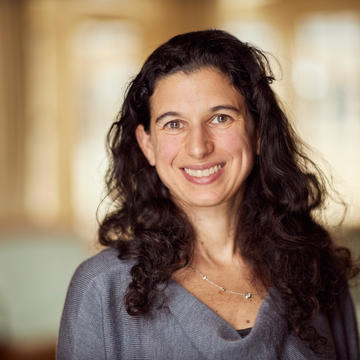
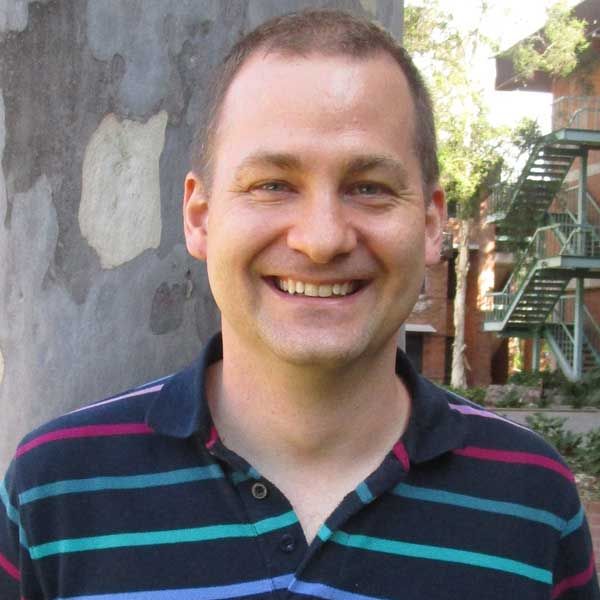
Professor Lucie Cluver is a leading academic in child and family social work at the University of Oxford (Department of Social Policy and Intervention) and an Honorary Professor at the University of Cape Town (Psychiatry and Mental Health). She directs the UKRI GCRF Accelerating Achievement for Africa's Adolescents Hub and co-leads the Global Parenting Initiative , focusing on scalable interventions to prevent violence and improve outcomes for vulnerable youth. Academic Affiliation: Department of Social Policy and Intervention, University of Oxford Key Collaborations: WHO, UNICEF, USAID-PEPFAR, African Union Development Agency Her research spans child protection , adolescent health , violence prevention , and HIV-related social policy . With over 200 peer-reviewed publications, her work combines longitudinal studies and randomized controlled trials (RCTs) across sub-Saharan Africa, Asia, and Europe. Current projects include cash-plus-care models for HIV-positive adolescents, Parenting for Lifelong Health (PLH) program adaptations, and COVID-19 emergency parenting resources reaching over 210 million families globally. Scientific Awards: ERC Public Engagement with Research Award (2024) Fellow of the Academy of Social Sciences (2023) Oxford VC’s Innovation Award (2022) International AIDS Society Excellence in Research with Children Award (2022) UKRI International Impact Award (2021) European Union Horizon 2020 Impact Award Appointed OBE in the King’s Birthday Honours (2025) Professor Cluver supervises a team of current DPhil and MPhil students , including Yvonne Agengo and Diana Mwala, while her previous students like Caroline Kuo and Jamie Lachman hold prominent roles in academia and policy. Her work has secured funding from UKRI , European Research Council , World Health Organization , and Bill & Melinda Gates Foundation .
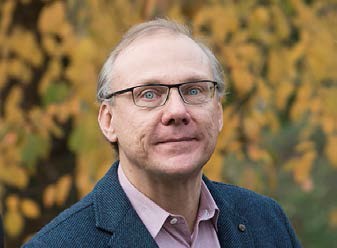
Ginie Servant-Miklos is an Assistant Professor at the Erasmus School of Social and Behavioural Sciences , Erasmus University Rotterdam. A leading figure in environmental education and problem-based learning (PBL), she develops pedagogical frameworks like Experimental Pedagogics and founded the Bildung Climate School and FairFight Foundation , which supports girls and women in Zambia, Zimbabwe, and India through martial arts and education. Her work bridges sustainability education, societal impact, and educational innovation. Bachelor of Arts in Politics, Philosophy, and Economics – University of Kent LLM in International Law – Kent Law School MA in International Relations – Sciences Po Lille PhD in Education Philosophy and Psychology – Erasmus University Rotterdam Post-doctoral research grant – Aalborg University Her research focuses on innovative pedagogies for societal transformation, particularly addressing climate change through problem-based learning . She explores how educational frameworks can cultivate resilience, agency, and ethical responsibility in the face of global crises. Her book Pedagogies of Collapse challenges traditional educational paradigms, advocating for hope-driven learning in the context of existential threats. Recent publications highlight her contributions to climate education and sustainability literacy , analyzing trends in PBL engineering students' awareness and engagement. Her work spans interdisciplinary collaborations, including roles at Tyumen University as a visiting professor. Scientific Awards: Leadership Fellow – Comenius Network for educational innovators (Netherlands) As founder of the FairFight Foundation , she integrates martial arts with mental health support and education for women in marginalized regions. Her advocacy appears in TEDx talks, podcasts, and debates, emphasizing sustainability and gender equality .
Prof. Dr. Roland A. Müller serves as Department Head of Systemic Environmental Biotechnology at the Helmholtz Centre for Environmental Research - UFZ in Leipzig, Germany, and holds an Honorary Professorship for Integrated Wastewater Resource Management at Leipzig University of Applied Sciences (HTWK) since 2016. With over three decades of experience at UFZ, he has held progressively senior positions including Head of Department SUBT since 2013, Speaker of the Department from 2010-2012, and Head of Infrastructure Unit from 1996-2010. His educational foundation includes university studies in Technical Microbiology at the Carolo-Wilhelmina Technical University of Braunschweig (1984-1990). This technical microbiology background has informed his interdisciplinary approach to environmental biotechnology. Prof. Müller's research pioneers the integration of ecological principles into urban water management systems, particularly focusing on Multifunctional BlueGreen Water Infrastructures for Water Sensitive Cities. His work spans Decentralized Rainwater & Wastewater Treatment, Ecological Engineering, and Resource-efficient Wastewater Treatment systems, with special attention to applications in water-scarce regions like Jordan. He has developed innovative approaches for implementing nature-based solutions that simultaneously address urban flooding, water scarcity, and climate adaptation challenges. His research combines engineering, ecology, and urban planning to create resilient water systems that enhance urban sustainability. Analysis of his recent publications reveals a consistent focus on implementing the 'Leipziger Modell Blau-Grün' - a comprehensive approach to integrated blue-green infrastructure in urban settings. His work demonstrates how nature-based solutions can simultaneously address stormwater management, irrigation needs, and urban greening. A significant portion of his research examines decentralized wastewater treatment systems, with particular attention to their application in arid and semi-arid regions where water resources are constrained. His publications increasingly emphasize participatory planning approaches involving municipal authorities, housing associations, and research institutions to co-design water-sensitive urban developments. 2018: German Environmental Award for solving a central water problem in a decentralized manner in Jordan 2016: Winner of UFZ Knowledge Transfer Award for contributions to Jordanian wastewater policy framework 2014: UFZ Technology Transfer Award for development of vertical filter systems for groundwater purification 2014: Finalist for Hugo Junkers Prize for innovative groundwater purification research Prof. Müller has been instrumental in advising on water policy frameworks, particularly in Jordan where he served as the German representative in the National Implementation Committee for decentralized Wastewater treatment. His work directly influenced the development of national certification standards for wastewater treatment systems with capacities up to 5,000 PE in Jordan. He leads the 'Leipziger BlauGrün' project, a German model city initiative for resource-efficient urban districts that demonstrates practical implementation of his research concepts. His department collaborates with international partners on projects addressing water challenges across diverse climatic conditions. As head of the Systemic Environmental Biotechnology department at UFZ, Prof. Müller oversees research at the intersection of environmental engineering, microbiology, and urban planning. His department is actively involved in the Technical Biogeochemistry Integration Platform, which focuses on 'Tapping Nature's Potential' for sustainable water management solutions. The department maintains strong international partnerships, particularly with institutions in water-stressed regions, to develop and implement decentralized wastewater management concepts that are both scientifically sound and practically implementable in resource-constrained settings.
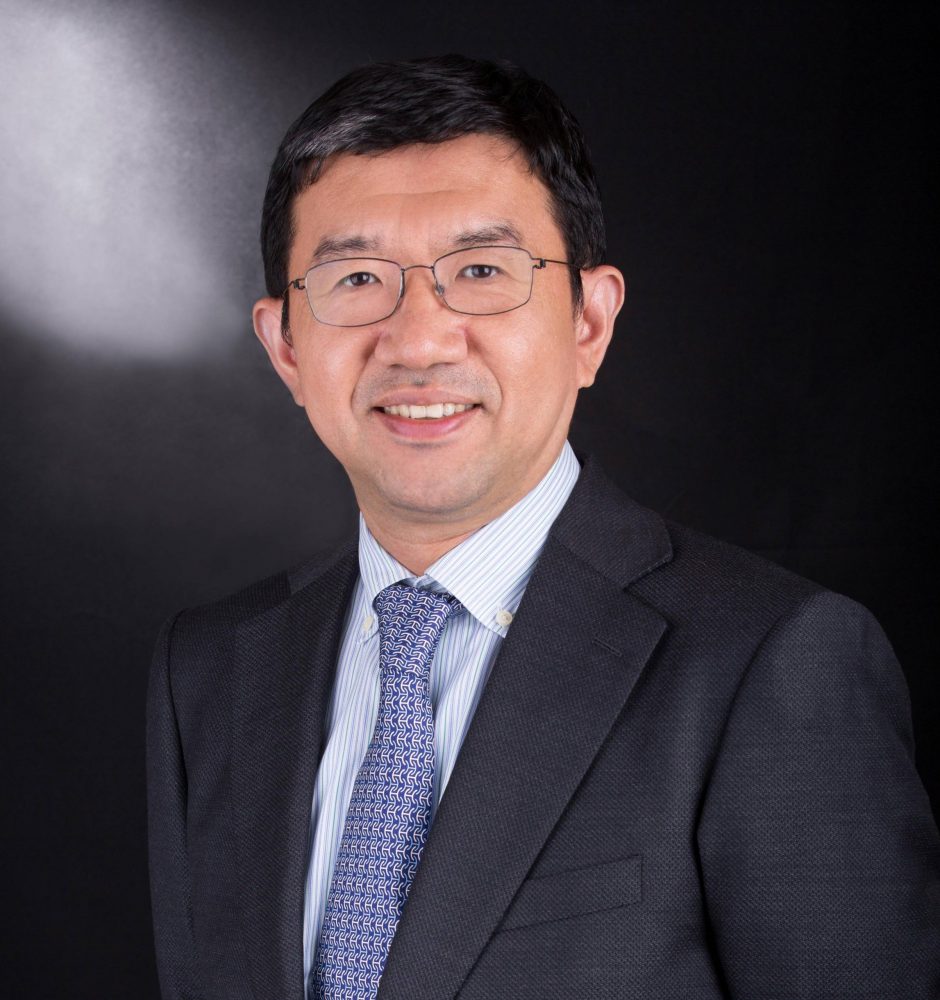
Jin Li serves as Zhang Yonghong Professor in Economics and Strategy, Area Head of Management and Strategy, and Director of the Centre for AI, Management and Organization (CAMO) at Hong Kong University Business School. Previously, he held tenured positions at Kellogg School of Management and London School of Economics where he was Tenured Associate Professor of Managerial Economics and Strategy. Professor Li's research focuses on organizational economics, personnel economics, and labor economics, examining how firms design organizations to align incentives and build trust. His recent work explores digital economy topics including causality issues in machine learning algorithms, blockchain governance, and AI-organization interactions. This research demonstrates how organizational design creates competitive advantage through effective incentive structures and relational contracts. His publication portfolio shows consistent output in top-tier journals with recent emphasis on AI's organizational impact (2022-2023). Key thematic clusters include relational contracting dynamics (30% of recent work), digital transformation challenges (25%), labor market structures (20%), and blockchain governance mechanisms (15%). Management Department teaching prize at London School of Economics Associate Editor, Management Science Professor Li has advised numerous PhD students through courses like 'Economics of Organization for PhDs' at Kellogg. His service includes reviewing for 30+ top journals (AER, Econometrica, JPE, QJE, ReStud) and grant proposals for NSF and SSHRC. He serves as external PhD examiner for Norwegian School of Economics. As Director of CAMO, he leads research initiatives at the AI-organization interface, focusing on how artificial intelligence transforms workplace structures, managerial decision-making, and competitive dynamics in digital economies.
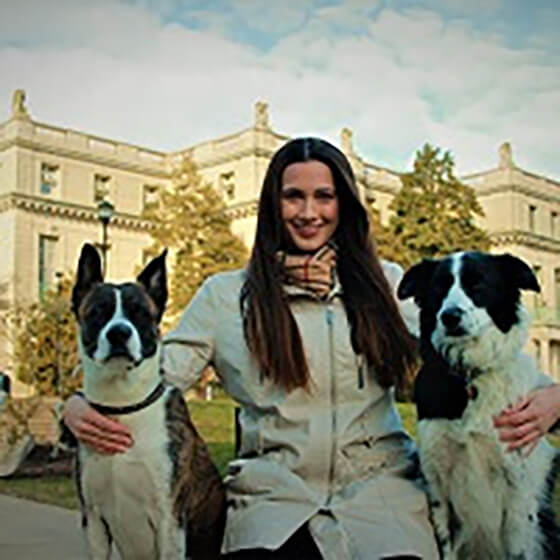
Lindsay R. Mehrkam, Ph.D., BCBA-D is an Associate Professor in the Department of Psychology at Monmouth University. She directs the Human-Animal Wellness Collaboratory (HAWC) and Aquatic Animal Learning Lab, serves as Program Coordinator for the MU-Six Flags Affiliation, and holds Vice-Chair position on the Institutional Animal Care & Use Committee (IACUC). Her work bridges applied animal behavior, welfare science, and behavior analysis across diverse settings including zoos, shelters, and sanctuaries. Education: Ph.D., University of Florida M.S., University of Florida B.A., Franklin & Marshall College Research Focus: Dr. Mehrkam investigates environmental influences on play, aggression, and stereotypic behaviors in companion and exotic animals, develops evidence-based enrichment and training protocols for captive welfare, and evaluates human-animal interactions in therapeutic contexts. Her approach integrates behavior analysis with ethology to create practical solutions for animal care facilities, emphasizing measurable welfare outcomes through rigorous experimental design. Publication Trends: Analysis of her 15 most recent publications reveals consistent focus on applied behavior analysis in animal contexts (2014-2020), with 60% targeting canine behavior, 20% marine/exotic species, and 20% cross-species welfare assessment. Key methodological themes include functional analysis of problem behaviors (33% of papers), enrichment efficacy testing (27%), and preference assessment protocols (20%). Her work increasingly incorporates physiological biomarkers alongside behavioral metrics since 2017. Awards & Recognition: Creativity Grant (2020) Maddie's Fund Grant: Do Playgroups Increase Behavioral and Physiological Welfare in Shelter Dogs? (2017, $131,395 as PI) Doctoral-Level Board-Certified Behavior Analyst (BACB, Certificate #1-15-17919) Featured in Scientific American, Gizmodo, and Phys.org for feline/dolphin welfare research Professional Leadership: As Departmental Advising Coordinator, she guides students through field experiences at Six Flags and animal shelters. She serves as Vice President of ABAI's Applied Animal Behavior SIG and advisor for Big Oak Wolf Sanctuary. Her FEMA-invited webinar on Animal Emergency Preparedness demonstrates real-world impact of her research, while Swiss Veterinary Congress presentations establish international influence in clinical animal behavior. Laboratory Operations: The HAWC lab conducts collaborative research with animal shelters and sanctuaries on behavioral assessment protocols, while the Aquatic Animal Learning Lab partners with Six Flags to study marine mammal cognition. Both labs emphasize student involvement through the PY 411 Field Experience course, producing peer-reviewed publications with undergraduate co-authors and developing evidence-based welfare protocols adopted by multiple zoological institutions.
Fredrik Sandin is a Professor in the Department of Computer Science, Electrical and Space Engineering at Luleå University of Technology, where he leads the Machine Learning research group with approximately thirty members. His work focuses on neuromorphic technologies and the intersection of machine learning with computational physics to solve challenging real-world interaction problems. He coordinates the 'Teknisk fysik och elektroteknik' program at LTU and has been instrumental in establishing neuromorphic research activities at the university. Luleå University of Technology, Department of Computer Science, Electrical and Space Engineering Member of WASP (Wallenberg AI, Autonomous Systems and Software Program) and ELLIS (European Laboratory for Learning and Intelligent Systems) Coordinator of Neuromorphic Innovation Platform Sweden with KTH, Lund University, Uppsala University, FOI, ABB, Ericsson, and SAAB Fredrik earned his PhD in Physics from Luleå University of Technology in 2007, with thesis work focusing on dense states of matter in neutron stars. His academic journey began with an MSc diploma work in ATLAS at CERN in 2001, followed by postdoctoral research in computational physics at IFPA in Belgium (2008-2009) and brain-like computing at EISLAB with Prof. Jerker Delsing (2010-2011). Professor Sandin's research interests center around neuromorphic technologies, particularly neuromorphic computing and spiking neural networks. He investigates sensor/detector and intelligent systems co-design where constraints like energy, power, latency, and dynamic range challenge conventional digital approaches. His work spans mixed-signal neuromorphic circuits, algorithms, and systems, as well as machine learning projects involving industrial data and collaboration. He has been a key figure in establishing neuromorphic research at LTU, supported by The Kempe Foundations, particularly through the 2014 Gunnar Öquist Fellowship. His recent publications demonstrate a strong interdisciplinary focus spanning quantum phase transitions, particle physics detector optimization, renewable energy materials, and the integration of large language models into control systems. This diverse portfolio reflects his approach connecting machine learning with fundamental physics and practical engineering applications, particularly in neuromorphic computing and intelligent systems design, with emphasis on solving real-world problems through co-design of hardware and algorithms. Gunnar Öquist Fellowship Award and 3 MSEK grant from The Kempe Foundations ISSP award for an Original Work in Theoretical Physics (signed by Prof. 't Hooft and Prof. Zichichi) New-Talents award for original work in theoretical physics at the International School of Subnuclear Physics in Erice Professor Sandin has supervised numerous PhD students working on topics ranging from neuromorphic TinyML to materials for neuromorphic computing, privacy-preserving machine learning at the edge, and intelligent fault diagnosis. He has secured substantial research funding from various sources including Vinnova, ÅForsk, Kempe Foundations, WASP-WISE, and EU programs like ECSEL JU Arrowhead Tools and ITEA3 AutoDC. His current major projects include the Neuromorphic Innovation Platform Sweden and several initiatives focused on neuromorphic condition monitoring and computing, with total funding exceeding 30 MSEK in the past five years. He leads the Machine Learning group at LTU, which collaborates extensively with industry partners including ABB, Ericsson, SAAB, SKF, and RISE. The group is active in developing neuromorphic technologies for wireless sensor networks, condition monitoring systems, and next-generation intelligent systems that address energy, power, and latency constraints that challenge conventional digital approaches.
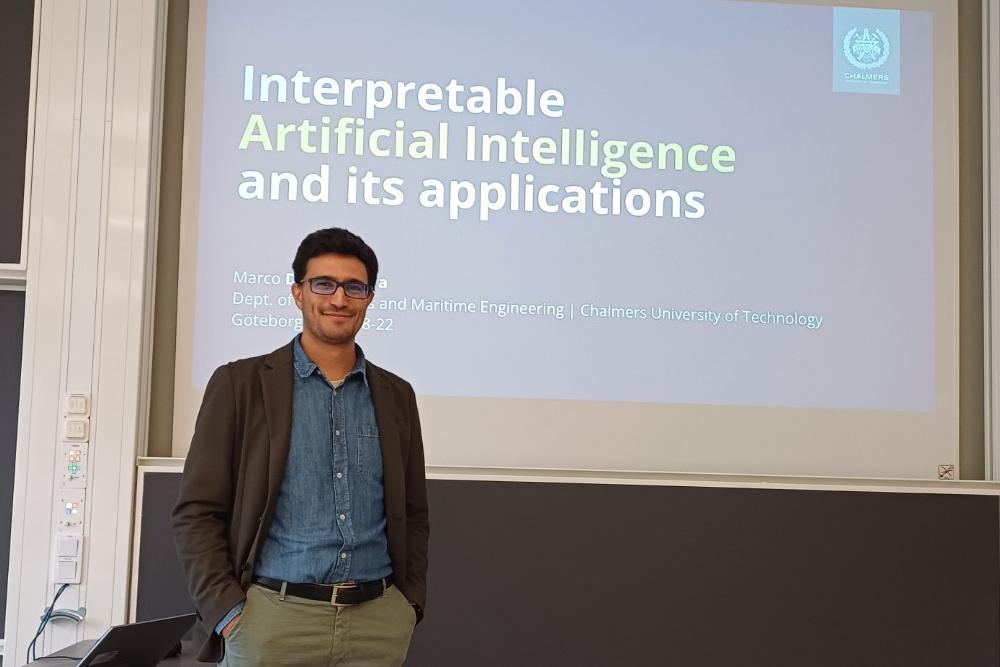
Marco L. Della Vedova is a Senior Lecturer in Applied Artificial Intelligence at Chalmers University of Technology, Sweden. He works in the Vehicle Engineering and Autonomous Systems division within the Department of Mechanics and Maritime Sciences, as part of Prof. Mattias Wahde's research group. Since 2025, he has served as Director of the Data Science and AI master's programme (MPDSC) at Chalmers, where he teaches courses including Introduction to Artificial Intelligence and Digitalization in Sports. Dr. Della Vedova earned his academic foundation at the University of Pavia, Italy, where he completed his BSc (2006), MSc (2009), and PhD (2013) in Computer Engineering. His doctoral research focused on "Real-Time Physical Systems and Electric Load Scheduling" under Prof. Tullio Facchinetti. During his PhD studies, he spent a year at U.C. Berkeley hosted by Prof. Francesco Borrelli at the Model Based Predictive and Distributed Control Lab. His research spans multiple AI domains with a strong emphasis on interpretability. Dr. Della Vedova develops interpretable methods for conversational AI, naturalness evaluation of forests using canopy height models, and geospatial applications. His work bridges theoretical AI with practical societal benefits, particularly in environmental monitoring, transportation systems, and orienteering. He has previously contributed to cloud computing, hate speech detection, and cyber-physical energy systems, demonstrating his interdisciplinary approach to AI research. Dr. Della Vedova's publication record reveals a consistent trajectory of impactful research across multiple domains of artificial intelligence. His recent work shows a strong focus on interpretability in AI systems, with significant contributions to natural language processing, geospatial analysis, and causal inference. The research demonstrates both theoretical depth and practical applications, particularly in environmental monitoring and social media analysis. His methodology often combines traditional machine learning approaches with novel interpretability techniques, creating bridges between complex AI systems and human understanding. Dr. Della Vedova has received several prestigious recognitions for his work: Best PhD thesis award from the Order of the Engineers of Bergamo (2013) Italian champion of Il Cervellone (2012) Top Italian performer in IEEEXtreme 6.0 programming competition (148th overall globally, 2012) Premio Arturo Schena award from Fondazione Credito Valtellinese (2010) With over 50 students supervised through bachelor's and master's theses, Dr. Della Vedova has established himself as a dedicated mentor in the AI community. His current PhD students include Minerva Suvanto working on interpretable NLP and Vivien Lacorre developing AI for railway infrastructure inspection. His supervision spans diverse topics from forest naturalness evaluation to hate speech detection and transportation optimization. Beyond formal supervision, he actively contributes to educational initiatives including serving as Director of Chalmers' Data Science and AI master's program and developing innovative teaching methods that connect theoretical concepts with real-world applications. Dr. Della Vedova is deeply embedded in both academic and professional communities. He leads the Applied Artificial Intelligence research group at Chalmers while maintaining strong connections with European research networks through projects like the ERASMUS+ EUrienteering initiative. His interdisciplinary approach is reflected in collaborations across computer science, environmental science, and social sciences. Notably, he applies his AI expertise to orienteering both as a researcher developing localization methods and as a licensed Event Advisor for the International Orienteering Federation, demonstrating how his professional and personal interests converge in innovative ways.
Víctor Rivero is a Professor in the Department of Probability and Statistics at the Center of Research in Mathematics (CIMAT) in Guanajuato, Mexico. He previously served as Director of CIMAT from January 2017 to December 2022 and spent a sabbatical year (August 2023-July 2024) at the Probability Group of the Department of Statistics at the University of Warwick, UK. Starting in 2025, he will serve as Editor of ALEA - Revista Latinoamericana de Probabilidad y Estadistica and is part of the Scientific Committee for the 11th International Conference on Lévy Processes to be held in Sofia, Bulgaria in 2025. He also serves on the steering committee of the CIMAT-UNAM-Warwick-Bath research platform for UK-Latin America engagement in probability. Rivero's research focuses on probability theory and stochastic processes, with particular expertise in Lévy processes, Markov processes, and self-similar processes. His work spans fluctuation theory of real-valued Lévy processes and Markov additive processes, stable processes, excursion theory, local times as stochastic processes, branching processes, and regenerative sets. He has developed deep connections between these areas, often using the Lamperti transform to relate self-similar Markov processes to Lévy processes. An analysis of his recent publications reveals a continued focus on foundational aspects of probability theory with applications to various mathematical models, particularly examining how scaling properties and self-similarity manifest in complex systems with increased attention to multidimensional settings and connections to biological models. Rivero actively mentors graduate students at institutions including CIMAT, University of Warwick, and University of Bath, frequently collaborating with other researchers like Andreas Kyprianou on student supervision. He has been a frequent visitor to leading probability research centers worldwide, including institutions in France (Université Sorbonne Paris Nord, Angers) and the UK (Bath, Warwick, Manchester). His teaching includes courses on Lévy processes and self-similar Markov processes, with lecture notes available for students. He is also part of the Network of Creative Teaching in Mathematics, which aims to promote mathematics as an activity that stimulates creative, conceptual, and emotional development.
Ali Dorri is an Associate Professor in the School of Computer Science at Queensland University of Technology's Faculty of Engineering. His research focuses on the intersection of blockchain technology, Internet of Things (IoT), and cybersecurity, with significant contributions to privacy-preserving systems and energy trading applications. He maintains an active research profile with consistent publications in top-tier venues including IEEE Transactions, ACM Computing Surveys, and various IEEE conferences. Dr. Dorri's research interests center on blockchain technology and its applications to real-world problems. His work addresses critical challenges in IoT security, privacy-preserving systems, energy trading mechanisms, and supply chain management. He has developed innovative solutions including Tree-Chain (a lightweight consensus algorithm for IoT-based blockchains), LSB (a lightweight scalable blockchain for IoT security), and various blockchain storage optimization techniques. His research bridges theoretical concepts with practical implementations, often targeting specific industry challenges in manufacturing, energy, and supply chain sectors. Analysis of his recent publications reveals a strong focus on optimizing blockchain for resource-constrained environments like IoT networks, developing privacy-preserving mechanisms for sensitive applications, and creating practical implementations for energy trading systems. His work shows increasing sophistication in addressing scalability challenges while maintaining security and privacy guarantees. The interdisciplinary nature of his research connects computer science fundamentals with applications in energy systems, manufacturing, and supply chain management. Dr. Dorri has established productive research collaborations with colleagues at QUT including Raja Jurdak, Salil Kanhere, and Gowri Ramachandran, as well as international collaborators. His publications demonstrate consistent productivity with multiple high-impact papers each year, including several that have received significant citations within the blockchain and IoT research communities.
Susanne Birnkammer is a Scientific Associate (Researcher) and doctoral student at the Department of Clinical Child and Adolescent Psychology and Psychotherapy within the Faculty of Education and Psychology at the Free University of Berlin, holding this position since February 2022. Her educational background includes: Master of Science in Clinical Psychology and Health Psychology from the Free University of Berlin (2020) Bachelor of Science in Psychology from the University of Ulm (2018) Her research focuses on digital interventions in childhood and adolescence, cross-cultural psychology, children of mentally ill parents, and creative therapy forms in psychotherapeutic contexts. She actively develops resource-oriented digital tools for youth mental health through her non-profit YIN YOUNG & YOU gUG. Recent publications reveal interdisciplinary trends combining clinical psychology with digital health solutions, examining victimization dynamics through intersectional frameworks and evaluating novel therapeutic approaches including psychedelic-assisted therapy. Her methodological approach frequently employs mixed-methods feasibility trials for intervention development. There is no publicly available information regarding Susanne Birnkammer's supervision of students or grant funding. Birnkammer contributes to the department's research ecosystem including gender identity projects (DEXTRA, GenderJourney) and university outpatient clinic initiatives. She previously held research roles at Charité Berlin's Sexual Science department and the University of Ulm's International Office.
Ronan Gruenbaum serves as Dean of International Affairs & Program Development at Hult International Business School, leading global partnerships and academic innovation. Previously, he directed the award-winning Bachelor of Business Administration program as Global Director of Undergraduate Learning and Development, and served as Dean of Hult's London undergraduate campus (2016-2022) after joining the institution in 2011 as a full-time professor of marketing technology. His expertise centers on digital transformation in business education, with core research areas including: E-commerce strategy and implementation Social technologies for organizational innovation Hybrid and online learning methodologies Future of work competencies development Business school evolution in digital age Digital marketing ecosystems Analysis of his publications reveals consistent focus on technology's disruptive impact across educational and business landscapes, particularly examining how social media, AI, and Web 2.0 tools necessitate fundamental shifts in teaching methodologies and organizational structures. His work emphasizes practical frameworks for implementing digital solutions while addressing associated risks and measurement challenges. No scientific awards were documented in the source materials. Professional engagement includes extensive conference speaking on educational innovation topics, though specific student advisement records and research grants remain undisclosed. His leadership in developing Hult's undergraduate programs demonstrates applied focus on preparing students for technological disruption in global business environments. Current initiatives indicate strong emphasis on AI integration challenges for business education and strategies for maintaining institutional relevance amid rapid technological change.
Dr. Ian Renner is a Senior Lecturer in the School of Information and Physical Sciences at the University of Newcastle, specializing in Data Science and Statistics. He holds a PhD in Statistics from the University of New South Wales, complemented by a Master of Statistics from the University of Utah and a Bachelor of Science in Mathematics from Valparaiso University. His research focuses on species distribution models (SDMs), particularly leveraging presence-only data and point process models. He developed the PPM-LASSO approach and maintains the R package 'ppmlasso' for model implementation. Education: PhD (Statistics), University of New South Wales Master of Statistics, University of Utah Bachelor of Science (Mathematics), Valparaiso University Research Interests: Dr. Renner's work bridges statistics and ecology, emphasizing the development of robust SDMs. Key areas include: Unifying MAXENT and Poisson point process models Observer bias correction in ecological data Integration of regularization techniques (e.g., LASSO) for predictive accuracy Application of citizen science data in conservation His methodologies address challenges like taxonomy changes and sampling biases in species distribution studies. Publications: His recent work highlights advancements in SDM stability, citizen science applications, and regularization methods. Key themes include improving model reliability through penalized likelihoods and addressing ecological data complexities. Awards: JB Douglas Award (2011) Runner-up for Best Student Talk (2011) EJG Pitman Prize (2010) Grants & Supervision: He has secured $12,838 in internal grants, including a visiting fellowship at CNRS (France) and conference funding. He currently co-supervises a PhD on deep learning for speech depression recognition and has guided two other students in statistical ecology and methodology. Labs/Teams: Leads the development of the 'ppmlasso' R package, collaborating with researchers like Olivier Gimenez and Eric Beh to advance ecological statistics.
Leonard Wesley is an Associate Professor in the Department of Computer Science at the College Of Science, San Jose State University. His research spans interdisciplinary domains at the intersection of Bioinformatics , Computational Biology , and Machine Learning , with specific applications in Pharmaceutical Drug Discovery , Genomic Data Analysis , and Autonomous Robotics . Education: Ph.D. in Computer Science, University of Massachusetts M.S. in Computer Science, University of Massachusetts B.A. in Physics and Math, Northeastern University Research Interests include Approximate Reasoning (probabilistic, evidential, and fuzzy logic), Agent-Oriented Systems , and Sensor Fusion . His work applies these methodologies to Drug Portfolio Management , Protein Structure Scoring , and Medical Diagnostics . Publication Trends show a consistent focus on Computational Biology , Robotics , and Uncertainty Quantification over four decades. Early work in Computer Vision evolved into modern applications in Pharmaceutical Analytics and AI in Aerospace . Key Projects include SVM-based drug affinity prediction, evidence-driven decision support systems for biopharma, and real-time agent development frameworks like ROADS. He has contributed to CFD code control and Mobile Network Congestion solutions. Collaborations with institutions like NASA, Los Alamos National Laboratory, and international conferences (WMSCI, ICINCO, AIAA) highlight his cross-disciplinary impact. His teaching includes Artificial Intelligence and Bioinformatics courses.
Dr. Zheng Zhou is a Professor of Psychology at St. John's College of Liberal Arts and Sciences, St. John's University. She holds a Ph.D. in School Psychology from Columbia University (1996), and her academic career includes significant contributions to cross-cultural educational psychology. Dr. Zhou is a Fulbright Scholar and Fellow of APA Division 16, recognized as one of the top 15 contributors to School Psychology literature. She serves as an Associate Editor for School Psychology International and has held leadership roles in professional organizations like the Board of Scientific Affairs (BSA). Education: Ph.D. 1996, Columbia University, School Psychology M.Phil. 1995, Columbia University, School Psychology M.S. 1989, Tulane University, School Psychology B.A. 1982, Suzhou University, China, English Research Focus: Dr. Zhou’s work centers on cross-cultural studies in mathematics education, particularly comparing U.S. and Chinese pedagogical approaches. Her research also addresses school adjustment of Asian-American youth and cultural competence in counseling. Key areas include children’s mathematical reasoning, bilingual education, and the psychosocial adaptation of immigrant adolescents. Publications Trends: Her articles consistently explore cultural differences in cognitive development and educational practices, with a focus on fractions, relational concepts, and cross-cultural comparisons in math instruction. Recent work emphasizes bridging Western and Eastern pedagogical strategies to enhance global educational outcomes. Awards & Recognition: Fulbright Scholar Fellow of APA Division 16 Top 15 contributor to School Psychology literature Multiple Faculty Recognition Awards from St. John’s University Advising & Leadership: Dr. Zhou advises students in graduate programs like Psycholinguistics of Bilingualism and Cross-Cultural Psychology. She has guest-edited special issues on topics such as Psychological and Educational Needs of Children in Asia and Culture and Psychology: Fulbright Psychologists and Educators in China . Her service includes roles as Chair of Division 16’s Committee on Ethnic Minority Affairs and liaison to the BSA.
Professor Karim R. Lakhani is the Dorothy & Michael Hintze Professor of Business Administration at Harvard Business School (HBS), specializing in technology management, innovation, digital transformation, and AI. He leads initiatives like the Laboratory for Innovation Science at Harvard and co-founded the Digital, Data, and Design (D^3) Institute. His research explores open innovation, crowdsourcing, and AI-driven business models, with over 150 peer-reviewed publications. Lakhani holds a PhD from MIT and has taught in HBS's MBA, executive, and online programs. His work bridges academia and industry through partnerships with NASA, Harvard Medical School, and private firms. Education: PhD in Management, MIT SM in Technology and Policy, MIT Bachelor's in Electrical Engineering and Management, McMaster University Research Interests: Lakhani's work focuses on leveraging crowds, open-source communities, and contests to solve complex challenges. He explores how digital technologies reshape industries, emphasizing AI's role in redefining business models. His studies on innovation ecosystems and organizational behavior highlight strategies for competitive advantage in the age of AI. Key Contributions: He co-authored Competing in the Age of AI , a seminal work on AI-driven enterprise transformation. His research on blockchain and digital ubiquity has informed global business strategies. Lakhani's initiatives, including the NASA Tournament Lab, demonstrate practical applications of academic research in real-world innovation. Recognition: Aga Khan Foundation International Scholarship Doctoral Fellowship from Canada's Social Science and Humanities Research Council Advising & Grants: Lakhani advises executives on digital transformation through HBS programs like Competing with Big Data. His grants fund projects on AI ethics, innovation contests, and organizational learning. He has co-developed courses on digital strategy and innovation, blending theory with actionable insights. Labs & Teams: He leads the Crowd Innovation Lab and co-chairs HBS's Business Analytics Program. His collaborations span academia, government, and industry, fostering interdisciplinary problem-solving and scaling innovation.