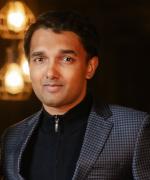
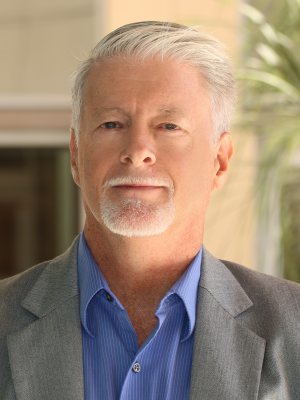
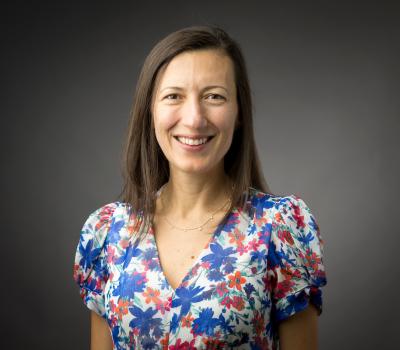
Eleonora Vacca is a PhD student and Research Fellow in the Department of Automatic Control and Computer Science (DAUIN) at the Polytechnic University of Turin. She holds a B.S. in Electronic Engineering from the University of Palermo (2018) and an M.S. in Electronic Engineering-Embedded Systems from Politecnico di Torino (2021). Her research focuses on digital hardware design, reliability engineering, reconfigurable devices, and AI applications in aerospace and safety-critical systems. She is a member of the Aerospace and Safety Computing Lab and the CAD - Electronic CAD & Reliability Group (DAUIN). Her work addresses challenges such as radiation effects mitigation in space missions, fault-tolerant AI accelerators, and real-time anomaly detection in satellite telemetry. She has contributed to projects like the RAMSES CubeSat-1 Development (2025-2026), funded by commercial contracts. In 2024, she won the Best Student Paper Award at the NEWCAS Conference for her research on radiation effects in space missions. Vacca collaborates on teaching, including assisting in the course 'Electronic Calculators' for Computer Engineering students. Her recent publications explore AI resilience in RISC-V ecosystems, radiation environment analysis for space missions, and gesture recognition systems for smart cities. She actively contributes to conferences such as the ACM International Conference on Computing Frontiers and the IEEE International Smart Cities Conference.
Prof. Wouter Roos is a Professor at the University of Groningen's Faculty of Science and Engineering, affiliated with the Molecular Biophysics department at the Zernike Institute for Advanced Materials. His research focuses on viral dynamics, membrane assemblies, and protein mechanics, utilizing advanced techniques like High Speed Atomic Force Microscopy (HS-AFM) and optical tweezers. Education: Studied Physics at the Universiteit van Amsterdam, earned a PhD from the Universität Heidelberg under Joachim Spatz. Conducted postdoctoral research at Max-Planck-Institut, Institut Curie, and Vrije Universiteit before joining Groningen in 2015. Research Interests: Physical Virology (viral material properties and dynamics), membrane biophysics (synthetic cells and lipid interactions), and molecular motor systems. His work bridges physics, chemistry, and biology to understand nanoscale biological processes. Recent Article Trends: Studies on hybrid membranes for synthetic cells, leukemic cell mechanics, and antibiotic-membrane interactions highlight his interdisciplinary approach. Key techniques include HS-AFM and single-particle tracking. Awards: Received a VIDI grant and multiple national/international grants. His lab leads the oLife Co-Fund consortium and participates in the MOSBRI research infrastructure. Grants & Leadership: Coordinates the oLife Fellowship Programme and chairs the Molecular Biophysics Lab. Active in steering committees for EU-funded initiatives. Labs/Teams: Heads the Molecular Biophysics Lab, focusing on viral dynamics and membrane systems. Collaborates globally on projects like ESCRT-III polymerization and antibiotic mechanisms.
Nabil Imam is an Assistant Professor at the School of Computational Science and Engineering within the College of Computing at Georgia Institute of Technology. He holds a Ph.D. in electrical engineering and neuroscience from Cornell University, advised by Rajit Manohar and Barbara Finlay. Prior to academia, he conducted research at IBM and Intel Labs, focusing on neuromorphic engineering and AI. His current research integrates computational neuroscience, probability theory, and control systems to model biological computation, with an emphasis on process algebras for asynchronous circuits and systems. Education: Ph.D. in Electrical Engineering and Neuroscience, Cornell University (Advisors: Rajit Manohar, Barbara Finlay) Research interests include computational neuroscience, parallel computing, probabilistic methods, and neuromorphic systems. His work bridges biological neural mechanisms with technological applications, such as neuromorphic olfactory circuits and cortical development models. Notable contributions include neuromorphic chips featured in Science and Nature . His publications highlight interdisciplinary trends in neural coding, neuromorphic hardware, and evolutionary neuroscience. Recent work explores dual computational systems in mammalian brain evolution and self-organizing cortical structures. Earlier projects include scalable spiking-neuron integrated circuits (Science, 2014) and neurosynaptic cores with event-driven architectures (Best Paper Award, 2012). Awards: Best Paper Award at IEEE International Symposium on Asynchronous Circuits and Systems (2012) Teaching includes CSE 8803: Computational Methods for Complex Systems. His lab investigates process algebra frameworks for asynchronous systems and biological computation principles. Collaborations span industry (IBM, Intel) and academic institutions. Future directions emphasize theoretical neuroscience and neuromorphic technology applications.
Elisa Morgera is a Professor of Global Environmental Law at the University of Strathclyde and the UN Special Rapporteur on Climate Change and Human Rights (2024–present). She previously directed the UKRI GCRF One Ocean Hub (2019–2024), a transformative ocean governance initiative spanning 22 institutions globally. Her research focuses on international environmental law, human rights, equity, and oceans governance, with particular attention to Indigenous peoples, small-scale fishers, and climate justice. Education includes a PhD in International Law from the European University Institute and an LLM in Environmental Law from University College London. She also holds an adjunct professorship at the University of Eastern Finland. Research interests integrate environmental law with human rights, equity, and sustainability, addressing topics like benefit-sharing in natural resources, marine biodiversity, and corporate accountability. She has advised UN agencies, governments, and NGOs, and contributed to Scottish human rights frameworks, including recommendations for a legal right to a healthy environment. Key awards include election to the Royal Society of Edinburgh (2022). Her work spans over 180 publications, including articles on climate governance, ocean defenders' rights, and BBNJ Agreements. She leads interdisciplinary projects funded by UKRI, the EU, and global partnerships. Elisa has advised on over 30 international initiatives, including contributions to the UN Special Rapporteur on Human Rights and the Environment. Her advisory roles include the Scottish Government’s Human Rights Leadership Task Force (2018–2020), shaping national human rights legislation. Her One Ocean Hub and other collaborations emphasize equity and inclusion in ocean policy, involving communities in decision-making processes.
R. Daniel Kelemen is McCourt Chair Professor at Georgetown University's McCourt School of Public Policy, with courtesy appointment at Georgetown Law. His research examines EU law transformation, comparative federalism, and democratic backsliding mechanisms. He received the European Union Studies Association Best Book Award for Eurolegalism: The Transformation of Law and Regulation in the European Union . Publications analyze constitutional crises, EU enforcement deficits, and autocracy dynamics. Recent works investigate funding conditionality for Hungary, judicial guardianship erosion, and geopolitical impacts of Russia's invasion of Ukraine. Article themes show consistent focus on institutional resilience and legal enforcement challenges. He serves on the Council of Foreign Relations and chairs EU policy consultations for risk analysis firms. Previously chaired Rutgers Political Science Department and directed its Center for European Studies.
Ronald E. Rice is a Distinguished Professor and Arthur N. Rupe Endowed Professor in the Department of Communication at the University of California, Santa Barbara. He has held visiting positions at Nanyang Technological University in Singapore and the University of Amsterdam. His research focuses on environmental communication, public communication campaigns, organizational theory, and digital technology impacts. He has authored/co-authored numerous books, including the Oxford Handbook of Digital Technology and Society . Education: Columbia University (B.A., English Literature, 1971), Stanford University (M.A. and Ph.D., Communication Research, 1978/1982). Professional roles include Department Chair at UCSB (2013–2015), Co-Director of the Carsey-Wolf Center, and President of the International Communication Association (2006–2007). Research interests span environmental communication, digital divide analysis, and organizational communication. Recent work examines media multitasking, online misinformation, and pro-environmental behavior drivers. Over 230 refereed articles and book chapters highlight his contributions to media effects and technology studies. Notable awards include the Honorary Doctorate from Université de Montréal (2010), ICA Fellowship, and Fulbright Scholarships. His research integrates interdisciplinary methods, emphasizing social networks, media affordances, and policy implications. Advising and grants include leadership in public health communication campaigns and environmental initiatives. Collaborations span global institutions, reflecting his commitment to applied research in digital society challenges.
Jacques deLisle is the Stephen A. Cozen Professor of Law and Professor of Political Science at the University of Pennsylvania. He serves as Director of the Center for the Study of Contemporary China, co-director of the Center for Asian Law, and director of the Asia Program at the Foreign Policy Research Institute. His expertise centers on contemporary Chinese law, politics, and U.S.-China relations, with a focus on legal reform, cross-strait relations, and Taiwan's international status. DeLisle’s research explores the interplay between law, governance, and international dynamics in China. His notable works analyze China’s engagement with international law, Taiwan’s diplomatic strategies, and the implications of U.S. policy toward the region. Recent publications include studies on China-India territorial disputes, political warfare tactics by authoritarian regimes, and the evolving role of the Chinese Communist Party. His work frequently addresses geopolitical issues such as the South China Sea disputes, the impact of the pandemic on U.S.-China relations, and the legal frameworks governing cross-strait interactions. DeLisle has advised on legal reform initiatives in China and frequently engages in policy discussions, including as an expert witness on Chinese law and a consultant for development programs.
Dr. Nicola Allison is a Reader at the University of St Andrews, School of Earth & Environmental Sciences, where she leads research on biomineralisation. Her work focuses on how marine organisms form calcium carbonate structures, the impact of environmental changes on these processes, and the role of these biominerals in reconstructing past climates. Her research integrates experimental studies using controlled aquaria systems to culture corals and other organisms, alongside geochemical analyses of fossil carbonates. Key areas include the effects of ocean acidification, rising temperatures, and organic matrices on biomineral formation. She collaborates internationally, including through the International Ocean Discovery Program (IODP). Publications highlight advancements in understanding coral skeletal chemistry, aragonite precipitation mechanisms, and the development of climate proxies. She holds grants from NERC, MASTS, and the Leverhulme Trust, supporting projects on coral calcification, biomolecule influences, and climate change impacts. Dr. Allison actively engages in public outreach through workshops and conferences, contributing to climate science communication and policy-relevant research on marine ecosystems.
Cameron L. Bentley is a Senior Lecturer in the School of Chemistry at Monash University, Australia. He holds a PhD in Chemistry from Monash University (2015), focusing on electroanalysis in ionic liquids. After completing his doctorate, he worked at the University of Warwick (UK) through prestigious fellowships including Endeavour, Marie Skłodowska-Curie, and Ramsay Memorial. In November 2020, he returned to Monash to lead an independent research group funded by a DECRA Fellowship. Affiliations: School of Chemistry (Monash University), Warwick Electrochemistry and Interfaces Group (former) Research Focus: Nanoscale electrochemistry, electrocatalyst design for renewable energy (water splitting, CO₂ reduction), and single nanoparticle electrochemistry. Bentley’s research innovatively combines scanning electrochemical cell microscopy (SECCM) with correlative microscopy/spectroscopy to study structure-activity relationships in electrochemical materials. Key projects include nanoscale imaging of water-splitting electrodes and developing platforms to probe individual nanoparticles for battery materials. Research Outputs: Over 77 publications since 2013, with recent focus on SECCM advancements, electrocatalyst optimization, and nanoscale reaction imaging. His work addresses pressing challenges in renewable energy storage and nanomaterials. Awards: A.M. Bond Medal (2023), Early Career Analytical Electrochemistry Prize (ISE Division 1, 2020) Grants: ARC DECRA Fellowship, CSIRO collaboration (2023–2027) He supervises PhD students in nanoscale reaction imaging and single nanoparticle electrochemistry, requiring competitive scholarships for international candidates.
Holger Straßheim is Professor of Political Sociology at Bielefeld University, affiliated with the Faculty of Sociology, Department 4 – Politics and Society. He also holds leadership roles as co-director of the Institute for Interdisciplinary Studies of Science (ISOS) and the Institute for World Society Studies, and is an elected member of the university’s Senate. He coordinates the MA program in Political Communication and serves on multiple examination and ethics committees. University: Bielefeld University School: Faculty of Sociology Department: Department 4 – Politics and Society Research Institutes: ISOS, Institute for World Society Studies Administrative Roles: Program Coordinator MA Political Communication, Member of BA/MA Examination Boards, Habilitation Committee His research centers on the interplay between science and politics, particularly the role of expertise and evidence in public policy. Key areas include behavioral public policy, climate and consumer policy, Arctic geopolitics, and the temporal dimensions of governance. He investigates how knowledge is produced, legitimized, and used in policy-making across transnational contexts. The most recent publications reflect a strong focus on evidence cultures, ethical expertise in crises, and the global spread of behavioral governance. These works analyze how expert advice functions under uncertainty, the paradoxes of evidence-based policy, and the institutionalization of ethical guidance during emergencies like the COVID-19 pandemic. The research often employs comparative and interdisciplinary methods, engaging with science and technology studies, political sociology, and policy analysis. Best Dissertation Award, University of Tübingen (2011) Visiting Fellow, Harvard Kennedy School (2014) Visiting Research Fellow, Collège d’études mondiales, Paris (2018) Visiting Research Fellow, University of Bologna (2022) Straßheim has supervised and advised in various research projects and PhD initiatives, particularly through his leadership in DFG and ESRC-funded programs. He has secured significant third-party funding, including projects on Arctic knowledge co-production and ethics in crisis governance. He is actively involved in academic service, reviewing for major journals and research councils, and shaping policy discourse through editorial roles in Critical Policy Studies and the Advances in Critical Policy Analysis book series. He leads the Straßheim Research Group, fostering interdisciplinary collaboration on science-policy interfaces. He is a key figure in research networks such as the Science and Democracy Network (Harvard) and the International Arctic Science Committee. His work bridges academic inquiry with real-world policy challenges, emphasizing democratic accountability, epistemic pluralism, and the ethical dimensions of expertise.
Dr. Rishita Nandagiri is a feminist researcher and academic currently serving as a Lecturer (Assistant Professor) in the Department of Global Health & Social Medicine at King's College London. She previously held research and teaching positions at the London School of Economics (LSE), including an ESRC Postdoctoral Fellowship and an LSE Fellow in Health and International Development. Her work is deeply rooted in reproductive justice, gender, and global health, with a focus on the Global South. PhD in Social Policy, London School of Economics (2019) ESRC Postdoctoral Fellow, LSE Department of Methodology (2020-2021) LSE Fellow in Health and International Development (2019-2020) Research Assistant, LSE Department of Media and Communications (2018-2019) Dr. Nandagiri’s research centers on reproductive (in)justices, interrogating how power and politics shape abortion access, self-managed abortion, care trajectories, and reproductive governance. Her work is interdisciplinary, drawing on feminist theory, qualitative and participatory methods, policy analysis, and co-production with communities and organizations. She has extended her research to examine the impact of the COVID-19 pandemic on abortion and the role of lay health providers in care delivery. Her methodological interests include multi-method designs that integrate interviews, archival research, and community engagement. The 15 most recent articles reflect a strong trajectory in reproductive justice, with increasing engagement with feminist economics, carceral systems, and global policy. Themes include structural violence, legal pluralism, care ethics, and transnational advocacy. Her publications span high-impact journals in public health, social policy, gender studies, and media, indicating a broad interdisciplinary reach. Scientific awards and recognitions include: ESRC Postdoctoral Fellowship (2020-2021) LSE Class Teacher Award (2020) LSE Research Investment and Infrastructure Funds (2020) Best PhD Poster Prize, British Society for Population Studies (2018) LSE PhD Studentship (2015-2019) Dr. Nandagiri has advised on and contributed to numerous research grants, particularly those related to reproductive health, digital privacy, and pandemic response. She has collaborated with major institutions such as UNFPA, the Women’s Global Network for Reproductive Rights, and FRIDA. She co-founded the Abortion Book Club and serves on editorial and advisory boards, including BMJ Sexual & Reproductive Health and the International Union for the Scientific Study of Population’s Abortion Research panel. She also co-convenes the Development Studies Association’s Women and Development Study Group, demonstrating strong leadership in academic and advocacy networks. She is actively involved in public engagement, contributing to LSE blogs, media outlets like Women's Health Magazine UK, and platforms such as the Oxford Human Rights Hub and Harvard’s Bill of Health. Her lab and team affiliations are not explicitly named, but her collaborative projects suggest strong ties to interdisciplinary research groups focused on global health, reproductive justice, and digital rights.
Prof. Maryline Laurent is a Professor at Telecom SudParis, affiliated with the SAMOVAR research laboratory. Her work focuses on cybersecurity, privacy-preserving technologies, blockchain applications, and IoT security. She has contributed to numerous high-impact publications and conferences, addressing challenges in secure healthcare systems, decentralized identity management, and privacy in distributed systems. Her research spans cryptographic protocols, access control mechanisms, and compliance with EU data protection regulations. Key areas of expertise include secure communication protocols for IoT, blockchain-based solutions for healthcare, and privacy-enhancing technologies. She has collaborated on projects such as self-sovereign identity frameworks, anonymized data aggregation, and privacy-preserving smart grid systems. Her work emphasizes practical methodologies for assessing re-identification risks in anonymized datasets and designing secure systems compliant with evolving regulations. Prof. Laurent’s contributions extend to book chapters and edited volumes on digital identity management and wireless network security. She actively participates in international conferences and initiatives, advocating for privacy-by-design principles in intelligent infrastructures.
Dr. Yelda Turkan is an Associate Professor in the School of Civil and Construction Engineering at Oregon State University, where she leads research in automation, computer vision, and machine learning for sustainable infrastructure. She holds a PhD from the University of Waterloo and dual BS degrees in Civil Engineering and Geomatics Engineering from Istanbul Technical University. Her work focuses on leveraging lidar, digital twins, and BIM to improve construction operations and decision-making in the built environment. She has secured over $4M in grants from NSF, FHWA, and other agencies, and currently leads the NSF Convergence Accelerator-funded 'Deep Reality' project for AI-driven infrastructure management. Education: Ph.D., Civil Engineering, University of Waterloo, 2012 M.S., Engineering Informatics & Remote Sensing, Istanbul Technical University, 2006 B.S., Civil Engineering (double major in Geomatics Engineering), Istanbul Technical University, 2005/2003 Professional Roles: Vice President, International Association for Automation and Robotics in Construction (IAARC) Chair, ASCE Computing Division Education Committee Associate Editor, ASCE OPEN Journal Her research emphasizes automation in construction quality control, infrastructure inspection via drones and lidar, and immersive education tools using VR/AR. Recent projects include automated curb ramp compliance analysis, wildfire impact modeling, and digital twin development for timber structures. She has published over 80 peer-reviewed articles and actively promotes computing integration in civil engineering education and professional practice.
Craig W. Hedberg is a Professor in the Division of Environmental Health Sciences at the University of Minnesota. As Co-Director of the Minnesota Integrated Food Safety Center of Excellence , he focuses on enhancing public health surveillance and collaboration between agencies to improve foodborne illness detection. Education: PhD in Epidemiology (1993), MS in Environmental Health (1984) from the University of Minnesota, BS in Biology (1976) from the University of Connecticut. His research integrates epidemiology , food safety , and outbreak investigation , with recent work on Salmonella risk frameworks and SARS-CoV-2 seroprevalence in grocery workers. Over his career, he has received awards like the Frozen Food Foundation’s Freezing Research Award (2023) and the Excellence in Advising Award (2019) . His publications span foodborne disease surveillance, regulatory compliance, and historical epidemiology studies. Scientific Awards: 2023 - Frozen Food Foundation’s Freezing Research Award 2022 - President’s Recognition Award, International Association for Food Protection 2022 - LOCAL PUBLIC HEALTH HERO AWARD, City of Minneapolis 2021 - Ewen C.D. Todd Control of Foodborne Illness Award 2019 - Excellence in Advising Award, University of Minnesota School of Public Health
Lubomir P. Litov is the David M. Moffett Professor of Corporate Finance and an associate professor in the Finance Department at the Michael F. Price College of Business, University of Oklahoma. He also holds an appointment as Affiliate Associate Professor of Law at the OU College of Law. Dr. Litov received his Ph.D. in Economics from Leonard Stern School of Business at New York University. Prior to joining OU, he held faculty positions at the University of Arizona and Washington University in St. Louis. He is also a research associate at the Financial Institutions Center at the Wharton School of the University of Pennsylvania. Dr. Litov's research focuses on several key areas of finance and corporate governance: Corporate governance mechanisms and board structures Mergers and acquisitions processes and outcomes Venture capital and private equity investment strategies Entrepreneurial finance and growth equity Capital structure decisions and risk management International corporate finance and policy impacts His recent publications examine critical issues such as dual-class stock IPOs, policy uncertainty effects on venture capital, poison pill defenses, and the relationship between venture capitalist directors and managerial incentives. Dr. Litov's work consistently bridges theoretical frameworks with practical applications in corporate finance and governance, with articles published in top journals including the Journal of Finance, Journal of Financial Economics, and Journal of Accounting and Economics. Dr. Litov has received numerous teaching and research honors including: Harold E. Hackler Outstanding MBA Professor Award (2022) Merrick Foundation Teaching Award (2018) Hurley Roberson Teaching Excellence Award (2017) William Sharpe award for best paper in JFQA (2010) As an educator, Dr. Litov teaches courses on Mergers, Acquisitions & Corporate Restructuring across multiple programs including the MBA, Executive MBA in Aerospace & Defense, and MSc in Finance. He also co-organizes the Virtual Household Finance Seminar and the NYU-Georgia Tech-OU Economics Virtual Seminar on Artificial Intelligence and Decentralized Finance, bringing together leading researchers to discuss cutting-edge developments in finance.