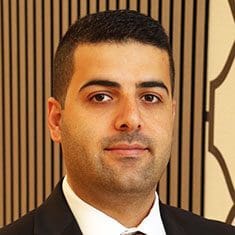
Dr. Atil Talay is an Associate Professor in the Department of Marine Engineering at the United States Merchant Marine Academy (USMMA). He joined the institution in 2018 and holds a PhD in Maritime Transportation and Management Engineering from ITW, Turkey, along with an M.S. in Marine Engineering and dual B.S. degrees in Marine Engineering and Mechanical Engineering from ITW and KOW Universities, respectively. Education: PhD, Maritime Transportation and Management Engineering, Istanbul Technical University (ITW), Turkey M.S., Marine Engineering, ITW, Turkey B.S., Marine Engineering, ITW, Turkey B.S., Mechanical Engineering, Kocaeli University (KOW), Turkey His research focuses on Risk Analysis and Safety Management in Maritime Transportation , Ship Energy Efficiency , Greenhouse Gas Emissions Abatement , and experimental studies using Engine Room Simulators (ERS) . He teaches courses such as Intro to Marine Engineering , Internal Combustion Engines , Steam Turbines , and Ship Design . No scientific awards or grants are explicitly mentioned in the text. His advising and lab affiliations are not detailed here.
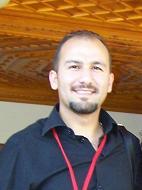
Yasser Mahmoudi Larimi is a Professor of Thermal Energy Engineering at the University of Manchester's Department of Mechanical and Aerospace Engineering since July 2024. Previously held roles include Senior Lecturer at the University of Manchester (2021-2024) and Lecturer in Clean Energy at Queen’s University Belfast. His academic journey includes postdoctoral research at Delft University of Technology and the University of Cambridge, focusing on turbulent reacting flows and aeroacoustics. Education: BSc, MSc, PhD in Mechanical Engineering Fellow of Higher Education Academy (FHEA) - 9 October 2018 Research Interests: Turbulent flow and heat transfer phenomena Energy storage systems (especially hydrogen and compressed air) Aeroacoustics of gas turbines Physics-Informed Neural Networks (PINNs) for flow modeling Composite porous-fluid systems Hydrogen combustion and clean energy technologies Key Contributions: Leader of UK Fluids Network's Turbulent Heat Transfer Special Interest Group Associate Editor for International Journal of Thermal Sciences Recipient of top 2% global Energy scientist ranking (Stanford University, 2021-2024) Principal investigator on EPSRC/industrial-funded projects Grants & Projects: £2M+ in research funding secured from EPSRC, Royal Society, and industry Leadership in projects like Near-isothermal Compressed Air Energy Storage (2024-2028) Multi-faculty collaboration on turbulent flow modeling and porous media systems Labs/Teams: Core member of Manchester's Fluids Research Group Pioneering PINN applications in thermal-fluid systems
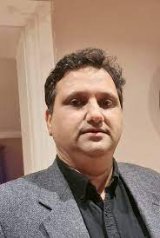
Matthew Nabity is a Professor in the Division of Computer Science at Western Oregon University (WOU), where he has been teaching since 2011. He directs the interdisciplinary WOU Data Lab , which focuses on data science education, research, and community engagement. His current projects include DNA Barcoding, Prerequisite Efficacy Analysis, and Data Visualization. His research spans Data Science Computational Biology Educational Technology Machine Learning Applied Physics . He has co-authored publications in journals such as the International Journal of Computer Science Education in Schools and the Journal of Experimental Biology , often mentoring undergraduate students as co-authors. The WOU Data Lab under his leadership aims to: Provide student opportunities in data science Motivate further study in data science Develop data science techniques Support campus data science activities . His recent publications highlight collaborations in Integrating dance with coding education Computational biology (DNA barcoding) Statistical modeling in sports analytics Detonation physics in aerospace engineering . He has mentored undergraduate researchers like Michael Baltzley, Breeann Flesch, and Stephen Ockerman.
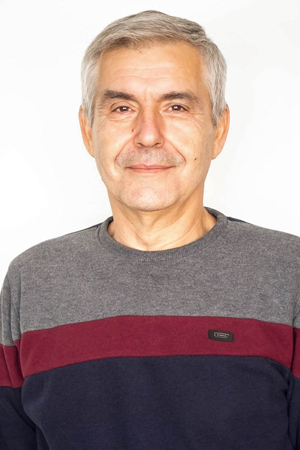
Hassan Hayajneh is an Assistant Professor in Mechatronics Engineering Technology at Purdue University Northwest . He is a Certified Energy Manager (CEM ® ), LEED Green Associate, and Mechanical Engineering EIT with extensive academic-industry experience in renewable energy systems , mobile energy storage , and electric vehicle infrastructure . Education : Ph.D. in Sustainable Energy Systems Engineering (Texas A&M University-Kingsville) M.S. in Mechanical Engineering (Texas A&M University-Kingsville) B.S. in Mechatronics Engineering (The Hashemite University) Research Interests : Developing integrated frameworks for renewable energy adoption Optimizing electric vehicle charging infrastructure Designing hybrid energy storage solutions Advancing solar-powered desalination technologies Improving grid resiliency through decentralized systems Applying AI to energy forecasting and management Research Trends : Recent publications focus on cross-disciplinary approaches combining renewable energy , water treatment , and transportation electrification . Key themes include hybrid energy systems , storage optimization , and sustainable infrastructure for urban and remote applications. Scientific Awards : Certified Energy Manager (CEM ® ) LEED Green Associate accreditation Mechanical Engineering EIT license
Professor Richard Burke is a faculty member in the Department of Mechanical Engineering at the University of Bath, where he serves as Centre Director for the IAAPS Made Smarter Innovation: Centre for People-Led Digitalisation. His research focuses on automotive engineering systems, particularly turbocharger technology, internal combustion engines, electric vehicle powertrains, and thermal management systems. Professor Burke's research interests span a wide range of mechanical engineering topics related to sustainable transportation. His work encompasses turbocharger systems optimization, electric vehicle powertrain development, hydrogen fuel cell applications, and advanced engine control strategies. He has made significant contributions to understanding transient engine performance, thermal management in electric motors, and emissions reduction technologies. His research often bridges theoretical modeling with practical engineering applications, particularly in the automotive sector. His publication record shows a clear trend toward sustainable mobility solutions, with increasing focus on electrified powertrains, hydrogen technologies, and emission reduction strategies in recent years. His work demonstrates expertise in both traditional internal combustion engine optimization and emerging electric and hydrogen-powered vehicle technologies. The interdisciplinary nature of his research connects mechanical engineering principles with control systems, thermal dynamics, and energy management. Professor Burke appears to be actively supervising doctoral students and has contributed to engineering education through initiatives like the virtual engine laboratory for teaching powertrain engineering. His work has garnered significant citations, particularly in areas of turbocharger technology and electric vehicle systems, indicating substantial impact in his research fields.
Prof. Dr. Jan-Dierk Grunwaldt is a Full Professor and Director at the Institute of Technical Chemistry and Polymer Chemistry , Faculty for Chemistry and Applied Biosciences, Karlsruhe Institute of Technology (KIT). His research focuses on heterogeneous catalysis , operando spectroscopy , in situ characterization using synchrotron radiation (PETRA III, ESRF, BESSY, etc.), and sustainable chemical processes like power-to-X and emission control. He has pioneered the use of HERFD-XAS , XES , and synchrotron-based tomography for catalyst analysis. A former Haldor Topsøe Chair at DTU and Privatdozent at ETH Zurich, he bridges industrial and academic catalysis research. Research Interests: Heterogeneous Catalysis : Methane oxidation, methanol synthesis, and CO₂ conversion. Operando Spectroscopy : Real-time tracking of catalyst structural changes using XANES, EXAFS, and X-ray tomography. Sustainable Chemistry : Power-to-X, chemical energy storage, and bio-derived monomers. Catalyst Preparation : Flame spray pyrolysis and single-atom catalysts. Scientific Awards : Recipient of the Dale Sayers Award (2006), Jochen Block Prize (2006), and Karl Winnacker Scholarship (2007). He also earned a Silver Medal at the 1988 International Chemistry Olympiad. Academic Leadership : Serves on international committees including the Photon Science Committee at DESY and Executive Board of GECATS . He co-developed standards for Electronic Laboratory Notebooks in photon/neutron communities.
CUMHUR GÖKHAN ÜNLÜ is an Associate Professor in the Department of Biomedical Engineering at the Faculty of Technology, Pamukkale University, Turkey. He holds a Ph.D. in Physics from Muğla Sıtkı Koçman University and has been actively contributing to interdisciplinary research at the intersection of materials science, nanotechnology, and biomedical engineering. B.Sc. in Physics, Uludağ University (2003) M.Sc. in Physics, Uludağ University (2006) Ph.D. in Physics, Muğla Sıtkı Koçman University (2013) His research focuses on graphene-based biosensors , magnetic nanoparticles for hyperthermia , perovskite manganites , and nanomaterials for cancer therapy and energy applications . He employs advanced synthesis and characterization techniques to develop functional nanomaterials with applications in biomedicine and renewable energy. The 15 most recent publications highlight a strong trend toward biomedical nanotechnology , particularly in cancer theranostics using Mo₂C-MXene and perovskite-based nanohybrids . Other works explore graphene-modified solar cells , bioelectrochemical systems for solar fuel generation , and nanofuel combustion . The dominant keywords include magnetocaloric materials, biosensors, photocatalysis, and nanomedicine. Dr. Ünlü is actively involved in multiple national and international research projects, including several TÜBİTAK-funded initiatives and ERASMUS+ collaborations. His recent work emphasizes interdisciplinary innovation with real-world applications in oncology and sustainable energy. Rational design of efficient energy and charge transfer in biophotoelectrodes for direct conversion of CO2 into fuel (TÜBİTAK-1071) Development of Mo₂C MXene derivatives for triple-negative breast cancer combination therapy (TÜBİTAK-1001) Functional magnetic nanoparticles for glioblastoma combination therapy (TÜBİTAK-1001) Graphene-based field-effect transistor biosensor platform for ferritin detection (Helmholtz-Zentrum Dresden-Rossendorf) He also coordinates internal BAP projects on graphene-doped nanofibers and 2D molybdenum carbide crystals. His lab fosters collaboration across physics, materials science, and biomedical engineering, contributing to both fundamental science and translational applications. No scientific awards are explicitly mentioned in the provided text.
Dr.-Ing. Norbert Hosters is a Research Associate and Chief Engineer at the Chair for Computational Analysis of Technical Systems (CATS), Faculty of Mechanical Engineering, RWTH Aachen University. He has been active since 2020 and serves as General Secretary of the German Association for Computational Mechanics (GACM). His work bridges advanced computational methods with engineering applications. His research focuses on numerical methods for fluid-structure interaction , computational fluid and structural dynamics , isogeometric analysis , and aerothermoelasticity . He also explores applied quantum methods and physics-informed neural networks for solving complex PDEs and optimizing industrial processes. His interdisciplinary work spans mechanical, biomedical, and computational engineering. The recent publications (2023–2025) demonstrate a strong trend toward integrating machine learning with traditional simulation techniques, particularly in partitioned FSI , multiphase flow , shape optimization , and biomedical simulations such as LVAD modeling. His work appears in high-impact journals like Scientific Reports , Computers & Fluids , and International Journal for Numerical Methods in Engineering , as well as major conferences including GACM and CMBE. He is actively involved in teaching courses on Numerical Methods for Fluid-Structure Interaction , Isogeometric Analysis , and Simulation Methods in Mechanical Engineering . He offers student projects and supervises research, though no named advisees are listed. He has no listed scientific awards or fellowships. His research is conducted within the CATS chair, a leading group in computational mechanics, contributing to both fundamental methods and industrial applications. He plays a key role in academic service through GACM leadership.
Dr. Waheed Afzal is a Reader in the School of Engineering at the University of Aberdeen, where he leads the MSc in Process Safety and MSc in Advanced Chemical Engineering. He holds a PhD from Mines Paris PSL and a European PhD jointly from Mines Paris PSL and the Technical University of Denmark, with postdoctoral experience at the University of California, Berkeley. He is a Chartered Engineer (CEng), Chartered Scientist (CSci), Fellow of the Institution of Chemical Engineers (FIChemE), and Fellow of the Higher Education Academy (FHEA). PhD (2009): Mines Paris PSL European PhD (2010): Mines Paris PSL and Technical University of Denmark Post-Doc (2010–2013): University of California, Berkeley MS (2005) & BSc Engg (2004): Punjab University, Lahore PgCert (2016): University of Aberdeen His research focuses on sustainable process engineering, environmental protection, and clean energy technologies. Key areas include carbon capture and utilization (CCUS), waste valorization (especially waste plastics), wastewater treatment, biofuels, mineral carbonation, and hydrogen safety. He emphasizes practical engineering solutions to combat climate change and reduce greenhouse gas emissions. His recent publications span high-impact journals and reveal a strong trend in sustainable materials, catalysis for plastic conversion, carbon-negative processes, and safety in green hydrogen systems. These works reflect interdisciplinary collaboration and a commitment to circular economy principles and environmental sustainability. European Doctorate (2010) Fellow of the Institution of Chemical Engineers (FIChemE) Chartered Engineer (CEng) Chartered Scientist (CSci) Fellow of the Higher Education Academy (FHEA) Dr. Afzal actively supervises PhD students and has led numerous funded research projects. He has served as lead or co-supervisor for over a dozen successful PhDs and currently mentors several ongoing doctoral candidates. His grants include projects on carbon utilization in precipitated calcium carbonate, sustainable offshore dismantling, and integration of renewable energy in agriculture. He also contributes as an external examiner, accreditation assessor, and journal reviewer for international bodies. He is involved in multiple collaborative research efforts with institutions such as MINES ParisTech, Technical University of Denmark, and the University of Manchester. His leadership in MSc programs and contributions to courses in safety, separation processes, and biochemical engineering highlight his strong educational impact.
Khizer Saeed is a Principal Lecturer and Academic Subject Leader in Engineering at the School of Architecture, Technology and Engineering, University of Brighton. He holds a DPhil in Engineering Sciences from the University of Oxford and has been a key figure in advancing research and education in mechanical engineering since joining the university in 2006. His educational background includes an undergraduate degree in Mechanical Engineering and a Master's in Thermal Sciences, culminating in a DPhil from Oxford, where he conducted research on fundamental combustion measurements as a Felix Scholar of Somerville College. Khizer's research spans Robotics and Control, Diagnostic Techniques, Clean Energy, and Nanoparticle Synthesis. He has developed novel systems for human-robot interaction in healthcare, defense, and industrial automation, and pioneered advanced diagnostics using laser and spectroscopic methods. His work in clean energy focuses on hydrogen, biofuels, and combustion control, while his nanoparticle synthesis research uses dry pyrolysis to produce functional metal oxides. His recent publications reflect a strong trend in intelligent robotics, energy-efficient systems, and sustainable fuels. The 2025 articles highlight integration of large language models with robotic manipulation, energy-efficient trajectory planning, and multilingual NLP for domestic robotics, indicating a shift toward AI-driven control systems. Earlier works focus on combustion diagnostics, biofuel stability, and nanoparticle synthesis, showcasing a consistent theme of innovation in energy and automation technologies. EPSRC-funded ATRACT project (£850K) on robotic casualty triage Human-Robot Interaction for Defence (£125K) Combustion Synthesis of Iron Oxide and Titania Nanoparticles (£125K each) BRITE project on sustainable energy for Africa (£10K) Zero Carbon electricity via ORC Systems (TSB, £125K) Development of biofuels testing facilities with Brighton Council and Commercial Fund Khizer has supervised several PhD students, including Dr. Xingming Lu (Chinese Academy of Science), Dr. Ayad Al Thuwaite (University of Babylon), Dr. Gelu Verghese (Airbus UK), Dr. James Pullen (EDT-Consulting UK), and Mr. Sajjad Husain (University of Brighton). He actively mentors research in human-robot interaction, clean energy, and advanced diagnostics. He has established the £1 million MOCAI (Multidisciplinary Robotics, Control and Artificial Intelligence) laboratory and a state-of-the-art bioenergy research lab at Brighton. These facilities support long-term, collaborative, and interdisciplinary research in robotics, sustainable energy, and advanced materials. The labs serve as platforms for innovation in automation, energy systems, and nanoparticle applications.
Aleksandar Davinic is an Associate Professor at the Department of Motor Vehicles and Engines, Faculty of Engineering Sciences, University of Kragujevac, Serbia. He is actively involved in teaching and research in the field of automotive and mechanical engineering. His research interests lie primarily in Motor Vehicles and Engines , focusing on mechanical systems, engine performance, and vehicle technology. Given his academic background and departmental affiliation, his work spans areas such as internal combustion engines, automotive design, and transportation engineering. There is no publicly listed information on recent publications or article trends in the provided text. There are no mentioned scientific awards or honors. There is no information available about student advising, research grants, or leadership in labs or research teams.
Abraham Engeda is a Professor in the Department of Mechanical Engineering at Michigan State University's College of Engineering. His research focuses on supercritical CO2 power generation, turbomachinery design, and low-head turbine systems. He holds a Ph.D. from the University of Hannover (1987), M.Sc. from the University of Manchester (1974), and B.Sc. from the University of Brighton (1973). Research Interests: Experimental and numerical analysis of centrifugal compressors and radial turbines Design methodologies for low-head hydraulic turbines CFD prediction and optimization of turbomachinery components Integration of solar-biogas hybrid systems for power generation Awards: Fellow, American Society of Mechanical Engineers ASME Fluid Machinery Award & Medal Fulbright Senior Global Award Labs/Teams: Co-leads the Turbomachinery Laboratory, focused on centrifugal compressor design and testing. Facilities include industrial-scale test stands, CFD workstations, and advanced data acquisition systems. Collaborates with industry partners like Elliott Company and NASA. Grants: Supported by U.S. Department of Energy, NASA, and private sector funding.
Christopher Cadou is a Professor and Keystone Professor in the Department of Aerospace Engineering at the University of Maryland. He serves as Director of Undergraduate Studies and leads interdisciplinary research in combustion, micro-fluidics, and compact power systems. His work integrates advanced diagnostics like laser-based techniques and infrared measurements. Education: B.S./B.A. in Mechanical Engineering and History from Cornell University; M.S. and Ph.D. in Mechanical Engineering from UCLA. Background: Joined UMD in 2000 as Assistant Professor, promoted to Associate (2006), and Professor (current). Prior roles include Postdoctoral positions at MIT, Caltech, and UCLA. Research interests focus on micro-scale combustion systems, fluid dynamics in miniature channels, and novel diagnostics for energy applications. His studies address flame stability, heat transfer optimization, and piezo-hydraulic actuator design. Collaborations span academia and industry, contributing to advancements in microturbomachinery and fuel-efficient systems. Grants/Advising: Active in securing NSF, AFOSR, and ARO funding. Advises on projects like microcombustor design and green aircraft engines. Mentors students through initiatives like the Maryland Energy Innovation Institute. Labs/Teams: Leads experimental facilities for combustion diagnostics and microfluidics. Collaborates with the Terrapin Rocket Team and MEI² startups in clean energy.
Peter B. Sunderland is a Professor and Director of Undergraduate Studies in the Department of Fire Protection Engineering at the University of Maryland, College Park. He also holds affiliate roles in Mechanical Engineering and Aerospace Engineering, and is a Keystone Professor in the College of Engineering. His research focuses on fire dynamics, combustion physics, and microgravity flame behavior, with applications in fire safety, thermal protection systems, and aerospace engineering. Education: Ph.D. (Aerospace Engineering, University of Michigan, 1995), M.S. (Mechanical Engineering, University of Massachusetts, 1986), B.S. (Mechanical Engineering, Cornell University, 1983) Affiliations: Center for Risk and Reliability, Robert E. Fischell Institute for Biomedical Devices Notable Projects: ISS-based flame studies, flammable refrigerant safety, and wildfire ember ignition analysis His research interests include soot formation and oxidation, flame quenching mechanisms, and the combustion behavior of gaseous and condensed fuels under varied conditions (e.g., microgravity, pressure extremes). Sunderland has pioneered the use of porous burners to emulate condensed fuel burning and has contributed to advancements in firebrand ignition modeling and thermal sensor technology. Awards include the 2021 Fellowship of the Combustion Institute and the 2020 Philip Merrill Presidential Scholars Faculty Mentor Award. His work has been supported by NASA, NSF, and industry partners like Underwriters Laboratories. Teaching responsibilities include courses on fire dynamics, fire protection fluid mechanics, and professional development in engineering. His research has led to over 100 peer-reviewed articles and collaborations with international space agencies and fire safety organizations.
Jamie Ervin is a full-time Professor and Department Chair in the Department of Mechanical and Aerospace Engineering at the University of Dayton's School of Engineering. He holds a Ph.D. in Mechanical Engineering from the University of Michigan and advanced degrees from Michigan Technological University. His academic leadership and research have established him as a key figure in aerospace thermal systems. Ph.D., Mechanical Engineering, University of Michigan M.S., Mechanical Engineering, Michigan Technological University B.S., Mechanical Engineering, Michigan Technological University Dr. Ervin's research focuses on aircraft thermal management , aviation fuels , and two-phase flow and heat transfer . His work integrates experimental diagnostics with computational modeling to address challenges in fuel stability, thermal oxidation, microscale evaporation, and endothermic cooling systems for aerospace platforms. He has developed advanced measurement techniques such as electrical capacitance tomography and Shack-Hartmann sensing for thin film characterization. His recent publications (2020–2022) reflect a strong trend toward hypersonic thermal management , endothermic fuel cracking , and advanced thermal energy storage using materials like ammonium carbamate and graphite foam composites. These studies span fluid dynamics, chemical kinetics, and materials engineering, indicating a multidisciplinary approach to solving high-heat-flux challenges in next-generation aircraft and propulsion systems. Dr. Ervin has received numerous honors, including: Hans Von Ohain Endowed Chair in Mechanical and Aerospace Engineering (2014–2018) Affiliate Society Council of Dayton, Outstanding Engineer Award (2009) University of Dayton Alumni Award in Scholarship (2003) School of Engineering Excellence in Research Award (2002) Sigma Xi Research Award (2001) AIAA Service Award (2001) He has advised graduate students in mechanical and aerospace engineering, though specific names are not listed. His research has been supported by the Air Force Office of Scientific Research and Air Force Research Laboratory, particularly in fuels and combustion technologies. He teaches core and advanced courses such as Thermodynamics, Heat Transfer, and Advanced Heat Transfer at both undergraduate and graduate levels. Dr. Ervin is also an Associate Fellow of AIAA and serves as a reviewer for leading journals including International Journal of Heat and Mass Transfer and AIAA Journal of Thermophysics and Heat Transfer . While no formal lab name is provided, his research group conducts experimental work in thermal-fluid systems, including facilities for jet fuel testing, microdroplet evaporation, and two-phase flow visualization, likely housed within the Kettering Laboratories.