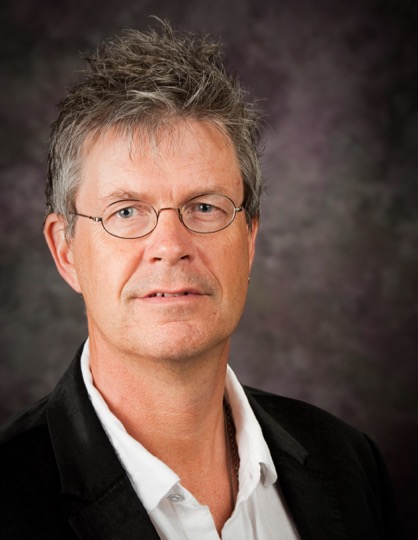
David Leigh is a Professor in Organic Chemistry at the University of Manchester , UK. He has held prestigious positions including the Sir Samuel Hall Chair (2014–present), Forbes Chair at the University of Edinburgh (2001–2012), and Chair of Synthetic Chemistry at the University of Warwick (1998–2001). His research focuses on synthetic molecular machines, supramolecular chemistry, and molecular knots. Fields of Scholarship : Synthetic molecular machines, Synthetic molecular knots and links, Supramolecular chemistry His work includes creating hydrogen-bonded molecular rotors , reversible rotary molecular motors , and artificial ribosome mimics . Article trends highlight nanotechnology , molecular engineering , and self-assembly advancements. Scientific Awards : Royal Society of Chemistry Pedler Award (2014), ERC Advanced Grant (2014), Bakerian Prize (2013), Tilden Prize (2010), Fellow of the Royal Society (2009), etc. Leigh has led groundbreaking projects funded by the European Research Council (2008, 2014) and held an EPSRC Senior Research Fellowship (2005–2010). His lab at the University of Manchester explores bottom-up molecular design and stimuli-responsive systems.
Associate Professor John Arron Stride is affiliated with the University of New South Wales (UNSW) through the School of Chemistry. His research focuses on neutron techniques, molecular and molecule-based materials, and novel magnetic interactions in the solid state. Research Interests Development of neutron instrumentation and methods Study of magnetic materials including spin liquids and nano-magnets Supramolecular chemistry and intermolecular forces Key Affiliations School of Chemistry, UNSW
Institute of Science and Technology AustriaAustria
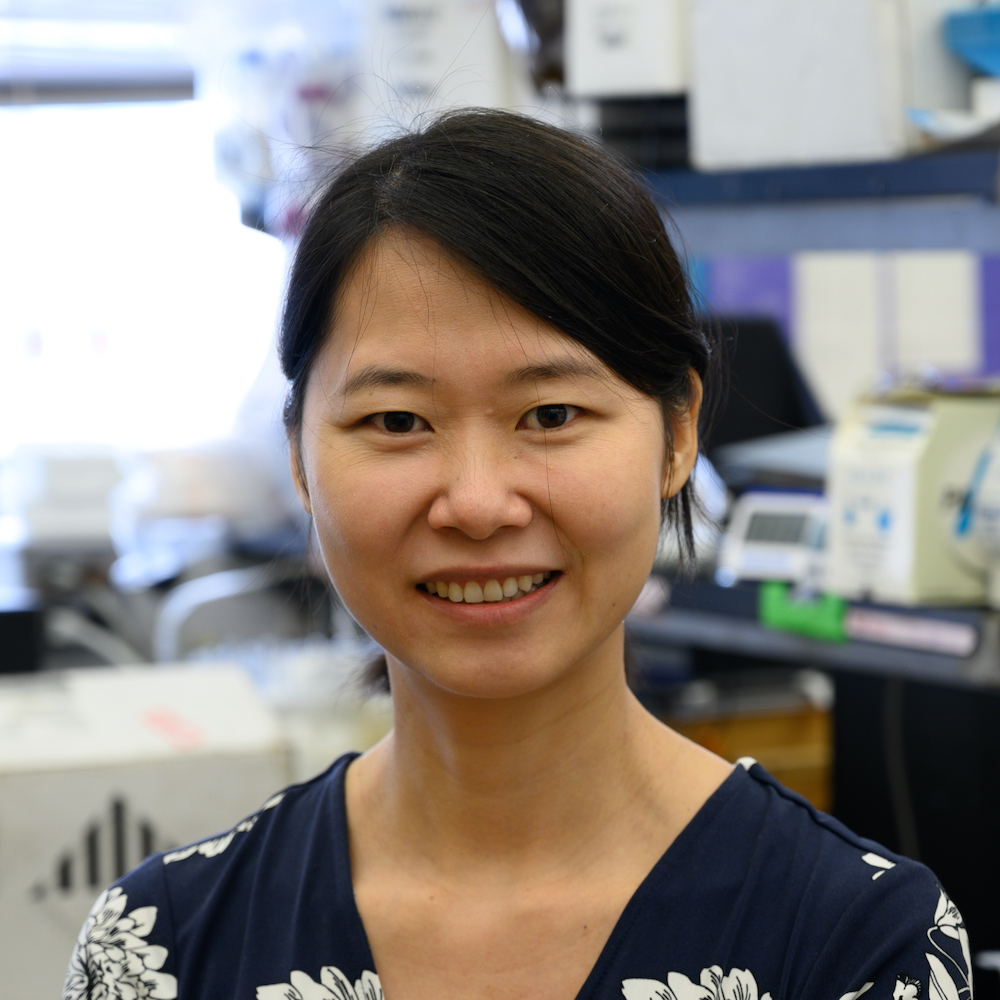
Latha Venkataraman is a Professor at the Institute of Science and Technology Austria (ISTA) since 2025, with prior tenure at Columbia University (2007-2025) including roles as Lawrence Gussman Professor of Applied Physics (2019-2025) and Vice Provost for Faculty Affairs (2019-2022). Her research focuses on molecular electronics , particularly single-molecule device physics , quantum transport , and metal-organic interfaces , with applications in organic electronics and catalysis . Key research themes include: Electronic, mechanical, and thermoelectric properties of atomic-scale devices Quantum interference effects in single-molecule junctions Electric field-driven chemical reactions and conductance modulation Development of gold-carbon and gold-sulfur contacts Her recent publications (2023-2025) reveal trends in topological molecular systems , spin-selective transport , and field-assisted chemical transformations , with collaborations spanning synthetic chemistry, theoretical physics, and materials science. Scientific accolades include the Alexander von Humboldt Research Award (2023) and ACS-PRF Grant (2008). Notable contributions include: Creation of single-molecule diodes and insulators via quantum interference First single-molecule potentiometer demonstration Elucidation of solvent effects on molecular junctions Advances in gold-thiol bond characterization Her lab trains students in applied physics and molecular engineering , with recent graduates like Liang Li and Woojung Lee . The group maintains strong ties with Columbia University and University of Science and Technology China .
John Straub is a Professor of Chemistry at Boston University, affiliated with the Chemistry Department. His research focuses on theoretical and computational studies of protein dynamics, thermodynamics, and phase transitions in molecular systems. He leads efforts to develop advanced algorithms for simulating phase changes in complex systems, including work supported by a National Science Foundation (NSF) grant (CH-1114676) to improve computational methods for phase transition modeling. His group has pioneered generalized simulated tempering and replica exchange algorithms, enabling more accurate simulations of phenomena like vapor-liquid phase changes and peptide aggregation. Dr. Straub also engages in science outreach through collaborations with the Pinhead Institute, supporting K-12 education programs and student internships. His research spans diverse topics such as cholesterol interactions in lipid membranes, amyloid fibril formation mechanisms, and the structural basis of protein aggregation in neurodegenerative diseases. His computational methods have been applied to study membrane proteins, lipid rafts, and the role of environmental factors in protein behavior. Key contributions include modeling amyloid-β aggregation pathways and investigating the impact of membrane composition on protein stability.
Bruno Alonso is a CNRS Research Director at the Institute of Chemistry of Montpellier (ICGM), a joint research unit of CNRS, University of Montpellier, and the National School of Chemistry of Montpellier (ENSCM). His work focuses on advanced materials chemistry with emphasis on nanostructured hybrid systems and NMR characterization of organic-inorganic interfaces. Education Engineer, National School of Chemistry of Paris (1993) Doctorate in Materials Science, University of Paris VI (1998) CNRS Research Fellow (2001) Accreditation to Supervise Research, University of Orléans (2006) Bachelor of Fine Arts, University of Paris 1-CNED (2017) Research Interests Dr. Alonso's research centers on hybrid organic-inorganic materials with expertise in sol-gel chemistry , nanoscale self-assembly , and advanced NMR spectroscopy . His group develops: Biomimetic nanocomposites using polysaccharides (chitin/cellulose) and oxides Zeolite systems with controlled heteroelement distribution and acidity Multinuclear NMR methods for probing molecular interactions at interfaces Applications span sustainable materials, energy storage, and catalytic systems with strong emphasis on green synthesis approaches. Publication Trends Analysis of recent publications (2021-2025) reveals dominant themes in zeolite chemistry (40% of output) and biomimetic nanomaterials (30%), with growing integration of computational methods (15%). His work increasingly employs machine learning for NMR prediction and solvent-free synthesis techniques , reflecting industry shifts toward sustainable materials. Collaborative publications span 12 countries with consistent focus on energy applications (hydrogen storage, thermal management) and advanced characterization. Research Infrastructure Based at Montpellier's Balard Research Chemistry Center, Dr. Alonso utilizes ICGM's state-of-the-art facilities including high-field NMR spectrometers and materials synthesis laboratories. His group maintains active collaborations with European institutions for X-ray diffraction, computational modeling, and gas-sensing applications.
David S. Corti is the Interim Jay and Cynthia Ihlenfeld Head of the Davidson School of Chemical Engineering at Purdue University, where he also serves as a Professor of Chemical Engineering and Director of Undergraduate Studies. His research focuses on thermophysical and kinetic properties of soft condensed-phase systems, including metastable liquids and colloidal dispersions. He employs theoretical and simulation techniques to study phenomena such as bubble nucleation and entropic force fields in colloidal systems. Corti holds a B.S. from the University of Pennsylvania (1991), an M.A. from Princeton University (1993), and a Ph.D. from Princeton (1997). His scientific contributions include advancements in understanding metastable liquid behavior, colloidal stability, and Hamaker constant estimation via atomic force microscopy. Notable honors include the NSF CAREER Award (2002), the 'Teaching for Tomorrow' Award (2002-2003), and University Faculty Scholar designation (2011-2016). Corti collaborates extensively, notably with Prof. Elias I. Franses on dispersion stability projects. His advising includes graduate student Betty Yung-Jih Yang. Research themes span bubble nucleation mechanisms, entropic control of colloids, and surfactant effects on nanoparticle stability. Corti's work bridges fundamental theory with industrial applications, addressing challenges in materials science and chemical engineering.
Amir Asadi is an Associate Professor in the Department of Engineering Technology and Industrial Distribution at Texas A&M University, holding the Corrie & Jim Furber '64 Faculty Fellow position. His research focuses on scalable manufacturing of multifunctional composites, structural energy systems, and advanced materials design. He leads the Polymer Composites Advanced Manufacturing (PCAM) Lab, which explores bottom-up fabrication techniques and additive manufacturing processes. Asadi holds a Ph.D. in Mechanical and Manufacturing Engineering from the University of Manitoba (2013), an M.S. in Mechanical Engineering from Iran University of Science & Technology (2006), and a B.S. in Mechanical Engineering from the same institution (2004). His work bridges molecular-level interactions with macroscale material performance, targeting applications in aerospace, e-mobility, and energy storage. Key research interests include structural battery/supercapacitor composites, additive manufacturing of polymer composites, and fast-rate manufacturing of thermoplastics. He has pioneered methods like supercritical CO₂-assisted atomization and cellulose nanocrystal-enabled interface tailoring to enhance composite performance. Asadi has received the NSF CAREER Award (2022) and has been an invited speaker at major conferences such as the Brazilian Conference on Composite Materials (2021) and Chalmers University’s “Materials for Tomorrow” event (2020). His lab’s innovations aim to revolutionize lightweight, multifunctional materials for industrial sectors. His research outputs include over 50 peer-reviewed articles, covering topics from nanocomposite interfaces to 3D-printed structural batteries. He collaborates with industry partners like the Air Force Research Lab and focuses on translating lab-scale innovations into scalable manufacturing solutions.
Steven Corcelli is a Professor and Interim Dean of the College of Science at the University of Notre Dame, with a joint appointment in the Department of Chemistry and Biochemistry. He has held key leadership roles including Department Chair (2022–2025) and Associate Dean for Interdisciplinary Studies (2019–2022). His research is centered in the Computational Molecular Science & Engineering Laboratory (CoMSEL), where he leads a team exploring molecular and biomolecular systems through advanced simulations. Education: Ph.D. in Chemistry, Yale University, 2001 Sc.B. in Chemistry, Brown University, 1997 His research interests bridge theoretical and experimental physical chemistry, with a strong emphasis on aqueous electrolytes, biomolecular binding, and vibrational spectroscopy . He employs GPU-accelerated molecular dynamics and enhanced sampling techniques to study ion transport in aqueous solutions and the mechanisms of protein-DNA and protein-protein interactions, particularly in immunological contexts such as T-cell receptor binding. His work has significant implications for battery technologies and drug design. The 15 most recent publications reveal a consistent focus on molecular simulation, biophysical chemistry, and spectroscopy , with recurring themes in DNA-ligand binding, ion solvation, and immune recognition. His group develops and applies novel computational methods, such as the coupled local mode approach, to interpret vibrational spectra with high accuracy. Scientific Awards: Thomas P. Madden Award (2020) Rev. Edmund P. Joyce, C.S.C. Award for Excellence in Undergraduate Teaching (2019, 2012) Fellow, American Chemical Society (2016) Sloan Research Fellowship (2009) NSF CAREER Award (2009) Camille and Henry Dreyfus New Faculty Award (2005) Kavli Fellow, National Academies of Science (2011) Corcelli has advised numerous graduate students and postdoctoral researchers, many of whom have gone on to successful careers in academia and industry. His lab collaborates extensively with experimental groups, particularly in spectroscopy and immunology. He has secured substantial research funding and published over 85 peer-reviewed articles. His lab, CoMSEL, benefits from high-performance computing resources through the Center for Research Computing at Notre Dame, enabling large-scale simulations of complex molecular systems. Research Labs and Teams: The Computational Molecular Science & Engineering Laboratory (CoMSEL) is a multidisciplinary research group that combines theoretical chemistry, biophysics, and materials science. The team includes graduate students and staff scientists working on projects ranging from fundamental solvation dynamics to applied biomedical simulations.
Professor Christer B. Aakeröy is the Taylor Chair University Distinguished Professor in the Department of Chemistry at Kansas State University. He has served as Head of the Department and has been at K-State since 1996. His research focuses on crystal engineering, supramolecular chemistry, and pharmaceutical solid-state properties. M.Sc., Uppsala University, Sweden (1985) D.Phil., University of Sussex, UK (1990) Dr. Aakeröy’s research explores non-covalent interactions in crystal engineering to design functional solid-state materials. His work leverages hydrogen and halogen bonding to assemble APIs into co-crystals, enhancing solubility and stability for pharmaceutical applications. He also investigates supramolecular architectures for nonlinear optical materials and mechanochemical synthesis methods. Recent publications highlight his focus on halogen bond donor preferences, chalcogen bonding, and computational tools for co-crystal design. His group’s work spans from fundamental crystal engineering to applied pharmaceutical solutions. Higuchi Award (2016) British Crystallographic Association Prize Lecture (2016) Presidential Award for Outstanding Undergraduate Teaching (2011) Making a Difference Award (2006) Segebrecht Distinguished Faculty Achievement Award (2003) His research group includes graduate and undergraduate researchers, and he has contributed to international scientific boards, including the Cambridge Crystallographic Data Centre. Collaborations, such as with Dr. Silvia Giordani, explore photochromic spiropyrans for chemosensory devices.
Marinka Zitnik is an Associate Professor of Biomedical Informatics at Harvard Medical School, Associate Faculty at the Kempner Institute for the Study of Natural and Artificial Intelligence, and Associate Member at the Broad Institute of MIT and Harvard. Her research focuses on advancing artificial intelligence for medicine and science, including AI-driven drug design, genomic medicine, and multimodal data fusion. She leads initiatives such as the Therapeutics Data Commons and the International AI4Science initiative, emphasizing AI's role in scientific discovery and personalized healthcare. Research Interests: Dr. Zitnik's work integrates AI with biomedical challenges, developing geometric deep learning and multi-scale models to address therapeutic design, disease prediction, and precision medicine. Her lab pioneers approaches for contextualized AI systems and large pretrained models to analyze genetic, cellular, and molecular data for clinical insights. Labs/Teams: Zitnik Lab (focusing on AI in Biomedicine) and collaborations across institutions like the Broad Institute and Harvard Data Science Initiative. She also contributes to global initiatives like the AI4Science network.
Dr. Xiaoli Li is an Associate Professor in the Department of Chemical and Petroleum Engineering at the University of Kansas. Her research laboratory (PVT Lab) focuses on complex fluid behavior in energy systems, with particular emphasis on phase equilibria, gas transport phenomena, and enhanced hydrocarbon recovery techniques. She maintains active research programs in unconventional reservoirs, CO 2 geostorage, hydrate technology, and nanoscale fluid dynamics. Her core research domains include: Confined phase behavior: Thermodynamics of fluids in nanoporous media Gas transport mechanisms: Rarefied flow and apparent permeability modeling Hydrate science: Structure stability and phase boundaries CO 2 utilization: Enhanced oil recovery and geological sequestration Asphaltene dynamics: Precipitation mechanisms in EOR processes Dr. Li teaches across the petroleum engineering curriculum, including core courses: Chemical Engineering Thermodynamics (C&PE 221), Reservoir Engineering (C&PE 327), Well Logging (C&PE 528), and Petroleum Engineering Design (C&PE 628). Her instructional portfolio emphasizes fundamental thermodynamics, reservoir characterization, and practical field applications. Her publication record (35+ articles) demonstrates consistent focus on reservoir thermodynamics and transport phenomena, with recent emphasis on: CO 2 -oil interactions (2020-2023), gas hydrate stability (2020-2022), shale gas transport (2019-2021), and equation of state modifications for confined fluids (2018-2020). Research methodologies combine molecular simulations, experimental studies, and novel thermodynamic modeling approaches.
Jaewon Lee is an Assistant Professor in the Department of Mechanical and Aerospace Engineering at the University of Missouri. He holds a PhD in Chemical Engineering from Purdue University and BS/MS degrees in Chemical Engineering from Yonsei University. His research focuses on understanding self-assembly mechanisms and crystal growth dynamics, with applications in photonics, energy storage, and biomedical technologies. Education: PhD in Chemical Engineering, Purdue University MS in Chemical Engineering, Yonsei University BS in Chemical Engineering, Yonsei University Research Interests: Jaewon Lee’s work explores the interplay between colloidal forces, nanoparticle dynamics, and material properties. His studies bridge fundamental nanotechnology with practical applications, including thermoelectric materials, energy storage systems, and biocompatible nanoparticles for diagnostics. Key areas include defect engineering in nanocrystals, phase-change material encapsulation, and real-time characterization of self-assembly processes. Awards: Excellent Academic Record, Yonsei University Outstanding Graduate Student in Cancer Research, SIRG Outstanding Postdoctoral Performance, Pacific Northwest National Lab Grants & Collaborations: Lee secured a $1.1M grant ($800K NSF + $300K university) to develop real-time microscale reaction visualization tools. He also collaborates with Samsung Advanced Institute of Technology and the Korea Institute of Chemical Engineers. Labs & Teams: His lab integrates advanced microscopy, computational modeling, and materials synthesis to address challenges in nanotechnology and energy systems. Research is conducted at the interface of chemical engineering and mechanical engineering disciplines.
Huaiying Zhang is an Assistant Professor in the Department of Biological Sciences at Carnegie Mellon University, part of the Mellon College of Science. His research focuses on the role of biomolecular condensates in cellular functions and cancer progression, particularly investigating phase transitions in telomere maintenance and cancer cell immortality. He holds a Ph.D. from McGill University and completed postdoctoral research at Dartmouth College, Princeton University, and the University of Pennsylvania. Research interests include engineering synthetic organelles, developing optogenetic tools to manipulate phase separation in live cells, and targeting phase transitions for cancer therapy. His work bridges biophysics, cell biology, and synthetic biology to address fundamental questions in nuclear organization and disease mechanisms. Education: Ph.D., McGill University Postdoctoral Fellowships: Dartmouth College, Princeton University, University of Pennsylvania Publications highlight advances in understanding telomere clustering in cancer cells, nuclear body formation, and applications of phase separation in therapeutic strategies. Collaborative projects emphasize interdisciplinary approaches, combining experimental and theoretical methods. Lab activities focus on biomolecular condensates' material properties, their roles in genomic processes, and translational applications in cancer treatment. The lab actively seeks students and researchers interested in cellular biophysics and disease biology.
Matteo Strozzi is an Associate Professor at the Department of Engineering Sciences and Methods, University of Modena and Reggio Emilia. His research focuses on mechanical vibrations, carbon nanotube dynamics, and nonlinear structural mechanics. He specializes in shell theories, nonlocal elasticity models, and advanced diagnostics for mechanical systems such as bearings and gears. Key research areas include vibration analysis of nanostructures, experimental validation of models, and the application of signal processing techniques (e.g., Hjorth parameters) for condition monitoring. His work addresses challenges in both theoretical and applied mechanics, with contributions to renewable energy systems (wind turbines) and additive manufacturing (3D-printed materials). Publications highlight advancements in understanding energy localization in carbon nanotubes, nonlinear resonance interactions, and the development of shell models for nanoscale structures. His research bridges continuum mechanics with modern engineering applications, emphasizing both fundamental science and industrial relevance.
Amanda Marciel is the William Marsh Rice Trustee Assistant Professor of Chemical and Biomolecular Engineering at Rice University, with joint appointments in Chemistry and Applied Physics. She joined Rice in 2019, following postdoctoral work at The University of Chicago (2015-2018) and a Ph.D. in Biophysics from the University of Illinois at Urbana-Champaign (2015), and a B.S. in Chemistry from UC Berkeley (2008). Her research focuses on designing stimuli-responsive materials through understanding charged polymer behavior in solutions and at interfaces. Key areas include pH-responsive polyelectrolyte brushes, polyampholyte phase behavior mimicking intrinsically disordered proteins, and charged polymers at fluid-fluid interfaces for applications in energy, biomedicine, and environmental engineering. Techniques used include precision polymer synthesis, light scattering, interfacial rheology, and advanced imaging. Marciel has published >30 articles on soft matter physics and supervised 5 graduate students. Notable awards include the NSF CAREER Award and ACS PRF Doctoral New Investigator grant. Her work bridges polymer chemistry, materials science, and biophysics, with a focus on interdisciplinary innovation.