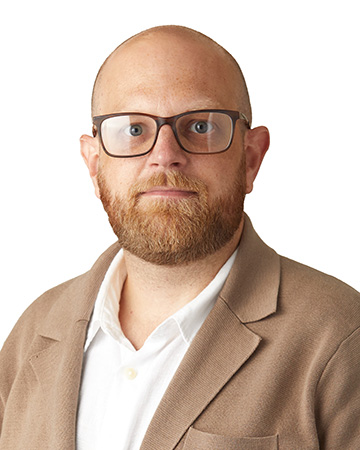
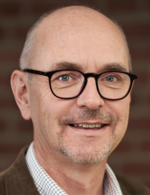
Professor Mohammad FARD is a faculty member at RMIT University's School of Engineering, specializing in Mechanical Engineering and Intelligent Systems. He leads research in autonomous vehicles, crash safety, and driver monitoring using AI. His industry experience includes six years at Nissan Technical Centre, focusing on vehicle body design. He holds a PhD from Tohoku University and has collaborated across Engineering, Health, and Science disciplines, achieving international media coverage for work on driver drowsiness and road safety. Research Interests: Autonomous Vehicles Advanced Crash Safety Driver State Monitoring AI in Noise/Vibration Human Factors/Ergonomics Teaching & Projects: Teaches Advanced CAE, Vehicle NVH, and research supervision in areas like crash simulation and vibration control. Current projects include Formula One safety barriers and driver education for autonomous vehicles. Awards & Labs: No awards listed. Active in cross-disciplinary teams and labs addressing automotive innovation and safety.
Yang P. Liu is an Assistant Professor at Carnegie Mellon University 's Department of Computer Science . He received his PhD from Stanford University under the supervision of Aaron Sidford and previously studied at MIT . Fields of Interest : Graph Algorithms, Optimization, High-Dimensional Geometry, Additive Combinatorics, Theoretical Computer Science. His research focuses on algorithmic design and analysis for graph problems, optimization, and combinatorics, with applications in machine learning and complexity theory. Recent work includes advancements in parallel repetition games , combinatorial lines , and dynamic graph algorithms . In 2024, his research spanned FOCS , STOC , and RANDOM conferences, addressing problems in k-CSPs , min-cost flow , and hypergraph sparsification . Earlier contributions (2023) included deterministic flow algorithms and spectral hypergraph techniques. Scientific Awards : NDSEG Fellowship (2018-2021), Google PhD Fellowship (2022-2023), FOCS Best Paper (2022), STOC Best Student Paper (2022), FOCS Best Student Paper (2021). He teaches CS 15-759 , a graduate course on convex optimization theory and applications, covering gradient descent, interior point methods, and algorithmic sparsification techniques.
Dr. Edyta Chlebowska is an Assistant Professor at the Cyprian Norwid Research Center, John Paul II Catholic University of Lublin. Specializing in the visual art and literary legacy of Cyprian Norwid, she explores intersections between Polish Romanticism, art history, and cultural studies. Her work extends to album art analysis and interdisciplinary connections with music (e.g., Pink Floyd, Czesław Niemen). Her research focuses on Norwid's self-portraits, eschatological themes in his drawings, and comparative studies with 19th-century Warsaw painting. She reconstructs lost artworks, documents private collections (e.g., Konstancja Górska, Victor Gomulicki), and examines Norwid's reception in Florence and Odessa. Key projects include translating Studia Norwidiana and critical editing of Norwid's complete works. As editor-in-chief of multiple On Cyprian Norwid. Studies and Essays volumes and organizer of conferences like Niemen Non Stop and Colloquia Norwidiana , she bridges academic rigor with public engagement. Her publications span peer-reviewed books, journal articles, and popular science pieces, emphasizing Norwid's unpublished works and symbolic programs.
Stefano NASINI is an Associate Professor at the University of Lille 3, specializing in Quantitative Methods within the Economics and Mathematics Sciences. He holds a HDR (Habilitation à Diriger des Recherches) from the University of Lille 3 (2021), a Ph.D. in Statistics and Operations Research from the Polytechnic University of Catalonia (2015), and a Master in Statistics (2011). His research focuses on optimization, complex networks, statistical inference, and microeconomic applications. He has held academic positions including a post-doctoral role at IESE Business School (2014–2016) and a visiting researcher role at the University of Lisbon (2014). His work spans scheduling optimization, network analysis, financial contagion modeling, and energy system planning. Key contributions include specialized algorithms for large-scale optimization problems and frameworks for decentralized portfolio management. He is a member of the LEM research group and teaches courses in optimization, econometrics, and social network analysis at the Grande École and MSc levels. Publications highlight interdisciplinary applications, including network-based diffusion models, multi-market financial strategies, and dynamic choice analysis. His research bridges theoretical advancements in operations research with practical challenges in economics, energy, and transportation systems. No scientific awards are explicitly listed in the provided materials. His advising roles and grants are not detailed here, but his extensive publication record reflects active collaboration within academic and applied domains.
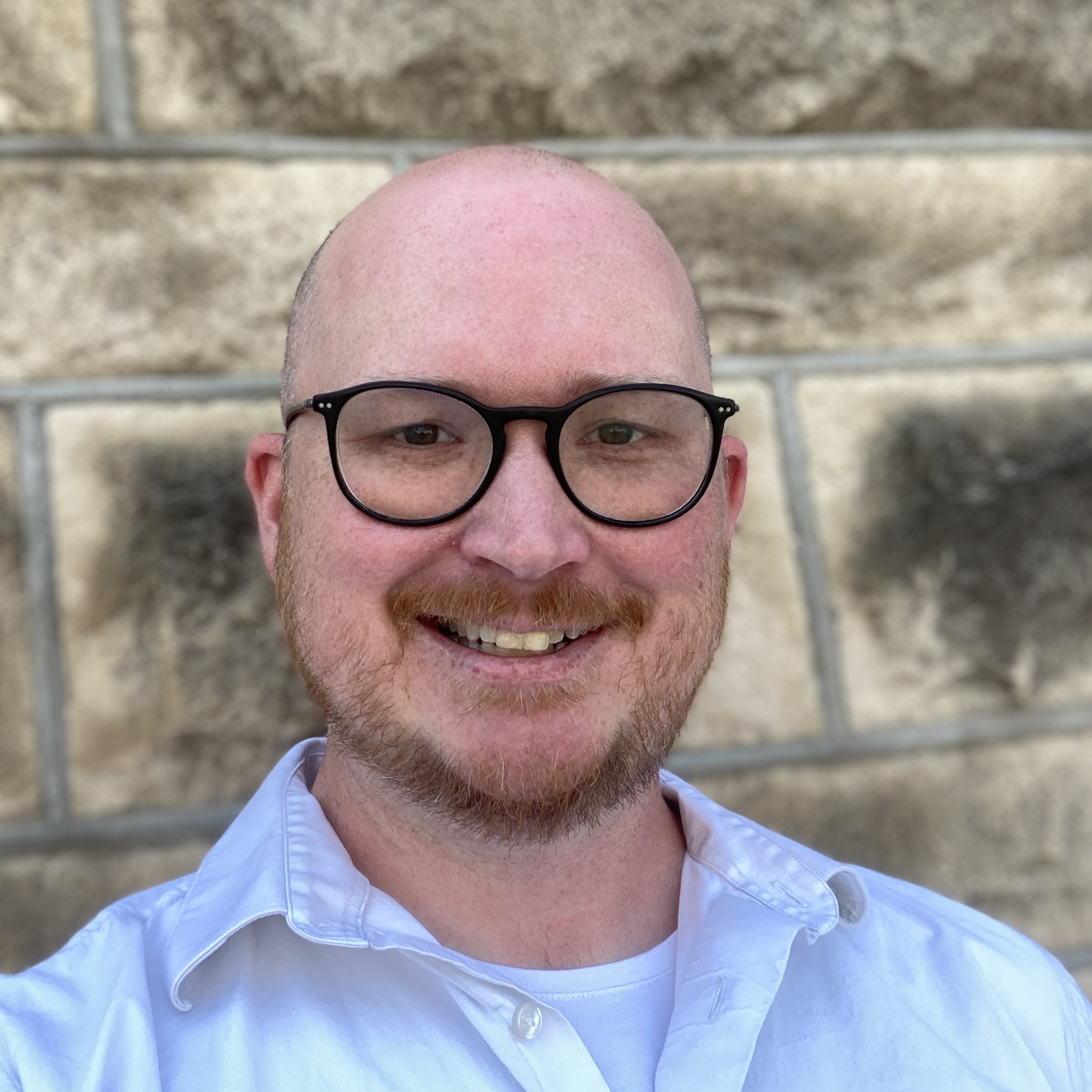
Andreas Eklund is an Assistant Professor in the Marketing Department at the University of Wisconsin-La Crosse (UWL). He holds a Ph.D. in Marketing from Linnaeus University (Sweden), specializing in consumer psychology, and a Master’s degree from Lund University (Sweden). His research focuses on sensory marketing, branding, and service-dominant logic, exploring how sensory cues influence consumer behavior and brand experiences. He has taught courses on branding, consumer behavior, and marketing strategy at universities in Sweden, Norway, and the U.S. Education: Ph.D. in Marketing (Consumer Psychology), Linnaeus University, Sweden M.Sc. in Marketing, Lund University, Sweden Research Interests: Sensory marketing and its intersection with branding Multi-sensory consumer experiences in automotive and retail environments Experiential marketing and value proposition design Congruency theories in brand-consumer relationships Teaching: Recent courses include MKT351 (Principles of Marketing), MKT362 (Consumer Behavior), and MBA755 (Advanced Marketing) Focuses on experiential learning and real-world marketing applications Professional Background: Prior career as a chef informs his sensory marketing research Experience in Scandinavian universities before joining UWL Personal Interests: Outdoor activities (disc golf, ice skating) Swedish salt licorice enthusiast Manchester United football fan
Daniel A. Spielman is a Sterling Professor of Computer Science, Statistics & Data Science, and Mathematics at Yale University. He serves as the inaugural James A. Attwood Director of the Institute for Foundations of Data Science (FDS) and was previously co-Director of the Yale Institute for Network Science (YINS). He is also a member of TILOS, the NSF Institute for Learning-Enabled Optimization at Scale. His research interests span Spectral Graph Theory, Algebraic Graph Theory, Laplacian Matrices, Expander Graphs, and Random Walks on Graphs. Spielman has made fundamental contributions to understanding the mathematical foundations of data science, including work on smoothed analysis of algorithms, spectral sparsification, and solutions to the Kadison-Singer problem. Spielman's publications demonstrate a consistent focus on developing efficient algorithms with strong theoretical foundations. His work bridges pure mathematics, theoretical computer science, and practical applications in network analysis and machine learning. His research has evolved from foundational work on smoothed analysis to recent contributions in experimental design using discrepancy theory. His scientific honors include: Nevanlinna Prize for contributions to mathematical aspects of computer science Two Gödel Prizes (2008 and 2015) for outstanding papers in theoretical computer science MacArthur Fellowship ('Genius Grant') Simons Investigator award Membership in the National Academy of Sciences and American Academy of Arts and Sciences Spielman has advised numerous PhD students who have gone on to prominent positions in academia and industry. His teaching includes advanced courses in Spectral Graph Theory and Computation and Optimization. He has developed important software packages like Laplacians.jl for solving Laplacian linear equations and related problems.
Prof. Dr. Michael Ulbrich is a full professor and Chair of Mathematical Optimization at the Technical University of Munich (TUM), within the School of Computation, Information and Technology. He has held this position since 2006 and previously served as Dean of Studies (2007–2010) and Vice Dean of the Faculty of Mathematics (2012–2015). His research focuses on nonlinear optimization, optimal control, and numerical analysis, with applications in fluid dynamics, shape optimization, and PDE-constrained systems. He leads projects in the DFG SPP 1962 and IGDK 1754, and has received prestigious awards including the Howard Rosenbrock Prize (2015) and the Doctoral Award from the TUM Association of Friends (1996). Ulbrich is Editor-in-Chief of Optimization and Engineering and contributes to multiple journals. His work bridges theoretical foundations and practical applications, including CO2 sequestration, fluid-structure interaction, and distributed optimization algorithms. Education: PhD (1996), Habilitation (2002) in Mathematics at TUM. Research stays at Rice University (USA) under DFG funding. Research Areas: Semismooth Newton methods, PDE-constrained optimization, optimal control of Navier-Stokes equations, and distributed parameter systems. Awards: Rosenbrock Prize, Teaching Excellence Awards, and recognition for doctoral work. Leadership Roles: Department Head of Mathematics (2022–), Member of TUM Senate (2019–2022), and Co-Chair of GAMM 2018. Ulbrich has authored influential textbooks like Semismooth Newton Methods for Variational Inequalities and Nichtlineare Optimierung . His recent projects include OptiGeoS (2024–2026) and collaborations on nonsmooth optimization and stochastic algorithms. His academic contributions span over 100 publications, emphasizing both algorithmic innovation and rigorous mathematical analysis.
Mei Mei Rado is an Assistant Professor at Bard Graduate Center, specializing in textile and dress history with a focus on China and France (18th–20th centuries). Her work connects global networks to local cultural systems through material analysis and cross-cultural interpretation. Education: PhD, Bard Graduate Center MA, University of Chicago BA, Nanjing University Research Interests: She explores intercultural textile exchanges, particularly European-Chinese interactions, rococo style diffusion, and Qing court arts. Her forthcoming book The Empire’s New Cloth (Yale, 2025) examines European textiles in Qing imperial contexts. Publications: Recent works include analyses of 18th-century French drapery, Qing cosmopolitanism through Japanese screens, and lamé textiles in modern fashion. Her research spans material culture, cross-cultural aesthetics, and historical networks. Curatorial Practice: Formerly Associate Curator at LACMA, she pioneered modern Chinese fashion collections. Collaborations with European/American institutions continue through her current projects on Edo-period textiles and light in fashion history.
Kory Beighle is an Assistant Professor in the Department of Architecture at Kansas State University's College of Architecture, Planning and Design. He joined the faculty in 2022, contributing to design studios, architectural history lectures, and theory seminars. Prior to this, he served as the inaugural Park Creative Arts Professor at Miami University in the Department of Architecture and Interior Design. His educational background includes a PhD in Architecture from the University of Cincinnati (2020), a professional Master of Architecture, and a B.S. in Architecture, all from the same institution. His doctoral research focused on 20th and 21st century architectural theory, particularly the concept of disciplinarity and the role of architectural tools, with a secondary focus on theories of visuality. His dissertation, Architectural Alchemy: Collaging Disciplinarity in the Kaleidoscopic , critically analyzed the work of Charles and Ray Eames. Kory's research and teaching are deeply interdisciplinary, exploring the intersections of design, pedagogy, tools, and spatial narrative within a kaleidoscopic paradigm. He aims to help designers and builders integrate thinking, making, and being in their practice. His work has been presented at national and international conferences, art exhibitions, film competitions, and academic journals. While no specific publications or research projects are listed, his scholarly focus suggests strong engagement with theoretical and methodological innovations in architecture. He has over a decade of teaching experience across diverse academic contexts, including foundational courses and graduate thesis studios in interior design, architectural engineering, and architecture. His approach emphasizes critical inquiry and experimental methodologies, particularly through the lens of film and architecture. Kory was born in a small town in rural Ohio and maintains an active role in architectural education and scholarship. He is affiliated with the Department of Architecture at Kansas State University, where he contributes to both pedagogy and research.
Professor Gene Bawden is a communication designer and Head of the Department of Design at Monash University’s Faculty of Art, Design and Architecture (MADA). He holds a PhD in Design focusing on Australian domestic spaces and cultural identity. His work bridges design practice and research, emphasizing gender equity in urban environments through collaborative projects like the XYX Lab. Key contributions include developing design thinking curricula, leading the D-Lab’s material tools for spatial inquiry, and co-designing safety initiatives for public transport and urban spaces. Education: PhD in Design (2015), Monash University, specializing in 'Comfort and Judgement: Nineteenth Century Advice Manuals and the Scripting of Australian Identity'. Research Interests: Gendered spatial practices, design thinking methodologies, material and visual narratives of belonging, and co-design strategies for mitigating urban gender inequity. His projects include the 'Safer Cities Crowd Mapping' initiative and the WHO-guided 'Design for Impact' toolkit. Awards: Recipient of the 2018 Dean’s Award for Research Impact, 2020 Good Design Award for 'Yours, Mine, Ours', and multiple recognitions for urban design projects addressing gender safety. Advising: Graduate supervisor for design research students. Grants: Principal investigator on projects totaling over AUD 2M, including the 'Gender-sensitive training for safe communities' and 'Co-designing health futures' initiatives. Labs/Teams: Founding director of D-Lab and core member of XYX Lab, which focus on design-driven solutions for gender equity in urban environments. Notable collaborations include the 'HyperSext City' exhibition and 'Keep Running' public safety campaigns.
Freek Persyn is a Full Professor of Architecture and Urban Transformation at ETH Zurich, where he has held the NEWROPE Professorship since 2019. He leads the Design in Dialogue Lab within the Department of Architecture, focusing on spatial design and social innovation. Persyn co-founded the spatial planning firm 51N4E in 1998, which specializes in urban and social transformation across Europe. Persyn's research centers on the concept of 'Design in Dialogue,' which emphasizes transdisciplinary collaboration to address the complexity of contemporary urban challenges. His work explores innovative solutions for European urban spaces, aiming to rediscover Europe as a habitable terrain and shared living space. Key research areas include urban design, spatial planning, social transformation, and the intersection of architecture with social innovation. The NEWROPE initiative seeks to examine diverse urban practices that shape Europe, fostering radical openness and learning from various urban practitioners through transdisciplinary projects. His scholarly output demonstrates a strong focus on reimagining urban spaces through dialogue-based approaches. Persyn's work examines European urban transformation, rural-urban connections, industrial heritage sites, and innovative design methodologies. Key themes across his publications include sustainable approaches to building, the social dimensions of space, and transformative design processes that challenge conventional architectural practices. His research often bridges theoretical frameworks with practical design applications, emphasizing participatory methods and material investigations. Persyn delivered his inaugural lecture at ETH Zurich on October 20, 2021, titled 'Wouldn't it be nice if architects started dreaming about building less?' The lecture explored his professional background, inspiration, and future plans for the NEWROPE Chair. The event featured collective sensing exercises developed by students of Studio Seebach with theater and dance maker Manuela Runge, highlighting his commitment to experiential and collaborative approaches to architectural education and practice. The Design in Dialogue Lab serves as a hub for exploring innovative approaches to urban transformation through projects across European cities including Brussels, Piraeus, Basel, and Plovdiv. Current initiatives examine topics such as urban spaces for more than human communities, collaborative processes, design approaches, and hybrid applications for European urban environments. Persyn's work consistently emphasizes transdisciplinary collaboration, bringing together spatial and strategic knowledge with other disciplines and urban practitioners to address complex contemporary challenges.
Prof. Dr. Jing Wang is a Full Professor at the Department of Civil, Environmental and Geomatic Engineering at ETH Zürich. His research focuses on air pollution control, nanoparticle transport, and environmental health and safety (EHS) impacts of nanomaterials. He has held roles including Assistant Professor at ETH Zürich (2010–present), Research Assistant Professor at the University of Minnesota (2007–2010), and postdoctoral associate in Particle Technology (2005–2007). Education: Bachelor’s in Engineering (2000) – Tsinghua University, Beijing Master’s in Computer Sciences (2003) – University of Minnesota PhD in Aerospace Engineering (2005) – University of Minnesota Research Interests: Air/water filtration technologies Nanoparticle emission reduction and measurement Multiphase flow mechanics Environmental impacts of nanomaterials Collaborations: Industrial partnerships include 3M, BASF, Boeing, Intel, Samsung, and others in nanoparticle measurement and filtration solutions. Honors: 2011 Smoluchowski Award (Association for Aerosol Research) 2006 ‘Best Dissertation’ Award (University of Minnesota) 2004 Doctoral Dissertation Fellowship Teaching: Courses include Air Pollution Control, Environmental Engineering Seminars, and Excursions for Environmental Engineers. Labs/Teams: Leads the Particle Technology Lab and collaborates with the Institute of Environmental Engineering at ETH Zürich.
Anders Rantzer is a Professor of Automatic Control at the Department of Control Engineering, Faculty of Engineering, Lund University, Sweden. He has held visiting positions at Caltech (2004–2005) and the University of Minnesota (2015–2016) as the Taylor Family Distinguished Visiting Professor. His academic journey began with a PhD from KTH Stockholm in 1991, followed by a postdoc at the Institute for Mathematics and its Applications (IMA), University of Minnesota. His research interests center on modeling, analysis, and synthesis of control systems , with a strong focus on scalability, adaptation, and applications in energy networks . He is particularly known for foundational work in positive systems and integral quadratic constraints (IQCs) . These theoretical frameworks are critical in analyzing stability and robustness of large-scale interconnected systems. His work bridges mathematical rigor with practical engineering applications, especially in sustainable energy and networked systems. The recent publications and lecture materials reflect a consistent trajectory in scalable and robust control, optimization, and distributed systems. Themes such as large-scale convex optimization , nonlinear and stochastic control , and network dynamics dominate his scholarly output, indicating a sustained commitment to advancing control theory for complex, real-world systems. Scientific honors include: Fellow of IEEE Member of the Royal Swedish Academy of Engineering Sciences (IVA) Chairman of the Swedish Scientific Council for Natural and Engineering Sciences Chairman of the Royal Physiographic Society of Lund Rantzer has supervised numerous students and contributed extensively to academic leadership and education. He has been involved in major national and international research initiatives such as WASP (Wallenberg AI, Autonomous Systems and Software Program) and ELLIIT. His work includes developing educational tools and courses in control, optimization, and machine learning. He leads and contributes to research projects on autonomous systems, cloud control, and smart energy networks. He is affiliated with the Control Lab at LTH and participates in collaborative efforts such as the Nordic University Hub on Industrial Internet of Things (HI2OT). His work integrates theoretical advances with practical implementations in robotics, biomedical systems, and industrial automation.
Dr. Iro Armeni is Assistant Professor of Civil and Environmental Engineering at Stanford University, leading the Gradient Spaces research group. Her interdisciplinary research bridges architecture, civil engineering, and computer vision to develop data-driven methods for sustainable and adaptive built environments. Professor Armeni's work focuses on creating gradient environments that blend physical and digital realities through mixed reality technologies. She develops computational methods for 3D scene understanding, generative design, and adaptive spaces that respond to human needs. Her research integrates AI with architectural design to improve sustainability, inclusivity, and reusability of built spaces. Current projects include 3D scene graph representations, automated BIM modeling from visual data, and neuro-symbolic approaches for design optimization. She has developed tools like HoloLabel (AR semantic labeling) and SemSpray (VR annotation) for construction information management. Professor Armeni holds a PhD from Stanford University, supported by a Google PhD Fellowship, and completed postdoctoral research at ETH Zurich with an ETH Fellowship. She teaches courses on Computer Vision for the Built Environment and Mixed Reality applications.
Dominik Schörkhuber is a PreDoc Researcher at the Vienna University of Technology (TU Wien) in the Computer Vision department. With a background in Informatics (BSc, Dipl.-Ing.), he focuses on computer vision applications for autonomous driving, robotics, and human-machine interaction. His work spans driver action recognition, pedestrian prediction, and adaptive lighting systems. Current projects: Empathic Vehicle (2024–2026), SyntheticCabin (2021–2025), SmartProtect (2020–2025) Research themes: Video transformers, synthetic data transfer learning, multi-task learning, and sensor-lighting integration Specializes in 3D sensing, nighttime driving analysis, and mobile video creation tools