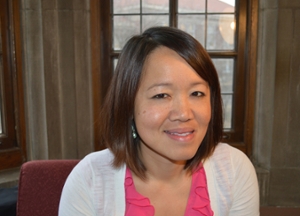
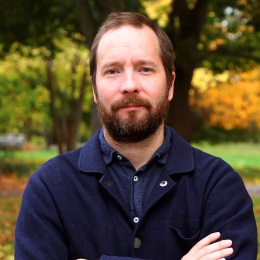
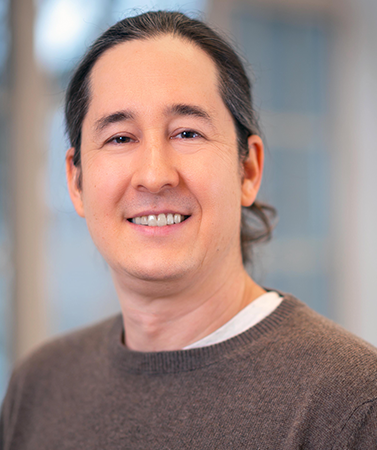
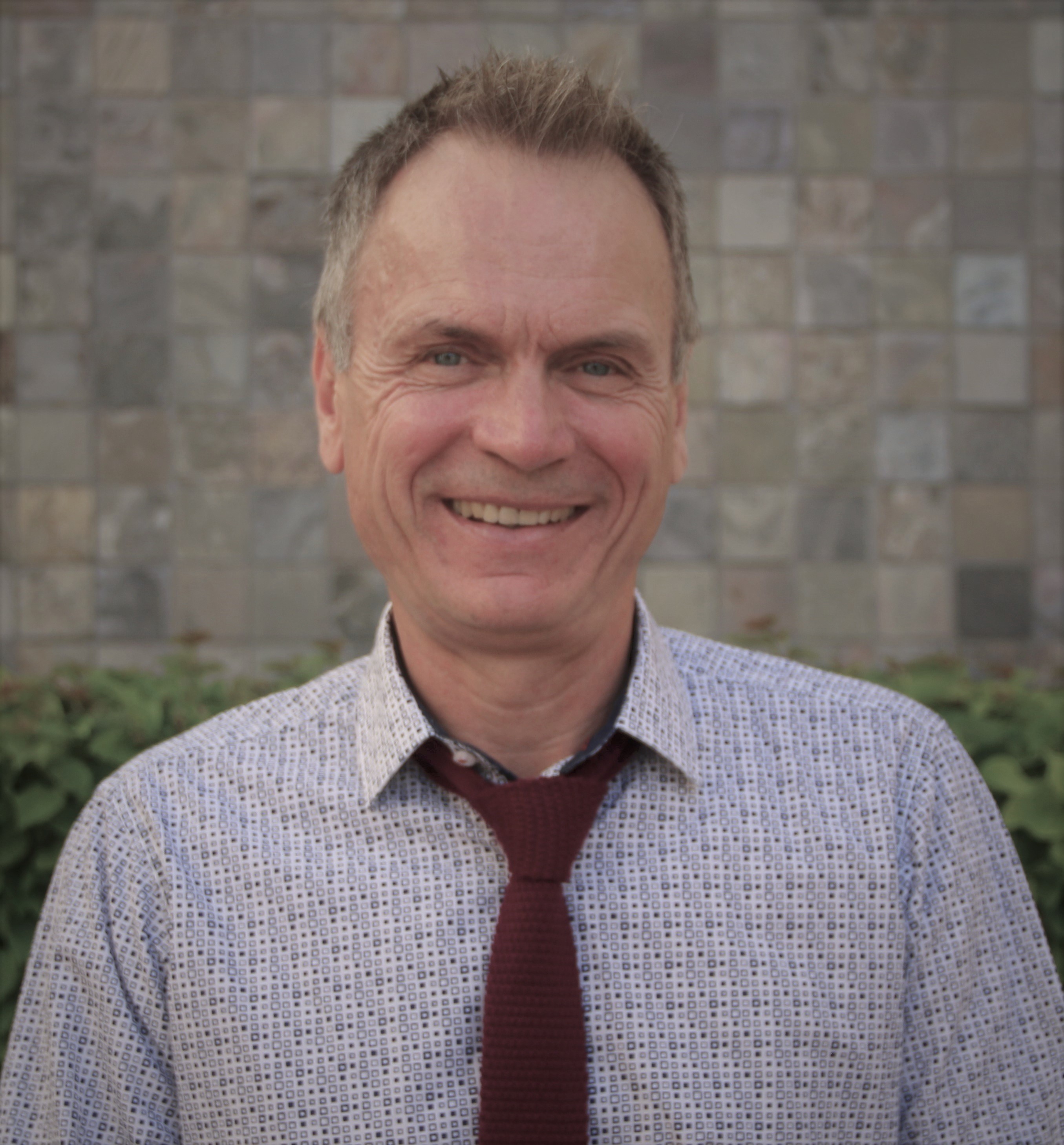
Sam Yam is a Professor and Head of the Management & Organisation Department at the National University of Singapore's (NUS) Business School. He holds the Jardine Cycle & Carriage Professorship and serves as Associate Dean. His research spans strategy, organisational behaviour, applied psychology, ethics, and human-technology interaction. Yam has contributed to over 125 publications, focusing on AI ethics, workplace dynamics, and cross-cultural management. He explores topics like robot replacement effects, abusive supervision, and financial anxiety's intergenerational impacts. His work bridges psychology, ethics, and organisational theory, addressing contemporary challenges in automation, leadership, and human-AI collaboration. Appointments: Head of Management & Organisation (2022–present), Joint Appointment in Arts & Social Sciences (2023–present). Key Research Themes: Future of work, human-technology interaction, ethical leadership, and Machiavellian dynamics. Notable Contributions: Multimodal ADHD diagnostics, leader biases toward robot-using employees, and cultural impacts on team performance. Yam’s interdisciplinary approach integrates psychology, technology, and management, addressing societal issues like AI ethics and workplace automation. His research frequently appears in top journals like the Journal of Management and Annual Review of Organizational Psychology .
Monica Trieu is an Associate Professor in the School of Interdisciplinary Studies at Purdue University, where she focuses on the intersection of race, ethnicity, and immigration with particular emphasis on children of immigrants. Her scholarly work bridges sociology and Asian American studies through critical examination of identity formation and systemic inequalities. Education: Ph.D. in Sociology, University of California, Irvine (Asian American Studies emphasis) Master's in Sociology, University of California, Irvine Research Focus: Professor Trieu's expertise spans International Migration, Post-1960s Immigrants and Refugees, 1.5 and Second-Generation Identity, Transnational Ties, and Historical/Contemporary Asian American Experiences. Her scholarship critically analyzes internalized racism, regional identity formation (particularly in the Midwest), and the psychological impacts of anti-Asian violence during the pandemic. She employs intersectional frameworks to explore how refugee experiences, cultural adaptation, and transnational connections shape ethnic identity among Southeast Asian Americans and other immigrant communities. Publication Trends: Her 2013-2024 publications reveal evolving engagement with contemporary crises—from pandemic-induced mental health challenges and anti-Asian violence to structural invisibility of Midwest Asian American communities. While maintaining core focus on identity negotiation among second-generation immigrants, her recent work expands into comparative analyses of Asian American/Latina/o transnational patterns and refugee resettlement experiences, demonstrating methodological versatility across ethnographic, survey, and media analysis approaches. Professional Impact: As author of Identity Construction among Chinese-Vietnamese Americans: Being, Becoming, and Belonging (2009) and publications in Journal of Ethnic and Migration Studies and Journal of Asian American Studies , Trieu has established herself as a key voice in Midwest Asian American scholarship. Her research directly informs institutional responses to rising anti-Asian sentiment and contributes foundational frameworks for understanding regional ethnic identity formation beyond coastal enclaves.
Peter Nilsson is a Professor of Economics at the Institute for International Economic Studies (IIES) , Stockholm University. He also holds a guest professorship at Linnaeus University and serves as a research fellow at IFAU , Uppsala Center for Labor Studies , CESifo , and CEPR . Previously, he was a postdoctoral fellow at Stanford University and obtained his PhD from Uppsala University (2010). Research Focus: His work bridges Labor Economics , Health Economics , and Environmental Economics , analyzing how early-life exposures (alcohol, lead), workplace dynamics, and policy interventions (unemployment insurance, congestion pricing) shape long-term socioeconomic outcomes. Key themes include Environmental Health Impacts on Cognition and Crime Labor Market Responses to Insurance Policies Peer Effects in Workplace Behavior Policy Design for Social Equity Scientific Awards: Nilsson has been recognized through research fellowships at leading institutions and editorial roles, including Associate Editor at The Economic Journal since 2021. His work has been featured in American Economic Review , Journal of Political Economy , and NBER platforms. Key Contributions: He provided testimony for Connecticut’s HB-5045 to reduce childhood lead exposure and contributed to Sweden’s Corona Commission report on pandemic responses. His empirical methods combine natural experiments with administrative datasets to identify causal relationships in health, labor, and environmental economics.
Jordi Galí is a Professor at the Department of Economics and Business at Universitat Pompeu Fabra (UPF), a Senior Researcher at the Center for Research in International Economics (CREI), and a Research Professor at the Barcelona School of Economics (BSE). He holds a PhD from MIT and has played a central role in shaping modern macroeconomic theory, particularly the New Keynesian framework used by central banks worldwide. Education: PhD in Economics, Massachusetts Institute of Technology (MIT), 1989 Master in International Management, ESADE, 1985 Bachelor in Economics, Universitat Pompeu Fabra, 1994 His research focuses on macroeconomic theory, monetary economics, and macroeconometrics. He is best known for his work on the New Keynesian Phillips Curve, optimal monetary policy rules, and the role of technology and expectations in business cycles. His influential book, Monetary Policy, Inflation and the Business Cycle , is a standard reference in graduate programs globally. The most recent articles highlight a continued focus on critical issues in modern macroeconomics: the implications of a low natural rate of interest (r*), the effectiveness of monetary policy at the zero lower bound, the role of wage and price flexibility, and the interaction between fiscal and monetary policy. His work increasingly integrates heterogeneity, financial frictions, and experimental methods, reflecting the evolving frontiers of the field. Scientific Awards: BBVA Foundation Frontiers of Knowledge Award (2025) Yrjo Jahnsson Award (2005) Premi Rei Jaume I d'Economia (2004) Premio Nacional de Investigación “Pascual Madoz” (2022) Three ERC Advanced Grants Foreign Honorary Member, American Economic Association (2020) Galí has advised numerous central banks, including the ECB, Federal Reserve, and Banque de France. He has held leadership roles as President of the European Economic Association (2012), co-editor of the Journal of the European Economic Association , and co-director of the CEPR International Macroeconomics Programme. He is a Research Fellow at CEPR, a Research Associate at NBER, and a Fellow of the Econometric Society. He has also been actively involved in public policy debates in Spain and Europe, particularly on issues of productivity, labor market reform, and fiscal policy. His research program continues to explore the design of stabilization policies in open and currency union economies.
Laura Maria Lojo Rodriguez is a Professor in the Department of English and German Philology at the University of Santiago de Compostela , specializing in British literature and modernist/postmodernist fiction. She leads the Discourse and Identity research group (GI DI-1924), focusing on English language, literature, and culture through interdisciplinary frameworks. Her work intersects with the Humanities Research Institute (iHUS) . Her research spans: Gender and identity in Woolfian studies Migration narratives in contemporary short fiction Postcolonial themes in British-Irish literature Ecocritical and posthuman anxieties in Johnson's works Recent publications examine border politics, maternal discourses, and cross-cultural literary bonds. She has also contributed to translation studies, particularly Woolf's Spanish reception. Her academic output bridges literary theory with socio-political analysis.
Kyle Bellucci Johanson serves as a Visiting Critic in Cornell University's College of Architecture, Art, and Planning, Department of Art. Holding an MFA from California Institute of the Arts and a BA in Art and Reconciliation Studies from Bethel University, he merges artistic practice with critical theory through performance architecture and collaborative media. Whitney Independent Study Program (2022–23) Founding fellow at land's edge free school (Los Angeles) Teaching experience at SAIC, UIC, CUNY, and Cooper Union His research investigates: Power structures through spatial interventions Critical theory applications in art practice Post-capitalist imaginaries Hauntology and historical materialism Transdisciplinary approaches to social critique Project trends reveal: Reinterpretation of Soviet design principles Investigation of worker identity in post-industrial contexts Temporal and spatial dislocation in artistic practice Monument critique through performative methods Quantum theory-inspired architectural concepts Reimagining of common spaces as political sites Scientific awards include: Creative Research Grant (2025) Whitney ISP participation (2022–23) Automata Studio Residency (2022) Artists Run Chicago Grant (2021) BOLT Residency (2020–21) Through projects like KLUB WRKR —a nomadic workers' club reimagined for the gig economy—and table (2018–2022), a Chicago-based experimental space for artistic practice, he interrogates institutional frameworks while fostering community through discursive meals and collaborative exhibitions.
Douglas K. Snyder is a Professor in the Department of Psychological and Brain Sciences within the College of Liberal Arts at Texas A&M University. He previously served as Director of Clinical Training from 1991 to 2012 and has been internationally recognized for his research on marital assessment and outcome research on marital therapy, particularly through his development of the Marital Satisfaction Inventory. Dr. Snyder earned his bachelor's degree from Wittenberg University in 1974, received his doctoral degree from the University of North Carolina at Chapel Hill in 1978, and completed his internship at Duke University Medical Center. Prior to his appointment at Texas A&M, he served on the faculty at Wayne State University in Detroit and at the University of Kentucky in Lexington, where he also served as Director of Clinical Training and Associate Dean in the College of Arts and Sciences. Dr. Snyder's research emphasizes the assessment, treatment, and prevention of couple relationship distress. His work centers on the Marital Satisfaction Inventory, a multidimensional measure of relationship accord now published in several languages and used worldwide. His treatment research focuses on tailoring therapy to specific partner and relationship characteristics by integrating cognitive, behavioral, emotion-focused, and insight-oriented interventions. His specific clinical interests include treating difficult couples with emotional, behavioral, and health problems, with particular attention to military and veteran couples and those dealing with infidelity. Dr. Snyder's recent publications demonstrate continued leadership in couple therapy, with emphasis on evidence-based approaches, treatment of infidelity, military couples, and cross-cultural applications of couple assessment tools. His work spans theoretical advancements and practical clinical applications. Outstanding Research Publication Award, Association for Marriage and Family Therapy, 1991 Professor of the Year Award, Texas Psychological Association - Division of Students, 1993 Award for Distinguished Contributions to Family Psychology, American Psychological Association, 2005 Outstanding Contributions to Science Award, Texas Psychological Association, 2008 Distinguished Alumnae Award, University of North Carolina (Chapel Hill), 2012 Distinguished Psychologist Award for Lifetime Contributions to Psychotherapy, American Psychological Association, 2015 Fellow of the American Psychological Association (Divisions 5, 12, 19, 29, 43) Fellow of the Association for Behavioral and Cognitive Therapies Fellow of the Society for Personality Assessment Dr. Snyder has served as Editor of the Clinician's Research Digest and as Associate Editor for the Journal of Consulting and Clinical Psychology and the Journal of Family Psychology. His research has been supported by the National Institute of Mental Health, with significant focus on military couples and relationship distress. He has developed evidence-based approaches for assessing and treating relationship problems across diverse cultural contexts. Dr. Snyder is affiliated with the Personality Processes research cluster at Texas A&M University, focusing on objective personality assessment and clinical assessment of couples and families. His work bridges research and clinical practice, with emphasis on developing practical assessment tools and treatment approaches for clinicians working with distressed couples.
Professor Duc Duy (Louis) Nguyen is Professor in Finance at Durham University Business School. Previously, he was Associate Professor at King's College London and Assistant Professor at University of St Andrews. His research has been featured in Forbes, Harvard Business Review, and BBC. He holds a BSc in Computing from National University of Singapore, MSc in Accounting, Finance, and Management from University of Bristol, and PhD in Finance from University of Edinburgh. Research foci include: Climate risk integration in mortgage markets and corporate finance Impact of social policies (e.g., marriage equality) on credit access Corporate governance and misconduct prevention in banking Local information environments and fraud detection Cross-cultural dimensions of executive decision-making His publication portfolio demonstrates consistent examination of how institutional frameworks (regulation, culture, governance) shape financial behaviors and market outcomes, with recent emphasis on climate finance and social equity impacts. Awards include: David Hume Publication Prize (2015) Semi-finalist, FMA Europe Best Paper Award (2018) Finalist, FMA Asia/Pacific Best Paper Award (2019) Best Registered Report on "Politics and Corporate Power" Vietnam Symposium in Climate Transition Best Paper Award (2024) He currently supervises PhD candidates Bingzhi Zhang and Jing Wei. His externally funded research includes grants from British Academy/Leverhulme Trust and Carnegie UK Trust. He serves as Associate Editor for European Journal of Finance and British Accounting Review. As frequent speaker at central banks and policy forums (Federal Reserve Banks of New York & St. Louis), he translates research insights into regulatory practice and policy development.
Nathan Nunn is a Professor at the Vancouver School of Economics at the University of British Columbia. He holds a Canada Research Chair in cultural economics and is affiliated with multiple prestigious research organizations including the Canadian Institute for Advanced Research (CIFAR), the National Bureau of Economic Research (NBER), and BREAD. His office is located in the Iona Building 172 at UBC. Professor Nunn's primary research interests span political economy, economic history, economic development, cultural economics, and international trade. His work focuses on the historical and dynamic processes of economic development, particularly examining how institutions and cultures evolve across societies. He has published extensively on historical factors crucial for economic development, including distrust, gender norms, religiosity, conflict, immigration, state formation, and support for democracy. His contemporary research examines the effects of Fair Trade certification, CIA interventions during the Cold War, foreign aid, school construction, climate shocks, and trade policies, with particular emphasis on how local context influences development policy effectiveness. Nunn's recent publications reveal a strong focus on the relationship between culture, institutions, and economic outcomes. His work increasingly examines how zero-sum thinking affects economic behavior and political divides, the persistence of traditional religious beliefs in Africa, and the historical roots of contemporary economic phenomena. His publications frequently appear in top economics journals including the Quarterly Journal of Economics, Econometrica, American Economic Review, and Science. His scientific contributions have been recognized through fellowships and editorial positions, including serving as an editor at the Quarterly Journal of Economics. He has advised numerous PhD students who have gone on to faculty positions at leading universities worldwide. Professor Nunn actively disseminates his research through various media channels, including podcasts, online courses, and public lectures. His teaching includes courses on economic history, development economics, and political economy, with a particular focus on how historical perspectives inform contemporary economic issues.
Lana Wells is an Associate Professor at the University of Calgary's Faculty of Social Work and holds the Brenda Strafford Chair in the Prevention of Domestic Violence. As Founder/Director of Shift: Primary Prevention Research Hub and Research Fellow at the School of Public Policy, she specializes in preventing gender-based violence through systems change, policy innovation, and community engagement. Key research areas: Gender equity, Indigenous sovereignty, AI ethics for social work, and male allyship in violence prevention Led over $11M in research funding and 22.5M+ in prevention initiatives 2023 Killam Professor Award recipient Recent publications focus on AI applications for violence prevention, gamification in male engagement, and rural/small-town violence reduction strategies. Her work spans interdisciplinary collaborations with public health agencies, Indigenous communities, and international organizations. Major projects: Alberta's Primary Prevention Playbook, Strong Women's Circle with Indigenous communities, ConnectED Parents virtual intervention Active in policy advisory roles for governments and NGOs Scientific awards include: 2023 Killam Annual Professor Award 2022 Queen Elizabeth II Platinum Jubilee Medal 2019 Alberta Inspiration Award 2015 & 2013 Carthy Foundation Leadership Awards 2012 School of Public Policy Fellowship As a graduate supervisor in Social Work and Public Policy, she develops prevention workforce capacity through Shifttolearn.com. Current initiatives include data-driven dashboards for real-time violence prevention and cultural transformation in male-dominated institutions.
Hannes Zacher is a Professor of Work and Organizational Psychology at Leipzig University's Wilhelm Wundt Institute of Psychology. He previously held academic positions at Queensland University of Technology (Australia) and the University of Groningen (Netherlands). His research focuses on occupational health, proactive employee behavior, aging in the workplace, and sustainable organizational practices. He has been awarded grants from institutions like the German Science Foundation (DFG) and the Volkswagen Foundation. Zacher earned his Ph.D. in Psychology from Justus-Liebig-University Gießen in 2009, following a Diploma (equivalent to B.Sc./M.Sc.) in Psychology from the Technical University of Braunschweig (2000–2006). His research interests include occupational health and well-being, proactive and adaptive employee behavior, aging at work and career development, and environmentally sustainable behavior in organizations. He employs methodologies such as longitudinal surveys, experience sampling, and experiments. Key themes in his work address the interplay between work environments and employee well-being, with a focus on fostering sustainable practices and mitigating age-related challenges in the workplace. Zacher leads projects such as the Centre for Digital Work and studies like 'The Role of Work in the Development of Civilization Diseases.' His publications span topics from green workplace behavior to leadership dynamics during crises. He has no listed scientific awards but has secured significant grant funding for his research. Advising and grant details reflect his commitment to impactful research, though specific student names are not provided. His lab and team efforts emphasize translating psychological insights into organizational practices for sustainability and employee well-being.
University of California, Los AngelesUnited States
Natasha Quadlin is an Associate Professor in the Department of Sociology at the University of California, Los Angeles (UCLA), and a faculty fellow at the California Center for Population Research. Her research focuses on social inequality in the U.S., particularly gender inequality, higher education access and economics, and debt's role in education. She holds advanced degrees from Indiana University (Ph.D., M.S. in Applied Statistics, M.A.) and a B.S. from Northwestern University. Key roles include associate editor for Science Advances and associate PI for Time-Sharing Experiments for the Social Sciences (TESS). She has been a Russell Sage Foundation Visiting Scholar (2022-23) and a William T. Grant Scholar (2024-29). Her work bridges sociology, statistics, and policy, emphasizing experimental methods to study social beliefs and behaviors. Research interests include: Gender disparities in education and labor markets Racial and economic stratification in education Public perceptions of social policies Notable awards include the Doris Entwisle Early Career Award (2021), Devah Pager Award (2019), and Lupia-Mutz Outstanding Publication Award (2021). Her book Who Should Pay? examines U.S. public views on college funding responsibilities. Grants and collaborations highlight her work with major foundations and institutions, including NSF support and partnerships with scholars at Harvard, Indiana University, and others. Ongoing projects address pandemic-era educational disparities, gendered wage gaps, and intersectional discrimination.
Professor Louis Schmidt is a leading academic in the Department of Psychology, Neuroscience & Behaviour at McMaster University , with a research focus on developmental psychophysiology, temperament, and the long-term effects of early adversity. His work bridges neuroscience, psychology, and behavioral science, emphasizing the interplay between brain function and socio-emotional development across the lifespan. Key research themes: Shyness, social anxiety, autism spectrum disorder, schizophrenia, and outcomes of extremely low birth weight. Recognized for mentoring postdoctoral fellow Kristie Poole, who was celebrated as a role model in the Child Emotion Laboratory. Scientific Awards : Royal Society of Canada recognition for contributions to research and scholarship. Research Trends from 15 recent publications include: Neurophysiological mechanisms of shyness (EEG, ERP, RSA) Impact of antenatal corticosteroids on adult brain function Intergenerational effects of maternal mental health interventions Cross-cultural comparisons of temperamental shyness Developmental consequences of preterm birth Behavioral and neural correlates of social anxiety in diverse populations Grants & Collaborations : Led the SNACS randomized controlled trial on antenatal corticosteroids, with applications in obstetrics and developmental neuroscience. Collaborates extensively on topics like autism spectrum disorder, schizophrenia, and emotion regulation. Labs & Teams : Directs the Child Emotion Laboratory at McMaster University, fostering interdisciplinary research on developmental psychopathology and neural mechanisms of temperament.
Florida Atlantic University - Boca RatonUnited States
Brett Laursen is a Professor of Psychology at Florida Atlantic University's Charles E. Schmidt College of Science, with additional Docent Professor appointments in Educational Psychology at the University of Helsinki and in Social Developmental Psychology at the University of Jyväskylä in Finland. His research focuses on developmental psychology, particularly adolescent development, peer relationships, and social dynamics. Dr. Laursen earned his Ph.D. and M.A. in Child Psychology from the Institute of Child Development at the University of Minnesota and his B.A. in Psychology from Nebraska Wesleyan University. He also holds an Honorary Ph.D. from Örebro University in Sweden. His research program examines influence within close relationships, with particular focus on peer relationships during childhood and adolescence. Current projects include longitudinal studies of elementary and middle school children in Florida, Lithuanian youth transitioning from middle to secondary school, and child characteristics affecting parent engagement in literacy activities. His work consistently explores how social dynamics shape development, with special attention to friendship formation, dissolution, and influence processes. Analysis of his recent publications reveals a strong focus on peer relationships, social status, and developmental transitions. His research employs sophisticated longitudinal and genetically informed designs to examine how social contexts shape development across childhood and adolescence, with particular emphasis on the mechanisms through which peer influence operates. Fellow, American Psychological Association (Division 7, Developmental; Division 8, Social) Fellow and Charter Member, Association for Psychological Science Fellow, International Society for the Study of Behavioural Development Distinguished Alumnus, College of Education and Human Development, University of Minnesota Florida Atlantic University Scholar of the Year (2023-24 and 2016-17) Dr. Laursen has mentored numerous doctoral and master's students who have gone on to successful careers in academia and research. His research has been supported by major funding sources including the US National Institute of Child Health and Human Development, the US National Institute of Mental Health, the US National Science Foundation, Trygfonden, the Jacobs Foundation, and the European Social Fund. As Editor-in-Chief of Merrill Palmer Quarterly and Founding Editor of Cambridge Elements in Research Methods for Developmental Science, he plays a significant role in shaping the field's scholarly discourse. The Laursen Lab operates as a collaborative research team involving current students, alumni, and international collaborators including Professors Goda Kaniušonytė and Rita Žukauskienė of Mykolas Romeris University in Lithuania. The lab regularly presents research at major conferences including the Society for Research on Child Development.
Claus Thustrup Kreiner is a Professor of Economics and Director of the Center for Economic Behavior and Inequality (CEBI) at the University of Copenhagen's Faculty of Social Sciences, Department of Economics. He also serves as Area Director of Public Economics in the CESifo network and was co-editor of the Journal of Public Economics from 2014 to 2020. Kreiner has held various leadership positions including Director of the Economic Policy Research Unit (EPRU) since 2005 and Director of the Center of Excellence WEST from 2011-2013. Education: Ph.D. in Economics, University of Copenhagen, 1998 Visiting Ph.D. student, University of York, 1996 M.Sc. in Economics, University of Copenhagen, 1994 B.Sc. in Economics, University of Copenhagen, 1991 Claus Thustrup Kreiner's research primarily focuses on Public Economics , with secondary specializations in Labor Economics, Household Finance, Applied Microeconometrics, and Experimental Economics. His work examines inequality in income, wealth and health, optimal redistribution policy, and behavioral responses to public policy. Kreiner has conducted significant research using Danish administrative data to analyze tax compliance, labor supply responses, and inequality dynamics. His research often involves collaborations with institutions like Columbia University, London School of Economics, and UC Berkeley. His recent publications reveal a strong focus on inequality across multiple dimensions (income, wealth, health, life expectancy), tax policy design and compliance, labor market responses to policy changes, and the intersection of behavioral economics with public policy. Kreiner frequently employs high-frequency administrative data from Denmark to provide empirical evidence on how individuals and households respond to economic policies and shocks. Scientific Awards and Recognition: Appointed Knight of The Order of Dannebrog by Queen Margrethe II (2018) The Invisible Hand Award from the Society of Social Economics (2006, 2001) Best Teacher Award from the Study Board of Economics at University of Copenhagen (2002) Research Fellow at Centre for Economic Policy Research (CEPR), London (2009-) Kreiner has supervised numerous students primarily in Public Economics and has received multiple research grants including from the Danish Social Science Research Council (2003, 2006, 2009), International Growth Center (2009), and Danish National Research Foundation (1998-2003). He has served on important policy bodies including as co-chair of the Danish Economic Council (2010-2014) and member of the Danish Tax Commission (2008-2009). As Director of CEBI (Center for Economic Behavior and Inequality), Kreiner leads a major research center funded by the Danish National Research Foundation. He also directs the Economic Policy Research Unit (EPRU) and has been instrumental in establishing research collaborations through networks like CESifo. His work bridges academic research and policy application, as evidenced by his practical policy experience with government commissions.