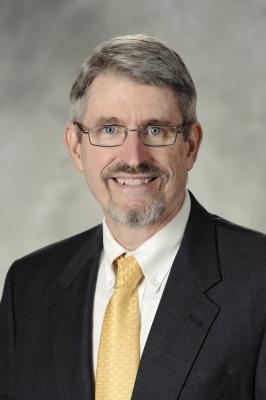
Dr. Carol Heckman is a faculty member in the Department of Biological Sciences at Bowling Green State University's College of Arts and Sciences. Her research focuses on uncovering how cells manage complex signaling pathways through membrane-bound scaffolds and lateral mobility restrictions, particularly in the context of feature classification, cell adhesion, and cytoskeletal motility mechanisms. Research Trends : Analysis of her publications reveals consistent exploration of TRP channel dynamics , protein kinase interactions , and cytoskeletal regulation across cellular sensing, migration, and receptor trafficking. Key subfields include filopodia-mediated signaling , signalosome assembly , and membrane biophysics . Techniques : Utilizes advanced methodologies like Tolansky interference microscopy , quantitative biophysics , and fractal analysis to investigate cellular processes.
Dr. Sudharman K. Jayaweera is a Professor in the Department of Electrical and Computer Engineering at the University of New Mexico, Albuquerque, NM. He holds a PhD in Electrical Engineering from Princeton University (2003), an MS in Electrical Engineering from Princeton University (2001), and a BE in Electrical and Electronic Engineering with First Class Honors from the University of Melbourne, Australia (1997). He is a Senior Member of IEEE and serves as an editor for IEEE Transactions in Vehicular Technology. Dr. Jayaweera's research spans several key areas in modern communications and signal processing: Cognitive radios and autonomous learning systems Wireless communications and statistical signal processing Machine learning applications in communications Smart-grid technologies and cyber-physical systems Satellite communications and space networks Vehicular networks and distributed systems His recent work shows a clear trend toward integrating artificial intelligence with traditional communications systems, particularly focusing on UAV networks, spectrum management, and security aspects of cognitive radio systems. The publications reflect a strong emphasis on practical implementations of theoretical concepts, with applications ranging from smart grids to space communications. Dr. Jayaweera has received numerous scientific awards including the IEEE PACRIM 2011 Gold Award for Best Communications Paper, the IEEE AVSS '06 Best Paper Award, and the WPMC '03 Excellent Paper Award. He has also been recognized with fellowships including the National Research Council (NRC) Senior Fellow at the Naval Postgraduate School and ASEE Air Force Summer Faculty Fellow. As an advisor, Dr. Jayaweera has mentored numerous graduate students to completion of their PhD and MS degrees. His former students have gone on to successful careers at institutions including Syracuse University, SUNY Oswego, Qualcomm, Sandia National Labs, and other leading technology companies. He also directs the EYES Summer Internship program for international students at UNM. Dr. Jayaweera leads the Communications and Information Sciences Lab (CISL) and the Cognitive Radio Lab (CRL) at UNM, where his teams work on cutting-edge research in autonomous cognitive radios (which he terms "Radiobots"), machine learning for communications, and next-generation wireless systems.
Darci R. Block, Ph.D. , is a Clinical Chemist at Mayo Clinic Rochester, Minnesota, with a focus on Laboratory Medicine and Pathology . She contributes to research and education, specializing in body fluid testing, process optimization, and clinical informatics. Research Interests: Validation of assays for body fluid analysis Improving clinical lab efficiency and quality Laboratory informatics systems Biomarker variability and diagnostic accuracy Scientific Contributions: Developed analytical validation frameworks for body fluid chemistry Investigated interference effects in clinical assays Advanced autoverification systems in core laboratories Scientific Awards & Memberships: Board-certified in Clinical Chemistry (American Board of Clinical Chemistry) Diplomate, American Medical Informatics Association (AMIA) Active leadership in AACC Academy and Association for Diagnostics & Laboratory Medicine
Dr. Leslie J. Donato is a board certified Clinical Chemist and Assistant Professor in the Department of Laboratory Medicine and Pathology at Mayo Clinic in Rochester, MN. She serves as co-director of the Hospital Clinical Laboratory and Point of Care Testing and co-director of the Cardiovascular Laboratory Medicine, with significant leadership roles in laboratory standardization and oversight committees. Dr. Donato's educational background includes a Ph.D. in Biochemistry, Molecular and Cellular Biology from Cornell University (2006), Post Doctoral Associate training in Biochemistry at the University of Wisconsin-Madison (2010), and Clinical Chemistry Fellowship and Residency at Mayo Clinic (2012). She is board certified by the American Board of Clinical Chemistry since 2012. Her research focuses on cardiovascular risk detection and cardiac biomarkers, gastrointestinal tests for bile acid malabsorption, and point of care molecular testing of lipids and infectious diseases. She has pioneered methods using serum 7-alpha-hydroxy-4-cholesten-3-one (7aC4) and stool bile acid measurements for bile acid diarrhea diagnosis, developed improved lipid measurement algorithms, and conducted significant work on lipoprotein(a) testing and interpretation. Dr. Donato's extensive publication record spans cardiovascular biomarkers, lipidology, gastrointestinal diagnostics, and analytical methods, with notable contributions to lipoprotein(a) testing guidelines and point-of-care testing validation. Her recent work (2023-2025) demonstrates continued innovation in lipid measurement techniques, cardiovascular risk assessment, and diagnostic approaches for gastrointestinal disorders. 2024 Cooper Award for Outstanding Contributions to Scientific Research (Lipoproteins and Vascular Diseases Division) Multiple AACC Outstanding Speaker Awards (2016, 2013, 2012) 2012 Paul E. Strandjord Young Investigator Award 2012 First Place Student Oral Presentation Contest 2011 Mass Spectrometry Application for Clinical Laboratory (MSACL) Trainee Travel Award As an educator, Dr. Donato actively trains residents, fellows, and medical laboratory technologists at Mayo Clinic. She holds leadership positions including Chair Elect of the ADLM Cardiovascular Division (2025-present) and Treasurer of the Critical and Point of Care Testing Division (2024-2026). Her work bridges clinical chemistry, laboratory medicine, and patient care, making significant contributions to diagnostic testing standardization and implementation at Mayo Clinic.
Paul J. Jannetto, Ph.D., DABCC, FAACC, M.T.(ASCP), serves as an Associate Professor in the Department of Laboratory Medicine and Pathology at Mayo Clinic in Rochester, Minnesota. He also holds the position of Laboratory Director at Mayo Clinic, where his clinical expertise focuses on Clinical and Forensic Toxicology, controlled substance monitoring, speciation and analysis of essential and heavy metals using inductively coupled plasma mass spectrometry, and development of therapeutic drug monitoring assays. Dr. Jannetto completed his educational training at prestigious institutions: a Post Doctoral Fellowship in Laboratory Medicine (2003) at Medical College of Wisconsin covering Clinical Chemistry, Clinical Toxicology, Forensic Toxicology, Therapeutic Drug Monitoring, Pharmacogenomics and Proteomics; a PhD in Pharmacology and Toxicology (2001) from Medical College of Wisconsin; and a BS in Clinical Laboratory Science-Medical Technology (1996) from University of Wisconsin. His research interests span multiple critical areas in laboratory medicine, with particular emphasis on applying mass spectrometry to clinical diagnostics. Dr. Jannetto has made significant contributions to understanding heavy metal toxicity, developing novel analytical methods for therapeutic drug monitoring, and advancing forensic toxicology practices. His work bridges the gap between analytical chemistry and clinical applications, focusing on improving diagnostic accuracy and patient care through innovative laboratory testing approaches. He has been instrumental in developing protocols for metal analysis in various clinical contexts including kidney stones, neurological disorders, and joint replacement complications. Analysis of his most recent publications reveals a strong focus on applying advanced analytical techniques to solve clinical problems, with particular attention to mass spectrometry applications, metal toxicity, and therapeutic drug monitoring. His work demonstrates an evolving trajectory toward incorporating artificial intelligence and automation into laboratory medicine to improve efficiency and accuracy. The publications span multiple disciplines including toxicology, nephrology, orthopedics, and critical care medicine, reflecting the interdisciplinary nature of modern laboratory medicine. Clinical Chemist Recognition Award (2015-2018) from multiple professional societies Outstanding Speaker Award (2012-2014) from Association for Diagnostics & Laboratory Medicine SYCL Service Award (2012) from Society for Young Clinical Laboratorians Lemuel J. Bowie Young Investigator Award (2002) from Chicago Section of Association for Diagnostics & Laboratory Medicine Dr. Jannetto actively mentors residents and fellows while contributing to professional societies through multiple leadership roles. He serves on the Mayo Clinic Clinical Practice Committee, is a Corresponding Member of the International Federation of Clinical Chemistry, and holds positions in the American Association for Clinical Chemistry and Association for Diagnostics & Laboratory Medicine. His professional activities demonstrate significant engagement in shaping laboratory medicine practices and standards. He has been particularly active in committees related to therapeutic drug management, toxicology, and mass spectrometry applications. As Laboratory Director at Mayo Clinic, Dr. Jannetto oversees critical testing services and contributes to the development of innovative laboratory methodologies. His work integrates clinical practice with research to address emerging challenges in toxicology and laboratory medicine, particularly in the areas of opioid monitoring, metal analysis, and advanced mass spectrometry applications. He maintains active collaborations across multiple medical specialties to ensure laboratory testing meets evolving clinical needs.
Loralie J. Langman, Ph.D. is a distinguished Researcher at the Mayo Clinic in Rochester, Minnesota, specializing in Laboratory Medicine and Pathology . With a career spanning over 25 years, she has held leadership roles including Chemistry Rotation Director at Mayo School of Graduate Medical Education, Chair of the Clinical Chemistry Exam Committee (American Board of Clinical Chemistry), and President of the Academy of Diagnostics & Laboratory Medicine. Her expertise encompasses clinical chemistry, forensic toxicology, therapeutic drug monitoring , and mass spectrometry , with a focus on transplant medicine, pain management , and pharmacogenomics . PhD in Laboratory Medicine and Pathology (University of Alberta, 1996) Postdoctoral Fellowship in Clinical Chemistry (University of Toronto, 1999) Board certifications in Clinical Chemistry, Forensic Toxicology , and Molecular Diagnostics Her research interests include therapeutic drug monitoring , particularly for immunosuppressive agents and opioids , pharmacogenetic testing in transplant recipients, and mass spectrometry applications in clinical and forensic toxicology. She has led international consensus guidelines on personalized immunosuppressive therapy and oral fluid drug testing . Her recent publications analyze phosphatidylethanol dynamics in transfusion medicine and drug testing in neonatal abstinence syndrome . Scientific honors include the 2025 Canadian Society of Clinical Chemists Outstanding Contribution Award , 2023 Irving Sunshine Award for clinical toxicology, and the 2018 AACC Professor Alvin Dubin Award . She has served on over 40 professional committees, including leadership roles in the International Association of Therapeutic Drug Monitoring and Clinical Toxicology and the College of American Pathologists . Her work bridges clinical diagnostics , forensic science , and transplant pharmacology , with a focus on improving patient care through precise laboratory practices. Currently, Dr. Langman directs Mayo Clinic's clinical chemistry curriculum , co-chairs the Pharmacogenomics Working Group , and contributes to global therapeutic drug monitoring standards. She has advised on guidelines for CLSI and SWGTOX , and her collaborations span institutions in Canada, USA, and Europe .
Sudeepa Roy is an Associate Professor of Computer Science at Duke University's Department of Computer Science within Trinity College of Arts & Sciences. She joined Duke in Fall 2015 after completing a postdoctoral research associate position at the University of Washington's Department of Computer Science and Engineering, where she worked with Professor Dan Suciu and the database group. Her educational background includes a Ph.D. in Computer and Information Science from the University of Pennsylvania, where she was advised by Professors Susan Davidson and Sanjeev Khanna. During her doctoral studies, she completed two internships at IBM Research, Almaden. Roy's research spans three interconnected thrusts in computer science: (1) Data management, focusing on repairing noisy data, data provenance, and tools for helping novices learn relational queries; (2) Data analysis, investigating interpretable causal inference techniques and meaningful explanations for data analysis pipelines; and (3) Database theory, exploring foundational problems at the intersection of databases, logic, and algorithms. Her work bridges theoretical rigor with practical applications across various domains. Her recent publications demonstrate a strong trajectory in causal inference, database theory, and privacy-preserving data analysis, with a notable emphasis on making complex database operations interpretable and accessible. The publications reveal increasing focus on causal explanations, differentially private query processing, and novel approaches to database repairs and query optimization. VLDB Endowment Early Career Research Contributions Award, 2022 NSF Career Award, 2016 Google Ph.D. Fellowship, 2011 (the first Google fellowship in Structured Data) SIGMOD Best Artifact Award - Honorable Mention, 2023 Roy has successfully mentored numerous graduate and undergraduate students, with former PhD students securing positions at institutions like Yale University, Simon Fraser University, and Megagon Labs. Her research has been supported by multiple significant grants including an NSF Award IIS-2147061 on "FAI: An Interpretable AI Framework for Care of Critically Ill Patients," an NSF Award IIS-2008107 on "Helping Novices Learn and Debug Relational Queries," and an NIH Award 1R01EB025021-01 on causal inference methods for big data. She is an active member of the Duke Database Group (Duke Database Devils) and has served in leadership roles for major conferences including as PC Co-Chair of ACM SIGMOD 2026 and PC Chair of ICDT 2025.
Paul Fortier is a Full Professor at the Department of Electrical Engineering and Computer Engineering , Université Laval, with a career spanning over three decades. His work focuses on Digital Communications , Internet of Things (IoT) , Cyber-Physical Systems , and Wireless Communication Systems , particularly exploring complexity-performance tradeoffs in hardware implementations. PhD in Electrical Engineering, Stanford University (1989) MSc in Statistics, Stanford University (1987) MSc and BSc in Electrical Engineering, Université Laval (1984, 1982) His research integrates Machine Learning with FPGA architectures for applications like real-time hand gesture recognition and hardware-in-the-loop simulation . Current projects include Advanced Digital Twin Development and Quantum-Resistant Communication Protocols under the Quebec Strategic Microsystems Group . Key contributions appear in IEEE Transactions on Vehicular Technology , IEEE Internet of Things Journal , and IEEE Transactions on VLSI Systems . He has secured major grants from Fonds de recherche du Québec and NSERC for initiatives like Hardware-in-the-Loop Simulators and Wireless Cybersecurity Research . Fellow, Engineering Institute of Canada Fellow, Canadian Academy of Engineering Senior Member, IEEE
Arnaud Ameline is a Professor at the University of Picardie Jules Verne, affiliated with the Faculty of Sciences and the INSPE in Amiens. He specializes in entomology and behavioral ecology, focusing on plant-insect interactions within agrosystems. PhD in Biology of Organisms from University of Paris XIII Current research on ecological interactions in agricultural systems Teaches Master’s-level courses in ecosystems, education, and sustainable development His research explores plant-phytophage interactions, pathogen vectoring by hemipterans, and effects of phytosanitary products. Recent work examines multitrophic systems under global change, companion plants for aphid deterrence, and microbial compounds as behavioral disruptants. Projects include INTERREG initiatives and Plant2Pro-Institut Carnot CHARAP collaborations. Scientific contributions span chemical ecology, electropenetrography (EPG), and fitness assessments of pests. He has supervised multiple PhD students and leads research axes within the EDYSAN unit.
Zekeriya Uykan serves as a Visiting Professor in the Department of Information and Communications Engineering at Aalto University, affiliated with the Communication Engineering research group. His current research profile is accessible via Aalto University's research portal, and he maintains direct contact through university email and phone channels. His primary research domains encompass Wireless Communications, Network Optimization, Machine Learning, and Neural Networks, with specialized focus on channel charting, femtocell optimization, device-to-device communications, and antenna placement. Recent work integrates Hopfield Neural Networks and stochastic optimization techniques to address dynamic resource allocation challenges in 5G/6G systems, emphasizing practical implementation in heterogeneous wireless environments. Analysis of his 2023-2024 publications reveals a strong trajectory toward machine learning-driven solutions for next-generation wireless networks, particularly in channel modeling and interference management. This builds upon his foundational contributions to relay network capacity bounds and SINR-balancing systems, demonstrating consistent innovation in merging theoretical information theory with applied neural network models. As a visiting researcher, Uykan actively collaborates within Aalto University's Communication Engineering group, contributing to advanced projects in wireless infrastructure design and optimization. His work bridges academic theory with industry-relevant communication system challenges, particularly in dense network scenarios requiring intelligent interference mitigation.
Dr. Sawsan Abdul-Majid is a part-time Professor in the Faculty of Engineering at the University of Ottawa, where she has contributed since 2008. Holding a PhD in Optical Communication Systems and over 25 years of academic experience, she is licensed as a Professional Engineer (P.Eng.) by Professional Engineers of Ontario and serves as faculty advisor for the IEEE student chapter. Her educational background includes: PhD in Engineering, Optical Communications, Technical University of Varna, Bulgaria (1992) M.Sc. in Electrical Engineering, Digital Design, Technical University of Varna, Bulgaria (1984) Dr. Abdul-Majid's research spans photonics and women in STEM. Her early work focused on silicon photonics and optical communication systems, yielding over 45 publications. Since 2016, she has pioneered professional skills development through the Advancing New Canadian Women in Technology (ANCWT) program, which bridges immigrant and refugee women with STEM backgrounds into Canada's engineering workforce. Her publication record demonstrates deep expertise in silicon photonics, optical amplifiers, and integrated photonic circuits, with a strategic pivot toward empowering women in engineering through structured professional development. Her accolades include: 2018 Advancing Immigrant Women in STEM award (Impact AI) 2019 Diversity Initiative of the Year (Women in IT) 2023 Women in Leadership (WIL) award 2024 Champion of Diversity award (Ontario) PEO Certificate of Recognition for volunteer service SOPI awards (2020, 2021) She has supervised graduate students in photonics at the Photonics Technology Lab and secured significant grants for professional development initiatives. As President of ANCWT, she oversees a program with 70% employment placement and 30% licensure rates among participants. Her current teaching includes mandatory Professional Skills courses for 600+ Master of Engineering students annually. Dr. Abdul-Majid previously managed the Photonics Technology Lab (2008-2015), directing a $1.25M infrastructure budget and collaborating with CMC and CPFC on silicon photonics prototyping.
Dr. Dragan Brajović is a Professor at the Department of Power Engineering, Faculty of Technical Sciences Čačak, University of Kragujevac, Serbia. He has been employed at this institution since 2020, following a significant career at the Higher School of Technical Vocational Studies in Čačak from 1991-2020 where he progressed from assistant to professor of vocational studies. Dr. Brajović was born on December 12, 1963, in Čačak, Serbia. He completed his elementary education and secondary technical education with mathematics-technical focus in Čačak. He graduated from the Power Engineering Department at the Faculty of Electrical Engineering in Belgrade, earned his Master's degree from the Technical Faculty in Čačak, and completed his PhD at the Faculty of Electrical Engineering in Belgrade. He holds professional licenses as "Responsible Designer" and "Responsible Executor" for low and medium voltage electrical installations. His research focuses on power engineering, particularly high voltage equipment and systems, quality of electrical energy, electrothermal processes, and smart electrical installations. His work addresses critical challenges in electrical energy systems including insulation systems of high voltage machines, measurement techniques for fast voltage pulses, SF6 gas applications and alternatives, and reliability engineering for electrical equipment. Recent publications demonstrate particular emphasis on improving the insulation systems of high voltage asynchronous machines and developing more environmentally friendly alternatives to traditional SF6-based equipment. Dr. Brajović has published extensively in reputable journals including IEEE Transactions on Dielectrics and Electrical Insulation, Nuclear Technology and Radiation Protection, and Radiation Effects and Defects in Solids. His research shows strong interdisciplinary connections between electrical engineering, measurement technology, and nuclear engineering, particularly in radiation effects on electrical systems. As an educator, Dr. Brajović teaches a comprehensive range of courses covering power plants and distribution facilities, electrical installations and lighting, electrothermy, elements of electrical energy systems, fundamentals of electrical energy engineering, high voltage equipment and systems, project management in engineering, electrothermal processes, modern lighting systems and smart electrical installations, and quality of electrical energy. His teaching integrates practical applications with theoretical foundations, reflecting his professional experience in the field. His laboratory work involves research on electrical machines, high voltage systems, and measurement techniques, contributing to both academic knowledge and practical applications in the power engineering field. His research has direct implications for improving the reliability and efficiency of electrical power systems while addressing environmental concerns related to traditional high-voltage equipment.
Dr. Thomas Durant is an Associate Professor of Laboratory Medicine at Yale School of Medicine with a secondary appointment in Biomedical Informatics & Data Science. He serves as Medical Director of Chemical Pathology and Laboratory Informatics at Yale-New Haven Hospital and Associate Director for the ACGME Chemical Pathology Fellowship. His dual expertise bridges clinical laboratory practice with cutting-edge informatics research. Dr. Durant's educational background includes: MD from University of Connecticut, School of Medicine (2015) MA in Physical Therapy from Quinnipiac University BA in Health Sciences from Quinnipiac University (2008) Winchester Clinical Microbiology Fellowship at Yale-New Haven Hospital (2019) Residency and Chief Residency at Yale-New Haven Hospital (2018) Board certified in Clinical Pathology (2018), Medical Microbiology (2019), and Clinical Informatics (2022), Dr. Durant's research focuses on practical applications of data science in laboratory medicine. His work centers on clinical informatics, quality care initiatives, and artificial intelligence applications including machine learning for automated image classification, quantum computing in healthcare, and laboratory data analytics. He investigates stream processing of interface data for sample identification and develops innovative data management technologies to improve laboratory operations and patient care. Analysis of Dr. Durant's publication record reveals a strong progression from traditional laboratory medicine into advanced computational methods. His recent work demonstrates expertise in ensemble learning for detecting IV fluid contamination, quantum computing applications, AI model verification protocols, and biomarker analysis for acute kidney injury prediction. The research spans multiple disciplines including clinical chemistry, informatics, and data science, addressing critical challenges in diagnostic medicine. Dr. Durant maintains extensive collaborations with Yale researchers including Wade Schulz (14 publications), Joe El-Khoury (10 publications), Harlan Krumholz (5 publications), and Richard Torres (4 publications). These partnerships support research on laboratory informatics, AI applications, and quality improvement initiatives that enhance diagnostic accuracy and healthcare delivery. As Medical Director of Laboratory IT Services, Dr. Durant oversees the technological infrastructure supporting laboratory operations at Yale-New Haven Hospital. His leadership in the Chemical Pathology Fellowship program trains future specialists, while his research continues to push the boundaries of how data science transforms diagnostic medicine.
Andrey I. Lyakhov is a Professor and Doctor of Computer Science at the Institute for Information Transmission Problems of the Russian Academy of Sciences. He serves as the Head of Laboratory №18 and has been active since 1959. His research focuses on wireless networks, particularly IEEE 802.11 and 802.16 protocols. Position: Laboratory Chief Affiliation: Institute for Information Transmission Problems, Russian Academy of Sciences Research Interests: Wireless Networks, MAC Protocol Analysis, Network Performance, Distributed Control, Multicast QoS, Channel Assignment His work includes analytical modeling of data transmission, beaconing in mesh networks, and studies on network unfairness and congestion. He has contributed to patents in wireless sensor networks and piconet beacon management. Notable publications span wireless LANs, WiMAX, and sensor network optimization. Lyakhov's research has involved collaborations with international conferences and journals, focusing on throughput estimation, channel contention, and quality of service in wireless systems. Recent publications include studies on bandwidth piggybacking (2010), intra-flow interference in mesh networks (2010), and multicast QoS support in WLANs (2007). Earlier works from 1983-2008 cover foundational topics in queueing theory, cache efficiency, and distributed control systems.
Edward J Coyle is a Professor at Georgia Institute of Technology's College of Engineering , holding the Arbutus Chair for the Integration of Research and Education and serving as Director of the Arbutus Center for the Integration of Research and Education. Education: B.S. in Electrical Engineering from University of Delaware (1978) M.S. and Ph.D. in Electrical Engineering and Computer Science from Princeton University (1980, 1982) Research Interests: Coyle's work bridges Computer Networks , Sensor Networks , and Signal Processing with a groundbreaking focus on Engineering Education innovation. His Vertically Integrated Projects (VIP) and EPICS programs revolutionized project-based learning by integrating undergraduate and graduate research while addressing community needs through engineering solutions. Notable Scientific Contributions: His academic output demonstrates a clear trajectory from technical work in Wireless Sensor Networks and Cognitive Radio to pioneering Education Reform frameworks. The 2025 articles highlight systemic education transformation and smart stadium testbeds, while 2024 publications quantitatively analyze interdisciplinary learning dynamics. Major Awards: IEEE Fellow (1998) National Academy of Engineering Gordon Prize (2005) ABET Innovation Award (2019) Georgia Regents Excellence in High Impact Practices (2025) Stony Brook Civic Engagement Award (2018)