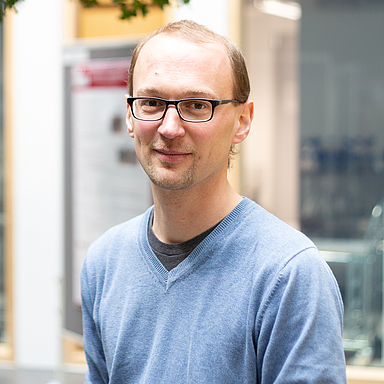
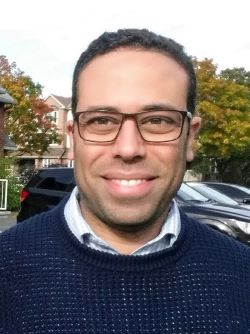
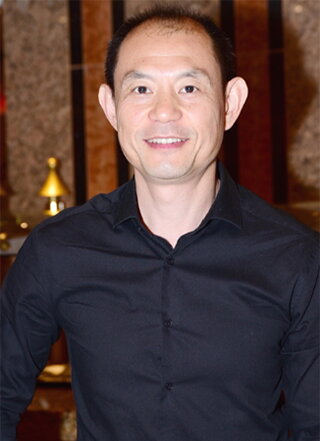
Guangyu Cao is a Professor at the Department of Energy and Process Engineering, Norwegian University of Science and Technology (NTNU). He holds leadership roles in multiple international organizations, including the European standards working group CEN TC156 WG18, REHVA's technical committee, and the editorial board of the Journal of Building Engineering (Impact Factor 5.318). His research focuses on indoor airflow dynamics, ventilation systems in healthcare settings, and airborne disease transmission mitigation, with a strong emphasis on surgical environments and school buildings. Education: PhD in Energy Engineering (2009), Helsinki University of Technology Senior Researcher at VTT Technical Research Center (2009-2014) Research Interests: Hospital ventilation optimization, thermal comfort in clinical settings, airborne infection control, and sustainable building environmental quality. He combines experimental studies with mathematical modeling to evaluate ventilation strategies, particularly in operating rooms and isolation wards. Projects: EU Marie Curie DTN HumanIC (2024–2027) EU H2020 iclimabuilt (2021–2025) NFR POSIred (2020-2024) Labs/Teams: Collaborates with St. Olav's Hospital on indoor environment projects and leads teams in Cold Climate HVAC and Healthy Building Europe initiatives.
Yong Chen is a Professor of Electrical and Computer Engineering and Physics at Purdue University. His research spans quantum physics, nanotechnology, and materials science, focusing on advanced 2D materials, topological insulators, and quantum transport phenomena. Condensed Matter Physics Quantum Computing Nanotechnology Materials Science Photonics Spintronics Recent publications highlight his work on van der Waals heterostructures, Bose-Einstein condensates, Raman spectroscopy applications, and quantum interference effects. His studies often intersect with machine learning, energy storage, and synthetic magnetic field engineering of quantum systems. Yong Chen's email address is yongchen@purdue.edu , and further information can be accessed at his Purdue University profile .
Ana Maria Velez is an Associate Professor at the Department of Entomology, University of Nebraska-Lincoln. Her research focuses on insect responses to chemical stressors, particularly RNA interference (RNAi) and Bt toxins for pest management. With a 80% research and 20% teaching appointment, she leads the Insect Toxicology Lab and teaches courses like 'Toxins in the Environment' and 'Insecticide Toxicology.' Education: Ph.D. in Entomology, University of Nebraska-Lincoln, 2013 M.S. in Entomology, Universidad Nacional de Colombia, 2009 B.S. in Biology, Pontificia Universidad Javeriana, Colombia, 2006 Her research spans molecular, organismal, and population levels to evaluate transgenic crops and RNAi technologies. Key areas include resistance mechanisms, non-target effects, and risk assessment frameworks. She has extensive publications on western corn rootworm and fall armyworm, emphasizing sustainable pest control. Her work also addresses sublethal impacts on non-target species like monarch butterflies and honeybees. Recent articles highlight RNAi delivery optimization, Bt resistance dynamics, and ecological impacts of insecticides. Her lab collaborates on patents for RNAi-based pest suppression methods targeting chromatin remodeling and developmental genes. Scientific Awards Distinguished Multicultural Alumni (2019) DuPont Young Professor Award (2016) International Congress of Entomology Travel Awards (2016) Widaman Trust Distinguished Graduate Assistant (2011) Milton E. Mohr Teaching Fellowship (2012) The Vélez Arango Lab investigates durability and safety of insect control technologies, with emphasis on RNAi and Bt crops. Their work informs integrated pest management (IPM) systems and regulatory frameworks.
Patrick Mitran is a full-time Professor at the University of Waterloo's Department of Electrical and Computer Engineering, within the Faculty of Engineering. His research focuses on advanced wireless communication systems, including 5G/6G technologies, millimeter-wave and sub-THz communication, digital predistortion techniques, MIMO systems, and beamforming architectures. He leads projects addressing challenges in transmitter linearization, network resource allocation, and hardware-efficient signal processing. Key research interests include optimizing frequency multiplier-based transmitters, mitigating inter-cell interference in massive MIMO networks, and developing algorithms for reconfigurable intelligent surfaces (RIS). His work often intersects hardware design, signal processing, and network optimization, with applications in next-generation wireless infrastructure. Recent publications highlight innovations in ultrawideband signal generation for 6G testing, practical RIS configurations, and FPGA-based real-time digital predistortion implementations. His contributions emphasize both theoretical advancements and practical system-level solutions. Dr. Mitran's research group collaborates on cutting-edge topics such as hybrid NOMA in multi-cell networks, adaptive coding modulation for Gaussian channels, and interference decoding strategies. His work has been published in top-tier journals and conferences, reflecting a sustained impact on modern wireless communication technologies.
Bertan Bakkaloglu is the On Semiconductor Professor in the School of Electrical, Computer and Energy Engineering at Arizona State University (ASU), where he has been since 2004. Prior to ASU, he worked at Texas Instruments focusing on analog, mixed-signal, and RF SoC development for communication transceivers. His research expertise spans RF and mixed-signal IC design, wireless/wireline communication systems, and broadband communication systems. Education: Ph.D. in Electrical Engineering, Oregon State University (1995) M.S.C. in Electrical Engineering, University of Houston (1992) Research Interests: RF and mixed-signal integrated circuits Power management ICs (including LDO regulators and DC-DC converters) High-efficiency power delivery systems Radiation-hardened electronics for space applications MEMS-based sensor systems Biomedical circuits for implantable devices Grants & Collaborations: Over 40+ funded research projects with institutions like NASA/JPL, BAE Systems, and NSF, focusing on power electronics, space systems, and biomedical applications Key projects include radiation-hardened converters, self-calibrating DACs, and implantable medical device circuits Industry partnerships with Texas Instruments, Space Micro, and FLIR Professional Activities: Technical committee member for IEEE Radio Frequency Integrated Circuits Conference Founding chair of IEEE Solid-State Circuits Society Phoenix Chapter
Saleh A. Alshebeili is a Professor in the Department of Electrical Engineering at King Saud University's College of Engineering, Riyadh, Saudi Arabia. With over 139 publications spanning from 1991 to 2024, his research demonstrates significant contributions across multiple engineering disciplines. His academic profile shows consistent collaboration with Saudi research institutions and international partners, particularly in communications and signal processing fields. Dr. Alshebeili's research interests span wireless communications, optical networks, radar systems, and biomedical signal processing. His work bridges theoretical signal processing with practical applications in 5G/6G communications, IoT security systems, and healthcare monitoring. The interdisciplinary nature of his research connects electrical engineering with computer science, particularly through machine learning applications for signal analysis and system optimization. His publications demonstrate expertise in both traditional signal processing techniques and emerging AI-driven approaches to engineering problems. Analysis of his recent publications (2021-2024) reveals a strong focus on next-generation communication technologies including 6G systems, optical wavelength conversion, and OAM-SDM communication. Simultaneously, he maintains active research in biomedical applications, particularly EEG signal processing for seizure detection and biometric authentication using physiological signals. His work consistently appears in top IEEE journals including IEEE Access, IEEE Transactions on Wireless Communications, and IEEE Journal of Biomedical and Health Informatics, reflecting the high quality and relevance of his research. Dr. Alshebeili has established extensive collaborations with researchers across King Saud University, particularly with Fathi E. Abd El-Samie (29 co-authored papers), Turky N. Alotaiby (22 papers), and Amr Ragheb (21 papers). These long-term collaborations suggest leadership in research groups focusing on communications systems and biomedical signal processing. His work spans theoretical development, simulation, and experimental validation, as evidenced by publications with 'Experimental Investigation' and 'Experimental Demonstration' in their titles.
Renaud BACHELOT is a full Professor of Physics at the University of Technology of Troyes (UTT) since 1996. He leads the Light, Nanomaterials, and Nanotechnologies (L2n) laboratory and directs the Graduate School 'Nano-optics & Nanophotonics'. He holds adjunct professorships at the University of Paris-Saclay (LuMIn Lab) and Shanghai University (1000-talents Grant). His research focuses on nano-optics, plasmonics, and hybrid nanoplasmonics, with expertise in photopolymerization and plasmon-driven chemical processes. Education: PhD and graduate studies at Université Paris-Cité and ESPCI Paris Research Interests: BACHELOT’s work spans nanoscale light-matter interactions, including plasmonic nanostructures, photopolymerization-based fabrication, and applications in optical sensing and quantum photonics. His lab employs advanced techniques like near-field scanning optical microscopy (NSOM) and two-photon polymerization. Grants & Projects: ANR-PIA3 STRONG-NANO (2023-2026) ANR ADVANSPEC (2022-2025) International collaborations with NTU Singapore and Argonne National Lab Labs & Teams: Directs L2n (CNRS-UMR 7076) and collaborates across interdisciplinary platforms like InSyTE and LIST3N. His team develops novel hybrid materials and nanophotonic devices.
Mickaël CAMPO is an Associate Professor at the University of Burgundy (Université Bourgogne Franche-Comté) in Dijon, France, specializing in sports psychology. He is affiliated with the Faculty of Sports and Physical Education (UFR STAPS) and the Socio-Psychology and Sports Management Laboratory (Laboratoire Psy-DREPI). His educational background includes a Doctorate in Sports Psychology. Prior to his current position, he served as an Associate Professor at Université de Rouen Normandie from 2013 to 2015 and completed his PhD studies at Claude Bernard University Lyon 1 from 2007 to 2010. Dr. CAMPO's research focuses on the interpersonal emotional process (IEP), particularly examining: Relationships between social psychological variables such as social identity and emotions in group contexts Interpersonal emotion regulation in sports settings Emotional contagion phenomena in team sports Psychological adaptation processes in performance and learning contexts Emotional intelligence development and application in sports His work primarily centers on team sports, with a special emphasis on rugby. He has developed theoretical frameworks like the Interpersonal Emotional Process (IEP) model and has conducted extensive research on how emotions affect performance in competitive sports environments. Dr. CAMPO has received recognition for his research, including the 1st Young Researcher Prize in 2010. His scientific contributions span numerous publications in prestigious journals, with his work focusing on the intersection of social psychology and sports performance. As an academic, Dr. CAMPO has supervised multiple research projects and has been invited to present at various conferences, including the clinical medico sport congress in Lyon. His work bridges theoretical research with practical applications for athletes, coaches, and sports psychologists.
Martin Kaltenpoth serves as Director at the Max Planck Institute for Chemical Ecology in Jena since 2020 and Professor for Evolutionary Ecology at Johannes Gutenberg University of Mainz since 2015. Previously, he led the Research Group Insect Symbiosis at the MPI for Chemical Ecology from 2009 to 2015. Education: PhD in Biology (summa cum laude), University of Würzburg, 2006 Diploma in Biology (with honors), University of Würzburg, 2003 His research centers on insect-bacterial symbioses , investigating evolutionary, ecological, and chemical dimensions of host-microbe interactions. Key foci include nutritional and defensive symbiosis in beetles, genomic adaptations of symbiotic bacteria, and chemical mediation of symbiotic relationships. His work bridges entomology, microbiology, and chemical ecology to unravel coevolutionary mechanisms. Analysis of recent publications reveals dominant trends in beetle-microbe systems, emphasizing symbiont roles in cuticle synthesis, antifungal defense, and host-plant adaptation. His studies frequently employ genomic, biochemical, and experimental approaches across diverse insect lineages. No scientific awards were documented in the source material. While specific advisees and grants remain unlisted, his leadership of research groups and dual academic appointments indicate active supervision of graduate researchers and externally funded projects in symbiosis evolution. Currently directing research at the Max Planck Institute, Kaltenpoth advances understanding of symbiotic systems with implications for evolutionary theory and sustainable pest management strategies.
Ebrahim Bedeer Mohamed is an Assistant Professor in the Department of Electrical and Computer Engineering at the University of Saskatchewan. He joined in July 2019, following roles as an Assistant Professor (Lecturer) at Ulster University, UK, and postdoctoral fellowships at Carleton University and the University of British Columbia. He holds a Ph.D. (Distinction) from Memorial University of Newfoundland (2014), with expertise in signal processing and wireless communications. His research focuses on optimizing communication systems through advanced signal processing techniques, including faster-than-Nyquist signaling, IoT network design, AI integration, and energy-efficient protocols. Key areas include next-generation communication networks, non-orthogonal modulation, and MIMO systems. Notable contributions include work on channel estimation for FTN signaling, RIS-aided wireless systems, and LR-FHSS protocols in IoT. His publications span spectral efficiency, interference minimization, and energy management in 5G/6G contexts. He actively seeks Ph.D. students with strong backgrounds in signal processing fundamentals. Awards and grants are not explicitly listed in the provided texts. His work emphasizes practical applications, such as UAV trajectory optimization for IoT data collection and energy-efficient caching strategies in dynamic networks.
Glenn Tiffert is a Distinguished Research Fellow at Stanford University's Hoover Institution, specializing in modern Chinese history and contemporary US-China relations. He co-chairs Hoover's program on the US, China, and the World and leads Stanford's participation in the NSF SECURE program, a $67 million initiative authorized by the CHIPS and Science Act of 2022. Tiffert is a historian of modern China with expertise in the political and legal history of the People's Republic of China. His research focuses on the construction of China's court system and judiciary, the drafting of the 1954 PRC Constitution, and the suppressed genealogy of the rule of law in China. He has pioneered the integration of computational methods into Chinese historical studies and is currently completing the first archival study in any language of the takeover and reconstitution of a Chinese state organ (the courts) by the Chinese Communist Party. His recent publications reveal a strong trend toward analyzing China's global influence operations, research security challenges, and technological competition between the US and China. Tiffert's work increasingly addresses how authoritarian regimes exploit vulnerabilities in open knowledge ecosystems, particularly examining China's 'sharp power' projection and efforts to reshape global narratives. Co-chairs the Hoover project on China's Global Sharp Power Executive committee member of the Academic Security and Counter-Exploitation Program Participant in multiple Hoover research teams including Taiwan in the Indo-Pacific Region and Semiconductors security working group Testified before the U.S. Senate Select Committee on Intelligence on Chinese malign influence operations Tiffert collaborates extensively with government and civil society partners worldwide to document and build resilience against authoritarian interference with democratic institutions. His work spans academic research, policy development, and public education on the security and integrity of knowledge ecosystems, particularly academic, corporate, and government research.
Vinod M. Vokkarane is a Professor in the Department of Electrical and Computer Engineering at the University of Massachusetts Lowell, where he serves as Director of the Center for Smart Cyber-Physical Systems (SCyPS) and Director of Advanced Computer Network Labs. Previously, he was an Associate Professor at University of Massachusetts Dartmouth from 2004 to 2013 and a Visiting Scientist at MIT's Research Laboratory of Electronics from 2011 to 2014. His extensive research portfolio spans multiple domains of advanced networking and cyber-physical systems. Dr. Vokkarane earned his educational foundation with a B.S. from University of Mysore, India (1999), followed by an M.S. (2001) and Ph.D. (2004) in Computer Science from the University of Texas at Dallas. His dissertation focused on optical burst-switched networks, establishing the foundation for his future research trajectory. His research interests center on Cyber-Physical Systems, Network Optimization, Reliability, Smart Grids, and Cyber-Security, with particular expertise in the design, analysis, and modeling of architectures, protocols, and algorithms for ultra-high speed networks including Optical networks, Grid/Cloud networks, and Big-data networks. His work bridges theoretical foundations with practical implementations, often addressing critical challenges in network reliability, security, and efficiency. His research has received significant recognition through numerous best paper awards and substantial external funding. Analysis of his recent publications reveals a clear evolution toward increasingly sophisticated integration of cyber-physical systems with power infrastructure, particularly in the areas of grid resilience and observability. His work has expanded from fundamental optical networking research to address critical infrastructure challenges, with a growing emphasis on machine learning applications for network optimization and power system monitoring. The recent focus on PMU networks, disaster resilience, and cyber restoration demonstrates his strategic pivot toward addressing national security and critical infrastructure protection challenges. UMass Dartmouth Scholar of the Year Award (2011) UMass Dartmouth Chancellor's Innovation in Teaching Award (2010-11) University of Texas at Dallas Computer Science Dissertation of the Year Award (2003-04) Multiple Best Paper Awards including IEEE GLOBECOM 2005, IEEE ANTS 2010, ONDM 2015, ONDM 2016, and IEEE ANTS 2016 Texas Telecommunications Engineering Consortium Fellowship (2002-03) Dr. Vokkarane has successfully mentored numerous graduate students who have contributed significantly to his research projects, with several going on to successful careers in academia and industry. His research has been consistently supported by major funding agencies including NSF, DOE, and USMC, with recent projects totaling over $5 million in funding. Current projects include Unified Post-Disaster Restoration Planning for Cyber-Physical Power Distribution Systems (ONR, $550K), CyberCARE: Northeast University Cybersecurity Center (DOE, $3.5M), and Flexible Spectrum Allocation in Next-Generation Optical Networks (NSF, $350K). He leads the Center for Smart Cyber-Physical Systems (SCyPS) and Advanced Computer Network Labs at UMass Lowell, where his research teams work on cutting-edge problems in network architecture, cyber-physical security, and infrastructure resilience. His labs collaborate extensively with national laboratories and industry partners to translate theoretical advances into practical solutions for real-world infrastructure challenges.
Wei Zhang is an Assistant Professor of Accounting at the University of Massachusetts Amherst's Isenberg School of Management. He focuses on auditor regulation, auditing practices, corporate governance, and internal audit dynamics. His work examines regulatory enforcement mechanisms and their impact on audit quality and corporate accountability. PhD, Arizona State University (2019) MAcc, City University of New York (2013) BBA & BA, Nanchang University (2005) His research investigates how regulatory policies influence auditor behavior, legal liability exposure, and financial reporting quality. Notable studies include analyses of PCAOB enforcement effectiveness and the implications of audit interference rules. He has received prestigious awards such as the PwC Inquires Grant (2020, 2023) and the AAA Auditing Section Best Paper Award. Awards: Multiple grants and recognitions for auditing research excellence Teaching: Financial Accounting and Auditing courses Zhang's research bridges regulatory frameworks and practical auditing challenges, contributing to debates on audit quality improvement and corporate governance structures.
Xuguo (Joe) Zhou is a Professor of Entomology at the University of Illinois at Urbana-Champaign, holding the Kearns, Metcalf and Flint Endowed Chair. He is affiliated with the Carl R. Woese Institute for Genomic Biology and the College of Liberal Arts & Sciences. His research focuses on Behavior, physiology, and genomics of social insects Chemical communication in insect systems Insect-plant interactions Recent publications highlight his work in RNA interference mechanisms in beetles, CRISPR gene editing applications in insect pigmentation, and studies on herbicide degradation pathways. These contributions span molecular entomology, agricultural biotechnology, and environmental microbiology. Zhou's work integrates genomic approaches with ecological and physiological studies, particularly evident in his studies on gene function analysis in pest species and development of RNA-based biopesticide strategies. He is based in Morrill Hall, Urbana, Illinois, and can be contacted at xgzhou@illinois.edu.
Yu Xiao is an Associate Professor at the Department of Information and Communications Engineering, Aalto University, specializing in edge computing, extended reality (XR), wearable computing, and crowdsensing. Their research contributes to the UN Sustainable Development Goals, particularly in education and technology innovation. Active in mobile cloud computing and decentralized systems Principal Investigator in EU-funded projects (EMIL, TUTL) Expert in 5G networks, autonomous systems, and human activity recognition Yu Xiao's work spans interdisciplinary domains, including healthcare (cardiovascular resuscitation devices) and urban mobility (autonomous vehicle interactions). They have received multiple awards, including Best Paper Awards and Nokia Foundation Scholarships. Focus on low-latency communication and multiagent reinforcement learning Developed frameworks like FediLive for decentralized social networks Contributed to 128+ publications and software tools Recent collaborations include institutions like Pontificia Universidad Católica de Chile and participation in IEEE committees. Their research integrates blockchain for secure IoT communication and advanced AR applications.